1. Search Result
Search Result
Results for "

root rot

" in MedChemExpress (MCE) Product Catalog:

8

Inhibitors & Agonists

1

Biochemical Assay Reagents

1

Peptides

4

Natural
Products

Cat. No. Product Name Target Research Areas Chemical Structure
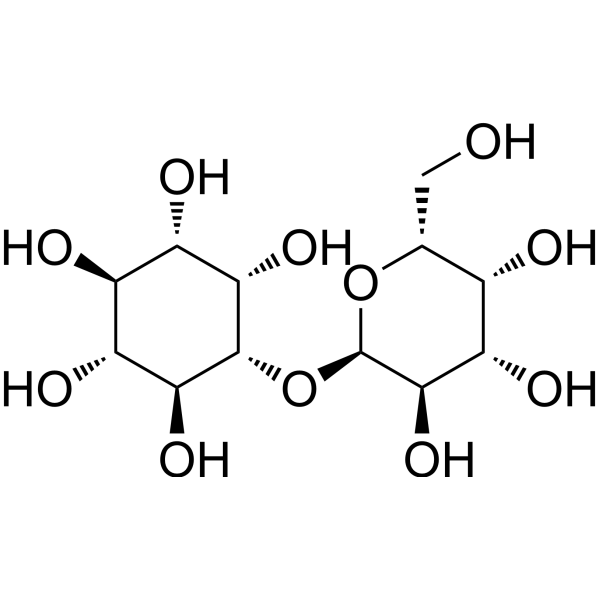
  • HY-N9497

    Galectin Fungal Infection
    Galactinol is a disaccharide carbohydrate serving as a galactosyl donor, which belongs to the raffinose family oligosaccharide pathway and acts as an important osmoprotectant. Galactinol not only induces disease resistance in plants against fungal and bacterial pathogens, but also significantly enhances plant tolerance to abiotic stresses such as drought, high salinity, low temperature and oxidative damage. In addition, Galactinol has the ability to scavenge hydroxyl radicals, can act as a signaling component for root colonization-induced systemic resistance, and is positively correlated with seed longevity in various crops, making it a potential biomarker for evaluating seed vigor. Therefore, Galactinol can be used in the research of various plant diseases including fungal leaf spot, bacterial angular leaf spot, gray mold and soft rot .
    Galactinol
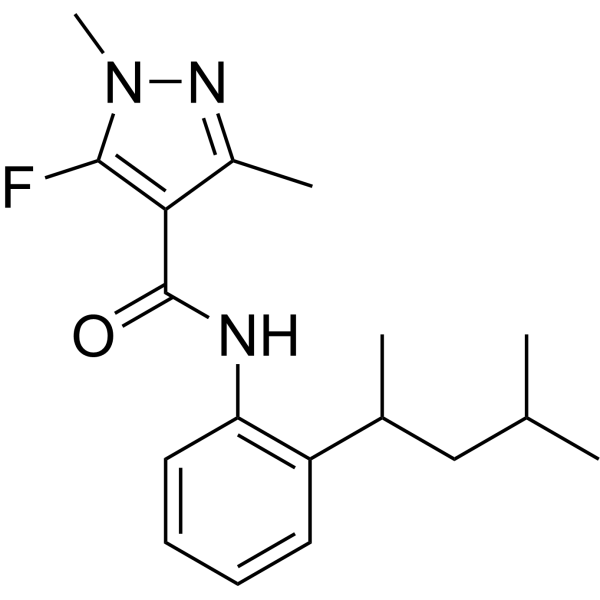
  • HY-139161

    Environmental Pollutants Fungal Infection
    Penflufen is a highly efficient, broad-spectrum succinate dehydrogenase inhibitor (SDHI). Penflufen can be used as a fungicide and has broad bioactivity against many fungal diseases, including potato black scurf, wheat sharp eyespot, rice sheath blight, and root rot in peanut and other similar fungal diseases .
    Penflufen
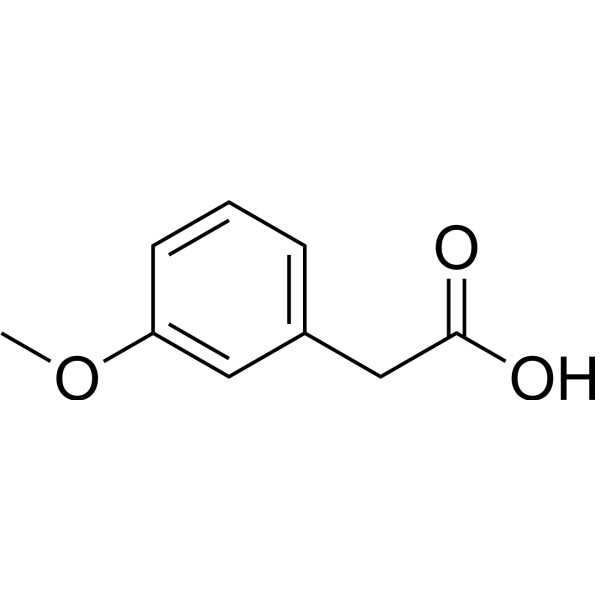
  • HY-W015343

    m-Methoxyphenylacetic acid

    Endogenous Metabolite Others
    3-Methoxyphenylacetic acid (m-Methoxyphenylacetic acid), a m-hydroxyphenylacetic acid (m-OHPAA) derivative, is a phytotoxin in Rhizoctonia solani. 3-Methoxyphenylacetic acid is used to develop a toxin-mediated bioassay for resistance to rhizoctonia root rot .
    3-Methoxyphenylacetic acid
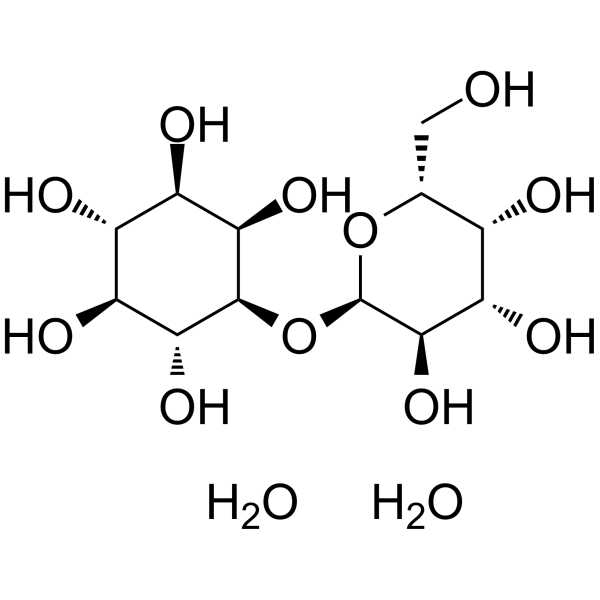
  • HY-135258

    Galectin Fungal Others
    Galactinol dihydrate is a disaccharide carbohydrate serving as a galactosyl donor, which belongs to the raffinose family oligosaccharide pathway and acts as an important osmoprotectant. Galactinol dihydrate not only induces disease resistance in plants against fungal and bacterial pathogens, but also significantly enhances plant tolerance to abiotic stresses such as drought, high salinity, low temperature and oxidative damage. In addition, Galactinol dihydrate has the ability to scavenge hydroxyl radicals, can act as a signaling component for root colonization-induced systemic resistance, and is positively correlated with seed longevity in various crops, making it a potential biomarker for evaluating seed vigor. Therefore, Galactinol dihydrate can be used in the research of various plant diseases including fungal leaf spot, bacterial angular leaf spot, gray mold and soft rot .
    Galactinol dihydrate
  • HY-139161R

    Fungal Reference Standards Infection
    Penflufen (Standard) is the analytical standard of Penflufen. This product is intended for research and analytical applications. Penflufen is a highly efficient, broad-spectrum succinate dehydrogenase inhibitor (SDHI). Penflufen can be used as a fungicide and has broad bioactivity against many fungal diseases, including potato black scurf, wheat sharp eyespot, rice sheath blight, and root rot in peanut and other similar fungal diseases .
    Penflufen (Standard)
  • HY-P11783

    Fungal Infection
    Surfactin C2 is a lipopeptide produced by Bacillus subtilis A18 with antifungal activity. Surfactin C2 acts against Heterobasidion annosum and Heterobasidion parviporum. Surfactin C2 exerts its activity mainly through membrane‑active effects to disrupt fungal cell structures and inhibit mycelial growth. Surfactin C2 can be used for the research of butt rot and root rot of conifers .
    Surfactin C2
  • HY-W015343R

    m-Methoxyphenylacetic acid (Standard)

    Endogenous Metabolite Reference Standards Others
    3-Methoxyphenylacetic acid (Standard) is the analytical standard of 3-Methoxyphenylacetic acid. This product is intended for research and analytical applications. 3-Methoxyphenylacetic acid (m-Methoxyphenylacetic acid), a m-hydroxyphenylacetic acid (m-OHPAA) derivative, is a phytotoxin in Rhizoctonia solani. 3-Methoxyphenylacetic acid is used to develop a toxin-mediated bioassay for resistance to rhizoctonia root rot[1].
    3-Methoxyphenylacetic acid (Standard)
  • HY-N13282

    Bacterial Fungal Infection
    Glyceocarpin is a phytoalexin and antibacterial agent naturally occurring in Glycine max, with weak antifungal activity. Glyceocarpin serves as the biosynthetic precursor of Glyceollins II (HY-N18032) and Glyceollins III. Glyceocarpin can be biosynthesized by the prenyltransferase and subsequent modification by cytochrome P450 enzymes. Glyceocarpin can be used for the study of soybean root and stem rot caused by Phytophthora sojae .
    Glyceocarpin

Inquiry Online

Your information is safe with us. * Required Fields.

Salutation


Country or Region *

Applicant Name *


Organization Name *

Department *


Email Address *


Product Name *

Cat. No.


Requested quantity *

Phone Number *


Remarks

Inquiry Online

Inquiry Information

Product Name:
Cat. No.:
Quantity:
MCE Japan Authorized Agent:

