
12 Results for "

septic inflammatory response

" in MedChemExpress (MCE) Product Catalog:
Products (12)

12 Results for "septic inflammatory response" in MCE Product Catalog:

8
8 Publications Verification
Cat. No.: HY-P3211
CAS No.: 2014384-91-7
Synonyms: LR12
Nangibotide (LR12) is a synthetic peptide and TREM-1 receptor inhibitor. Nangibotide inhibits NF-κB and NLRP3 inflammasome activation and reduces the release of pro-inflammatory factors (such as IL-1β, IL-8). Nangibotide inhibits Apoptosis. Nangibotide reduces excessive inflammatory responses and protects tissues (liver, lung) from damage. Nangibotide can be used in the researches for myocardial ischemia-reperfusion injury, septic shock, acute lung injury, osteoarthritis, and acute liver failure .
loading...
    loading...
8
8 Publications Verification
Cat. No.: HY-P3211A
Synonyms: LR12 TFA
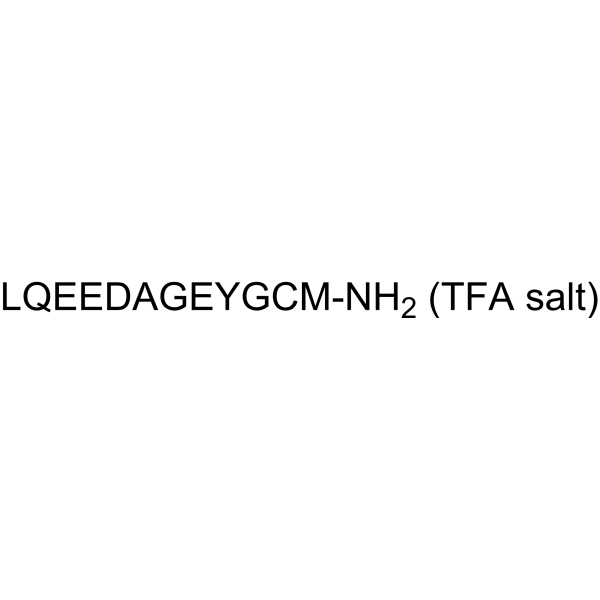
Nangibotide TFA (LR12 TFA) is a synthetic peptide and TREM-1 receptor inhibitor. Nangibotide TFA inhibits NF-κB and NLRP3 inflammasome activation and reduces the release of pro-inflammatory factors (such as IL-1β, IL-8). Nangibotide TFA inhibits Apoptosis. Nangibotide TFA reduces excessive inflammatory responses and protects tissues (liver, lung) from damage. Nangibotide TFA can be used in the researches for myocardial ischemia-reperfusion injury, septic shock, acute lung injury, osteoarthritis, and acute liver failure .
loading...
    loading...
3
3 Cited Publications
Cat. No.: HY-N1388
CAS No.: 104012-37-5
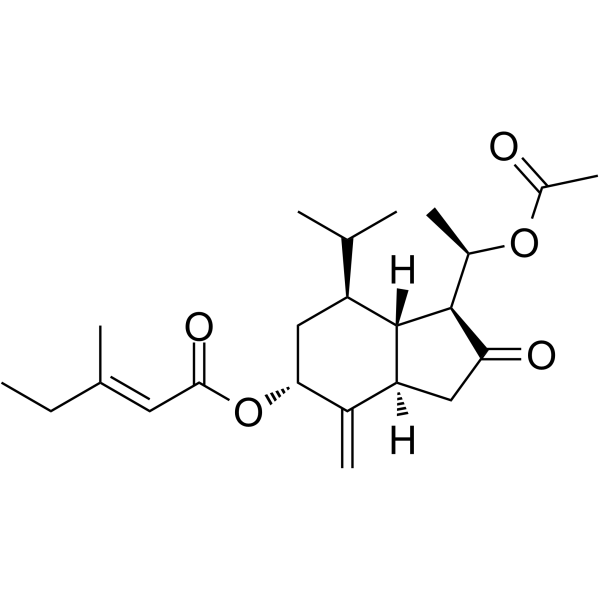
Tussilagone, a major active component in Tussilago farfara, has anti-inflammatory effect. Tussilagone ameliorates inflammatory responses in dextran sulphate sodium-induced murine colitis. Tussilagone inhibits the inflammatory response and improves survival in cecal ligation and puncture (CLP)-induced septic mice .
loading...
    loading...
Cat. No.: HY-103639A
CAS No.: 613263-00-6
Purity:  99.86%
Research Areas:  

Infection

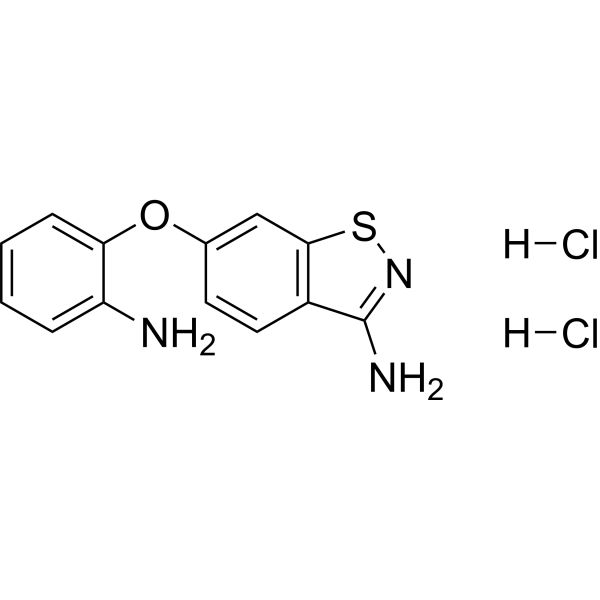
M62812 is a toll-like receptor 4 (TLR4) signaling inhibitor. M62812 inhibits endothelial and leukocyte activation and prevents lethal septic shock in mice. M62812 can reduces LPS-induced coagulation and inflammatory responses. M62812 can be used for the research of sepsis .
loading...
    loading...
Cat. No.: HY-W929472
CAS No.: 87984-82-5
13 (S)-HOTrE is an oxylipin metabolite of α-Linolenic acid (HY-N0728). 13 (S)-HOTrE mediates the inactivation of the NLRP3 inflammasome through the PPAR-γ pathway to exert anti-inflammatory effects. 13 (S)-HOTrE inhibits NF-κB nuclear translocation, ROS production, autophagy and IL-1β levels, induces apoptosis, and increases IL-10 levels. 13 (S)-HOTrE alleviates LPS-induced inflammatory responses in macrophages, prolongs the survival time of septic mice, and regulates the immunometabolic phenotype in parenteral nutrition mouse models. 13 (S)-HOTrE can be used in the research of immune and inflammation-related diseases .
loading...
    loading...
Cat. No.: HY-113919
CAS No.: 11023-94-2
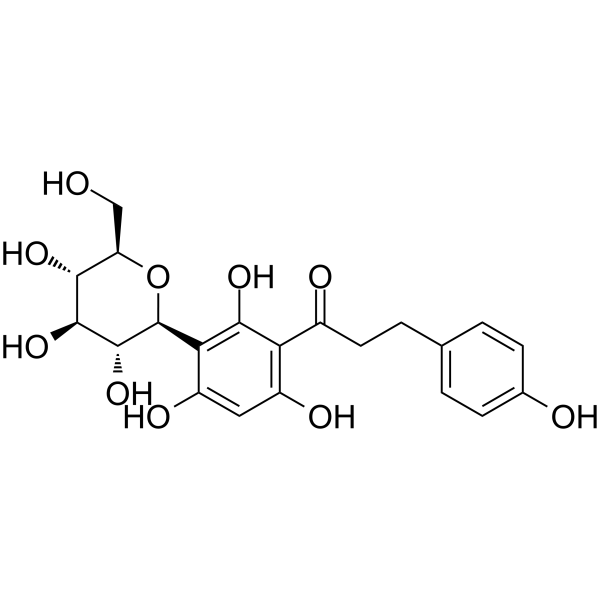
Nothofagin, a dihydrochalcone, is isolated from rooibos (Aspalathus linearis) . Nothofagin downregulates NF-κB translocation through blocking calcium influx. Nothofagin has antioxidant activity and ameliorates various inflammatory responses such as the septic response and vascular inflammation .
loading...
    loading...
Cat. No.: HY-111303
CAS No.: 848193-72-6
Target:  

Sirtuin

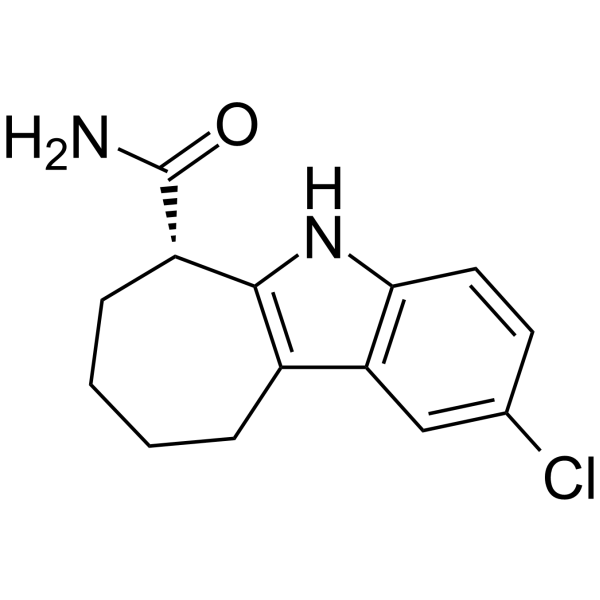
CHIC35, an analog of EX-527, is a potent and selective inhibitor of SIRT1 (IC50=0.124 μM). CHIC35 shows potential selective inhibition against SIRT1 over SIRT2 (IC50=2.8 μM) or SIRT3 (IC50>100 μM) . CHIC35 has anti-inflammatory effects and can be used for CHARGE syndrome research .
loading...
    loading...
Cat. No.: HY-N1388R
CAS No.: 104012-37-5
Tussilagone (Standard) is the analytical standard of Tussilagone. This product is intended for research and analytical applications. Tussilagone, a major active component in Tussilago farfara, has anti-inflammatory effect. Tussilagone ameliorates inflammatory responses in dextran sulphate sodium-induced murine colitis. Tussilagone inhibits the inflammatory response and improves survival in cecal ligation and puncture (CLP)-induced septic mice .
loading...
    loading...
Cat. No.: HY-153452
CAS No.: 2455424-51-6
Target:  

PCSK9

Research Areas:  

Cardiovascular Disease

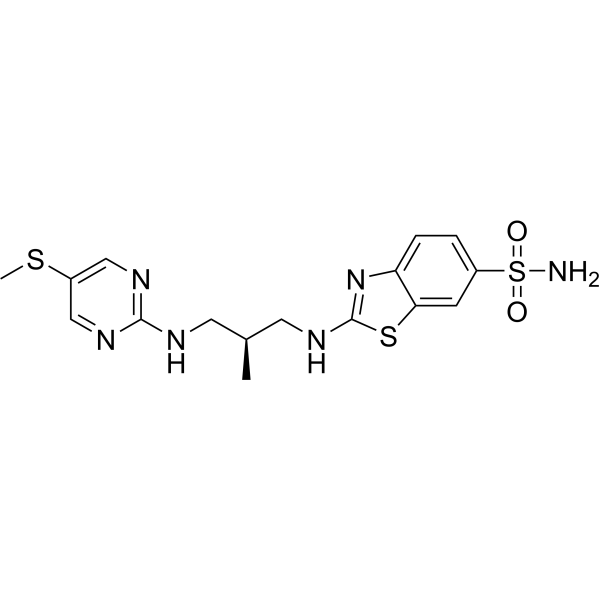
PCSK9-IN-16 is a potent PCSK9 inhibitor. PCSK9-IN-16 is extracted from patent WO2020150474, example 87, has the potential for hypercholesterolemia and other cardiovascular diseases research .
loading...
    loading...
Cat. No.: HY-176466
CAS No.: 143484-41-7
ST-899 is a novel platelet-activating factor (PAF) receptor antagonist. ST-899 can significantly reduce the mortality of mice with endotoxin (LPS)-induced shock. ST-899 can significantly inhibit the increase in serum tumor necrosis factor (TNF) levels induced by LPS, but has no effect on interleukin-6 (IL-6). The regulatory mechanism of ST-899 is to block the positive feedback loop between PAF and TNF, thereby reducing the inflammatory response. ST-899 can be used to study inflammatory diseases such as septic shock .
loading...
    loading...
Cat. No.: HY-103639AR
CAS No.: 613263-00-6
Research Areas:  

Infection

M62812 (Standard) is the analytical standard of M62812 (HY-103639A). This product is intended for research and analytical applications. M62812 is a toll-like receptor 4 (TLR4) signaling inhibitor. M62812 inhibits endothelial and leukocyte activation and prevents lethal septic shock in mice. M62812 can reduces LPS-induced coagulation and inflammatory responses. M62812 can be used for the research of sepsis .
loading...
    loading...
Cat. No.: HY-L014
1,770 compounds

Nuclear factor-κB (NF-κB)/Rel proteins include NF-κB2 p52/p100, NF-κB1 p50/p105, c-Rel, RelA/p65, and RelB. These proteins function as dimeric transcription factors that regulate the expression of genes and influence a broad range of biological processes including innate and adaptive immunity, inflammation, stress responses, B-cell development, and lymphoid organogenesis. NF-κB plays a key role in regulating the immune response to infection. In addition, activation of the NF-κB pathway is involved in the pathogenesis of chronic inflammatory diseases, such as asthma, rheumatoid arthritis, and inflammatory bowel disease. Incorrect regulation of NF-κB has been linked to cancer, inflammatory and autoimmune diseases, septic shock, viral infection, and improper immune development.

MCE owns a unique collection of 1,770 small molecule compounds that can be used in the research of NF-κB signaling pathway or high throughput screening (HTS) related drug discovery.

  • 1

