



13(S)-HOTrE

Based on 1 Customer Validation
13 (S)-HOTrE is an oxylipin metabolite of α-Linolenic acid (HY-N0728). 13 (S)-HOTrE mediates the inactivation of the NLRP3 inflammasome through the PPAR-γ pathway to exert anti-inflammatory effects. 13 (S)-HOTrE inhibits NF-κB nuclear translocation, ROS production, autophagy and IL-1β levels, induces apoptosis, and increases IL-10 levels. 13 (S)-HOTrE alleviates LPS-induced inflammatory responses in macrophages, prolongs the survival time of septic mice, and regulates the immunometabolic phenotype in parenteral nutrition mouse models. 13 (S)-HOTrE can be used in the research of immune and inflammation-related diseases.
For research use only. We do not sell to patients.
- Purity : 99.9%
- CAS No.: 87984-82-5
- Formula: C18H30O3
- Molecular Weight:294.43
-
Storage:
Solution, -20°C, 2 years


To place orders, for customer services and technical support, please contact: MedChemExpress USA
Tel: 609-228-6898 E-mail: [email protected] [email protected]


-
 Biological Activity
-
Chemical Information
- Protocols
- Purity & Documentation
- References
-
 Help & FAQs


-
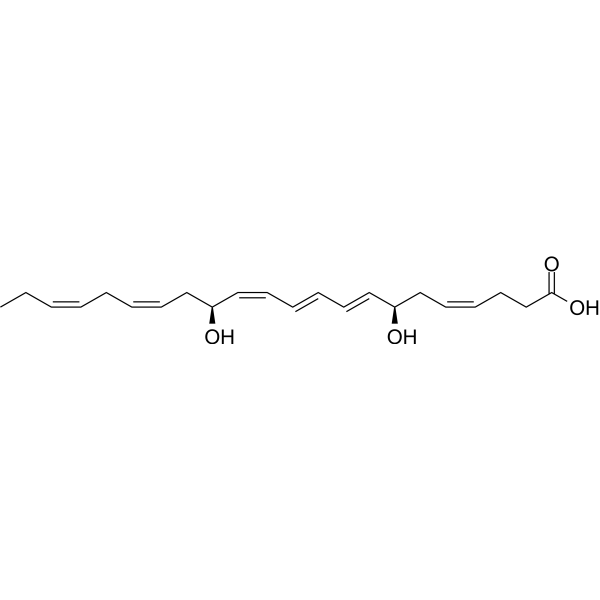
HY-116429
Maresin 1Ca2+ Stimulator -

HY-137310
4-Hydroxy atorvastatin hemicalciumAtorvastati metabolite -

HY-W011309A
1-O-Hexadecyl-sn-glycerolAlkyl Glycerol Monoether -
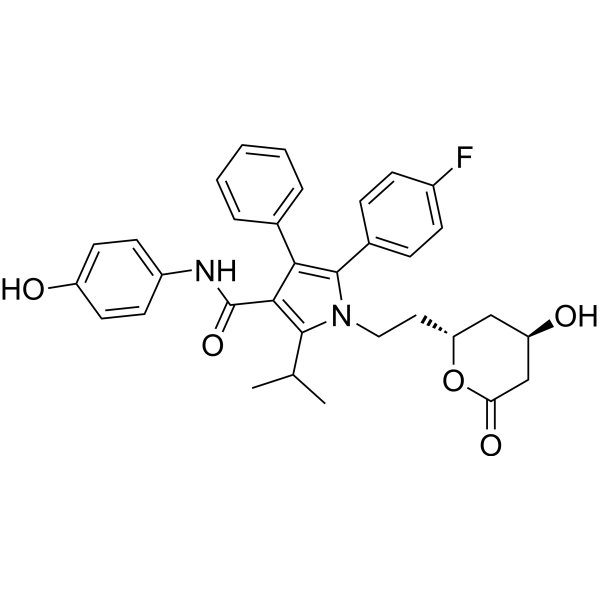
HY-126852
4-Hydroxy Atorvastatin lactoneAtorvastatin Metabolite -
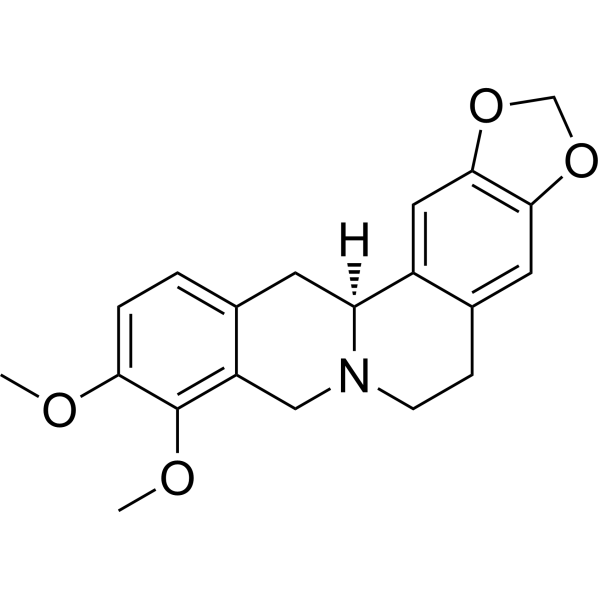
HY-N1418
(S)-(-)-TetrahydroberberineInsecticide -

HY-125394
9(R)-HODE cholesteryl ester -

HY-165875
13(R)-HODE Cholesteryl esterEster Product -

HY-123016
9(S)-HODE cholesteryl ester -
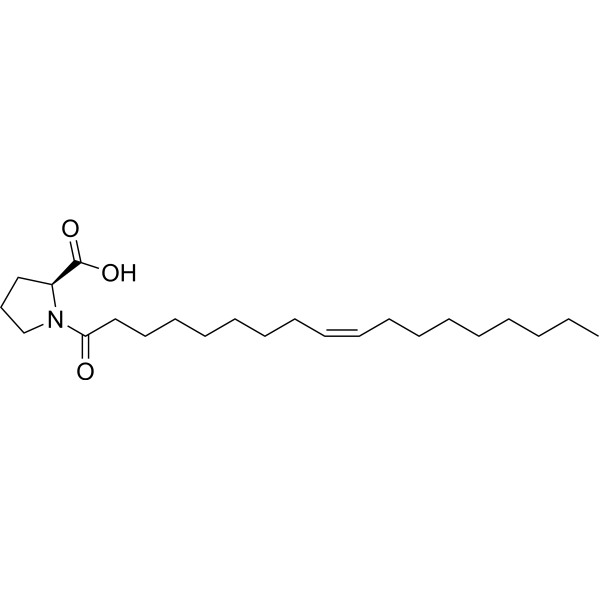
HY-115387
Oleoyl prolineN-acyl amine Compound -
HY-135245
Ezetimibe hydroxy glucuronideEzetimibe Metabolite
All Caspase Isoforms
More

Biological Activity
Description
IC50 & Target
[1]|
NF-κB |
PPAR-γ |
IL-1β |
IL-10 |
NLRP3 |
iNOS |
Caspase-1 |
TNF-α |
In Vitro
13(S)-HOTrE (1-100 μM; 3 h pre-incubation; 24 h LPS stimulation) reduces LPS-induced NO production in RAW 264.7 cells; inhibits the protein expression of iNOS, TNF-α and COX-2 in a dose-dependent manner; and decreases the transcriptional levels of NLRP3, caspase-1, IL-1β and IL-18 as well as IL-1β secretion in a dose-dependent manner[1].
13(S)-HOTrE (100 μM; 3 h pre-incubation; 16 h LPS stimulation) inhibits LPS-induced NF-κB nuclear translocation in RAW 264.7 cells at a pre-treatment dose of 100 μM[1].
MedChemExpress (MCE) has not independently confirmed the accuracy of these methods. They are for reference only.
-
Cell Line:RAW 264.7 mouse macrophage cells
-
Concentration:1, 10, 100, 200 μM
-
Incubation Time:24 h
-
Result:Reduced RAW 264.7 cell proliferation in a dose-dependent manner, with less cytotoxicity than 13(S)-HPOTrE.
Had an IC50 for reduction of cell proliferation greater than 200 μM at 24 hours.
-
Cell Line:LPS-stimulated RAW 264.7 mouse macrophage cells
-
Concentration:1, 5, 100 μM
-
Incubation Time:3 h pre-incubation; 24 h LPS stimulation
-
Result:Reduced LPS-induced iNOS and TNF-α protein expression in a dose-dependent manner. Enhanced LPS-induced COX-2 protein expression in a dose-dependent manner.
-
Cell Line:LPS-stimulated RAW 264.7 mouse macrophage cells
-
Concentration:100 μM
-
Incubation Time:3 h pre-incubation; 16 h LPS stimulation
-
Result:Reduced LPS-induced NF-κB translocation to the nucleus.
-
Cell Line:LPS-stimulated RAW 264.7 mouse macrophage cells
-
Concentration:1, 50, 100 μM
-
Incubation Time:3 h pre-incubation; 24 h LPS stimulation
-
Result:Reduced LPS-induced NLRP3, caspase-1, IL-1β, and IL-18 transcript levels in a dose-dependent manner.
-
Cell Line:LPS-stimulated RAW 264.7 mouse macrophage cells
-
Concentration:1, 50, 100 μM
-
Incubation Time:3 h pre-incubation; 24 h LPS stimulation
-
Result:Reduced LPS-induced IL-1β levels by 23% in a dose-dependent manner at 100 μM pre-treatment.
-
Cell Line:LPS-stimulated RAW 264.7 mouse macrophage cells
-
Concentration:100 μM
-
Incubation Time:3 h pre-incubation; 24 h LPS stimulation
-
Result:Inactivated the NLRP3 inflammasome and downregulated caspase-1 expression; this effect was reversed by co-incubation with 10 μM GW9662 (HY-16578), a PPAR-γ antagonist.
In Vivo
MedChemExpress (MCE) has not independently confirmed the accuracy of these methods. They are for reference only.
-
Animal Model:BALB/c (male, 4-week old, 20-25 g, endotoxin-mediated septic shock model via intraperitoneal LPS injection)[1]
-
Dosage:0.1 mg/kg
-
Administration:i.p.; two doses (1 hour prior to LPS injection, immediately after LPS injection)
-
Result:Increased survival rate by 10% compared to LPS-only treated mice.
-
Animal Model:BALB/c (male, 20-25 g, polymicrobial sepsis model via cecal ligation and puncture surgery)[1]
-
Dosage:0.1 mg/kg
-
Administration:i.p.; two doses (1 hour prior to CLP surgery, immediately after CLP surgery)
-
Result:Reduced iNOS and NLRP3 protein expression in mouse tissue.
Decreased pro-inflammatory IL-1β levels in serum and liver tissue.
Increased anti-inflammatory IL-10 levels in serum, compared to CLP-only mice.
- Cytoplasmic-Nuclear Fractionated Protein Extraction
- Detection of Apoptosis
- TUNEL staining for apoptotic DNA fragmentation
- Annexin V plus membrane-impermeant dye apoptosis staining
- ROS/oxidative-stress fluorescent staining
- Autophagy
- Apoptosis Solutions
- Research Protocol for Inflammation-related Diseases
- Lysosome and acidic-vesicle live-cell staining
- Macroautophagy Solutions
- Pyroptosis Solutions


Chemical Information
-
CAS No. 87984-82-5
-
Appearance Liquid
-
Molecular Weight 294.43
-
Formula C18H30O3
-
SMILES
OC(CCCCCCC/C=C\C=C\[C@@H](O)C/C=C\CC)=O
-
Shipping
Room temperature in continental US; may vary elsewhere.
-
Storage
Solution, -20°C, 2 years


Purity & Documentation
-
Data Sheet (274 KB)
-
SDS (252 KB)
- English - EN (252 KB)
- Français - FR (252 KB)
- Deutsch - DE (252 KB)
- Norwegian - NO (252 KB)
- Español - ES (252 KB)
- Swedish - SV (252 KB)
- Italian - IT (252 KB)
- Korean - KR (252 KB)
- Portuguese - PT (252 KB)
-
Handling Instructions (2659 KB)
References
[1]. Kumar N, et al. 15-Lipoxygenase metabolites of α-linolenic acid, [13-(S)-HPOTrE and 13-(S)-HOTrE], mediate anti-inflammatory effects by inactivating NLRP3 inflammasome. Scientific reports. 2016 Aug 18;6:31649. [Content Brief]
[2]. Cambiaggi L, et al. The Role of α-Linolenic Acid and Its Oxylipins in Human Cardiovascular Diseases. International journal of molecular sciences. 2023 Mar 24;24(7):6110. [Content Brief]

Calculators
Concentration (start) × Volume (start) = Concentration (final) × Volume (final)


13(S)-HOTrE Related Classifications
HY-W929472 Related Classifications
 Powered by Bioz