10 Results for "

serpins

" in MedChemExpress (MCE) Product Catalog:
Products (10)

10 Results for "serpins" in MCE Product Catalog:

1
1 Cited Publications
Cat. No.: HY-33299
CAS No.: 154235-77-5
Synonyms: BTCA
Research Areas:  

Cancer

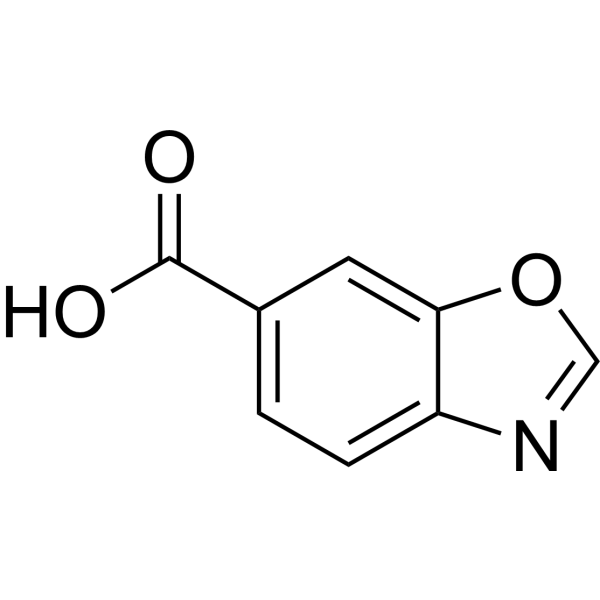
Serpin B9-IN-1 (BTCA) is an inhibitor that specifically targets Serpin B9 (SB9); SB9 is a natural inhibitor of granzyme B (GrB) , but may promote the metastasis of lung cancer cells into the bone marrow. SB9-overexpressing cancer cells promote proliferation and metastasis in an immune cell-dependent manner by binding to GrB. Inhibition of SB9 by Serpin B9-IN-1 significantly inhibits immunotherapy of lung cancer bone metastases in the caudal artery (CA) mouse model (LCBM) .
loading...
    loading...
Cat. No.: HY-E70194
CAS No.: 137010-42-5
Synonyms: V8 protease; Glu-C
Target:  

Ser/Thr Protease

Research Areas:  

Others

Endoproteinase Glu-C (MS grade) is a serine proteinase. Endoproteinase GluC is able to hydrolyze some serpins and all classes of mammalian immunoglobulins .
loading...
    loading...
Cat. No.: HY-P991422
Synonyms: DS9231; TS-23; CSL-301

Target:  

PAI-1

Stromab (DS9231) is a human IgG1 monoclonal antibody (mAb) targeting Serpin F2. Recommended isotype control: Human IgG1 kappa, Isotype Control (HY-P99001) .
loading...
    loading...
Cat. No.: HY-14759
CAS No.: 481629-87-2
Purity:  99.59%
Synonyms: PAZ-417
Target:  

PAI-1 Amyloid-β

Research Areas:  

Neurological Disease

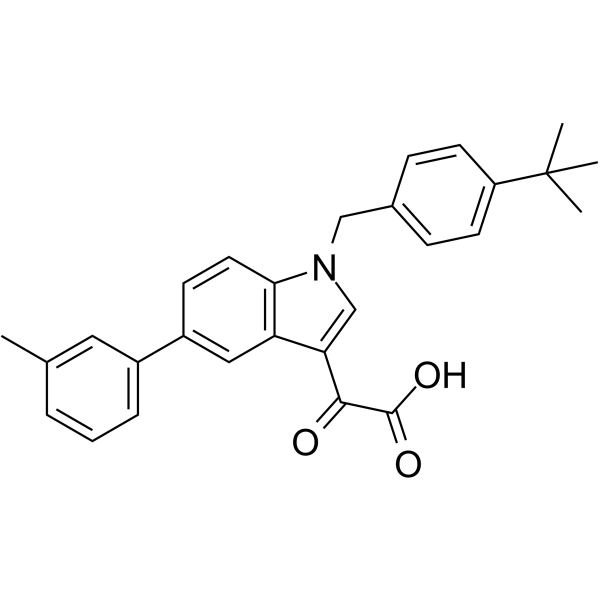
Aleplastinin (PAZ-417) is an orally active, blood-brain barrier permeable, selective SERPINE1 (PAI-1) inhibitor (IC50=655 nM). Aleplastinin activates the tissue type plasminogen activator (tPA)/fibrinolysis cascade by inhibiting PAI-1, thereby promoting the degradation of amyloid-β (Aβ) oligomers and monomers. Aleplastinin can significantly reduce plasma and brain Aβ levels, improve memory impairment, and reverse cognitive impairment. Aleplastinin can be used for research on Alzheimer's disease .
loading...
    loading...
Cat. No.: HY-150514
CAS No.: 1381459-14-8
Purity:  99.34%
Target:  

Prion Protein

Research Areas:  

Infection

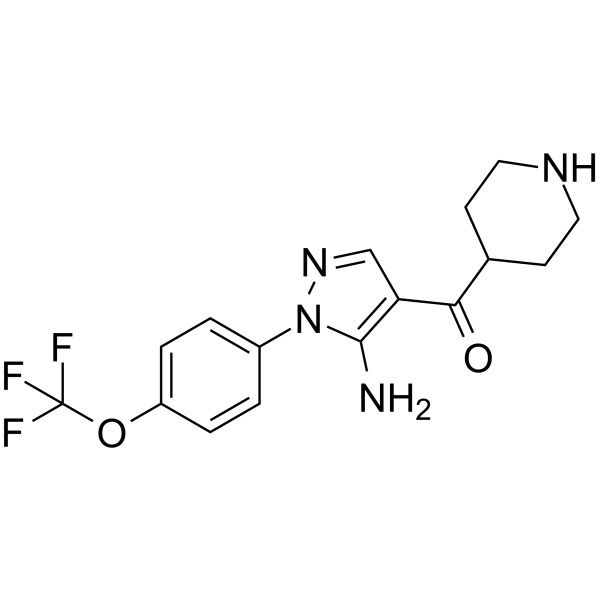
ARN1468 (compound 5) is an orally active and potent SerpinA3n inhibitor. ARN1468 can inhibit serpins activity would set the protease free to further reduce prion accumulation. ARN1468 shows anti-prion effect in ScGT1 RML, ScGT1 22L, ScN2a RML, and ScN2a 22L cell lines, with EC50 values of 8.64, 19.3, 11.2, and 6.27 μM .
loading...
    loading...
Cat. No.: HY-P991629

Target:  

Ser/Thr Protease

Research Areas:  

Inflammation/Immunology

C1 Esterase Inhibitor (Human) is a C1 Esterase inhibitor derived from human plasma. C1 Esterase Inhibitor (Human), a glycoprotein, is a serum protease inhibitor (serpin) that binds covalently and inactivates C1r, C1s, and mannan-binding protein-associated proteases (MASPs). C1 Esterase Inhibitor (Human) has anti-inflammatory effects. C1 Esterase Inhibitor (Human) can be used to prevent angioedema attacks associated with hereditary angioedema .
loading...
    loading...
Cat. No.: HY-134858
CAS No.: 2406205-61-4
Purity:  99.77%
Synonyms: A1AT modulator 1
Target:  

Serpin Ser/Thr Protease

Research Areas:  

Metabolic Disease

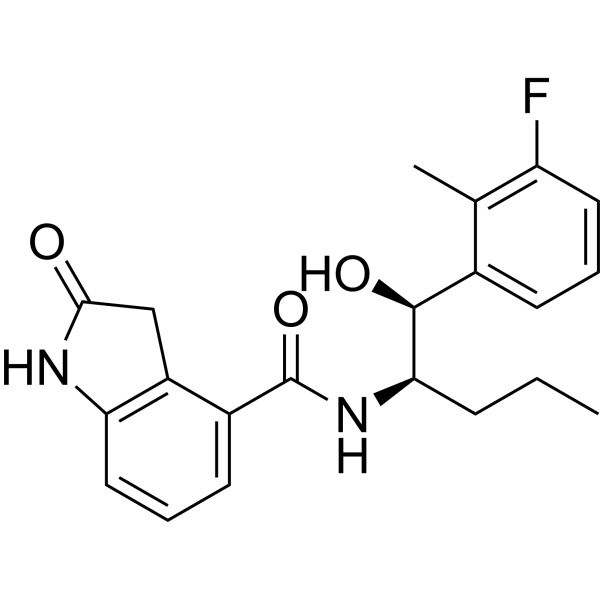
GSK716 (A1AT modulator 1) is an orally active Z α1-antitrypsin (Z-A1AT) inhibitor with a pIC50 of 8.3. GSK716 binds a cryptic Z α1-antitrypsin pocket, stabilizes monomeric folding intermediates, blocks polymerization, and increases monomer secretion. GSK716 acts on select sensitive α1-antitrypsin variants but fails to affect resistant variants. GSK716 can be used for the research of α1-antitrypsin deficiency and α1-antitrypsin deficiency-associated liver disease .
loading...
    loading...
Cat. No.: HY-174484
Target:  

mRNA

Research Areas:  

Others

OVA mRNA (5moU) encodes the ovalbumin (OVA) protein, a member of the serpin superfamily and the predominant glycoprotein found in egg whites. It is a commonly used antigen for immunization and biochemical studies and is an established model allergen for airway hyper-responsiveness.
loading...
    loading...
Cat. No.: HY-P11413
CAS No.: 139446-70-1
PAI-1 is a serine protease inhibitor (SERPIN). PAI-1 binds to and irreversibly inhibits uPA, tPA and furin; it also interacts with vitronectin, α1-acid glycoprotein, CRT, TLR4, proteasome α-3 subunit, uPAR, LRP1, Integrin αvβ3 and thrombin. PAI-1 regulates fibrinolysis, extracellular matrix turnover, cell migration, angiogenesis, inflammatory response and tissue remodeling; it mediates epithelial-mesenchymal transition (EMT)/endothelial-mesenchymal transition (EndMT), apoptosis and thrombus stabilization. PAI-1 can be used in research related to sepsis, acute lung injury, cardiovascular diseases, tissue fibrosis, diabetic nephropathy, obstructive nephropathy and non-insulin-dependent diabetes mellitus .
loading...
    loading...
Cat. No.: HY-174540
Target:  

mRNA

Research Areas:  

Cancer

Human SERPINA1 mRNA encodes the human serpin family A member 1 (SERPINA1) protein, a serine protease inhibitor belonging to the serpin superfamily. SERPINA1’s major physiological function is the protection of the lower respiratory tract against proteolytic destruction by human leukocyte elastase (HLE).
loading...
    loading...

