
1. Search Result
Search Result
Results for "

spheroid formation

" in MedChemExpress (MCE) Product Catalog:

14

Inhibitors & Agonists

1

Inhibitory Antibodies

Cat. No. Product Name Target Research Areas Chemical Structure
  • HY-15372
    GW6471
    Maximum Cited Publications
    70 Publications Verification

    PPAR Apoptosis Cancer
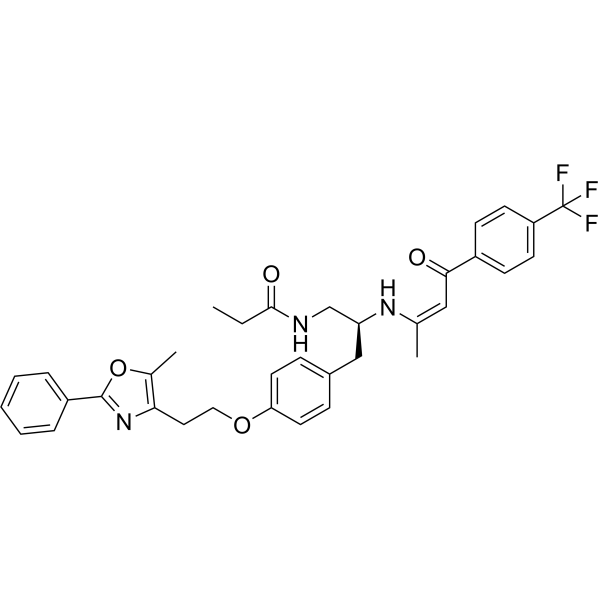
    GW6471 is a selective peroxisome proliferator-activated receptor α (PPARα) antagonist. GW6471 reduces cancer stem cell viability, proliferation, and spheroid formation. GW6471 induces apoptosis and causes metabolic impairment including energy imbalance. GW6471 can be used for the research of paragangliomas and triple-negative breast cancer .
    GW6471
  • HY-18768
    NCT-501
    5 Publications Verification

    Aldehyde Dehydrogenase (ALDH) Akt β-catenin Necroptosis Cancer
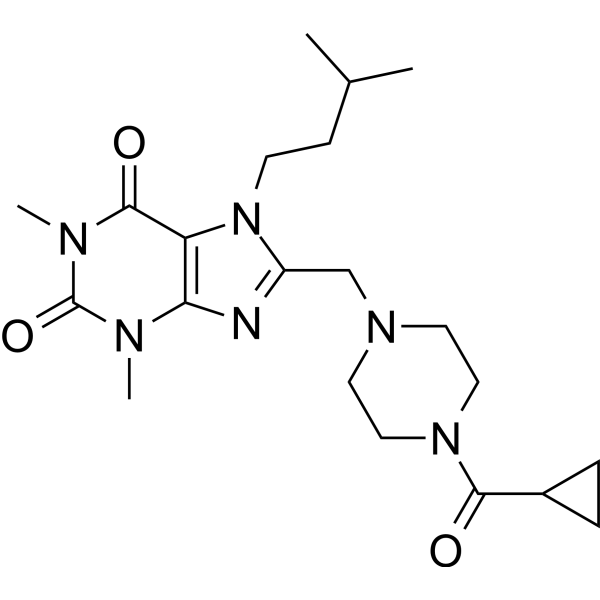
    NCT-501 is a reversible, non-competitive, selective, blood-brain barrier-permeable ALDH1A1 inhibitor with an IC50 of 40 nM. NCT-501 inhibits the AKT-β-catenin signaling pathway, induces necroptosis in nasopharyngeal carcinoma cells, suppresses their proliferation and inhibits stem cell spheroid formation. NCT-501 can be used in research related to nasopharyngeal carcinoma, esophageal squamous cell carcinoma and malignant tumors .
    NCT-501
  • HY-P99828

    PF-06523435; hu24

    ADC Antibody RET PERK ROR Cancer
    Cofetuzumab (PF-06523435) is a humanized IgG1-κ monoclonal antibody targeting PTK7. The expression system of Cofetuzumab is typically CHO (Chinese hamster ovary) cells. Cofetuzumab downregulates PTK7 expression, modulates its downstream signaling pathways, and inhibits tumor sphere formation of ovarian cancer cells. Cofetuzumab can be used to synthesize the ADC molecule Cofetuzumab pelidotin (HY-P99829). Cofetuzumab is applicable to the research of tumors such as ovarian cancer .
    Cofetuzumab
  • HY-176761

    Apoptosis Autophagy Caspase mTOR Cancer
    NSC647889 is an apoptosis and autophagy inducer. NSC647889 induces apoptosis, inhibits mTOR pathway and abrogates DNA synthesis. NSC647889 triggers LC3-positive vesicle formation, modulates AKT and 4EBP1 phosphorylation and shows heightened caspase-3 activation in multicellular spheroids. NSC647889 can be used for the research of solid cancer tumour, head-neck carcinoma, and colorectal cancer .
    NSC647889
  • HY-168437

    MicroRNA Cancer
    LIN28-IN-2 is a Lin28 inhibitor with activity against Lin28a, Lin28b, and their zinc knuckle domain. LIN28-IN-2 blocks Lin28-RNA substrate binding, perturbs zinc knuckle domain conformation. LIN28-IN-2 inhibits cancer cell proliferation, spheroid growth, and induces G2/M phase arrest. LIN28-IN-2 suppresses cancer stem cell phenotypes, Lin28-mediated stress granule formation, let-7 target genes, cancer stem cell biomarkers, and neuroendocrine biomarkers expression in cancer cells. LIN28-IN-2 can be used for the research of cancer .
    LIN28-IN-2
  • HY-152159

    Cytochrome P450 Cancer
    CYP4Z1-IN-1 (compound 7c) is a potent CYP4Z1 inhibitor, with an IC50 of 41.8 nM. CYP4Z1-IN-1 decreases the expression of breast CSCs stemness markers, spheroid formation, and metastatic ability as well as tumor-initiation capability in a concentration-dependent manner in vitro and in vivo .
    CYP4Z1-IN-1
  • HY-122844B

    BI-853520 tosylate; IN-10018 tosylate

    FAK Cancer
    Ifebemtinib (tosylate) (BI-853520 (tosylate); IN-10018 (tosylate)) is a highly selective PTK2 kinase inhibitor. Ifebemtinib (tosylate) demonstrates anti-tumor activity. Ifebemtinib (tosylate) inhibits FAK autophosphorylation in prostate carcinoma cells. Ifebemtinib (tosylate) can inhibit spheroid formation and orthotopic tumor growth in vivo. Ifebemtinib (tosylate) can be studied in anticancer research such as solid tumors, breast cancer, and malignant pleural mesothelioma .
    Ifebemtinib tosylate
  • HY-147706

    Others Cancer
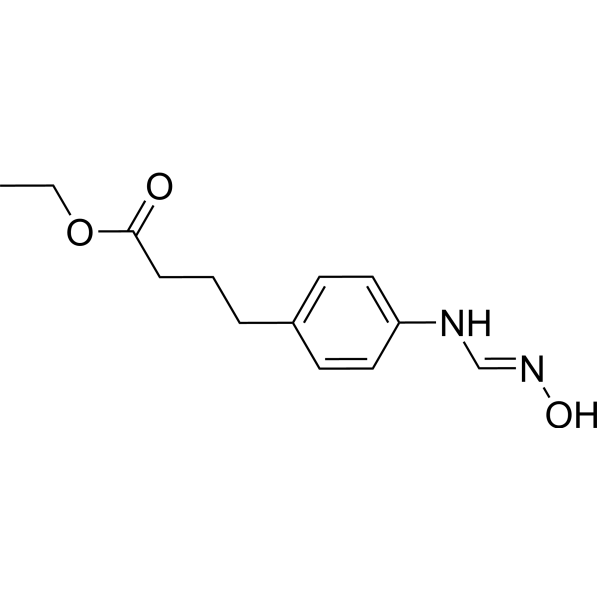
    Ar524 has higher inhibitory activity than the known transgenic inhibitor kifunensine. At the same time, ar524 inhibited low concentration (10 μ M) Spheroid formation of human malignant cells.
    AR524
  • HY-161661

    Caspase Cancer
    Anticancer agent 223 (Compound V-d) is an anticancer agent that triggers cell death through caspase-dependent and caspase-independent mechanisms. Anticancer agent 223 inhibits tumor spheroid formation and resensitizes cisplatin (HY-17394)-resistant A2780 cells to cisplatin (HY-17394) treatment .
    Anticancer agent 223
  • HY-155974
    MeOIstPyrd
    1 Publications Verification

    MDM-2/p53 Cancer
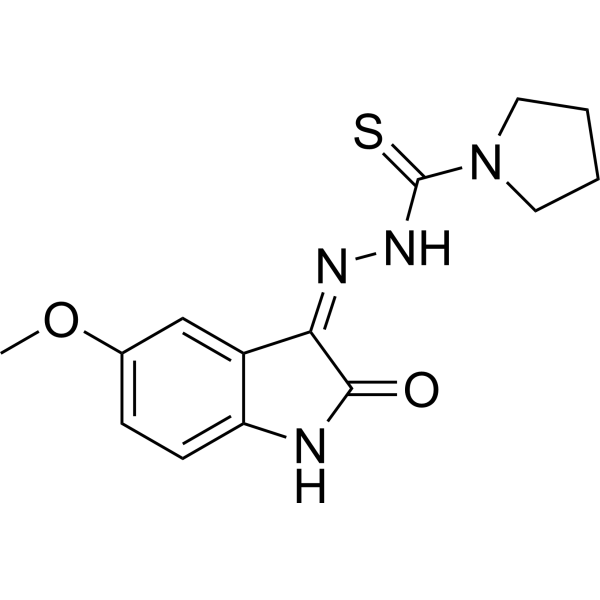
    MeOIstPyrd is an anti-skin cancer agent. MeOIstPyrd inhibits cell proliferation, migration, and spheroid formation by activating the mitochondrial intrinsic apoptotic pathway. MeOIstPyrd induces DNA damage. MeOIstPyrd activates p53, and increases the half-life of p53 and stabilizes p53 by phosphorylating it at ser15. MeOIstPyrd binds to MDM2 in the p53 sub-pocket and blocks p53-MDM2 interaction .
    MeOIstPyrd
  • HY-178921

    Drug Derivative Apoptosis Cancer
    HJ-4 is a Piperine (HY-N0144) derivative. HJ-4 potently inhibits the proliferation of CRC cells by dose-dependently reducing colony formation and DNA synthesis. HJ-4 markedly suppresses the adhesion, migration, invasion and induces apoptosis of CRC cells. HJ-4 demonstrates anti-tumor efficacy in chicken embryo chorioallantoic membrane (CAM) model implanted with HCT116/SW480 tumor spheroids. HJ-4 can be used for the study of colorectal cancer (CRC) .
    HJ-4
  • HY-159580

    STAT Cancer
    STAT3-IN-31 (compound K2071) is a STATtic-derived STAT3 and mitotic inhibitor. STAT3-IN-31 blocks mitotic progression and affects the formation of mitotic spindles. STAT3-IN-31 also affects glioblastoma cell migration and inhibits cell proliferation in tumor spheroids. STAT3-IN-31 is also able to induce glioblastoma senescence, inhibit the growth of Temozolomide (HY-17364)-resistant cells and the secretion of the pro-inflammatory cytokine monocyte chemoattractant protein MCP-1 .
    STAT3-IN-31
  • HY-173007

    Akt PI3K Anaplastic lymphoma kinase (ALK) CDK Apoptosis Mitochondrial Metabolism Cancer
    ALK/PI3K/AKT-IN-1 (Compound 45) inhibits the proliferation of cancer cell A549, H1975 and PC9 with an IC50 of 0.44, 0.83 and 1.51 μM. ALK/PI3K/AKT-IN-1 increases the expression of p21 and p27, inhibits the activity of CDK2 and p-Rb, arrests the cell cycle at G1 phase. ALK/PI3K/AKT-IN-1 inhibits the ALK/PI3K/AKT signaling pathway, promotes the depolarization of mitochondrial membrane potential, and inducing apoptosis in A549 cell. ALK/PI3K/AKT-IN-1 inhibits the formation and growth of A549 cell spheroids .
    ALK/PI3K/AKT-IN-1
  • HY-183765

    PARP Pyruvate Kinase Cancer
    PARP1/PKM2-IN-1 is a dual PARP1/PKM2 inhibitor, with an IC50 of 39.5 nM against PARP1, and IC50 values of 261 nM (recombinant PKM2) and 50 nM (dimeric PKM2) against PKM2. PARP1/PKM2-IN-1 reduces the dimerization of PKM2 and decreases its nuclear accumulation level. PARP1/PKM2-IN-1 also selectively downregulates PKM2 mRNA and impairs poly (ADP-ribose)-mediated nuclear retention of PKM2. PARP1/PKM2-IN-1 exhibits antiproliferative activity and inhibits the formation of 3D cancer spheroids. PARP1/PKM2-IN-1 can be used in research related to mammary adenocarcinoma, triple-negative breast cancer, BRCA1-mutant triple-negative breast cancer, and prostate adenocarcinoma .
    PARP1/PKM2-IN-1

Inquiry Online

Your information is safe with us. * Required Fields.

Salutation


Country or Region *

Applicant Name *


Organization Name *

Department *


Email Address *


Product Name *

Cat. No.


Requested quantity *

Phone Number *


Remarks

Inquiry Online

Inquiry Information

Product Name:
Cat. No.:
Quantity:
MCE Japan Authorized Agent:

