1. Search Result
Search Result
Results for "

supramolecular

" in MedChemExpress (MCE) Product Catalog:

23

Inhibitors & Agonists

2

Biochemical Assay Reagents

4

Peptides

2

Natural
Products

1

Isotope-Labeled Compounds

3

Oligonucleotides

Cat. No. Product Name Target Research Areas Chemical Structure
  • HY-W017289

    Drug Intermediate Others
    4,4′-Dipyridyl is a heterocyclic compound. 4,4′-Dipyridyl is utilized as an electronic and photosensitive building block and bidentate ligand in supramolecular chemistry. 4,4′-Dipyridyl can also be used as a drug intermediate in the synthesis of paraquat, a widely used herbicide .
    4,4′-Dipyridyl
  • HY-103656

    TPP; Tetraphenylporphine; meso-Tetraphenylporphyrin

    MOFs Cancer
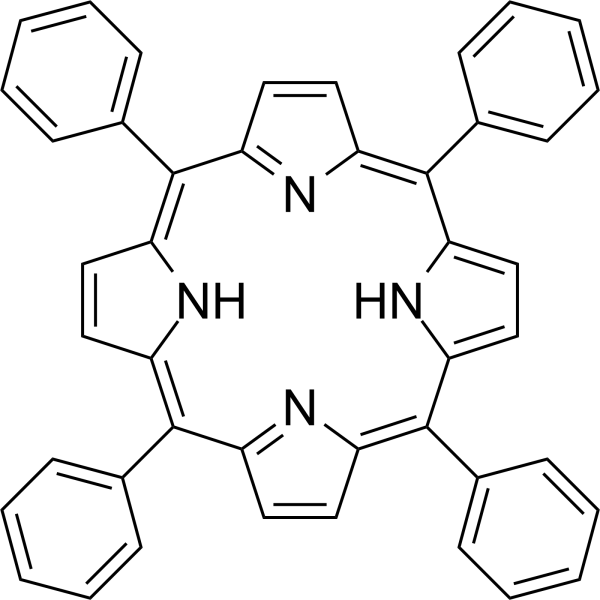
    Tetraphenylporphyrin (TPP) is a symmetrically substituted porphyrin-based heterocyclic compound and used as a structural block for supramolecular synthesis. Tetraphenylporphyrin derivatives can be used for cancer research .
    Tetraphenylporphyrin
  • HY-103689

    Biochemical Assay Reagents Others
    Cucurbit[8]uril is a potent, low toxicity and orally active supramolecular inducer of protein heterodimerization. Cucurbit[8]uril induces heterodimerization of methylviologen and naphthalene functionalized proteins. Cucurbit[8]uril can induce energy transfer .
    Cucurbit[8]uril
  • HY-W105804
    Selenocystamine dihydrochloride
    1 Publications Verification

    Amino Acid Derivatives Drug Intermediate Others
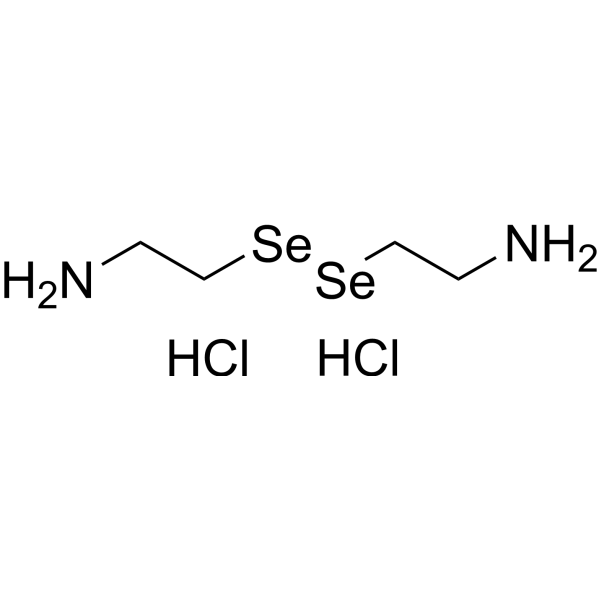
    Selenocystamine dihydrochloride is a selenocysteine derivative that can be used in the synthesis of other active compounds. Selenocystamine dihydrochloride can also induce the aggregation of amphiphilic p-sulfonatocalixarene to form supramolecular nanoparticles .
    Selenocystamine dihydrochloride
  • HY-144013H

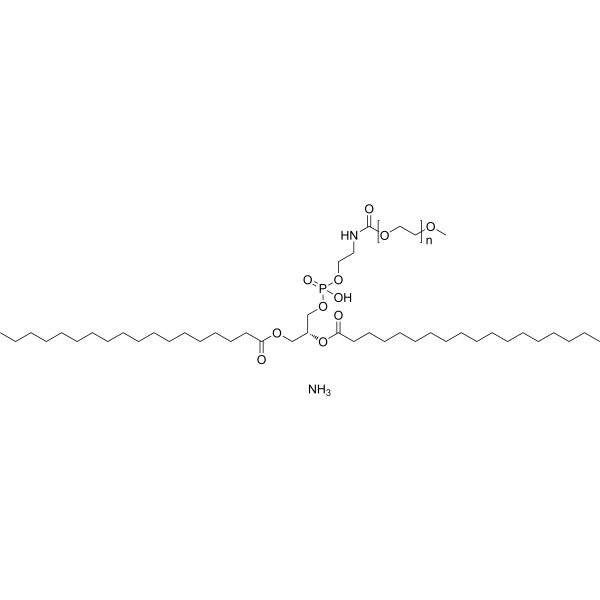
    DSPE-mPEG5000 ammonium; 1,2-Distearoyl-sn-glycero-3-phosphoethanolamine-N-[methoxy(polyethylene glycol)-5000] ammonium

    Liposome Cancer
    18:0 mPEG5000 PE (DSPE-mPEG5000) ammonium is a kind of amphiphilic polymer material. 18:0 mPEG5000 PE ammonium combines hydrophobic lipids (18:0 stearic acid chain) with hydrophilic polyethylene glycol (5 kDa) chains to form amphiphilic molecules, which are used to construct stable liposomes/nanoparticles, thereby enhancing drug delivery, prolonging circulation time, and achieving targeted effects through its functional terminal groups (usually biotin or carboxyl groups). 18:0 mPEG5000 PE ammonium can be used for the research of nanoprobes and drug delivery .
    18:0 mPEG5000 PE ammonium
  • HY-W022255

    D-Fmoc-glutamic acid

    Amino Acid Derivatives Others
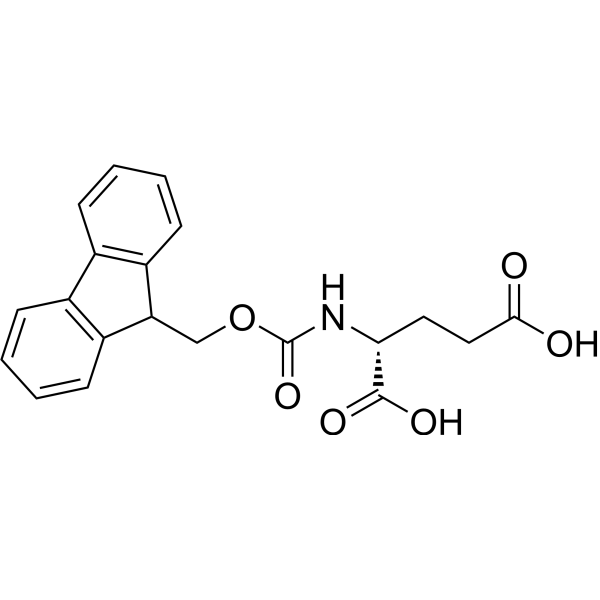
    Fmoc-D-Glu-OH (D-Fmoc-glutamic acid) is a derivative of glutamate, can be used to prepare supramolecular hydrogels .
    Fmoc-D-Glu-OH
  • HY-138130

    Nucleoside Antimetabolite/Analog Infection
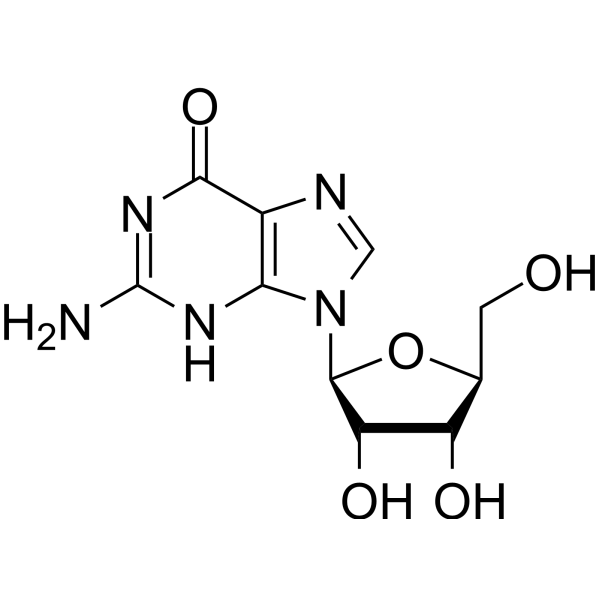
    L-Guanosine is the L-configuration of Guanosine (HY-N0097). L-Guanosine is a purine nucleoside with anti-herpesvirus activity. L-Guanosine can be used to prepare supramolecular hydrogel .
    L-Guanosine
  • HY-W127820

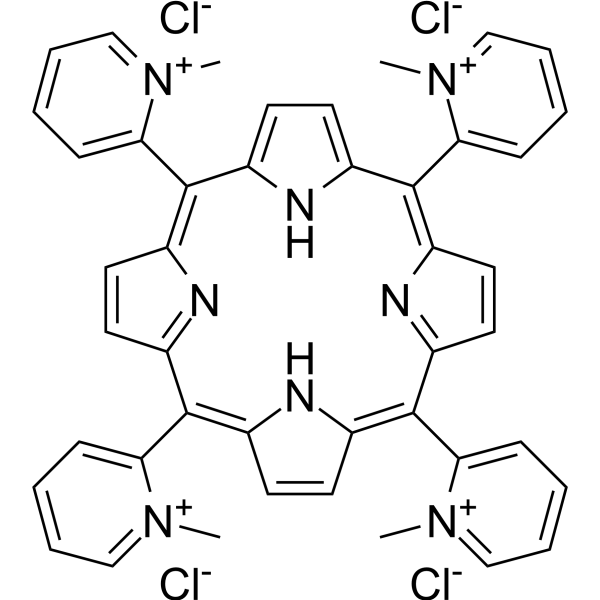
    Tetrakis(2-N-methylpyridyl)porphine chloride

    Biochemical Assay Reagents Fluorescent Dye Others
    H2TMpyP-2 (tetrakis(2-N-methylpyridyl)porphine) chloride is an active photosensitizer with strong absorption properties in the visible to near-infrared region and excellent singlet oxygen quantum yield. Captisol-TMPyP complexes can be used in supramolecular nanosynthesis to increase singlet oxygen production, improve photostability and better photosensitization, and support photodynamic therapy activity. The Captisol:TMPyP complex also exhibited antibacterial activity against Escherichia coli and was cytotoxic against lung cancer A549 cells .
    H2TMpyP-2 chloride
  • HY-W017289S

    Isotope-Labeled Compounds Drug Intermediate Others
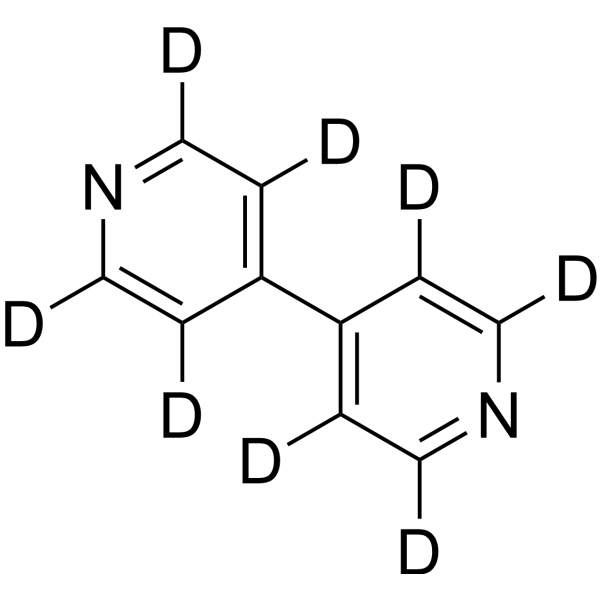
    4,4′-Dipyridyl-d8 is the deuterium labeled 4,4'-Dipyridyl (HY-017289). 4,4′-Dipyridyl is a heterocyclic compound. 4,4′-Dipyridyl is utilized as an electronic and photosensitive building block and bidentate ligand in supramolecular chemistry. 4,4′-Dipyridyl can also be used as a drug intermediate in the synthesis of paraquat, a widely used herbicide.
    4,4′-Dipyridyl-d8
  • HY-172533

    STING Cancer
    3’,5’-DiOA-dC is a hydrophobic nucleotide lipid and a ligand for the STING agonist c-di-GMP (CDG). 3’,5’-DiOA-dC can assemble with CDG and form stable cyclic dinucleotide nanoparticles via various supramolecular forces driven by molecular recognition. 3’,5’-DiOA-dC can decrease tumor weight and volume, increase CD8 T cell, neutrophils as well as NK cell counts in tumor microenvironment in combination with CDG. 3’,5’-DiOA-dC also increases the levels of TNF-α and IFN-γ in murine melanoma model .
    3′,5′-DiOA-dC
  • HY-P10678

    Biochemical Assay Reagents Others
    d-KYFIL is a peptide-based biomaterial that can be used for stereocomplexation and can be used to study the regulation of supramolecular assembly of hydrogel biomaterials .
    d-KYFIL
  • HY-177324

    Bacterial Infection Neurological Disease Cancer
    Antibacterial agent 290 (Compound YY), a sulfonamide derivative, is an antibacterial agent. Antibacterial agent 290 has antiproliferative activity against a variety of tumor cells. Antibacterial agent 290 significantly activates the E3 Ligase Parkin auto-ubiquitinvlation with an EC50 of 0.4 μM. Antibacterial agent 290 can used for synthesis of building blocks for various supramolecular structures such as metal-organic skeletons and coordination polymers. Antibacterial agent 290 can be used for cancers, neurology disorders and infections research .
    Antibacterial agent 290
  • HY-168886

    c-Myc Cancer
    Anticancer agent 263 (compound 7) is a potent anticancer agent. Anticancer agent 263 binds to the G-quadruplex DNA (G4) sequence 22-mer Pu22, a mimic of c-Myc DNA. Anticancer agent 263 is a structure modulator, showcasing a significant enhancement in protein α-helix formation and the capability to form supramolecular network. Anticancer agent 263 shows no cytotoxicity .
    Anticancer agent 263
  • HY-155060

    Bacterial DNA/RNA Synthesis Infection
    Antibacterial agent 144 (compound 8e) is an antibacterial agent,with better effect against multi-resistant Staphylococcus aureus than Chloromycin and Amoxicillin (HY-B0467A). Antibacterial agent 144 destroys the cytoplasmic membrane of bacteria,and inhibits the biofilms formation. Antibacterial agent 144 binds to HSA (Kd=13.2 μM),and exerts bactericidal efficacy. Antibacterial agent 144 also binds with DNA to for supramolecular complex to obstruct DNA replications .
    Antibacterial agent 144
  • HY-179320

    Biochemical Assay Reagents Others
    mPEG-Amide-tri(DPCA) is a PEG-DPCA conjugate that can self-assemble into a supramolecular polymer hydrogel with nanofiber structures. mPEG-Amide-tri(DPCA) supramolecular polymer hydrogel exhibits shear-thinning behavior for injectable delivery, high drug loading, and degrades in vivo to release only DPCA and PEG. mPEG-Amide-tri(DPCA) supramolecular polymer hydrogel induces in vivo earhole regeneration in adult non-healing mice. mPEG-Amide-tri(DPCA) can be used for tissue regeneration research .
    mPEG-Amide-tri(DPCA)
  • HY-179313

    Biochemical Assay Reagents Others
    PEG-DPCA conjugate 1 is a PEG-DPCA conjugate that can co-assemble with mPEG-Amide-tri(DPCA) (HY-179320) into a supramolecular polymer hydrogel with nanofiber structures. The supramolecular polymer hydrogel exhibits shear-thinning behavior for injectable delivery, high drug loading, and degrades in vivo to release only DPCA and PEG, induces in vivo earhole regeneration in adult non-healing mice. PEG-DPCA conjugate 1 can be used for tissue regeneration research .
    PEG-DPCA conjugate 1
  • HY-103656R

    TPP (Standard); Tetraphenylporphine (Standard); meso-Tetraphenylporphyrin (Standard)

    Reference Standards Others Cancer
    Tetraphenylporphyrin (Standard) is the analytical standard of Tetraphenylporphyrin (HY-103656). This product is intended for research and analytical applications. Tetraphenylporphyrin (TPP) is a symmetrically substituted porphyrin-based heterocyclic compound and used as a structural block for supramolecular synthesis. Tetraphenylporphyrin derivatives can be used for cancer research .
    Tetraphenylporphyrin (Standard)
  • HY-103689R

    Biochemical Assay Reagents Reference Standards Others
    Cucurbit uril (Standard) is the analytical standard of Cucurbit uril (HY-103689). This product is intended for research and analytical applications. Cucurbit uril is a potent, low toxicity and orally active supramolecular inducer of protein heterodimerization. Cucurbit uril induces heterodimerization of methylviologen and naphthalene functionalized proteins. Cucurbit uril can induce energy transfer .
    Cucurbit<sup>[8]</sup>uril (Standard)
  • HY-N13470

    Drug Isomer Inflammation/Immunology
    meso-Astaxanthin is a natural stereoisomer of Astaxanthin (HY-B2163) with antioxidant activity and is found in a variety of aquatic animals. meso-Astaxanthin binds to human serum albumin in a monomeric form at a stoichiometric ratio; at low ligand-to-protein ratios, human serum albumin acts as a chiral template for supramolecular assembly at higher ratios. meso-Astaxanthin directly scavenges superoxide anions. meso-Astaxanthin can be used in the research of myocardial ischemia-reperfusion injury .
    meso-Astaxanthin
  • HY-182027

    Bacterial Reactive Oxygen Species (ROS) Lactate Dehydrogenase DNA/RNA Synthesis Infection
    Antibacterial agent 330 is an antibacterial agent. Antibacterial agent 330 triggers ROS accumulation, forms DNA supramolecular complex by intercalation to block DNA replication and inhibits LDH to
    disturb metabolism, and further prompts bacterial cell rupture to induce the leakage of intracellular content, ultimately causing bacterial death. Antibacterial agent 330 displays antibacterial activity and promotes wound healing in both G. Mellonella larval and murine wound infection models. Antibacterial agent 330 can be used for the research of bacterial infections .
    Antibacterial agent 330
  • HY-181075

    Bacterial Reactive Oxygen Species (ROS) Infection
    Antibacterial agent 318 is an antibacterial agent that binds to bacterial DNA, blocks its replication, and forms supramolecular complexes. Antibacterial agent 318 acts as an oxidative stress inducer, elevating intracellular reactive oxygen species (ROS) levels, oxidizing glutathione (GSH) to glutathione disulfide (GSSG), depleting cellular GSH reserves, and inducing bacterial cell death through oxidative damage. Antibacterial agent 318 disrupts the bacterial cell membrane and reduces bacterial metabolic activity. Antibacterial agent 318 exhibits rapid bactericidal activity, inhibits bacterial biofilm formation, and displays minimal cytotoxicity toward non-cancerous mammalian cells. Antibacterial agent 318 is applicable in research on drug-resistant bacterial infections .
    Antibacterial agent 318
  • HY-N9677

    Herbicide Others
    Digalactosyldiacylglycerol is a membrane structure stabilizer that selectively acts on photosystem II light-harvesting complex II (LHCII), serving as a natural bilayer-forming lipid in plant thylakoid membranes. Digalactosyldiacylglycerol constructs a lipid bilayer environment with monogalactosyldiacylglycerol (MGDG) in a 2:1 molar ratio, stabilizing the supramolecular structure of LHCII through interactions such as hydrogen bonding. Its core activity is maintaining thylakoid membrane stacking (grana formation) and supporting photosynthesis-related functions, while also possessing functions in light harvesting assistance and excitation energy quenching regulation under light stress. Digalactosyldiacylglycerol can be used in research on plant photosynthesis mechanisms, thylakoid membrane structure and function regulation, as well as in the construction of artificial photosynthetic systems and the development of plant photoprotection strategies .
    Digalactosyldiacylglycerol
  • HY-169478

    Liposome Cancer
    Lipid N2-3L is an ionizable cationic lipid (pKa = 8.99) that can be used to generate supramolecular lipid nanoparticles (SMLNPs) for mRNA delivery. Lipid nanoparticles formed by encapsulating a luciferase reporter gene with Lipid N2-3L were detected to accumulate in the lymph nodes of mice, indicating that they can effectively enter the mouse immune system. Lipid nanoparticles formed by encapsulating ovalbumin mRNA and the TLR7/8 agonist Resiquimod (HY-13740) with Lipid N2-3L were able to reduce tumor volume and increase survival in the MC-38-OVA mouse colon cancer model. Lipid N2-3L can be used in the research of drug delivery for cancer-related therapies .
    Lipid N2-3L

Inquiry Online

Your information is safe with us. * Required Fields.

Salutation


Country or Region *

Applicant Name *


Organization Name *

Department *


Email Address *


Product Name *

Cat. No.


Requested quantity *

Phone Number *


Remarks

Inquiry Online

Inquiry Information

Product Name:
Cat. No.:
Quantity:
MCE Japan Authorized Agent: