12 Results for "

tau imaging

" in MedChemExpress (MCE) Product Catalog:
Products (12)

12 Results for "tau imaging" in MCE Product Catalog:

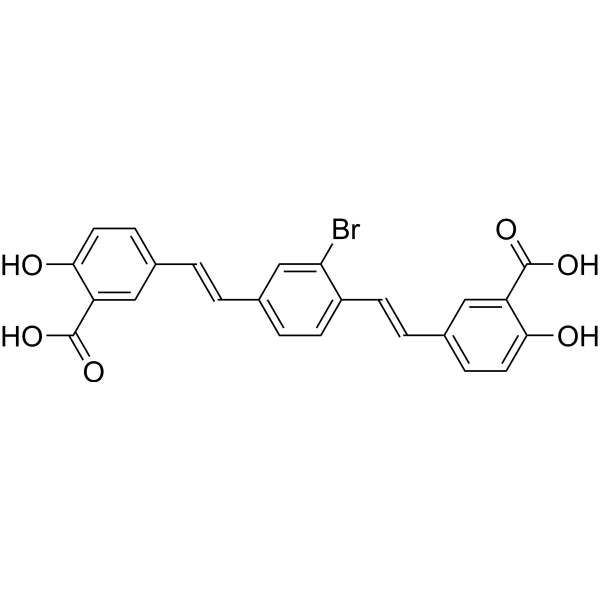
Cat. No.: HY-D1443
CAS No.: 291766-06-8
Synonyms: (trans,trans)-1-Bromo-2,5-bis-(3-hydroxycarbonyl-4-hydroxy)styrylbenzene
BSB is a Congo red-derived fluorescent probe. BSB binds not only to extracellular amyloid β protein, but also many intracellular lesions composed of abnormal tau and synuclein proteins. BSB acts as a prototype imaging agent for Alzheimer's disease .
loading...
    loading...
Cat. No.: HY-137557
CAS No.: 1565797-16-1
Synonyms: APN1607; PM-PBB3
Target:  

Tau Protein

Research Areas:  

Neurological Disease

Florzolotau (APN1607) is a positron emission tomography (PET) ligand that can be used for the detection of Alzheimer's disease (AD) and other tau proteinopathies. Its binding sites are located in the β-sheet of paired helical filaments (PHFs) and straight filaments (SFs) of tau protein, as well as in the C-shaped cavity of SFs. In addition, APN-1607 binds to intraneuronal inclusions in Alzheimer's disease (AD), primary age-related tauopathy (PART) and posterior cortical atrophy (PCA). Florzolotau shows promise for PET imaging studies of neurological disorders, particularly tau proteinopathies .
loading...
    loading...
Cat. No.: HY-134880
CAS No.: 2173361-80-1
Purity:  99.92%
Synonyms: PI-2620
Target:  

Microtubule/Tubulin

Research Areas:  

Neurological Disease

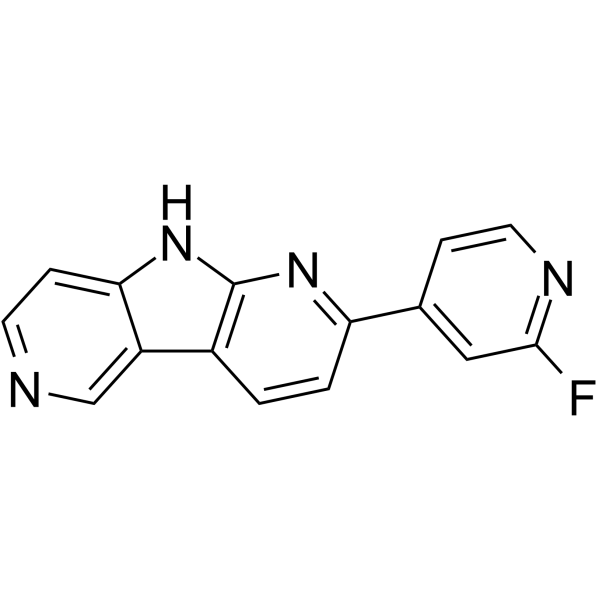
Tau tracer 2 (PI-2620) is a Tau tracer used for imaging Tau protein aggregates. Tau tracer 2 can be used to diagnose neurodegenerative diseases .
loading...
    loading...
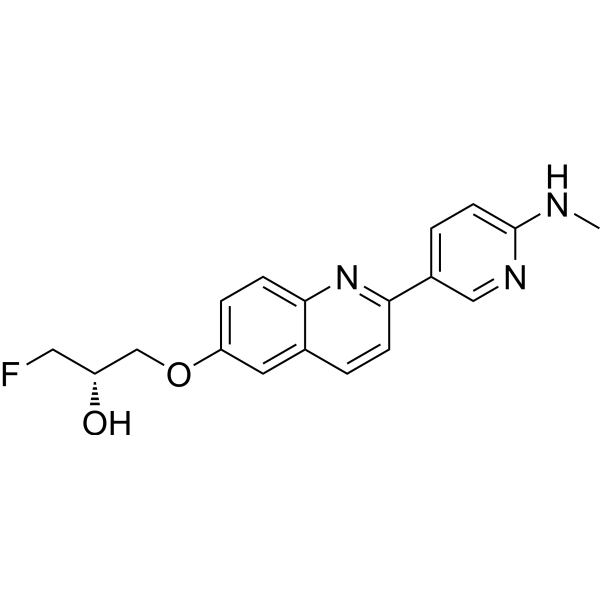
Cat. No.: HY-101183
CAS No.: 1707147-26-9
Purity:  98.95%
THK5351 can be radiolabeled and used as a radiotracer for in vivo imaging of tau pathology in the brain.
loading...
    loading...
Cat. No.: HY-W338446
CAS No.: 22191-97-5
Target:  

Tau Protein

Research Areas:  

Neurological Disease

BF-170 is a selective tau fibril binding agent with an EC50 of 221 nM. It exhibits good blood-brain barrier permeability, and after intravenous injection in mice, the concentration in brain tissue reaches 9.1% ID/g within 2 minutes (with a brain clearance rate of 0.25% ID/g after 30 minutes). BF-170 can be used as a probe for tau protein pathology imaging in Alzheimer's disease (AD). It plays an important role in early-stage AD research and holds potential for imaging studies of tau-related neurodegenerative diseases .
loading...
    loading...
Cat. No.: HY-173291
CAS No.: 3063166-64-0
Target:  

Tau Protein

Research Areas:  

Neurological Disease

Tau ligand-1 (Compound 75) is a ligand for aggregated tau protein that can penetrate the blood-brain barrier . In tissues from patients with Alzheimer's disease, progressive supranuclear palsy, corticobasal degeneration, and Pick's disease, Tau ligand-1 exhibits high affinity for aggregated tau protein, with equilibrium dissociation constant (KD) values ranging from 1 to 3.8 nM . Tau ligand-1 can serve as a potential positron emission tomography (PET) tracer and holds promise for application in positron emission tomography imaging studies of tau-related diseases in the central nervous system .
loading...
    loading...
Cat. No.: HY-100723
CAS No.: 1573029-17-0
Target:  

Amyloid-β

Research Areas:  

Neurological Disease

THK-523 has demonstrated its high affinity and selectivity for tau pathology both in vitro and in vivo. 18F-THK523 is a potent tau imaging radiotracer. 18F-THK523 is a potent in vivo tau imaging ligand for Alzheimer's disease .
loading...
    loading...
Cat. No.: HY-101182
CAS No.: 1374107-54-6
Purity:  98.52%
Target:  

Microtubule/Tubulin

Research Areas:  

Neurological Disease

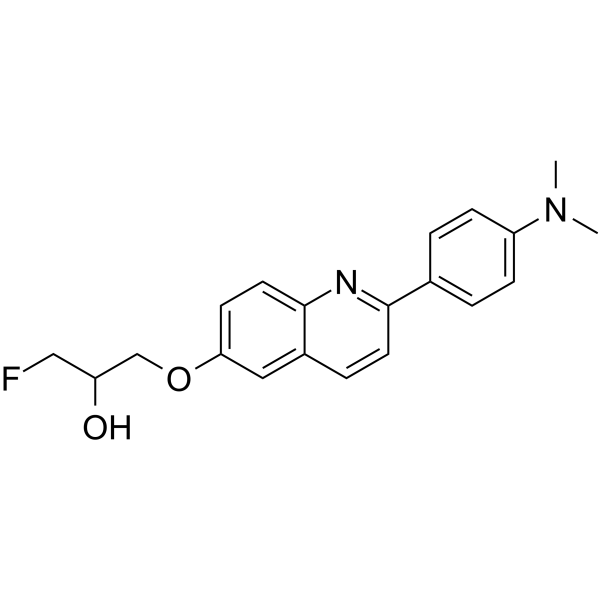
THK-5117, an arylquinoline derivative, displays high binding affinity to tau fibrils with a Ki of 10.5 nM. THK-5117 has high binding affinity to tau protein aggregates and tau-rich Alzheimer disease (AD)  brain homogenates. 18F-THK-5117 has the potential to act as a tau imaging PET probe .
loading...
    loading...
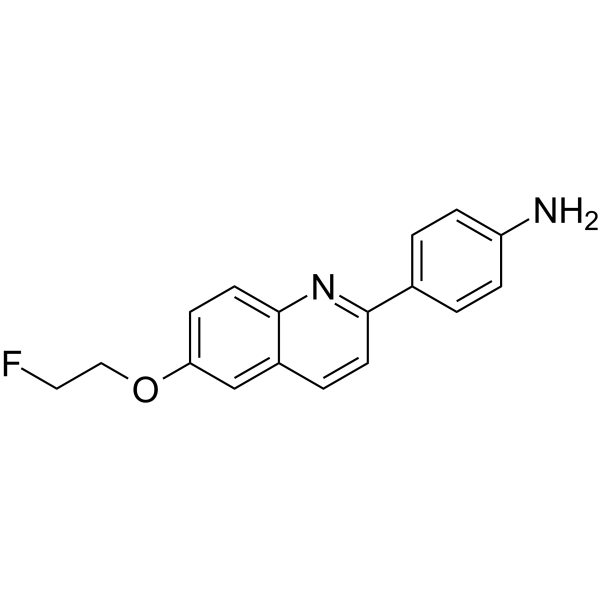
Cat. No.: HY-101181
CAS No.: 1374107-46-6
Target:  

Microtubule/Tubulin

Research Areas:  

Neurological Disease

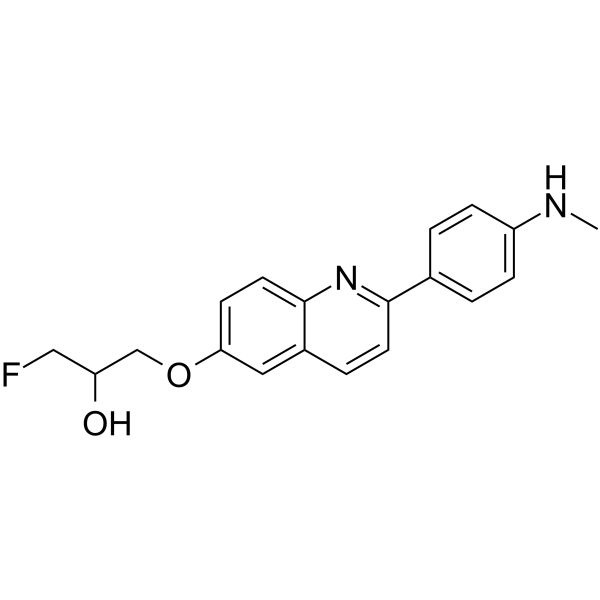
THK-5105, an arylquinoline derivative, displays high binding affinity to tau fibrils. THK-5105 has high binding affinity to tau protein aggregates and tau-rich Alzheimer disease (AD)  brain homogenates. 18F-THK-5105 has the potential to act as a tau imaging PET probe .
loading...
    loading...
Cat. No.: HY-134879
CAS No.: 2173353-53-0
Target:  

Microtubule/Tubulin

Research Areas:  

Neurological Disease

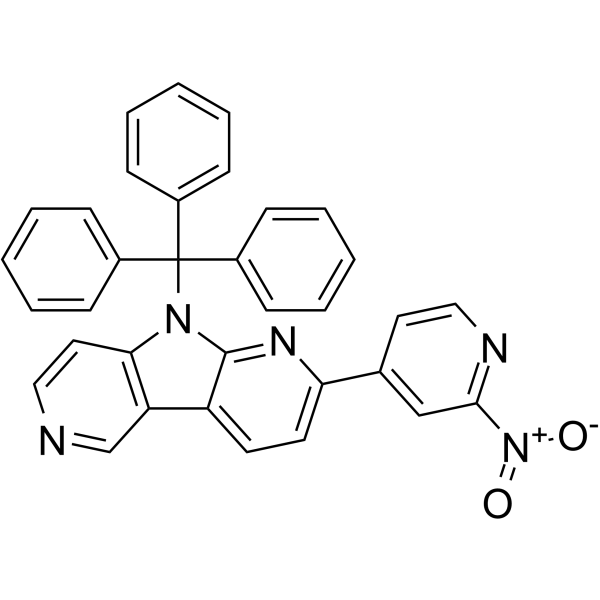
Tau tracer 1 is a Tau tracer used for imaging Tau protein aggregates. Tau tracer 1 can be used to diagnose neurodegenerative diseases .
loading...
    loading...
Cat. No.: HY-101183R
CAS No.: 1707147-26-9
THK5351 (Standard) is the analytical standard of THK5351 (HY-101183). This product is intended for research and analytical applications. THK5351 can be radiolabeled and used as a radiotracer for in vivo imaging of tau pathology in the brain.
loading...
    loading...
Cat. No.: HY-137557A
Synonyms: (E/Z)-APN1607; (E/Z)-PM-PBB3
Target:  

Tau Protein

Research Areas:  

Neurological Disease

(E/Z)-Florzolotau ((E/Z)-APN1607) is a mixed configuration or unspecified configuration of Florzolotau (HY-137557). Florzolotau (APN1607) is a positron emission tomography (PET) ligand that can be used for the detection of Alzheimer's disease (AD) and other tau proteinopathies. Its binding sites are located in the β-sheet of paired helical filaments (PHFs) and straight filaments (SFs) of tau protein, as well as in the C-shaped cavity of SFs. In addition, APN-1607 binds to intraneuronal inclusions in Alzheimer's disease (AD), primary age-related tauopathy (PART) and posterior cortical atrophy (PCA). Florzolotau shows promise for PET imaging studies of neurological disorders, particularly tau proteinopathies .
loading...
    loading...
  • 1

