
1. Search Result
Search Result
Results for "

thermal oxidation

" in MedChemExpress (MCE) Product Catalog:

14

Inhibitors & Agonists

2

Biochemical Assay Reagents

4

Natural
Products

Cat. No. Product Name Target Research Areas Chemical Structure
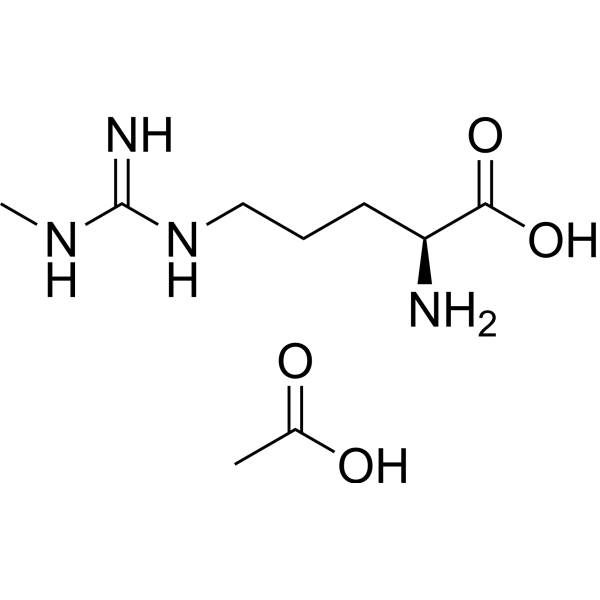
  • HY-18732A
    L-NMMA acetate
    10+ Cited Publications

    Tilarginine acetate; Methylarginine acetate

    NO Synthase Neurological Disease Inflammation/Immunology Cancer
    L-NMMA (Tilarginine) acetate is a non-selective and competitive inhibitor of nitric oxide synthase. L-NMMA acetate inhibits three subtypes, namely nNOS, eNOS, and iNOS, and reduces NO production . L-NMMA acetate alleviates mechanical allodynia, thermal hyperalgesia, and choroidal fibrosis. L-NMMA acetate is applicable to research related to nociception, bone cancer pain, and myopia .
    L-NMMA acetate
  • HY-D1005A8

    PEG-PPG-PEG, 2000 (Average)

    Environmental Pollutants Biochemical Assay Reagents Bacterial P-glycoprotein Infection Cancer
    Poloxamer 181 L61 is a block polymer of polyethylene oxide and polypropylene oxide with an average molecular weight of 2000. Poloxamer has the ability to inhibit P-gp. Poloxamer 181 has antimicrobial activity and can inhibit Mycobacterium avium. Poloxamer 181 can form a thermally reversible hydrogel and is used as a food additive, and as an agent delivery carrier in cosmetics, pharmaceuticals and tissue engineering .
    Poloxamer 181 (L61)
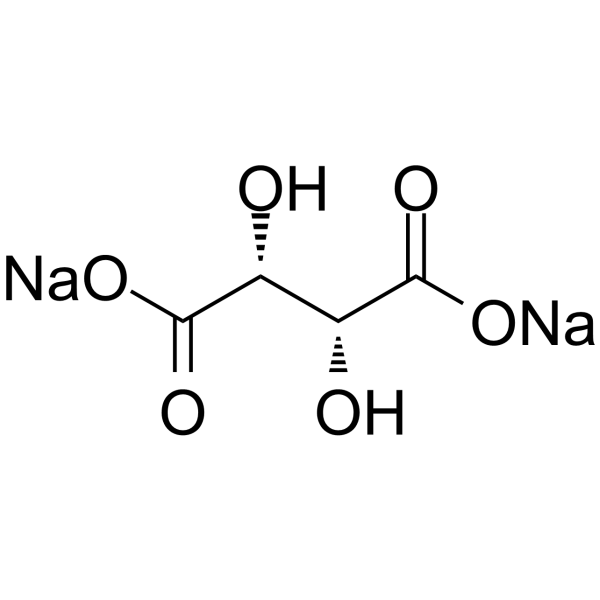
  • HY-128476

    Environmental Pollutants Biochemical Assay Reagents Others
    Sodium Tartrate (E335ii) is an approved food additive that functions as both a pH regulator and an emulsifier. Sodium Tartrate effectively inhibits hydrolysis, thermal oxidation, polymerization and coloration of vegetable oil during high-temperature heating, exhibiting significant antioxidant activity. The DL-tartaric acid component of Sodium Tartrate has an absorption rate of up to 90% in brown rats, while the absorption rate of related tartaric acid in humans is only 20% .
    Sodium Tartrate
  • HY-18732
    L-NMMA
    Maximum Cited Publications
    11 Publications Verification

    Tilarginine; Methylarginine

    NO Synthase Neurological Disease Inflammation/Immunology Cancer
    L-NMMA (Tilarginine) is a non-selective and competitive inhibitor of nitric oxide synthase. L-NMMA inhibits three subtypes, namely nNOS, eNOS, and iNOS, and reduces NO production . L-NMMA alleviates mechanical allodynia, thermal hyperalgesia, and choroidal fibrosis. L-NMMA is applicable to research related to nociception, bone cancer pain, and myopia .
    L-NMMA
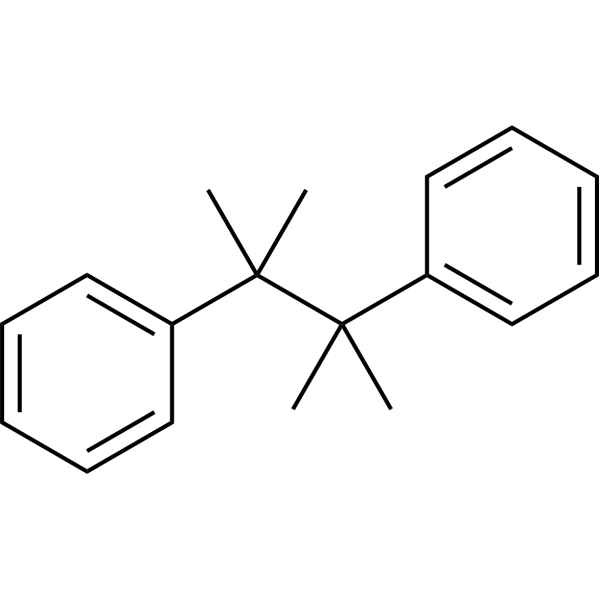
  • HY-W087905

    Biochemical Assay Reagents Others
    2,3-Dimethyl-2,3-diphenylbutane is a minor product formed during the thermal decomposition of dicumyl peroxide (DCP) in cumene, generated through radical coupling reactions. As an initiator capable of producing free radicals, 2,3-dimethyl-2,3-diphenylbutane promotes cross-linking or decomposition processes via initiating free radical reactions in fields such as polymer polymerization (e.g., modification of polyphenylene oxide processing), organic synthesis (e.g., DCP decomposition reactions), and coal processing (e.g., oxidation stabilization of coal tar pitch), thereby enhancing material properties or reaction efficiency .
    2,3-Dimethyl-2,3-diphenylbutane
  • HY-Y1219E

    Biochemical Assay Reagents Others
    Silica gel, high-purity grade, 130-270 mesh is a low-density, high-surface-area, high-purity inert additive that can be used to prepare chromatographic column sieve plates based on the sol-gel method. Silica gel, high-purity grade prevents DNA degradation by absorbing water from plant leaves, and is suitable for the preservation of field-collected samples for subsequent DNA extraction, restriction endonuclease digestion, PCR amplification and gene sequencing. It can also be reused after being saturated with water. Silica gel, high-purity grade can provide a non-toxic, inert aquatic environment for embedded cells, allowing nutrients, oxygen and metabolic waste to diffuse freely and blocking external pollution, thereby maintaining the activity of fibroblasts and epithelial cells .
    Silica gel, high-purity grade, 130-270 mesh
  • HY-W009641

    PyM; 1-HMP

    Biochemical Assay Reagents Others
    1-Pyrenemethanol is an organic compound that can be used to prepare graphene films with excellent thermal conductivity, flexibility and mechanical properties. 1-Pyrenemethanol binds to graphene oxide sheets through hydrogen bonds and π-π interactions to form GO-PyM films, increasing the dispersion and stability of the material .
    1-Pyrenemethanol
  • HY-125209A

    Apoptosis PARP DNA/RNA Synthesis Cancer
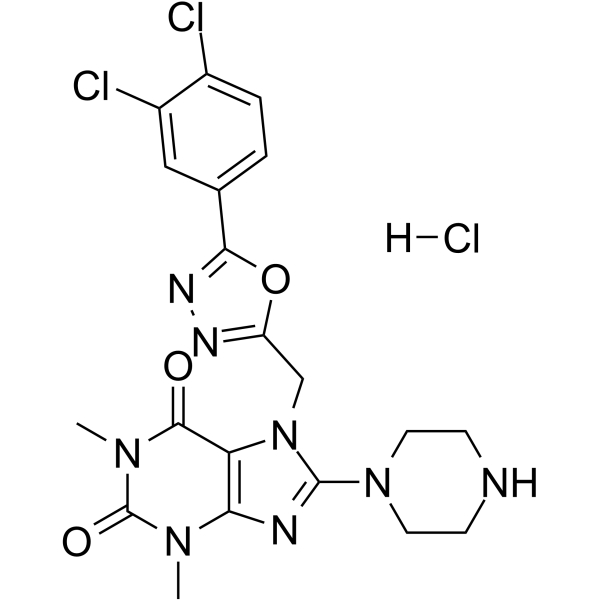
    TH5427 hydrochloride is a NUDT5 inhibitor with a human target IC50 of 29 nM, ~690-fold selectivity over MTH1 in vitro, and selective functional inhibition over other NUDIX hydrolases including NUDT9 .TH5427 hydrochloride binds to the active site of NUDT5, blocking enzymatic activity related to ADP-ribose metabolism and PAR-derived ATP synthesis .TH5427 hydrochloride blocks progestin-dependent nuclear ATP synthesis, impairs progestin-induced chromatin remodeling, inhibits histone H1 displacement, disrupts progestin-dependent gene regulation, and abrogates progestin-dependent proliferation in breast cancer cells .TH5427 hydrochloride functions as a versatile probe to study nuclear ATP dynamics and ADP-ribose-related metabolism in cells .TH5427 hydrochloride engages NUDT5 at physiological temperatures, as demonstrated by Drug Affinity Responsive Target Stability (DARTS) assay .TH5427 hydrochloride stabilizes NUDT5 against thermal denaturation in cell lysates and intact cells, as shown by cellular thermal shift assay (CETSA) .TH5427 hydrochloride functionally inhibits NUDT5 activity, leading to downstream effects on oxidative DNA damage and DNA replication in triple-negative breast cancer (TNBC) cells .TH5427 hydrochloride suppresses proliferation of TNBC cells without inducing cell death or apoptosis, slows DNA replication in TNBC cells, promotes accumulation of oxidative DNA lesions, and triggers DNA damage response in TNBC cells .TH5427 hydrochloride suppresses growth of TNBC cells in vitro, inhibits growth of TNBC xenograft tumors in nude mice in vivo, and shows greater potency against TNBC cell lines compared to ER-positive and normal-like breast cell lines .TH5427 hydrochloride can be used for the research of breast cancer and triple-negative breast cancer .
    TH5427 hydrochloride
  • HY-N6875

    Others Metabolic Disease
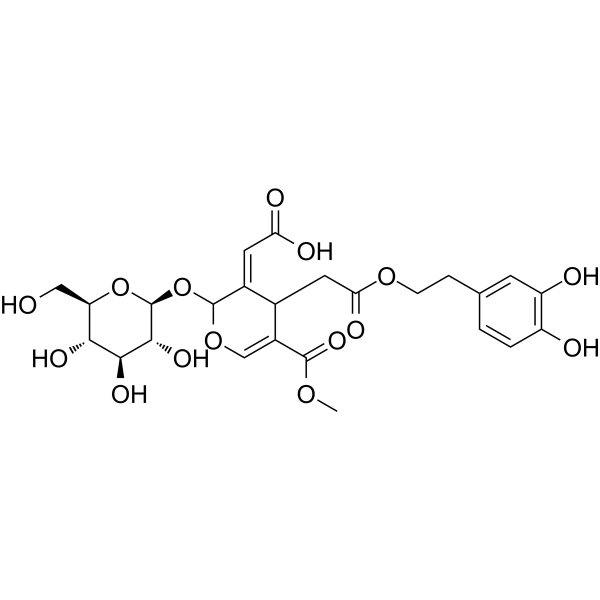
    oleuropeinic acid is present initially in olive tissues or formed by the thermal treatment, possibly by the oxidation of oleuropein. Oleuropeinic acid is an antioxidant-soluble fiber .
    Oleuropeinic acid
  • HY-18732C

    Tilarginine hydrochloride; Methylarginine hydrochloride

    NO Synthase Endogenous Metabolite Cardiovascular Disease Cancer
    L-NMMA (Tilarginine) hydrochloride is a non-selective and competitive inhibitor of nitric oxide synthase. L-NMMA hydrochloride inhibits three subtypes, namely nNOS, eNOS, and iNOS, and reduces NO production . L-NMMA hydrochloride alleviates mechanical allodynia, thermal hyperalgesia, and choroidal fibrosis. L-NMMA hydrochloride is applicable to research related to nociception, bone cancer pain, and myopia .
    L-NMMA hydrochloride
  • HY-18732B

    Methylarginine citrate; Tilarginine citrate

    NO Synthase Endogenous Metabolite Cardiovascular Disease Cancer
    L-NMMA (Tilarginine) citrate is a non-selective and competitive inhibitor of nitric oxide synthase. L-NMMA citrate inhibits three subtypes, namely nNOS, eNOS, and iNOS, and reduces NO production . L-NMMA citrate alleviates mechanical allodynia, thermal hyperalgesia, and choroidal fibrosis. L-NMMA citrate is applicable to research related to nociception, bone cancer pain, and myopia .
    L-NMMA citrate
  • HY-W142432R

    Reference Standards Biochemical Assay Reagents Others
    Perfluoroundecanoic acid (Standard) is the analytical standard of Perfluoroundecanoic acid. This product is intended for research and analytical applications. Perfluoroundecanoic acid is an orally active inducer of oxidative stress and DNA damage. Perfluoroundecanoic acid exhibits genotoxicity and reproductive toxicity in swiss mice. Perfluoroundecanoic acid is utilized as a processing aid in the manufacture of fluoropolymer for its thermal and pressure stability, and properties of having both water-repellent and oil-repellent groups and hydrophilic groups on the same molecule .
    Perfluoroundecanoic acid (Standard)
  • HY-18732AR

    Tilarginine acetate (Standard); Methylarginine acetate (Standard)

    Reference Standards NO Synthase Cardiovascular Disease Cancer
    L-NMMA (Tilarginine) acetate (Standard) is the analytical standard of L-NMMA acetate (HY-18732A). This product is intended for research and analytical applications. L-NMMA (Tilarginine) acetate is a non-selective and competitive inhibitor of nitric oxide synthase. L-NMMA acetate inhibits three subtypes, namely nNOS, eNOS, and iNOS, and reduces NO production . L-NMMA acetate alleviates mechanical allodynia, thermal hyperalgesia, and choroidal fibrosis. L-NMMA acetate is applicable to research related to nociception, bone cancer pain, and myopia .
    L-NMMA acetate (Standard)
  • HY-W540405

    Others Others
    2,3-Dimethyl-1-pentene is volatile compound produced by the thermal oxidation of Cholesterol (HY-N0322) .
    2,3-Dimethyl-1-pentene

Inquiry Online

Your information is safe with us. * Required Fields.

Salutation


Country or Region *

Applicant Name *


Organization Name *

Department *


Email Address *


Product Name *

Cat. No.


Requested quantity *

Phone Number *


Remarks

Inquiry Online

Inquiry Information

Product Name:
Cat. No.:
Quantity:
MCE Japan Authorized Agent:

