1. Search Result
Search Result
Results for "

translation process

" in MedChemExpress (MCE) Product Catalog:

25

Inhibitors & Agonists

4

Screening Libraries

1

Fluorescent Dye

5

Natural
Products

2

Isotope-Labeled Compounds

1

Click Chemistry

3

Oligonucleotides

Cat. No. Product Name Target Research Areas Chemical Structure
  • HY-113061
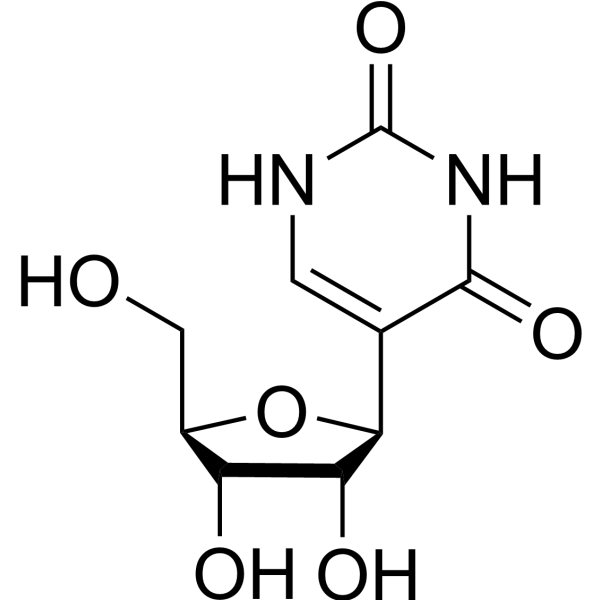
    Pseudouridine
    1 Publications Verification

    Endogenous Metabolite Nucleoside Antimetabolite/Analog DNA/RNA Synthesis Cancer
    Pseudouridine is an isomer of uridine and the most abundant modified nucleoside in non-coding RNA. It fine-tunes and stabilizes regional structures in rRNA and tRNA, maintaining their functions in mRNA decoding, ribosome assembly, processing, and translation. Pseudouridine-modified tRNA fragments can inhibit aberrant protein synthesis and hold promise for research on myelodysplastic syndrome (MDS)-related leukemia. .
    Pseudouridine
  • HY-D1725

    Fluorescent Dye DNA Stain Others
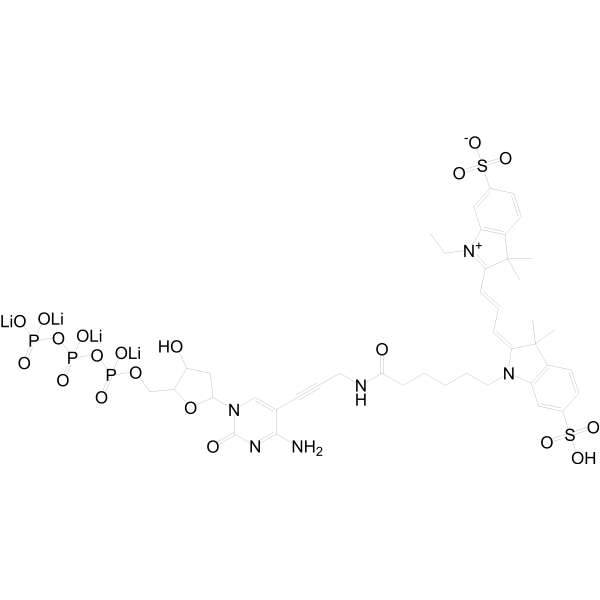
    Cy3-dCTP is a directly fluorescently labeled deoxyribonucleotide, in which Cy3 is a cyanine fluorescent dye. Cy3-dCTP is used for direct enzymatic labeling of DNA and cDNA: with the aid of DNA polymerases, this modified nucleotide is incorporated into the extending DNA strand during processes such as reverse transcription, PCR, nick translation or random primer labeling .
    Cy3-dCTP
  • HY-W009444
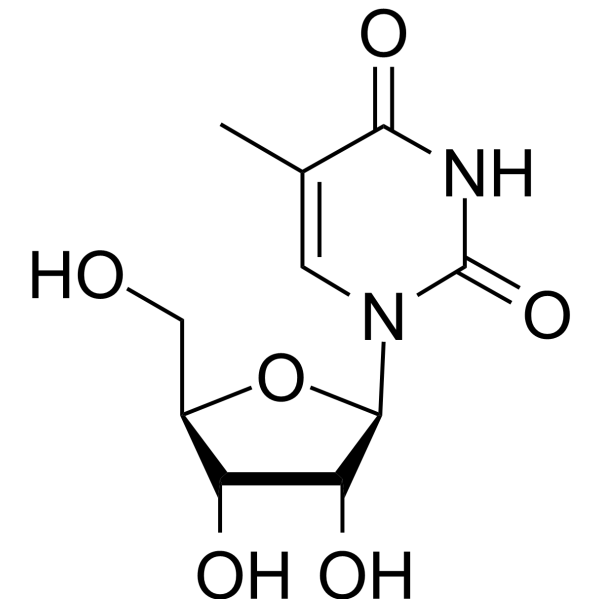
    5-Methyluridine
    1 Publications Verification

    Endogenous Metabolite Others
    5-Methyluridine (m 5U) is an RNA modified nucleotide generated by RNA methyltransferases (such as TrmA and RumA), which mainly targets specific uracil sites in RNA molecules such as the T arm of tRNA and rRNA. 5-Methyluridine relies on enzyme recognition of RNA secondary/tertiary structures (such as the T loop of tRNA or the specific stem-loop structure of rRNA) and participates in physiological processes such as translation accuracy and ribosome function by stabilizing RNA folding or regulating base pairing .
    5-Methyluridine
  • HY-W016647

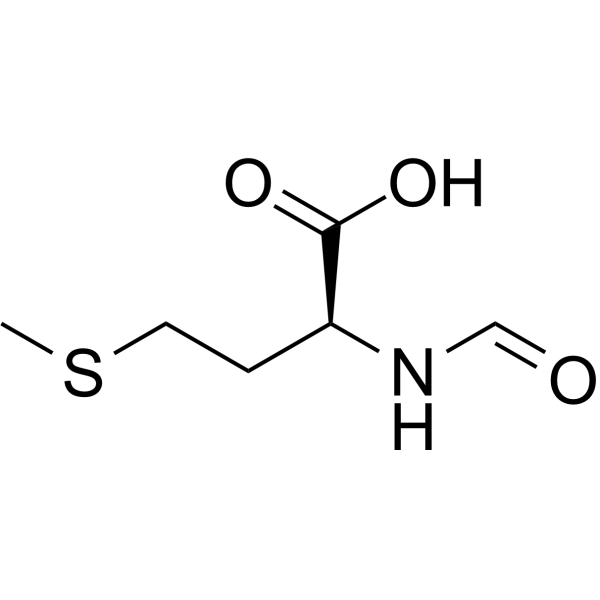
    N-Formylmethionine

    Endogenous Metabolite Bacterial Infection Metabolic Disease
    For-Met-OH (N-Formylmethionine) can be involved in the translation process of bacteria, chloroplasts, and mitochondria. For-Met-OH plays different roles in different species and organelles, such as promoting the formation of protein complexes in mitochondria and acting as a degradation signal in bacteria and yeast. The level of For-Met-OH is closely related to certain diseases, for example, For-Met-OH is a potential biomarker for metabolic disorders and poor prognosis in critically ill patients .
    For-Met-OH
  • HY-113061R

    Reference Standards Endogenous Metabolite Nucleoside Antimetabolite/Analog DNA/RNA Synthesis Others
    Pseudouridine (Standard) is the analytical standard of Pseudouridine. This product is intended for research and analytical applications. Pseudouridine is an isomer of the nucleoside uridine, and the most abundant modified nucleoside in non-coding RNAs. Pseudouridine in rRNA and tRNA can fine-tune and stabilize the regional structure and help maintain their functions in mRNA decoding, ribosome assembly, processing and translation [4].
    Pseudouridine (Standard)
  • HY-146446

    Bacterial Antibiotic Infection
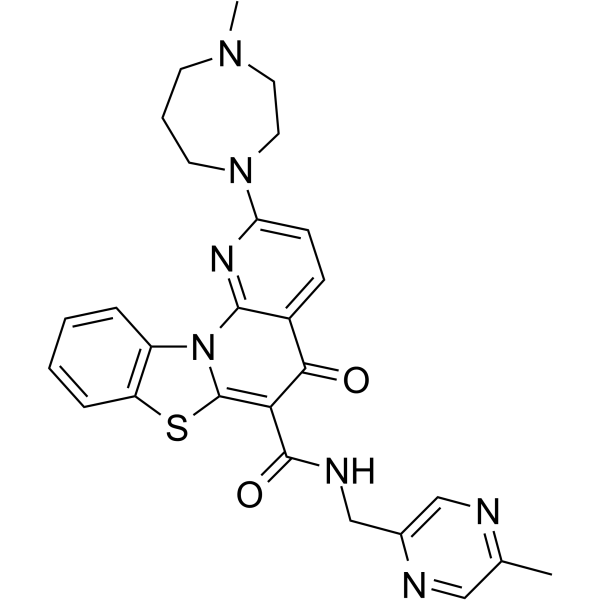
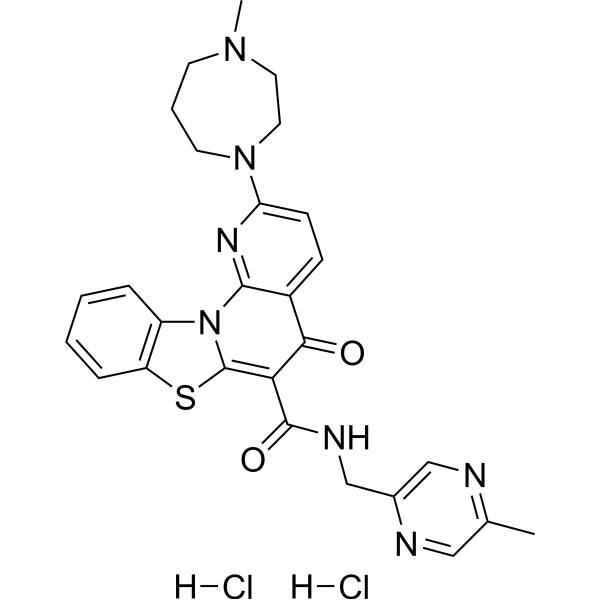
    PXYC1 is a ribosomal protein S1 (RpsA) antagonist with Kds of 0.81 and 0.31 μM for RpsA-CTD and RpsA-CTD Δ438A, respectively. RpsA plays an important role in the trans-translation process of Mycobacterium Tuberculosis (Mtb) .
    PXYC1
  • HY-117938

    Aminoacyl-tRNA Synthetase Cancer
    T-3861174 is an inhibitor of prolyl-tRNA synthetase (PRS, Aminoacyl-tRNA Synthetase) without completely inhibiting its translation process. T-3861174 activates the GCN2-ATF4 pathway and induces death in multiple tumor cell lines, including SK-MEL-2. T-3861174 demonstrated significant antitumor activity in multiple xenograft models without significantly affecting body weight .
    T-3861174
  • HY-401209

    α-synuclein DNA/RNA Synthesis Neurological Disease
    Synucleozid-2.0 is a blood-brain barrier-permeable inhibitor that binds to the IRE of SNCA mRNA, with a EC50 of 2.9 µM and a Kd value of 1.8 µM. Synucleozid-2.0 selectively binds to and stabilizes the A bulge and adjacent closed base pairs in the 5' UTR IRE of SNCA mRNA, blocks the translation process and reduces intracellular levels of α-synuclein. Synucleozid-2.0 exerts cytoprotective effects against cytotoxicity induced by α-synuclein preformed fibrils. Synucleozid-2.0 is applicable to the research of Parkinson's disease .
    Synucleozid-2.0
  • HY-E70625

    Casein Kinase Cancer
    Casein Kinase 2 (CK2) is a serine/threonine protein kinase that is highly conserved among eukaryotes and has roles in many different cellular processes, such as cell survival, cell cycle regulation, cell polarity, stress responses, transcription and translation .
    Casein Kinase 2
  • HY-175164

    Apoptosis c-Myc Cancer
    SVC112 is a translation elongation inhibitor that prevents the cyclic dissociation of EF2 from the ribosome, thereby inhibiting the elongation step of translation. SVC112 shows activity in growth inhibition among cancer cell lines of various origins (acute myeloid leukemia (AML), multiple myeloma (Myeloma), colorectal cancer (CRC), and head and neck squamous cell carcinoma (HNSCC)). SVC112 preferentially impedes ribosomal processing of mRNAs, and decreaseds CSC-related proteins including Myc and Sox2. SVC112 induces apoptosis in hematologic cancer cell lines, while phosphorylation of c-Myc correlates with sensitivity to SVC112 in colorectal cancer cell lines. SVC112 inactivates HNSCC stem cells in vitro and prevents the regrowth of HNSCC tumor xenografts in mice. SVC112 can be used for the study of HNSCC .
    SVC112
  • HY-170524

    SARS-CoV DNA Methyltransferase Cytochrome P450 Infection
    TDI-015051 is a highly selective, orally active antiviral agent that targets the coronavirus NSP14 guanine-N7 methyltransferase. TDI-015051 binds to substrates in a non-competitive manner and forms a stable ternary complex, precisely blocking the capping and methylation processes of viral mRNA. TDI-015051 potently inhibits a variety of coronaviruses (including SARS-CoV-2 and MERS). By impairing viral replication and translation and inducing a moderate type I interferon-mediated immune response, it significantly reduces pulmonary viral load and exhibits a synergistic effect with Nirmatrelvir (HY-138687). In addition, TDI-015051 does not inhibit non-coronavirus methyltransferases, and the drug-resistant mutations it induces impair viral fitness, demonstrating excellent antiviral properties and safety. TDI-015051 can be used for research on COVID-19 and the replication mechanism of coronaviruses .The IC50 values of TDI-015051 against SARS-CoV-2, α-hCoV-NL63, α-hCoV-229E, β-hCoV-MERS are 0.15 nM, 1.7 nM, 2.6 nM and 3.6 nM, respectively, and the Ka value against SARS-CoV-2 is 0.061 nM .
    TDI-015051
  • HY-146451

    Bacterial Antibiotic Infection
    PXYC12 is a ribosomal protein S1 (RpsA) antagonist with Kds of 2.67 and 4.67 μM for RpsA-CTD and RpsA-CTD Δ438A, respectively. RpsA plays an important role in the trans-translation process of Mycobacterium Tuberculosis (Mtb) .
    PXYC12
  • HY-W768571

    Isotope-Labeled Compounds Nucleoside Antimetabolite/Analog DNA/RNA Synthesis Endogenous Metabolite Cancer
    Pseudouridine- 13C, 15N2 is the 13C- and 15N-labeled Pseudouridine (HY-113061). Pseudouridine is an isomer of uridine and the most abundant modified nucleoside in non-coding RNA. It fine-tunes and stabilizes regional structures in rRNA and tRNA, maintaining their functions in mRNA decoding, ribosome assembly, processing, and translation. Pseudouridine-modified tRNA fragments can inhibit aberrant protein synthesis and hold promise for research on myelodysplastic syndrome (MDS)-related leukemia. .
    Pseudouridine-13C,15N2
  • HY-162861

    Antibiotic Bacterial Infection Inflammation/Immunology
    3-Methyl-chuangxinmycin is an antibiotic. 3-Methyl-chuangxinmycin can affect the translation process in bacteria and mammalian cells by inhibiting the enzyme that synthesizes tryptophan tRNA (TrpRS). 3-Methyl-chuangxinmycin can downregulate genes related to interferon, TNF, and inflammatory responses in RDEB_L1 cells .
    3-Methyl-chuangxinmycin
  • HY-113061S

    Isotope-Labeled Compounds Endogenous Metabolite Nucleoside Antimetabolite/Analog DNA/RNA Synthesis Others
    Pseudouridine- 18O is the 18O labeled Pseudouridine (HY-113061). Pseudouridine is an isomer of the nucleoside uridine, and the most abundant modified nucleoside in non-coding RNAs. Pseudouridine in rRNA and tRNA can fine-tune and stabilize the regional structure and help maintain their functions in mRNA decoding, ribosome assembly, processing and translation.
    Pseudouridine-O18
  • HY-146450

    Bacterial Antibiotic Infection
    PXYC2 is a ribosomal protein S1 (RpsA) antagonist with Kds of 6.35 and 5.11 μM for RpsA-CTD and RpsA-CTD Δ438A, respectively. RpsA plays an important role in the trans-translation process of Mycobacterium Tuberculosis (Mtb) .
    PXYC2
  • HY-146447

    Bacterial Antibiotic Infection
    PXYC13 is a ribosomal protein S1 (RpsA) antagonist with Kds of 7.61 and 8.50 μM for RpsA-CTD and RpsA-CTD Δ438A, respectively. RpsA plays an important role in the trans-translation process of Mycobacterium Tuberculosis (Mtb) .
    PXYC13
  • HY-146449

    Bacterial Antibiotic Infection
    PXYD4 is a ribosomal protein S1 (RpsA) antagonist with Kds of 3.24 and 1.64 μM for RpsA-CTD and RpsA-CTD Δ438A, respectively. RpsA plays an important role in the trans-translation process of Mycobacterium Tuberculosis (Mtb) .
    PXYD4
  • HY-146448

    Bacterial Infection
    PXYD3 is a ribosomal protein S1 (RpsA) antagonist with Kds of 5.66 and 6.91 μM for RpsA-CTD and RpsA-CTD Δ438A, respectively. RpsA plays an important role in the trans-translation process of Mycobacterium Tuberculosis (Mtb) .
    PXYD3
  • HY-125629

    Others Others
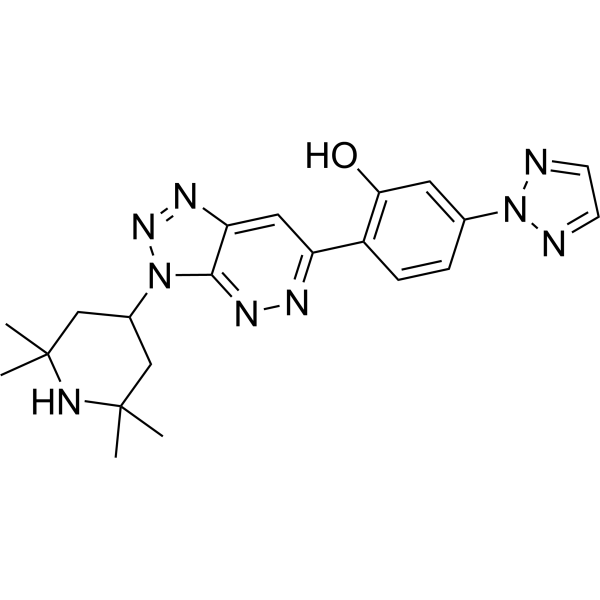
    Primordazine B is a small molecule compound identified by chemical screening in zebrafish embryos with the activity of selectively destroying Primordial Germ Cells (PGCs). Primordazine B inhibits a process called Poly(A)-tail Independent Non-canonical Translation (PAINT) without inhibition of polyadenylate tail dependent typical translation (PAT). Primordazine B can be used to study translational control of cells in specific physiological or pathological states, such as gene expression regulation during cell dormancy, viral infection, or stress conditions .
    Primordazine B
  • HY-W016647R

    N-Formylmethionine (Standard)

    Reference Standards Endogenous Metabolite Bacterial Infection Metabolic Disease
    For-Met-OH (Standard) (N-Formylmethionine (Standard)) is the analytical standard of For-Met-OH (HY-W016647). This product is intended for research and analytical applications. For-Met-OH (N-Formylmethionine) can be involved in the translation process of bacteria, chloroplasts, and mitochondria. For-Met-OH plays different roles in different species and organelles, such as promoting the formation of protein complexes in mitochondria and acting as a degradation signal in bacteria and yeast. The level of For-Met-OH is closely related to certain diseases; for example, For-Met-OH is a potential biomarker for metabolic disorders and poor prognosis in critically ill patients.
    For-Met-OH (Standard)
  • HY-125984

    α-synuclein Neurological Disease
    Syn-516 is an inhibitor of α-synuclein (α-Syn). Syn-516 targets the 5' untranslated region (5'UTR) of α-Syn mRNA, with an IC50 value of 1.8 μM, thereby inhibiting the translation process of α-Syn. Syn-516 improves motor dysfunction and colonic motility abnormalities associated with α-Syn overexpression in mouse models. α-Syn can be used to study diseases such as Parkinson's disease and Lewy body dementia .
    Syn-516
  • HY-W460666

    Phosphoramidites Drug Intermediate Cancer
    5'-O-DMT-N2-Ibu-2'-OMe-G is a crucial intermediate for the synthesis of antisense oligonucleotides. 5'-O-DMT-N2-Ibu-2'-OMe-G is involved in constructing antisense oligonucleotides with specific sequences, which can bind complementarily to the targeted mRNA. 5'-O-DMT-N2-Ibu-2'-OMe-G blocks the translation process of mRNA, thereby inhibiting the expression of specific proteins and playing a role in regulating gene expression. 5'-O-DMT-N2-Ibu-2'-OMe-G is promising for research of genetic diseases and tumors .
    5'-O-DMT-N2-Ibu-2'-OMe-G
  • HY-183253

    Drug-Linker Conjugates for ADC Eukaryotic Initiation Factor (eIF) EGFR Cancer
    DL149 is a component of an antibody-drug conjugate (ADC) formed by conjugating the eIF4A inhibitor FD236 (HY-186186) with an ADC linker, and exhibits potential antitumor activity. DL149 can bind to an anti-HER2 antibody to form a complete ADC molecule, which precisely binds to the HER2 receptor on the surface of tumor cells. After internalization into cells, it releases the eIF4A inhibitor payload. DL149 irreversibly blocks the mRNA translation process in tumor cells, thereby inhibiting tumor cell proliferation and inducing their death. DL149 exhibits in vivo antitumor activity in the SK-OV-3 xenograft tumor model, and can be used for the research of HER2-positive solid tumors .
    DL149
  • HY-133240

    DNA Alkylator/Crosslinker Calcium Channel Potassium Channel Sodium Channel Infection
    trans-AzoTAB is a photoresponsive potassium/sodium/calcium channel modulator and DNA-binding agent. trans-AzoTAB undergoes trans-cis isomerization driven by light, with variable polarity and DNA affinity. trans-AzoTAB also enhances voltage-gated potassium currents and inhibits sodium and calcium currents in cardiomyocytes, thereby reducing spontaneous electrical activity and excitation conduction velocity. In addition, trans-AzoTAB induces compaction and frozen conformation of λ-phage DNA, and non-sequence-dependently inhibits transcription and translation processes in the dark; its activity can be reversed and restored by visible light after activation with ultraviolet irradiation. trans-AzoTAB can serve as a probe for two-photon optical regulation of myocardial excitability, and is used to construct photoresponsive interfacial polymer structures .
    trans-AzoTAB

Inquiry Online

Your information is safe with us. * Required Fields.

Salutation


Country or Region *

Applicant Name *


Organization Name *

Department *


Email Address *


Product Name *

Cat. No.


Requested quantity *

Phone Number *


Remarks

Inquiry Online

Inquiry Information

Product Name:
Cat. No.:
Quantity:
MCE Japan Authorized Agent:

