


24 Results for "

vegetable oil

" in MedChemExpress (MCE) Product Catalog:
Products (24)

24 Results for "vegetable oil" in MCE Product Catalog:

5
5 Cited Publications
Cat. No.: HY-107799
CAS No.: 8001-79-4
Castor oil is a natural triglyceride and a solvent. Castor oil has a laxative effect and induces labor in pregnant females. Castor oil can be used as a solvent, co-solvent, stabilizing agent and polyol for the formation of polymer-nanoparticle composites .
loading...
    loading...
2
2 Cited Publications
Cat. No.: HY-154629
CAS No.: 8008-74-0
Purity:  ≥98.0%
Sesame Oil is a vegetable oil. Sesame Oil can be extracted from the seeds of Sesamum indicum L. Sesame Oil decreases NF-κB, aspartate aminotransferase, alanine aminotransferase, IL-1β, IL-4 and nitric oxide. Sesame Oil has antitumor activity against malignant melanoma. Sesame Oil has protective effects against liver damage caused by various agents such as Cisplatin (HY-17394) and Acetaminophen (HY-66005). Sesame Oil shows antinociceptive and anti-inflammatory activities .
loading...
    loading...
1
1 Cited Publications
Cat. No.: HY-108750
CAS No.: 8001-22-7
Synonyms: VT 18 (oil); Vegetoil; Wesson
Soybean oil (VT 18 (oil); Vegetoil; Wesson) is an edible vegetable oil. Soybean oil reduces circulating blood cholesterol levels when it replaces dietary saturated fats. Soybean oil does not affect inflammatory biomarkers or increase oxidative stress. Soybean oil contains γ-tocopherol and δ-tocopherol, which possess antioxidant properties. Soybean oil can be used in research related to coronary heart disease .
loading...
    loading...
1
1 Cited Publications
Cat. No.: HY-113362
CAS No.: 593-39-5
Purity:  ≥98.0%
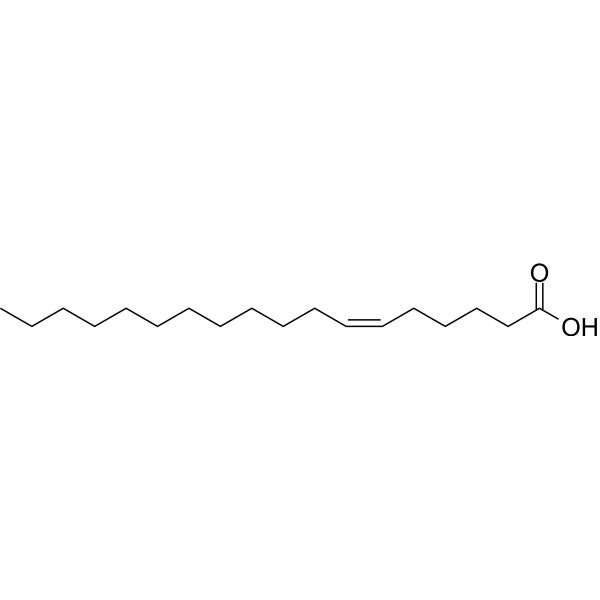
Petroselinic acid, a positional isomer of oleic acid, is isolated from the vegetable oil of Coriandrum sativum fruits. Petroselinic acid is used as substrate for sophorolipid fermentation. Petroselinic acid inhibits the biofilm formation in microorganisms, exhibits antibacterial and antifungal activities. Petroselinic acid is orally active [4.
loading...
    loading...
Cat. No.: HY-N7113
CAS No.: 111-01-3
Squalane, found in certain fish oils (especially shark liver oil), and some vegetable oils, is a saturated derivative of Squalene. Squalane shows anticancer, antioxidant, skin hydrating, and emollient activities .
loading...
    loading...
Cat. No.: HY-128476
CAS No.: 868-18-8
Purity:  ≥99.0%
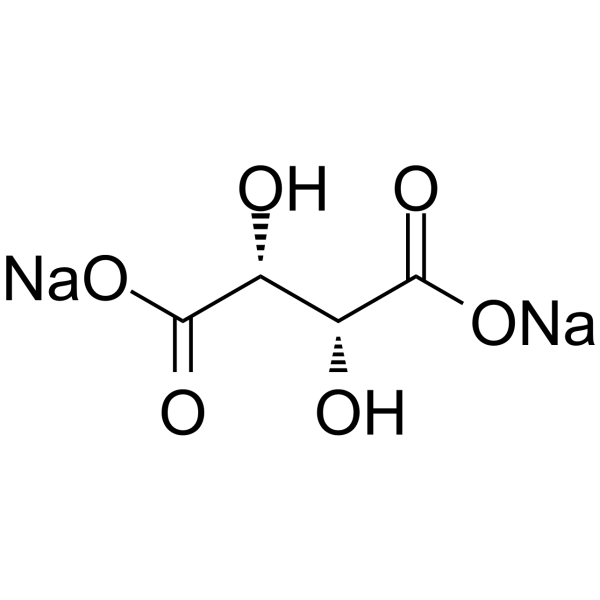
Sodium Tartrate (E335ii) is an approved food additive that functions as both a pH regulator and an emulsifier. Sodium Tartrate effectively inhibits hydrolysis, thermal oxidation, polymerization and coloration of vegetable oil during high-temperature heating, exhibiting significant antioxidant activity. The DL-tartaric acid component of Sodium Tartrate has an absorption rate of up to 90% in brown rats, while the absorption rate of related tartaric acid in humans is only 20% .
loading...
    loading...
Cat. No.: HY-N7113S
CAS No.: 16514-83-3
Squalane-d62 is the deuterium labeled Squalane . Squalane, found in certain fish oils (especially shark liver oil), and some vegetable oils, is a saturated derivative of Squalene. Squalane shows anticancer, antioxidant, skin hydrating, and emollient activities .
loading...
    loading...
Cat. No.: HY-W093282
CAS No.: 8013-07-8
Synonyms: Soybean oil epoxide
Epoxidized soya bean oil (ESBO) is a vegetable oil-derived organic compound used as a plasticizer and stabilizer in various applications. It is produced by epoxidation of soybean oil, which introduces epoxy groups into the fatty acid chains of the oil. ESBO is a viscous, pale yellow liquid that is soluble in many organic solvents, such as chloroform and ethanol, but insoluble in water. It is commonly used as a plasticizer in polyvinyl chloride (PVC) products, including toys, food packaging materials and medical devices. In addition to its plasticizing properties, ESBO acts as an antioxidant and UV stabilizer, helping to prevent degradation and discoloration of PVC products over time. ESBOs have been investigated for their potential use in biodegradable plastics and as bio-based alternatives to traditional petroleum-derived plasticizers.
loading...
    loading...
Cat. No.: HY-126386A
CAS No.: 9032-75-1
Research Areas:  

Others

Pectinase, aspergillus aculeatus is a pectin-degrading enzyme with the activity of catalyzing the decomposition of pectin into galacturonic acid. Pectinase, aspergillus aculeatus can be applied in a variety of industrial fields, including juice extraction and clarification, vegetable oil extraction, wine clarification, cocoa and coffee fermentation, paper bleaching, plant fiber degumming, cotton bioscouring, bioenergy production, wastewater treatment, and use as a poultry feed additive to reduce feed viscosity .
loading...
    loading...
Cat. No.: HY-W585827
CAS No.: 497-04-1
Synonyms: 2-MCPD
Target:  

Drug Derivative

Research Areas:  

Others

2-Chloro-1,3-propanediol (2-MCPD) is a pharmaceutical intermediate. 2-Chloro-1,3-propanediol is a common glycerol-derived chemical intermediate and also a food processing contaminant. 2-Chloro-1,3-propanediol can cross the intestinal barrier model via paracellular diffusion. 2-Chloro-1,3-propanediol induces renal and testicular toxicity in animal models. 2-Chloro-1,3-propanediol can be used in research related to organic synthesis .
loading...
    loading...
Cat. No.: HY-N7113R
CAS No.: 111-01-3
Squalane (Standard) is the analytical standard of Squalane. This product is intended for research and analytical applications. Squalane, found in certain fish oils (especially shark liver oil), and some vegetable oils, is a saturated derivative of Squalene. Squalane shows anticancer, antioxidant, skin hydrating, and emollient activities .
loading...
    loading...
Cat. No.: HY-131306B
CAS No.: 629-56-1
Synonyms: Gaidic acid
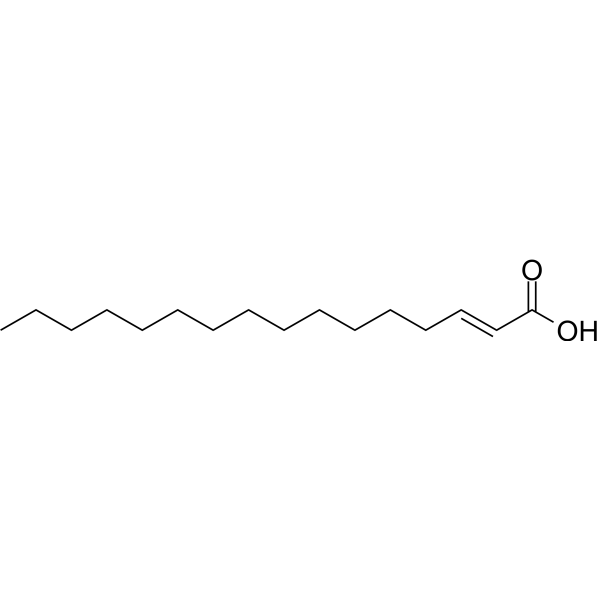
2-Hexadecenoic acid is a natural unsaturated fatty acid. It is ubiquitously present in various animal and plant tissues, especially adipose tissue and certain vegetable oils, such as macadamia nut oil. 2-Hexadecenoic acid has unique chemical properties that make it an important component of cell membranes and storage lipids, and participates in various metabolic processes such as lipid metabolism and inflammation. It's also been linked to potential health benefits, including improved insulin sensitivity and a lower risk of heart disease.
loading...
    loading...
Cat. No.: HY-W753927
CAS No.: 2420-42-0
Synonyms: C18:2(9E,12Z); C18:2 n-6
Target:  

Endogenous Metabolite

Research Areas:  

Metabolic Disease

9(E),12(Z)-Octadecadienoic acid is an ω-6 polyunsaturated fatty acid and an isomer of linoleic acid (HY-N0729) that contains a trans double bond at the C9 position. It has been found as a minor component of bovine milk fat and in partially hydrogenated vegetable oils. 9(E),12(Z)-Octadecadienoic acid levels increase in rabbit meat following supplementation with heated sunflower oil, α-tocopheryl acetate, and zinc.
loading...
    loading...
Cat. No.: HY-W585827S
CAS No.: 1216764-05-4
Synonyms: 2-MCPD-d5
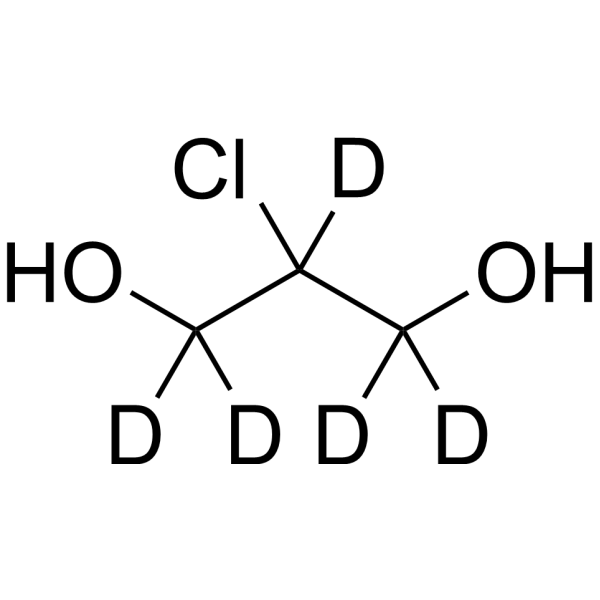
2-Chloro-1,3-propanediol-d5 (2-MCPD-d5) is the deuterated-labeled 2-Chloro-1,3-propanediol (HY-W585827). 2-Chloro-1,3-propanediol (2-MCPD) is a pharmaceutical intermediate. 2-Chloro-1,3-propanediol is a common glycerol-derived chemical intermediate and also a food processing contaminant. 2-Chloro-1,3-propanediol can cross the intestinal barrier model via paracellular diffusion. 2-Chloro-1,3-propanediol induces renal and testicular toxicity in animal models. 2-Chloro-1,3-propanediol can be used in research related to organic synthesis .
loading...
    loading...
Cat. No.: HY-W585827S1
CAS No.: 1216764-05-4
Synonyms: 2-MCPD-d5 (major)
2-Chloro-1,3-propanediol-d5 (major) (2-MCPD-d5 (major)) is the deuterated-labeled 2-Chloro-1,3-propanediol (HY-W585827). 2-Chloro-1,3-propanediol (2-MCPD) is a pharmaceutical intermediate. 2-Chloro-1,3-propanediol is a common glycerol-derived chemical intermediate and also a food processing contaminant. 2-Chloro-1,3-propanediol can cross the intestinal barrier model via paracellular diffusion. 2-Chloro-1,3-propanediol induces renal and testicular toxicity in animal models. 2-Chloro-1,3-propanediol can be used in research related to organic synthesis .
loading...
    loading...
Cat. No.: HY-179362
CAS No.: 68334-28-1
Research Areas:  

Others

Hydrogenated vegetable oil is a suppository thickener and hardener that can be used as a pharmaceutical excipient.
loading...
    loading...
Cat. No.: HY-W718351
CAS No.: 5684-71-9
Synonyms: C18:1(8Z); cis-8-Octadecenoate; Δ8-cis-Octadecenoic acid
Target:  

Endogenous Metabolite

Research Areas:  

Metabolic Disease

cis-8-Octadecenoic acid is a monounsaturated fatty acid and an isomer of oleic acid (HY-N1446), trans-vaccenic acid (HY-113427), trans-petroselinic acid, and cis-petroselinic acid. It has been found in partially hydrogenated vegetable oil and milk fat.
loading...
    loading...
Cat. No.: HY-W015370R
CAS No.: 39665-12-8
Squalane (Standard) is the analytical standard of Squalane. This product is intended for research and analytical applications. Squalane, found in certain fish oils (especially shark liver oil), and some vegetable oils, is a saturated derivative of Squalene. Squalane shows anticancer, antioxidant, skin hydrating, and emollient activities .
loading...
    loading...
Cat. No.: HY-113362R
CAS No.: 593-39-5
Petroselinic acid (Standard) is the analytical standard of Petroselinic acid. This product is intended for research and analytical applications. Petroselinic acid, a positional isomer of oleic acid, is isolated from the vegetable oil of Coriandrum sativum fruits. Petroselinic acid is used as substrate for sophorolipid fermentation. Petroselinic acid inhibits the biofilm formation in microorganisms, exhibits antibacterial and antifungal activities. Petroselinic acid is orally active [4.
loading...
    loading...
Cat. No.: HY-W111403
CAS No.: 1305-78-8
Calcium oxide (CaO) acts as a heterogeneous base catalyst. Calcium oxide can be extracted not only from waste materials such as oyster shells, eggshells and crab shells, but also exhibits tolerance to low to moderate oil quality, free fatty acid and water content in raw materials. Calcium oxide can be used in biodiesel production, where it effectively catalyzes the transesterification of vegetable oils or animal fats to produce alkyl esters .
loading...
    loading...

