9 Results for "

wasabi

" in MedChemExpress (MCE) Product Catalog:
Products (9)

9 Results for "wasabi" in MCE Product Catalog:

Cat. No.: HY-101371
CAS No.: 4430-35-7
Purity:  99.20%
Target:  

Keap1-Nrf2

Research Areas:  

Cancer

Hesperin is a bioactive ingredient present in Japanese horseradish (wasabi) and has been shown to be an Nrf2 activator.
loading...
    loading...
Cat. No.: HY-N2589
CAS No.: 19416-87-6
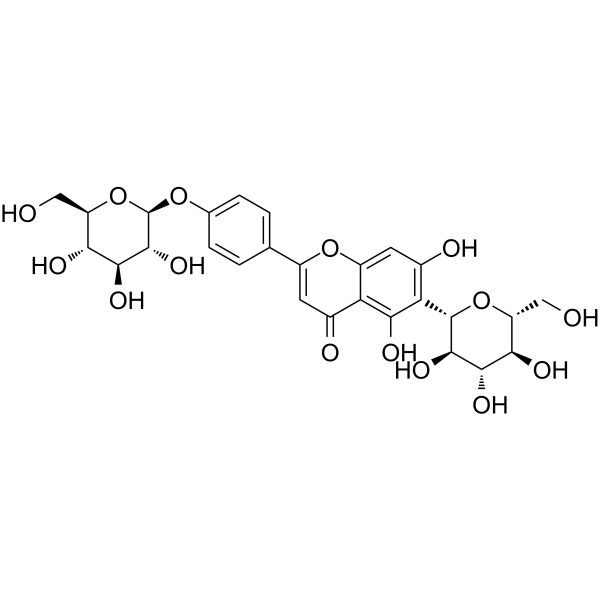
Isosaponarin is a flavone glycoside isolated from wasabi leaves. Isosaponarin is a P4HA2 enzymatic agonist. Isosaponarin increases collagen synthesis via up-regulated TGF-β type II receptor (TβR-II) and prolyl 4-hydroxylase (P4H) proteins production, promoting skin health and wound healing. Isosaponarin-rich plants exhibit strong antimicrobial, antioxidant, anti-hyaluronidase, antiplatelet, anti-atopic dermatitis, and anti-tumor effects .
loading...
    loading...
Cat. No.: HY-W714137
CAS No.: 4430-39-1
Synonyms: Lesquerellin; 6-Methylthiohexyl isothiocyanate
Target:  

Bacterial

Research Areas:  

Infection

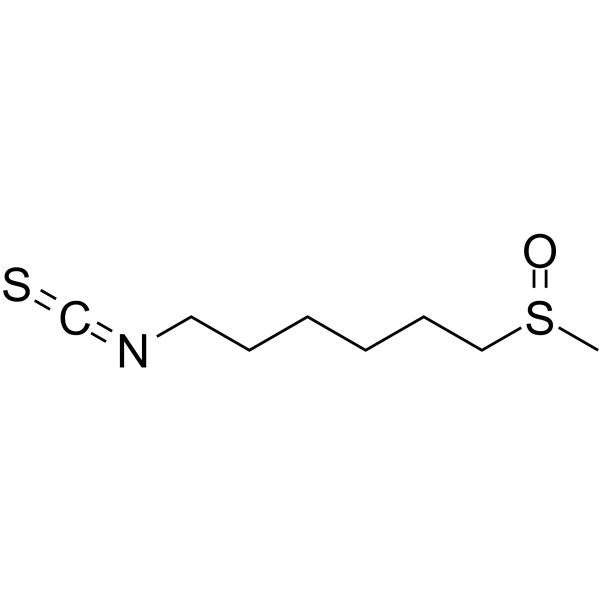
(6-Isothiocyanatohexyl)(methyl)sulfane (Lesquerellin; 6-Methylthiohexyl isothiocyanate) is an isothiocyanate found in wasabi (W. japonica) and has various biological activities. (6-Isothiocyanatohexyl)(methyl)sulfane is active against the bacterium Bacillus subtilis and the fungus T. mentagrophytes (MIC=25 μg/mL). (6-Isothiocyanatohexyl)(methyl)sulfane also has anthelmintic activity against blue mussel (M. edulis). (6-Isothiocyanatohexyl)(methyl)sulfane has antifouling activity when applied to polyvinyl chloride (PVC) panels at a concentration of 50 μmol/cm2 in a conventional immersion test.
loading...
    loading...
Cat. No.: HY-114644
CAS No.: 52946-22-2
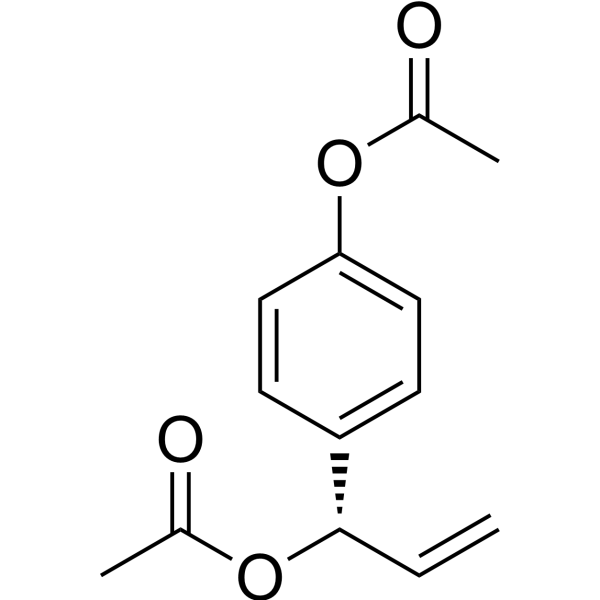
Galangal acetate is a wasabi-like spicy compound .
loading...
    loading...
Cat. No.: HY-P5914
CAS No.: 2569291-86-5
Synonyms: WaTx
Target:  

TRP Channel

Research Areas:  

Neurological Disease

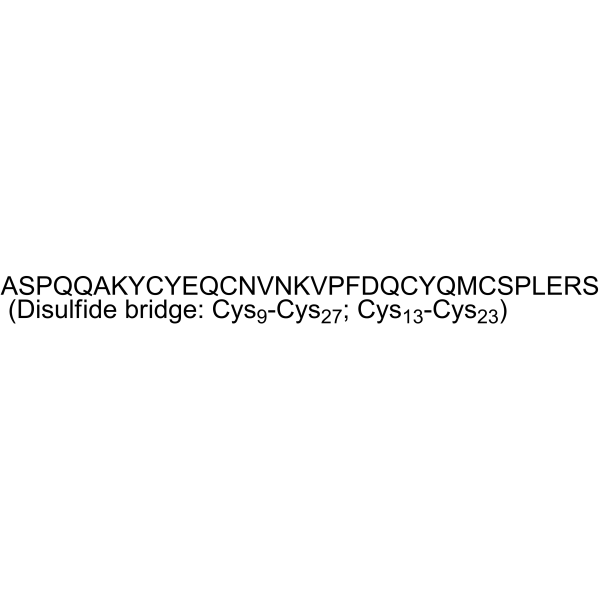
Wasabi Receptor Toxin is a cell-penetrating scorpion toxin. Wasabi Receptor Toxin is the activator for TRPA1 ion channel with EC50 in nanomolar level, and prolongs the channel open time, but reduces Ca 2+ permeability. Wasabi Receptor Toxin causes thermal hypersensitivity and mechanical allodynia in rats, without triggering neurogenic inflammation .
loading...
    loading...
Cat. No.: HY-P5914A
Synonyms: WaTx TFA
Target:  

TRP Channel

Research Areas:  

Neurological Disease

Wasabi Receptor Toxin TFA (WaTx TFA) is the TFA salt form of Wasabi Receptor Toxin (HY-P5914). Wasabi Receptor Toxin TFA is a cell-penetrating scorpion toxin. Wasabi Receptor Toxin TFA is the activator for TRPA1 ion channel with EC50 in nanomolar level, and prolongs the channel open time, but reduces Ca 2+ permeability. Wasabi Receptor Toxin TFA causes thermal hypersensitivity and mechanical allodynia in rats, without triggering neurogenic inflammation .
loading...
    loading...
Cat. No.: HY-N15326
CAS No.: 18377-50-9
Phytoalexine (Compound 8) is a phytoalexin found in wasabi with antifungal activity against fungi such as Phoma lingam and Phoma wasabiae. Phytoalexine inhibits spore germination and mycelial growth of fungi. Phytoalexine is promising for research of pesticides against plant fungal diseases .
loading...
    loading...
Cat. No.: HY-P811589
Synonyms: ANKTM1, TRPA1, Transient receptor potential cation channel subfamily A member 1, Ankyrin-like with transmembrane domains protein 1, Transformation-sensitive protein p120, wasabi receptor, p120

Host:  

Rabbit

Application:  

WB

Reactivity:  

Human, Mouse, Rat

loading...
    loading...
Cat. No.: HY-P701382
Purity:  ≥ 90%, as determined by reducing SDS-PAGE.
Synonyms: TRPA1; ANKTM1; Transient receptor potential cation channel subfamily A member 1; Ankyrin-like with transmembrane domains protein 1; Transformation-sensitive protein p120; p120; wasabi receptor; Transient Receptor Potential Cation Channel, Subfamily A, Mem
Species:  
Source:  
loading...
    loading...

