



Sucralose (Standard)

Based on 1 Customer Validation
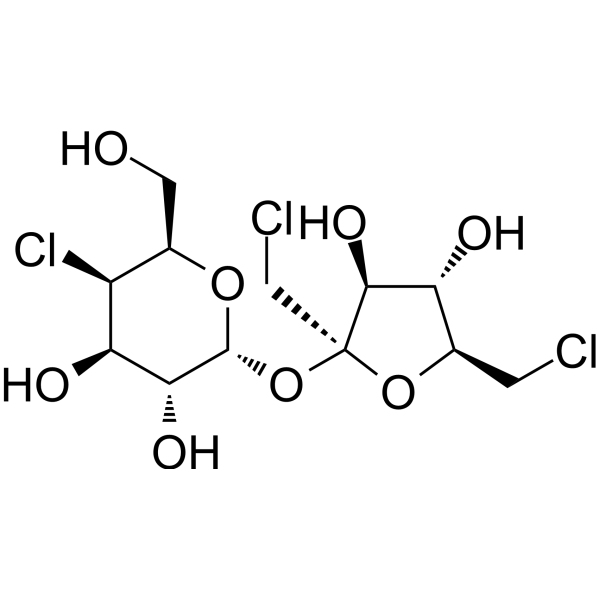
Sucralose (Standard) is the analytical standard of Sucralose. This product is intended for research and analytical applications. Sucralose?(E955; Trichlorosucrose) is a?non-nutritive?artificial?sweetener and sugar substitute. Sucralose can activate a conserved neural fasting response and thereby exerts an appetite-stimulating effect in rodents.
For research use only. We do not sell to patients.
- Purity : 99.72%
- CAS No.: 56038-13-2
- Formula: C12H19Cl3O8
- Molecular Weight:397.63
-
Storage:
Please store the product under the recommended conditions in the Certificate of Analysis.


To place orders, for customer services and technical support, please contact: MedChemExpress USA
Tel: 609-228-6898 E-mail: [email protected] [email protected]


-
 Product Information
-
Chemical Information
- Purity & Documentation
-
 Help & FAQs


-
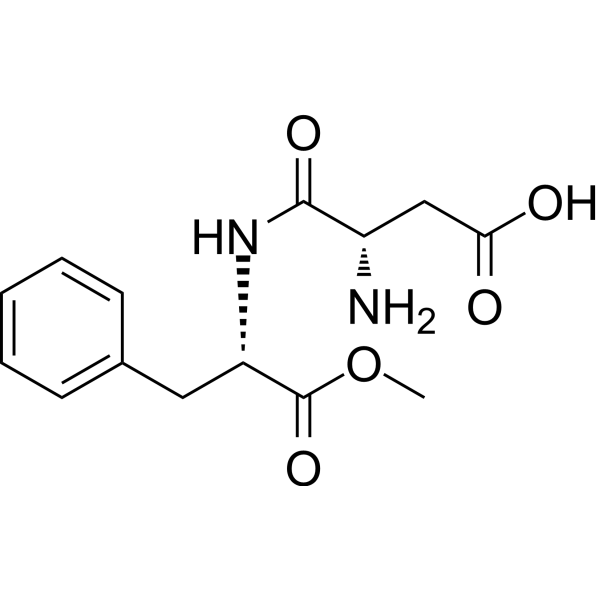
HY-B0361
AspartameSweetener -
HY-N0614
SucraloseNon-Nutritive Sweetener -
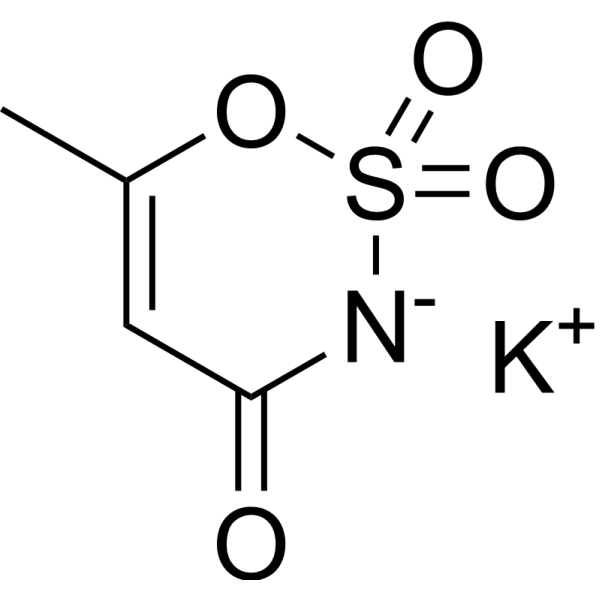
HY-D0195
Acesulfame potassiumSweetener -

HY-N0614GL
Sucralose (GMP Like)Non-Nutritive Sweetener -
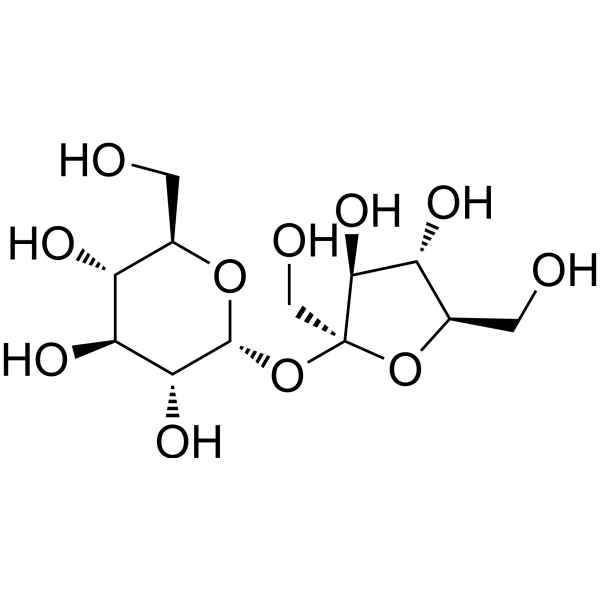
HY-B1779
SucroseDisaccharide -
HY-N2325
D-(+)-CellobioseEndogenous Metabolite -

HY-B1779R
Sucrose (Standard)Disaccharide -
HY-N7092
D-FructoseEndogenous Metabolite -
HY-N7059
Lactobionic acidBacterial Inhibitor -

HY-N2325R
D-(+)-Cellobiose (Standard)Endogenous Metabolite -
HY-N2024
MaltoseDisaccharide -
HY-W015611
L-(+)-Arabinose


Product Information
Information
Application
The compound is the grade of analytical standard, which is the reference standard supplied assay. It is commonly used in qualitative, quantitative and methodological research experiments in HPLC, GC and MS.


Chemical Information
-
CAS No. 56038-13-2
-
Appearance Solid
-
Molecular Weight 397.63
-
Formula C12H19Cl3O8
-
Color White to off-white
-
SMILES
ClC[C@]1(O[C@H](CCl)[C@@H](O)[C@@H]1O)O[C@H]([C@@H]([C@@H](O)[C@H]2Cl)O)O[C@@H]2CO
-
Synonyms
E955 (Standard); Trichlorosucrose (Standard)
-
Shipping
Room temperature in continental US; may vary elsewhere.
-
Storage
Please store the product under the recommended conditions in the Certificate of Analysis.


Purity & Documentation
-
SDS (394 KB)
- English - EN (394 KB)
- Français - FR (394 KB)
- Deutsch - DE (394 KB)
- Norwegian - NO (394 KB)
- Español - ES (394 KB)
- Swedish - SV (394 KB)
- Italian - IT (394 KB)
- Korean - KR (394 KB)
- Portuguese - PT (394 KB)
-
Handling Instructions (2659 KB)
References
[1]. M S, et al. Sucralose administered in feed, beginning prenatally through lifespan, induces hematopoietic neoplasias in male swiss mice. Int J Occup Environ Health. 2016 Jan;22(1):7-17. [Content Brief]
[2]. Nabanita Kundu, et al. Sucralose promotes accumulation of reactive oxygen species (ROS) and adipogenesis in mesenchymal stromal cells. Stem Cell Res Ther. 2020 Jun 26;11(1):250. [Content Brief]

Calculators
Concentration (start) × Volume (start) = Concentration (final) × Volume (final)


Sucralose (Standard) Related Classifications
HY-N0614R Related Classifications
 Powered by Bioz