



Lactobionic acid

Based on 1 Customer Validation
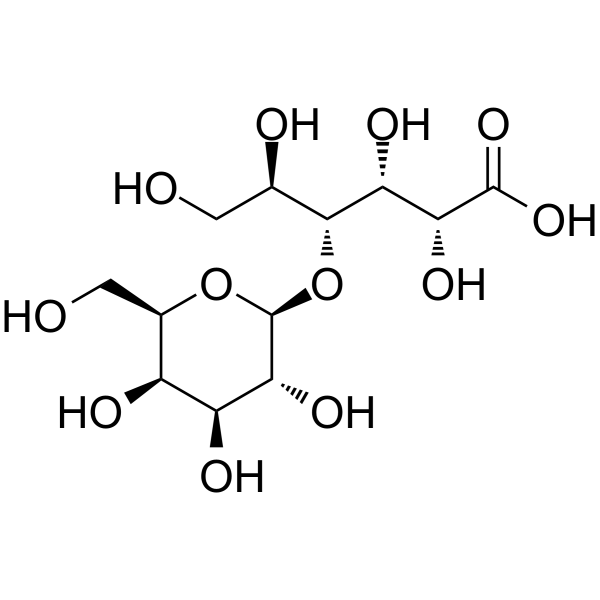
Lactobionic acid is a bionic acid that can be naturally found in the Caspian Sea yogurt and chemically constituted of a gluconic acid bonded to a galactose. Lactobionic acid has antioxidant, antimicrobial, chelating, stabilizer, acidulant, and moisturizing properties. Lactobionic acid can be obtained by electrolytic methods, microbial fermentation or biocatalytic approaches. Lactobionic acid can be used in foodstuffs, to produce new functional products and against food-borne pathogens. Lactobionic acid inhibits DNA repair and protein synthesis, induction of oxidative stress and inhibition of metabolic pathways against MRSA.
Nur für Forschungszwecke. Wir verkaufen nicht an Patienten.
- Reinheit : 99.23%
- CAS. Nr.: 96-82-2
- Formel: C12H22O12
- Molecular Weight:358.30
-
Speicherung:Powder -20°C, 3 years , 4°C, 2 years ; In solvent -80°C, 2 years , -20°C, 1 year

To place orders, for customer services and technical support, please contact: MedChemExpress USA
Tel: 609-228-6898 E-mail: [email protected] [email protected]


-
 Biologische Aktivität
-
Chemical Information
-
Lösungsmittel & Löslichkeit
- Protokoll
- Reinheit & Dokumentation
- Verweise
-
 Help & FAQs


-
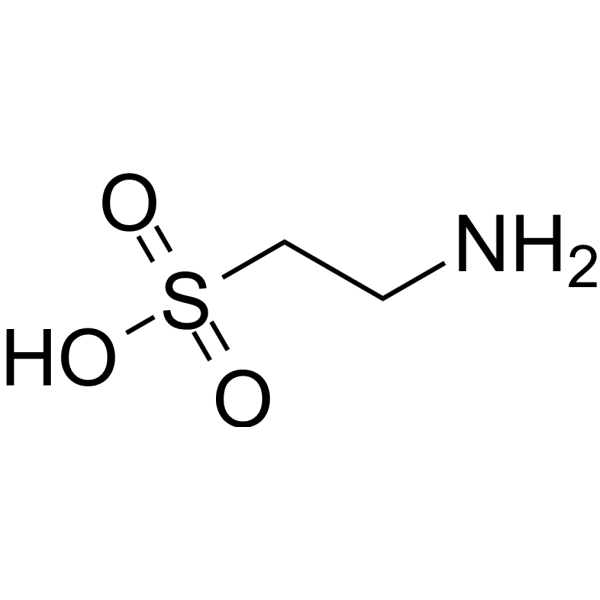
HY-B0351
TaurineAutophagy Inducer -
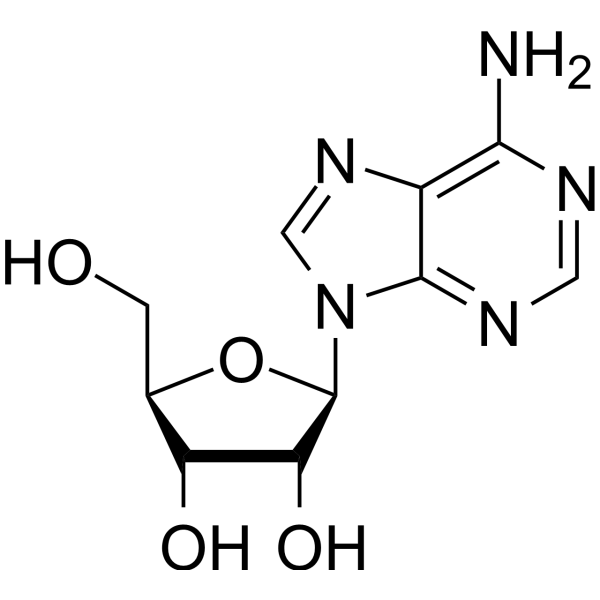
HY-B0228
AdenosineEndogenous Autacoid -
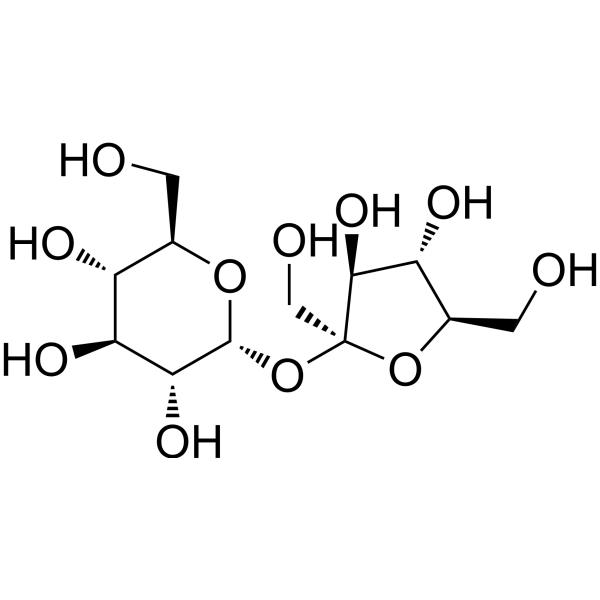
HY-B1779
SucroseDisaccharide -

HY-N7059R
Lactobionic acid (Standard)Bacterial Inhibitor -
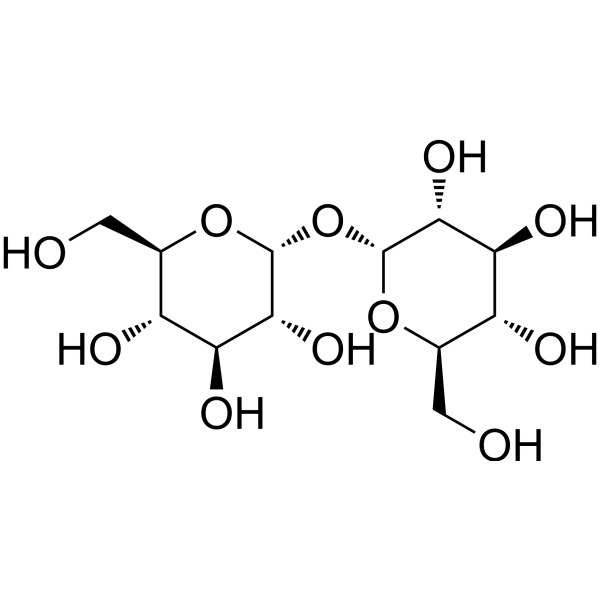
HY-N1132
D-(+)-TrehaloseDisaccharide -
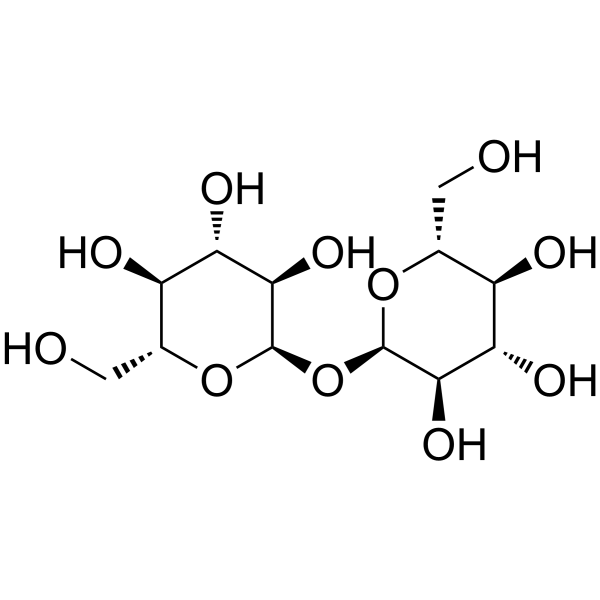
HY-CP001
D-Trehalose, Carrier ProteinCarrier Protein -
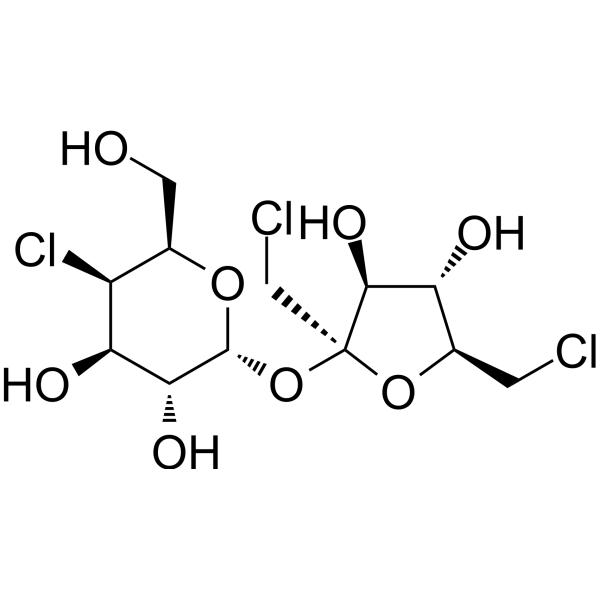
HY-N0614
SucraloseNon-Nutritive Sweetener -
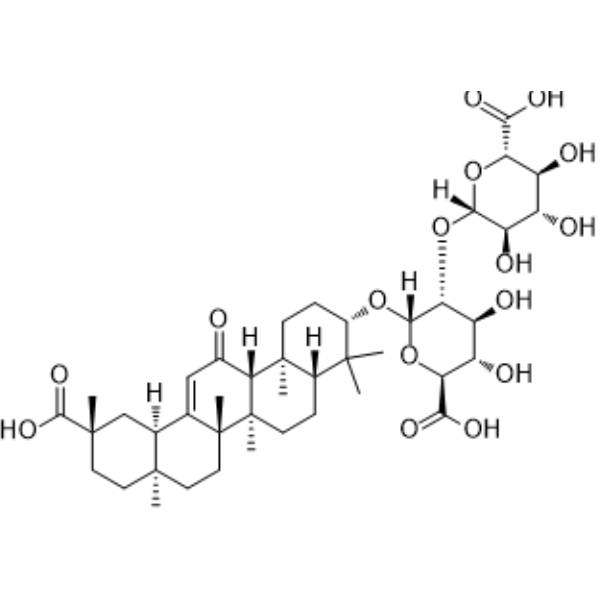
HY-N0184
Glycyrrhizic acidHMGB1 Antagonist -
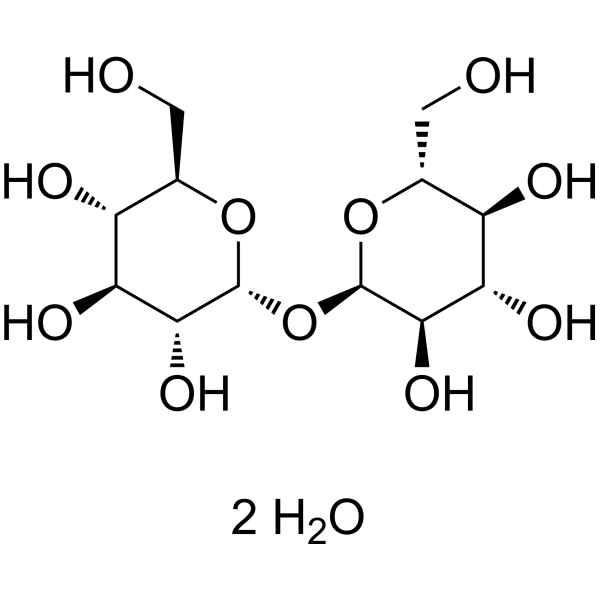
HY-N1132A
D-(+)-Trehalose dihydrateEndogenous Metabolite -

HY-B1779R
Sucrose (Standard)Disaccharide -
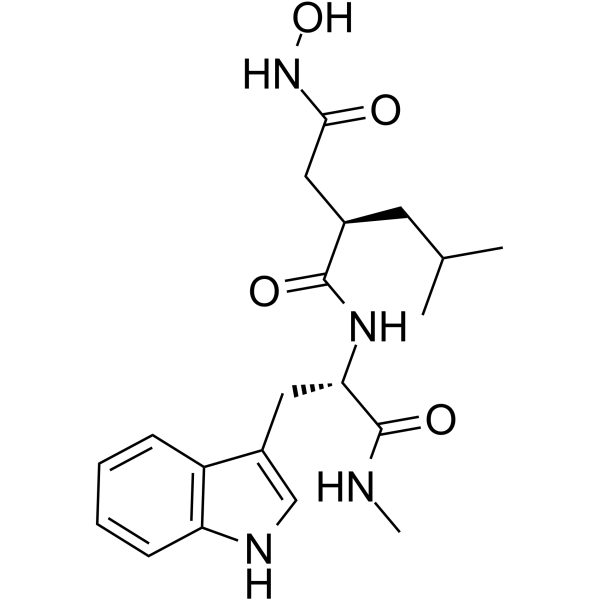
HY-15768
IlomastatMMP Inhibitor -

HY-N1132R
D-(+)-Trehalose (Standard)Disaccharide


Biologische Aktivität
Beschreibung
In Vitro
Lactobionic acid (7.5-15 mg/mL) negatively affects the growth of Staphylococcus aureus in a dose-dependent manner, damaging the integrity of the cell membrane[2].
Lactobionic acid (6.25 mg/mL) leads to cell damage in P. taetrolens ATCC 13525 cells[2].
MedChemExpress (MCE) has not independently confirmed the accuracy of these methods. They are for reference only. Further protocols information, click here.


Chemical Information
-
CAS. Nr. 96-82-2
-
Appearance Solid
-
Molecular Weight 358.30
-
Formel C12H22O12
-
Color White to off-white
-
SMILES
O[C@H]([C@H]([C@@H]([C@@H](CO)O)O[C@H]1[C@@H]([C@H]([C@H]([C@@H](CO)O1)O)O)O)O)C(O)=O
-
Structure Classification
-
Initial Source
Pseudomonas taetrolens
-
Versand
Room temperature in continental US; may vary elsewhere.
-
Speicherung
Powder -20°C 3 years 4°C 2 years In solvent -80°C 2 years -20°C 1 year


Lösungsmittel & Löslichkeit
In Vitro:
H2O : 125 mg/mL (348.87 mM; Need ultrasonic)
DMSO : 100 mg/mL (279.10 mM; Need ultrasonic; Hygroscopic DMSO has a significant impact on the solubility of product, please use newly opened DMSO)
Please refer to the solubility information to select the appropriate solvent. Once prepared, please aliquot and store the solution to prevent product inactivation from repeated freeze-thaw cycles.
Storage method and period of stock solution: -80°C, 2 years; -20°C, 1 year. When stored at -80°C, please use it within 2 years. When stored at -20°C, please use it within 1 year.
* Note: If you choose water as the stock solution, please dilute it to the working solution, then filter and sterilize it with a 0.22 μm filter before use.
Please refer to the solubility information to select the appropriate solvent. Once prepared, please aliquot and store the solution to prevent product inactivation from repeated freeze-thaw cycles.
Storage method and period of stock solution: -80°C, 2 years; -20°C, 1 year. When stored at -80°C, please use it within 2 years. When stored at -20°C, please use it within 1 year.
* Note: If you choose water as the stock solution, please dilute it to the working solution, then filter and sterilize it with a 0.22 μm filter before use.
Konzentration (Stammlösung) × Volumen (Stammlösung) = Konzentration (Ziellösung) × Volumen (Ziellösung)
In Vivo:
Select the appropriate dissolution method based on your experimental animal and administration route.
- For the following dissolution methods, please ensure to first prepare a clear stock solution using an In Vitro approach and then sequentially add co-solvents:
- To ensure reliable experimental results, the clarified stock solution can be appropriately stored based on storage conditions. As for the working solution for In Vivo experiments, it is recommended to prepare freshly and use it on the same day.
- The percentages shown for the solvents indicate their volumetric ratio in the final prepared solution. If precipitation or phase separation occurs during preparation, heat and/or sonication can be used to aid dissolution.
Add each solvent one by one: 10% DMSO 40% PEG300 5% Tween-80 45% Saline
Solubility: ≥ 2.5 mg/mL (6.98 mM); Clear solution
This protocol yields a clear solution of ≥ 2.5 mg/mL (saturation unknown).
Taking 1 mL working solution as an example, add 100 μL DMSO stock solution (25.0 mg/mL) to 400 μL PEG300, and mix evenly; then add 50 μL Tween-80 and mix evenly; then add 450 μL Saline to adjust the volume to 1 mL.
Preparation of Saline: Dissolve 0.9 g sodium chloride in ddH₂O and dilute to 100 mL to obtain a clear Saline solution.
Add each solvent one by one: 10% DMSO 90% (20% SBE-β-CD in Saline)
Solubility: ≥ 2.5 mg/mL (6.98 mM); Clear solution
This protocol yields a clear solution of ≥ 2.5 mg/mL (saturation unknown).
Taking 1 mL working solution as an example, add 100 μL DMSO stock solution (25.0 mg/mL) to 900 μL 20% SBE-β-CD in Saline, and mix evenly.
Preparation of 20% SBE-β-CD in Saline (4°C, storage for one week): 2 g SBE-β-CD powder is dissolved in 10 mL Saline, completely dissolve until clear.
For the following dissolution methods, please prepare the working solution directly:
It is recommended to prepare fresh solutions and use them promptly within a short period of time.
The percentages shown for the solvents indicate their volumetric ratio in the final prepared solution. If precipitation or phase separation occurs during preparation, heat and/or sonication can be used to aid dissolution.
Add each solvent one by one: PBS
Solubility: 100 mg/mL (279.10 mM); Clear solution; Need ultrasonic
In Vivo Dissolution Calculator
Please enter the basic information of animal experiments:
-
-
-
-
Recommended: Prepare an additional quantity of animals to account for potential losses during experiments.
Working solution concentration: 0.22 mg/mL
This product has good water solubility, please refer to the measured solubility data in water/PBS/Saline for details.

Protokoll
-
Research Protocol for Infectious Diseases
Infectious-disease experiments test how pathogens interact with host barriers, innate immune receptors, inflammatory signaling, pathogen replication, and tissue injury; pattern-recognition receptors such as TLRs, RIG-I-like receptors, NOD-like receptors, and inflammasomes detect microbial molecules and activate NF-κB, interferon, and cytokine responses. The central hypothesis is that infection severity reflects the balance between pathogen burden and host response: protective inflammation restricts pathogen growth, whereas excessive or mislocalized inflammation contributes to tissue damage and disease phenotype. Unresolved questions include which host pathways are protective versus pathogenic, why some infection models fail to translate to human disease, and which combined readouts best predict clinically relevant infection outcomes.
-
ROS/oxidative-stress fluorescent staining
ROS/oxidative-stress fluorescent staining uses cell-permeant fluorogenic probes that become fluorescent after oxidation inside cells or tissues; commonly used examples include DCFH-DA/DCFDA for broad cellular oxidant detection, DHE for superoxide-related signal detection, MitoSOX for mitochondrial superoxide-related signal detection, and CellROX probes for oxidative-stress-associated fluorescence readouts. The assay detects probe oxidation rather than a single ROS species unless the probe and analysis method have been chemically validated for that species. DCFH-DA enters cells, is deacetylated by intracellular esterases to DCFH, and produces fluorescent DCF after oxidation, so the readout is used as an operational measure of total cellular oxidative stress rather than a species-specific ROS measurement. DHE and MitoSOX can report superoxide-related oxidation, but red fluorescence alone can include non-specific ethidium-like oxidation products; HPLC or optimized spectral approaches are


Reinheit & Dokumentation
-
Data Sheet (276 KB)
-
SDS (394 KB)
- English - EN (394 KB)
- Français - FR (394 KB)
- Deutsch - DE (394 KB)
- Norwegian - NO (394 KB)
- Español - ES (394 KB)
- Swedish - SV (394 KB)
- Italian - IT (394 KB)
- Korean - KR (394 KB)
- Portuguese - PT (394 KB)
-
Handling Instructions (2659 KB)
Verweise
[1]. Cardoso T, et al. Lactobionic Acid as a Potential Food Ingredient: Recent Studies and Applications. J Food Sci. 2019 Jul;84(7):1672-1681. [Content Brief]
[2]. Sáez-Orviz, S., et al., (2022). The antimicrobial and bioactive properties of lactobionic acid. Journal of the science of food and agriculture, 102(9), 3495–3502. [Content Brief]


Complete Stock Solution Preparation Table
Please refer to the solubility information to select the appropriate solvent. Once prepared, please aliquot and store the solution to prevent product inactivation from repeated freeze-thaw cycles.
Storage method and period of stock solution: -80°C, 2 years; -20°C, 1 year. When stored at -80°C, please use it within 2 years. When stored at -20°C, please use it within 1 year.
| Optional Solvent | Concentration Solvent Mass | 1 mg | 5 mg | 10 mg | 25 mg |
|---|---|---|---|---|---|
| DMSO / H2O | 1 mM | 2.7910 mL | 13.9548 mL | 27.9096 mL | 69.7739 mL |
| 5 mM | 0.5582 mL | 2.7910 mL | 5.5819 mL | 13.9548 mL | |
| 10 mM | 0.2791 mL | 1.3955 mL | 2.7910 mL | 6.9774 mL | |
| 15 mM | 0.1861 mL | 0.9303 mL | 1.8606 mL | 4.6516 mL | |
| 20 mM | 0.1395 mL | 0.6977 mL | 1.3955 mL | 3.4887 mL | |
| 25 mM | 0.1116 mL | 0.5582 mL | 1.1164 mL | 2.7910 mL | |
| 30 mM | 0.0930 mL | 0.4652 mL | 0.9303 mL | 2.3258 mL | |
| 40 mM | 0.0698 mL | 0.3489 mL | 0.6977 mL | 1.7443 mL | |
| 50 mM | 0.0558 mL | 0.2791 mL | 0.5582 mL | 1.3955 mL | |
| 60 mM | 0.0465 mL | 0.2326 mL | 0.4652 mL | 1.1629 mL | |
| 80 mM | 0.0349 mL | 0.1744 mL | 0.3489 mL | 0.8722 mL | |
| 100 mM | 0.0279 mL | 0.1395 mL | 0.2791 mL | 0.6977 mL |
* Note: If you choose water as the stock solution, please dilute it to the working solution, then filter and sterilize it with a 0.22 μm filter before use.


Lactobionic acid Related Classifications
HY-N7059 Related Classifications
 Powered by Bioz