



96-82-2
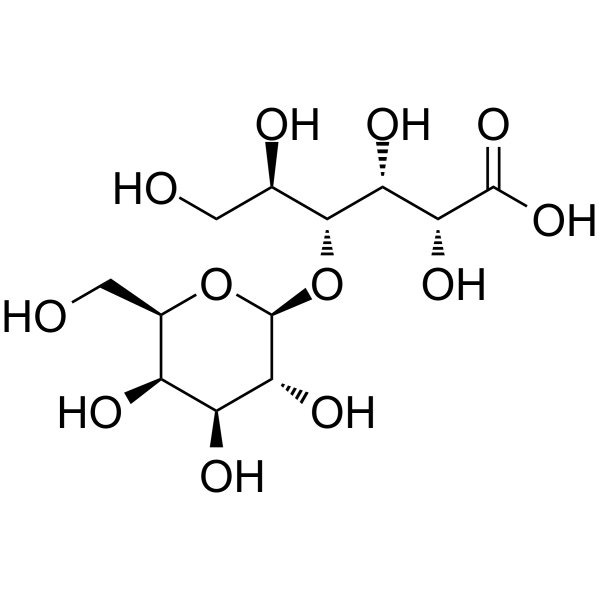
Chemical Structure
Lactobionic acid
- CAS. Nr.: 96-82-2
- Formula:C12H22O12
- Molecular Weight:358.30
IUPAC Name: (2R,3R,4R,5R)-2,3,5,6-tetrahydroxy-4-(((2S,3R,4S,5R,6R)-3,4,5-trihydroxy-6-(hydroxymethyl)tetrahydro-2H-pyran-2-yl)oxy)hexanoic acid
InChIKey: JYTUSYBCFIZPBE-AMTLMPIISA-N
SMILES: O[C@H]([C@H]([C@@H]([C@@H](CO)O)O[C@H]1[C@@H]([C@H]([C@H]([C@@H](CO)O1)O)O)O)O)C(O)=O
Biological Activity: Lactobionic acid is an orally active derivative of Lactose (HY-B2123). Lactobionic acid can intercalate into bacterial DNA and inhibit DNA repair. Lactobionic acid can serve as a prebiotic, cryoprotectant, humectant, acidulant, flavor enhancer, calcium carrier, bread anti-staling agent, food preservative, and emulsifier. Lactobionic acid promotes wound healing and skin renewal, maintains low skin pH, and supports moisturizing, anti-aging, and keratinization effects. Lactobionic acid negatively affects the growth of Staphylococcus aureus. Lactobionic acid can be used in research on obesity, foodborne diseases, and atopic dermatitis[1][2][3][4].
| Art. -Nr. | Produktname | Reinheit | Beschreibung | Pricing | |||||||||||||||||||
|---|---|---|---|---|---|---|---|---|---|---|---|---|---|---|---|---|---|---|---|---|---|---|---|
|
|
Lactobionic acid | 99.23% | Lactobionic acid is an orally active derivative of Lactose (HY-B2123). Lactobionic acid can intercalate into bacterial DNA and inhibit DNA repair. Lactobionic acid can serve as a prebiotic, cryoprotectant, humectant, acidulant, flavor enhancer, calcium carrier, bread anti-staling agent, food preservative, and emulsifier. Lactobionic acid promotes wound healing and skin renewal, maintains low skin pH, and supports moisturizing, anti-aging, and keratinization effects. Lactobionic acid negatively affects the growth of Staphylococcus aureus. Lactobionic acid can be used in research on obesity, foodborne diseases, and atopic dermatitis. | ||||||||||||||||||||
|
loading...
/
|
|||||||||||||||||||||||
|
|
Lactobionic acid (Standard) | ≥98% | Lactobionic acid (Standard) is an analytical standard for lactobionic acid. This product is intended for use in research and analytical applications. Lactobionic acid is a bionic acid that can be naturally found in the Caspian Sea yogurt and chemically constituted of a gluconic acid bonded to a galactose. Lactobionic acid has antioxidant, antimicrobial, chelating, stabilizer, acidulant, and moisturizing properties. Lactobionic acid can be obtained by electrolytic methods, microbial fermentation or biocatalytic approaches. Lactobionic acid can be used in foodstuffs, to produce new functional products and against food-borne pathogens. Lactobionic acid inhibits DNA repair and protein synthesis, induction of oxidative stress and inhibition of metabolic pathways against MRSA. | ||||||||||||||||||||
|
loading...
/
|
|||||||||||||||||||||||
-
Similarity Score 1.00
 HY-W423191Maltobionic acid
-
Similarity Score 0.88
 HY-B2123RLactose (Standard)
-
Similarity Score 0.88
 HY-N10618Epilactose
-
Similarity Score 0.88
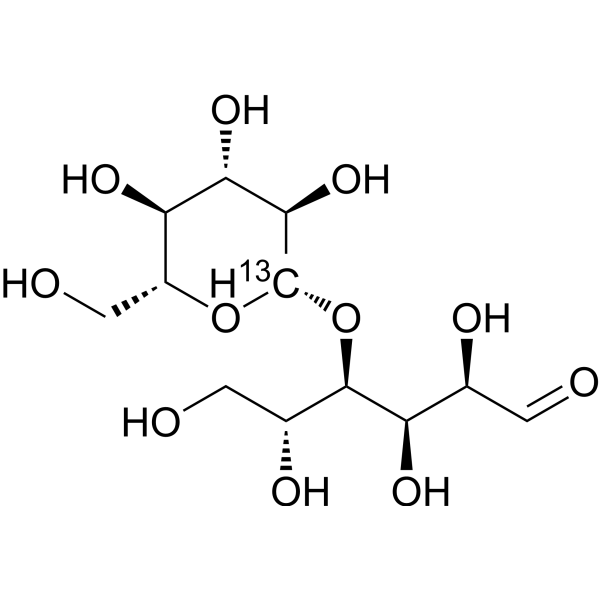 HY-N2325SD-(+)-Cellobiose-13C
-
Similarity Score 0.88
 HY-W5513864-O-(α-D-Mannopyranosyl)-D-mannose
-
Similarity Score 0.88
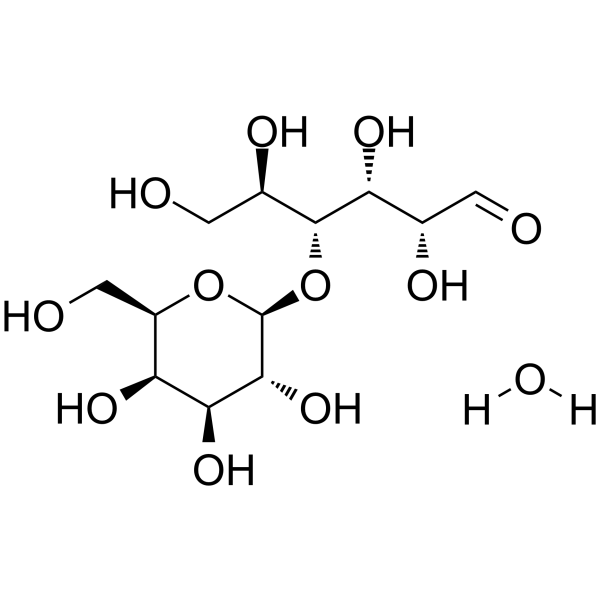 HY-B1673D-Lactose monohydrate
-
Similarity Score 0.87
 HY-178739Melibionic acid
-
Similarity Score 0.87
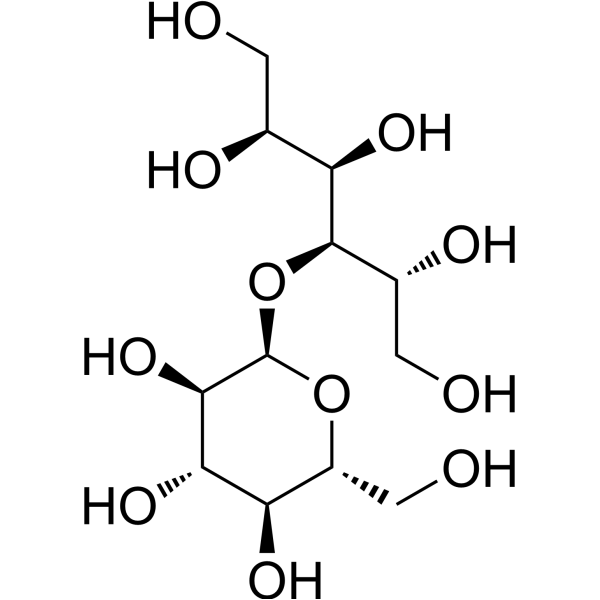 HY-B2122Maltitol
-
Similarity Score 0.87
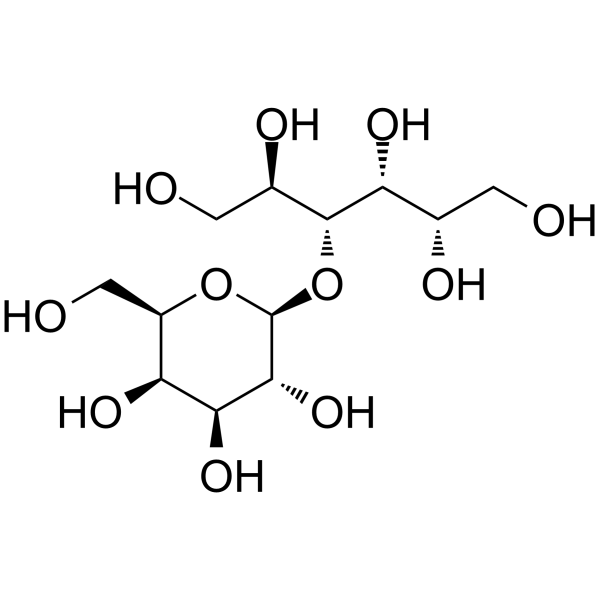 HY-N7104Lactitol
-

Explore the MedChemAI to find more analogs


References
- [1]. Cardoso T, et al. Lactobionic Acid as a Potential Food Ingredient: Recent Studies and Applications. Journal of food science. 2019 Jul;84(7):1672-1681. [Content Brief]
- [2]. Sáez-Orviz S, et al. The antimicrobial and bioactive properties of lactobionic acid. Journal of the science of food and agriculture. 2022 Jul;102(9):3495-3502. [Content Brief]
- [3]. Gutiérrez L F, Hamoudi S, Belkacemi K. Lactobionic acid: A high value-added lactose derivative for food and pharmaceutical applications[J]. International Dairy Journal, 2012, 26(2): 103-111.
- [4]. Goderska K, et al. The antioxidant and prebiotic properties of lactobionic acid. Applied microbiology and biotechnology. 2019 May;103(9):3737-3751.



