



Tauro-β-muricholic acid
Based on 6 publication(s) in Google Scholar
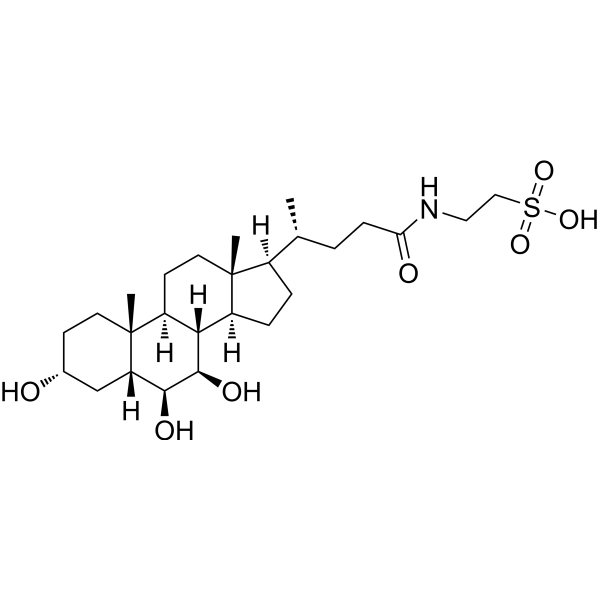
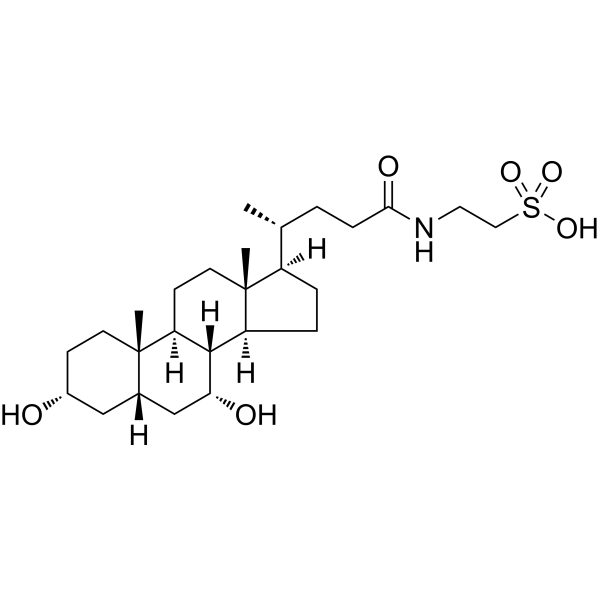
Tauro-β-muricholic acid (TβMCA) is an orally active trihydroxylated bile acid and a competitive, reversible FXR antagonist (IC50=40 μM). Tauro-β-muricholic acid inhibits bile acid-induced hepatocyte apoptosis by maintaining mitochondrial membrane potential, while simultaneously inhibiting intestinal FXR signaling, affecting bile acid synthesis, hepatic lipid metabolism, and insulin sensitivity. Accumulation of tauro-β-muricholic acid disrupts metabolic homeostasis, promoting cancer stem cell proliferation and tumor progression. The mechanisms of tauro-β-muricholic acid involve two aspects: first, inhibiting the translocation of the pro-apoptotic protein Bax to mitochondria and maintaining mitochondrial membrane potential (MMP); and second, blocking the FXR signaling pathway to regulate bile acid metabolism, reduce serum ceramide production, and downregulate the hepatic SREBP1C/CIDEA pathway. Tauro-β-muricholic acid possesses anti-hepatocyte apoptosis, bile acid homeostasis regulation, and liver fat accumulation reduction properties, and also functions as a biomarker, making it useful in the study of diseases such as bile acid metabolism disorders, non-alcoholic fatty liver disease, colorectal cancer, and liver fibrosis.
For research use only. We do not sell to patients.
- Purity : 99.91%
- CAS No.: 25696-60-0
- Formula: C26H45NO7S
- Molecular Weight:515.70
-
Storage:
-20°C, sealed storage, away from moisture
* In solvent : -80°C, 6 months; -20°C, 1 month (sealed storage, away from moisture)

To place orders, for customer services and technical support, please contact: MedChemExpress USA
Tel: 609-228-6898 E-mail: [email protected] [email protected]


-
 Biological Activity
-
Chemical Information
-
Solvent & Solubility
- Purity & Documentation
- References
-
 Help & FAQs


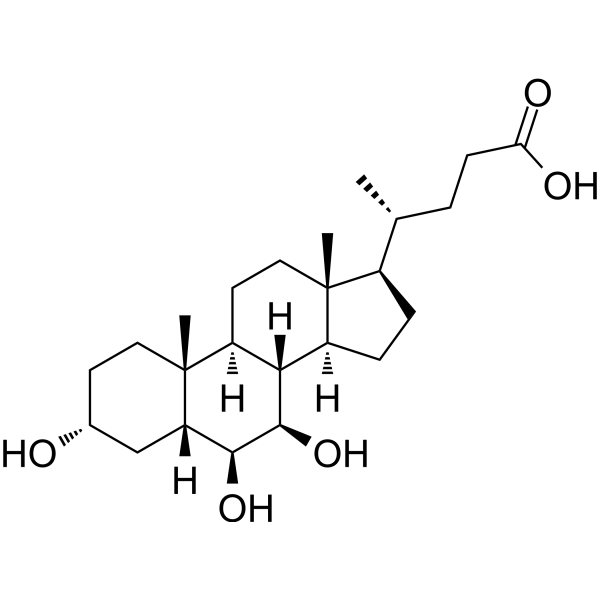
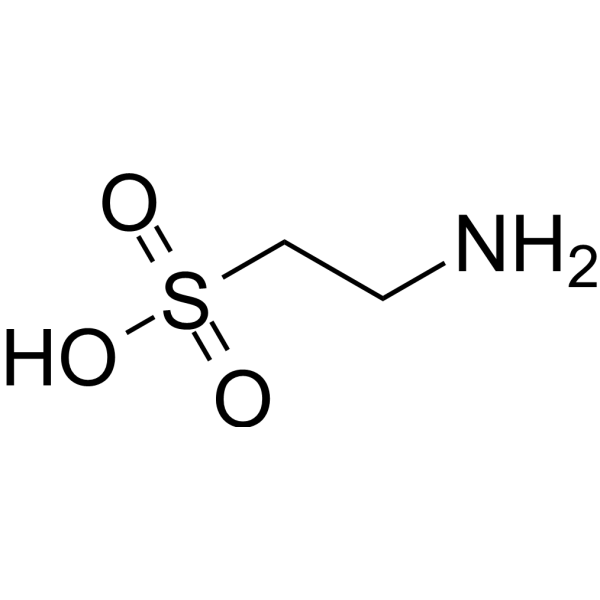
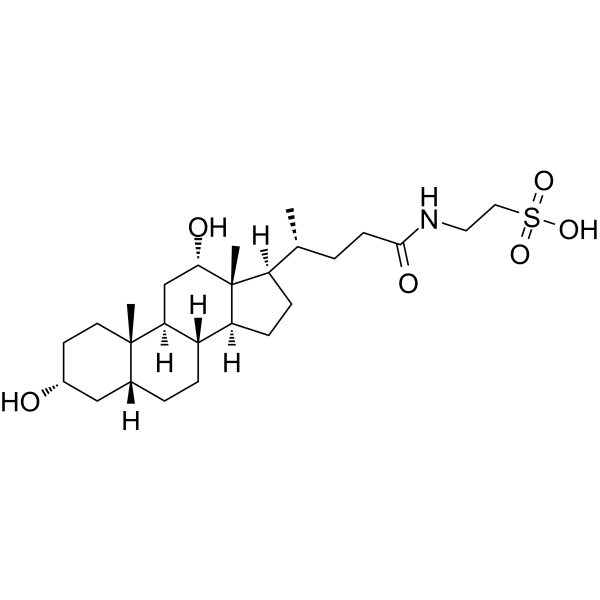


Publications Citing Use of MedChemExpress (MCE) Tauro-β-muricholic acid
More- Cancer Cell. 2026 Aug 10;44(8):1653-1671.e16.
- Cell. 2025 Aug 21;188(17):4530-4548.e25. [Abstract]
- Cell Host Microbe. 2024 Feb 14;32(2):191-208.e9. [Abstract]
- J Pharm Biomed Anal. 2026 Apr 27;278:117541.
- J Pharm Biomed Anal. 2025 Jul 15:259:116760. [Abstract]
- World J Gastrointest Oncol. 2025 Aug 15;17(8):107453. [Abstract]
 Customer Validation & Images

-
Bio/Physico-chemical Assay

-
RT-PCR


Biological Activity
Description
IC50 & Target
40 μM (FXR)[1]
In Vitro
Co-incubation of tauro-β-muricholic acid (25 μM; 4 h) with GCDCA reduced apoptosis in human Ntcp-HepG2 cells, and co-incubation with palmitic acid restored the GCDCA-induced disruption of mitochondrial membrane potential (MMP). Both treatments also inhibited the translocation of the pro-apoptotic protein Bax to the mitochondria[1].
MedChemExpress (MCE) has not independently confirmed the accuracy of these methods. They are for reference only.
-
Cell Line:Human Ntcp-transfected HepG2 cells, Primary rat hepatocytes, Primary mouse hepatocytes
-
Concentration:25 μmol/L (Ntcp-HepG2 cells, primary rat hepatocytes), 100 μmol/L (primary mouse hepatocytes)
-
Incubation Time:24 h
-
Result:When co-incubated with glycochenodeoxycholic acid (GCDCA), Tauro-β-muricholic acid reduced GCDCA-induced hepatocellular apoptosis to 49% in Ntcp-HepG2 cells, and significantly decreased apoptosis in primary rat and mouse hepatocytes after 4 hours of treatment; nuclear fragmentation induced by GCDCA was also inhibited as visualized by Hoechst 33342 staining.
In Vivo
MedChemExpress (MCE) has not independently confirmed the accuracy of these methods. They are for reference only.
-
Animal Model:Swiss Webster mice (male, 9-16 weeks old), conventional raised (CONV-R) and germ-free (GF) mice; C57BL/6 mice (male, 9-16 weeks old), Fxr-deficient mice (backcrossed 8 generations on C57BL/6 background), CONV-R and GF mice [2]
-
Dosage:Combined with TCA, 400 mg/kg, 200 mg/kg/day
-
Administration:Oral administration
-
Result:Significantly reduced the TCA-induced expression of Fgf15 and Shp in the ileum of GF C57BL/6 mice. Antibiotic treatment increased the levels of TbMCA in the gallbladder of CONV-R C57BL/6 mice, suppressed ileal Fgf15 expression, and increased hepatic Cyp7a1 expression. GF mice had higher levels of TbMCA and a larger bile acid pool compared with CONV-R mice, and TbMCA functioned as a natural FXR antagonist to inhibit bile acid synthesis.


Chemical Information
-
CAS No. 25696-60-0
-
Appearance Solid
-
Molecular Weight 515.70
-
Formula C26H45NO7S
-
Color White to off-white
-
SMILES
C[C@@]12[C@]3([H])[C@]([C@H]([C@H]([C@]1([H])C[C@@H](CC2)O)O)O)([H])[C@@]4([H])[C@](CC3)([C@@](CC4)([H])[C@H](C)CCC(NCCS(=O)(O)=O)=O)C
-
Synonyms
TβMCA
-
Structure Classification
-
Initial Source
-
Shipping
Room temperature in continental US; may vary elsewhere.
-
Storage
-20°C, sealed storage, away from moisture
* In solvent : -80°C, 6 months; -20°C, 1 month (sealed storage, away from moisture)


Publications (6)
-
Journal Impact Factor
-
Most Recent
-
-
Cell
A microbial amino-acid-conjugated bile acid, tryptophan-cholic acid, improves glucose homeostasis via the orphan receptor MRGPRE. [Abstract]2025 Aug 21;188(17):4530-4548.e25. PMID: 40446798 -
Cell Host Microbe
A gut microbiota-bile acid axis promotes intestinal homeostasis upon aspirin-mediated damage. [Abstract]2024 Feb 14;32(2):191-208.e9. PMID: 38237593
Tauro-β-muricholic acid purchased from MedChemExpress. Usage Cited in: Cell Host Microbe. 2024 Feb 14;32(2):191-208.e9. [Abstract]
The expression of two FXR downstream markers, fibroblast growth factor 19 (FGF19) and small heterodimer partner (SHP), were increased by CDCA. But this was abrogated by TβMCA (Tauro-β-muricholic acid sodium, 20 μM), UDCA, and 7-keto-LCA in both intestinal cell lines.
-
-
J Pharm Biomed Anal
Integrating 16S rDNA sequencing analysis and targeted metabolomics to explore the mechanism of Xiexin Tang in treating atherosclerosis mice induced by high-fat diet. [Abstract]2025 Jul 15:259:116760. PMID: 40014894
Tauro-β-muricholic acid purchased from MedChemExpress. Usage Cited in: J Pharm Biomed Anal. 2025 Jul 15:259:116760. [Abstract]
The contents of bile acids such as TCA, T-α-MCA, DCA, TDCA, CA, TCDCA, T-β-MCA, CDCA, and TUDCA were significantly altered when AS occurred (p < 0.01, vs. Ctrl group). However, XXT could only significantly reverse the changes of CDCA, DCA, T-β-MCA, TCA, and TCDCA (p < 0.01, vs. AS group).
-
World J Gastrointest Oncol
Deoxycholic acid induces reactive oxygen species accumulation and promotes colorectal cancer cell apoptosis through the CaMKII-Ca2+ pathway. [Abstract]2025 Aug 15;17(8):107453. PMID: 40837770


Solvent & Solubility
In Vitro:
DMSO : 25 mg/mL (48.48 mM; Need ultrasonic; Hygroscopic DMSO has a significant impact on the solubility of product, please use newly opened DMSO)
Please refer to the solubility information to select the appropriate solvent. Once prepared, please aliquot and store the solution to prevent product inactivation from repeated freeze-thaw cycles.
Storage method and period of stock solution: -80°C, 6 months; -20°C, 1 month (sealed storage, away from moisture). When stored at -80°C, please use it within 6 months. When stored at -20°C, please use it within 1 month.
Please refer to the solubility information to select the appropriate solvent. Once prepared, please aliquot and store the solution to prevent product inactivation from repeated freeze-thaw cycles.
Storage method and period of stock solution: -80°C, 6 months; -20°C, 1 month (sealed storage, away from moisture). When stored at -80°C, please use it within 6 months. When stored at -20°C, please use it within 1 month.
Concentration (start) × Volume (start) = Concentration (final) × Volume (final)


Purity & Documentation
-
Data Sheet (280 KB)
-
SDS (252 KB)
- English - EN (252 KB)
- Français - FR (252 KB)
- Deutsch - DE (252 KB)
- Norwegian - NO (252 KB)
- Español - ES (252 KB)
- Swedish - SV (252 KB)
- Italian - IT (252 KB)
- Korean - KR (252 KB)
- Portuguese - PT (252 KB)
-
Handling Instructions (2659 KB)
References
[1]. Denk GU, et al. Tauro-β-muricholic acid restricts bile acid-induced hepatocellular apoptosis by preserving the mitochondrial membrane potential. Biochem Biophys Res Commun. 2012 Aug 10;424(4):758-64. [Content Brief]
[2]. Sayin SI, et al. Gut microbiota regulates bile acid metabolism by reducing the levels of tauro-beta-muricholic acid, a naturally occurring FXR antagonist. Cell Metab. 2013 Feb 5;17(2):225-35. [Content Brief]
[3]. Zhao DS, et al. Identification of urine tauro-β-muricholic acid as a promising biomarker in Polygoni Multiflori Radix-induced hepatotoxicity by targeted metabolomics of bile acids. Food Chem Toxicol. 2017 Oct;108(Pt B):532-542. [Content Brief]
[4]. Jiang C, et al. Intestinal farnesoid X receptor signaling promotes nonalcoholic fatty liver disease. J Clin Invest. 2015 Jan;125(1):386-402. [Content Brief]


Complete Stock Solution Preparation Table
Please refer to the solubility information to select the appropriate solvent. Once prepared, please aliquot and store the solution to prevent product inactivation from repeated freeze-thaw cycles.
Storage method and period of stock solution: -80°C, 6 months; -20°C, 1 month (sealed storage, away from moisture). When stored at -80°C, please use it within 6 months. When stored at -20°C, please use it within 1 month.
| Optional Solvent | Concentration Solvent Mass | 1 mg | 5 mg | 10 mg | 25 mg |
|---|---|---|---|---|---|
| DMSO | 1 mM | 1.9391 mL | 9.6956 mL | 19.3911 mL | 48.4778 mL |
| 5 mM | 0.3878 mL | 1.9391 mL | 3.8782 mL | 9.6956 mL | |
| 10 mM | 0.1939 mL | 0.9696 mL | 1.9391 mL | 4.8478 mL | |
| 15 mM | 0.1293 mL | 0.6464 mL | 1.2927 mL | 3.2319 mL | |
| 20 mM | 0.0970 mL | 0.4848 mL | 0.9696 mL | 2.4239 mL | |
| 25 mM | 0.0776 mL | 0.3878 mL | 0.7756 mL | 1.9391 mL | |
| 30 mM | 0.0646 mL | 0.3232 mL | 0.6464 mL | 1.6159 mL | |
| 40 mM | 0.0485 mL | 0.2424 mL | 0.4848 mL | 1.2119 mL |


Tauro-β-muricholic acid Related Classifications
HY-N9933 Related Classifications
 Powered by Bioz