



Tenofovir hydrate
Based on 10 publication(s) in Google Scholar
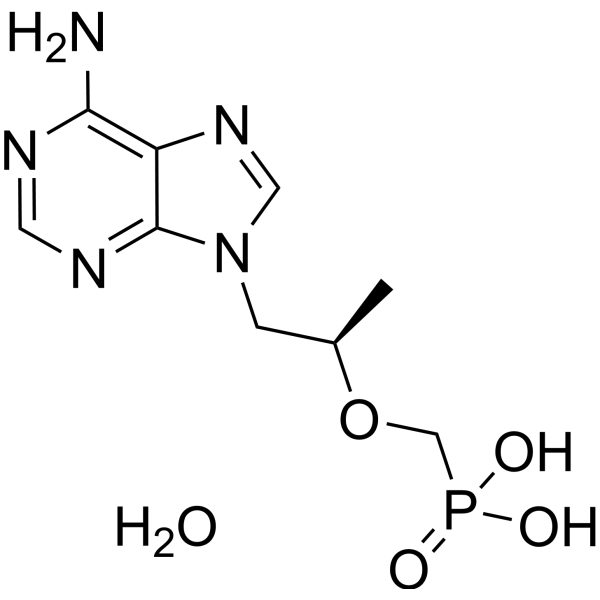
Tenofovir hydrate (GS 1278 hydrate; PMPA hydrate) is a nucleotide reverse transcriptase inhibitor to treat HIV and chronic Hepatitis B (HBV).
Nur für Forschungszwecke. Wir verkaufen nicht an Patienten.
- Reinheit : 99.53%
- CAS. Nr.: 206184-49-8
- Formel: C9H16N5O5P
- Molecular Weight:305.23
-
Speicherung:
4°C, stored under nitrogen
* In solvent : -80°C, 6 months; -20°C, 1 month (stored under nitrogen)

To place orders, for customer services and technical support, please contact: MedChemExpress USA
Tel: 609-228-6898 E-mail: [email protected] [email protected]


-
 Biologische Aktivität
-
Chemical Information
-
Lösungsmittel & Löslichkeit
- Reinheit & Dokumentation
- Verweise
-
 Help & FAQs


-
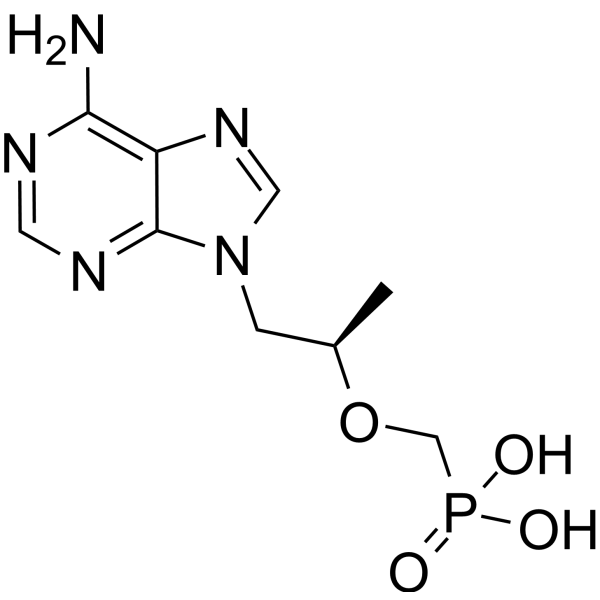
HY-13910
TenofovirNucleotide Reverse Transcriptase Inhibitor -
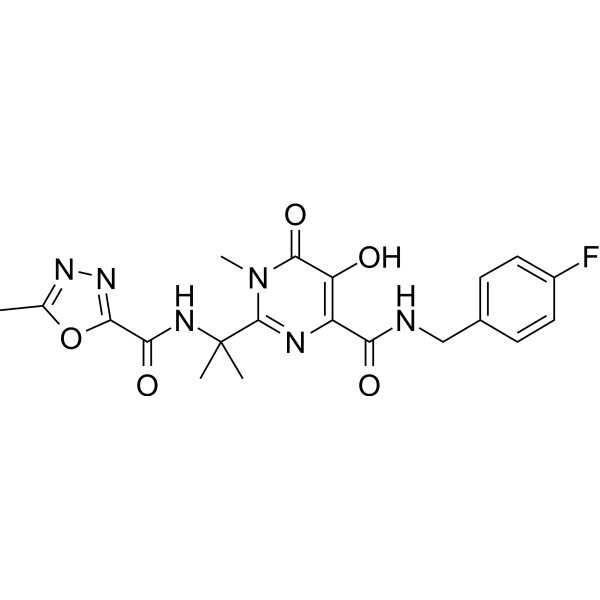
HY-10353
RaltegravirIntegrase Inhibitor -
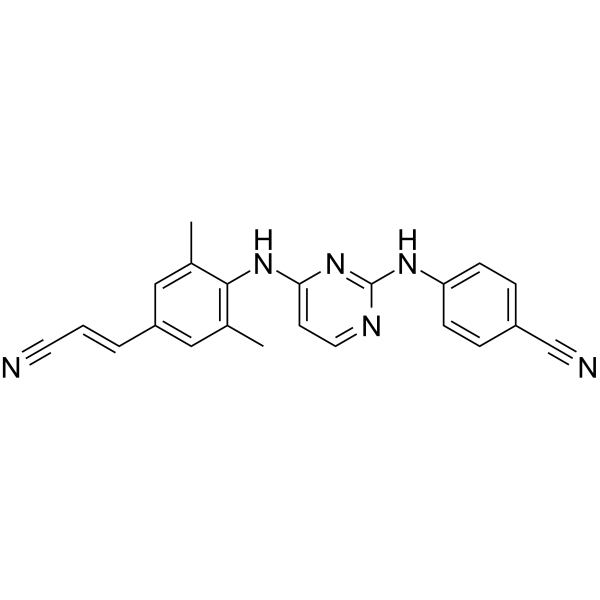
HY-10574
RilpivirineNNRTI -
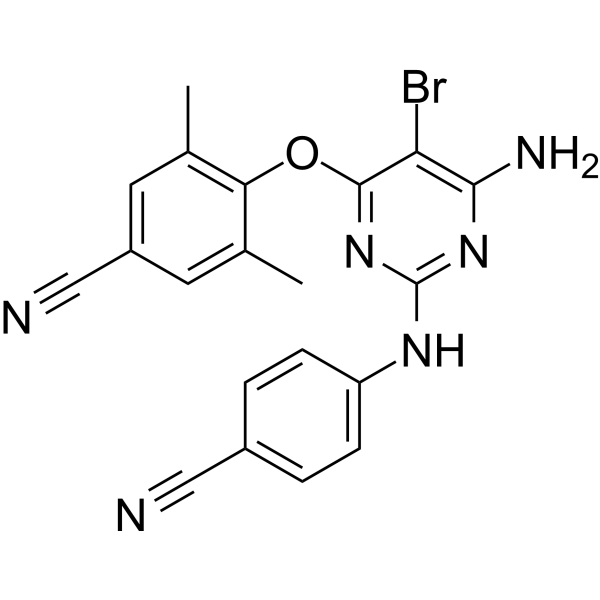
HY-90005
Etravirine -
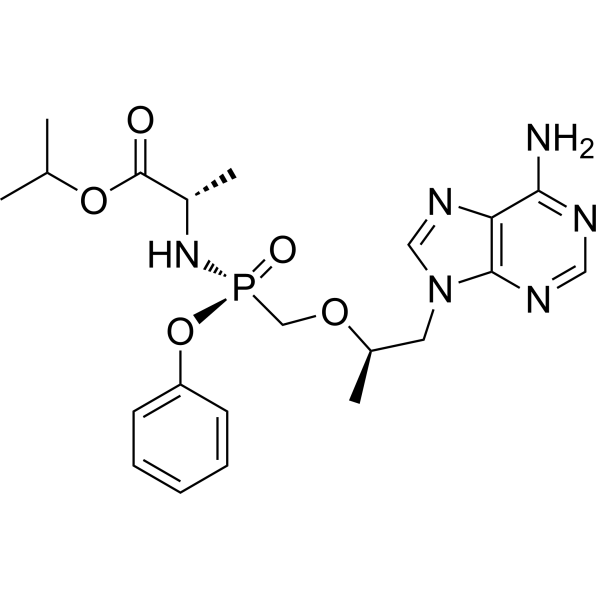
HY-15232
Tenofovir alafenamideReverse Transcriptase Inhibitor -
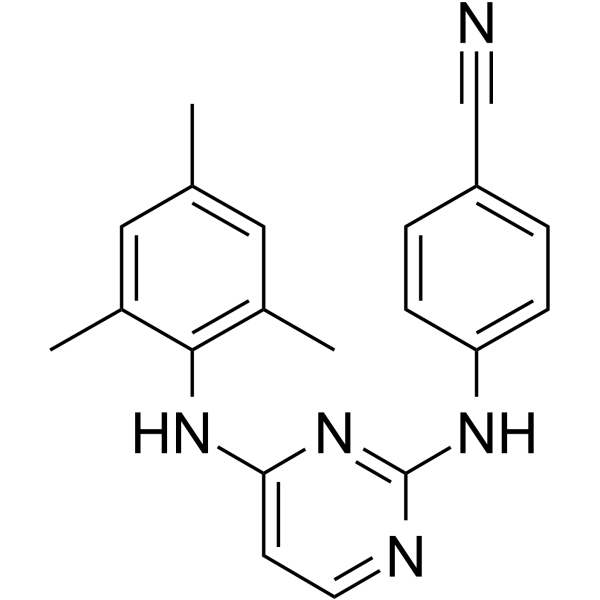
HY-14266
DapivirineNRTI -
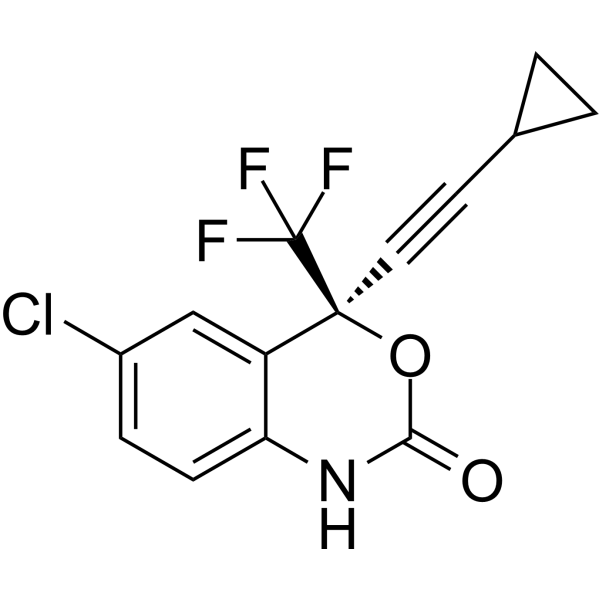
HY-10572
EfavirenzHIV NNRTI -
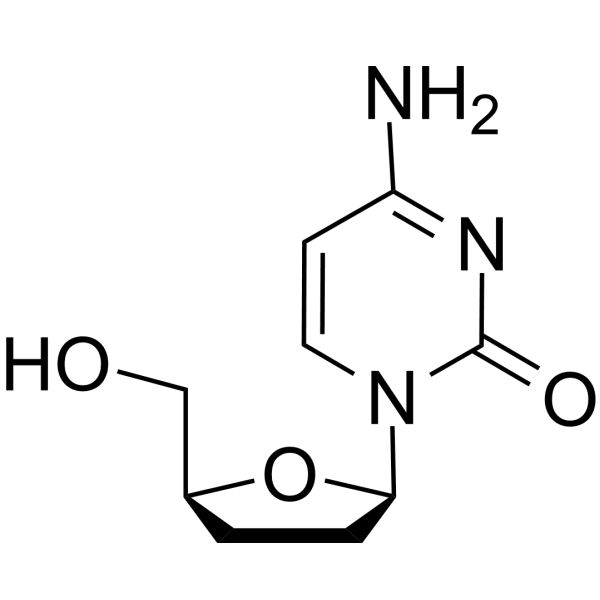
HY-17392
ZalcitabineReverse Transcriptase Inhibitor -
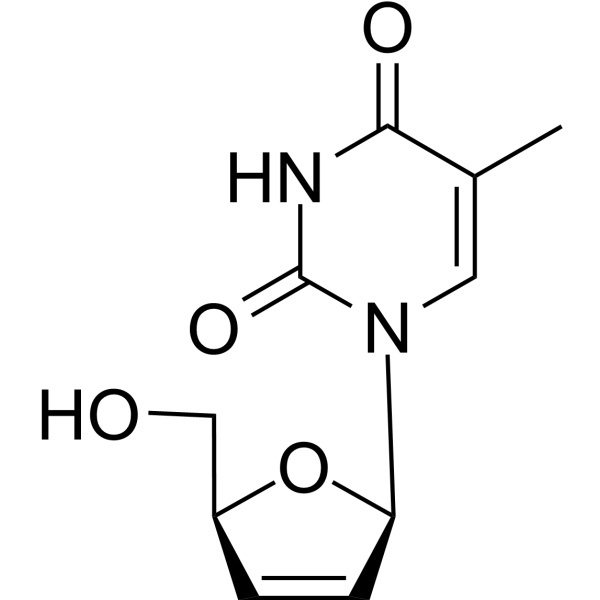
HY-B0116
StavudineNucleoside Reverse Transcriptase Inhibitor -

HY-13910AR
Tenofovir hydrate (Standard)Reference Standard -
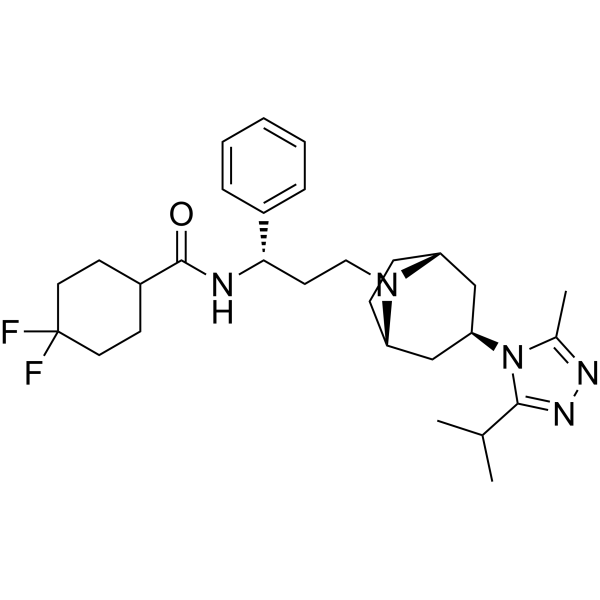
HY-13004
MaravirocCCR5 Antagonist -
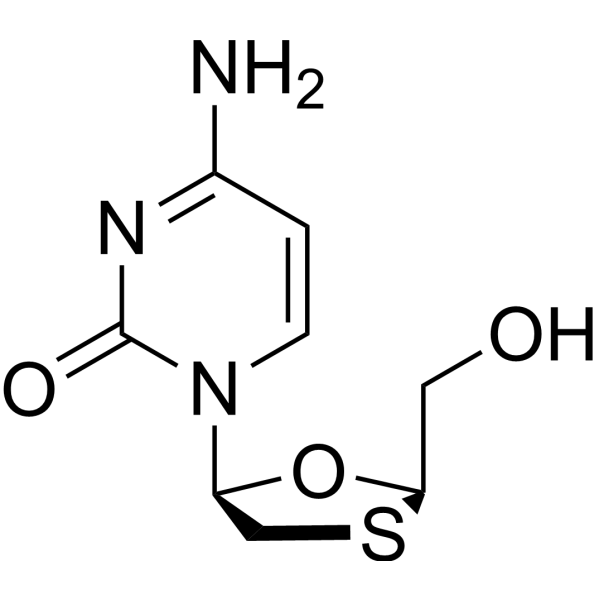
HY-B0250
LamivudineReverse Transcriptase Inhibitor
Publications Citing Use of MedChemExpress (MCE) Tenofovir hydrate
More- Adv Sci (Weinh). 2022 Dec;9(34):e2203088. [Abstract]
- Nanoscale. 2017 Jul 13;9(27):9676-9684. [Abstract]
- Int J Antimicrob Agents. 2019 Dec;54(6):814-819. [Abstract]
- Sci Rep. 2017 Mar 15:7:44409. [Abstract]
- Antiviral Res. 2020 Jun:178:104786. [Abstract]
- Pharm Res. 2023 Nov;40(11):2597-2606. [Abstract]
- Drug Metab Dispos. 2026 Mar 2;54(5):100263. [Abstract]
- J Chromatogr B Analyt Technol Biomed Life Sci. 2025 Dec 15:1267:124803. [Abstract]
- bioRxiv. 2025 Aug 14:2025.08.14.670267. [Abstract]
- Charles University. 2019 Jun.
 Customer Validation & Images

-
Bio/Physico-chemical Assay


Biologische Aktivität
Beschreibung
IC50 & Target
|
HIV-1 |
In Vitro
Tenofovir hydrate displays cytotoxicity against HK-2 cells, with IC50 values of 9.21 μM at 48 h and 2.77 μM at 72 h determined by MTT assay. It reduces intracellular ATP levels, elevates oxidative stress and protein carbonylation, and triggers mitochondria-mediated apoptosis in HK-2 cells[1].
Tenofovir hydrate formulated with M48U1 in 0.25% HEC inhibits the replication of R5-tropic HIV-1BaL and X4-tropic HIV-1IIIb in activated PBMCs, and suppresses a panel of laboratory HIV-1 strains and patient-derived primary HIV-1 isolates. The combined formulation of Tenofovir hydrate and M48U1 in 0.25% HEC delivers synergistic antiretroviral activity against R5-tropic HIV-1BaL infection and exhibits no cytotoxicity toward PBMCs[2].
MedChemExpress (MCE) has not independently confirmed the accuracy of these methods. They are for reference only.
Clinical Trial
| NCT Number | Sponsor | Condition | Start Date |
Phase

|
|---|---|---|---|---|
| NCT01329991 | 2011-05 | PHASE1 |


Chemical Information
-
CAS. Nr. 206184-49-8
-
Appearance Solid
-
Molecular Weight 305.23
-
Formel C9H16N5O5P
-
Color White to off-white
-
SMILES
C[C@@H](OCP(O)(O)=O)CN1C=NC2=C(N)N=CN=C12.O
-
Synonyms
GS 1278 hydrate; PMPA hydrate
-
Versand
Room temperature in continental US; may vary elsewhere.
-
Speicherung
4°C, stored under nitrogen
* In solvent : -80°C, 6 months; -20°C, 1 month (stored under nitrogen)


Publications (10)
-
Journal Impact Factor
-
Most Recent
-
Adv Sci (Weinh)
SRSF5-Mediated Alternative Splicing of M Gene is Essential for Influenza A Virus Replication: A Host-Directed Target Against Influenza Virus. [Abstract]2022 Dec;9(34):e2203088. PMID: 36257906 -
Nanoscale
2017 Jul 13;9(27):9676-9684. PMID: 28675222 -
Int J Antimicrob Agents
2019 Dec;54(6):814-819. PMID: 31479744 -
Sci Rep
2017 Mar 15:7:44409. PMID: 28294122 -
Antiviral Res
Remdesivir, lopinavir, emetine, and homoharringtonine inhibit SARS-CoV-2 replication in vitro. [Abstract]2020 Jun:178:104786. PMID: 32251767 -
Pharm Res
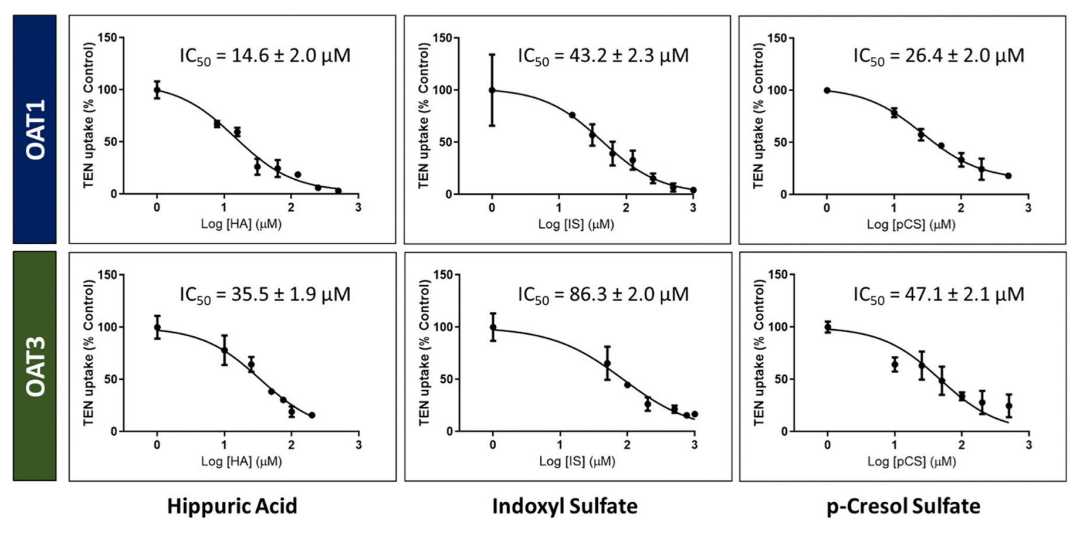
Incorporating Uremic Solute-mediated Inhibition of OAT1/3 Improves PBPK Prediction of Tenofovir Renal and Systemic Disposition in Patients with Severe Kidney Disease. [Abstract]2023 Nov;40(11):2597-2606. PMID: 37704895
Tenofovir hydrate purchased from MedChemExpress. Usage Cited in: Pharm Res. 2023 Nov;40(11):2597-2606. [Abstract]
Uremic solute inhibition of Tenofovir uptake. Human OAT1 and OAT3-overexpressing and mock-transfected HEK-293 cells were used for inhibition studies. Radiolabeled Tenofovir (0.1 μM) was added with potential inhibitors at specified concentrations for 5 min at 37 °C. Results of Tenofovir uptake were normalized to % of vehicle controls. IC50 shown in insets were calculated based on nonlinear regression curves.
-
Drug Metab Dispos
A minimal physiologically based pharmacokinetic model for predicting the metabolism of tenofovir prodrugs in the liver of human with fibrosis. [Abstract]2026 Mar 2;54(5):100263. PMID: 42085925 -
J Chromatogr B Analyt Technol Biomed Life Sci
Development, validation and clinical implementation of a HPLC-MS/MS method for the simultaneous quantification of bictegravir, emtricitabine, doravirine, cabotegravir, lenacapavir, fostemsavir, tenofovir alafenamide and the corresponding metabolites temsavir and tenofovir, in human plasma. [Abstract]2025 Dec 15:1267:124803. PMID: 41072339 -
bioRxiv
Mechanistic insights and in vivo HIV suppression by the BRD4-targeting small molecule ZL0580. [Abstract]2025 Aug 14:2025.08.14.670267. PMID: 40832229 -


Lösungsmittel & Löslichkeit
In Vitro:
DMSO : ≥ 6 mg/mL (19.66 mM; Hygroscopic DMSO has a significant impact on the solubility of product, please use newly opened DMSO)
* "≥" means soluble, but saturation unknown.
Please refer to the solubility information to select the appropriate solvent. Once prepared, please aliquot and store the solution to prevent product inactivation from repeated freeze-thaw cycles.
Storage method and period of stock solution: -80°C, 6 months; -20°C, 1 month (stored under nitrogen). When stored at -80°C, please use it within 6 months. When stored at -20°C, please use it within 1 month.
Please refer to the solubility information to select the appropriate solvent. Once prepared, please aliquot and store the solution to prevent product inactivation from repeated freeze-thaw cycles.
Storage method and period of stock solution: -80°C, 6 months; -20°C, 1 month (stored under nitrogen). When stored at -80°C, please use it within 6 months. When stored at -20°C, please use it within 1 month.
Konzentration (Stammlösung) × Volumen (Stammlösung) = Konzentration (Ziellösung) × Volumen (Ziellösung)
In Vivo:
Select the appropriate dissolution method based on your experimental animal and administration route.
- For the following dissolution methods, please ensure to first prepare a clear stock solution using an In Vitro approach and then sequentially add co-solvents:
- To ensure reliable experimental results, the clarified stock solution can be appropriately stored based on storage conditions. As for the working solution for In Vivo experiments, it is recommended to prepare freshly and use it on the same day.
- The percentages shown for the solvents indicate their volumetric ratio in the final prepared solution. If precipitation or phase separation occurs during preparation, heat and/or sonication can be used to aid dissolution.
Add each solvent one by one: 10% DMSO 40% PEG300 5% Tween-80 45% Saline
Solubility: ≥ 0.6 mg/mL (1.97 mM); Clear solution
This protocol yields a clear solution of ≥ 0.6 mg/mL (saturation unknown).
Taking 1 mL working solution as an example, add 100 μL DMSO stock solution (6.0 mg/mL) to 400 μL PEG300, and mix evenly; then add 50 μL Tween-80 and mix evenly; then add 450 μL Saline to adjust the volume to 1 mL.
Preparation of Saline: Dissolve 0.9 g sodium chloride in ddH₂O and dilute to 100 mL to obtain a clear Saline solution.
Add each solvent one by one: 10% DMSO 90% (20% SBE-β-CD in Saline)
Solubility: ≥ 0.6 mg/mL (1.97 mM); Clear solution
This protocol yields a clear solution of ≥ 0.6 mg/mL (saturation unknown).
Taking 1 mL working solution as an example, add 100 μL DMSO stock solution (6.0 mg/mL) to 900 μL 20% SBE-β-CD in Saline, and mix evenly.
Preparation of 20% SBE-β-CD in Saline (4°C, storage for one week): 2 g SBE-β-CD powder is dissolved in 10 mL Saline, completely dissolve until clear.
In Vivo Dissolution Calculator
Please enter the basic information of animal experiments:
-
-
-
-
Recommended: Prepare an additional quantity of animals to account for potential losses during experiments.
Please enter your animal formula composition:
-
%DMSO +
Recommended: Keep the proportion of DMSO in working solution below 2% if your animal is weak.
-
%+
-
+%Tween-80 + +
-
%Saline +
The co-solvents required include: DMSO, . All of co-solvents are available by MedChemExpress (MCE). , Tween 80. All of co-solvents are available by MedChemExpress (MCE).
Working solution concentration: 0.22 mg/mL
Method for preparing stock solution: mg drug dissolved in μL DMSO. Stock solution concentration: mg/mL. * In solvent : -80°C, 6 months; -20°C, 1 month (stored under nitrogen)
1. Take μL DMSO stock solution;
2. Add μL .
μL , mix evenly;
3. Then add μL Tween 80, mix evenly;
4. Then add μL
Please ensure that the stock solution in the first step is dissolved to a clear state, and add co-solvents in sequence. You can use ultrasonic heating (ultrasonic cleaner, recommended frequency 20-40 kHz), vortexing, etc. to assist dissolution.


Reinheit & Dokumentation
-
Data Sheet (296 KB)
-
SDS (480 KB)
- English - EN (480 KB)
- Français - FR (480 KB)
- Deutsch - DE (480 KB)
- Norwegian - NO (480 KB)
- Español - ES (480 KB)
- Swedish - SV (480 KB)
- Italian - IT (480 KB)
- Korean - KR (480 KB)
- Portuguese - PT (480 KB)
-
Handling Instructions (2659 KB)
Verweise
[1]. Murphy RA, et al. Establishment of HK-2 Cells as a Relevant Model to Study Tenofovir-Induced Cytotoxicity. Int J Mol Sci. 2017 Mar 1;18(3). [Content Brief]
[2]. Musumeci G, et al. M48U1 and Tenofovir combination synergistically inhibits HIV infection in activated PBMCs and human cervicovaginal histocultures. Sci Rep. 2017 Feb 1;7:41018. [Content Brief]
[3]. Wahl A, et al. Predicting HIV Pre-exposure Prophylaxis Efficacy for Women using a Preclinical Pharmacokinetic-Pharmacodynamic In Vivo Model. Sci Rep. 2017 Feb 1;7:41098. [Content Brief]
[4]. Menne S, Cote PJ, Korba BE, Antiviral effect of oral administration of tenofovir disoproxil fumarate in woodchucks with chronic woodchuck hepatitis virus infection. Antimicrob Agents Chemother. 2005 Jul;49(7):2720-8. [Content Brief]


Complete Stock Solution Preparation Table
Please refer to the solubility information to select the appropriate solvent. Once prepared, please aliquot and store the solution to prevent product inactivation from repeated freeze-thaw cycles.
Storage method and period of stock solution: -80°C, 6 months; -20°C, 1 month (stored under nitrogen). When stored at -80°C, please use it within 6 months. When stored at -20°C, please use it within 1 month.
| Optional Solvent | Concentration Solvent Mass | 1 mg | 5 mg | 10 mg | 25 mg |
|---|---|---|---|---|---|
| DMSO | 1 mM | 3.2762 mL | 16.3811 mL | 32.7622 mL | 81.9054 mL |
| 5 mM | 0.6552 mL | 3.2762 mL | 6.5524 mL | 16.3811 mL | |
| 10 mM | 0.3276 mL | 1.6381 mL | 3.2762 mL | 8.1905 mL | |
| 15 mM | 0.2184 mL | 1.0921 mL | 2.1841 mL | 5.4604 mL |


Tenofovir hydrate Related Classifications
HY-13910A Related Classifications
 Powered by Bioz