



Trimethylamine N-oxide
Based on 12 publication(s) in Google Scholar
Trimethylamine N-oxide is a gut microbe-dependent metabolite of dietary choline and other trimethylamine-containing nutrients. Trimethylamine N-oxide induces inflammation by activating the ROS/NLRP3 inflammasome. Trimethylamine N-oxide also accelerates fibroblast-myofibroblast differentiation and induces cardiac fibrosis by activating the TGF-β/smad2 signaling pathway.
For research use only. We do not sell to patients.
- Purity: 98.0%
- CAS No.: 1184-78-7
- Formula: C3H9NO
- Molecular Weight:75.11
-
Storage:Powder -20°C, 3 years , 4°C, 2 years ; In solvent -80°C, 6 months , -20°C, 1 month



-
 Biological Activity
-
Chemical Information
-
Solvent & Solubility
- Purity & Documentation
- References
-
 Help & FAQs
-


Immunology/Inflammation Compound Library
HY-L007
-
Metabolism/Protease Compound Library
HY-L012
-
NF-κB Signaling Compound Library
HY-L014
-
Stem Cell Signaling Compound Library
HY-L017
-
TGF-beta/Smad Compound Library
HY-L018
-
Wnt/Hedgehog/Notch Compound Library
HY-L020
-
Natural Product Library
HY-L021
-
Human Endogenous Metabolite Compound Library
HY-L030
-
Anti-Aging Compound Library
HY-L034
-
Antioxidant Compound Library
HY-L037
-
Differentiation Inducing Compound Library
HY-L038
-
Oxygen Sensing Compound Library
HY-L045
-
Anti-Cardiovascular Disease Compound Library
HY-L046
-
Pyroptosis Compound Library
HY-L059
-
Orally Active Compound Library
HY-L061
-
Gut Microbial Metabolite Library
HY-L078
-
Microbial Metabolite Library
HY-L084
-
Angiogenesis-Related Compound Library
HY-L088
-
Transcription Factor-Targeted Library
HY-L090
-
Food Additive Library
HY-L093
-
Food-Sourced Compound Library
HY-L094
-
Drug Metabolite Library
HY-L098
-
Anti-Liver Cancer Compound Library
HY-L101
-
Antidepressant Compound Library
HY-L108
-
Human Metabolite Library
HY-L123
-
Osteogenesis Compound Library
HY-L131
-
Membrane Receptor-targeted Compound Library
HY-L150
-
Autoimmune Disease Compound Library
HY-L156
-
Animal-Sourced Natural Product Library
HY-L157
-
Highly Selective Activators Library
HY-L159
-
Immunopotentiator Compound Library
HY-L172
-
Inflammasomes related Compound Library
HY-L175
-
Multi-Target Compound Library
HY-L176
-
Radioprotector Library
HY-L178
-
Bioactive Compound Library Max
HY-L181
-
MCE Bioactive Compound Library
HY-L001V
-
Natural Product Library Plus
HY-L021P
-
Natural Product and Natural Product-Like Compound Library
HY-L021M
-
Bioactive Compound Library
HY-L001
-
RO5 Drug-like Natural Product Library
HY-L200
-
Cell Proliferation Compound Library
HY-L201
-
High-Throughput Bioactive Compound Library
HY-L205
-
High-Throughput Natural Product Library
HY-L206
-
Mouse Metabolite Compound Library
HY-L217
-
Cosmetic Ingredient Compound Library
HY-L221
-
Pattern Recognition Receptors Library
HY-L237
-
Chinese Baijiu Compound Library
HY-L241
-
Flavors and Fragrances Compound Library
HY-L242
-
Natural Product Diversity Scaffold Library
HY-L245
-
Lactylation Compound Library
HY-L249


Publications Citing Use of MedChemExpress (MCE) Trimethylamine N-oxide
More- Gut Microbes. 2026 Dec 31;18(1):2605768. [Abstract]
- Phytomedicine. 2022 Mar 21;100:154067. [Abstract]
- Free Radic Biol Med. 2025 May:232:214-230. [Abstract]
- Eur Polym J. 2026 Feb 5.
- Ecotoxicol Environ Saf. 2025 Sep 1:302:118691. [Abstract]
- Chin Med. 2026 Mar 9;21(1):81. [Abstract]
- FASEB J. 2025 Dec 15;39(23):e71269. [Abstract]
- Clin Immunol. 2026 Jun:285:110706. [Abstract]
- Biol Trace Elem Res. 2025 Apr;203(4):2295-2309. [Abstract]
- Clin Chim Acta. 2024 Jan 15:553:117726. [Abstract]
- J Chromatogr B Analyt Technol Biomed Life Sci. 2024 Jun 25:1243:124210. [Abstract]
- Mol Cell Toxicol. 2025 Dec 10.
 Customer Validation & Images

-
Cell Proliferation/Viability Assay
-
In Vivo Efficacy Study
-
Cell Proliferation/Viability Assay
-
WB
-
IF
All Endogenous Metabolite Isoforms
More

Biological Activity
|
NLRP3 |
Microbial Metabolite |
Human Endogenous Metabolite |
The size and migration of fibroblasts are increased after Trimethylamine N-oxide (TMAO) treatment compared with non-treated fibroblasts in vitro. Trimethylamine N-oxide increases TGF-β receptor I expression, which promotes the phosphorylation of Smad2 and up-regulates the expression of α-SMA and collagen I. The ubiquitination of TGF-βRI is decreased in neonatal mouse fibroblasts after Trimethylamine N-oxide treatment. Trimethylamine N-oxide also inhibits the expression of smurf2[2].
Trimethylamine N-oxide is frequently found in the tissues of a variety of marine organisms that protects against the adverse effects of temperature, salinity, high urea and hydrostatic pressure[3].
MedChemExpress (MCE) has not independently confirmed the accuracy of these methods. They are for reference only.
Please do not refer to only one article to determine the experimental conditions. It is recommended to determine the optimal experimental conditions (animal strain, age, dosage, frequency and cycle, detection time and indicators, etc.) through preliminary experiments before the formal experiment.
Trimethylamine N-oxide can be used in animal modeling to create cardiovascular and metabolic disease models[1].
Administration: 100 μM and 1 mM• perfusion or incubation in TMAO-containing buffer solution• incubated for 1 h[1]
Mice: CD-1• male• weighing 25-30 g• 6-8 weeks of age[1]
Administration: 120 mg/kg• mixed with drinking water• a single dose or daily for 7 days[1]
(2) All experimental animals were housed under standard conditions (21-23°C, 12-hour light/dark cycle, relative humidity 45-65%) with unlimited access to food (R70 diet) and water[1].
(3) The mice from the first experimental group received Isoproterenol (HY-B1670A) at a dose of 10 μg/mouse, but the animals from the second group received Isoproterenol (HY-B1670A) and Trimethylamine N-oxide at doses of 10 μg/mouse and 120 mg/kg, respectively. After 30 min, the experimental animals were anesthetized with isoflurane once more to record the cardiac response to acute cardiac stress and the impact of Trimethylamine N-oxide on the inotropic and chronotropic effects. For the next seven days, the mice in the second group received Trimethylamine N-oxide together with drinking water at a dose of 120 mg/kg, while the animals from the first group received pure drinking water[1].
Pathology change: Trimethylamine N-oxide had no influence on Isoproterenol (HY-B1670A)-induced increase on left ventricular ejection fraction, fractional shortening and heart rate[1].
Histological analysis: Promote myocardial hypertrophy, fibrosis, and inflammation in a model of cardiovascular diseases (CVDs)[3].
MedChemExpress (MCE) has not independently confirmed the accuracy of these methods. They are for reference only.


Chemical Information
-
CAS No. 1184-78-7
-
Appearance Solid
-
Molecular Weight 75.11
-
Formula C3H9NO
-
Color White to off-white
-
SMILES
CN(C)(C)=O
-
Structure Classification
-
Initial Source
Host intestinal bacteria
-
Shipping
Room temperature in continental US; may vary elsewhere.
-
Storage
Powder -20°C 3 years 4°C 2 years In solvent -80°C 6 months -20°C 1 month


Publications (12)
-
Journal Impact Factor
-
Most Recent
-
Gut Microbes
Blautia coccoides-derived metabolite trimethylamine-N-oxide exacerbates Alzheimer's disease progression via targeting HIF1α signaling. [Abstract]2026 Dec 31;18(1):2605768. PMID: 41459734
Trimethylamine N-oxide purchased from MedChemExpress. Usage Cited in: Gut Microbes. 2026 Dec 31;18(1):2605768. [Abstract]
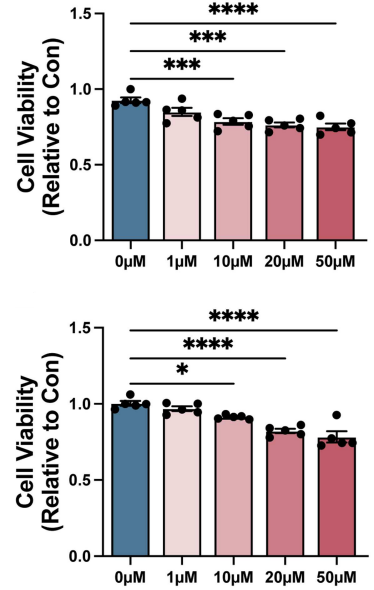
P301L-N2a and P301L-293T cells were treated with 1, 10, 20 and 50 μM Trimethylamine N-oxide (TMAO, 24 h), and cell viability was assessed using the CCK-8 method (n = 5).
-
Phytomedicine
2022 Mar 21;100:154067. PMID: 35349832 -
Free Radic Biol Med
Trimethylamine N-oxide (TMAO) treatment triggers premature ovarian insufficiency (POI) via the activation of mitochondrial pathway apoptosis in granulosa cells. [Abstract]2025 May:232:214-230. PMID: 40054636
Trimethylamine N-oxide purchased from MedChemExpress. Usage Cited in: Free Radic Biol Med. 2025 May:232:214-230. [Abstract]
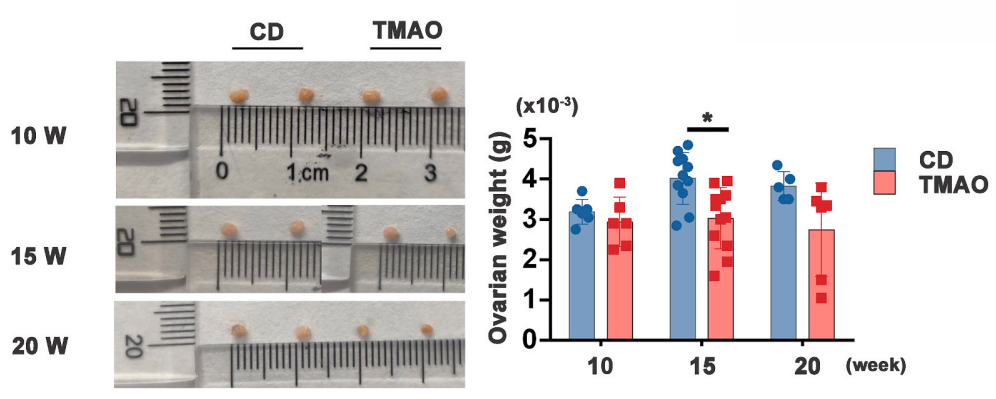
Representative ovarian size and ovarian weight quantification in the two groups across developmental stages. The results showed that at 15 weeks of age, mice in the Trimethylamine N-oxide (TMAO, 0.12% in drinking water for 11 weeks)-treated group exhibited significant reductions in both ovarian volume and ovarian weight.
-
-
Ecotoxicol Environ Saf
Involvement of TMAO in exacerbating arsenic-induced neurotoxicity by activating the PERK/eIF2α/ATF4 pathway. [Abstract]2025 Sep 1:302:118691. PMID: 40684638
Trimethylamine N-oxide purchased from MedChemExpress. Usage Cited in: Ecotoxicol Environ Saf. 2025 Sep 1:302:118691. [Abstract]
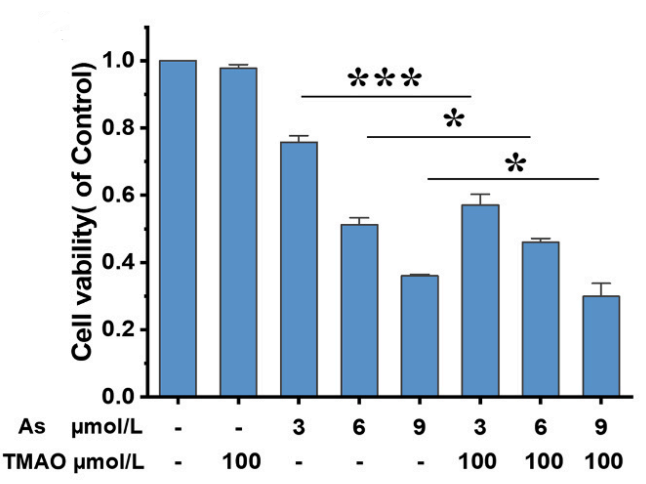
Cell viability after treatment with As (3–9 µmol/L) and/or Trimethylamine N-oxide (TMAO) (100 µmol/L) for 24 h.
Trimethylamine N-oxide purchased from MedChemExpress. Usage Cited in: Ecotoxicol Environ Saf. 2025 Sep 1:302:118691. [Abstract]
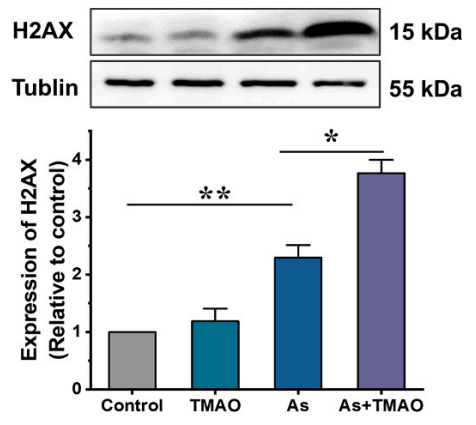
Representative western blots and quantification of H2AX in ASTs. Values represent the mean ± standard deviation from three separate experiments. Western blot analysis confirmed that Trimethylamine N-oxide (TMAO, 100 μM; 24 h) enhanced As-induced H2AX upregulation.
Trimethylamine N-oxide purchased from MedChemExpress. Usage Cited in: Ecotoxicol Environ Saf. 2025 Sep 1:302:118691. [Abstract]
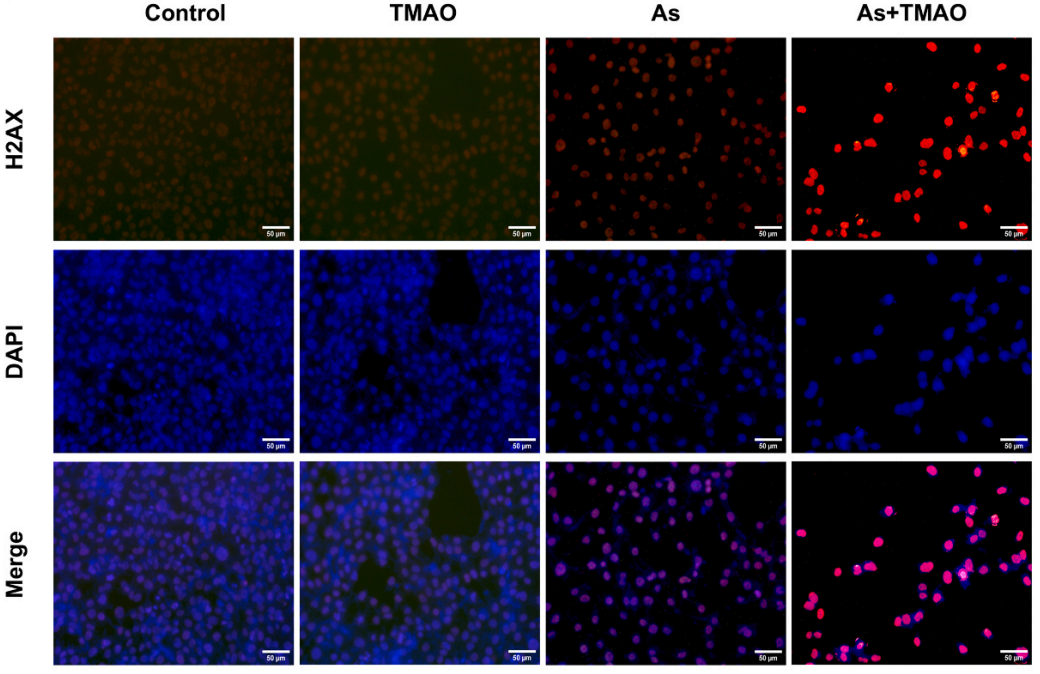
Representative immunofluorescence images of H2AX staining in ASTs. Immunofluorescence analysis revealed significantly increased γH2AX expression in ASTs after As (3 μM; 24 h) treatment This effect was further amplified by Trimethylamine N-oxide (TMAO, 100 µM; 24 h).
-
Chin Med
Based on the gut-heart axis: Polygonum capitatum improves atherosclerosis by modulating gut microbiota and TMAO, supporting MCPIP1/p53-associated endothelial protection. [Abstract]2026 Mar 9;21(1):81. PMID: 41803870 -
FASEB J
POSTN Enhances the Proliferation of Goat Skin Fibroblasts Through the TGFβ Pathway Activation. [Abstract]2025 Dec 15;39(23):e71269. PMID: 41324916 -
Clin Immunol
Short-chain fatty acid deficiency drives aberrant B cell differentiation in systemic lupus erythematosus. [Abstract]2026 Jun:285:110706. PMID: 41974394 -
Biol Trace Elem Res
TGF-β/SMAD Pathway Mediates Cadmium Poisoning-Induced Chicken Liver Fibrosis and Epithelial-Mesenchymal Transition. [Abstract]2025 Apr;203(4):2295-2309. PMID: 38958867 -
Clin Chim Acta
SAH and SAM/SAH ratio associate with acute kidney injury in critically ill patients: A case-control study. [Abstract]2024 Jan 15:553:117726. PMID: 38110027 -
J Chromatogr B Analyt Technol Biomed Life Sci
Simultaneous determination of choline, L-carnitine, betaine, trimethylamine, trimethylamine N-oxide, and creatinine in plasma, liver, and feces of hyperlipidemic rats by UHPLC-MS/MS. [Abstract]2024 Jun 25:1243:124210. PMID: 38936270 -


Solvent & Solubility
H2O : 100 mg/mL (1331.38 mM; Need ultrasonic)
DMSO : 100 mg/mL (1331.38 mM; Need ultrasonic; Hygroscopic DMSO has a significant impact on the solubility of product, please use newly opened DMSO)
Please refer to the solubility information to select the appropriate solvent. Once prepared, please aliquot and store the solution to prevent product inactivation from repeated freeze-thaw cycles.
Storage method and period of stock solution: -80°C, 6 months; -20°C, 1 month. When stored at -80°C, please use it within 6 months. When stored at -20°C, please use it within 1 month.
* Note: If you choose water as the stock solution, please dilute it to the working solution, then filter and sterilize it with a 0.22 μm filter before use.
Please refer to the solubility information to select the appropriate solvent. Once prepared, please aliquot and store the solution to prevent product inactivation from repeated freeze-thaw cycles.
Storage method and period of stock solution: -80°C, 6 months; -20°C, 1 month. When stored at -80°C, please use it within 6 months. When stored at -20°C, please use it within 1 month.
* Note: If you choose water as the stock solution, please dilute it to the working solution, then filter and sterilize it with a 0.22 μm filter before use.
Concentration (start) × Volume (start) = Concentration (final) × Volume (final)
Select the appropriate dissolution method based on your experimental animal and administration route.
- For the following dissolution methods, please ensure to first prepare a clear stock solution using an In Vitro approach and then sequentially add co-solvents:
- To ensure reliable experimental results, the clarified stock solution can be appropriately stored based on storage conditions. As for the working solution for In Vivo experiments, it is recommended to prepare freshly and use it on the same day.
- The percentages shown for the solvents indicate their volumetric ratio in the final prepared solution. If precipitation or phase separation occurs during preparation, heat and/or sonication can be used to aid dissolution.
Add each solvent one by one: 10% DMSO 40% PEG300 5% Tween-80 45% Saline
Solubility: ≥ 2.5 mg/mL (33.28 mM); Clear solution
This protocol yields a clear solution of ≥ 2.5 mg/mL (saturation unknown).
Taking 1 mL working solution as an example, add 100 μL DMSO stock solution (25.0 mg/mL) to 400 μL PEG300, and mix evenly; then add 50 μL Tween-80 and mix evenly; then add 450 μL Saline to adjust the volume to 1 mL.
Preparation of Saline: Dissolve 0.9 g sodium chloride in ddH₂O and dilute to 100 mL to obtain a clear Saline solution.
Add each solvent one by one: 10% DMSO 90% (20% SBE-β-CD in Saline)
Solubility: ≥ 2.5 mg/mL (33.28 mM); Clear solution
This protocol yields a clear solution of ≥ 2.5 mg/mL (saturation unknown).
Taking 1 mL working solution as an example, add 100 μL DMSO stock solution (25.0 mg/mL) to 900 μL 20% SBE-β-CD in Saline, and mix evenly.
Preparation of 20% SBE-β-CD in Saline (4°C, storage for one week): 2 g SBE-β-CD powder is dissolved in 10 mL Saline, completely dissolve until clear.
For the following dissolution methods, please prepare the working solution directly:
It is recommended to prepare fresh solutions and use them promptly within a short period of time.
The percentages shown for the solvents indicate their volumetric ratio in the final prepared solution. If precipitation or phase separation occurs during preparation, heat and/or sonication can be used to aid dissolution.
Add each solvent one by one: PBS
Solubility: 100 mg/mL (1331.38 mM); Clear solution; Need ultrasonic
Please enter the basic information of animal experiments:
-
-
-
-
Recommended: Prepare an additional quantity of animals to account for potential losses during experiments.
Working solution concentration: 0.22 mg/mL
This product has good water solubility, please refer to the measured solubility data in water/PBS/Saline for details.


Purity & Documentation
-
Data Sheet (281 KB)
-
SDS (393 KB)
- English - EN (393 KB)
- Français - FR (393 KB)
- Deutsch - DE (393 KB)
- Norwegian - NO (393 KB)
- Español - ES (393 KB)
- Swedish - SV (393 KB)
- Italian - IT (393 KB)
- Portuguese - PT (393 KB)
-
Handling Instructions (2659 KB)
References
[1]. Wei Shuai, et al. High-choline Diet Exacerbates Cardiac Dysfunction, Fibrosis, and Inflammation in a Mouse Model of Heart Failure With Preserved Ejection Fraction. J Card Fail. 2020 May 14;S1071-9164(19)31802-0. [Content Brief]
[2]. Wenlong Yang, et al. Gut Microbe-Derived Metabolite Trimethylamine N-oxide Accelerates Fibroblast-Myofibroblast Differentiation and Induces Cardiac Fibrosis. J Mol Cell Cardiol. 2019 Sep;134:119-130. [Content Brief]
[3]. Manuel T Velasquez, et al. Trimethylamine N-Oxide: The Good, the Bad and the Unknown. Toxins (Basel). 2016 Nov 8;8(11):326. [Content Brief]


Complete Stock Solution Preparation Table
Please refer to the solubility information to select the appropriate solvent. Once prepared, please aliquot and store the solution to prevent product inactivation from repeated freeze-thaw cycles.
Storage method and period of stock solution: -80°C, 6 months; -20°C, 1 month. When stored at -80°C, please use it within 6 months. When stored at -20°C, please use it within 1 month.
| Optional Solvent | Concentration Solvent Mass | 1 mg | 5 mg | 10 mg | 25 mg |
|---|---|---|---|---|---|
| H2O / DMSO | 1 mM | 13.3138 mL | 66.5690 mL | 133.1381 mL | 332.8452 mL |
| 5 mM | 2.6628 mL | 13.3138 mL | 26.6276 mL | 66.5690 mL | |
| 10 mM | 1.3314 mL | 6.6569 mL | 13.3138 mL | 33.2845 mL | |
| 15 mM | 0.8876 mL | 4.4379 mL | 8.8759 mL | 22.1897 mL | |
| 20 mM | 0.6657 mL | 3.3285 mL | 6.6569 mL | 16.6423 mL | |
| 25 mM | 0.5326 mL | 2.6628 mL | 5.3255 mL | 13.3138 mL | |
| 30 mM | 0.4438 mL | 2.2190 mL | 4.4379 mL | 11.0948 mL | |
| 40 mM | 0.3328 mL | 1.6642 mL | 3.3285 mL | 8.3211 mL | |
| 50 mM | 0.2663 mL | 1.3314 mL | 2.6628 mL | 6.6569 mL | |
| 60 mM | 0.2219 mL | 1.1095 mL | 2.2190 mL | 5.5474 mL | |
| 80 mM | 0.1664 mL | 0.8321 mL | 1.6642 mL | 4.1606 mL | |
| 100 mM | 0.1331 mL | 0.6657 mL | 1.3314 mL | 3.3285 mL |
* Note: If you choose water as the stock solution, please dilute it to the working solution, then filter and sterilize it with a 0.22 μm filter before use.


 Powered by Bioz