



(-)-Isoproterenol hydrochloride
Based on 1 publication(s) in Google Scholar
(-)-Isoproterenol (Levisoprenalinel) hydrochloride is the R-isomer of Isoproterenol. (-)-Isoproterenol hydrochloride can reduce the cleavage of caspase 3 and TNFα levels in retinal endothelial cells (REC). (-)-Isoproterenol hydrochloride can be used for the study of diabetic retinopathy.
For research use only. We do not sell to patients.
- Purity : 99.61%
- CAS No.: 5984-95-2
- Formula: C11H18ClNO3
- Molecular Weight:247.72
-
Storage:
-20°C, sealed storage, away from moisture
* In solvent : -80°C, 6 months; -20°C, 1 month (sealed storage, away from moisture)


To place orders, for customer services and technical support, please contact: MedChemExpress USA
Tel: 609-228-6898 E-mail: [email protected] [email protected]


-
 Biological Activity
-
Chemical Information
-
Solvent & Solubility
- Protocols
- Purity & Documentation
- References
-
 Help & FAQs


-
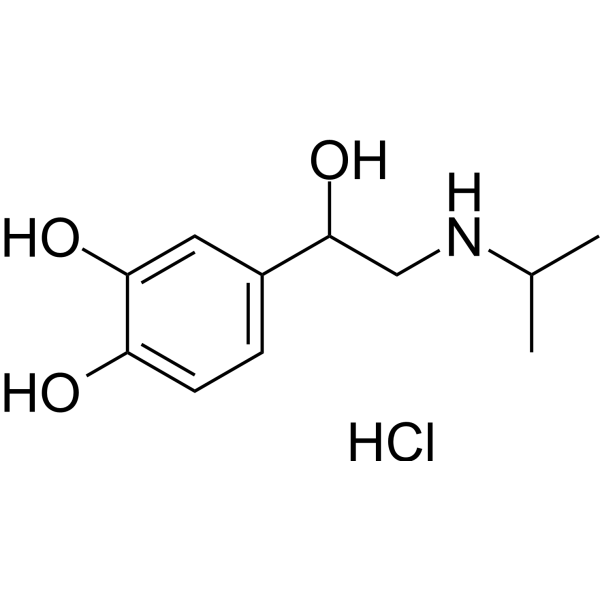
HY-B0468
Isoprenaline hydrochlorideβ-adrenoceptor Agonist -
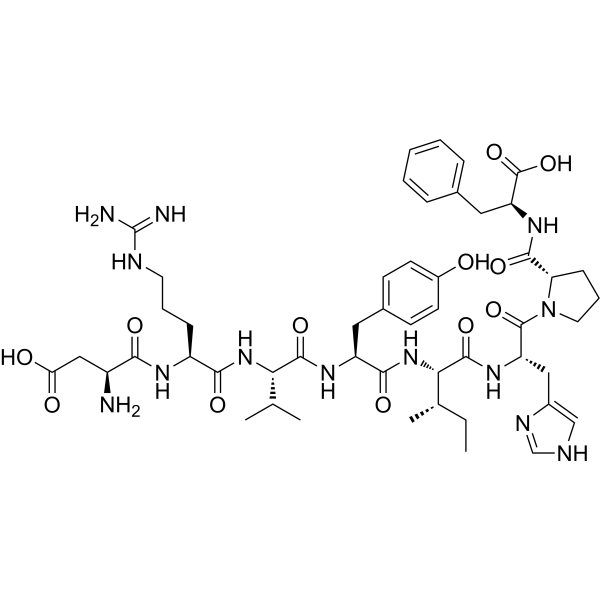
HY-13948
Angiotensin II humanVasoconstrictor -
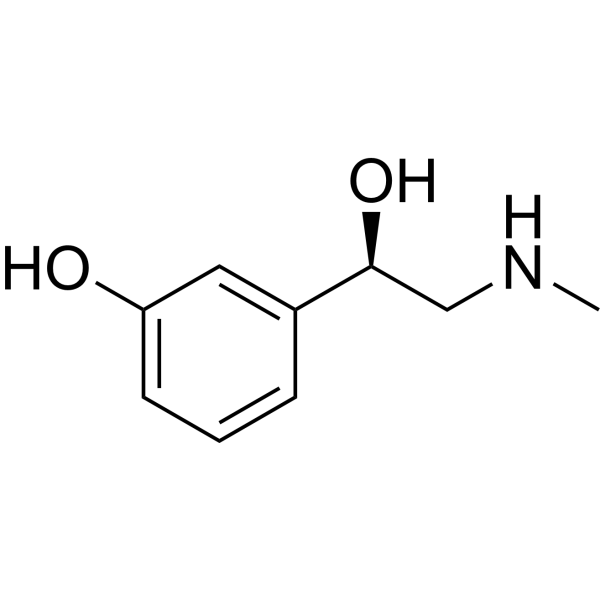
HY-B0769
PhenylephrineAdrenergic Receptor Agonist -
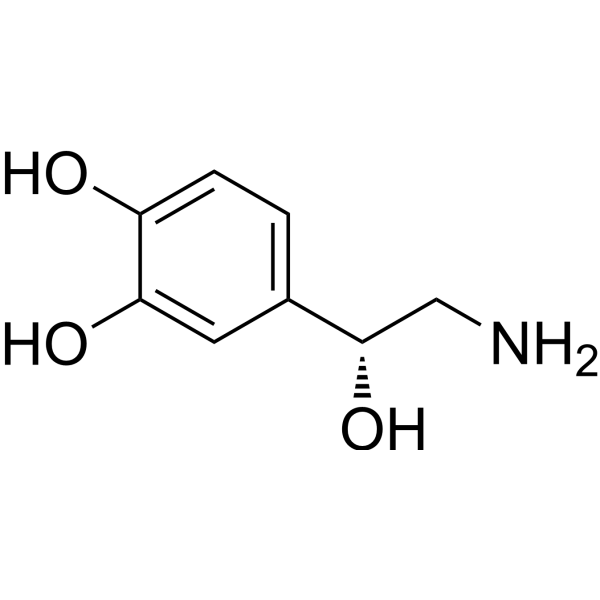
HY-13715
NorepinephrineAdrenergic Receptor Agonist -
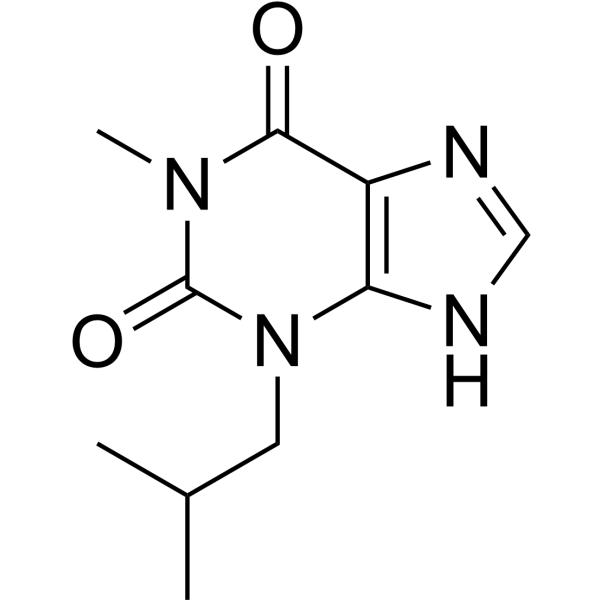
HY-12318
IBMXPDE Inhibitor -
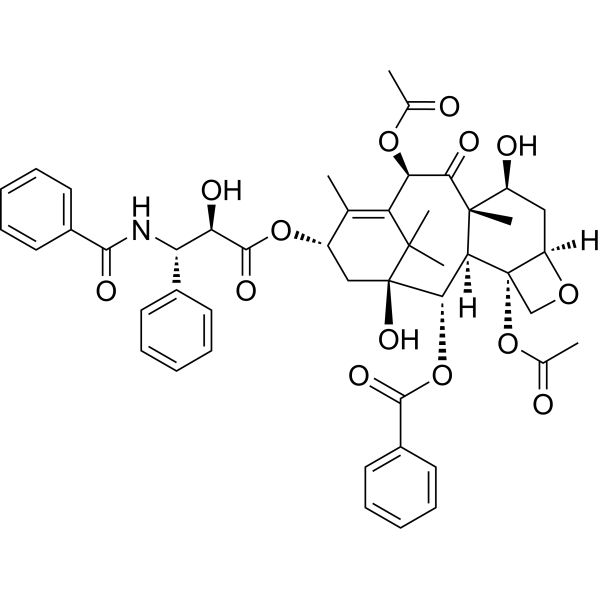
HY-B0015
PaclitaxelAntitumor Agent -
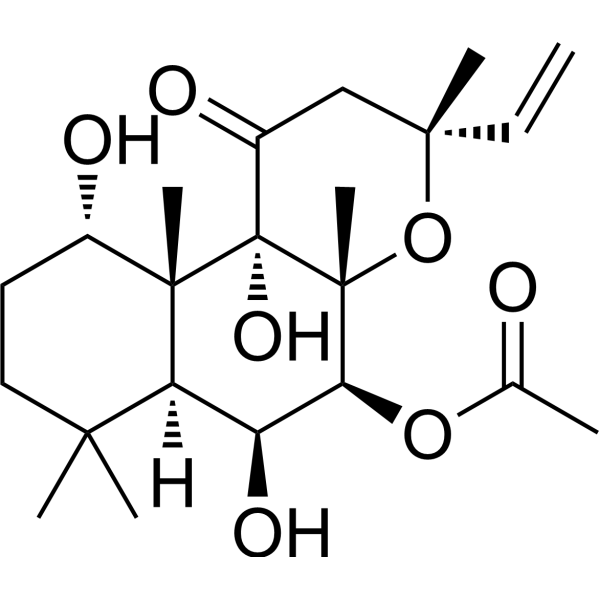
HY-15371
ForskolinAdenylate Cyclase Activator -
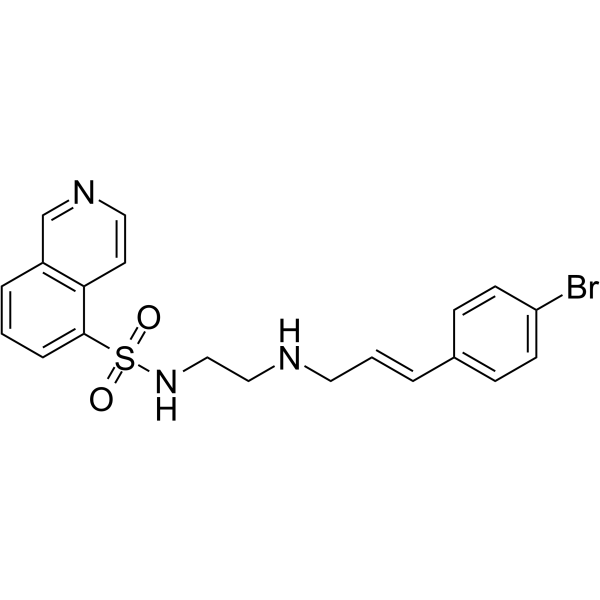
HY-15979
H-89PKA Inhibitor -
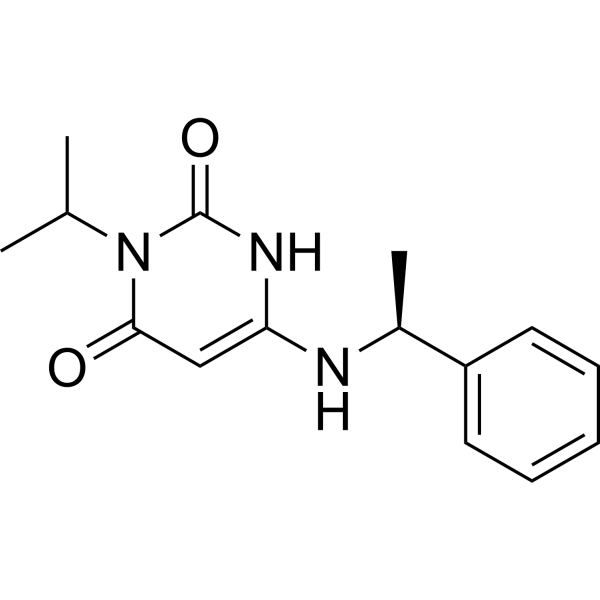
HY-109037
MavacamtenCardiac Myosin Modulator -
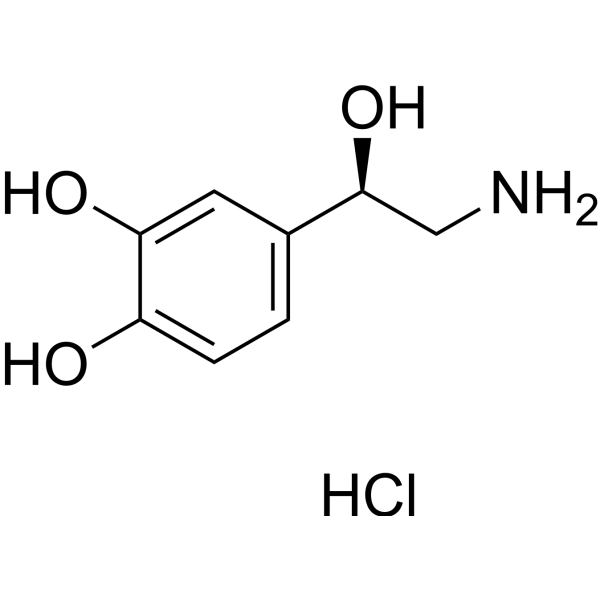
HY-13715A
Norepinephrine hydrochlorideAdrenergic Receptor Agonist -
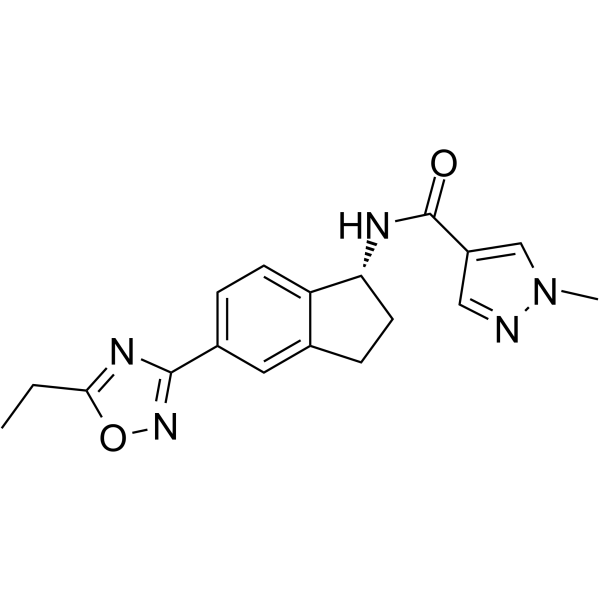
HY-139465
AficamtenCardiac Myosin Inhibitor -
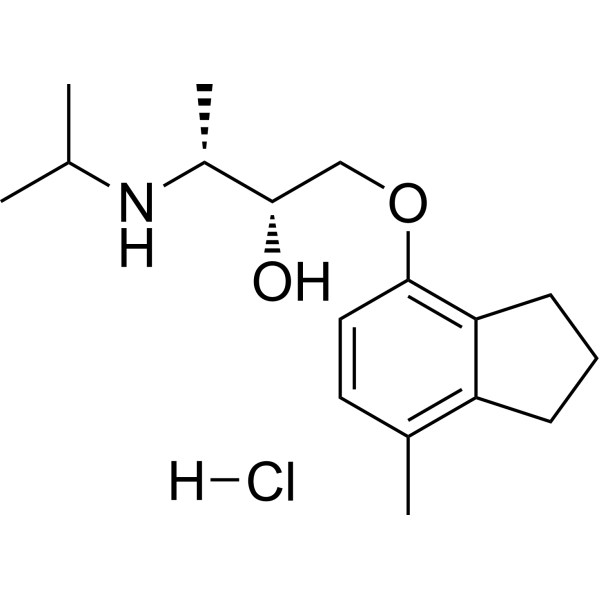
HY-13951
Zenidolol hydrochlorideβ2 Adrenergic Receptor Antagonist
Publications Citing Use of MedChemExpress (MCE) (-)-Isoproterenol hydrochloride
MoreAll Caspase Isoforms
More

Biological Activity
Description
IC50 & Target
[1]|
Caspase 3 |
TNF-α |
In Vitro
(-)-Isoproterenol (R-1) (10 μM; 15-45 minutes) hydrochloride decreases both TNFα and caspase 3 levels in REC and Müller cells[1].
MedChemExpress (MCE) has not independently confirmed the accuracy of these methods. They are for reference only. Further protocols information, click here.
-
Cell Line:REC cells and Müller cells
-
Concentration:10 μM
-
Incubation Time:15, 30, and 45 minutes
-
Result:Significantly decreased caspase 3 levels in REC.
Did not significantly decreased the cleaved caspase 3 levels in Müller cells.


Chemical Information
-
CAS No. 5984-95-2
-
Appearance Solid
-
Molecular Weight 247.72
-
Formula C11H18ClNO3
-
Color White to off-white
-
SMILES
OC1=CC=C([C@@H](O)CNC(C)C)C=C1O.[H]Cl
-
Synonyms
Levisoprenaline hydrochloride; Proternol L hydrochloride
-
Shipping
Room temperature in continental US; may vary elsewhere.
-
Storage
-20°C, sealed storage, away from moisture
* In solvent : -80°C, 6 months; -20°C, 1 month (sealed storage, away from moisture)


Publications (1)
-
Journal Impact Factor
-
Most Recent
-
Clin Exp Hypertens
2026 Dec 31;48(1):2607404. PMID: 41447318


Solvent & Solubility
In Vitro:
DMSO : 100 mg/mL (403.68 mM; Need ultrasonic; Hygroscopic DMSO has a significant impact on the solubility of product, please use newly opened DMSO)
H2O : 100 mg/mL (403.68 mM; Need ultrasonic)
Please refer to the solubility information to select the appropriate solvent. Once prepared, please aliquot and store the solution to prevent product inactivation from repeated freeze-thaw cycles.
Storage method and period of stock solution: -80°C, 6 months; -20°C, 1 month (sealed storage, away from moisture). When stored at -80°C, please use it within 6 months. When stored at -20°C, please use it within 1 month.
* Note: If you choose water as the stock solution, please dilute it to the working solution, then filter and sterilize it with a 0.22 μm filter before use.
Please refer to the solubility information to select the appropriate solvent. Once prepared, please aliquot and store the solution to prevent product inactivation from repeated freeze-thaw cycles.
Storage method and period of stock solution: -80°C, 6 months; -20°C, 1 month (sealed storage, away from moisture). When stored at -80°C, please use it within 6 months. When stored at -20°C, please use it within 1 month.
* Note: If you choose water as the stock solution, please dilute it to the working solution, then filter and sterilize it with a 0.22 μm filter before use.
Concentration (start) × Volume (start) = Concentration (final) × Volume (final)

Protocols
-
Endothelial Tube Formation Assay
Endothelial tube formation assay evaluates the ability of endothelial cells to attach, migrate, align, and organize into capillary-like networks when cultured on gelled basement membrane extract or Matrigel; the readout is the morphology and quantity of tube-like networks, which reflects an in vitro endothelial morphogenesis step related to angiogenesis. Basement membrane extract/Matrigel provides laminin-rich extracellular matrix cues that support endothelial differentiation into capillary-like structures, but it can contain biologically active growth factors, so growth-factor-reduced matrix is preferred when testing defined angiogenic stimulators or inhibitors.
-
Apoptosis Solutions
Apoptosis is a regulated, generally non-lytic cell-death pathway that removes unwanted, damaged, infected, or abnormal cells through coordinated morphological changes, caspase activation, DNA fragmentation, and membrane remodeling. The intrinsic apoptosis pathway is controlled mainly by mitochondrial outer membrane permeabilization, BCL-2 family proteins, cytochrome c release, apoptosome formation, caspase-9 activation, and downstream executioner caspase-3/7 activation. The extrinsic apoptosis pathway is initiated by death receptors such as Fas, TNFR, and TRAIL receptors, which recruit adaptor proteins and activate caspase-8 before engaging executioner caspases or mitochondrial amplification through BID cleavage. Apoptosis is linked to many phenotypes, including cancer cell killing, tissue homeostasis, immune regulation, neurodegeneration, infection response, and treatment-induced cytotoxicity; unresolved questions include how apoptosis interacts with necroptosis, pyroptosis, ferroptos


Purity & Documentation
-
Data Sheet (272 KB)
-
SDS (394 KB)
- English - EN (394 KB)
- Français - FR (394 KB)
- Deutsch - DE (394 KB)
- Norwegian - NO (394 KB)
- Español - ES (394 KB)
- Swedish - SV (394 KB)
- Italian - IT (394 KB)
- Korean - KR (394 KB)
- Portuguese - PT (394 KB)
-
Handling Instructions (2659 KB)
References


Complete Stock Solution Preparation Table
Please refer to the solubility information to select the appropriate solvent. Once prepared, please aliquot and store the solution to prevent product inactivation from repeated freeze-thaw cycles.
Storage method and period of stock solution: -80°C, 6 months; -20°C, 1 month (sealed storage, away from moisture). When stored at -80°C, please use it within 6 months. When stored at -20°C, please use it within 1 month.
| Optional Solvent | Concentration Solvent Mass | 1 mg | 5 mg | 10 mg | 25 mg |
|---|---|---|---|---|---|
| DMSO / H2O | 1 mM | 4.0368 mL | 20.1841 mL | 40.3682 mL | 100.9204 mL |
| 5 mM | 0.8074 mL | 4.0368 mL | 8.0736 mL | 20.1841 mL | |
| 10 mM | 0.4037 mL | 2.0184 mL | 4.0368 mL | 10.0920 mL | |
| 15 mM | 0.2691 mL | 1.3456 mL | 2.6912 mL | 6.7280 mL | |
| 20 mM | 0.2018 mL | 1.0092 mL | 2.0184 mL | 5.0460 mL | |
| 25 mM | 0.1615 mL | 0.8074 mL | 1.6147 mL | 4.0368 mL | |
| 30 mM | 0.1346 mL | 0.6728 mL | 1.3456 mL | 3.3640 mL | |
| 40 mM | 0.1009 mL | 0.5046 mL | 1.0092 mL | 2.5230 mL | |
| 50 mM | 0.0807 mL | 0.4037 mL | 0.8074 mL | 2.0184 mL | |
| 60 mM | 0.0673 mL | 0.3364 mL | 0.6728 mL | 1.6820 mL | |
| 80 mM | 0.0505 mL | 0.2523 mL | 0.5046 mL | 1.2615 mL | |
| 100 mM | 0.0404 mL | 0.2018 mL | 0.4037 mL | 1.0092 mL |
* Note: If you choose water as the stock solution, please dilute it to the working solution, then filter and sterilize it with a 0.22 μm filter before use.


(-)-Isoproterenol hydrochloride Related Classifications
HY-B1670A Related Classifications
 Powered by Bioz