



17β-Hydroxy exemestane
17β-Hydroxy exemestane (17-H-EXE) is the primary active metabolite of Exemestane (HY-13632). 17β-Hydroxy exemestane is an aromatase inhibitor (IC50 = 69 nM) and an androgen receptor (AR) agonist (IC50 = 39.6 nM) that is selective for AR over estrogen receptor α (ERα; IC50 = 21.2 μM). 17β-Hydroxy exemestane stimulates growth of AR- and ERα-positive MCF-7 (EC50= 2.7 μM) and T47D breast cancer cells (EC50s = 0.43 and 1500 nM for AR- and ER-mediated growth, respectively) and inhibits proliferation of testosterone-treated aromatase-overexpressing MCF-7 cells. 17β-Hydroxy exemestane inhibits increases in serum cholesterol and LDL levels and prevents decreases in bone mineral density in the lumbar vertebrae and femur, as well as femoral bending strength and compressive strength of the fifth lumbar vertebrae in ovariectomized rats.
Nur für Forschungszwecke. Wir verkaufen nicht an Patienten.
- CAS. Nr.: 122370-91-6
- Formel: C20H26O2
- Molecular Weight:298.42
-
Speicherung:Powder -20°C, 3 years ; In solvent -80°C, 6 months , -20°C, 1 month


To place orders, for customer services and technical support, please contact: MedChemExpress USA
Tel: 609-228-6898 E-mail: [email protected] [email protected]


-
 Biologische Aktivität
-
Chemical Information
- Protokoll
- Reinheit & Dokumentation
- Verweise
-
 Help & FAQs


-

HY-133798
Sorafenib N-oxideCYP3A4 Inhibitor -
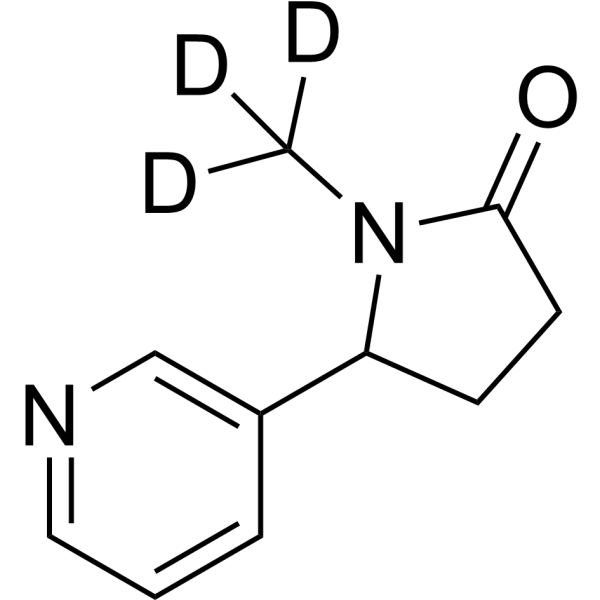
HY-B1178S
(Rac)-Cotinine-d3Stable Isotope -
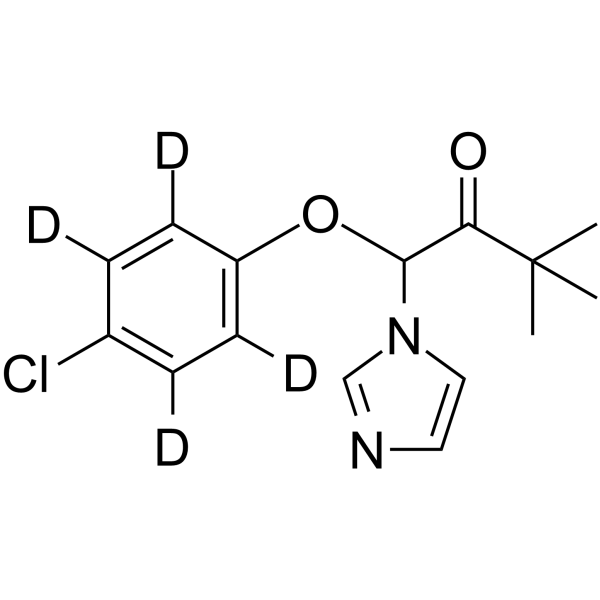
HY-B1151S
Climbazole-d4Stable Isotope -
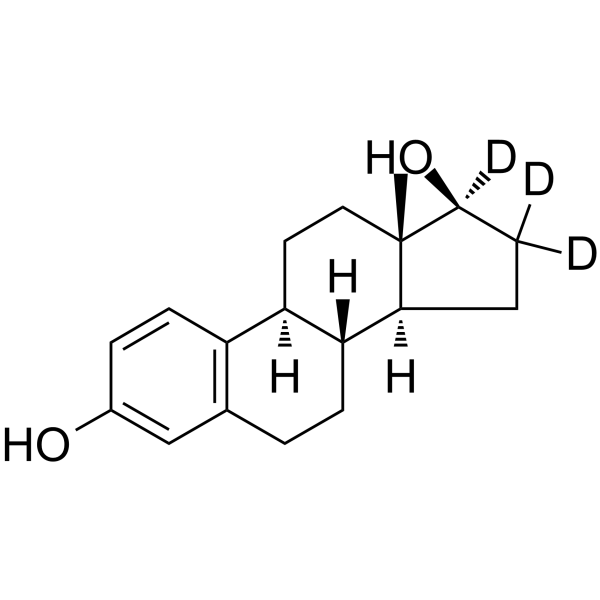
HY-B0141S
Estradiol-d3Stable Isotope -
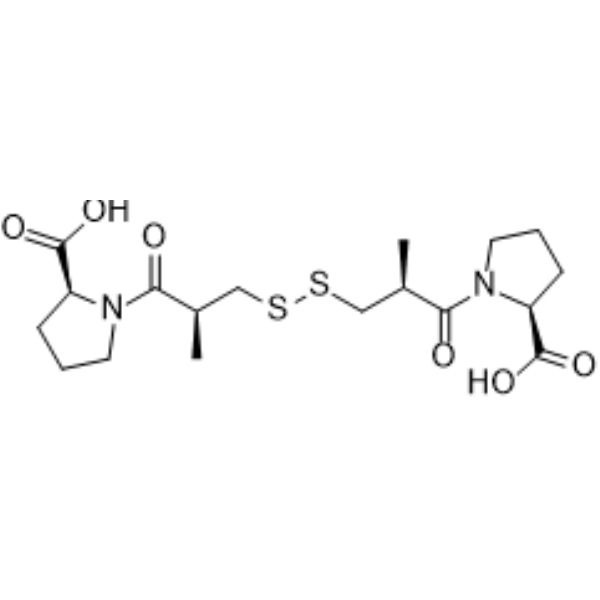
HY-123068
Captopril disulfideProdrug -
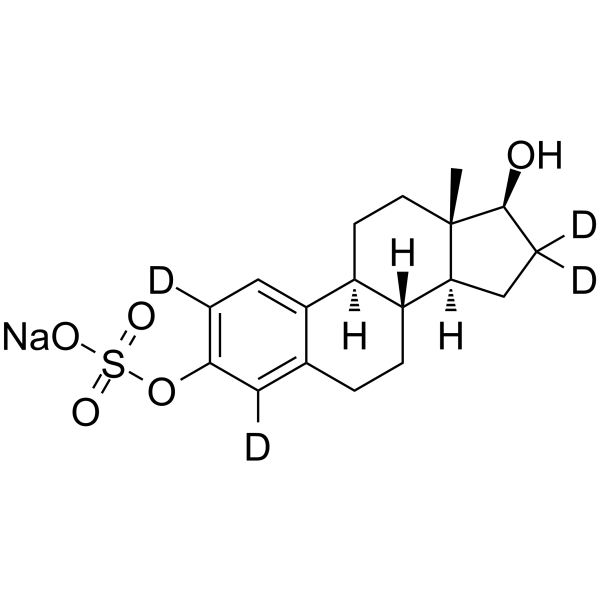
HY-141672S1
17β-Estradiol sulfate-d4 sodiumStable Isotope -
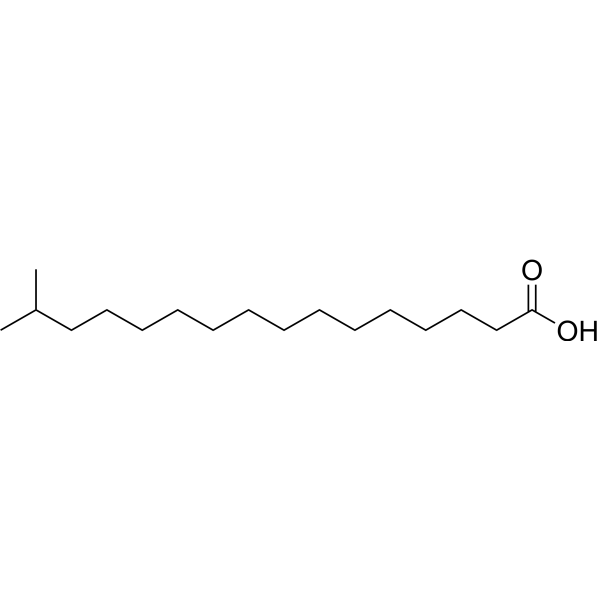
HY-N7824
15-Methylpalmitic acidBiochemical Assay Reagent -
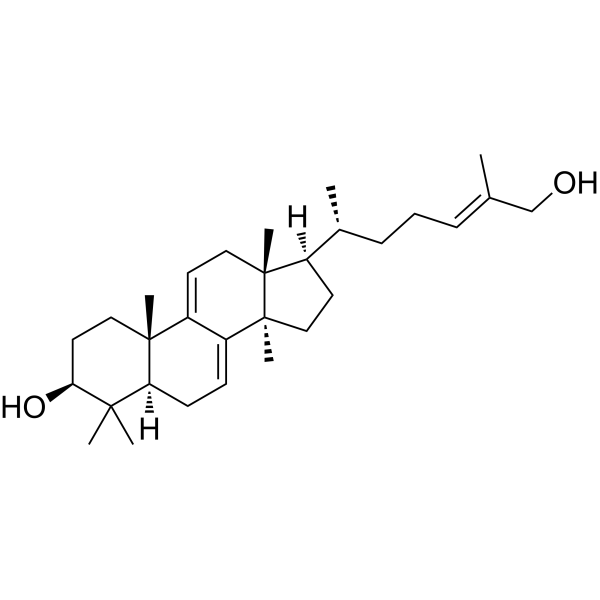
HY-N2223
Ganoderol Bα-glucosidase Inhibitor -

HY-123068R
Captopril disulfide (Standard)ACE Inhibitor -
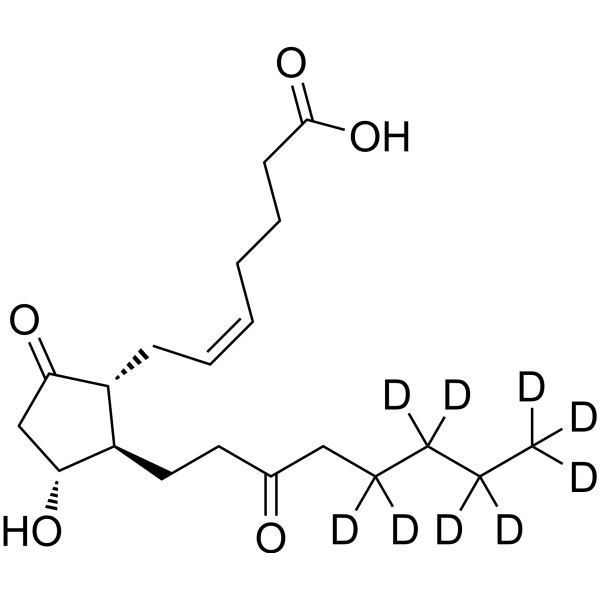
HY-113254S1
13,14-Dihydro-15-keto-PGE2-d9Stable Isotope -
HY-B0661AS1
Tamsulosin-d4 hydrochlorideStable Isotope


Biologische Aktivität
Beschreibung
Cellular Effect
|
Cell Line

|
Type | Value | Description | References |
|---|---|---|---|---|
| MCF7 | IC50 |
0.25 μM
Compound: 4, 17-betaHE
|
Inhibition of human placental microsome aromatase expressed in human MCF7 cells using [1beta-3H] androstenedione as substrate after 1 hr by liquid scintillation counting
Inhibition of human placental microsome aromatase expressed in human MCF7 cells using [1beta-3H] androstenedione as substrate after 1 hr by liquid scintillation counting
|
[PMID: 25277066] |


Chemical Information
-
CAS. Nr. 122370-91-6
-
Appearance Solid
-
Molecular Weight 298.42
-
Formel C20H26O2
-
Color White to off-white
-
SMILES
C[C@@]12[C@]3([H])[C@](CC(C1=CC(C=C2)=O)=C)([H])[C@@]4([H])[C@](CC3)([C@H](CC4)O)C
-
Versand
Room temperature in continental US; may vary elsewhere.
-
Speicherung
Powder -20°C 3 years In solvent -80°C 6 months -20°C 1 month


Reinheit & Dokumentation
-
Data Sheet (273 KB)
-
SDS (252 KB)
- English - EN (252 KB)
- Français - FR (252 KB)
- Deutsch - DE (252 KB)
- Norwegian - NO (252 KB)
- Español - ES (252 KB)
- Swedish - SV (252 KB)
- Italian - IT (252 KB)
- Korean - KR (252 KB)
- Portuguese - PT (252 KB)
-
Handling Instructions (2659 KB)
Verweise
[1]. Goss PE, et al. Effects of the steroidal aromatase inhibitor exemestane and the nonsteroidal aromatase inhibitor letrozole on bone and lipid metabolism in ovariectomized rats. Clin Cancer Res. 2004 Sep 1;10(17):5717-23. [Content Brief]
[2]. Buzzetti F, et al. Synthesis and aromatase inhibition by potential metabolites of exemestane (6-methylenandrosta-1,4-diene-3,17-dione). Steroids. 1993 Nov;58(11):527-32. [Content Brief]
[3]. Ariazi EA, et al. Exemestane's 17-hydroxylated metabolite exerts biological effects as an androgen. Mol Cancer Ther. 2007 Nov;6(11):2817-27. [Content Brief]
[4]. Varela CL, et al. Exemestane metabolites: Synthesis, stereochemical elucidation, biochemical activity and anti-proliferative effects in a hormone-dependent breast cancer cell line. Eur J Med Chem. 2014 Nov 24;87:336-45. [Content Brief]

Calculators
Konzentration (Stammlösung) × Volumen (Stammlösung) = Konzentration (Ziellösung) × Volumen (Ziellösung)


17β-Hydroxy exemestane Related Classifications
HY-138089 Related Classifications
 Powered by Bioz