



6-Mercaptopurine hydrate
Based on 21 publication(s) in Google Scholar
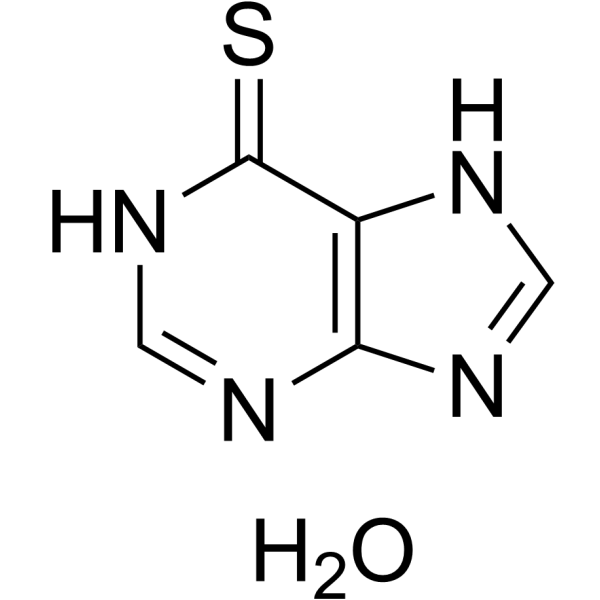
6-Mercaptopurine hydrate (Mercaptopurine hydrate; 6-MP hydrate) is a purine analogue which acts as an antagonist of the endogenous purines and has been widely used as antileukemic agent and immunosuppressive agent.
Nur für Forschungszwecke. Wir verkaufen nicht an Patienten.
- Reinheit : 99.89%
- CAS. Nr.: 6112-76-1
- Formel: C5H6N4OS
- Molecular Weight:170.19
-
Speicherung:Powder -20°C, 3 years , 4°C, 2 years ; In solvent -80°C, 2 years , -20°C, 1 year

To place orders, for customer services and technical support, please contact: MedChemExpress USA
Tel: 609-228-6898 E-mail: [email protected] [email protected]


-
 Biologische Aktivität
-
Chemical Information
-
Lösungsmittel & Löslichkeit
- Reinheit & Dokumentation
- Verweise
-
 Help & FAQs


-
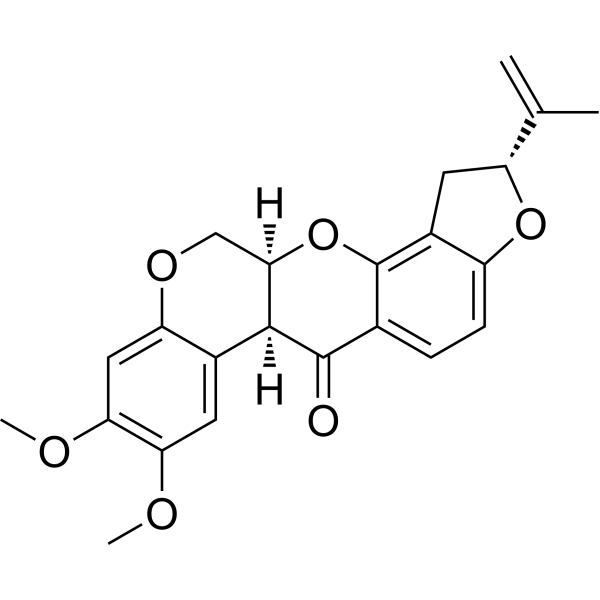
HY-B1756
RotenoneMitochondrial Complex I Inhibitor -
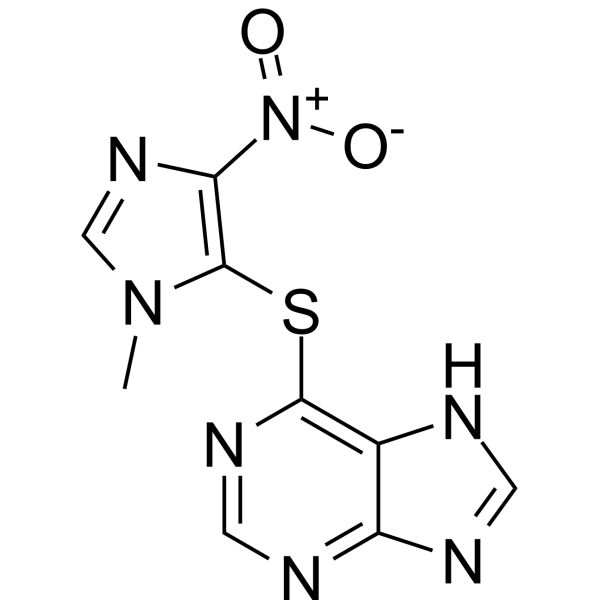
HY-B0256
AzathioprineAutoimmunity Inhibitor -
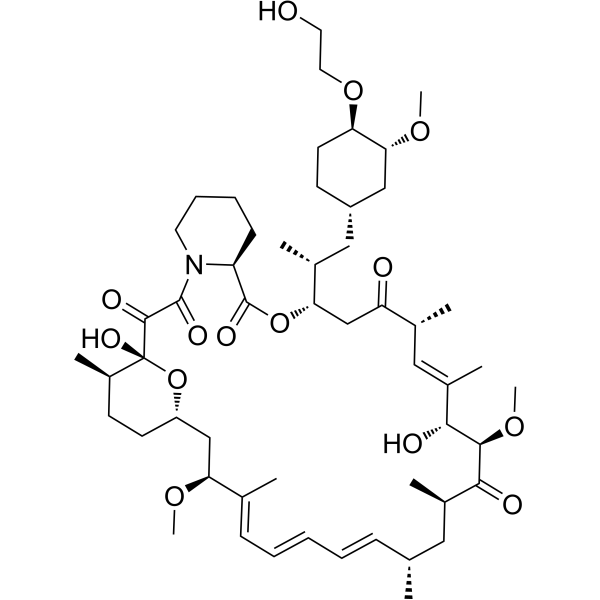
HY-10218
EverolimusmTORC Inhibitor -
HY-13765
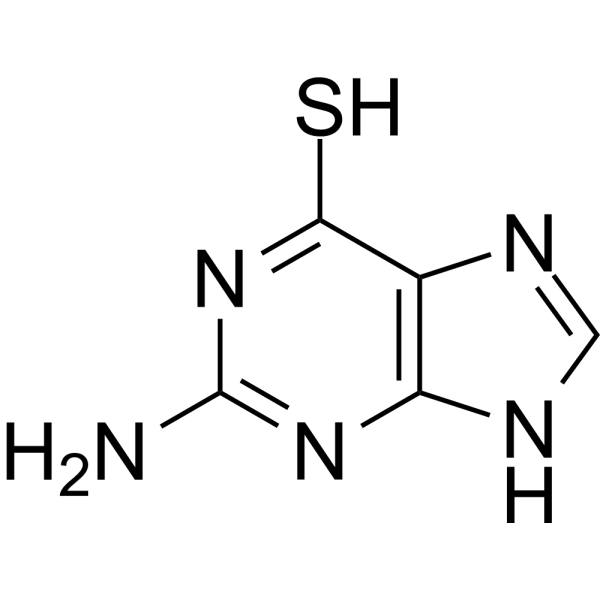
6-ThioguanineImmunosuppressant Agent -
HY-13629
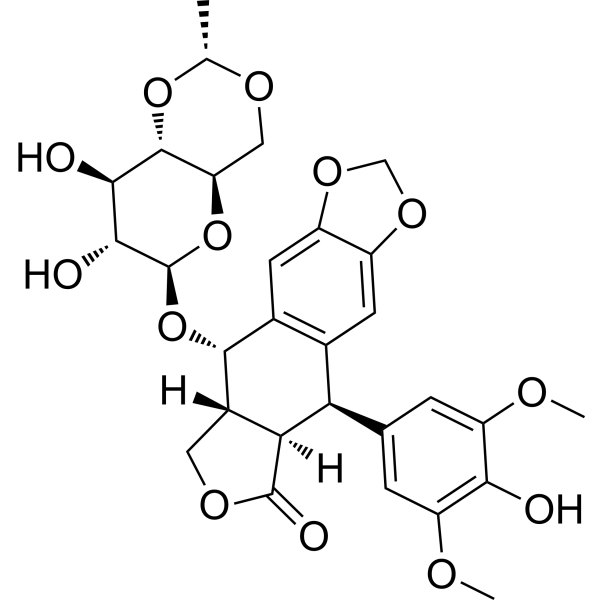
EtoposideTopoisomerase II Inhibitor -
HY-76201
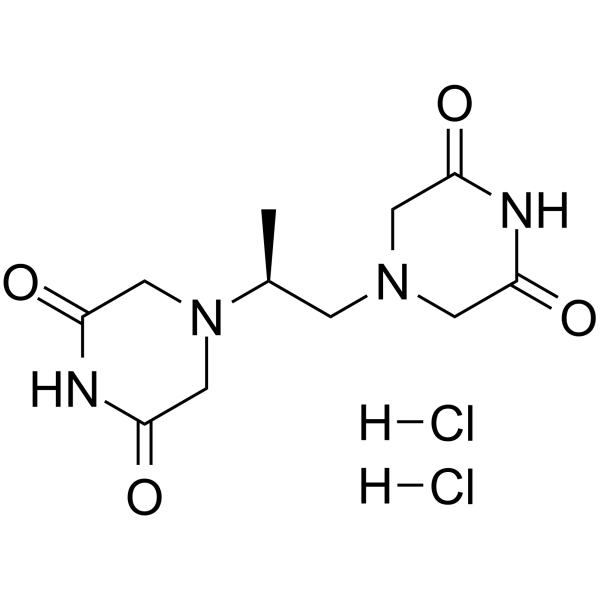
Dexrazoxane hydrochlorideCardioprotective Agent -

HY-13677AR
6-Mercaptopurine hydrate (Standard)Nucleoside Antimetabolite/Analog Antagonist -
HY-B0097
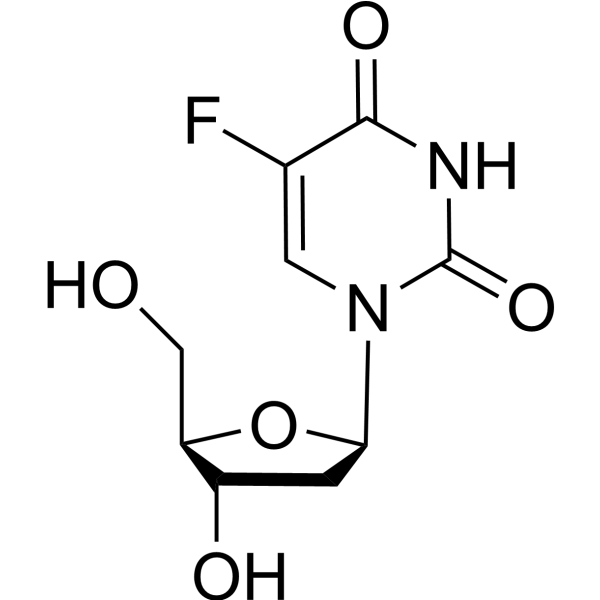
FloxuridineOncology Antimetabolite -
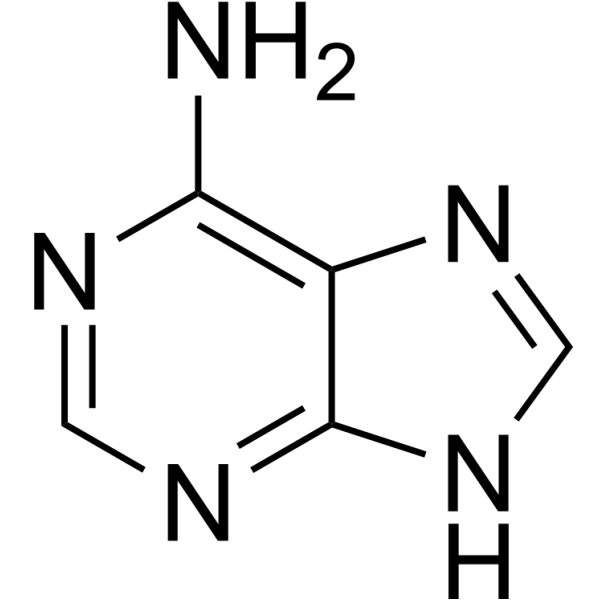
HY-B0152
AdenineNucleobase -
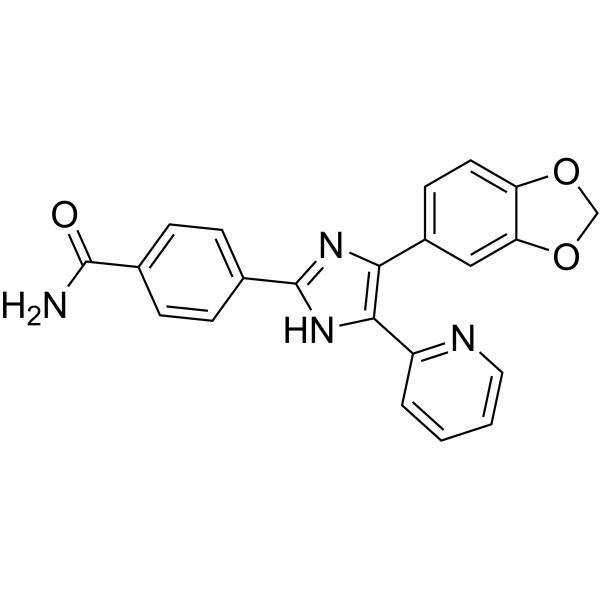
HY-10431
SB-431542TGF-β Receptor Kinase Inhibitor -
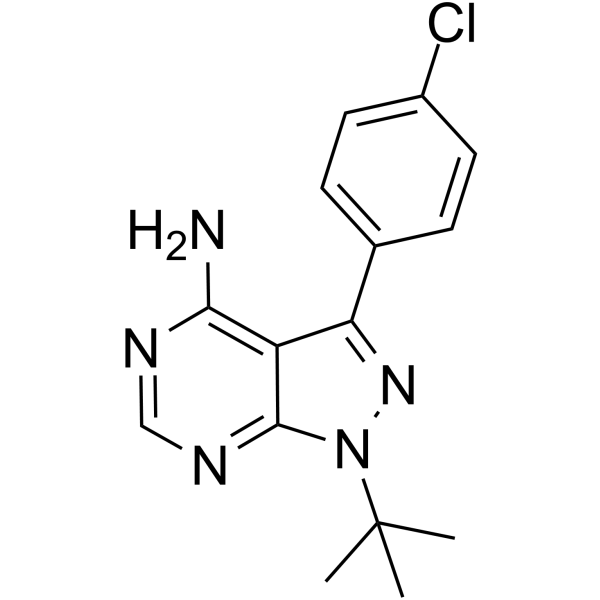
HY-13805
PP2Src Inhibitor -
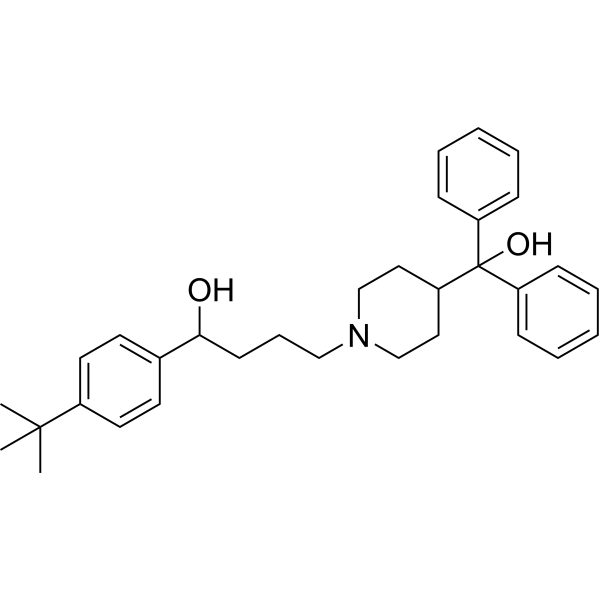
HY-B1193
TerfenadineCaspase Activator
Publications Citing Use of MedChemExpress (MCE) 6-Mercaptopurine hydrate
More- Nat Commun. 2022 Nov 17;13(1):7031. [Abstract]
- Adv Sci (Weinh). 2025 Dec 5:e20444. [Abstract]
- Adv Sci (Weinh). 2025 Jan;12(4):e2408373. [Abstract]
- Cell Rep Med. 2025 Apr 15;6(4):102053. [Abstract]
- Cell Death Dis. 2024 Mar 14;15(3):216. [Abstract]
- Pharmacol Res. 2024 Feb:200:107082. [Abstract]
- ACS Environ Au. 2025 Aug 5;5(6):573-582. [Abstract]
- Int J Biol Macromol. 2024 Sep 15;280(Pt 1):135698. [Abstract]
- Cell Rep. 2025 Mar 25;44(4):115466. [Abstract]
- Anal Chem. 2025 Jun 3;97(21):11099-11109. [Abstract]
- Life Sci. 2026 Mar 15:389:124236. [Abstract]
- Int J Pharm. 2026 Mar 10:692:126648. [Abstract]
- Commun Biol. 2024 Oct 30;7(1):1416. [Abstract]
- J Mol Med (Berl). 2019 Aug;97(8):1183-1193. [Abstract]
- Cancers (Basel). 2022 Oct 19;14(20):5127. [Abstract]
- PLoS Negl Trop Dis. 2019 Aug 20;13(8):e0007681. [Abstract]
- Front Oncol. 2024 Jul 19:14:1440650. [Abstract]
- Oral Dis. 2026 Jul 15.
- bioRxiv. 2026 Jul 7:2026.07.06.736733.
- bioRxiv. 2026 Jul 7.
- Res Sq. 2026 Jun 15.
 Customer Validation & Images

-
WB
-
In Vivo Efficacy Study
-
In Vivo Efficacy Study
-
Cell Proliferation/Viability Assay
-
WB


Biologische Aktivität
Beschreibung
IC50 & Target
endogenous purines[1]
In Vitro
6-Mercaptopurine hydrate (Mercaptopurine hydrate; 6-MP hydrate) induces NR4A3 transcriptional activity 1.6- to 11-fold (P<0.01) in a dose-responsive manner. It is found that 6-Mercaptopurine hydrate leads to a dose-dependent increase in NR4A3 protein levels. 6-Mercaptopurine hydrate treatment increases cell surface GLUT4 in both basal cells 1.8- to 3.6-fold (P<0.01) and insulin-stimulated cells 2.9- to 4.4-fold (P<0.01) over that in controls. It is also found that 6-Mercaptopurine hydrate increases phospho-AS160 significantly in a dose-responsive manner under both basal and insulin-stimulated conditions[2].
MedChemExpress (MCE) has not independently confirmed the accuracy of these methods. They are for reference only. .
In Vivo
MedChemExpress (MCE) has not independently confirmed the accuracy of these methods. They are for reference only.


Chemical Information
-
CAS. Nr. 6112-76-1
-
Appearance Solid
-
Molecular Weight 170.19
-
Formel C5H6N4OS
-
Color Light yellow to yellow
-
SMILES
S=C1NC=NC2=C1NC=N2.O
-
Synonyms
Mercaptopurine hydrate; 6-MP hydrate
-
Versand
Room temperature in continental US; may vary elsewhere.
-
Speicherung
Powder -20°C 3 years 4°C 2 years In solvent -80°C 2 years -20°C 1 year


Publications (21)
-
Journal Impact Factor
-
Most Recent
-
Nat Commun
Identification of purine biosynthesis as an NADH-sensing pathway to mediate energy stress. [Abstract]2022 Nov 17;13(1):7031. PMID: 36396642
6-Mercaptopurine hydrate purchased from MedChemExpress. Usage Cited in: Nat Commun. 2022 Nov 17;13(1):7031. [Abstract]
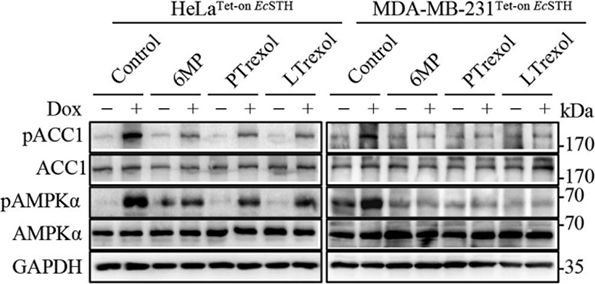
6-Mercaptopurine (6-MP; 300 µM; pretreatment for 2 h) significantly inhibits EcSTH-induced phosphorylation of AMPK and ACC1 in HeLaTet-on EcSTH and MDA-MB-231Tet-on EcSTH cells.
-
Adv Sci (Weinh)
NADH-Reductive Stress Induced by Dihydrolipoamide Dehydrogenase Activation Contributes to Cuproptosis. [Abstract]2025 Dec 5:e20444. PMID: 41346305
6-Mercaptopurine hydrate purchased from MedChemExpress. Usage Cited in: Adv Sci (Weinh). 2025 Dec 5:e20444. [Abstract]
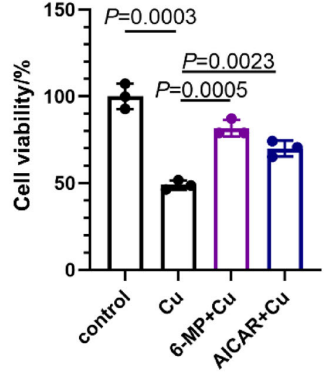
Viability of SH‐SY5Y cells treated with 500 µM CuSO4 and 100 µM 6-Mercaptopurine (6-MP) , 400 µM AICAR for 24 h (n = 3, unpaired t‐test).
-
Adv Sci (Weinh)
Targeting Caveolin-1 in Multiple Myeloma Cells Enhances Chemotherapy and Natural Killer Cell-Mediated Immunotherapy. [Abstract]2025 Jan;12(4):e2408373. PMID: 39630017
6-Mercaptopurine hydrate purchased from MedChemExpress. Usage Cited in: Adv Sci (Weinh). 2025 Jan;12(4):e2408373. [Abstract]
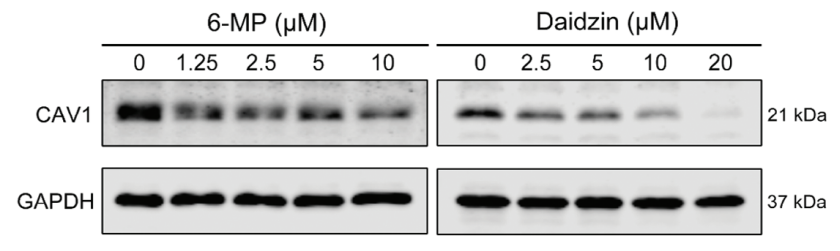
MM1S cells were treated with 6-Mercaptopurine (6-MP, 1.25-10 µM) or daidzin at the indicated concentrations for 48 h and the expression of CAV1 was detected using western blot. The results showed that 6-MP significantly inhibited the expression of CAV1 protein.
6-Mercaptopurine hydrate purchased from MedChemExpress. Usage Cited in: Adv Sci (Weinh). 2025 Jan;12(4):e2408373. [Abstract]
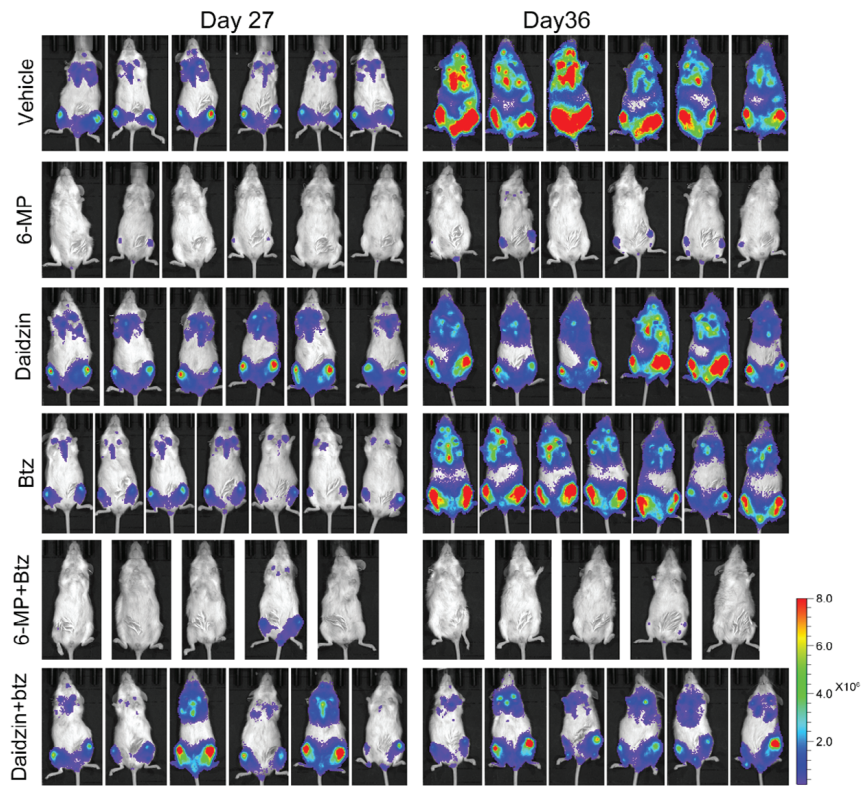
B‐NDG mice were inoculated with MM1S‐Luc cells and randomly divided into six groups (n = 5–7). After 11 days of inoculation, these mice were intraperitoneally injected with 6-Mercaptopurine (6-MP) (10-20 mg/kg), daidzin (30 mg/kg), or vehicle daily until day 67. After 15 days of inoculation, mice were intraperitoneally injected with bortezomib (0.5 mg/kg) three times a week until day 67. The distribution of MM1S‐Luc cells in these mice was measured at the indicated days after inoculation using a living imaging system.
6-Mercaptopurine hydrate purchased from MedChemExpress. Usage Cited in: Adv Sci (Weinh). 2025 Jan;12(4):e2408373. [Abstract]
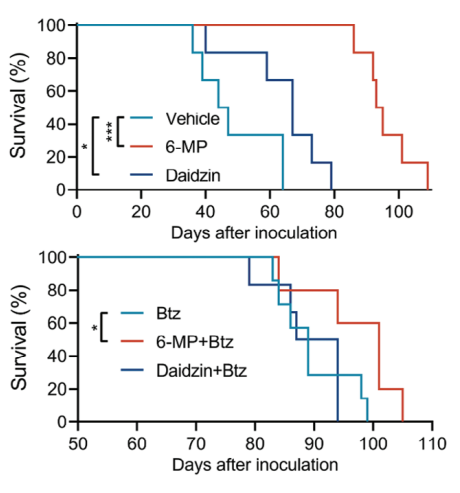
B‐NDG mice were inoculated with MM1S‐Luc cells and randomly divided into six groups (n = 5–7). After 11 days of inoculation, these mice were intraperitoneally injected with 6‐MP (10-20 mg/kg), daidzin (30 mg/kg), or vehicle daily until day 67. After 15 days of inoculation, mice were intraperitoneally injected with bortezomib (0.5 mg/kg) three times a week until day 67. Kaplan–Meier curve showing mice survival. The results showed that 6-MP further promoted the bortezomib‐mediated survival of MM‐bearing mice.
-
Cell Rep Med
CAN-Scan: A multi-omic phenotype-driven precision oncology platform identifies prognostic biomarkers of therapy response for colorectal cancer. [Abstract]2025 Apr 15;6(4):102053. PMID: 40187357 -
Cell Death Dis
Histidine re-sensitizes pediatric acute lymphoblastic leukemia to 6-mercaptopurine through tetrahydrofolate consumption and SIRT5-mediated desuccinylation. [Abstract]2024 Mar 14;15(3):216. PMID: 38485947 -
Pharmacol Res
Identification of Fasudil as a collaborator to promote the anti-tumor effect of lenvatinib in hepatocellular carcinoma by inhibiting GLI2-mediated hedgehog signaling pathway. [Abstract]2024 Feb:200:107082. PMID: 38280440 -
ACS Environ Au
Machine Learning-Assisted Recognition of Environmental Sulfur-Containing Chemicals in Nontargeted Mass Spectrometry Analysis of Inadequate Mass Resolution. [Abstract]2025 Aug 5;5(6):573-582. PMID: 41277996 -
Int J Biol Macromol
circE2F1-encoded peptide inhibits circadian machinery essential for nucleotide biosynthesis and tumor progression via repressing SPIB/E2F1 axis. [Abstract]2024 Sep 15;280(Pt 1):135698. PMID: 39288851 -
Cell Rep
Structural basis for the reversal of human MRP4-mediated multidrug resistance by lapatinib. [Abstract]2025 Mar 25;44(4):115466. PMID: 40138312 -
Anal Chem
Exposome-Scale Investigation of Cl-/Br-Containing Chemicals Using High-Resolution Mass Spectrometry, Multistage Machine Learning, and Cloud Computing. [Abstract]2025 Jun 3;97(21):11099-11109. PMID: 40401576 -
Life Sci
A protective role of ECSIT in chemotherapy-induced intestinal mucositis by maintaining Lgr5+ intestinal stem cells and gut homeostasis. [Abstract]2026 Mar 15:389:124236. PMID: 41611204 -
Int J Pharm
Physicochemical characterization and clinical evaluation of 3D-printed subdivided tablets of 6-Mercaptopurine with broad dosage variations. [Abstract]2026 Mar 10:692:126648. PMID: 41644072 -
Commun Biol
Ferroptosis-related gene signature for predicting prognosis and identifying potential therapeutic drug in EGFR wild-type lung adenocarcinoma. [Abstract]2024 Oct 30;7(1):1416. PMID: 39478024 -
J Mol Med (Berl)
2019 Aug;97(8):1183-1193. PMID: 31201471 -
Cancers (Basel)
Association between Dysfunction of the Nucleolar Stress Response and Multidrug Resistance in Pediatric Acute Lymphoblastic Leukemia. [Abstract]2022 Oct 19;14(20):5127. PMID: 36291909 -
PLoS Negl Trop Dis
Identification of anti-flaviviral drugs with mosquitocidal and anti-Zika virus activity in Aedes aegypti. [Abstract]2019 Aug 20;13(8):e0007681. PMID: 31430351 -
Front Oncol
Hypoxanthine in the microenvironment can enable thiopurine resistance in acute lymphoblastic leukemia. [Abstract]2024 Jul 19:14:1440650. PMID: 39099696 -
-
-
-


Lösungsmittel & Löslichkeit
In Vitro:
DMSO : 50 mg/mL (293.79 mM; Need ultrasonic; Hygroscopic DMSO has a significant impact on the solubility of product, please use newly opened DMSO)
H2O : < 0.1 mg/mL (insoluble)
Please refer to the solubility information to select the appropriate solvent. Once prepared, please aliquot and store the solution to prevent product inactivation from repeated freeze-thaw cycles.
Storage method and period of stock solution: -80°C, 2 years; -20°C, 1 year. When stored at -80°C, please use it within 2 years. When stored at -20°C, please use it within 1 year.
Please refer to the solubility information to select the appropriate solvent. Once prepared, please aliquot and store the solution to prevent product inactivation from repeated freeze-thaw cycles.
Storage method and period of stock solution: -80°C, 2 years; -20°C, 1 year. When stored at -80°C, please use it within 2 years. When stored at -20°C, please use it within 1 year.
Konzentration (Stammlösung) × Volumen (Stammlösung) = Konzentration (Ziellösung) × Volumen (Ziellösung)
In Vivo:
Select the appropriate dissolution method based on your experimental animal and administration route.
- For the following dissolution methods, please ensure to first prepare a clear stock solution using an In Vitro approach and then sequentially add co-solvents:
- To ensure reliable experimental results, the clarified stock solution can be appropriately stored based on storage conditions. As for the working solution for In Vivo experiments, it is recommended to prepare freshly and use it on the same day.
- The percentages shown for the solvents indicate their volumetric ratio in the final prepared solution. If precipitation or phase separation occurs during preparation, heat and/or sonication can be used to aid dissolution.
Add each solvent one by one: 10% DMSO 40% PEG300 5% Tween-80 45% Saline
Solubility: ≥ 2.5 mg/mL (14.69 mM); Clear solution
This protocol yields a clear solution of ≥ 2.5 mg/mL (saturation unknown).
Taking 1 mL working solution as an example, add 100 μL DMSO stock solution (25.0 mg/mL) to 400 μL PEG300, and mix evenly; then add 50 μL Tween-80 and mix evenly; then add 450 μL Saline to adjust the volume to 1 mL.
Preparation of Saline: Dissolve 0.9 g sodium chloride in ddH₂O and dilute to 100 mL to obtain a clear Saline solution.
For the following dissolution methods, please prepare the working solution directly:
It is recommended to prepare fresh solutions and use them promptly within a short period of time.
The percentages shown for the solvents indicate their volumetric ratio in the final prepared solution. If precipitation or phase separation occurs during preparation, heat and/or sonication can be used to aid dissolution.
Add each solvent one by one: 50% PEG300 50% Saline
Solubility: 3.33 mg/mL (19.57 mM); Clear solution; Need ultrasonic
In Vivo Dissolution Calculator
Please enter the basic information of animal experiments:
-
-
-
-
Recommended: Prepare an additional quantity of animals to account for potential losses during experiments.
Please enter your animal formula composition:
-
%DMSO +
Recommended: Keep the proportion of DMSO in working solution below 2% if your animal is weak.
-
%+
-
+%Tween-80 + +
-
%Saline +
The co-solvents required include: DMSO, . All of co-solvents are available by MedChemExpress (MCE). , Tween 80. All of co-solvents are available by MedChemExpress (MCE).
Working solution concentration: 0.22 mg/mL
Method for preparing stock solution: mg drug dissolved in μL DMSO. Stock solution concentration: mg/mL.
1. Take μL DMSO stock solution;
2. Add μL .
μL , mix evenly;
3. Then add μL Tween 80, mix evenly;
4. Then add μL
Please ensure that the stock solution in the first step is dissolved to a clear state, and add co-solvents in sequence. You can use ultrasonic heating (ultrasonic cleaner, recommended frequency 20-40 kHz), vortexing, etc. to assist dissolution.


Reinheit & Dokumentation
-
Data Sheet (282 KB)
-
SDS (644 KB)
- English - EN (644 KB)
- Français - FR (644 KB)
- Deutsch - DE (644 KB)
- Norwegian - NO (644 KB)
- Español - ES (644 KB)
- Swedish - SV (644 KB)
- Italian - IT (644 KB)
- Korean - KR (644 KB)
- Portuguese - PT (644 KB)
-
Handling Instructions (2659 KB)
Verweise
[1]. Sahasranaman S, et al. Clinical pharmacology and pharmacogenetics of thiopurines. Eur J Clin Pharmacol. 2008 Aug;64(8):753-67. [Content Brief]
[2]. Liu Q, et al. 6-Mercaptopurine augments glucose transport activity in skeletal muscle cells in part via a mechanism dependent upon orphan nuclear receptor NR4A3. Am J Physiol Endocrinol Metab. 2013 Nov 1;305(9):E1081-92. [Content Brief]
[3]. Kanemitsu H, et al. 6-Mercaptopurine (6-MP) induces cell cycle arrest and apoptosis of neural progenitor cells in the developing fetal rat brain. Neurotoxicol Teratol. 2009 Mar-Apr;31(2):104-9. [Content Brief]


Complete Stock Solution Preparation Table
Please refer to the solubility information to select the appropriate solvent. Once prepared, please aliquot and store the solution to prevent product inactivation from repeated freeze-thaw cycles.
Storage method and period of stock solution: -80°C, 2 years; -20°C, 1 year. When stored at -80°C, please use it within 2 years. When stored at -20°C, please use it within 1 year.
| Optional Solvent | Concentration Solvent Mass | 1 mg | 5 mg | 10 mg | 25 mg |
|---|---|---|---|---|---|
| DMSO | 1 mM | 5.8758 mL | 29.3789 mL | 58.7579 mL | 146.8946 mL |
| 5 mM | 1.1752 mL | 5.8758 mL | 11.7516 mL | 29.3789 mL | |
| 10 mM | 0.5876 mL | 2.9379 mL | 5.8758 mL | 14.6895 mL | |
| 15 mM | 0.3917 mL | 1.9586 mL | 3.9172 mL | 9.7930 mL | |
| 20 mM | 0.2938 mL | 1.4689 mL | 2.9379 mL | 7.3447 mL | |
| 25 mM | 0.2350 mL | 1.1752 mL | 2.3503 mL | 5.8758 mL | |
| 30 mM | 0.1959 mL | 0.9793 mL | 1.9586 mL | 4.8965 mL | |
| 40 mM | 0.1469 mL | 0.7345 mL | 1.4689 mL | 3.6724 mL | |
| 50 mM | 0.1175 mL | 0.5876 mL | 1.1752 mL | 2.9379 mL | |
| 60 mM | 0.0979 mL | 0.4896 mL | 0.9793 mL | 2.4482 mL | |
| 80 mM | 0.0734 mL | 0.3672 mL | 0.7345 mL | 1.8362 mL | |
| 100 mM | 0.0588 mL | 0.2938 mL | 0.5876 mL | 1.4689 mL |


6-Mercaptopurine hydrate Related Classifications
HY-13677A Related Classifications
 Powered by Bioz