



Amiselimod hydrochloride

Based on 1 Customer Validation
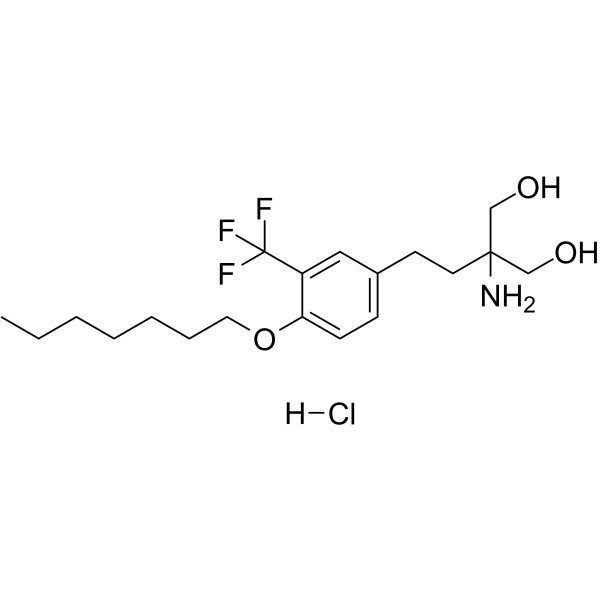
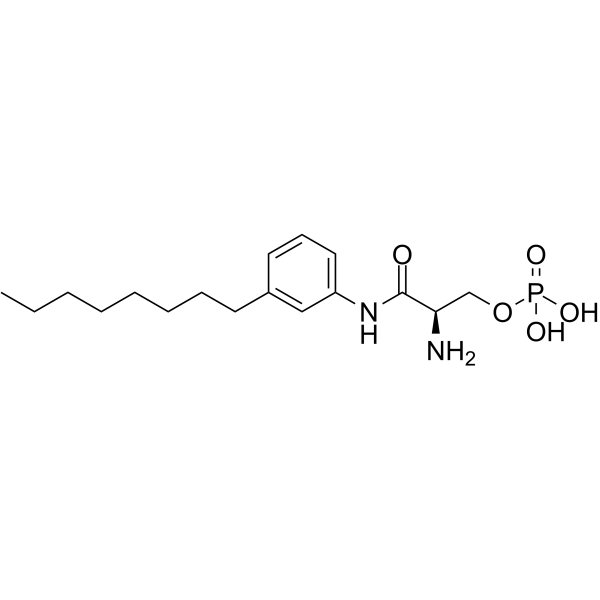
Amiselimod (MT-1303) hydrochloride is converted to its active metabolite Amiselimod phosphate by sphingosine kinases in vivo. Amiselimod hydrochloride is an orally active and high selectivity sphingosine 1-phosphate receptor-1 (S1P1) agonist, designed to reduce the bradycardia effects associated with fingolimod and other S1P receptor modulators. Amiselimod hydrochloride inhibits chronic colitis via inhibiting infiltration of colitogenic Th1 and Th17 cells into the colon. Amiselimod hydrochloride inhibits lupus nephritis by reducing the infiltration of autoreactive T cells into the kidneys. Amiselimod hydrochloride is promising for research of autoimmune diseases.
Para uso exclusivo en investigación. No vendemos a pacientes.
- Pureza : 98.86%
- No. CAS: 942398-84-7
- Fòrmula: C19H31ClF3NO3
- Peso molecular:413.90
-
Almacenamiento:
4°C, sealed storage, away from moisture
* In solvent : -80°C, 6 months; -20°C, 1 month (sealed storage, away from moisture)

To place orders, for customer services and technical support, please contact: MedChemExpress USA
Tel: 609-228-6898 E-mail: [email protected] [email protected]


-
 Actividad biológica
-
Chemical Information
-
Solvente y solubilidad
- Protocolo
- Pureza y Documentación
- Referencias
-
 Help & FAQs


-
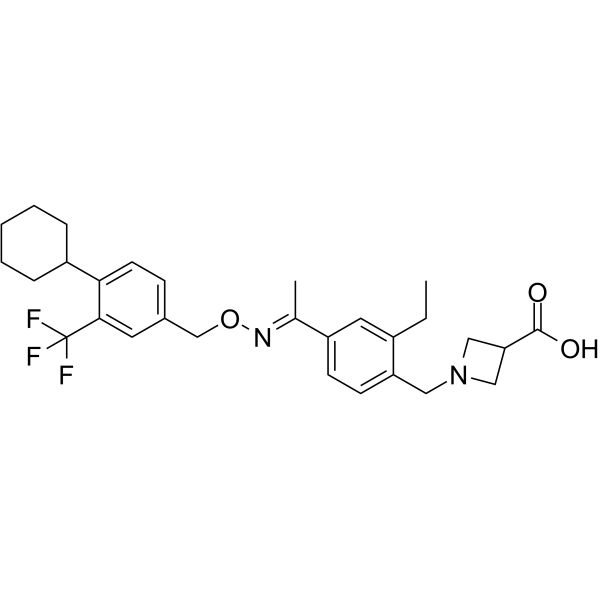
HY-12355
SiponimodS1P1/S1P5 Agonist -
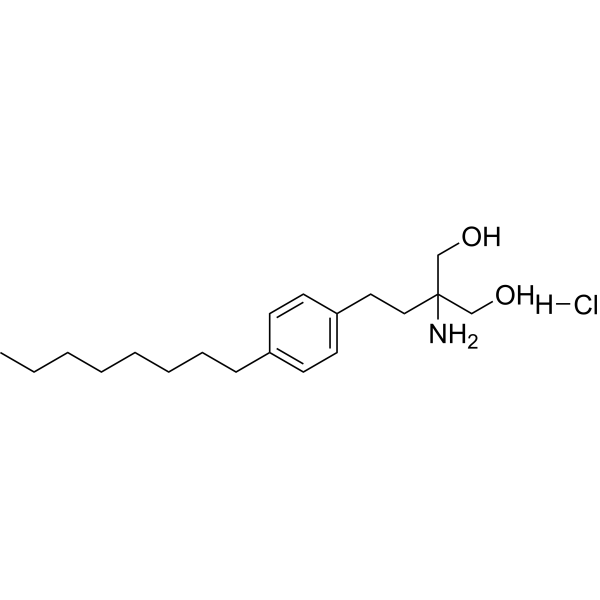
HY-12005
Fingolimod hydrochlorideS1P Receptors Modulator -
HY-108490
VPC 23019S1P1/3 Antagonist -
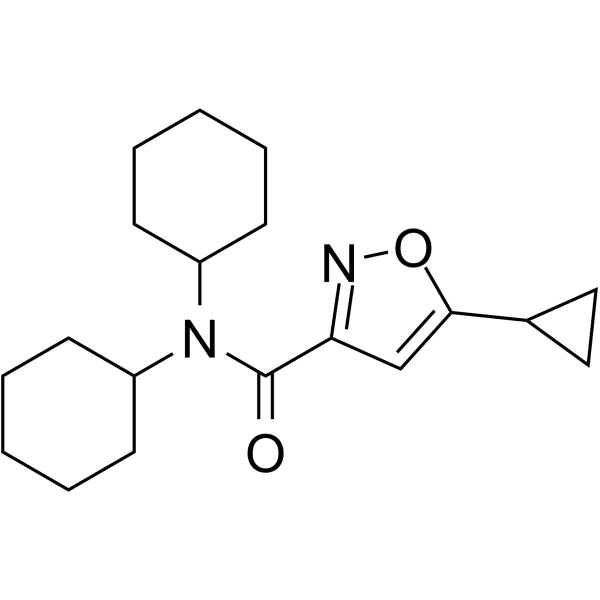
HY-101419
CYM-5541S1P3 Receptor Agonist -
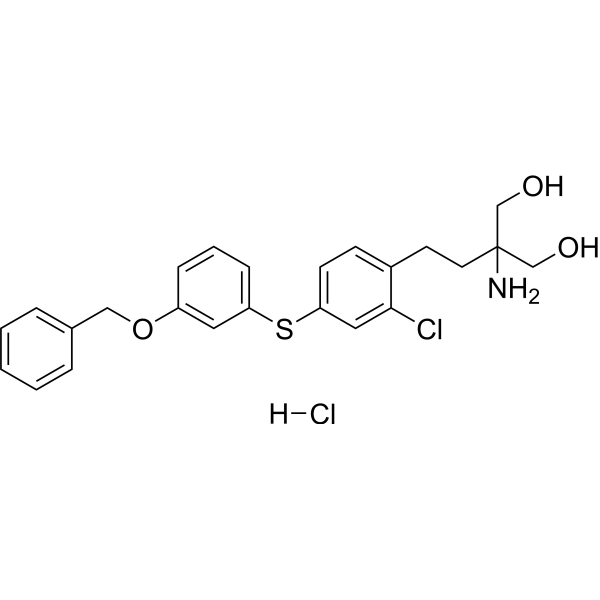
HY-13660
Mocravimod hydrochlorideS1PR Regulator -
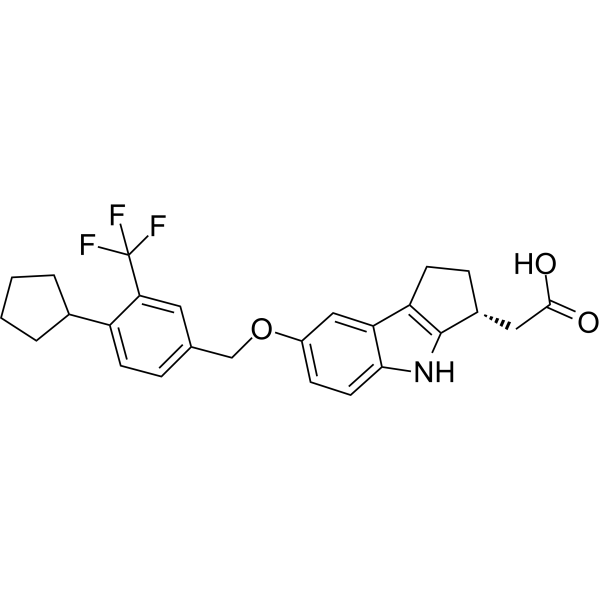
HY-12789
EtrasimodS1P1 Receptor Antagonist -
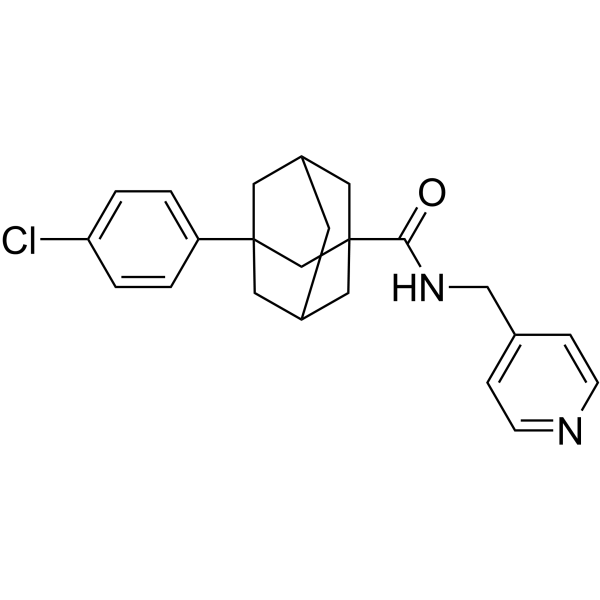
HY-16015
Opaganib -
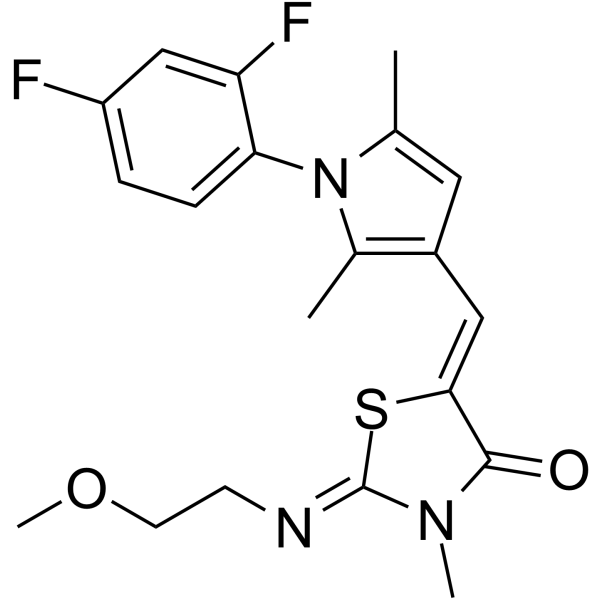
HY-108495
CYM50308S1P4 Receptor Agonist -
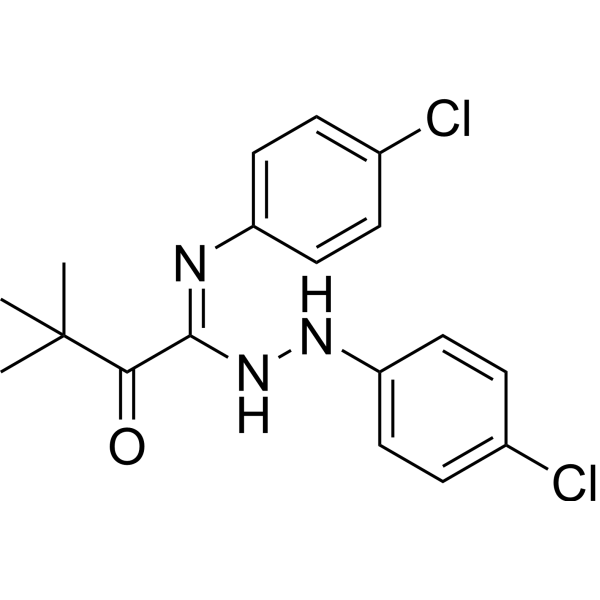
HY-19736
TY-52156LPL Receptor Antagonist -
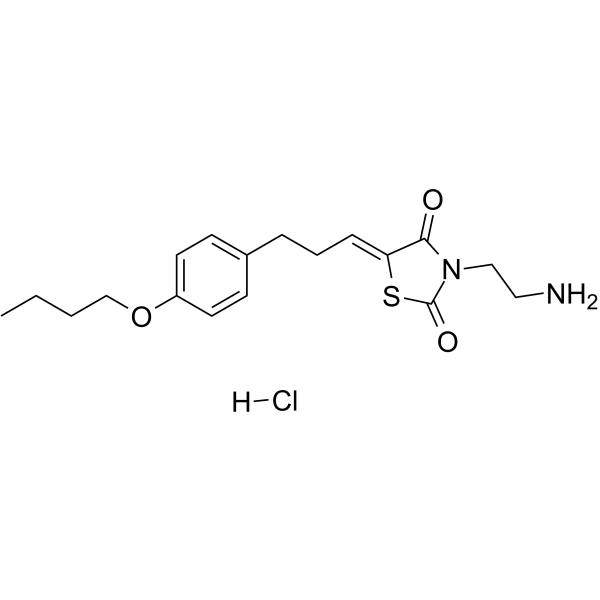
HY-15779A
K145 hydrochlorideSphK2 Inhibitor -
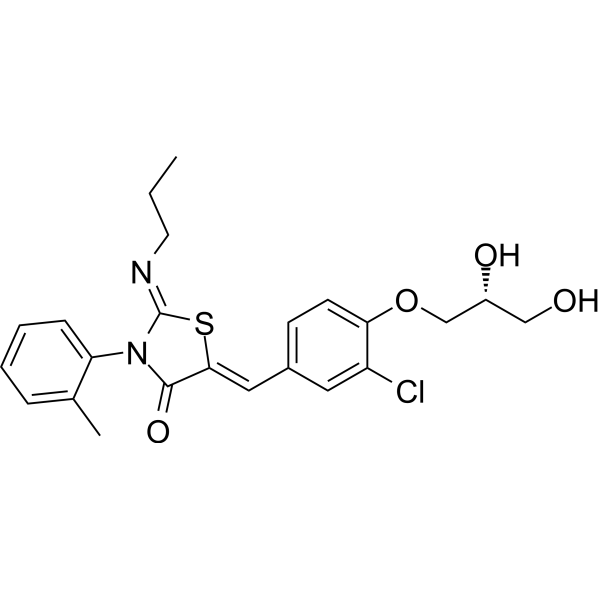
HY-10569
PonesimodS1P1 Agonist -
HY-101265
IcanbelimodS1P Receptor Agonist


Actividad biológica
Descripciòn
In Vitro
Amiselimod hydrochloride (100 nM, 12 h) is converted into Amiselimod-P in HEK293 cells or primary HCMs (human cardiac myocytes) more slowly than Fingolimod (HY-11063) was converted into fingolimod-P[1].
Amiselimod-P (0.001-1000 nM) shows agonist activity at S1P1 receptor with an EC50 of 75 pM, and is more potent than at S1P4 and S1P5 receptors but has no distinct agonist activity at S1P2 or S1P3 receptors in human S1P receptor-expressing cells[1].
Amiselimod-P (0.001-1000 nM) increases G-protein-activated inwardly rectifying potassium (GIRK) current amplitude in a concentration-dependent manner, with an EC50 of 41.6 nM in human atrial myocytes[1].
MedChemExpress (MCE) has not independently confirmed the accuracy of these methods. They are for reference only.
In Vivo
Amiselimod (0.3-30 mg/kg, p.o., with a 6 day interval between vehicle and 0.3 mg/kg, 13 or 14 day intervals between dose levels of 0.3, 3 and 30 mg/kg) hydrochloride does not affect heart rate or ECG parameters in monkeys[1].
Amiselimod (0.3 mg/kg, p.o., daily, 3 days) hydrochloride decreases S1P1 expression on CD4+ T cells from mesenteric lymph nodes in C57BL/6 mice[3].
. Amiselimod (0.3 mg/kg, p.o., daily, 28 days) hydrochloride inhibits the development of colitis induced by adoptive transfer of CD4+CD45RBhigh T cells in SCID mice[3].
Amiselimod (0.3 mg/kg, p.o., daily, 3-4 weeks) hydrochloride reduces infiltration of Th1 and Th17 cells into the colon of colitis mic e induced by adoptive transfer of CD4+CD45RBhigh T cells [3].
Amiselimod (0.1-0.3 mg/kg, p.o., daily, 21 days) hydrochloride inhibits the development of chronic colitis with an efficacy comparable to that of an anti-mTNF-α mAb (250 μg/mouse) in adoptive transfer of CD4+CD45RBhigh T cells induced colitis mice[3].
Amiselimod (0.1-1 mg/kg, p.o., daily, 18 weeks) hydrochloride strongly inhibits the development of lupus nephritis in MRL/lpr mice[4].
Amiselimod (0.1-0.3 mg/kg, p.o., daily, 10 weeks) hydrochloride prevents progression of lupus nephritis in NZBWF1 Mice[4].
Amiselimod (0.3 mg/kg, p.o., daily, 13 weeks) hydrochloride reduces infiltration of T Cells into the kidneys of NZBWF1 mice[4].
MedChemExpress (MCE) has not independently confirmed the accuracy of these methods. They are for reference only.
-
Animal Model:Four male cynomolgus monkeys, Macaca fascicularis, 3-4 years old [1].
-
Dosage:0.3, 3, 30 mg/kg,
-
Administration:p.o., with a 6 day interval between vehicle and 0.3 mg/kg, 13 or 14 day intervals between dose levels of 0.3, 3 and 30 mg/kg.
-
Result:Had no effects on heart rate or ECG parameters, including PR interval, QRS duration, QT interval and QTc at doses up to 30 mg/kg
Did not affect blood pressure at doses up to 30 mg/kg.
-
Animal Model:Male C57BL/6 mice, aged 5 weeks.[3].
-
Dosage:0.3 mg/kg,
-
Administration:p.o., daily, 3 days
-
Result:Decreased S1P1 expression on CD4+ T cells from mesenteric lymph nodes.
-
Animal Model:Immunodeficient SCID mice with chronic colitis induced by adoptive transfer of CD4+CD45RBhigh T cells from BALB/c mice[3].
-
Dosage:0.1, 0.3 mg/kg
-
Administration:p.o., daily, 28 days
-
Result:Body weight remained higher than that in the control group from 4 days after cell transfer.
Body weight in the 0.3 mg/kg treated group was significantly higher than that in the control group from 17 days.
Clinical scores (sum of scores for hunching, wasting, colon thickening, and stool consistency) in the 0.1 and 0.3 mg/kg treated groups were 1.5 and 1.1.
Reduced inflammatory cell infiltrates, epithelial hyperplasia and mucin depletion from goblet cells in the colon at 0.3 mg/kg.
-
Animal Model:Immunodeficient SCID mice with chronic colitis induced by adoptive transfer of CD4+CD45RBhigh T cells from BALB/c mice[3].
-
Dosage:0.1, 0.3 mg/kg
-
Administration:p.o., daily, 21 days, the anti-mTNF-α mAb (250 μg/mouse) was intraperitoneally injected on days 7 and 21.
-
Result:Increased body weight from day 15 comparable to anti-mTNF-α mAb-treated groups.
Clinical scores in the 0.1 and 0.3 mg/kg treated groups were 1.1 and 0.6 and anti-mTNF-α mAb-treated group was 1.2.
Inhibited the development of chronic colitis with an efficacy comparable to that of an anti-mTNF-α mAb (250 μg/mouse).
-
Animal Model:Immunodeficient SCID mice with chronic colitis induced by adoptive transfer of CD4+CD45RBhigh T cells from BALB/c mice[3].
-
Dosage:0.3 mg/kg,
-
Administration:p.o., daily, 3-4 weeks
-
Result:Significantly reduced the number of infiltrating lymphocytes and CD4+ T cells.
Decreased the number of IFN-γ- and IL-17-producing CD4+ T cells in the lamina propria.
Produced significantly less IFN-γ and IL-17 than those from vehicle-treated mice.
-
Animal Model:MRL/lpr mice at 8 weeks of age without proteinuria[4].
-
Dosage:0.1, 0.3, 1 mg/kg
-
Administration:p.o., daily, 18 weeks
-
Result:No mice treated at doses greater than 0.3 mg/kg developed lupus nephritis during the study period.
Reduced this infiltration of T cells into the kidneys.
Inhibited the development of lymphadenopathy and splenomegaly.
Decreased the number of T cells,CD4 T cells, B cells, and MRL/lpr-mouse-specific abnormal T cells.
-
Animal Model:NZBWF1 mice at 30 weeks of age without proteinuria[4].
-
Dosage:0.1, 0.3 mg/kg
-
Administration:p.o., daily, 10 weeks
-
Result:Mean proteinuria scores remained lower than those in the control group.
Attenuated the severity of several histological changes including mesangial expansion, glomerular sclerosis, and interstitial infiltrates.
-
Animal Model:NZBWF1 mice at 41 weeks of age without proteinuria[4].
-
Dosage:0.3 mg/kg
-
Administration:p.o., daily, 13 weeks
-
Result:Reduced the number of infiltrating T cells, CD4 T cells, CD8 T cells, and CD4-CD8- double-negative (DN) T cells.
Decreased B cell counts.


Chemical Information
-
No. CAS 942398-84-7
-
Appearance Solid
-
Peso molecular 413.90
-
Fòrmula C19H31ClF3NO3
-
Color White to off-white
-
SMILES
OCC(CCC1=CC=C(OCCCCCCC)C(C(F)(F)F)=C1)(N)CO.[H]Cl
-
Synonyms
MT-1303 hydrochloride
-
Envío
Room temperature in continental US; may vary elsewhere.
-
Almacenamiento
4°C, sealed storage, away from moisture
* In solvent : -80°C, 6 months; -20°C, 1 month (sealed storage, away from moisture)


Solvente y solubilidad
In Vitro:
DMSO : 110 mg/mL (265.76 mM; Need ultrasonic; Hygroscopic DMSO has a significant impact on the solubility of product, please use newly opened DMSO)
Please refer to the solubility information to select the appropriate solvent. Once prepared, please aliquot and store the solution to prevent product inactivation from repeated freeze-thaw cycles.
Storage method and period of stock solution: -80°C, 6 months; -20°C, 1 month (sealed storage, away from moisture). When stored at -80°C, please use it within 6 months. When stored at -20°C, please use it within 1 month.
Please refer to the solubility information to select the appropriate solvent. Once prepared, please aliquot and store the solution to prevent product inactivation from repeated freeze-thaw cycles.
Storage method and period of stock solution: -80°C, 6 months; -20°C, 1 month (sealed storage, away from moisture). When stored at -80°C, please use it within 6 months. When stored at -20°C, please use it within 1 month.
Concentration (start) × Volume (start) = Concentration (final) × Volume (final)
In Vivo:
Select the appropriate dissolution method based on your experimental animal and administration route.
- For the following dissolution methods, please ensure to first prepare a clear stock solution using an In Vitro approach and then sequentially add co-solvents:
- To ensure reliable experimental results, the clarified stock solution can be appropriately stored based on storage conditions. As for the working solution for In Vivo experiments, it is recommended to prepare freshly and use it on the same day.
- The percentages shown for the solvents indicate their volumetric ratio in the final prepared solution. If precipitation or phase separation occurs during preparation, heat and/or sonication can be used to aid dissolution.
Add each solvent one by one: 10% DMSO 90% (20% SBE-β-CD in Saline)
Solubility: ≥ 2.75 mg/mL (6.64 mM); Clear solution
This protocol yields a clear solution of ≥ 2.75 mg/mL (saturation unknown).
Taking 1 mL working solution as an example, add 100 μL DMSO stock solution (27.5 mg/mL) to 900 μL 20% SBE-β-CD in Saline, and mix evenly.
Preparation of 20% SBE-β-CD in Saline (4°C, storage for one week): 2 g SBE-β-CD powder is dissolved in 10 mL Saline, completely dissolve until clear.
In Vivo Dissolution Calculator
Please enter the basic information of animal experiments:
-
-
-
-
Recommended: Prepare an additional quantity of animals to account for potential losses during experiments.
Please enter your animal formula composition:
-
%DMSO +
Recommended: Keep the proportion of DMSO in working solution below 2% if your animal is weak.
-
%+
-
+%Tween-80 + +
-
%Saline +
The co-solvents required include: DMSO, . All of co-solvents are available by MedChemExpress (MCE). , Tween 80. All of co-solvents are available by MedChemExpress (MCE).
Working solution concentration: 0.22 mg/mL
Method for preparing stock solution: mg drug dissolved in μL DMSO. Stock solution concentration: mg/mL. * In solvent : -80°C, 6 months; -20°C, 1 month (sealed storage, away from moisture)
1. Take μL DMSO stock solution;
2. Add μL .
μL , mix evenly;
3. Then add μL Tween 80, mix evenly;
4. Then add μL
Please ensure that the stock solution in the first step is dissolved to a clear state, and add co-solvents in sequence. You can use ultrasonic heating (ultrasonic cleaner, recommended frequency 20-40 kHz), vortexing, etc. to assist dissolution.


Pureza y Documentación
-
Ficha de datos (281 KB)
-
SDS (394 KB)
- English - EN (394 KB)
- Français - FR (394 KB)
- Deutsch - DE (394 KB)
- Norwegian - NO (394 KB)
- Español - ES (394 KB)
- Swedish - SV (394 KB)
- Italian - IT (394 KB)
- Korean - KR (394 KB)
- Portuguese - PT (394 KB)
-
Instrucciones de manejo (2659 KB)
Referencias
[1]. Sugahara K et al. Amiselimod, a novel sphingosine 1-phosphate receptor-1 modulator, has potent therapeutic efficacy for autoimmune diseases, with low bradycardia risk. Br J Pharmacol. 2016 Oct 7. [Content Brief]
[2]. Kappos L et al. Safety and efficacy of amiselimod in relapsing multiple sclerosis (MOMENTUM): a randomised, double-blind, placebo-controlled phase 2 trial. Lancet Neurol. 2016 Oct;15(11):1148-59. [Content Brief]
[3]. Shimano K, et al. Amiselimod (MT-1303), a novel sphingosine 1-phosphate receptor-1 functional antagonist, inhibits progress of chronic colitis induced by transfer of CD4+CD45RBhigh T cells. PLoS One. 2019 Dec 5;14(12):e0226154. [Content Brief]
[4]. Sugahara K, et al. Amiselimod (MT-1303), a Novel Sphingosine 1-Phosphate Receptor-1 Modulator, Potently Inhibits the Progression of Lupus Nephritis in Two Murine SLE Models. J Immunol Res. 2019 Dec 23;2019:5821589. [Content Brief]


Complete Stock Solution Preparation Table
Please refer to the solubility information to select the appropriate solvent. Once prepared, please aliquot and store the solution to prevent product inactivation from repeated freeze-thaw cycles.
Storage method and period of stock solution: -80°C, 6 months; -20°C, 1 month (sealed storage, away from moisture). When stored at -80°C, please use it within 6 months. When stored at -20°C, please use it within 1 month.
| Optional Solvent | Concentration Solvent Mass | 1 mg | 5 mg | 10 mg | 25 mg |
|---|---|---|---|---|---|
| DMSO | 1 mM | 2.4160 mL | 12.0802 mL | 24.1604 mL | 60.4011 mL |
| 5 mM | 0.4832 mL | 2.4160 mL | 4.8321 mL | 12.0802 mL | |
| 10 mM | 0.2416 mL | 1.2080 mL | 2.4160 mL | 6.0401 mL | |
| 15 mM | 0.1611 mL | 0.8053 mL | 1.6107 mL | 4.0267 mL | |
| 20 mM | 0.1208 mL | 0.6040 mL | 1.2080 mL | 3.0201 mL | |
| 25 mM | 0.0966 mL | 0.4832 mL | 0.9664 mL | 2.4160 mL | |
| 30 mM | 0.0805 mL | 0.4027 mL | 0.8053 mL | 2.0134 mL | |
| 40 mM | 0.0604 mL | 0.3020 mL | 0.6040 mL | 1.5100 mL | |
| 50 mM | 0.0483 mL | 0.2416 mL | 0.4832 mL | 1.2080 mL | |
| 60 mM | 0.0403 mL | 0.2013 mL | 0.4027 mL | 1.0067 mL | |
| 80 mM | 0.0302 mL | 0.1510 mL | 0.3020 mL | 0.7550 mL | |
| 100 mM | 0.0242 mL | 0.1208 mL | 0.2416 mL | 0.6040 mL |


Amiselimod hydrochloride Related Classifications
HY-16734A Related Classifications
 Powered by Bioz