



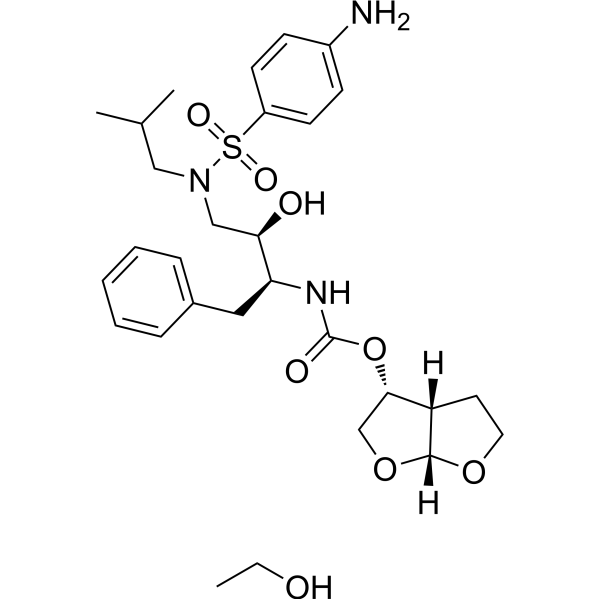
Darunavir Ethanolate
Based on 19 publication(s) in Google Scholar
Darunavir ethanolate (TMC114 Ethanolate) is a potent HIV protease inhibitor used to treat and prevent HIV/AIDS. Darunavir has a Ki of 1 nM for wild type HIV-1 protease.
For research use only. We do not sell to patients.
- Purity : 99.93%
- CAS No.: 635728-49-3
- Formula: C29H43N3O8S
- Molecular Weight:593.73
-
Storage:Powder -20°C, 3 years , 4°C, 2 years ; In solvent -80°C, 2 years , -20°C, 1 year

To place orders, for customer services and technical support, please contact: MedChemExpress USA
Tel: 609-228-6898 E-mail: [email protected] [email protected]


-
 Biological Activity
-
Chemical Information
-
Solvent & Solubility
- Purity & Documentation
- References
-
 Help & FAQs


-
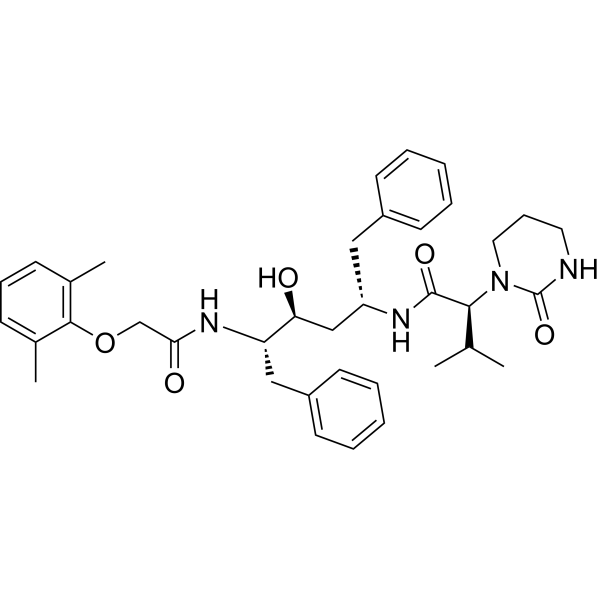
HY-14588
LopinavirHIV-1 Protease Inhibitor -
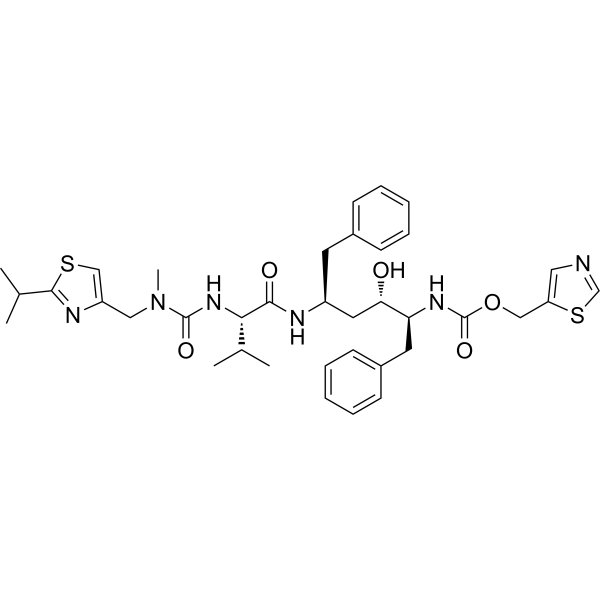
HY-90001
RitonavirHIV Protease Inhibitor -
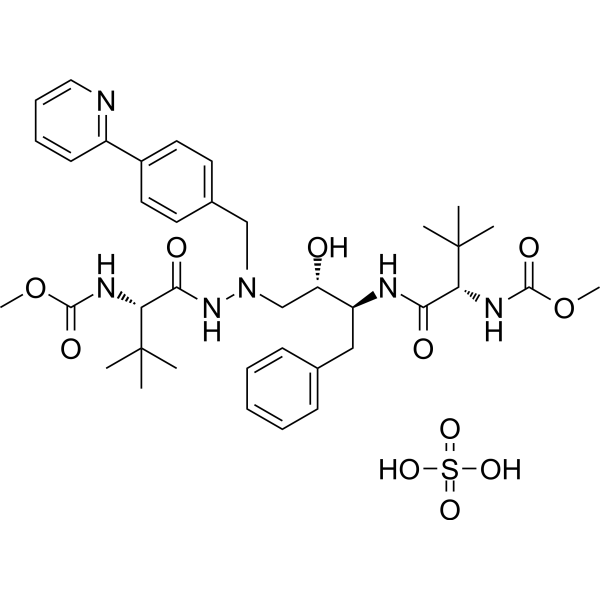
HY-17367A
Atazanavir sulfateHIV Protease Inhibitor -
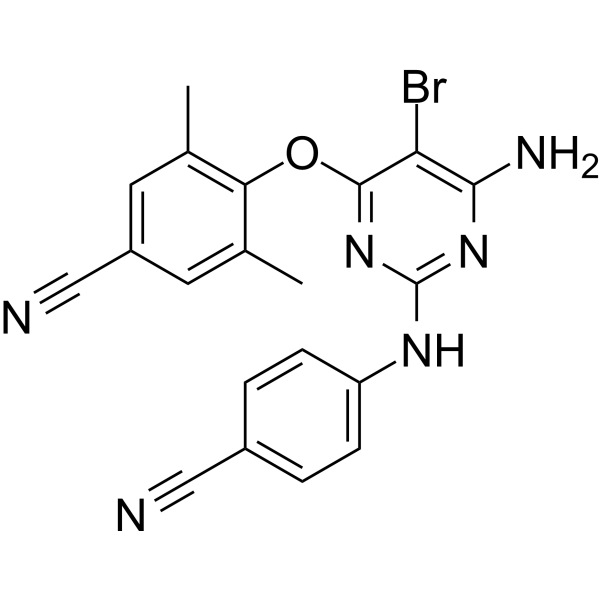
HY-90005
Etravirine -
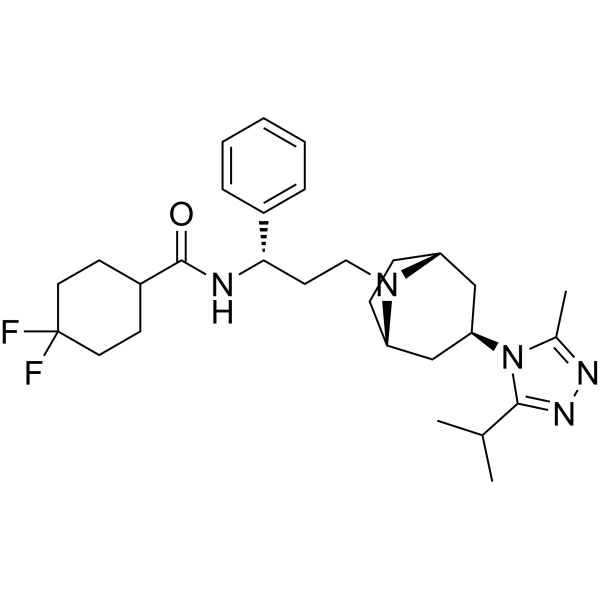
HY-13004
MaravirocCCR5 Antagonist -
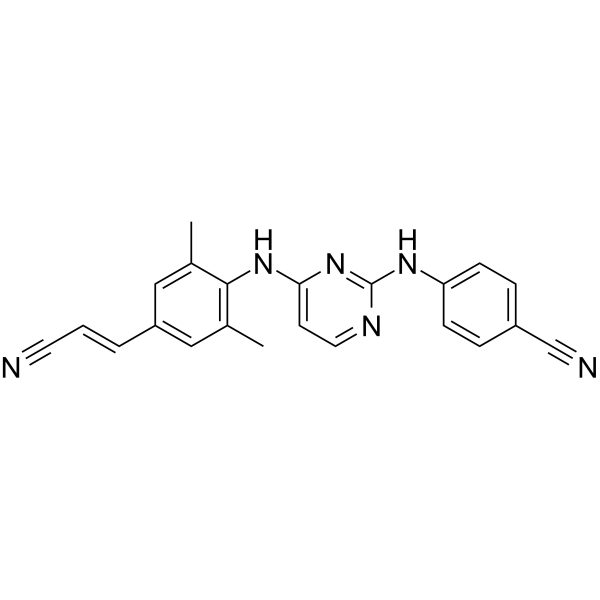
HY-10574
RilpivirineNNRTI -
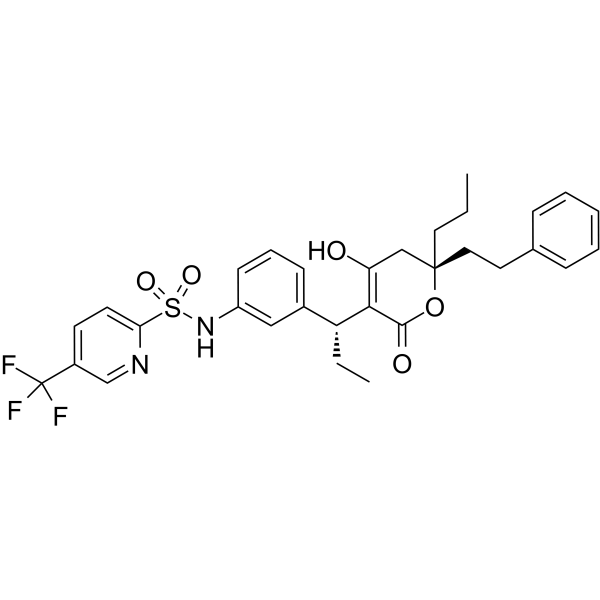
HY-15148
TipranavirHIV Protease Inhibitor -
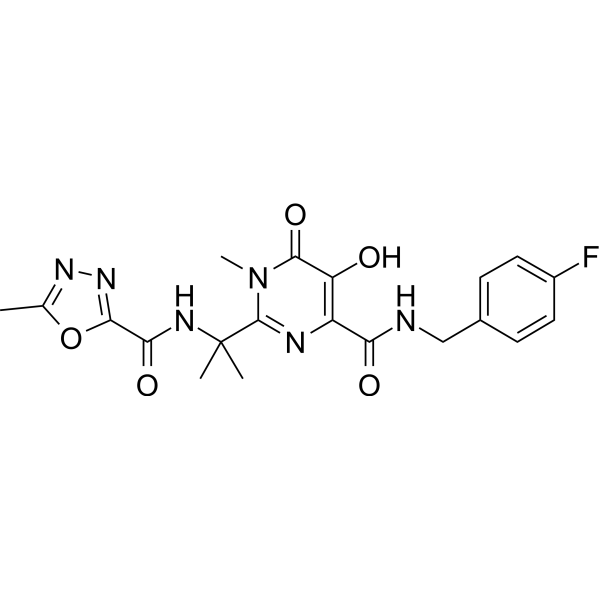
HY-10353
RaltegravirIntegrase Inhibitor -
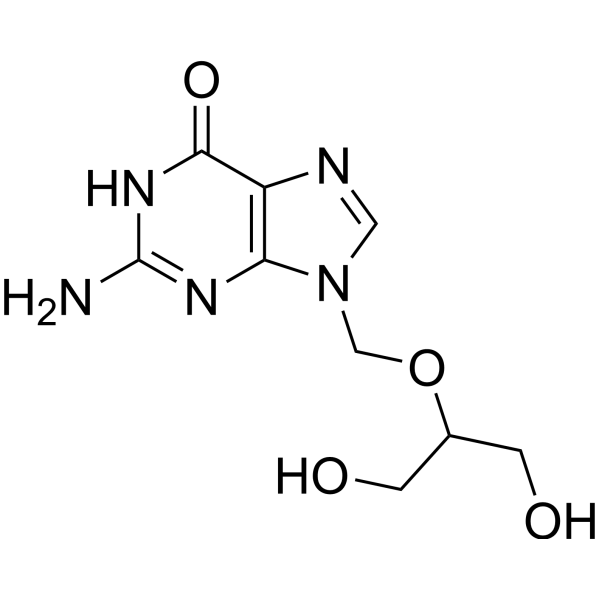
HY-13637
GanciclovirAntiviral Agent -
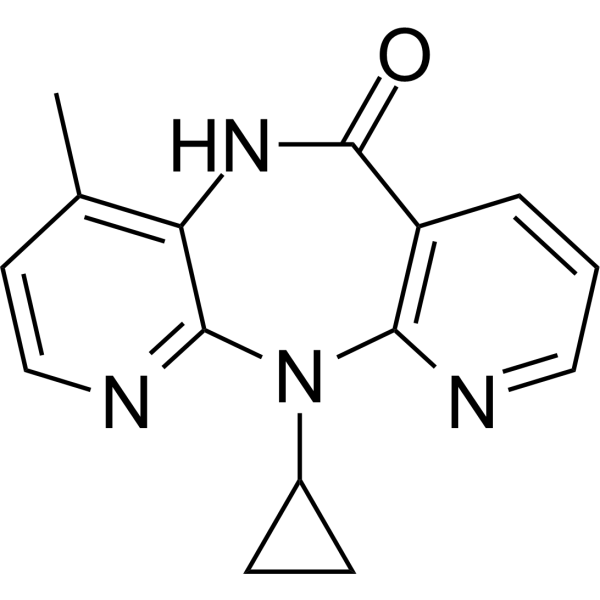
HY-10570
NevirapineHIV-1 Reverse Transcriptase Inhibitor -
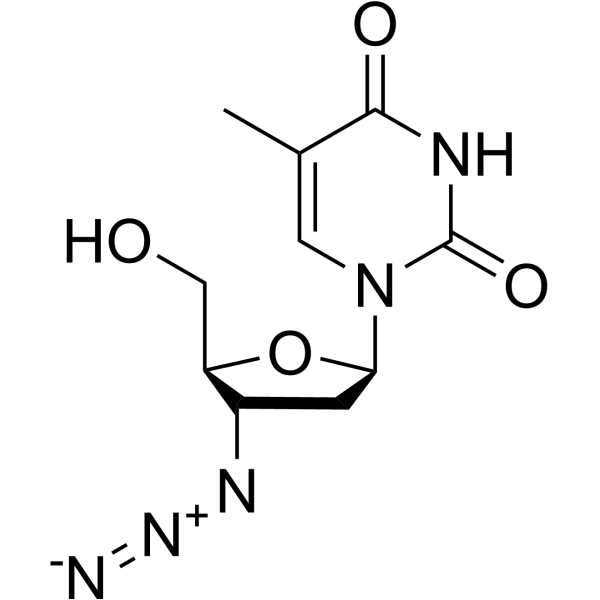
HY-17413
ZidovudineNucleoside Reverse Transcriptase Inhibitor -
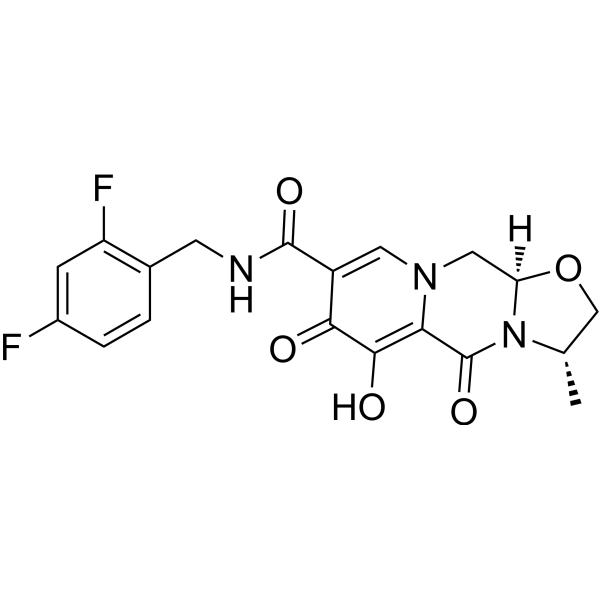
HY-15592
CabotegravirHIV Integrase Inhibitor
Publications Citing Use of MedChemExpress (MCE) Darunavir Ethanolate
More- Signal Transduct Target Ther. 2021 May 29;6(1):212. [Abstract]
- Nat Microbiol. 2025 Nov;10(11):2736-2748. [Abstract]
- Nat Commun. 2020 Sep 4;11(1):4417. [Abstract]
- Cell Rep Med. 2024 Sep 17;5(9):101702. [Abstract]
- Aging Cell. 2023 Jan;22(1):e13750. [Abstract]
- J Neuroimmune Pharmacol. 2021 Mar;16(1):159-168. [Abstract]
- Pharmaceuticals (Basel). 2022 Feb 18;15(2):242. [Abstract]
- Protein Sci. 2026 Jun;35(6):e70611. [Abstract]
- ACS Omega. 2025 Dec 10;10(50):62083-62098. [Abstract]
- Int J Antimicrob Agents. 2019 Dec;54(6):814-819. [Abstract]
- J Photochem Photobiol A Chem. 2025 Nov 15;473:116930.
- Mol Divers. 2025 Nov 12. [Abstract]
- Antiviral Res. 2022 Dec:208:105463. [Abstract]
- Antimicrob Agents Chemother. 2020 Aug 20;64(9):e00872-20. [Abstract]
- J Chem. 2025 Oct 15.
- bioRxiv. 2026 Sep 23:2026.09.22.753563.
- bioRxiv. 2025 Apr 4:2025.04.04.647291. [Abstract]
- Research Square Print. 2022 May.
- bioRxiv. 2020 Apr.
 Customer Validation & Images

-
Bio/Physico-chemical Assay

-
Bio/Physico-chemical Assay

-
WB

-
Bio/Physico-chemical Assay

-
ELISA


Biological Activity
Description
IC50 & Target
|
HIV-1 |
In Vitro
Darunavir is a broad-spectrum potent inhibitor active against HIV-1 clinical isolates with minimal cytotoxicity. Darunavir forms hydrogen bonds with the conserved main-chain atoms of Asp29 and Asp30 of the protease. These interactions are proposed to be critical for the potency of this compound against HIV isolates that are resistant to multiple protease inhibitors[1]. In an in vitro study in MT-2 cells, the potency of darunavir is greater than that of saquinavir, amprenavir, nelfinavir, indinavir, lopinavir and ritonavir. Darunavir is primarily metabolized by the hepatic cytochrome P450 (CYP) enzymes, primarily CYP3A. The ‘boosting’ dose of ritonavir acts an an inhibitor of CYP3A, thereby increasing darunavir bioavailability[2].
MedChemExpress (MCE) has not independently confirmed the accuracy of these methods. They are for reference only.
In Vivo
MedChemExpress (MCE) has not independently confirmed the accuracy of these methods. They are for reference only.
Clinical Trial
| NCT Number | Sponsor | Condition | Start Date |
Phase

|
|---|---|---|---|---|
| NCT01329991 | 2011-05 | PHASE1 |


Chemical Information
-
CAS No. 635728-49-3
-
Appearance Solid
-
Molecular Weight 593.73
-
Formula C29H43N3O8S
-
Color White to off-white
-
SMILES
O=C(O[C@@H]1[C@@]2([H])[C@@](OCC2)([H])OC1)N[C@@H](CC3=CC=CC=C3)[C@H](O)CN(S(=O)(C4=CC=C(N)C=C4)=O)CC(C)C.CCO
-
Synonyms
TMC114 Ethanolate
-
Shipping
Room temperature in continental US; may vary elsewhere.
-
Storage
Powder -20°C 3 years 4°C 2 years In solvent -80°C 2 years -20°C 1 year


Publications (19)
-
Journal Impact Factor
-
Most Recent
-
Signal Transduct Target Ther
Bardoxolone and bardoxolone methyl, two Nrf2 activators in clinical trials, inhibit SARS-CoV-2 replication and its 3C-like protease. [Abstract]2021 May 29;6(1):212. PMID: 34052830 -
Nat Microbiol
Superinfection promotes replication and diversification of defective HIV-1 proviruses in people with non-suppressible viraemia. [Abstract]2025 Nov;10(11):2736-2748. PMID: 41044362 -
Nat Commun
Both Boceprevir and GC376 efficaciously inhibit SARS-CoV-2 by targeting its main protease. [Abstract]2020 Sep 4;11(1):4417. PMID: 32887884 -
Cell Rep Med
Decoupling HIV-1 antiretroviral drug inhibition from plasma antibody activity to evaluate broadly neutralizing antibody therapeutics and vaccines. [Abstract]2024 Sep 17;5(9):101702. PMID: 39216479 -
Aging Cell
Antiretroviral protease inhibitors induce features of cellular senescence that are reversible upon drug removal. [Abstract]2023 Jan;22(1):e13750. PMID: 36539941 -
J Neuroimmune Pharmacol
2021 Mar;16(1):159-168. PMID: 31338753
Darunavir Ethanolate purchased from MedChemExpress. Usage Cited in: J Neuroimmune Pharmacol. 2021 Mar;16(1):159-168. [Abstract]
Darunavir (0.1 μM; 48 h) significantly increased endolysosome pH in primary cultured rat neurons.
Darunavir Ethanolate purchased from MedChemExpress. Usage Cited in: J Neuroimmune Pharmacol. 2021 Mar;16(1):159-168. [Abstract]
Darunavir (0.1 μM; 48 h) significantly increased secreted Aβ1–40 and Aβ1–42 in primary cultured rat neurons.
-
Pharmaceuticals (Basel)
Evaluation of the Potency of Anti-HIV and Anti-HCV Drugs to Inhibit P-Glycoprotein Mediated Efflux of Digoxin in Caco-2 Cell Line and Human Precision-Cut Intestinal Slices. [Abstract]2022 Feb 18;15(2):242. PMID: 35215354 -
Protein Sci
Phosphinate pseudopeptide enhances binding free energy in HIV-1 protease by driving flap closure and suppressing global flexibility. [Abstract]2026 Jun;35(6):e70611. PMID: 42101091 -
ACS Omega
Highly Potent Phosphinic HIV‑1 Protease Inhibitors: Synthesis, In Vitro Evaluation, and Docking Studies. [Abstract]2025 Dec 10;10(50):62083-62098. PMID: 41476560
Darunavir Ethanolate purchased from MedChemExpress. Usage Cited in: ACS Omega. 2025 Dec 10;10(50):62083-62098. [Abstract]
Darunavir (0.01, 0.1, 1 μM) exhibited the highest level of enzyme inhibition for HIV-1 protease.
-
Int J Antimicrob Agents
2019 Dec;54(6):814-819. PMID: 31479744 -
-
Mol Divers
A potent and selective PROTAC degrader of CDK9 as effective inhibitor of HIV-1 RNA synthesis. [Abstract]2025 Nov 12. PMID: 41225073 -
Antiviral Res
HIV protease inhibitor attenuated astrocyte autophagy involvement in inflammation via p38 MAPK pathway. [Abstract]2022 Dec:208:105463. PMID: 36372295
Darunavir Ethanolate purchased from MedChemExpress. Usage Cited in: Antiviral Res. 2022 Dec:208:105463. [Abstract]
Darunavir (10 μM) had no effect on autophagy in U87 cells.
-
Antimicrob Agents Chemother
2020 Aug 20;64(9):e00872-20. PMID: 32669265 -
Darunavir Ethanolate purchased from MedChemExpress. Usage Cited in: J Chem. 2025 Oct 15.
Darunavir (0-10 nM) showed Inhibitory activity towardHIV-1 wild-type PR with an IC50 value of 0.50 nM.
-
-
bioRxiv
Superinfection with intact HIV-1 results in conditional replication of defective proviruses and nonsuppressible viremia in people living with HIV-1. [Abstract]2025 Apr 4:2025.04.04.647291. PMID: 40236094 -
-


Solvent & Solubility
In Vitro:
DMSO : ≥ 50 mg/mL (84.21 mM; Hygroscopic DMSO has a significant impact on the solubility of product, please use newly opened DMSO)
* "≥" means soluble, but saturation unknown.
Please refer to the solubility information to select the appropriate solvent. Once prepared, please aliquot and store the solution to prevent product inactivation from repeated freeze-thaw cycles.
Storage method and period of stock solution: -80°C, 2 years; -20°C, 1 year. When stored at -80°C, please use it within 2 years. When stored at -20°C, please use it within 1 year.
Please refer to the solubility information to select the appropriate solvent. Once prepared, please aliquot and store the solution to prevent product inactivation from repeated freeze-thaw cycles.
Storage method and period of stock solution: -80°C, 2 years; -20°C, 1 year. When stored at -80°C, please use it within 2 years. When stored at -20°C, please use it within 1 year.
Concentration (start) × Volume (start) = Concentration (final) × Volume (final)
In Vivo:
Select the appropriate dissolution method based on your experimental animal and administration route.
- For the following dissolution methods, please ensure to first prepare a clear stock solution using an In Vitro approach and then sequentially add co-solvents:
- To ensure reliable experimental results, the clarified stock solution can be appropriately stored based on storage conditions. As for the working solution for In Vivo experiments, it is recommended to prepare freshly and use it on the same day.
- The percentages shown for the solvents indicate their volumetric ratio in the final prepared solution. If precipitation or phase separation occurs during preparation, heat and/or sonication can be used to aid dissolution.
Add each solvent one by one: 10% DMSO 40% PEG300 5% Tween-80 45% Saline
Solubility: ≥ 2.5 mg/mL (4.21 mM); Clear solution
This protocol yields a clear solution of ≥ 2.5 mg/mL (saturation unknown).
Taking 1 mL working solution as an example, add 100 μL DMSO stock solution (25.0 mg/mL) to 400 μL PEG300, and mix evenly; then add 50 μL Tween-80 and mix evenly; then add 450 μL Saline to adjust the volume to 1 mL.
Preparation of Saline: Dissolve 0.9 g sodium chloride in ddH₂O and dilute to 100 mL to obtain a clear Saline solution.
Add each solvent one by one: 10% DMSO 90% (20% SBE-β-CD in Saline)
Solubility: ≥ 2.5 mg/mL (4.21 mM); Clear solution
This protocol yields a clear solution of ≥ 2.5 mg/mL (saturation unknown).
Taking 1 mL working solution as an example, add 100 μL DMSO stock solution (25.0 mg/mL) to 900 μL 20% SBE-β-CD in Saline, and mix evenly.
Preparation of 20% SBE-β-CD in Saline (4°C, storage for one week): 2 g SBE-β-CD powder is dissolved in 10 mL Saline, completely dissolve until clear.
In Vivo Dissolution Calculator
Please enter the basic information of animal experiments:
-
-
-
-
Recommended: Prepare an additional quantity of animals to account for potential losses during experiments.
Please enter your animal formula composition:
-
%DMSO +
Recommended: Keep the proportion of DMSO in working solution below 2% if your animal is weak.
-
%+
-
+%Tween-80 + +
-
%Saline +
The co-solvents required include: DMSO, . All of co-solvents are available by MedChemExpress (MCE). , Tween 80. All of co-solvents are available by MedChemExpress (MCE).
Working solution concentration: 0.22 mg/mL
Method for preparing stock solution: mg drug dissolved in μL DMSO. Stock solution concentration: mg/mL.
1. Take μL DMSO stock solution;
2. Add μL .
μL , mix evenly;
3. Then add μL Tween 80, mix evenly;
4. Then add μL
Please ensure that the stock solution in the first step is dissolved to a clear state, and add co-solvents in sequence. You can use ultrasonic heating (ultrasonic cleaner, recommended frequency 20-40 kHz), vortexing, etc. to assist dissolution.


Purity & Documentation
-
Data Sheet (280 KB)
-
SDS (396 KB)
- English - EN (396 KB)
- Français - FR (396 KB)
- Deutsch - DE (396 KB)
- Norwegian - NO (396 KB)
- Español - ES (396 KB)
- Swedish - SV (396 KB)
- Italian - IT (396 KB)
- Korean - KR (396 KB)
- Portuguese - PT (396 KB)
-
Handling Instructions (2659 KB)
References
[1]. Tie Y, et al. High resolution crystal structures of HIV-1 protease with a potent non-peptide inhibitor (UIC-94017) active against multi-drug-resistant clinical strains. J Mol Biol. 2004 Apr 23;338(2):341-52. [Content Brief]
[2]. McKeage K, et al. Darunavir: a review of its use in the management of HIV infection in adults. Drugs. 2009;69(4):477-503. [Content Brief]
[3]. Bhalekar MR, et al. In-vivo bioavailability and lymphatic uptake evaluation of lipid nanoparticulates of darunavir. Drug Deliv. 2016 Sep;23(7):2581-2586. [Content Brief]


Complete Stock Solution Preparation Table
Please refer to the solubility information to select the appropriate solvent. Once prepared, please aliquot and store the solution to prevent product inactivation from repeated freeze-thaw cycles.
Storage method and period of stock solution: -80°C, 2 years; -20°C, 1 year. When stored at -80°C, please use it within 2 years. When stored at -20°C, please use it within 1 year.
| Optional Solvent | Concentration Solvent Mass | 1 mg | 5 mg | 10 mg | 25 mg |
|---|---|---|---|---|---|
| DMSO | 1 mM | 1.6843 mL | 8.4213 mL | 16.8427 mL | 42.1067 mL |
| 5 mM | 0.3369 mL | 1.6843 mL | 3.3685 mL | 8.4213 mL | |
| 10 mM | 0.1684 mL | 0.8421 mL | 1.6843 mL | 4.2107 mL | |
| 15 mM | 0.1123 mL | 0.5614 mL | 1.1228 mL | 2.8071 mL | |
| 20 mM | 0.0842 mL | 0.4211 mL | 0.8421 mL | 2.1053 mL | |
| 25 mM | 0.0674 mL | 0.3369 mL | 0.6737 mL | 1.6843 mL | |
| 30 mM | 0.0561 mL | 0.2807 mL | 0.5614 mL | 1.4036 mL | |
| 40 mM | 0.0421 mL | 0.2105 mL | 0.4211 mL | 1.0527 mL | |
| 50 mM | 0.0337 mL | 0.1684 mL | 0.3369 mL | 0.8421 mL | |
| 60 mM | 0.0281 mL | 0.1404 mL | 0.2807 mL | 0.7018 mL | |
| 80 mM | 0.0211 mL | 0.1053 mL | 0.2105 mL | 0.5263 mL |


Darunavir Ethanolate Related Classifications
HY-17041 Related Classifications
 Powered by Bioz