36 Results for "

Erlotinib Hydrochloride

" in MedChemExpress (MCE) Product Catalog:
Products (36)

36 Results for "Erlotinib Hydrochloride" in MCE Product Catalog:

143
143 Publications Verification
Cat. No.: HY-50896
CAS No.: 183321-74-6
Synonyms: CP-358774; NSC 718781; OSI-774
Target:  

EGFR OAT ERK GSK-3 β-catenin

Research Areas:  

Endocrinology Cancer

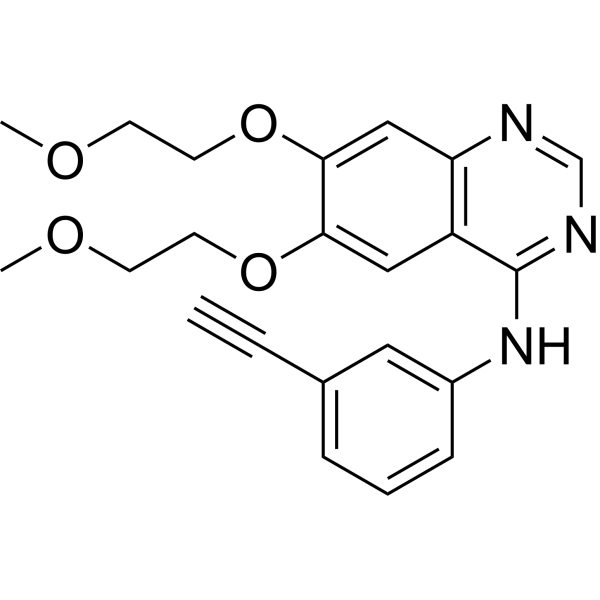
Erlotinib (CP-358774) is a selective, orally active EGFR tyrosine kinase inhibitor. Erlotinib also acts as a substrate and inhibitor of OATP2B1, with an IC50 of approximately 0.079 μM for inhibiting OATP2B1-mediated uptake of estrone 3-sulfate. Erlotinib blocks EGFR phosphorylation, downstream signal transduction, as well as the growth and proliferation of cancer cells. Erlotinib inhibits MMP-10-mediated renal injury, fibrotic lesions, the ERK1/2, GSK-3β and β-catenin signaling pathways, fibronectin, α-SMA, collagen deposition, and renal injury markers. Erlotinib is metabolized via CYP3A to produce the active metabolite OSI-420. Erlotinib can be used in research related to non-small cell lung cancer, gastric cancer, papillary renal cell carcinoma, pancreatic cancer, renal fibrosis, and other conditions .
loading...
    loading...
143
143 Publications Verification
Cat. No.: HY-12008
CAS No.: 183319-69-9
Purity:  99.94%
Synonyms: CP-358774 Hydrochloride; NSC 718781 Hydrochloride; OSI-774 Hydrochloride
Target:  

EGFR OAT ERK GSK-3 β-catenin

Research Areas:  

Endocrinology Cancer

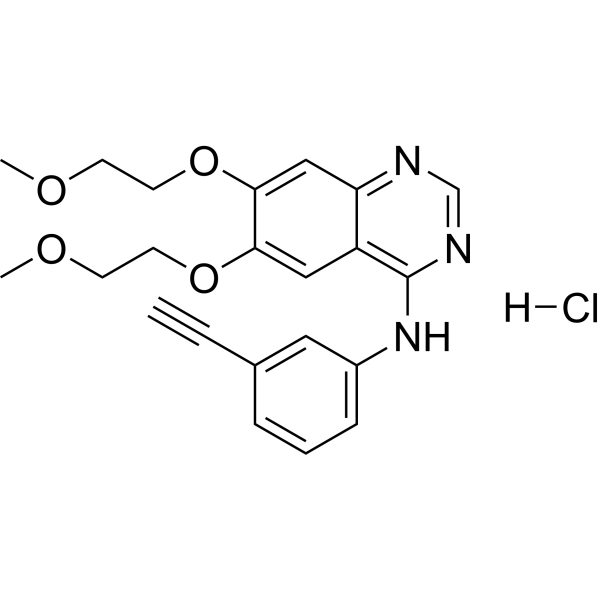
Erlotinib (CP-358774) Hydrochloride is a selective, orally active EGFR tyrosine kinase inhibitor. Erlotinib Hydrochloride also acts as a substrate and inhibitor of OATP2B1, with an IC50 of approximately 0.079 μM for inhibiting OATP2B1-mediated uptake of estrone 3-sulfate. Erlotinib Hydrochloride blocks EGFR phosphorylation, downstream signal transduction, as well as the growth and proliferation of cancer cells. Erlotinib Hydrochloride inhibits MMP-10-mediated renal injury, fibrotic lesions, the ERK1/2, GSK-3β and β-catenin signaling pathways, as well as the deposition of fibronectin, α-SMA, collagen and renal injury markers. Erlotinib Hydrochloride is metabolized via CYP3A to produce the active metabolite OSI-420. Erlotinib Hydrochloride can be used in research related to non-small cell lung cancer, gastric cancer, papillary renal cell carcinoma, EGFR inhibitor resistance and renal fibrosis .
loading...
    loading...
3
3 Cited Publications
Cat. No.: HY-13256
CAS No.: 183320-51-6
Purity:  99.23%
Synonyms: OSI-420; CP-373420 Hydrochloride
Target:  

Drug Metabolite

Research Areas:  

Cancer

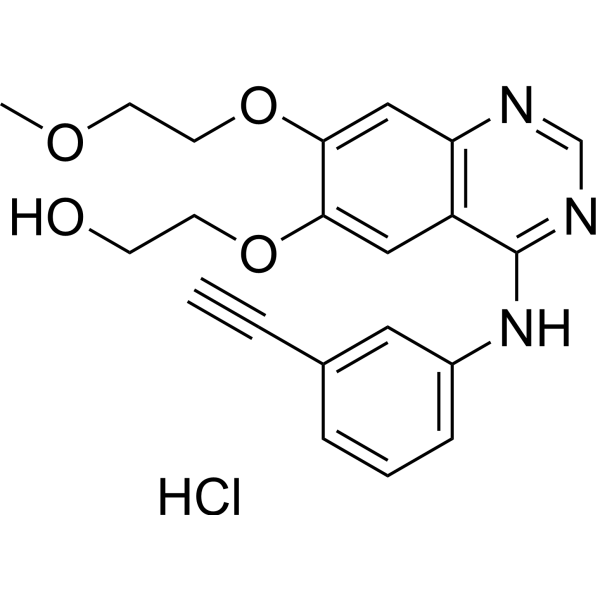
Desmethyl Erlotinib hydrochloride (OSI-420) is an active metabolite of Erlotinib. Erlotinib is a potent EGFR tyrosin kinase inhibitor . Desmethyl Erlotinib (hydrochloride) is a click chemistry reagent, it contains an Alkyne group and can undergo copper-catalyzed azide-alkyne cycloaddition (CuAAc) with molecules containing Azide groups.
loading...
    loading...
3
3 Cited Publications
Cat. No.: HY-13256A
CAS No.: 183321-86-0
Purity:  98.77%
Synonyms: OSI-420 free base; CP-373420
Target:  

Drug Metabolite

Research Areas:  

Cancer

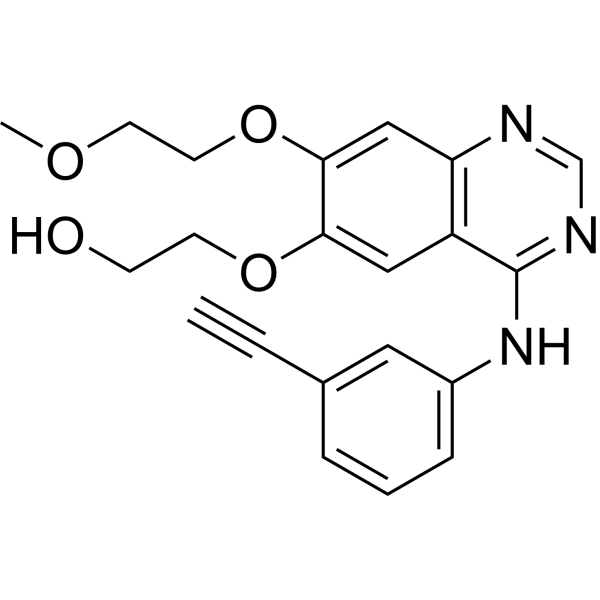
Desmethyl Erlotinib (OSI-420 free base) is an active metabolite of Erlotinib. Erlotinib is a potent EGFR tyrosin kinase inhibitor . Desmethyl Erlotinib is a click chemistry reagent, it contains an Alkyne group and can undergo copper-catalyzed azide-alkyne cycloaddition (CuAAc) with molecules containing Azide groups.
loading...
    loading...
2
2 Cited Publications
Cat. No.: HY-115594
CAS No.: 2256056-21-8
Purity:  96.02%
Target:  

STAT Apoptosis

Research Areas:  

Cancer

Erasin is a potent Erlotinib (HY-50896)-resistance antagonizing STAT3 inhibitor with IC50s of 9.7 and 24 μM against STAT3 and STAT1, respectively. Erasin induces cancer cells apoptosis .
loading...
    loading...
2
2 Cited Publications
Cat. No.: HY-135699
CAS No.: 1798328-24-1
Purity:  ≥95.0%
Target:  

Apoptosis Phosphatase Akt

Research Areas:  

Cancer

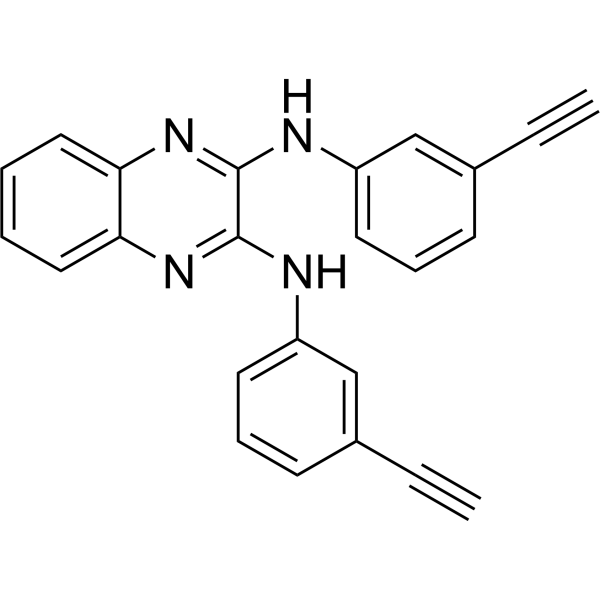
TD52, an Erlotinib (HY-50896) derivative, is an orally active, potent cancerous inhibitor of protein phosphatase 2A (CIP2A) inhibitor. TD52 mediates the apoptotic effect in triple-negative breast cancer (TNBC) cells via regulating the CIP2A/PP2A/p-Akt signalling pathway. TD52 indirectly reduced CIP2A by disturbing Elk1 binding to the CIP2A promoter. TD52 has less p-EGFR inhibition and has potent anti-cancer activity . TD52 is a click chemistry reagent, it contains an Alkyne group and can undergo copper-catalyzed azide-alkyne cycloaddition (CuAAc) with molecules containing Azide groups.
loading...
    loading...
2
2 Cited Publications
Cat. No.: HY-135699A
CAS No.: 2918778-70-6
Purity:  99.90%
Target:  

Akt Phosphatase Apoptosis

Research Areas:  

Cancer

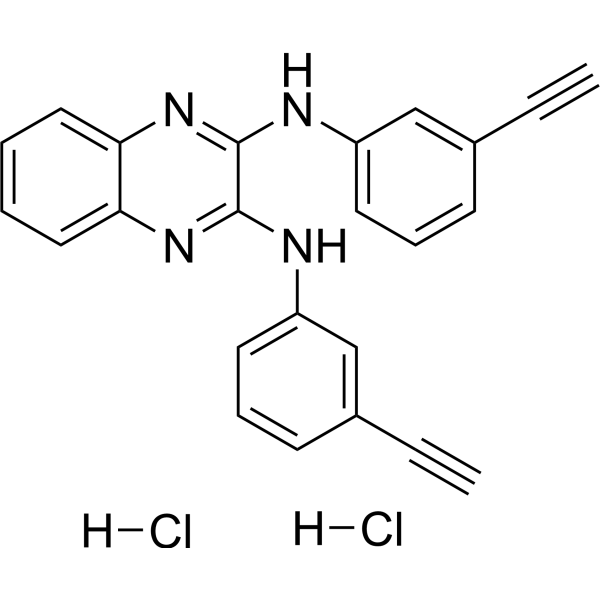
TD52 dihydrochloride, an Erlotinib (HY-50896) derivative, is an orally active, potent cancerous inhibitor of protein phosphatase 2A (CIP2A) inhibitor. TD52 dihydrochloride mediates the apoptotic effect in triple-negative breast cancer (TNBC) cells via regulating the CIP2A/PP2A/p-Akt signalling pathway. TD52 dihydrochloride indirectly reduced CIP2A by disturbing Elk1 binding to the CIP2A promoter. TD52 dihydrochloride has less p-EGFR inhibition and has potent anti-cancer activity . TD52 (dihydrochloride) is a click chemistry reagent, it contains an Alkyne group and can undergo copper-catalyzed azide-alkyne cycloaddition (CuAAc) with molecules containing Azide groups.
loading...
    loading...
Cat. No.: HY-50896R
CAS No.: 183321-74-6
Synonyms: CP-358774 (Standard); NSC 718781 (Standard); OSI-774 (Standard)
Erlotinib Standard (CP-358774 Standard) is the analytical standard of Erlotinib (HY-50896). This product is intended for research and analytical applications. Erlotinib (CP-358774) is a selective, orally active EGFR tyrosine kinase inhibitor. Erlotinib also acts as a substrate and inhibitor of OATP2B1, with an IC50 of approximately 0.079 μM for inhibiting OATP2B1-mediated uptake of estrone 3-sulfate. Erlotinib blocks EGFR phosphorylation, downstream signal transduction, as well as the growth and proliferation of cancer cells. Erlotinib inhibits MMP-10-mediated renal injury, fibrotic lesions, the ERK1/2, GSK-3β and β-catenin signaling pathways, as well as the deposition of fibronectin, α-SMA, collagen and renal injury markers. Erlotinib is metabolized via CYP3A to produce the active metabolite OSI-420. Erlotinib can be used in research related to non-small cell lung cancer, gastric cancer, papillary renal cell carcinoma, EGFR inhibitor resistance and renal fibrosis .
loading...
    loading...
Cat. No.: HY-152852
CAS No.: 1639014-72-4
Purity:  99.40%
Synonyms: Mifanertinib
Target:  

EGFR

Research Areas:  

Cancer

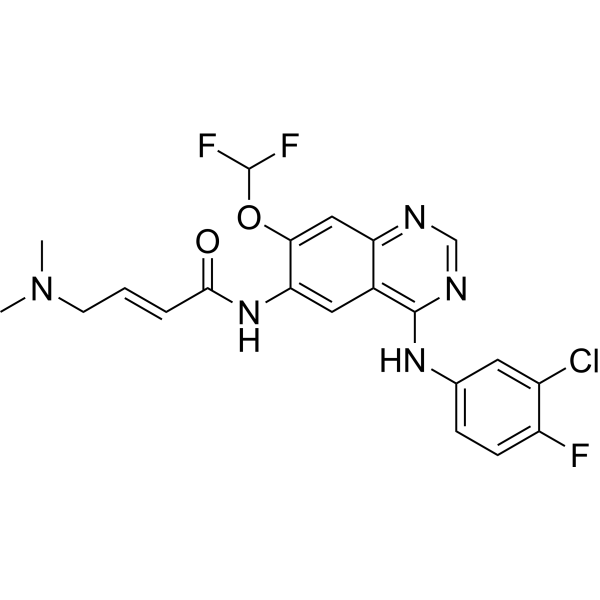
Mefatinib free base (Mifanertinib) is an orally active EGFR and HER2 kinase inhibitor with IC50 values of 0.4 nM and 11.7 nM, respectively. Mefatinib free base inhibits tumor growth in mouse models of lung cancer xenografts that overexpress EGFR/HER2, carry EGFR mutations, or carry Erlotinib (HY-50896)-resistant EGFR double mutations. Mefatinib free base can be used for the research of advanced EGFR-mutant non-small cell lung cancer .
loading...
    loading...
Cat. No.: HY-12008R
CAS No.: 183319-69-9
Synonyms: CP-358774 Hydrochloride (Standard); NSC 718781 Hydrochloride (Standard); OSI-774 Hydrochloride (Standard)
Erlotinib Hydrochloride Standard (CP-358774 hydrochloride Standard) is the analytical standard of Erlotinib Hydrochloride (HY-12008). This product is intended for research and analytical applications. Erlotinib (CP-358774) Hydrochloride is a selective, orally active EGFR tyrosine kinase inhibitor. Erlotinib Hydrochloride also acts as a substrate and inhibitor of OATP2B1, with an IC50 of approximately 0.079 μM for inhibiting OATP2B1-mediated uptake of estrone 3-sulfate. Erlotinib Hydrochloride blocks EGFR phosphorylation, downstream signal transduction, as well as the growth and proliferation of cancer cells. Erlotinib Hydrochloride inhibits MMP-10-mediated renal injury, fibrotic lesions, the ERK1/2, GSK-3β and β-catenin signaling pathways, as well as the deposition of fibronectin, α-SMA, collagen and renal injury markers. Erlotinib Hydrochloride is metabolized via CYP3A to produce the active metabolite OSI-420. Erlotinib Hydrochloride can be used in research related to non-small cell lung cancer, gastric cancer, papillary renal cell carcinoma, EGFR inhibitor resistance and renal fibrosis .
loading...
    loading...
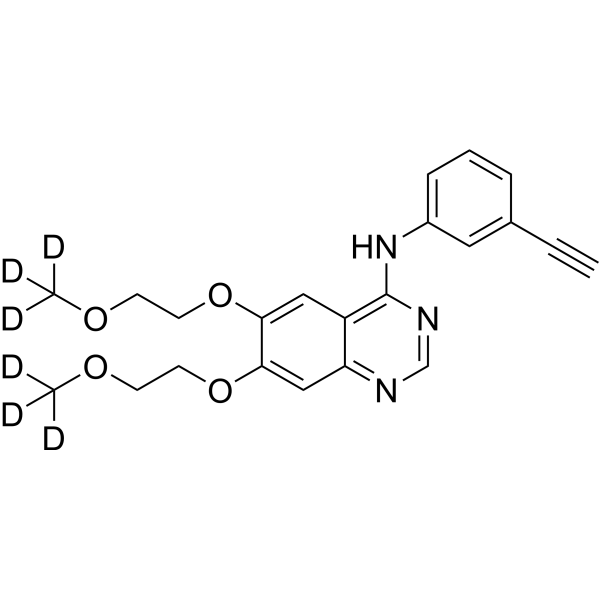
Cat. No.: HY-50896S
CAS No.: 1034651-23-4
Synonyms: CP-358774-d6; NSC 718781-d6; OSI-774-d6
Erlotinib-d6 (CP-358774-d6) is the deuterated-labeled Erlotinib (HY-50896). Erlotinib (CP-358774) is a selective, orally active EGFR tyrosine kinase inhibitor. Erlotinib also acts as a substrate and inhibitor of OATP2B1, with an IC50 of approximately 0.079 μM for inhibiting OATP2B1-mediated uptake of estrone 3-sulfate. Erlotinib blocks EGFR phosphorylation, downstream signal transduction, as well as the growth and proliferation of cancer cells. Erlotinib inhibits MMP-10-mediated renal injury, fibrotic lesions, the ERK1/2, GSK-3β and β-catenin signaling pathways, fibronectin, α-SMA, collagen deposition, and renal injury markers. Erlotinib is metabolized via CYP3A to produce the active metabolite OSI-420. Erlotinib can be used in research related to non-small cell lung cancer, gastric cancer, papillary renal cell carcinoma, pancreatic cancer, renal fibrosis, and other conditions .
loading...
    loading...
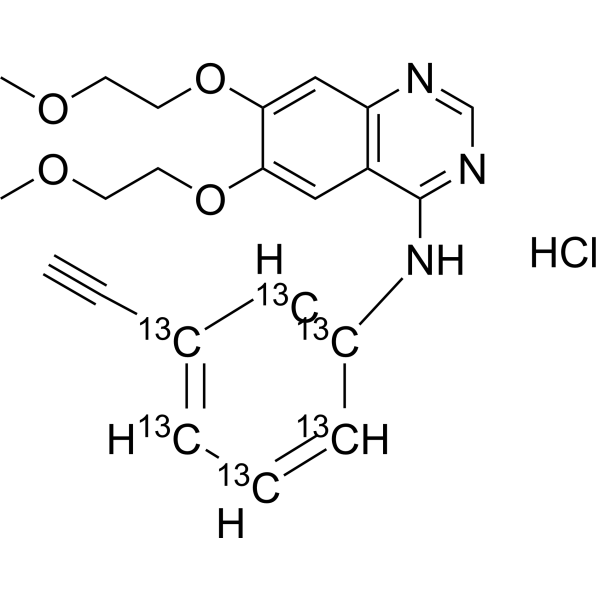
Cat. No.: HY-12008S1
CAS No.: 1210610-07-3
Synonyms: CP-358774-13C6 Hydrochloride; NSC 718781-13C6 Hydrochloride; OSI-774-13C6 Hydrochloride
Erlotinib- 13C6 hydrochloride (CP-358774- 13C6 hydrochloride) is the 13C-labeled Erlotinib Hydrochloride (HY-12008). Erlotinib (CP-358774) Hydrochloride is a selective, orally active EGFR tyrosine kinase inhibitor. Erlotinib Hydrochloride also acts as a substrate and inhibitor of OATP2B1, with an IC50 of approximately 0.079 μM for inhibiting OATP2B1-mediated uptake of estrone 3-sulfate. Erlotinib Hydrochloride blocks EGFR phosphorylation, downstream signal transduction, as well as the growth and proliferation of cancer cells. Erlotinib Hydrochloride inhibits MMP-10-mediated renal injury, fibrotic lesions, the ERK1/2, GSK-3β and β-catenin signaling pathways, as well as the deposition of fibronectin, α-SMA, collagen and renal injury markers. Erlotinib Hydrochloride is metabolized via CYP3A to produce the active metabolite OSI-420. Erlotinib Hydrochloride can be used in research related to non-small cell lung cancer, gastric cancer, papillary renal cell carcinoma, EGFR inhibitor resistance and renal fibrosis .
loading...
    loading...
Cat. No.: HY-129510
CAS No.: 1346601-52-2
Target:  

EGFR Mitosis

Research Areas:  

Cancer

4-Methyl erlotinib, is a potent and selective epidermal growth factor receptor (EGFR) tyrosine kinase inhibitor. 4-Methyl erlotinib potently inhibits EGF-mediated tumor cell mitosis by reducing EGFr-specific tyrosine phosphorylation. Using a mouse model of human tumor transplantation, 4-Methyl erlotinib demonstrated significant and sustained suppression of EGFr phosphotyrosine levels, resulting in significant growth inhibition of EGFr-dependent human cancers .
loading...
    loading...
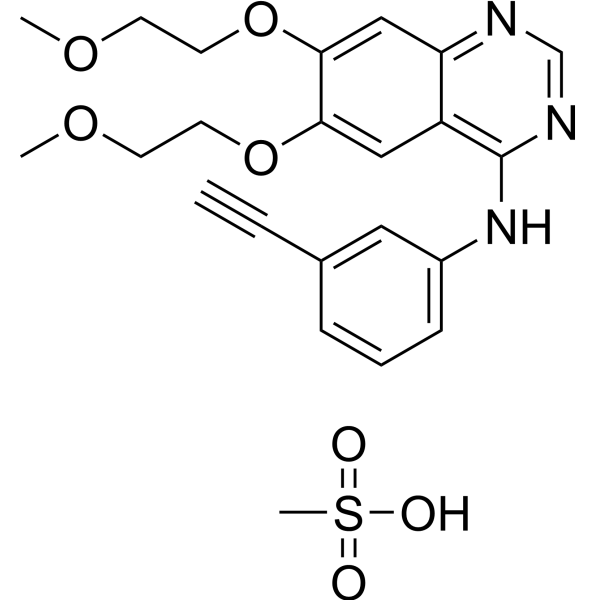
Cat. No.: HY-12008A
CAS No.: 248594-19-6
Synonyms: CP-358774 mesylate; NSC 718781 mesylate; OSI-774 mesylate
Target:  

EGFR OAT ERK GSK-3 β-catenin

Research Areas:  

Endocrinology Cancer

Erlotinib (CP-358774) mesylate is a selective, orally active EGFR tyrosine kinase inhibitor. Erlotinib mesylate also acts as a substrate and inhibitor of OATP2B1, with an IC50 of approximately 0.079 μM for inhibiting OATP2B1-mediated uptake of estrone 3-sulfate. Erlotinib mesylate blocks EGFR phosphorylation, downstream signal transduction, as well as the growth and proliferation of cancer cells. Erlotinib mesylate inhibits MMP-10-mediated renal injury, fibrotic lesions, the ERK1/2, GSK-3β and β-catenin signaling pathways, as well as the deposition of fibronectin, α-SMA, collagen and renal injury markers. Erlotinib mesylate is metabolized via CYP3A to produce the active metabolite OSI-420. Erlotinib mesylate can be used in research related to non-small cell lung cancer, gastric cancer, papillary renal cell carcinoma, EGFR inhibitor resistance and renal fibrosis .
loading...
    loading...
Cat. No.: HY-W002950
CAS No.: 179688-29-0
Target:  

Drug Intermediate

Research Areas:  

Cancer

Erlotinib lactam impurity (compound 7a) is a precursor of the tyrosine kinase inhibitor .
loading...
    loading...
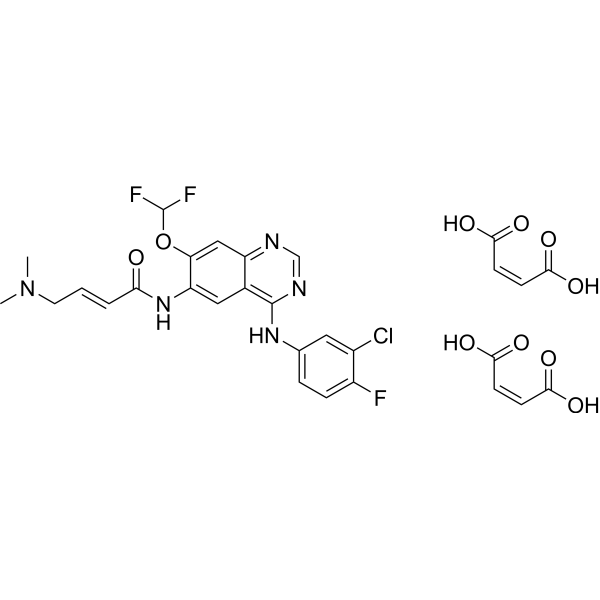
Cat. No.: HY-152852A
CAS No.: 1989592-50-8
Purity:  98.90%
Synonyms: Mifanertinib dimaleate
Target:  

EGFR

Research Areas:  

Cancer

Mefatinib (Mifanertinib dimaleate) is an orally active EGFR and HER2 kinase inhibitor with IC50 values of 0.4 nM and 11.7 nM, respectively. Mefatinib inhibits tumor growth in mouse models of lung cancer xenografts that overexpress EGFR/HER2, carry EGFR mutations, or carry Erlotinib (HY-50896)-resistant EGFR double mutations. Mefatinib can be used for the research of advanced EGFR-mutant non-small cell lung cancer .
loading...
    loading...
Cat. No.: HY-W007977
CAS No.: 183322-18-1
Target:  

Drug Intermediate

Research Areas:  

Cancer

4-Chloro-6,7-bis(2-methoxyethoxy)quinazoline (Compound 11 and 15) is a building block and synthetic intermediate, which can be used as a precursor in the synthesis of receptor tyrosine kinase (RTK) inhibitors, dual RTK and histone deacetylase (HDAC) inhibitors, and anticancer agents. 4-Chloro-6,7-bis(2-methoxyethoxy)quinazoline can also be used to synthesize EGFR inhibitors, including Erlotinib (HY-50896), with antiproliferative activity .
loading...
    loading...
Cat. No.: HY-13256AS
CAS No.: 1216420-11-9
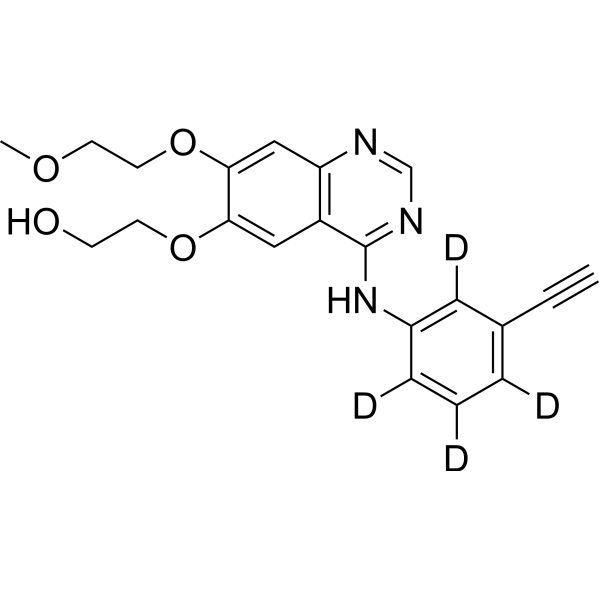
Desmethyl Erlotinib-d4 is the deuterium labeled Desmethyl Erlotinib. Desmethyl Erlotinib (OSI-420 free base) is an active metabolite of Erlotinib. Erlotinib is a potent EGFR tyrosin kinase inhibitor . Desmethyl Erlotinib-d4 is a click chemistry reagent, it contains an Alkyne group and can undergo copper-catalyzed azide-alkyne cycloaddition (CuAAc) with molecules containing Azide groups.
loading...
    loading...
Cat. No.: HY-12008Y
CAS No.: 183321-83-7
Target:  

Drug Intermediate

Research Areas:  

Others

Erlotinib impurity 45 is an impurity of Erlotinib (HY-50896).
loading...
    loading...
Cat. No.: HY-12008Z
CAS No.: 183321-85-9
Target:  

Drug Intermediate

Research Areas:  

Others

Erlotinib impurity 44 is an impurity of Erlotinib (HY-50896).
loading...
    loading...

