



Goserelin acetate
Based on 2 publication(s) in Google Scholar
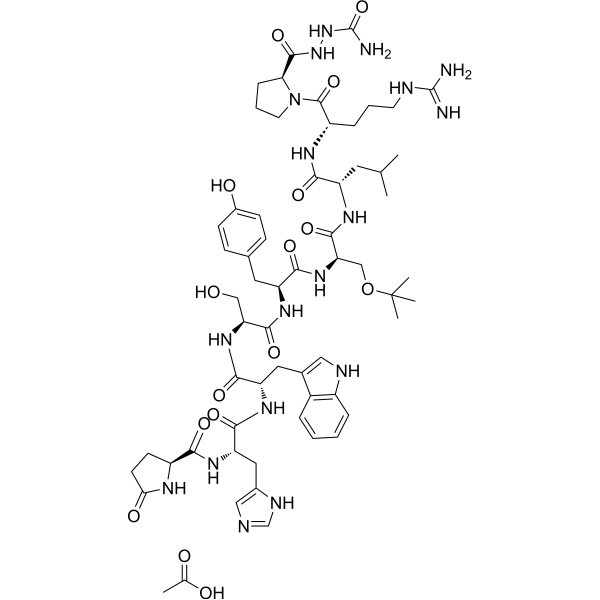
Goserelin acetate (ICI-118630 acetate), a decapeptide analogue of gonadotropin-releasing hormone (GnRH/LHRH), functions as a GnRH agonist. Goserelin acetate can be used for the research of breast cancer, epithelial ovarian cancer and prostate cancer.
For research use only. We do not sell to patients.
- Purity : 99.93%
- CAS No.: 145781-92-6
- Formula: 醋酸戈舍瑞林 C59H84N18O14·xC2H4O2
- Molecular Weight:1269.41 (free base)
-
Storage:
Sealed storage, away from moisture.
Powder -80°C, 2 years , -20°C, 1 year* In solvent : -80°C, 6 months; -20°C, 1 month (sealed storage, away from moisture)

To place orders, for customer services and technical support, please contact: MedChemExpress USA
Tel: 609-228-6898 E-mail: [email protected] [email protected]


-
 Biological Activity
-
Chemical Information
-
Solvent & Solubility
- Protocols
- Purity & Documentation
- References
-
 Help & FAQs


-
HY-16168A
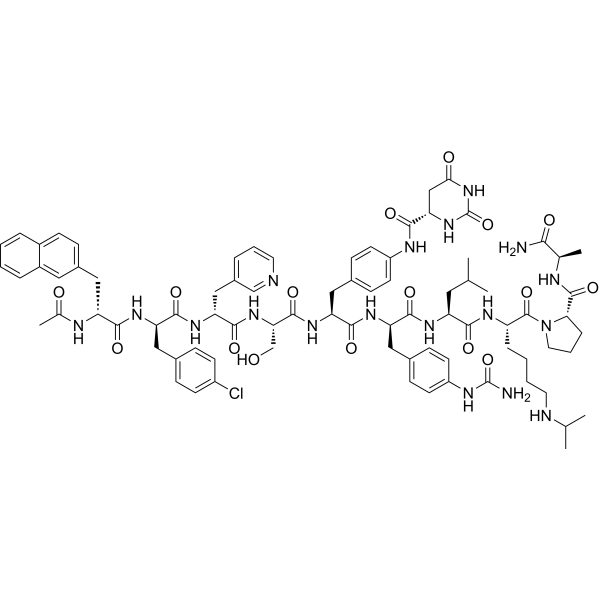
DegarelixGnRHR Antagonist -
HY-17405
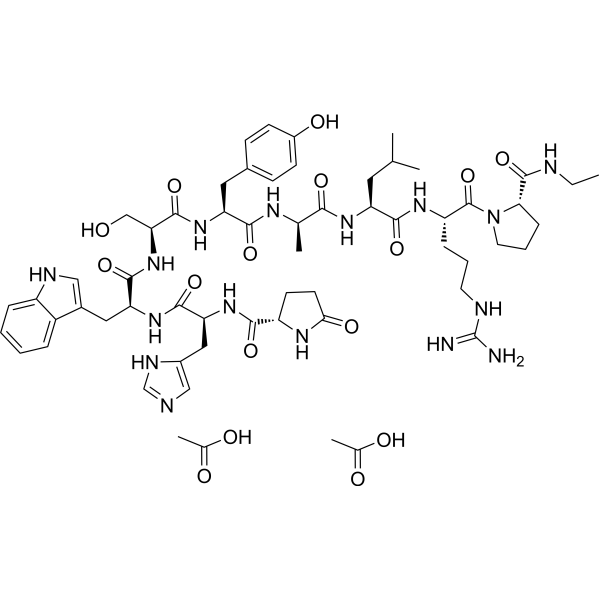
Alarelin AcetateGnRH Receptor Agonist -
HY-P0009A
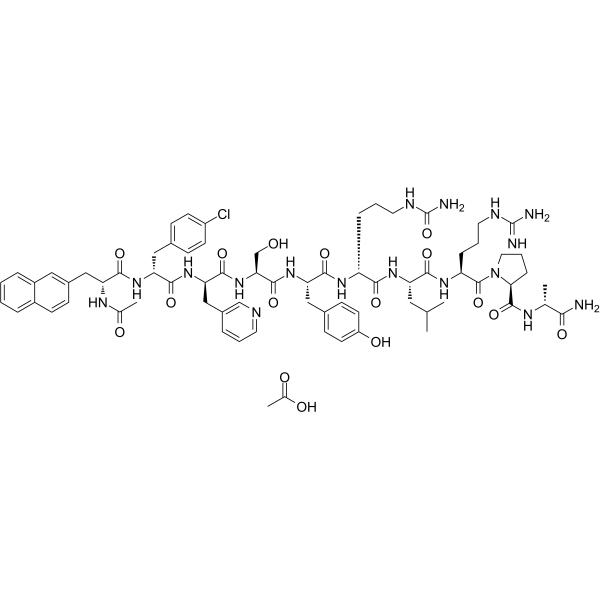
Cetrorelix acetateGnRH Receptor Antagonist -
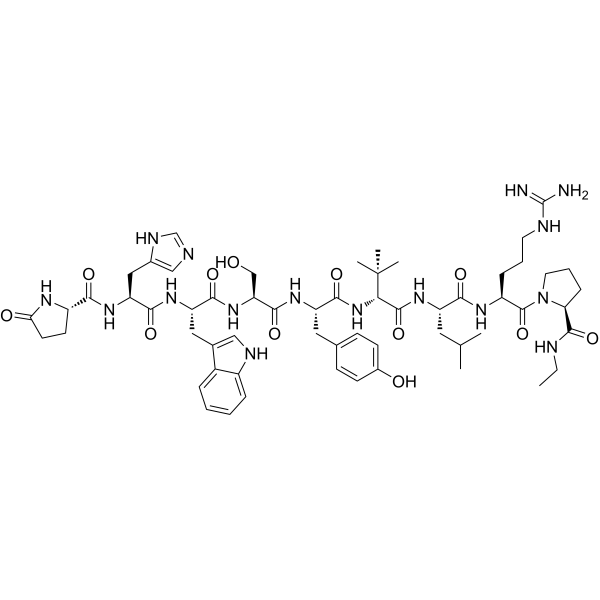
HY-P0051
LecirelinGnRH Analogue -
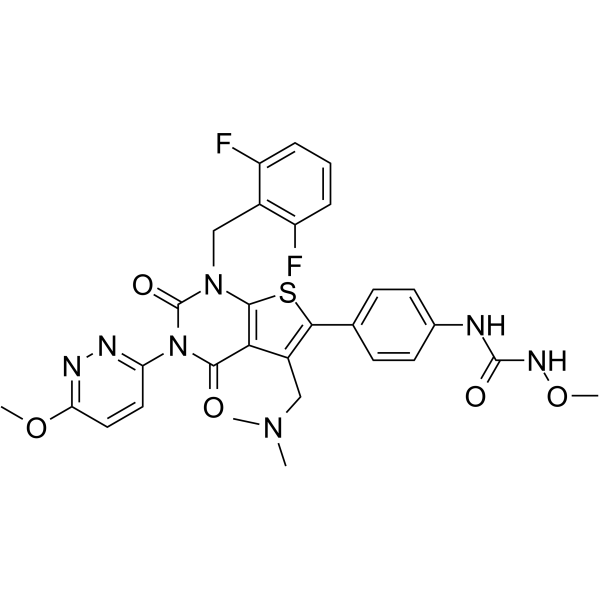
HY-16474
RelugolixGnRH Antagonist -
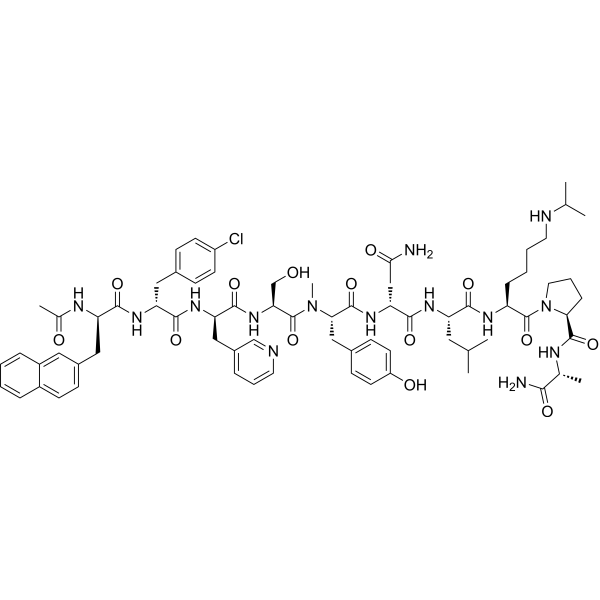
HY-13534
AbarelixGnRH Antagonist -
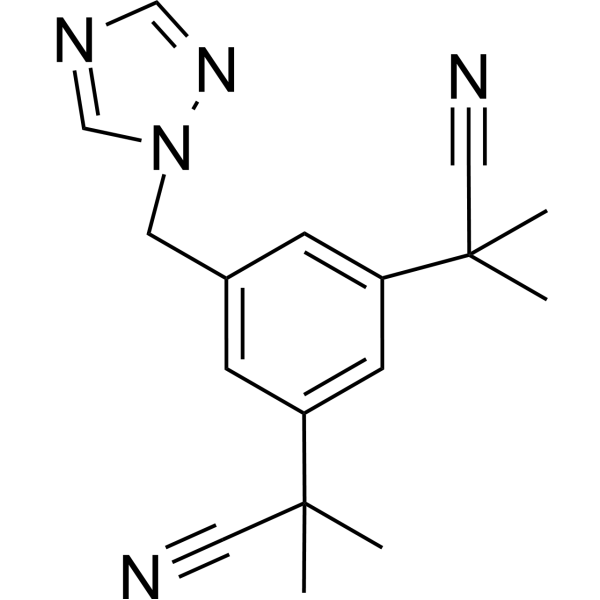
HY-14274
AnastrozoleAromatase Inhibitor -
HY-14248
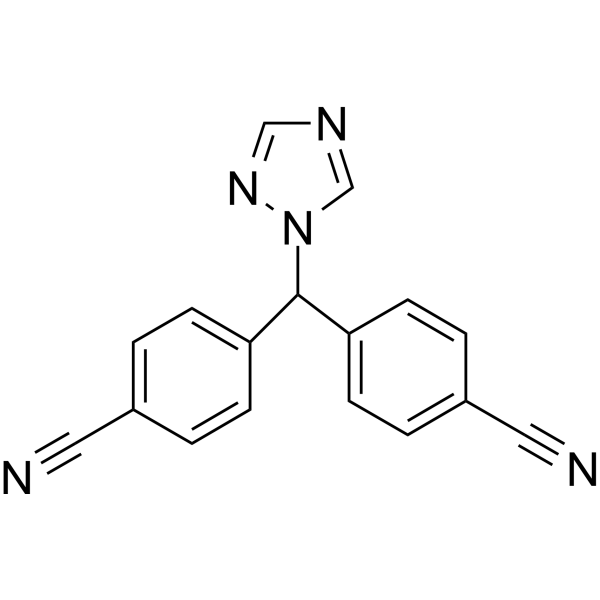
LetrozoleAromatase Inhibitor -
HY-P0056A
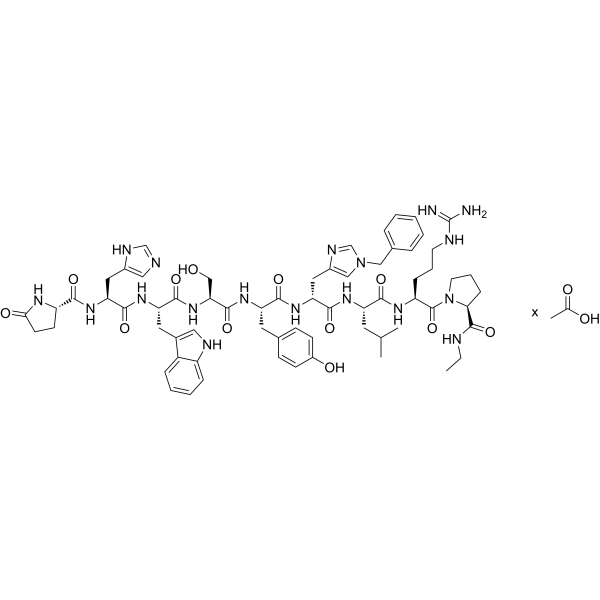
Histrelin acetateGnRH Receptor Agonist -
HY-13636
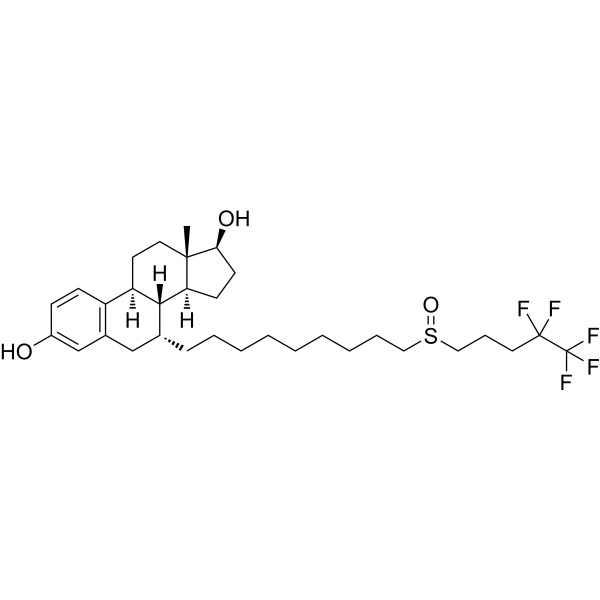
FulvestrantEstrogen Receptor Antagonist -
HY-Y0320
Dimethyl sulfoxide, meets analytical specification of Ch.P.Aprotic Solvent -
HY-13948
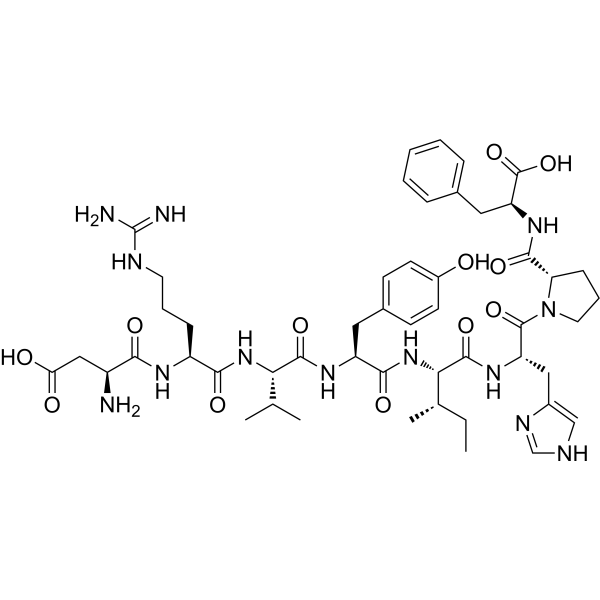
Angiotensin II humanVasoconstrictor
Publications Citing Use of MedChemExpress (MCE) Goserelin acetate
More

Biological Activity
Description
IC50 & Target
GnRH[1]
In Vitro
Goserelin (1 nM-1 mM; 48-72 hours) promotes EOC cell apoptosis[1].
Goserelin (100 μM; 24-72 hours) regulates the expression of human apoptosis-related genes in SKOV3-ip cells[1].
Goserelin (100 μM; 24-72 hours) promotes EOC cell apoptosis by upregulating FOXO1 through the PI3K/AKT signaling pathway[1].
MedChemExpress (MCE) has not independently confirmed the accuracy of these methods. They are for reference only. Further protocols information, click here.
-
Cell Line:SKOV3 cells, SKOV3-ip cells, A2780 cells (human EOC cell lines)
-
Concentration:1 nM, 10 nM, 100 nM, 1 μM, 10 μM, 100 μM, 1 mM
-
Incubation Time:48 hours, 72 hours
-
Result:Significantly increased the total apoptosis rate of SKOV3-ip, SKOV3 and A2780 cells.
-
Cell Line:SKOV3 cells, SKOV3-ip cells, A2780 cells (human EOC cell lines)
-
Concentration:1 nM, 10 nM, 100 nM, 1 μM, 10 μM, 100 μM, 1 mM
-
Incubation Time:48 hours, 72 hours
-
Result:The expression of cleaved-caspase-3 and cleaved-PARP were observably increased at 100 μM.
-
Cell Line:SKOV3-ip cells
-
Concentration:100 μM
-
Incubation Time:24 hours, 48 hours, 72 hours
-
Result:Expression of human apoptosis-related genes regulated
In Vivo
MedChemExpress (MCE) has not independently confirmed the accuracy of these methods. They are for reference only.
-
Animal Model:Five-week-old specific-pathogen free (SPF) female nude mice (18-20 g), subcutaneous xenograft tumor model[1]
-
Dosage:100 µg/mice
-
Administration:Subcutaneous injection, daily, for 19 days
-
Result:Significantly increased the proportion of apoptotic cells in the subcutaneous xenograft tumors
Clinical Trial
| NCT Number | Sponsor | Condition | Start Date |
Phase

|
|---|---|---|---|---|
| NCT01329991 | Plexxikon| | 2011-05 | PHASE1 |


Chemical Information
-
CAS No. 145781-92-6
-
Appearance Solid
-
Molecular Weight 1269.41 (free base)
-
Formula 醋酸戈舍瑞林 C59H84N18O14·xC2H4O2
-
Color White to off-white
-
Synonyms
ICI-118630 acetate
-
Sequence
{Glp}-His-Trp-Ser-Tyr-Ser(OtBu)-Leu-Arg-Pro-{Hydrazinecarboxamide}
-
Sequence Shortening
{Glp}-HWSY-Ser(OtBu)-LRP-{Hydrazinecarboxamide}
-
Shipping
Room temperature in continental US; may vary elsewhere.
-
Storage
Sealed storage, away from moisture
Powder -80°C 2 years -20°C 1 year * In solvent : -80°C, 6 months; -20°C, 1 month (sealed storage, away from moisture)


Publications (2)
-
Journal Impact Factor
-
Most Recent
-
Environ Sci Technol
A Novel Screening Framework Integrating a Two-Cell Assay System and Computational Toxicology to Identify Disruptors of the GnRH Neuron-Gonadotrope Axis. [Abstract]2026 Apr 7;60(13):9881-9894. PMID: 41872703 -
Commun Biol
Diurnal testosterone oscillations gate drug delivery via phase separation of ZO-1 at the blood-testis barrier in mice. [Abstract]2026 Jun 1. PMID: 42219451


Solvent & Solubility
In Vitro:
H2O : 100 mg/mL (Need ultrasonic)
DMSO : ≥ 28 mg/mL
* "≥" means soluble, but saturation unknown.
In Vivo:
Select the appropriate dissolution method based on your experimental animal and administration route.
- For the following dissolution methods, please ensure to first prepare a clear stock solution using an In Vitro approach and then sequentially add co-solvents:
- To ensure reliable experimental results, the clarified stock solution can be appropriately stored based on storage conditions. As for the working solution for In Vivo experiments, it is recommended to prepare freshly and use it on the same day.
- The percentages shown for the solvents indicate their volumetric ratio in the final prepared solution. If precipitation or phase separation occurs during preparation, heat and/or sonication can be used to aid dissolution.
Add each solvent one by one: 10% DMSO 40% PEG300 5% Tween-80 45% Saline
Solubility: ≥ 2.08 mg/mL; Clear solution
This protocol yields a clear solution of ≥ 2.08 mg/mL (saturation unknown).
Taking 1 mL working solution as an example, add 100 μL DMSO stock solution (20.8 mg/mL) to 400 μL PEG300, and mix evenly; then add 50 μL Tween-80 and mix evenly; then add 450 μL Saline to adjust the volume to 1 mL.
Preparation of Saline: Dissolve 0.9 g sodium chloride in ddH₂O and dilute to 100 mL to obtain a clear Saline solution.
Add each solvent one by one: 10% DMSO 90% (20% SBE-β-CD in Saline)
Solubility: ≥ 2.08 mg/mL; Clear solution
This protocol yields a clear solution of ≥ 2.08 mg/mL (saturation unknown).
Taking 1 mL working solution as an example, add 100 μL DMSO stock solution (20.8 mg/mL) to 900 μL 20% SBE-β-CD in Saline, and mix evenly.
Preparation of 20% SBE-β-CD in Saline (4°C, storage for one week): 2 g SBE-β-CD powder is dissolved in 10 mL Saline, completely dissolve until clear.
For the following dissolution methods, please prepare the working solution directly:
It is recommended to prepare fresh solutions and use them promptly within a short period of time.
The percentages shown for the solvents indicate their volumetric ratio in the final prepared solution. If precipitation or phase separation occurs during preparation, heat and/or sonication can be used to aid dissolution.
Add each solvent one by one: PBS
Solubility: 50 mg/mL; Clear solution; Need ultrasonic
In Vivo Dissolution Calculator
Please enter the basic information of animal experiments:
-
-
-
-
Recommended: Prepare an additional quantity of animals to account for potential losses during experiments.
Working solution concentration: 0.22 mg/mL
This product has good water solubility, please refer to the measured solubility data in water/PBS/Saline for details.

Protocols
-
Research Protocol for Endocrine Diseases
Endocrine diseases often arise from disrupted hormone production, hormone signaling, or target-tissue responsiveness; for diabetes-focused endocrine disease models, insulin signaling regulates glucose uptake, hepatic glucose output, lipid metabolism, and β-cell compensation. Type 2 diabetes develops through interacting defects in insulin resistance, β-cell dysfunction, adipose inflammation, hepatic glucose overproduction, altered incretin signaling, and ectopic lipid metabolism. A major unresolved question is whether endocrine dysfunction is driven primarily by target-tissue insulin resistance, intrinsic β-cell failure, immune/inflammatory stress, or combined multi-organ failure that differs by disease stage.
-
Breast Cancer Modeling
Breast cancer is a heterogeneous cancer, and it has been distinguished into four subtypes: luminal A, luminal B, HER2-positive and basal-like. Molecular mutations, epigenetic alterations, hormone exposure and immune microenvironment are related to the progression of breast cancer.


Purity & Documentation
-
Data Sheet (282 KB)
-
SDS (535 KB)
- English - EN (535 KB)
- Français - FR (535 KB)
- Deutsch - DE (535 KB)
- Norwegian - NO (535 KB)
- Español - ES (535 KB)
- Swedish - SV (535 KB)
- Italian - IT (535 KB)
- Korean - KR (535 KB)
- Portuguese - PT (535 KB)
-
Handling Instructions (2659 KB)
References
[1]. Ning Zhang, et al. Goserelin promotes the apoptosis of epithelial ovarian cancer cells by upregulating forkhead box O1 through the PI3K/AKT signaling pathway. Oncol Rep. 2018 Mar; 39(3): 1034–1042. [Content Brief]
[2]. Halle C F Moore, et al. Goserelin for ovarian protection during breast-cancer adjuvant chemotherapy. N Engl J Med. 2015 Mar 5;372(10):923-32. [Content Brief]

Calculators
Concentration (start) × Volume (start) = Concentration (final) × Volume (final)


Goserelin acetate Related Classifications
HY-13673A Related Classifications
 Powered by Bioz