



HG-10-102-01
Based on 1 publication(s) in Google Scholar
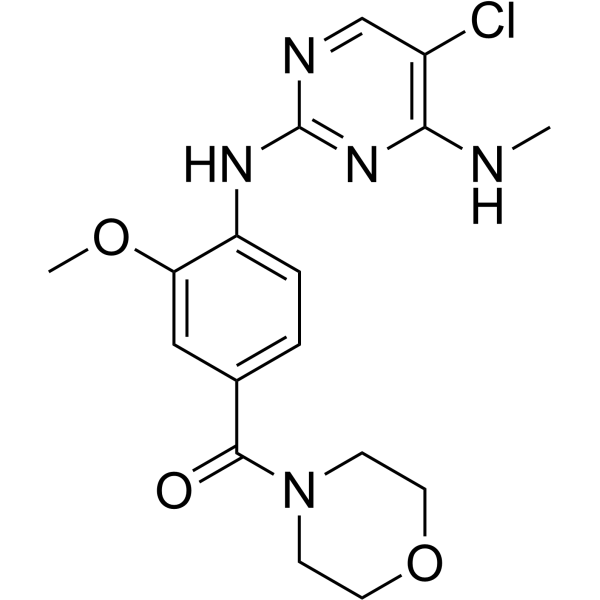
HG-10-102-01 is a highly potent, selective, and brain-penetrable LRRK2 inhibitor, with IC50 values of 20.3 and 3.2 nM against wild-type LRRK2 and LRRK2[G2019S], respectively. HG-10-102-01 also inhibits MNK2 and MLK1, with IC50 values of 0.6 and 2.1 μM. HG-10-102-01 can be used for Parkinson's disease (PD) research.
For research use only. We do not sell to patients.
- Purity : 99.55%
- CAS No.: 1351758-81-0
- Formula: C17H20ClN5O3
- Molecular Weight:377.83
-
Storage:Powder -20°C, 3 years , 4°C, 2 years ; In solvent -80°C, 2 years , -20°C, 1 year

To place orders, for customer services and technical support, please contact: MedChemExpress USA
Tel: 609-228-6898 E-mail: [email protected] [email protected]


-
 Biological Activity
-
Chemical Information
-
Solvent & Solubility
- Protocols
- Purity & Documentation
- References
-
 Help & FAQs


-
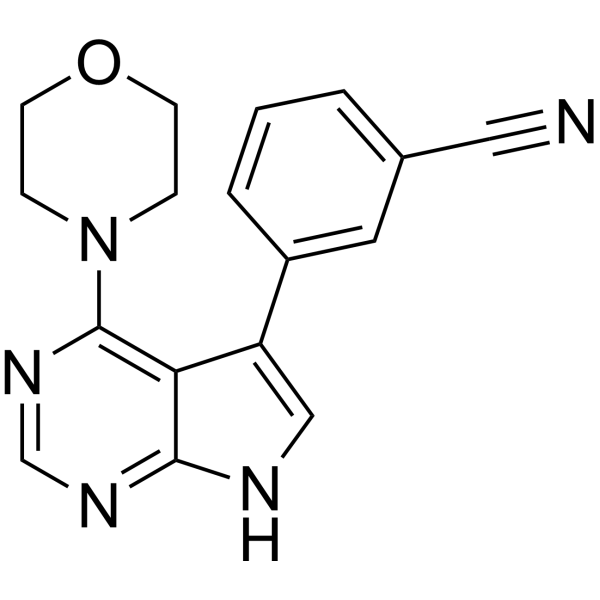
HY-12477
PF-06447475LRRK2 Inhibitor -
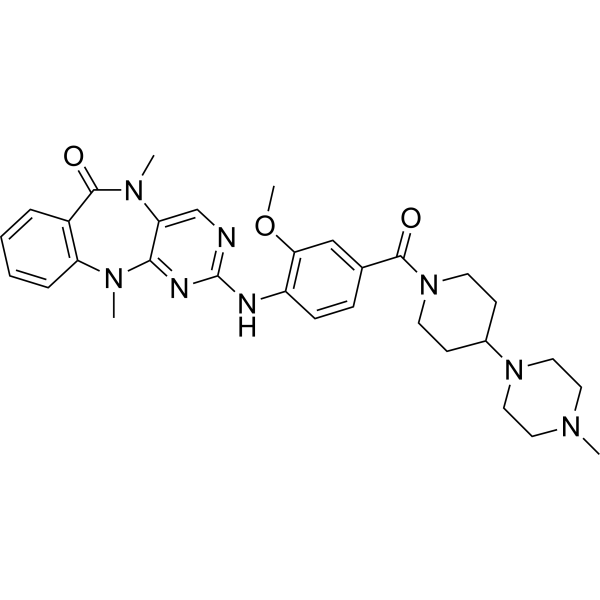
HY-10875
LRRK2-IN-1LRRK2 Inhibitor -
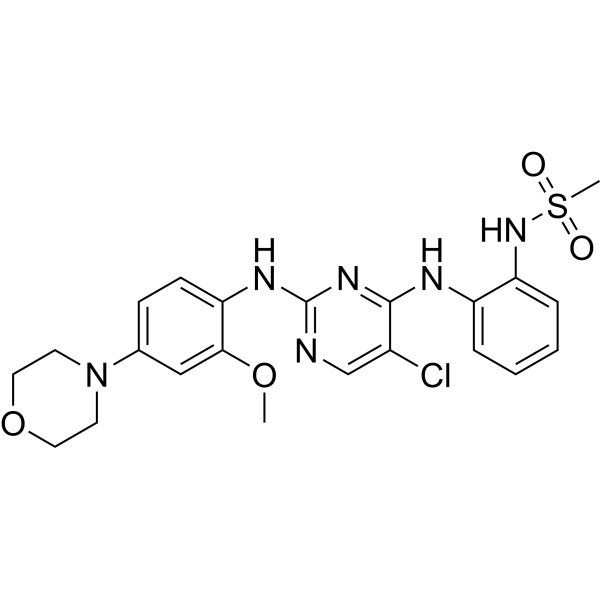
HY-B0792
CZC-54252LRRK2 Inhibitor -
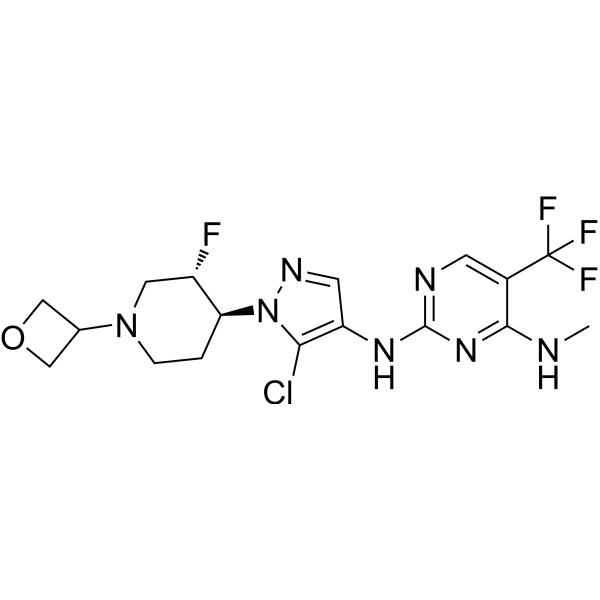
HY-12282
GNE-9605LRRK2 Inhibitor -
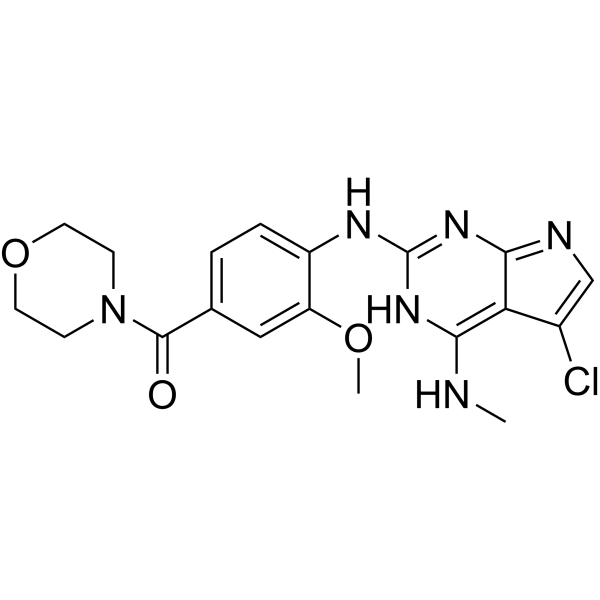
HY-16936
JH-II-127LRRK2 Inhibitor -
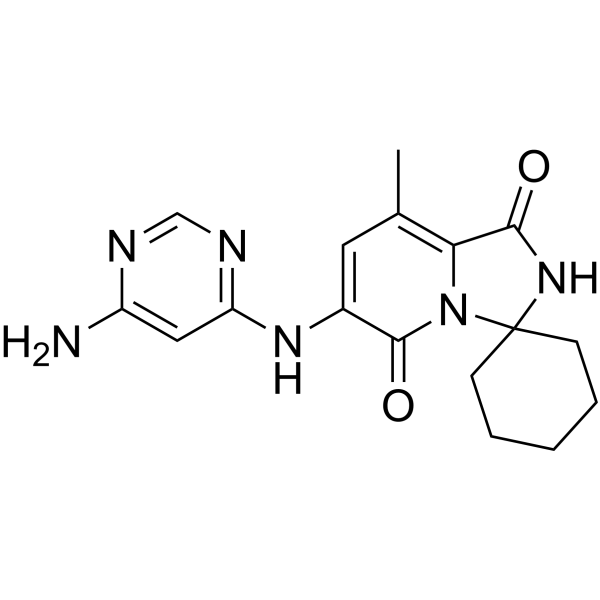
HY-100022
TomivosertibMNK1/2 Inhibitor -
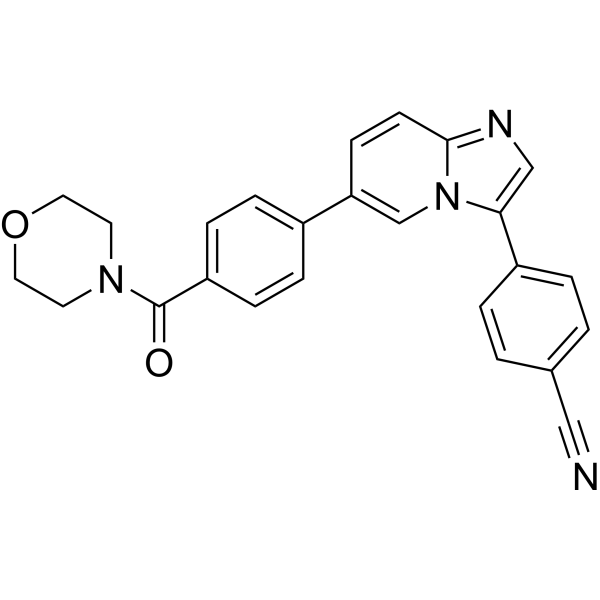
HY-112424
TinodasertibMNK1/2 Inhibitor -
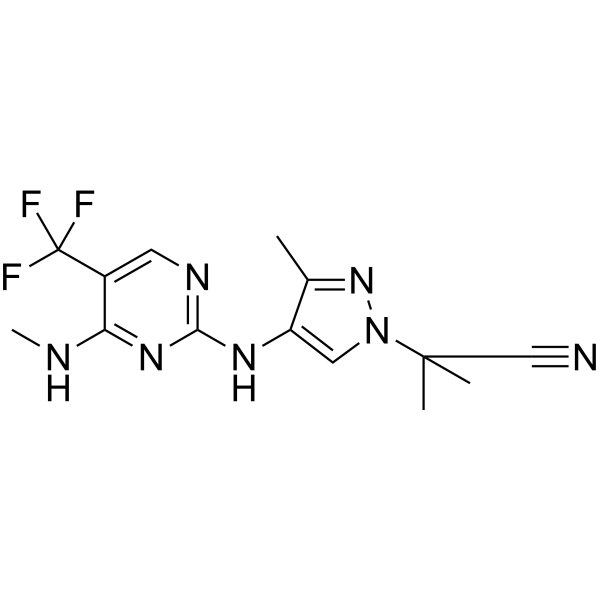
HY-15796
GNE0877LRRK2 Inhibitor -
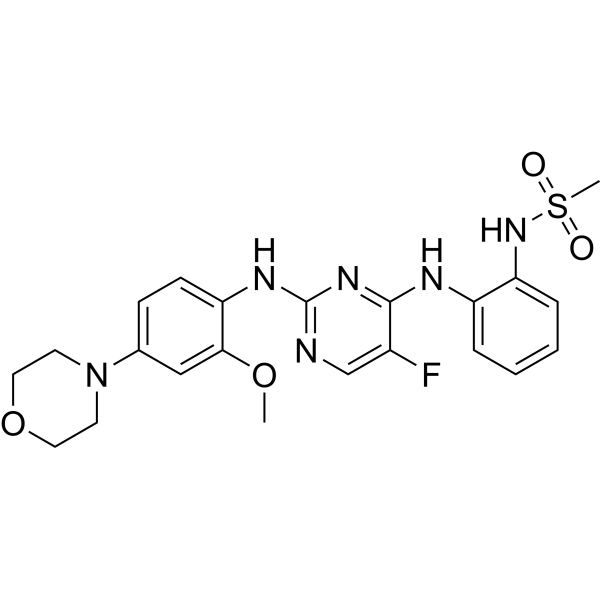
HY-15800A
CZC-25146LRRK2 Inhibitor -
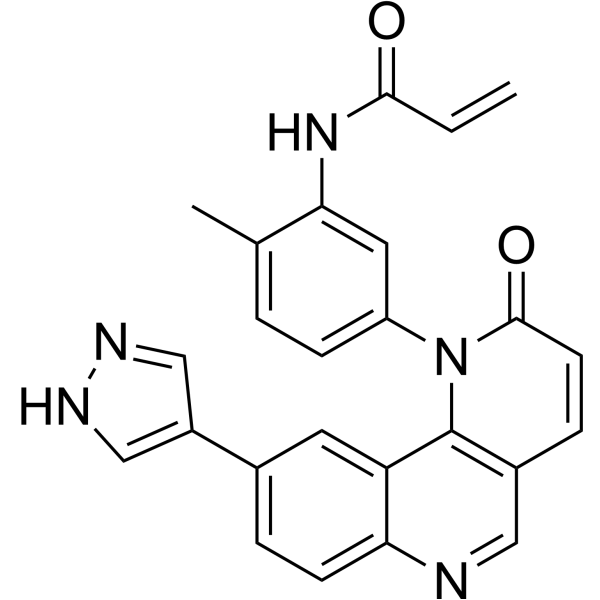
HY-124645
QL-X-138BTK/MNK Dual Inhibitor -
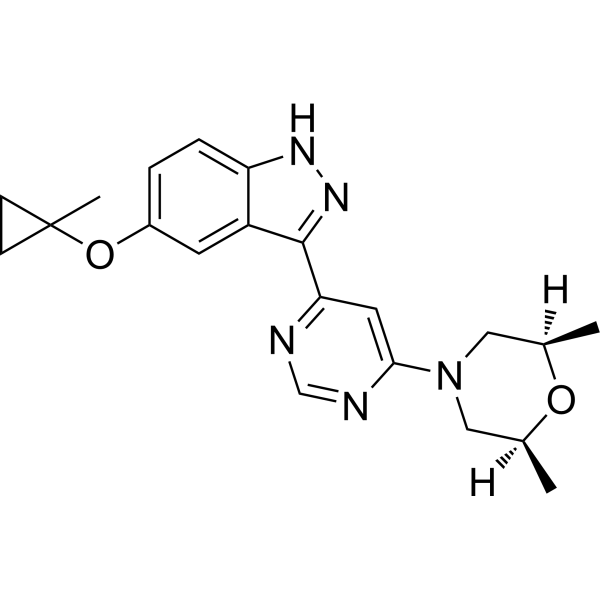
HY-100411
MLi-2LRRK2 Inhibitor -
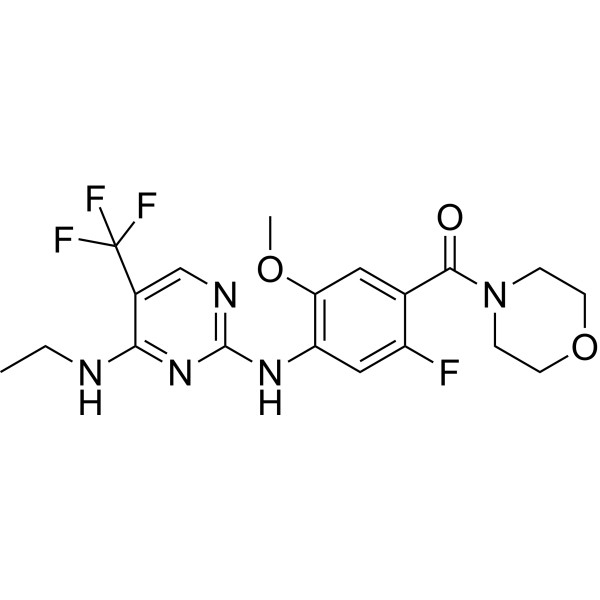
HY-18163
GNE-7915LRRK2 Inhibitor
Publications Citing Use of MedChemExpress (MCE) HG-10-102-01
More

Biological Activity
Description
IC50 & Target
IC50: 3.2 nM (LRRK2[G2019S]), 20.3 nM (wild-type LRRK2), 95.9 nM (LRRK2[G2019S+A2016T], 153.7 nM (LRRK2[A2016T]), 0.6 μM (MNK2), 2.1 μM (MLK1)[1]
Cellular Effect
|
Cell Line

|
Type | Value | Description | References |
|---|---|---|---|---|
| HEK293 | IC50 |
153.7 nM
Compound: 4, HG-10-102-01
|
Inhibition of LRRK2 A2016T mutant expressed in HEK293 cells using nictide as substrate and [gamma32P]ATP after 15 mins by Cerenkov counting method
Inhibition of LRRK2 A2016T mutant expressed in HEK293 cells using nictide as substrate and [gamma32P]ATP after 15 mins by Cerenkov counting method
|
[PMID: 23066449] |
| HEK293 | IC50 |
20.3 nM
Compound: 4, HG-10-102-01
|
Inhibition of LRRK2 expressed in HEK293 cells using nictide as substrate and [gamma32P]ATP after 15 mins by Cerenkov counting method
Inhibition of LRRK2 expressed in HEK293 cells using nictide as substrate and [gamma32P]ATP after 15 mins by Cerenkov counting method
|
[PMID: 23066449] |
| HEK293 | IC50 |
29 nM
Compound: 1
|
Inhibition of autophosphorylation of LRRK2 in human HEK293 cells
Inhibition of autophosphorylation of LRRK2 in human HEK293 cells
|
[PMID: 22985112] |
| HEK293 | IC50 |
3.2 nM
Compound: 4, HG-10-102-01
|
Inhibition of LRRK2 G2019S mutant expressed in HEK293 cells using nictide as substrate and [gamma32P]ATP after 15 mins by Cerenkov counting method
Inhibition of LRRK2 G2019S mutant expressed in HEK293 cells using nictide as substrate and [gamma32P]ATP after 15 mins by Cerenkov counting method
|
[PMID: 23066449] |
| HEK293 | IC50 |
95.9 nM
Compound: 4, HG-10-102-01
|
Inhibition of LRRK2 G2019S/A2016T mutant expressed in HEK293 cells using nictide as substrate and [gamma32P]ATP after 15 mins by Cerenkov counting method
Inhibition of LRRK2 G2019S/A2016T mutant expressed in HEK293 cells using nictide as substrate and [gamma32P]ATP after 15 mins by Cerenkov counting method
|
[PMID: 23066449] |
In Vitro
HG-10-102-01 (0-3 μM, 90 min) substantially inhibits Ser910 and Ser935 phosphorylation of both wild-type LRRK2 and G2019S mutant[1].
MedChemExpress (MCE) has not independently confirmed the accuracy of these methods. They are for reference only. Further protocols information, click here.
-
Cell Line:HEK293 cells, Mouse Swiss 3T3 cells and Mouse embryonic fibroblast cells
-
Concentration:0, 0.01, 0.03, 0.1, 0.3, 1, and 3 μM
-
Incubation Time:90 min
-
Result:Induced a dose-dependent inhibition of Ser910 and Ser935 phosphorylation in both wild-type LRRK2 and LRRK2[G2019S] stably transfected into HEK293 cells. Induced similar dose-dependent Ser910 and Ser935 dephosphorylation of endogenous LRRK2 in mouse Swiss 3T3 cells and mouse embryonic fibroblast cells.
In Vivo
HG-10-102-01 (1 mg/kg, IV; 10 mg/kg, PO; once) shows good oral bioavailability (%F = 67), a short half-life of 0.13 h, and low plasma exposure[1].
MedChemExpress (MCE) has not independently confirmed the accuracy of these methods. They are for reference only.
-
Animal Model:Wild type male C57BL/6 mice[1]
-
Dosage:0, 3, 10, 30, 50, and 100 mg/kg
-
Administration:IP, once
-
Result:Showed near complete dephosphorylation of Ser910 and Ser935 of LRRK2 in all tissues including brain at 100 mg/kg and 50 mg/kg, but only partial inhibition in brain at the 30 and 10 mg/kg doses.
-
Animal Model:Wild type male C57BL/6 mice[1]
-
Dosage:1 mg/kg (IV); 10 mg/kg (PO)
-
Administration:IV, PO; once (Pharmacokinetic Analysis)
-
Result:Pharmacokinetic Parameters of HG-10-102-01 in male C57BL/6 mice[1].
IV (1 mg/kg) PO (10 mg/kg) Tmax (h) 0.25 Cmax (ng/mL) 1330 1241 AUClast (ng/mL∗h) 74.85 502.34 AUCINF (ng/mL∗h) 75.06 503.41 T1/2 (h) 0.13 CL (mL/min/kg) 222.04 Vss (L/kg) 1.68 F (%) 67


Chemical Information
-
CAS No. 1351758-81-0
-
Appearance Solid
-
Molecular Weight 377.83
-
Formula C17H20ClN5O3
-
Color White to off-white
-
SMILES
COC1=CC(C(N2CCOCC2)=O)=CC=C1NC3=NC(NC)=C(Cl)C=N3
-
Shipping
Room temperature in continental US; may vary elsewhere.
-
Storage
Powder -20°C 3 years 4°C 2 years In solvent -80°C 2 years -20°C 1 year


Publications (1)
-
Journal Impact Factor
-
Most Recent
-
Harvard Medical School LINCS LIBRARY


Solvent & Solubility
In Vitro:
DMSO : ≥ 50 mg/mL (132.33 mM; Hygroscopic DMSO has a significant impact on the solubility of product, please use newly opened DMSO)
* "≥" means soluble, but saturation unknown.
Please refer to the solubility information to select the appropriate solvent. Once prepared, please aliquot and store the solution to prevent product inactivation from repeated freeze-thaw cycles.
Storage method and period of stock solution: -80°C, 2 years; -20°C, 1 year. When stored at -80°C, please use it within 2 years. When stored at -20°C, please use it within 1 year.
Please refer to the solubility information to select the appropriate solvent. Once prepared, please aliquot and store the solution to prevent product inactivation from repeated freeze-thaw cycles.
Storage method and period of stock solution: -80°C, 2 years; -20°C, 1 year. When stored at -80°C, please use it within 2 years. When stored at -20°C, please use it within 1 year.
Concentration (start) × Volume (start) = Concentration (final) × Volume (final)
In Vivo:
Select the appropriate dissolution method based on your experimental animal and administration route.
- For the following dissolution methods, please ensure to first prepare a clear stock solution using an In Vitro approach and then sequentially add co-solvents:
- To ensure reliable experimental results, the clarified stock solution can be appropriately stored based on storage conditions. As for the working solution for In Vivo experiments, it is recommended to prepare freshly and use it on the same day.
- The percentages shown for the solvents indicate their volumetric ratio in the final prepared solution. If precipitation or phase separation occurs during preparation, heat and/or sonication can be used to aid dissolution.
Add each solvent one by one: 10% DMSO 40% PEG300 5% Tween-80 45% Saline
Solubility: ≥ 2 mg/mL (5.29 mM); Clear solution
This protocol yields a clear solution of ≥ 2 mg/mL (saturation unknown).
Taking 1 mL working solution as an example, add 100 μL DMSO stock solution (20.0 mg/mL) to 400 μL PEG300, and mix evenly; then add 50 μL Tween-80 and mix evenly; then add 450 μL Saline to adjust the volume to 1 mL.
Preparation of Saline: Dissolve 0.9 g sodium chloride in ddH₂O and dilute to 100 mL to obtain a clear Saline solution.
Add each solvent one by one: 10% DMSO 90% (20% SBE-β-CD in Saline)
Solubility: ≥ 2 mg/mL (5.29 mM); Clear solution
This protocol yields a clear solution of ≥ 2 mg/mL (saturation unknown).
Taking 1 mL working solution as an example, add 100 μL DMSO stock solution (20.0 mg/mL) to 900 μL 20% SBE-β-CD in Saline, and mix evenly.
Preparation of 20% SBE-β-CD in Saline (4°C, storage for one week): 2 g SBE-β-CD powder is dissolved in 10 mL Saline, completely dissolve until clear.
In Vivo Dissolution Calculator
Please enter the basic information of animal experiments:
-
-
-
-
Recommended: Prepare an additional quantity of animals to account for potential losses during experiments.
Please enter your animal formula composition:
-
%DMSO +
Recommended: Keep the proportion of DMSO in working solution below 2% if your animal is weak.
-
%+
-
+%Tween-80 + +
-
%Saline +
The co-solvents required include: DMSO, . All of co-solvents are available by MedChemExpress (MCE). , Tween 80. All of co-solvents are available by MedChemExpress (MCE).
Working solution concentration: 0.22 mg/mL
Method for preparing stock solution: mg drug dissolved in μL DMSO. Stock solution concentration: mg/mL.
1. Take μL DMSO stock solution;
2. Add μL .
μL , mix evenly;
3. Then add μL Tween 80, mix evenly;
4. Then add μL
Please ensure that the stock solution in the first step is dissolved to a clear state, and add co-solvents in sequence. You can use ultrasonic heating (ultrasonic cleaner, recommended frequency 20-40 kHz), vortexing, etc. to assist dissolution.

Protocols
-
Cell Cytotoxicity Assay
Cytotoxicity assays are usually based on the assessment of cell membrane damage, which can also be indirectly detected by measuring cell viability. Detection methods include MTT assay, CKK-8 assay, LDH assay and ATP assay, etc.
-
Human pluripotent stem cell midbrain dopaminergic neuron differentiation
Human pluripotent stem cells are directed toward midbrain dopaminergic neurons by first inducing a neural floor-plate-like progenitor state, then patterning cells with ventralizing SHH signaling and midbrain/WNT-FGF cues, and finally maturing progenitors into neurons expressing dopaminergic markers such as TH, NURR1/NR4A2, PITX3, DAT/SLC6A3, VMAT2/SLC18A2, GIRK2/KCNJ6, FOXA2, LMX1A, and EN1. The main readouts are loss of pluripotency, acquisition of FOXA2+/LMX1A+ midbrain floor-plate progenitors, emergence of βIII-tubulin+/MAP2+ neurons, and production of TH+ dopaminergic neurons with molecular, dopamine-release, and electrophysiological features of midbrain dopaminergic identity.


Purity & Documentation
-
Data Sheet (283 KB)
-
SDS (393 KB)
- English - EN (393 KB)
- Français - FR (393 KB)
- Deutsch - DE (393 KB)
- Norwegian - NO (393 KB)
- Español - ES (393 KB)
- Swedish - SV (393 KB)
- Italian - IT (393 KB)
- Korean - KR (393 KB)
- Portuguese - PT (393 KB)
-
Handling Instructions (2659 KB)
References
[1]. Choi HG, et al. Brain Penetrant LRRK2 Inhibitor. ACS Med Chem Lett. 2012 Aug 9;3(8):658-662. [Content Brief]
[2]. Wang M, et al. Synthesis of [11C]HG-10-102-01 as a new potential PET agent for imaging of LRRK2 enzyme in Parkinson's disease. Bioorg Med Chem Lett. 2017 Mar 15;27(6):1351-1355. [Content Brief]


Complete Stock Solution Preparation Table
Please refer to the solubility information to select the appropriate solvent. Once prepared, please aliquot and store the solution to prevent product inactivation from repeated freeze-thaw cycles.
Storage method and period of stock solution: -80°C, 2 years; -20°C, 1 year. When stored at -80°C, please use it within 2 years. When stored at -20°C, please use it within 1 year.
| Optional Solvent | Concentration Solvent Mass | 1 mg | 5 mg | 10 mg | 25 mg |
|---|---|---|---|---|---|
| DMSO | 1 mM | 2.6467 mL | 13.2335 mL | 26.4669 mL | 66.1673 mL |
| 5 mM | 0.5293 mL | 2.6467 mL | 5.2934 mL | 13.2335 mL | |
| 10 mM | 0.2647 mL | 1.3233 mL | 2.6467 mL | 6.6167 mL | |
| 15 mM | 0.1764 mL | 0.8822 mL | 1.7645 mL | 4.4112 mL | |
| 20 mM | 0.1323 mL | 0.6617 mL | 1.3233 mL | 3.3084 mL | |
| 25 mM | 0.1059 mL | 0.5293 mL | 1.0587 mL | 2.6467 mL | |
| 30 mM | 0.0882 mL | 0.4411 mL | 0.8822 mL | 2.2056 mL | |
| 40 mM | 0.0662 mL | 0.3308 mL | 0.6617 mL | 1.6542 mL | |
| 50 mM | 0.0529 mL | 0.2647 mL | 0.5293 mL | 1.3233 mL | |
| 60 mM | 0.0441 mL | 0.2206 mL | 0.4411 mL | 1.1028 mL | |
| 80 mM | 0.0331 mL | 0.1654 mL | 0.3308 mL | 0.8271 mL | |
| 100 mM | 0.0265 mL | 0.1323 mL | 0.2647 mL | 0.6617 mL |


HG-10-102-01 Related Classifications
HY-13488 Related Classifications
 Powered by Bioz