



Norverapamil hydrochloride
Based on 2 publication(s) in Google Scholar
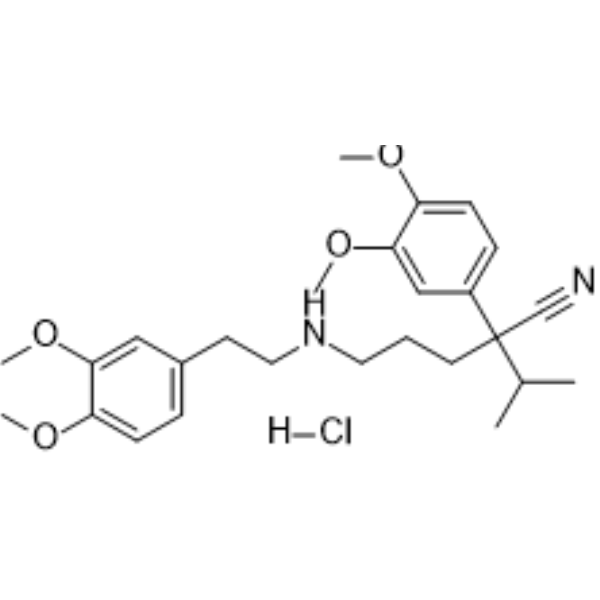
Norverapamil hydrochloride ((±)-Norverapamil hydrochloride), an N-demethylated metabolite of Verapamil, is a L-type calcium channel blocker and a P-glycoprotein (P-gp) function inhibitor.
For research use only. We do not sell to patients.
- Purity : 99.80%
- CAS No.: 67812-42-4
- Formula: C26H37ClN2O4
- Molecular Weight:477.04
-
Storage:
4°C, sealed storage, away from moisture and light
* In solvent : -80°C, 6 months; -20°C, 1 month (sealed storage, away from moisture and light)

To place orders, for customer services and technical support, please contact: MedChemExpress USA
Tel: 609-228-6898 E-mail: [email protected] [email protected]


-
 Biological Activity
-
Chemical Information
-
Solvent & Solubility
- Purity & Documentation
- References
-
 Help & FAQs


-
HY-14275
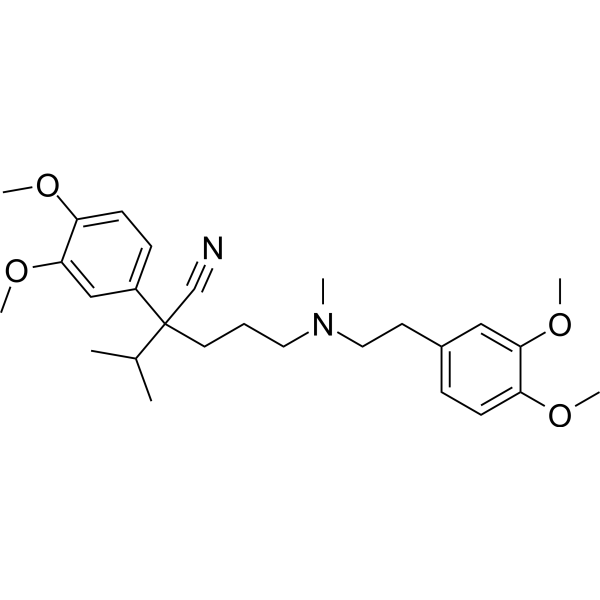
Verapamil -
HY-135336
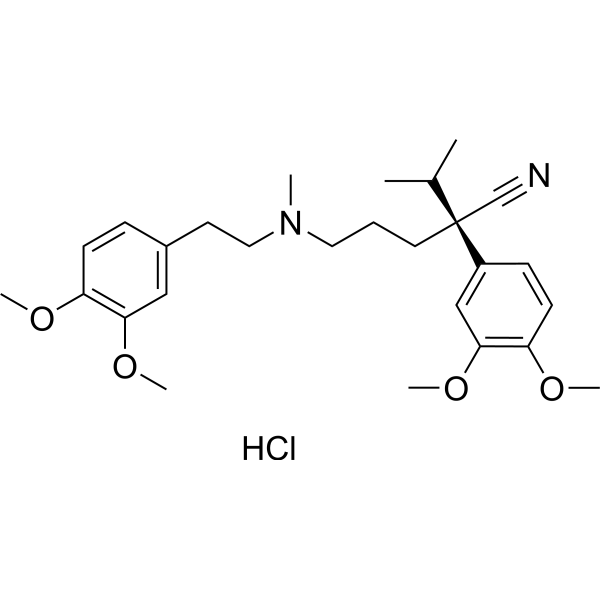
(R)-Verapamil hydrochloride -

HY-100750R
Norverapamil hydrochloride (Standard) -
HY-N0797
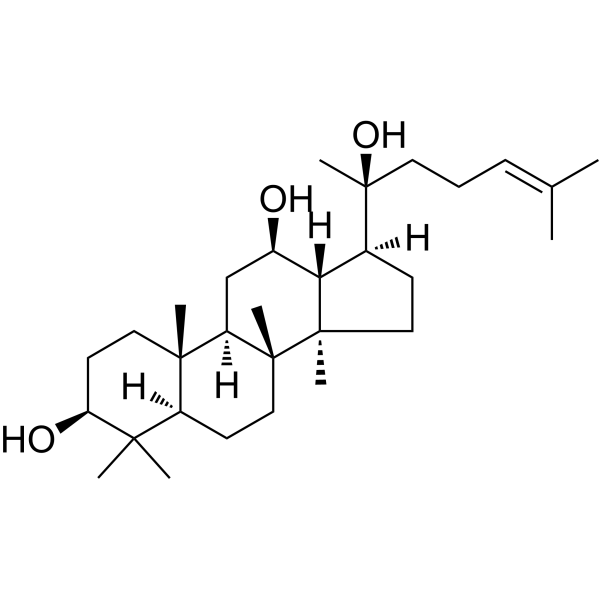
(20S)-Protopanaxadiol -
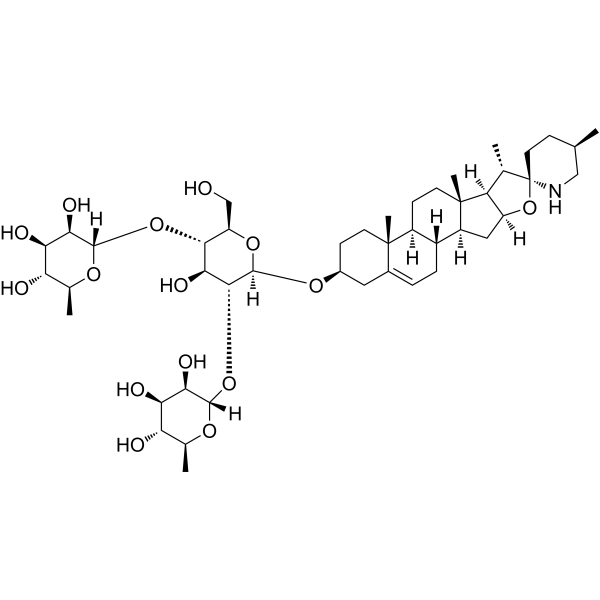
HY-N0069
Solamargine -
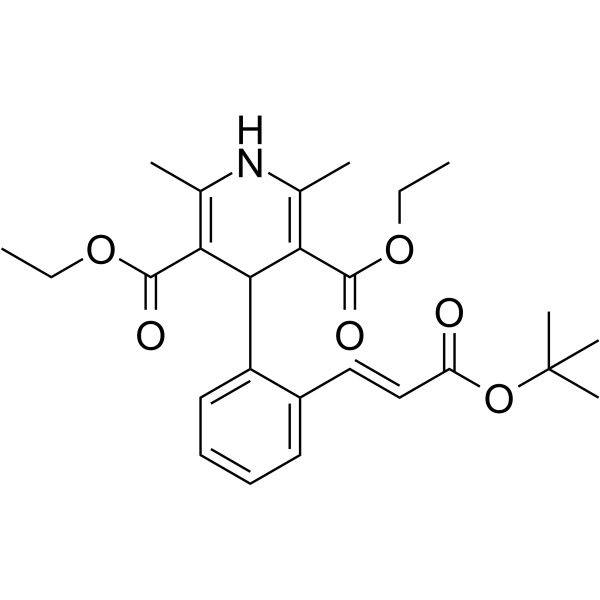
HY-B0347
Lacidipine -
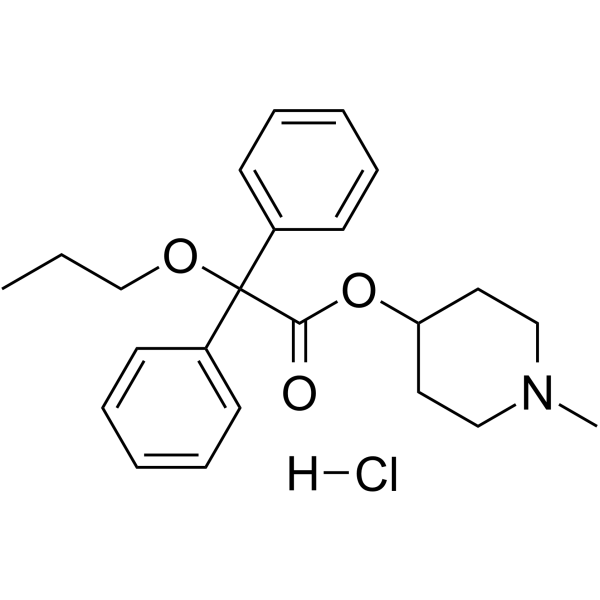
HY-116408A
Propiverine hydrochloride -
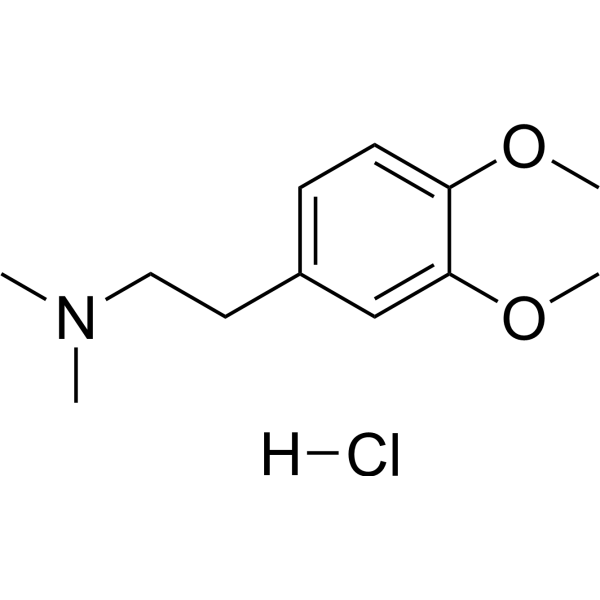
HY-136589
Verapamil EP Impurity C hydrochloride -
HY-106004
Zamicastat -
HY-W032013
1-Octanol -

HY-14275R
Verapamil (Standard) -

HY-N0797R
(20S)-Protopanaxadiol (Standard)
Publications Citing Use of MedChemExpress (MCE) Norverapamil hydrochloride
MoreAll Calcium Channel Isoforms
More

Biological Activity
Description
IC50 & Target
|
L-type calcium channel |
In Vitro
Norverapamil hydrochloride ((±)-Norverapamil hydrochloride) is similarly effective as verapamil at inhibiting isoniazid and rifampicin tolerance and killing of intracellular M. tuberculosis in the absence of other drugs. norverapamil, also inhibits macrophage-induced tolerance and achieves similar serum levels to verapamil[1].
Verapamil and its major metabolite norverapamil were identified to be both mechanism-based inhibitors and substrates of CYP3A and reported to have non-linear pharmacokinetics in clinic[3].
MedChemExpress (MCE) has not independently confirmed the accuracy of these methods. They are for reference only.
In Vivo
MedChemExpress (MCE) has not independently confirmed the accuracy of these methods. They are for reference only.
-
Animal Model:Male Sprague-Dawley rats[3]
-
Dosage:9 mg/kg (Pharmacokinetic Study)
-
Administration:Oral administration
-
Result:t1/2=9.4 hours; AUC=260 ng▪h/mL; Cmax=41.6 ng/mL.


Chemical Information
-
CAS No. 67812-42-4
-
Appearance Solid
-
Molecular Weight 477.04
-
Formula C26H37ClN2O4
-
Color White to off-white
-
SMILES
N#CC(C(C)C)(CCCNCCC1=CC=C(OC)C(OC)=C1)C2=CC=C(OC)C(OC)=C2.[H]Cl
-
Synonyms
(±)-Norverapamil hydrochloride; D591 hydrochloride
-
Shipping
Room temperature in continental US; may vary elsewhere.
-
Storage
4°C, sealed storage, away from moisture and light
* In solvent : -80°C, 6 months; -20°C, 1 month (sealed storage, away from moisture and light)


Publications (2)
-
Journal Impact Factor
-
Most Recent
-
Biochem Pharmacol
BMAL1-mediated transcriptional regulation of CYP3A13 drives circadian rhythms in intestinal first-pass metabolism. [Abstract]2026 Apr 16;250(Pt 1):117981. PMID: 42000077 -
Toxicol Lett
Lactobacillus rhamnosus induces CYP3A and changes the pharmacokinetics of verapamil in rats. [Abstract]2021 Nov 1:352:46-53. PMID: 34600097


Solvent & Solubility
In Vitro:
H2O : ≥ 50 mg/mL (104.81 mM)
DMSO : ≥ 31 mg/mL (64.98 mM; Hygroscopic DMSO has a significant impact on the solubility of product, please use newly opened DMSO)
* "≥" means soluble, but saturation unknown.
Please refer to the solubility information to select the appropriate solvent. Once prepared, please aliquot and store the solution to prevent product inactivation from repeated freeze-thaw cycles.
Storage method and period of stock solution: -80°C, 6 months; -20°C, 1 month (sealed storage, away from moisture and light). When stored at -80°C, please use it within 6 months. When stored at -20°C, please use it within 1 month.
* Note: If you choose water as the stock solution, please dilute it to the working solution, then filter and sterilize it with a 0.22 μm filter before use.
Please refer to the solubility information to select the appropriate solvent. Once prepared, please aliquot and store the solution to prevent product inactivation from repeated freeze-thaw cycles.
Storage method and period of stock solution: -80°C, 6 months; -20°C, 1 month (sealed storage, away from moisture and light). When stored at -80°C, please use it within 6 months. When stored at -20°C, please use it within 1 month.
* Note: If you choose water as the stock solution, please dilute it to the working solution, then filter and sterilize it with a 0.22 μm filter before use.
Concentration (start) × Volume (start) = Concentration (final) × Volume (final)
In Vivo:
Select the appropriate dissolution method based on your experimental animal and administration route.
- For the following dissolution methods, please ensure to first prepare a clear stock solution using an In Vitro approach and then sequentially add co-solvents:
- To ensure reliable experimental results, the clarified stock solution can be appropriately stored based on storage conditions. As for the working solution for In Vivo experiments, it is recommended to prepare freshly and use it on the same day.
- The percentages shown for the solvents indicate their volumetric ratio in the final prepared solution. If precipitation or phase separation occurs during preparation, heat and/or sonication can be used to aid dissolution.
Add each solvent one by one: 10% DMSO 40% PEG300 5% Tween-80 45% Saline
Solubility: ≥ 2.5 mg/mL (5.24 mM); Clear solution
This protocol yields a clear solution of ≥ 2.5 mg/mL (saturation unknown).
Taking 1 mL working solution as an example, add 100 μL DMSO stock solution (25.0 mg/mL) to 400 μL PEG300, and mix evenly; then add 50 μL Tween-80 and mix evenly; then add 450 μL Saline to adjust the volume to 1 mL.
Preparation of Saline: Dissolve 0.9 g sodium chloride in ddH₂O and dilute to 100 mL to obtain a clear Saline solution.
Add each solvent one by one: 10% DMSO 90% (20% SBE-β-CD in Saline)
Solubility: ≥ 2.5 mg/mL (5.24 mM); Clear solution
This protocol yields a clear solution of ≥ 2.5 mg/mL (saturation unknown).
Taking 1 mL working solution as an example, add 100 μL DMSO stock solution (25.0 mg/mL) to 900 μL 20% SBE-β-CD in Saline, and mix evenly.
Preparation of 20% SBE-β-CD in Saline (4°C, storage for one week): 2 g SBE-β-CD powder is dissolved in 10 mL Saline, completely dissolve until clear.
In Vivo Dissolution Calculator
Please enter the basic information of animal experiments:
-
-
-
-
Recommended: Prepare an additional quantity of animals to account for potential losses during experiments.
Working solution concentration: 0.22 mg/mL
This product has good water solubility, please refer to the measured solubility data in water/PBS/Saline for details.


Purity & Documentation
-
Data Sheet (276 KB)
-
SDS (584 KB)
- English - EN (584 KB)
- Français - FR (584 KB)
- Deutsch - DE (584 KB)
- Norwegian - NO (584 KB)
- Español - ES (584 KB)
- Swedish - SV (584 KB)
- Italian - IT (584 KB)
- Korean - KR (584 KB)
- Portuguese - PT (584 KB)
-
Handling Instructions (2659 KB)
References
[1]. Adams KN, et al. Verapamil, and its metabolite norverapamil, inhibit macrophage-induced, bacterial efflux pump-mediated tolerance to multiple anti-tubercular drugs. J Infect Dis. 2014 Aug 1;210(3):456-66. [Content Brief]
[2]. Pauli-Magnus C, et al. Characterization of the major metabolites of verapamil as substrates and inhibitors of P-glycoprotein. J Pharmacol Exp Ther. 2000 May;293(2):376-82. [Content Brief]
[3]. Wang J et al. A semi-physiologically-based pharmacokinetic model characterizing mechanism-based auto-inhibition to predict stereoselective pharmacokinetics of verapamil and its metabolite norverapamil in human. Eur J Pharm Sci. 2013 Nov 20;50(3-4):290-302. [Content Brief]
[4]. Choi DH, et al. Effects of simvastatin on the pharmacokinetics of verapamil and its main metabolite, norverapamil, in rats. Eur J Drug Metab Pharmacokinet. 2009 Jul-Sep;34(3-4):163-8. [Content Brief]


Complete Stock Solution Preparation Table
Please refer to the solubility information to select the appropriate solvent. Once prepared, please aliquot and store the solution to prevent product inactivation from repeated freeze-thaw cycles.
Storage method and period of stock solution: -80°C, 6 months; -20°C, 1 month (sealed storage, away from moisture and light). When stored at -80°C, please use it within 6 months. When stored at -20°C, please use it within 1 month.
| Optional Solvent | Concentration Solvent Mass | 1 mg | 5 mg | 10 mg | 25 mg |
|---|---|---|---|---|---|
| DMSO / H2O | 1 mM | 2.0963 mL | 10.4813 mL | 20.9626 mL | 52.4065 mL |
| 5 mM | 0.4193 mL | 2.0963 mL | 4.1925 mL | 10.4813 mL | |
| 10 mM | 0.2096 mL | 1.0481 mL | 2.0963 mL | 5.2407 mL | |
| 15 mM | 0.1398 mL | 0.6988 mL | 1.3975 mL | 3.4938 mL | |
| 20 mM | 0.1048 mL | 0.5241 mL | 1.0481 mL | 2.6203 mL | |
| 25 mM | 0.0839 mL | 0.4193 mL | 0.8385 mL | 2.0963 mL | |
| 30 mM | 0.0699 mL | 0.3494 mL | 0.6988 mL | 1.7469 mL | |
| 40 mM | 0.0524 mL | 0.2620 mL | 0.5241 mL | 1.3102 mL | |
| 50 mM | 0.0419 mL | 0.2096 mL | 0.4193 mL | 1.0481 mL | |
| 60 mM | 0.0349 mL | 0.1747 mL | 0.3494 mL | 0.8734 mL | |
| H2O | 80 mM | 0.0262 mL | 0.1310 mL | 0.2620 mL | 0.6551 mL |
| 100 mM | 0.0210 mL | 0.1048 mL | 0.2096 mL | 0.5241 mL |
* Note: If you choose water as the stock solution, please dilute it to the working solution, then filter and sterilize it with a 0.22 μm filter before use.


Norverapamil hydrochloride Related Classifications
HY-100750 Related Classifications
 Powered by Bioz