



Cholinesterase (ChE)
Cholinesterase (ChE) is a family of enzymes present in the central nervous system, particularly in nervous tissue, muscle and red cells, which catalyze the hydrolysis of the neurotransmitter acetylcholine into choline and acetic acid, a reaction necessary to allow a cholinergic neuron to return to its resting state after activation. It is one of many important enzymes needed for the proper functioning of the nervous systems of humans.
There are two types: acetylcholinesterase (AChE, acetylcholine hydrolase) and butyrylcholinesterase (BChE, acylcholine acylhydrolase), also known as nonspecific cholinesterase or pseudocholinesterase. AChE is primarily found in the blood on red blood cell membranes, in neuromuscular junctions, and in neural synapses, while BChE is produced in the liver and found primarily in plasma. The difference between the two types of cholinesterase is their relative preferences for substrates: AChE hydrolyzes acetylcholine faster while BChE hydrolyzes butyrylcholine faster.
Cholinesterase (ChE) Isoform Specific Products
All Product Categories
-
Cholinesterase (ChE) Inhibitors
(912)
View all products
-
Cholinesterase (ChE) Agonists
(5)
View all products
-
Cholinesterase (ChE) Antagonists
(10)
View all products
-
Cholinesterase (ChE) Activators
(32)
View all products
-
Cholinesterase (ChE) Modulators
(10)
View all products
-
Cholinesterase (ChE) Chemical
(1)
View all products
-
Cholinesterase (ChE) Inducer
(1)
View all products
-
Cholinesterase (ChE) Controls
(6)
View all products
-
Cholinesterase (ChE) Substrates
(2)
View all products
-
Cholinesterase (ChE) Related Products (1060)
Related Products (1060)

-
Antibodies (2)
-
Cholinesterase (ChE) Isoform Comparison
-
Benactyzine hydrochloride (Standard)
 0 ImagesCat. No.: HY-B1542ARCAS No.: 57-37-4Benactyzine hydrochloride (Standard) is the analytical standard of Benactyzine hydrochloride. This product is intended for research and analytical applications. Benactyzine hydrochloride is a competitive BChE inhibitor with a Ki of 0.01 mM. Benactyzine hydrochloride is an anticholinergic drug. Benactyzine hydrochloride has the potential for organophosphate poisoning research.
-
AChE/BChE-IN-20
 0 ImagesCat. No.: HY-159081CAS No.: 3052008-10-0AChE/BChE-IN-20 (compound 3m) is an acetylcholinesterase (AChE, IC50=34.81 μM) and butylcholinesterase (BChE, IC50=20.66 μM) inhibitor, which has been demonstrated to have affinity for key enzyme pockets and favorable interaction profiles by molecular docking and kinetic simulations, and can be used in the study of Alzheimer's disease.
-
3-Hydroxycarbofuran (Standard)
 0 ImagesCat. No.: HY-116026RCAS No.: 16655-82-63-Hydroxycarbofuran (Standard) is the analytical standard of 3-Hydroxycarbofuran. This product is intended for research and analytical applications. 3-Hydroxycarbofuran, a major metabolite of Carbofuran, is a reversible acetylcholinesterase (AChE) inhibitor.
-
NDs-IN-1
 0 ImagesCat. No.: HY-158334CAS No.: 3033806-97-9(Neurodegenerative diseases) NDs-IN-1 (Compound 3g) inhibits the activities of key enzymes such as hBACE-1, hAChE and hMAO-B. NDs-IN-1 is a novel non-covalent multi-target inhibitor. NDs-IN-1 is mainly used in the study of neurodegenerative diseases.
-
AChE/GSK-3β-IN-1
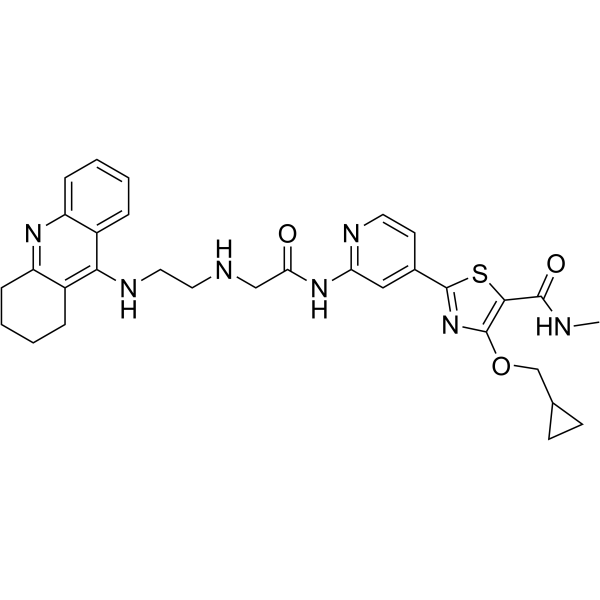 0 ImagesCat. No.: HY-150537CAS No.: 2412364-73-7AChE/GSK-3β-IN-1 (compound GT15) is a potent, dual AChE/GSK-3β inhibitor with IC50 values of 1.2, 149.8 and 22.4 nM for hAChE , hBChE and hGSK-3β, respectively. AChE/GSK-3β-IN-1 penetrates the blood-brain barrier (BBB). AChE/GSK-3β-IN-1 has high kinase selectivity profiles for the CMGC kinase family. AChE/GSK-3β-IN-1 occupies the ATP binding site of DYRK1A. AChE/GSK-3β-IN-1 inhibits ROS expression and reduces oxidative stress. AChE/GSK-3β-IN-1 can be used for Alzheimer’s disease research.

-
AChE/BChE/MAO-B-IN-5
 0 ImagesCat. No.: HY-172460CAS No.: 1432738-00-5AChE/BChE/MAO-B-IN-5 is a multitarget inhibitor of cholinesterases (AChE and BChE) and monoamine oxidase MAO-B with blood–brain barrier permeability. It exhibits IC50 values of 0.24 µM, 6.29 µM, and 0.11 µM against AChE, BChE, and MAO-B, respectively. AChE/BChE/MAO-B-IN-5 shows promise for research in the field of neurodegenerative diseases such as Alzheimer's disease.
-
2-Hydroxyalbrassitriol
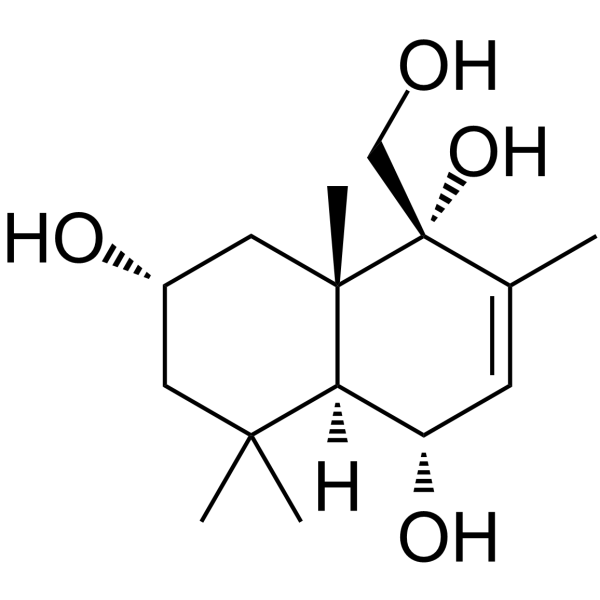 0 ImagesCat. No.: HY-N10425CAS No.: 1176586-98-32-Hydroxyalbrassitriol (Compound 6) is an AChE inhibitor with an IC50 of 35.97 μM.
-
AChE/BChE-IN-1
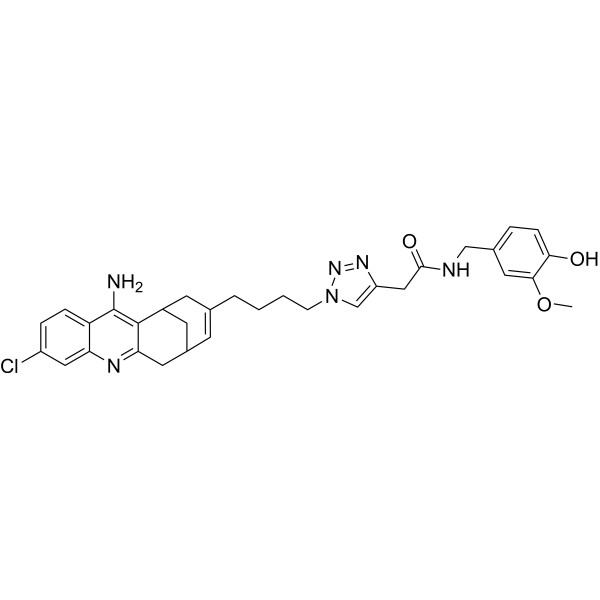 0 ImagesCat. No.: HY-131971CAS No.: 2720624-42-8AChE/BChE-IN-1 is a potent and brain-penetrant dual inhibitor of Acetylcholinesterase and Butyrylcholinesterase, with IC50s of 1.06 and 7.3 nM for hAChE and hBChE, respectively. AChE/BChE-IN-1 also has antioxidant activity. AChE/BChE-IN-1 can be used for the research of Alzheimer’s disease.
-
Insecticidal agent 5
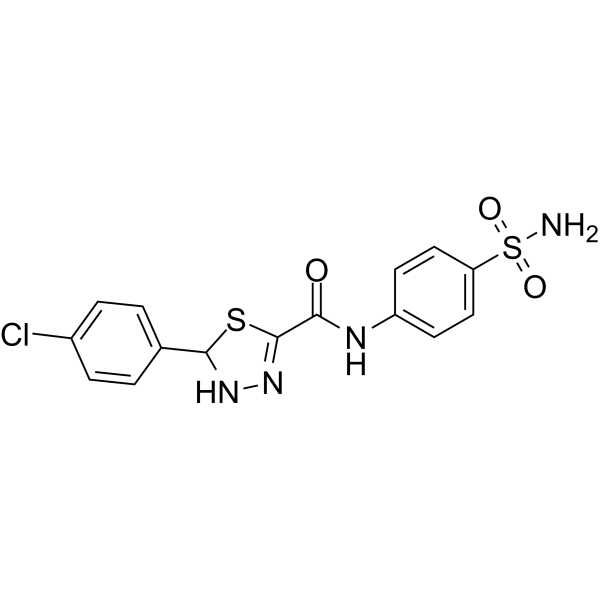 0 ImagesCat. No.: HY-157162CAS No.: 3021587-00-5Insecticidal agent 5 (compound 8) is an AChE-targeting insecticide with an LD50 of 27.65 ppm against the cotton leafworm Spodoptera littoralis.
-
BuChE-IN-16
 0 ImagesCat. No.: HY-170976BuChE-IN-16 (Compound 6a) is an orally active, BBB-permeable, and selective BuChE inhibitor with an IC50 of 0.33 μM. BuChE-IN-16 has anti-inflammatory and neuroprotective effects. BuChE-IN-16 can improve the cognitive function of zebrafish with Alzheimer's disease (AD) and alleviate memory impairment in mice induced by Scopolamine (HY-N0296). BuChE-IN-16 can be used for the research of AD.

-
BChE-IN-5
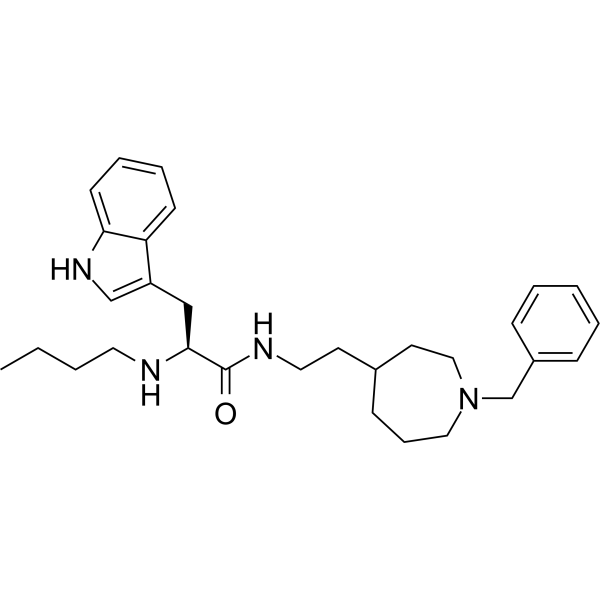 0 ImagesCat. No.: HY-143465CAS No.: 2983586-25-8
-
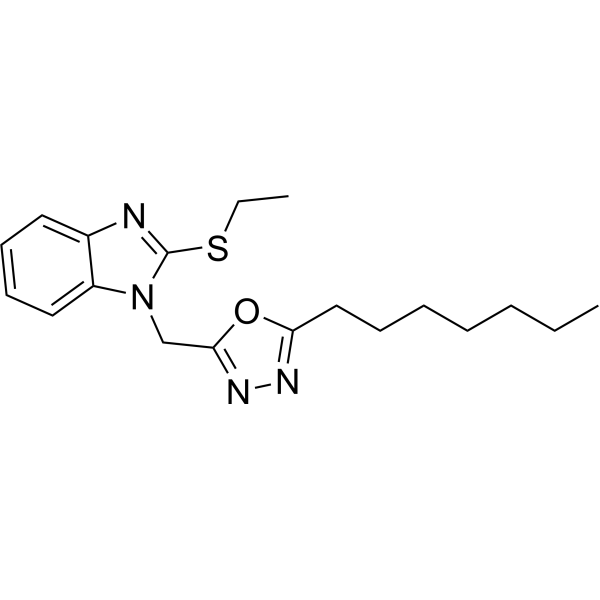
Flucopride
 0 ImagesCat. No.: HY-168241CAS No.: 1639925-34-0Flucopride (Compound 4a) is an AChE inhibitor (IC50: 24 nM), and a partial 5-HT4R agonist (Ki: 9.6 nM for (h)5-HT4R). Flucopride promotes the non-amyloidogenic processing of APP in COS-7 transiently expressing (h)5-HT4R (EC50: 23.0 nM). Flucopride may has good gastrointestinal track (GIT) penetration, and blood-brain barrier (BBB) cross-membrane penetration (PAMPA assay).
-
hAChE-IN-10
 0 ImagesCat. No.: HY-170583CAS No.: 3058182-98-9hAChE-IN-10 (Compound ET11) is the inhibitor for human acetylcholinesterase (AChE) with an IC50 of 6.34 nM. hAChE-IN-10 scavenges free radicals, and exhibits antioxidant activity. hAChE-IN-10 exhibits metal chelating activity, inhibits Cu2+-induced Aβ1-42 aggregation, reduces the formation of amyloid plaques, and exhibits neuroprotective activity. hAChE-IN-10 ameliorates the Scopolamine (HY-N0296)-induced cognitive impairment in mouse models.
-
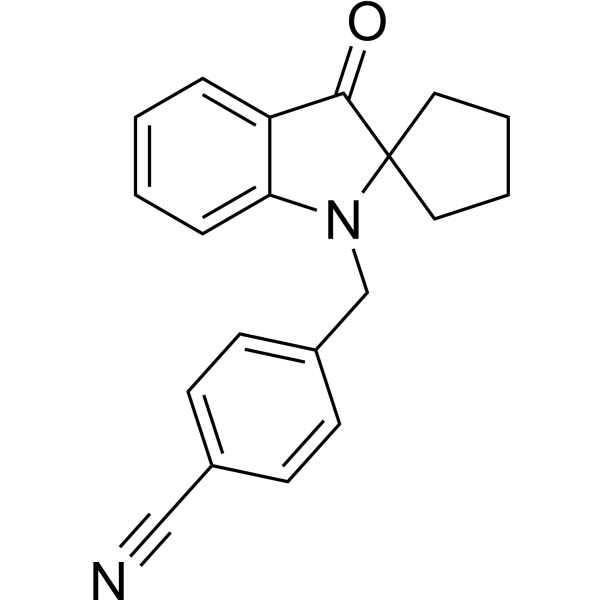
6,9-Dichloro-1,2,3,4-tetrahydroacridine
 0 ImagesCat. No.: HY-W049335CAS No.: 5396-25-86,9-Dichloro-1,2,3,4-tetrahydroacridine (compound 26) is an intermediate for the synthesis of acetylcholinesterase (AChE) inhibitors, which can be used in the study of Alzheimer's disease.
-
AChE/BChE-IN-14
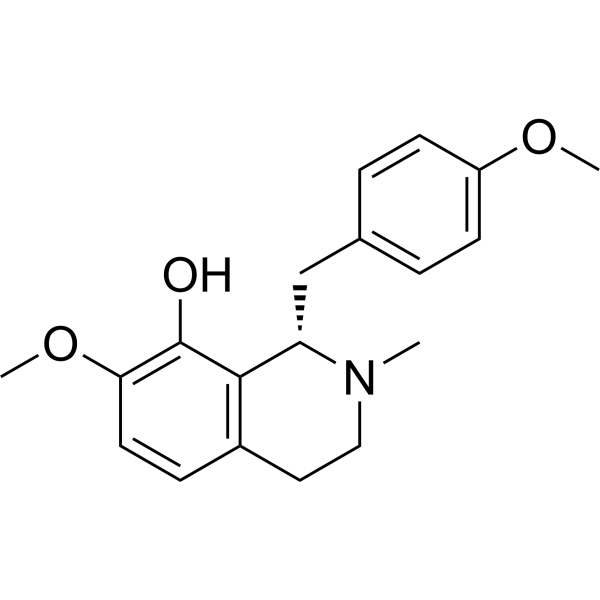 0 ImagesCat. No.: HY-N12027AChE/BChE-IN-14 (compound 13) is a benzylisoquinoline alkaloid isolated from the roots of Fissistigma polyanthum. AChE/BChE-IN-14 exhibits AChE and BChE inhibitions with antioxidant activities. AChE/BChE-IN-14 can be used for Alzheimer’s disease research.
-
MAO-B-IN-26
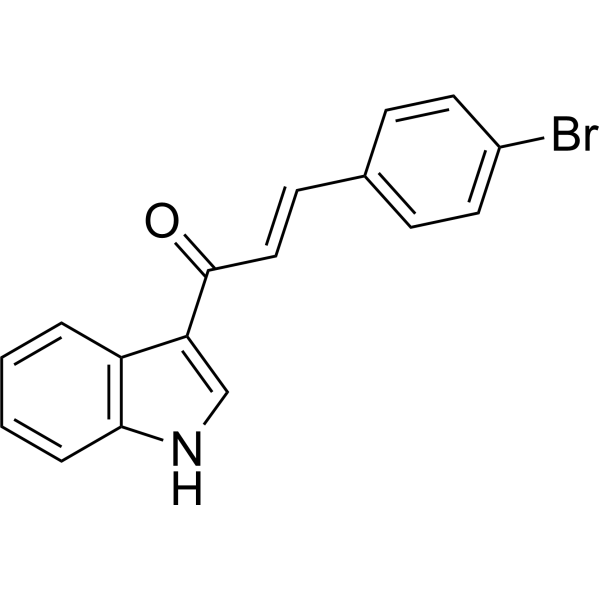 0 ImagesCat. No.: HY-156348CAS No.: 38470-71-2MAO-B-IN-26 (Compound IC9) is a MAO-B and acetylcholinesterase inhibitor. MAO-B-IN-26 protects SH?SY5Y cells against Aβ induced cytotoxicity, morphological changes, ROS generation and membrane damage. MAO-B-IN-26 also inhibits Aβ induced autophagy and apoptosis. MAO-B-IN-26 can be used as a neuroprotective agent against Alzheimer’s disease.




