



Cholinesterase (ChE)
Cholinesterase (ChE) is a family of enzymes present in the central nervous system, particularly in nervous tissue, muscle and red cells, which catalyze the hydrolysis of the neurotransmitter acetylcholine into choline and acetic acid, a reaction necessary to allow a cholinergic neuron to return to its resting state after activation. It is one of many important enzymes needed for the proper functioning of the nervous systems of humans.
There are two types: acetylcholinesterase (AChE, acetylcholine hydrolase) and butyrylcholinesterase (BChE, acylcholine acylhydrolase), also known as nonspecific cholinesterase or pseudocholinesterase. AChE is primarily found in the blood on red blood cell membranes, in neuromuscular junctions, and in neural synapses, while BChE is produced in the liver and found primarily in plasma. The difference between the two types of cholinesterase is their relative preferences for substrates: AChE hydrolyzes acetylcholine faster while BChE hydrolyzes butyrylcholine faster.
Cholinesterase (ChE) Isoform Specific Products
All Product Categories
-
Cholinesterase (ChE) Inhibitors
(912)
View all products
-
Cholinesterase (ChE) Agonists
(5)
View all products
-
Cholinesterase (ChE) Antagonists
(10)
View all products
-
Cholinesterase (ChE) Activators
(32)
View all products
-
Cholinesterase (ChE) Modulators
(10)
View all products
-
Cholinesterase (ChE) Chemical
(1)
View all products
-
Cholinesterase (ChE) Inducer
(1)
View all products
-
Cholinesterase (ChE) Controls
(6)
View all products
-
Cholinesterase (ChE) Substrates
(2)
View all products
-
Cholinesterase (ChE) Related Products (1060)
Related Products (1060)

-
Antibodies (2)
-
Cholinesterase (ChE) Isoform Comparison

-
AChE/BuChE-IN-1
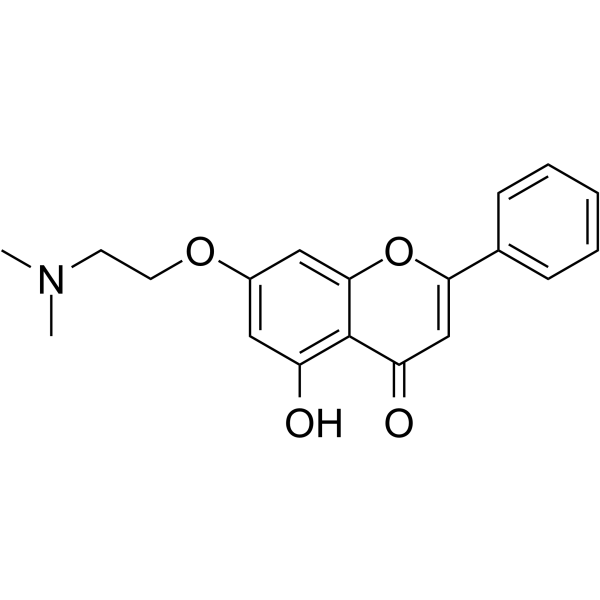 0 ImagesCat. No.: HY-144392CAS No.: 84212-49-7AChE/BuChE-IN-1 (Compound 1), a chrysin derivative, is a selective butyrylcholinesterase (BuChE) inhibitor with an IC50 of 0.48 μM. AChE/BuChE-IN-1 inhibits acetylcholinesterase (AChE) with an IC50 of 7.16 μM. AChE/BuChE-IN-1 shows strong scavenging ·OH activities with a IC50 of 0.1674 μM. AChE/BuChE-IN-1 inhibits reactive oxygen species (ROS), Aβ1-42 aggregation (self-, Cu2+-induced, AChE-induced). AChE/BuChE-IN-1 has high BBB permeability and bioavailability and low cell toxicity. AChE/BuChE-IN-1 has the potential for Alzheimer' disease (AD) research.
-
Acotiamide-d6 hydrochloride
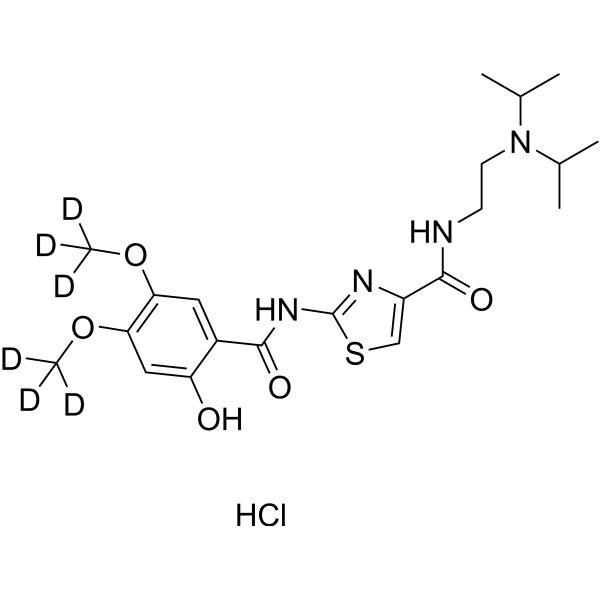 0 ImagesCat. No.: HY-121467ASSynonyms: Z-338-d6 hydrochloride; YM443-d6 hydrochlorideAcotiamide-d6 (hydrochloride) is deuterium labeled Acotiamide (hydrochloride).
-
PE154 (solution)
 0 ImagesCat. No.: HY-DY1110CAS No.: 1192750-33-6PE154 (solution) is a fluorescent probe that binds to Aβ plaques, as well as a potent fluorescent inhibitor of AChE and BChE, with an IC50 of 280 pM against hAChE and 16 nM against hBChE. PE154 (solution) is applicable for histochemical detection of Aβ plaques in mouse and human brain tissues. PE154 (solution) can be used in research related to Alzheimer's disease.
-
Eseramine
 0 ImagesEseramine is a weak acetylcholinesterase inhibitor with an IC50 value of 9300 nM. Eseramine is promising for research of diseases involving the regulation of acetylcholinesterase, such as glaucoma, myasthenia gravis, and protection against organophosphate poisoning.
-
AChE/BChE-IN-17
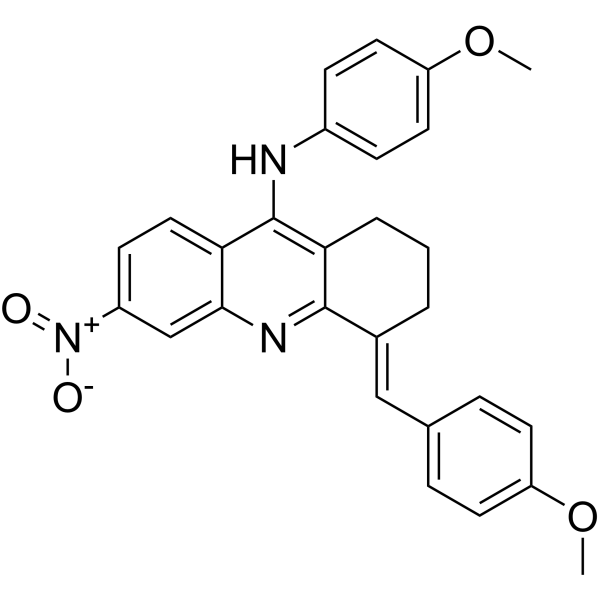 0 ImagesCat. No.: HY-161150CAS No.: 3026229-55-7
-
3-Hydroxycarbofuran
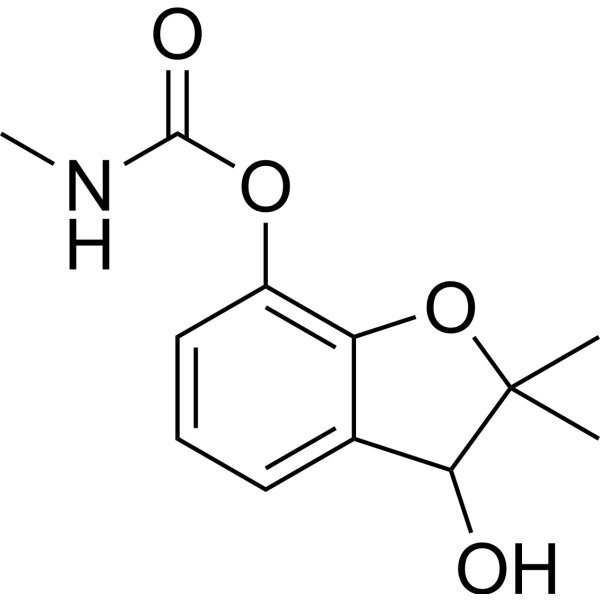 0 ImagesCat. No.: HY-116026CAS No.: 16655-82-63-Hydroxycarbofuran, a major metabolite of Carbofuran, is a reversible acetylcholinesterase (AChE) inhibitor.
-
Cryptolepine
 0 ImagesCat. No.: HY-W800535CAS No.: 480-26-2Cryptolepine is an orally active multi-potent alkaloid with anti-cancer, anti-bacterial, anti-viral, anti-malarial, anti-inflammatory, anti-hyperglycemic, relieve pain and other properties. Cryptolepine acts as an inhibitor of c-Myc, mTOR, NF-κB, HIF-1, MAPK and an activator of AMPKα1/2. It intercalates into DNA, inhibits topoisomerase II (Top II), disrupts mitochondrial dynamics and induces apoptosis. Cryptolepine also exhibits anti-plasmodial and cholinesterase inhibitory activities. Cryptolepine can be used in research related to tumors (melanoma, hepatocellular carcinoma, mammary adenocarcinoma, etc.), malaria, inflammatory diseases and diabetes, particularly in studies focused on inhibiting tumor growth and anti-plasmodial infection.
-
AChE/BChE-IN-23
 0 ImagesCat. No.: HY-159898AChE/BChE-IN-23 (Compound 6e) is an AChE/BChE inhibitor (IC50: 0.91 μM, 1.19 μM and 1.01 μM for hAChE, eq BChE and hBChE, respectively). AChE/BChE-IN-23 has antioxidant activity and inhibits Aβ1-42 and Tau protein aggregation. AChE/BChE-IN-23 also inhibits microglial activation by reducing ROS release and mitochondrial injury. AChE/BChE-IN-23 suppresses NLRP3 inflammasome and pro-inflammatory cytokines in human microglial cells. AChE/BChE-IN-23 also reverses the Scopolamine (HY-N0296)-induced memory impairment in mice model.
-
AChE-IN-92
 0 ImagesCat. No.: HY-175300CAS No.: 2421120-68-3AChE-IN-92 (Compound L4R1-3) is a highly selective acetylcholinesterase (AChE) inhibitor (IC50=4.6 nM). AChE-IN-92 blocks acetylcholine hydrolysis and elevates synaptic acetylcholine levels. AChE-IN-92 is promising for research of Alzheimer’s disease (AD).
-
Aldicarb sulfone (Standard)
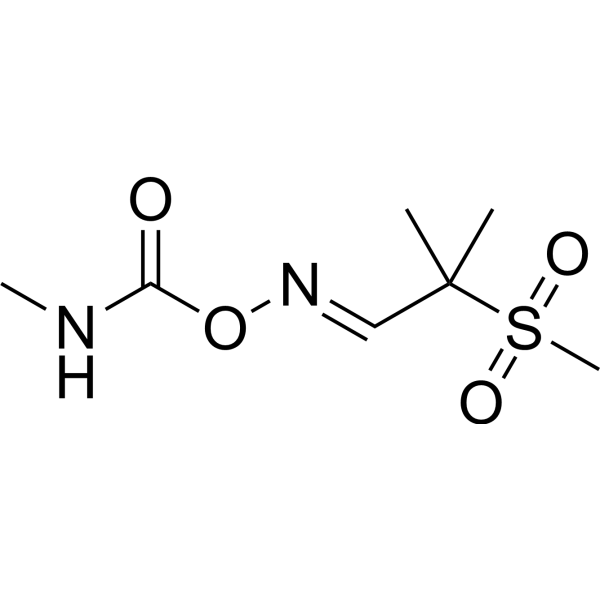 0 ImagesAldicarb sulfone (Standard) is the analytical standard of Aldicarb sulfone (HY-17530). This product is intended for research and analytical applications. Aldicarb sulfone is one of the metabolites of the carbamate pesticide Aldicarb and has insecticidal activity. Aldicarb sulfone is also an inhibitor of cholinesterase.

-
AChE-IN-113
 0 ImagesCat. No.: HY-185346CAS No.: 2365416-33-5AChE-IN-113 is a selective acetylcholinesterase inhibitor with a Ki value of 8.3 μM against electric eel acetylcholinesterase. AChE-IN-113 can be used for the research of Alzheimer's disease.
-
Picfeltarraenin IV
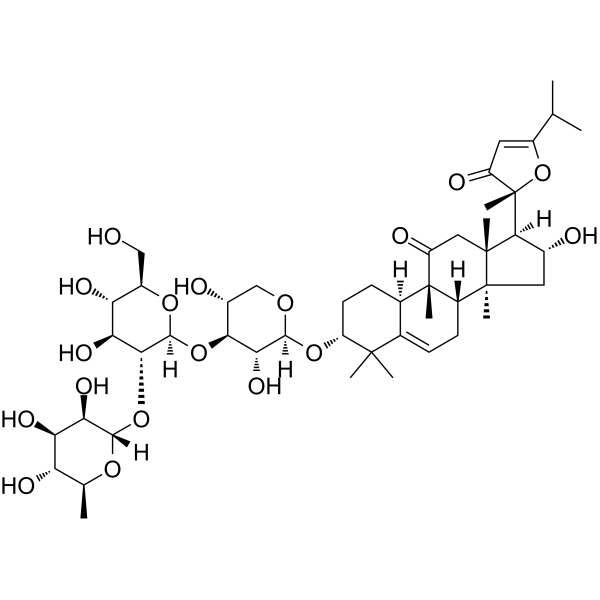 0 ImagesCat. No.: HY-N5076CAS No.: 184288-35-5
-
AChE-IN-69
 0 ImagesCat. No.: HY-159116CAS No.: 2755986-33-3AChE-IN-69 (compound 7o) is a potent AChE inhibitor with an IC50 value of 1.67 µM. AChE-IN-69 has the potential for the research of Alzheimer’s disease.
-
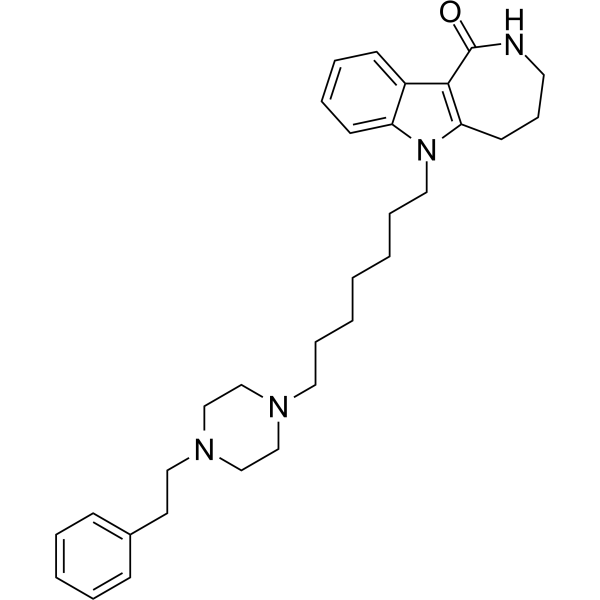
AChE-IN-97
 0 ImagesCat. No.: HY-179121AChE-IN-97 (compound 7e) is a cholinesterase inhibitor. AChE-IN-97 exhibits AChE and BChE inhibitory activity through molecular docking. AChE-IN-97 can be used for research on neurological conditions.


-
N-p-trans-Coumaroyltyramine (Standard)
 0 ImagesCat. No.: HY-N2230RCAS No.: 36417-86-4N-p-trans-Coumaroyltyramine (Standard) is the analytical standard of N-p-trans-Coumaroyltyramine (HY-N2230). This product is intended for research and analytical applications. N-p-trans-Coumaroyltyramine is a natural phenolic amide compound and an inhibitor of AChE (IC50: 122 μM) and α-glucosidase (IC50: 2.7 μM). N-p-trans-Coumaroyltyramine also has anti-trypanosomal activity, with an IC50 of 13.3 µM against T. brucei rhodesiense. N-p-trans-Coumaroyltyramine can be used in the research of diseases such as Alzheimer's disease.




