



Asialoglycoprotein Receptor (ASGPR)
Asialoglycoprotein Receptor; Ashwell-Morell Receptor
Asialoglycoprotein Receptor (ASGPR), also known as the Ashwell-Morell receptor, is a C-type lectin highly and specifically expressed on the surface of hepatocytes. It was the first cell surface lectin discovered in mammals. ASGPR is composed of two subunits (H1 and H2) and contains calcium-dependent carbohydrate recognition domains (CRDs) that can recognize terminal D-galactose (Gal) or N-acetylgalactosamine (GalNAc) residues on desialylated glycoproteins.
ASGPR mediates the internalization of its ligands via clathrin-mediated endocytosis and remains recyclable after internalization, showing great potential for efficient delivery. It plays a critical role in the clearance of desialylated glycoproteins such as IgA, extracellular fibronectin, and hepatic lipoproteins, and is also involved in the hepatic entry of certain pathogens.
Due to its high expression in hepatocytes (approximately 500,000 receptors per cell) and minimal expression in other tissues, ASGPR serves as an ideal target for liver-specific drug delivery. ASGPR-targeted delivery strategies often utilize natural or synthetic sugar-based ligands (e.g., arabinogalactan, pullulan, or GalNAc-modified polymers) to construct ligand-drug conjugates or ligand-anchored nanocarriers for selective uptake by hepatocytes.
Dysregulated expression or impaired function of ASGPR is closely associated with various diseases, including viral hepatitis, hepatocellular carcinoma, autoimmune hepatitis, diabetes, and drug-induced liver injury. ASGPR is not only a valuable therapeutic target but also holds potential in liver function evaluation and clinical diagnostics[1].
All Product Categories
-
Asialoglycoprotein Receptor (ASGPR) Related Products (8)
Related Products (8)

-
tri(GalNAc-PEG2)-PEG4-cyclo(Ac-DCAW-{Arg(3F-Ph)-PEG2}-LGELVWCT) (Cys2-Cys12)
 0 Imagestri(GalNAc-PEG2)-PEG4-cyclo(Ac-DCAW-{Arg(3F-Ph)-PEG2}-LGELVWCT) (Cys2-Cys12) is an asialoglycoprotein receptor (ASGPR) ligand that can be used for LYsosome TArgeting Chimera (LYTAC) research.
-
GalNAc-L96 free base
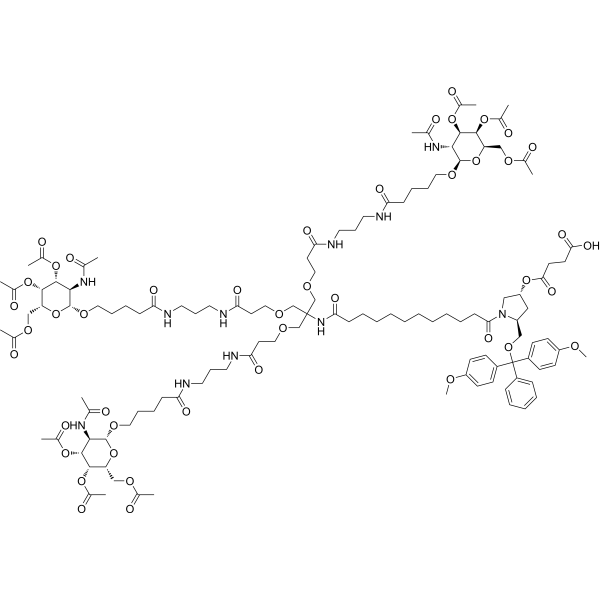 0 ImagesCat. No.: HY-153184CAS No.: 1159408-61-3GalNAc-L96 free base is a conjugate of GalNAc and its ligand L96. When conjugated with the A-rich HCV sequence (H12), GalNAc-L96 free base binds potently to ASGPR, with a Ki value of 10.4 nM. GalNAc-L96 free base promotes siRNA delivery to hepatocytes.
-
TMU454
 0 ImagesCat. No.: HY-180909TMU454 is a prototype GalNAc-PROTAC conjugate. TMU454 binds to ASGPR on the membrane of cells, and then is internalized via ASGPR-mediated endocytosis. TMU454 selectively degrades BRD4. TMU454 exhibits anticancer activity against hepatocellular carcinoma.
-
OGT-719
 0 ImagesCat. No.: HY-19272CAS No.: 185843-61-2OGT-719 is a potent, orally active nucleoside analogue that targets the asialoglycoprotein receptor (ASGP-R). OGT-719 inhibits growth of metastatic colorectal tumors in the liver of nude mice. OGT-719 can be used for primary hepatocellular carcinoma and colorectal liver metastases research.
-
PEG9MA10-PAB10-GalMA10
 0 ImagesCat. No.: HY-184926PEG9MA10-PAB10-GalMA10 is a CD147 LYTAC degrader. PEG9MA10-PAB10-GalMA10 binds to the asialoglycoprotein receptor (ASGPR) via its galactose methacrylate domain, mediating its uptake by hepatoma cells. PEG9MA10-PAB10-GalMA10 induces lysosome-dependent degradation of CD147, resulting in concurrent loss of associated MCT1 and MCT4. PEG9MA10-PAB10-GalMA10 reduces extracellular lactate levels, increases intracellular lactate accumulation, inhibits glycolytic activity, and enhances mitochondrial respiratory capacity. PEG9MA10-PAB10-GalMA10 decreases the secretion of MMP-2 and MMP-9, and upregulates the expression of E-cadherin. PEG9MA10-PAB10-GalMA10 exhibits anti-tumor efficacy in hepatoma models. PEG9MA10-PAB10-GalMA10 can be used for research on liver cancer (hepatocellular carcinoma).
-
Zilebesiran sodium
 0 ImagesCat. No.: HY-145649ACAS No.: 2380166-34-5Synonyms: AD-85481 sodium; ALN-AGT sodiumZilebesiran (AD-85481; ALN-AGT) sodium is a long-acting liver-targeted small interfering RNA (siRNA) antihypertensive agent. Zilebesiran sodium binds to the hepatic asialoglycoprotein receptor (ASGPR), activates the RNA-induced silencing complex to degrade hepatic angiotensinogen mRNA, thereby inhibiting the gene expression and synthesis of angiotensinogen. Zilebesiran sodium dose-dependently reduces serum angiotensinogen levels and 24-hour ambulatory blood pressure, with its effect persisting throughout the circadian cycle. Zilebesiran sodium is applicable to research related to hypertension.
-
ASGPR ligand-1
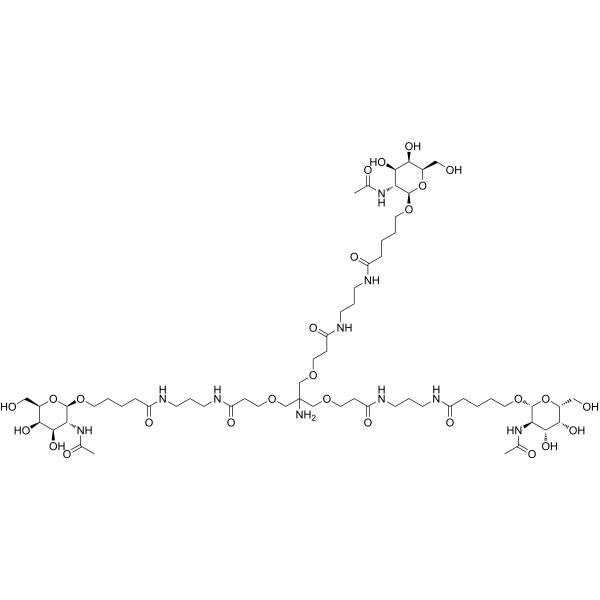 0 ImagesCat. No.: HY-156994CAS No.: 1426160-58-8ASGPR ligand-1 (Compound int-CC2) is an asialoglycoprotein receptor (ASGPR) ligand with a binding Kd value of 0.9 nM. ASGPR ligand-1 is applicable to research on lysosome degradation-related diseases.
-
tri-GalNAc-phosphoric acid
 0 ImagesCat. No.: HY-185590CAS No.: 3084453-02-8tri-GalNAc-phosphoric acid is a specific ligand of ASGPR with cell-specific internalization capability. tri-GalNAc-phosphoric acid can mediate the delivery of conjugated sclerostin aptamers to lysosomes of cells expressing ASGPR. tri-GalNAc-phosphoric acid is applicable to anticancer research.



