SARS-CoV
SARS coronavirus
SARS-CoV is the coronavirus (CoV) that causes severe acute respiratory syndrome (SARS). CoVs are enveloped viruses with a positive-sense, single-stranded RNA and can cause health-threatening outbreaks by targeting human respiratory system, including not only SARS, but also Middle East respiratory syndrome (MERS) and SARS-CoV-2 (the cause of COVID-19).
CoVs have four main structural proteins: spike(S), membrane (M), envelope (E), and nucleocapsid (N) proteins. An S protein mediates the CoV entry into host cells by attaching to a cellular receptor (ACE2 for SARS-CoV and SARS-CoV-2, DPP4 for MERS-CoV), followed by fusion between virus and host cell membranes. Genome replication and subgenomic RNA transcription after entry carry on with the participation of many nonstructural proteins such as Mpro (main protease or 3CLpro), PLpro (papain-like protease) and RdRp (RNA-dependent RNA polymerase). Then the structural proteins are translated, assembled into mature virions, and released via vesicles by exocytosis. It is worth mentioning that a protease called TMPRSS2 (transmembrane protease, serine 2) play important roles throughout the whole life of CoVs (such as attachment, assembling and release) by cleaving S protein. All the proteins and subcellular structures participated in the life cycle of CoVs are promising targets for treatment of disease caused by CoVs.
All Product Categories
-
SARS-CoV Related Products (1184)
Related Products (1184)

-
Recombinant Proteins (195)
-
SARS-CoV-2 Mpro-IN-21
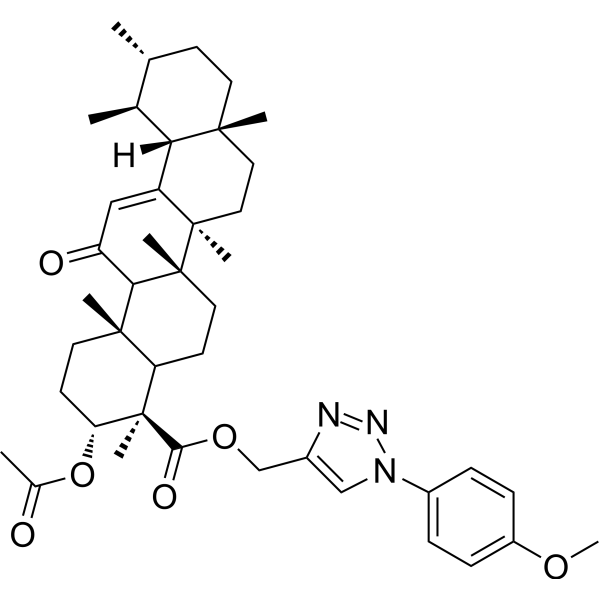
 0 ImagesCat. No.: HY-161722CAS No.: 3041099-79-7SARS-CoV-2 Mpro-IN-21 (compound A8) is a potent SARS-CoV-2 and OVID-19 Main Protease MPro inhibitor. SARS-CoV-2 Mpro-IN-21 shows excellent antioxidant activity in DPPH assay with an IC50 of 0.36 mg/mL. SARS-CoV-2 Mpro-IN-21 also exhibits better antibacterial potency against Klebsiella with an IC50 of 1.19 mg/mL.
-
GPSVFPLAPSSK-13C6,15N2 TFA
 0 ImagesCat. No.: HY-P5168ASGPSVFPLAPSSK-13C6,15N2 TFA is the 13C- and 15N-labeled GPSVFPLAPSSK. GPSVFPLAPSSK is an IgG1 signature peptide of anti-SARS-CoV-2 antibodies. GPSVFPLAPSSK can be used for the quantification of the specific isolation of anti-SARS-CoV-2 antibodies.
-
SARS-CoV-2 Mpro-IN-32
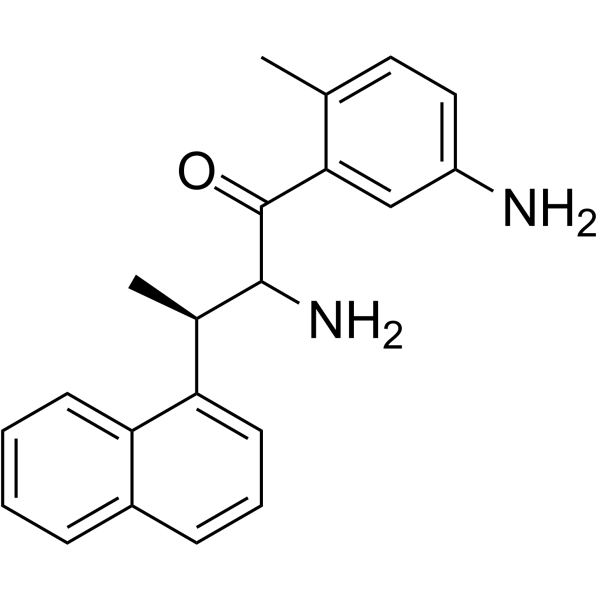
 0 ImagesCat. No.: HY-168600CAS No.: 2961016-95-3SARS-CoV-2 Mpro-IN-32 (Compound 1) is a selective inhibitor of SARS-CoV-2 MPro with an IC50 value of 230 nM. SARS-CoV-2 Mpro-IN-32 can also inhibit the replication of multiple SARS-CoV-2 variants in vitro.
-
SARS-CoV-2-IN-56
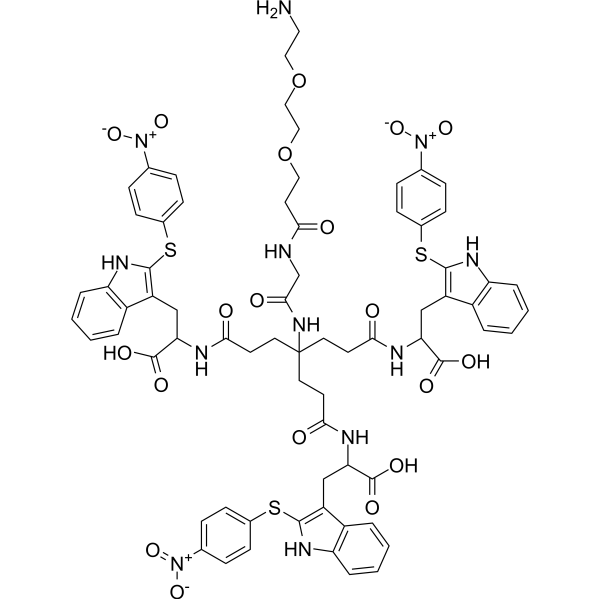 0 ImagesCat. No.: HY-155121CAS No.: 3033198-21-6SARS-CoV-2-IN-56 (Compound 63) is a SARS-CoV-2 inhibitor. SARS-CoV-2-IN-56 has antiviral activity. SARS-CoV-2-IN-56 inhibits SARS-CoV-2 in Vero E6 cells, with an IC50 of 0.7 μM.
-
SARS-CoV-2-IN-22
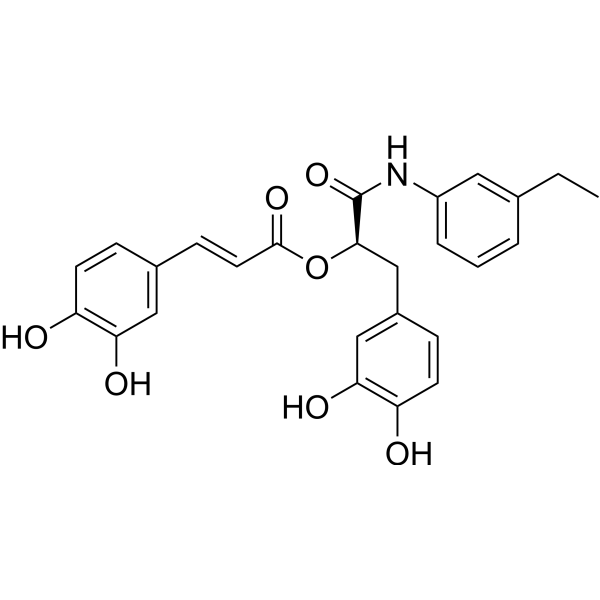
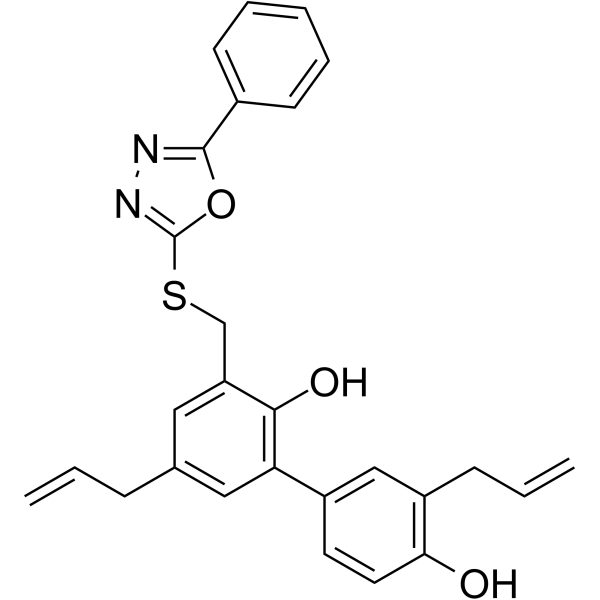 0 ImagesCat. No.: HY-146157CAS No.: 2710278-53-6SARS-CoV-2-IN-22 is a SARS-CoV-2 pseudovirus entry inhibitor with an IC50 value of 16.96 µM.
-
HP211206
 0 ImagesCat. No.: HY-170598CAS No.: 3119106-17-8HP211206 is a bifunctional CRBN-recruiting SARS-CoV-2 Mpro PROTAC degrader with a CRBN IC50 of 3.2 μM and a SARS-CoV-2 Mpro DC50 of 621 nM. HP211206 recruits E3 ubiquitin ligase CRBN to drive ubiquitination and proteasomal degradation of wild-type SARS-CoV-2 Mpro and E166 mutant while inhibiting Mpro enzymatic activity, exhibits no cytotoxicity against normal mammalian cells at tested concentrations, and can be used for the study of COVID-19 and SARS-CoV-2 infection
-
SARS-CoV-2 3CLpro-IN-1
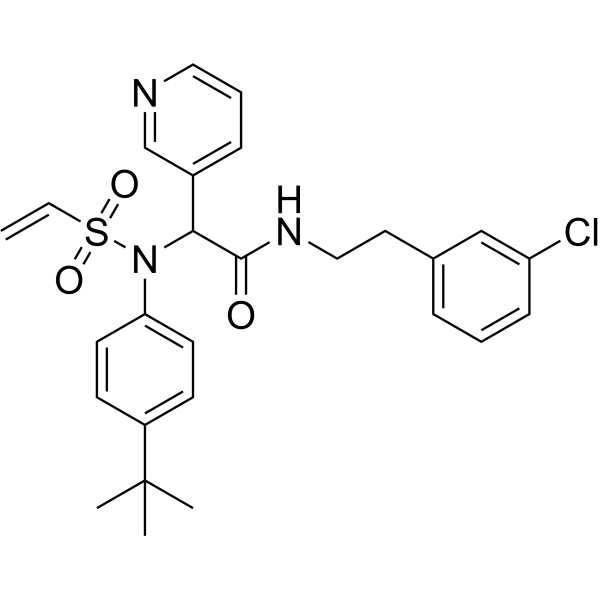 0 ImagesCat. No.: HY-144833CAS No.: 2757970-20-8
-
SARS-CoV-2 3CLpro-IN-35
 0 ImagesCat. No.: HY-181489CAS No.: 3023042-32-9SARS-CoV-2 3CLpro-IN-35 is a SARS-CoV-2 3CLpro inhibitor with an IC50 of 0.15 μM. SARS-CoV-2 3CLpro-IN-35 inhibits the proliferation of bladder cancer cells, exerts anti-SARS-CoV-2 activity, and exhibits low cytotoxicity in fibroblasts. SARS-CoV-2 3CLpro-IN-35 is applicable to research related to SARS-CoV-2 infection and bladder cancer.
-
PLpro-IN-5
 0 ImagesCat. No.: HY-159633CAS No.: 3009839-42-0PLpro-IN-5 (compound 21) is a PLPro protease inhibitor with an IC50 value of 91.14 nM. PLpro-IN-5 shows broad-spectrum antivirus, especially for SARS-CoV, MERS-CoV, SARS-CoV-2.

-
CDD-1819
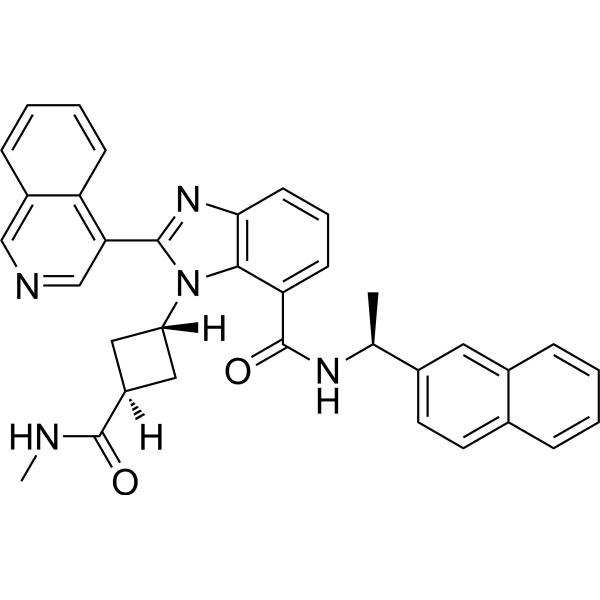 0 ImagesCat. No.: HY-155142CAS No.: 2894104-40-4CDD-1819 is a non-covalent and non-peptide potent SARS-CoV-2 Mpro inhibitor with a Ki of 5 nM. CDD-1819 also inhibits ΔP168, A173V, and ΔP168/A173V Mpro variants.
-
NVP-EGT710
 0 ImagesCat. No.: HY-179567CAS No.: 2893895-11-7Synonyms: EGT710NVP-EGT710 (EGT710) is an orally active non-peptidomimetic covalent SARS-CoV-2 Mpro inhibitor. NVP-EGT710 can be used for coronavirus infection research.
-
AT-9010
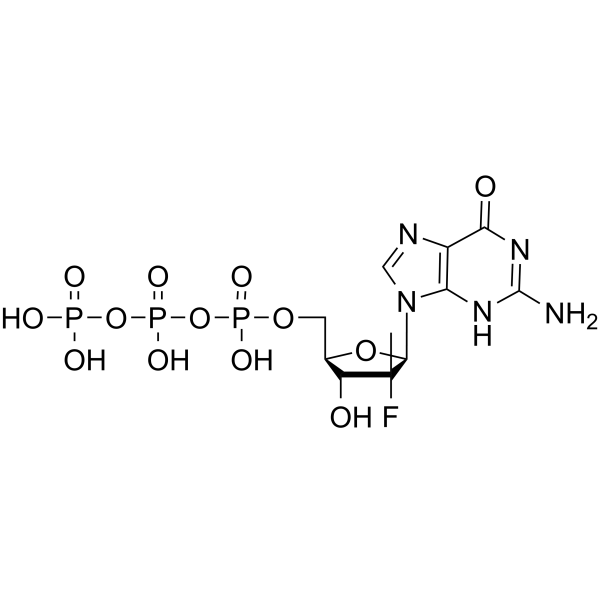 0 ImagesCat. No.: HY-139165CAS No.: 1261253-79-5AT-9010, a triphosphate active metabolite of AT-527, is a potent inhibitor of NiRAN (a function essential for viral replication). AT-9010 can inhibit SARS-CoV-2 replication.
-
Tirfipiravir
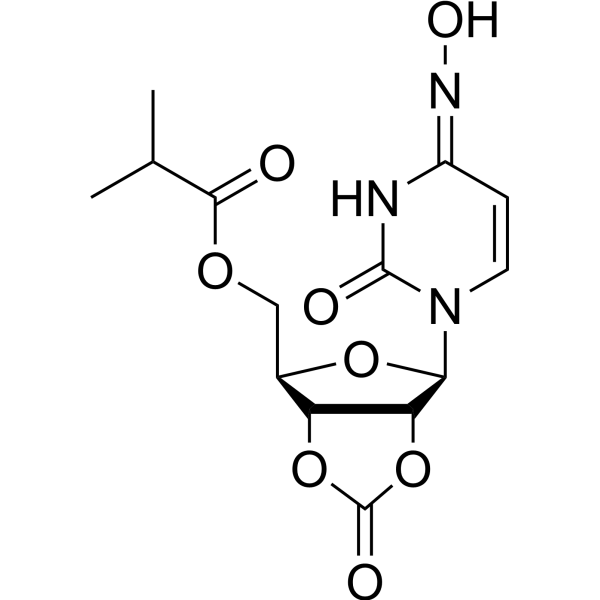 0 ImagesCat. No.: HY-156656CAS No.: 2759996-93-3Tirfipiravir is a nucleoside compound and antiviral agent, against the novel coronavirus or influenza virus.
-
TFMU-ADPr
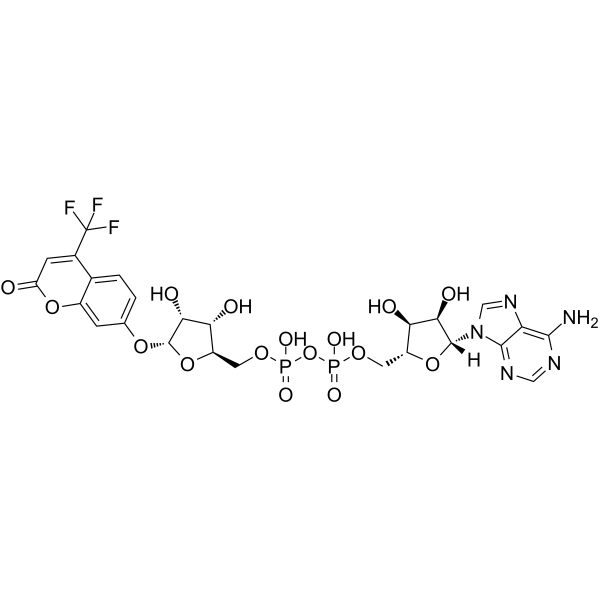 0 ImagesCat. No.: HY-146248CAS No.: 2412923-11-4TFMU-ADPr is a selective reporter substrate of SARS-CoV-2 Macro1 (IC50=0.59 μM), with an excitation wavelength (λEx) of 385 nm, and an emission wavelength (λEm) of 502 nm (or 495 nm). TFMU-ADPr can also undergo enzymatic hydrolysis with Poly(ADP-ribose) Glycohydrolase (PARG) sourced from human, Tetrahymena thermophila and ADP-ribosylhydrolase 3 from human to release fluorophores, thereby directly reporting total poly (ADP-ribose) hydrolase activity. TFMU-ADPr binds to the ADPr-binding site of SARS-CoV-2 Macro1, and its TFMU moiety inserts into the narrow hydrophobic groove of this protein. TFMU-ADPr can thus be used to evaluate small-molecule inhibitors targeting PAR hydrolases under in vitro conditions, to investigate the regulatory mechanisms of ADP-ribosyl catabolic enzymes, or to detect PAR hydrolase activity in whole-cell lysate assays. TFMU-ADPr is also applicable to COVID-19-related research.
-
SARS-CoV-2-IN-101
 0 ImagesCat. No.: HY-168557SARS-CoV-2-IN-101 (compound 10O) is a potent and orally active SARS-CoV-2 inhibitor with an EC50 value of 0.64 µM for HCoV-229E. SARS-CoV-2-IN-101 shows cyotoxicity. SARS-CoV-2-IN-101 decreases the expression of HCoV-229E N protein and RNA level. SARS-CoV-2-IN-101 shows broad-spectrum anti-coronaviral effect.