



SSTR4
SSTR4 (somatostatin receptor subtype 4) is a member of the somatostatin receptor family and belongs to the class A G protein-coupled receptor (GPCR) superfamily with seven transmembrane domains, mediating cellular responses to somatostatin signaling.[1][2] Mechanistically, SSTR4 regulates intracellular signaling through inhibition of adenylate cyclase activity and activation of downstream kinase pathways, including phosphoinositide-3 kinase (PI3K) and extracellular signal-regulated kinase (ERK)/MAPK signaling, thereby linking receptor activation to neuronal and cellular responses.[3][4] Consistent with its prominent expression in the central nervous system, SSTR4 has been implicated in the regulation of neuronal excitability, and receptor activation couples to the M-current to modulate seizure susceptibility in experimental models.[5] Disease-related studies further demonstrate that selective SSTR4 activation produces analgesic effects in preclinical pain models, where the highly selective agonist J-2156 reverses pain-like behaviors and reduces spinal ERK phosphorylation associated with central sensitization.[6] Compared with other somatostatin receptor isoforms, SSTR4 has attracted particular interest because it mediates analgesic, anti-inflammatory, and antidepressant actions without the endocrine effects commonly associated with other receptor subtypes, supporting efforts to achieve subtype-selective pharmacology.[7] For experimental applications, selective agonists including J-2156 and other SSTR4-preferring ligands are widely used to investigate receptor-specific signaling, neurobiology, and therapeutic mechanisms while minimizing off-target activation of related somatostatin receptor isoforms.[6][7]
References:
- [1]. Shenoy PA, et al. The Somatostatin Receptor-4 Agonist J-2156 Alleviates Mechanical Hypersensitivity in a Rat Model of Breast Cancer Induced Bone Pain. Front Pharmacol. 2018 May 15;9:495. [Content Brief]
- [2]. Drago SFA, et al. Effects of a Dietary Supplement Composed of Baicalin, Bromelain and Escin for Venous Chronic Insufficiency Treatment: Insights from a Retrospective Observational Study. Pharmaceuticals (Basel). 2024 Jun 14;17(6):779. [Content Brief]
-
SSTR4 Related Products (13)
Related Products (13)

- 1
-
Cortistatin-14
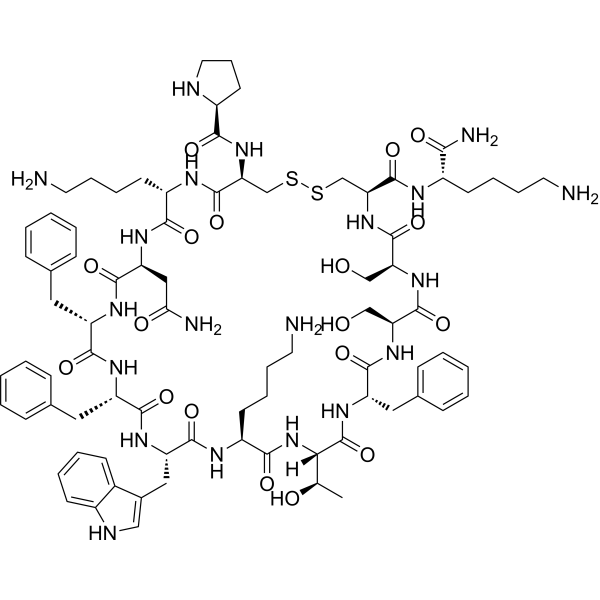 0 ImagesCortistatin-14 is a neuropeptide that shares structural similarities with somatostatin, working by binding to somatostatin receptors (sst1-sst5). Cortistatin-14 (TFA) has anticonvulsant, neuroprotective effects, and significant anti-inflammatory properties.
-
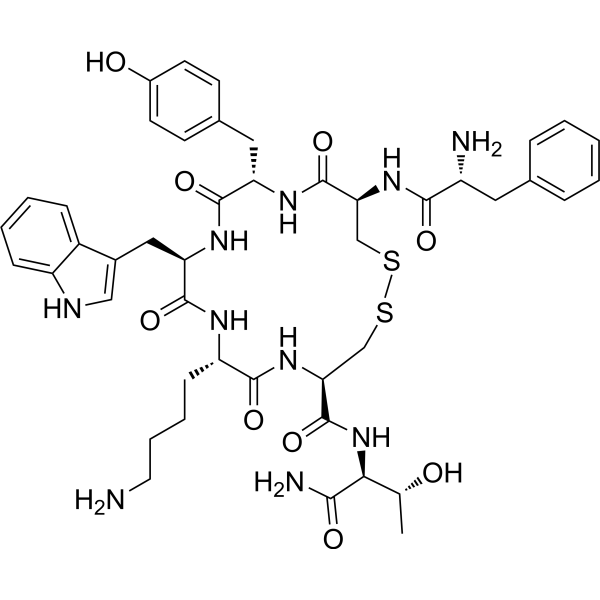
Mazisotine
 0 ImagesSynonyms: LY3556050; CNTX-0290Mazisotine (CNTX-0290) is an orally active, non-opioid somatostatin receptor 4 (SSTR4) agonist with an EC50 of 4.7 nM. Mazisotine exerts significant analgesic effects in various nociceptive (inflammatory, osteoarthritic) and neuropathic pain models. Mazisotine can be used for pain research.
-
Veldoreotide TFA
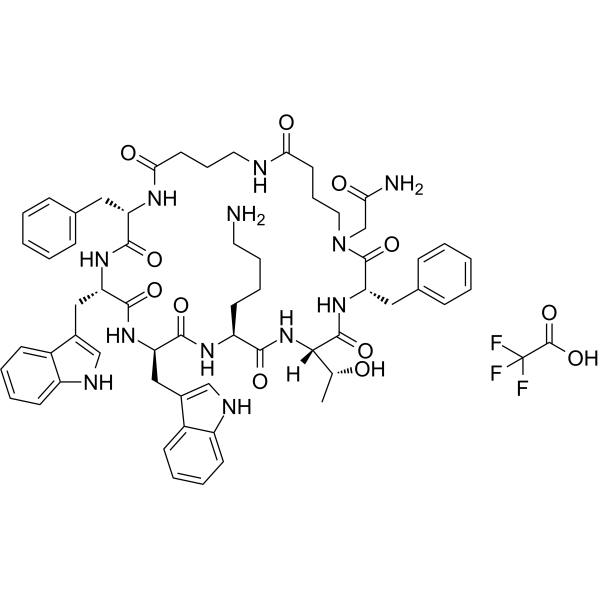 0 ImagesSynonyms: DG3173 TFA; PTR-3173 TFAVeldoreotide (DG3173) TFA a somatostatin analogue, binds to and activate the somatostatin receptors (SSTR) 2, 4, and 5. Veldoreotide TFA inhibits growth hormone (GH) secretion in adenomas compared with Octreotide (HY-P0036). Veldoreotide has the potential to be used as pain modulating agent
-
PRL 2915
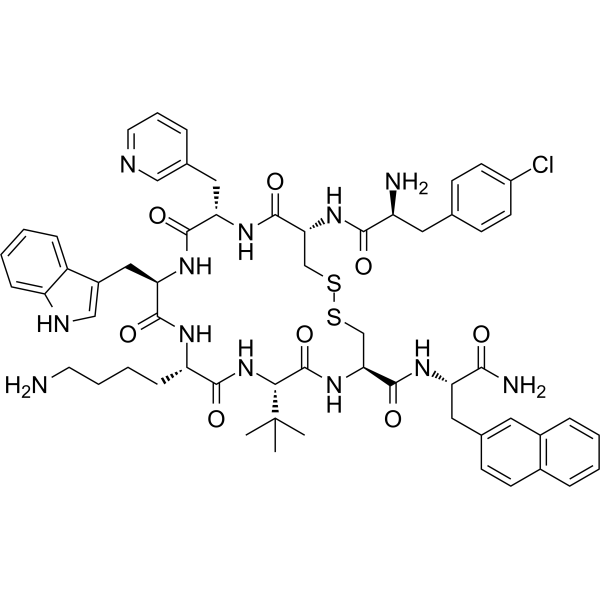 0 ImagesPRL 2915 is a potent human somatostatin subtype 2 receptor (hsst2) antagonist with a Ki of 12 nM.
-
Veldoreotide
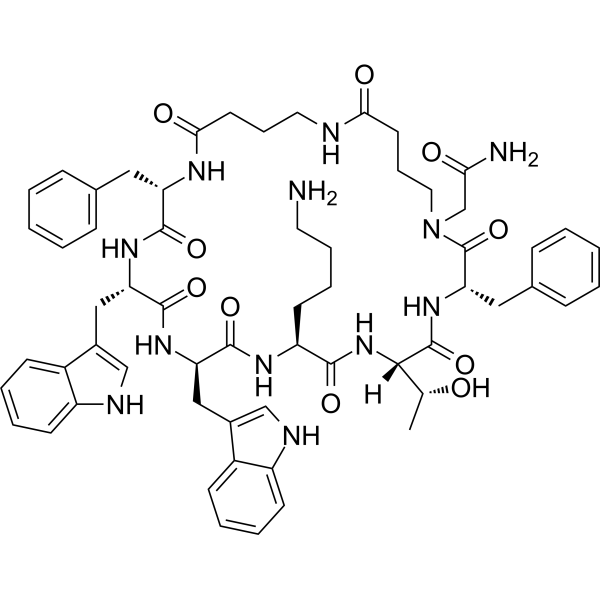 0 ImagesCat. No.: HY-P0024CAS No.: 252845-37-7Synonyms: DG3173; PTR-3173
-
Cortistatin-29 (reduced)
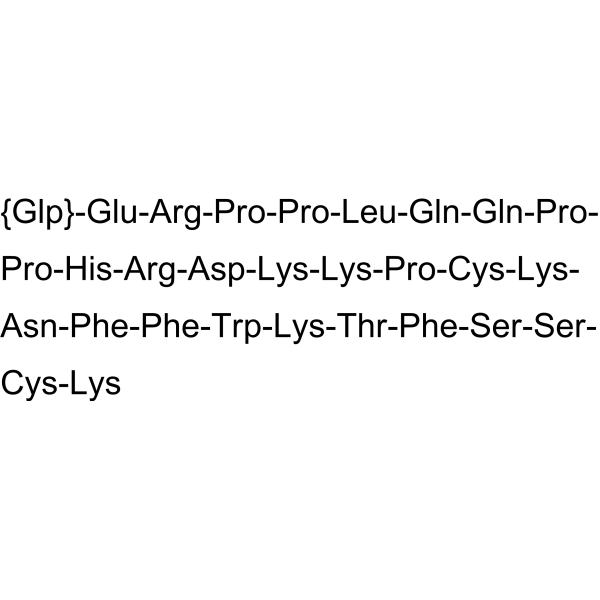 0 ImagesCat. No.: HY-P3618Purity: 98.12%Cortistatin-29 is a neuropeptide. Cortistatin-29 alleviates neuropathic pain. Cortistatin-29 binds all somatostatin (SS) receptor subtypes with high affinity and shows IC50 values of 2.8 nM, 7.1 nM, 0.2 nM, 3.0 nM, 13.7 nM for SSTR1, SSTR2, SSTR3, SSTR4, SSTR5, respectively. Cortistatin-29 shows anti-fibrotic effects.
-
SSTR4 agonist 6
 0 ImagesCat. No.: HY-W1117589CAS No.: 2744188-17-6
-
PRL 3195
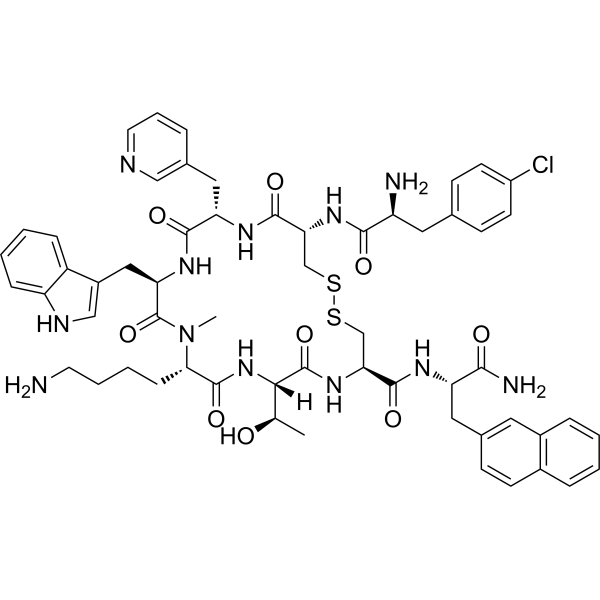 0 ImagesCat. No.: HY-P4469CAS No.: 341519-04-8PRL 3195 is a somatostatin receptor antagonist with Kis of 6, 17, 66, 1000 and 1000 nM for human somatostatin receptors (sst5, sst2, sst3, sst1 and sst4, respectively).
-
SSTR4 agonist 4
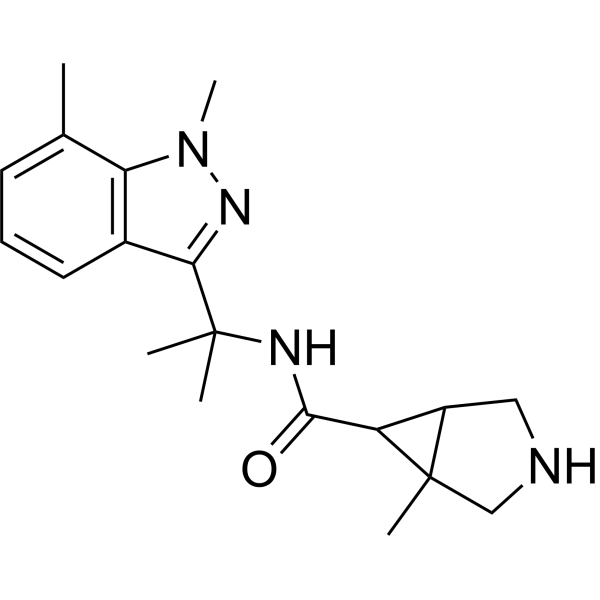 0 ImagesCat. No.: HY-142701CAS No.: 2747928-27-2SSTR4 agonist 4 is a somatostatin receptor 4 (SSTR4) agonist. SSTR4 agonist 4 functionally activates SSTR4. SSTR4 agonist 4 has the potential for the research of pain.
-
L803
 0 ImagesCat. No.: HY-P1384CAS No.: 348089-28-1L803 is a selective Somatostatin Receptor Subtype 4 (SST4) agonist. L803 inhibits L-type calcium channel currents (ICa). L803 is promising for research of retinal ganglion cell (RGC) degenerative diseases (e.g., glaucoma).
-
SSTR4 agonist 5
 0 ImagesCat. No.: HY-172147CAS No.: 2761347-44-6SSTR4 agonist 5 (Compound 5) is the orally active agonist for somatostatin receptor 4 (SSTR4) with an EC50 of 0.228 nM. SSTR4 agonist 5 exhibits good stability in human/rat liver microsomes. SSTR4 agonist 5 inhibits mechanical hyperalgesia in rat models.
-
Cortistatin-29 (rat)
 0 ImagesCat. No.: HY-P2150CAS No.: 1815618-17-7Cortistatin-29 is a neuropeptide. Cortistatin-29 alleviates neuropathic pain. Cortistatin-29 binds all somatostatin (SS) receptor subtypes with high affinity and shows IC50 values of 2.8 nM, 7.1 nM, 0.2 nM, 3.0 nM, 13.7 nM for SSTR1, SSTR2, SSTR3, SSTR4, SSTR5, respectively. Cortistatin-29 shows anti-fibrotic effects.
- 1



