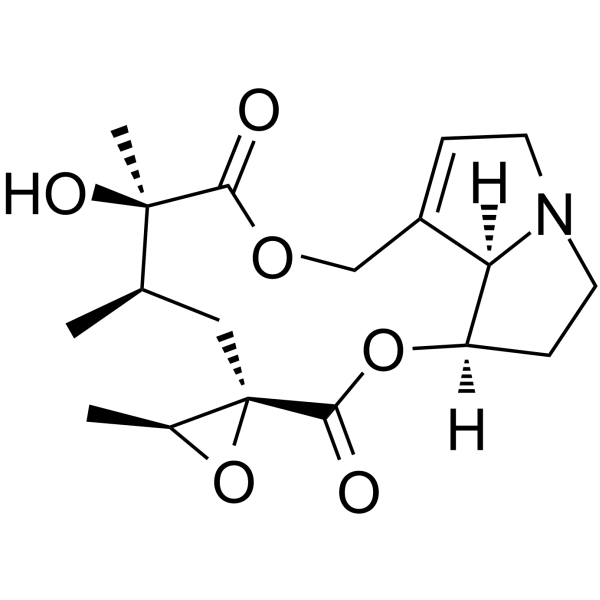
Insecticide
Insecticide
Insecticides refer to any toxic substances used to kill insects, which exert toxic effects on pests through different mechanisms, thereby achieving the purpose of controlling pest populations and protecting crops and human health. Insecticides have both chemical and biological origins and can be classified into organochlorine insecticides, organophosphorus insecticides, carbamate insecticides, and mineral insecticides based on their chemical properties. Insecticides interact with different target and non-target sites, including receptors, enzymes, and many other known and unknown molecules. Most insecticides are neurotoxicants that target the nervous system, but they can also affect other organs and body systems. Insecticides are metabolized through different metabolic pathways and often serve as biomarkers of exposure in the form of their parent compounds or metabolites. The toxicity of insecticides can be acute, subacute, or chronic, depending on the duration of exposure and the dose involved. Therefore, selecting sensitive, accurate, and validated biomarkers of exposure, effects, and susceptibility appears to be a challenging task.
Insecticides are widely used in agriculture, horticulture, forestry, gardening, homes, offices, and other fields[1][2].
All Product Categories
-
Insecticide Related Products (523)
Related Products (523)

-
Flucycloxuron (Standard)
 0 ImagesCat. No.: HY-118730RCAS No.: 113036-88-7Synonyms: Andalin (Standard); DU 319722 (Standard); A 1335 (Standard)Flucycloxuron (Standard) is the analytical standard of Flucycloxuron. This product is intended for research and analytical applications. Flucycloxuron (Andalin) is an insect growth regulator (IGR).
-
Bifenazate (Standard)
 0 ImagesBifenazate (Standard) is the analytical standard of Bifenazate. This product is intended for research and analytical applications. Bifenazate is a carbazate acaricide that control 100% of mites at a concentration of 25 ppm. Bifenazate is a positive allosteric modulator of GABA receptor. Bifenazate is the inhibitor for the mitochondrial electron transport chain complex III.
-
Boron sodium oxide tetrahydrate
 0 ImagesCat. No.: HY-W460727CAS No.: 12280-03-4Boron sodium oxide (tetrahydrate) is an alkaline salt. Boron sodium oxide (tetrahydrate) can be used as an insecticide, a flame retardant, and an agricultural micronutrient.
-
Chromafenozide (Standard)
 0 ImagesSynonyms: ANS118 (Standard)Chromafenozide (Standard) is the analytical standard of Chromafenozide. This product is intended for research and analytical applications. Chromafenozide is a potent partial ecdysone receptor agonist and dibenzoylhydrazine insecticide. Chromafenozide inhibits insect feeding and causes the insect to molt prematurely, leading to death. Chromafenozide shows antagonistic activity against 20-HE. Chromafenozide shows high toxicity against Spodoptera exigua and Spodoptera littoralis.
-
Hydroprene
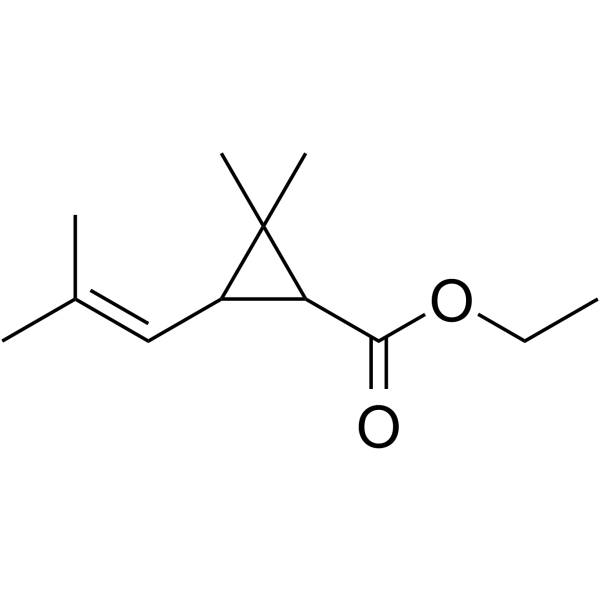
 0 ImagesCat. No.: HY-119625CAS No.: 41096-46-2Hydroprene is a synthetic juvenile hormone analog that mainly interferes with the normal growth, development and reproduction processes of insects by mimicking the juvenile hormone in insects. Hydroprene inhibits insect metamorphosis, disrupts reproduction and even directly affects embryos, with its target being the immature stages of insects. Hydroprene can be used in control studies of Plodia interpunctella eggs and Blattella germanica.
-
3'-Ethoxy spinosyn L 17-pseudoaglycone
 0 ImagesCat. No.: HY-1775333'-Ethoxy Spinosyn L 17-pseudoaglycone is an acid degradation product of 3'-ethoxy-5,6-dihydrospinosyn L, a component of the insecticide spinosyn L.
-
S-Hydroprene
 0 ImagesCat. No.: HY-W587961CAS No.: 65733-18-8S-Hydroprene is an insecticide. S-Hydroprene prolongs larval and pupa durations, disrupts larval development, suppresses pupation, and exhibits larvicidal activity against Culex quinquefasciatus and Blatta orientalis.
-
Lepimectin A4
 0 ImagesCat. No.: HY-N8333CAS No.: 171249-05-1Lepimectin A4, a macrocyclic lactone, is a component of the insecticide Lepimectin.
-
Methiocarb
 0 ImagesMethiocarb (Mercaptodimethur) is an orally active carbamate insecticide. Methiocarb exerts dose-dependent toxic effects on onions. In addition to inhibiting acetylcholinesterase to induce cholinergic excitation, Methiocarb can induce lipid peroxidation in liver, kidney, brain and testicular tissues and alter reduced glutathione levels by generating ROS. Methiocarb can be used for agricultural pest control and research on oxidative stress-related cellular damage in mammals.
-
Imidaclothiz (Standard)
 0 ImagesCat. No.: HY-W338247RCAS No.: 105843-36-5Imidaclothiz (Standard) is the analytical standard of Imidaclothiz. This product is intended for research and analytical applications. Imidaclothiz is a kind of neonicotinoid insecticides. Imidaclothiz has excellent insecticidal effect. Imidaclothiz can be used for the research of sucking and biting insects.
-
Spinosyn A
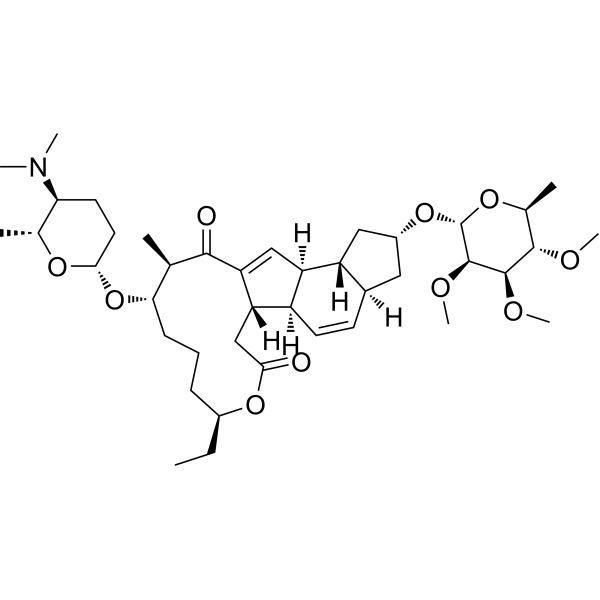 0 ImagesSpinosyn A, a polyketide-derived macrolide produced by Saccharopolyspora spinosa, is a potent insecticide.
-
Chlorophenothane-d8
 0 ImagesCat. No.: HY-B1603SCAS No.: 93952-18-2Chlorophenothane-d8 is the deuterium labeled Chlorophenothane. Chlorophenothane has stomach poisoning and contact killing effects. Chlorophenothane has been widely used as an insecticide.
-
Insecticidal agent 29
 0 ImagesCat. No.: HY-181706Insecticidal agent 29 is a pyrethroid incorporating a pyridine heterocycle and insecticide. Insecticidal agent 29 exhibits insecticidal activity against Culex pipiens Pallens larvae, Aphis laburni Kaltenbach, and aphids. Insecticidal agent 29 shows inactivity against Tetranychus cinnabarinus Boisduval.
-
OfChi-h-IN-1
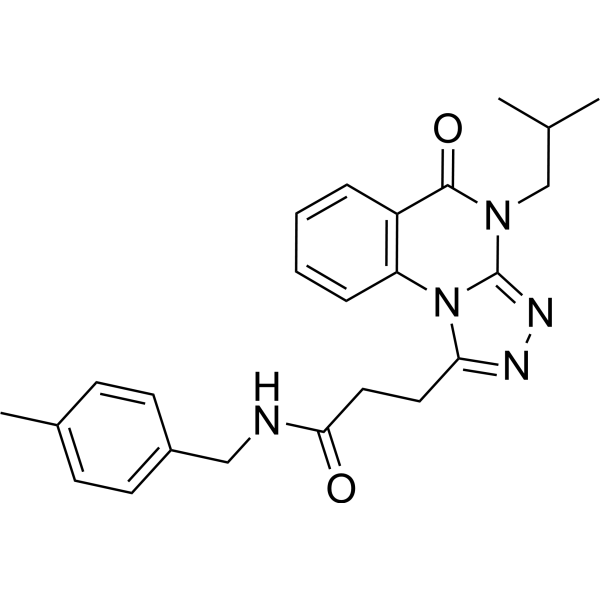 0 ImagesCat. No.: HY-157016CAS No.: 902928-83-0OfChi-h-IN-1 is a potent OfChi-h inhibitor with a Ki value of 0.33 μM. OfChi-h-IN-1 dramatically inhibit the growth and development of Ostrinia nubilalis larvae, and it shows higher insecticidal activity than Hexaflumuron (HY-B1848). OfChi-h-IN-1 serves as novel candidates for insect growth regulator.
-
Thiacloprid-d4
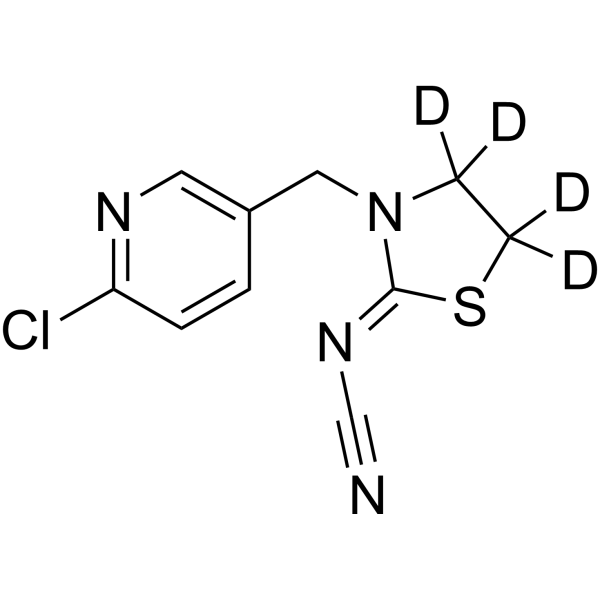 0 ImagesCat. No.: HY-B1953SCAS No.: 1793071-39-2Thiacloprid-d4 is the deuterium labeled Thiacloprid. Thiacloprid is an orally active neurotoxic insecticide and also a nAChR agonist. Thiacloprid reduces the viability of healthy cells, depletes reduced glutathione, and increases MDA levels, thereby inducing cytotoxicity and oxidative stress damage. In practical applications, Thiacloprid has lower acute toxicity to honeybees than other compounds of the same class such as Imidacloprid (HY-B0838), but it still significantly impairs the learning and memory function, immune capacity and survival status of honeybees. Thiacloprid induces intestinal microbial dysbiosis and reduces survival rate in middle-aged honeybees, increases the risk of premature collapse in bumblebee colonies, and significantly decreases the final colony weight and reproductive output. Thiacloprid is used in broad-spectrum agricultural pest control, often alone or in combination with Deltamethrin (HY-B1971), and meets the pest management needs of various crops including potatoes, cabbages, various fruits and vegetables, and nuts.
-
Methyl undecanoate
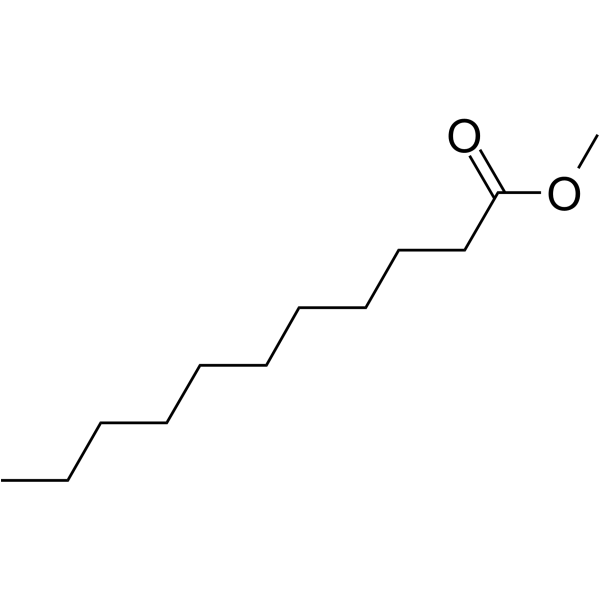 0 ImagesMethyl undecanoate is a synthetic undecanoic acid ester analog with biting deterrent and repellent activity against Aedes aegypti mosquitoes, with a biting deterrent index (BDI) of 0.88 and minimum effective dose (MED) of 25 µg/cm2. Methyl undecanoate can be used for the research of mosquito-borne diseases transmitted by Aedes aegypti.
-
Melicopine
 0 ImagesCat. No.: HY-W437569CAS No.: 568-01-4Melicopine is an alkaloid found in Z. simulans with antimalarial and anticancer activities. It exhibits inhibitory activity against chloroquine-sensitive 3D7 and chloroquine-resistant Dd2 strains of P. falciparum, with IC50 values of 29.7 and 33.7 µg/mL, respectively. Melicopine is cytotoxic to prostate cancer cells PC-3M and LNCaP (IC50 values of 47.9 and 37.8 µg/mL), but has no effect on non-cancerous HEK293 cells (IC50 greater than 100 µg/mL). Melicopine holds promise for research in anticancer and anti-infection fields.
-
Thiamethoxam-d4
 0 ImagesCat. No.: HY-B0833SCAS No.: 1331642-98-8Thiamethoxam-d4 is the deuterium labeled Thiamethoxam (HY-B0833). Thiamethoxam is a broad spectrum neonicotinoid insecticide.