



Reference Standards
Material, sufficiently homogeneous and stable with respect to one or more specified properties, and the uses include the calibration of a measurement system, assessment of a measurement procedure, assigning values to other materials, and quality control and so on.
-
Reference Standards Related Products (11493)
Related Products (11493)

-
Imidacloprid (Standard)
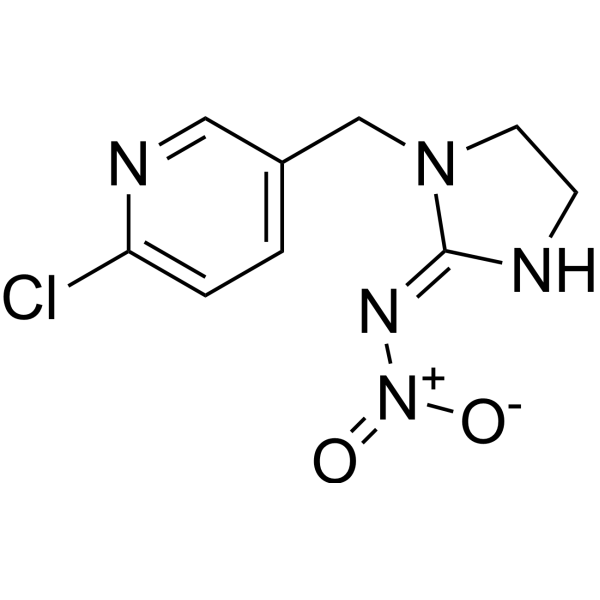 0 ImagesImidacloprid (Standard) is the analytical standard of Imidacloprid. This product is intended for research and analytical applications. Imidacloprid is an effective and widely used neonicotinoid pesticide to control pests of cereals, vegetables, tea and cotton.
-
L-Lactic acid sodium (Standard)
 0 ImagesSynonyms: (S)-2-Hydroxypropanoic acid sodium (Standard)Sodium (S)-2-hydroxypropanoate (Standard) is the analytical standard of Sodium (S)-2-hydroxypropanoate. This product is intended for research and analytical applications. L-lactate Sodium (Sodium (S)-2-hydroxypropanoate) is a buildiing block which can be used as a precursor for the production of the bioplastic polymer poly-lactic acid. L-Lactic acid Sodium has antiproliferative activity.
-
Carvedilol (Standard)
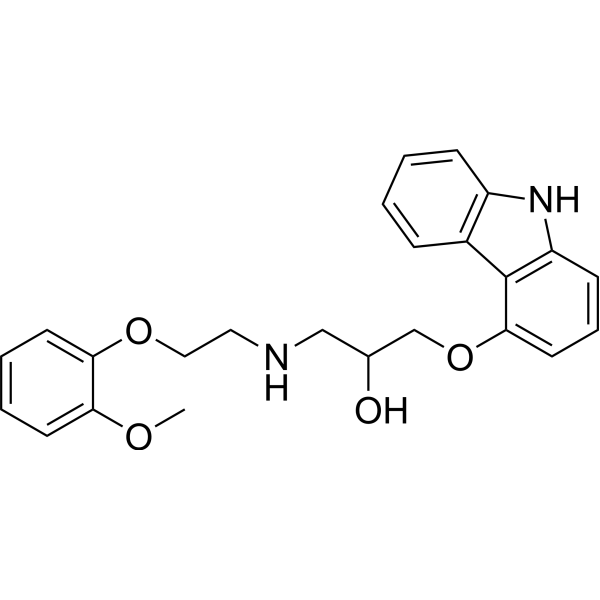 0 ImagesSynonyms: BM 14190 (Standard)Carvedilol (Standard) is the analytical standard of Carvedilol. This product is intended for research and analytical applications. Carvedilol (BM 14190) is a non-selective β/α-1 blocker. Carvedilol inhibits lipid peroxidation in a dose-dependent manner with an IC50 of 5 μM. Carvedilol is a multiple action antihypertensive agent with potential use in angina and congestive heart failure. Carvedilol is an autophagy inducer that inhibits the NLRP3 inflammasome.
-
Bedaquiline fumarate (Standard)
 0 ImagesSynonyms: R403323 (Standard); TMC207 fumarate (Standard); R207910 fumarate (Standard)Bedaquiline (fumarate) (Standard) is the analytical standard of Bedaquiline (fumarate). This product is intended for research and analytical applications. Bedaquiline fumarate, a diarylquinoline antibiotic that targets ATP synthase, is effective for the treatment of Mycobacterium tuberculosis infections.
-
L-5-Hydroxytryptophan (Standard)
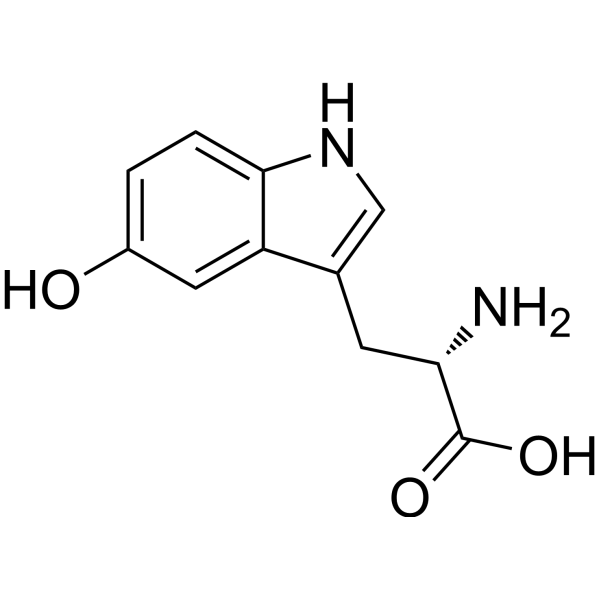 0 ImagesSynonyms: L-5-HTP (Standard); Oxitriptan (Standard)L-5-Hydroxytryptophan (Standard) is the analytical standard of L-5-Hydroxytryptophan. This product is intended for research and analytical applications. L-5-Hydroxytryptophan (L-5-HTP), a naturally occurring amino acid and a dietary supplement for use as an antidepressant, appetite suppressant, and sleep aid, is the immediate precursor of the neurotransmitter serotonin and a reserpine antagonist. L-5-Hydroxytryptophan (L-5-HTP) is used to treat fibromyalgia, myoclonus, migraine, and cerebellar ataxia.
-
Phosphorylethanolamine (Standard)
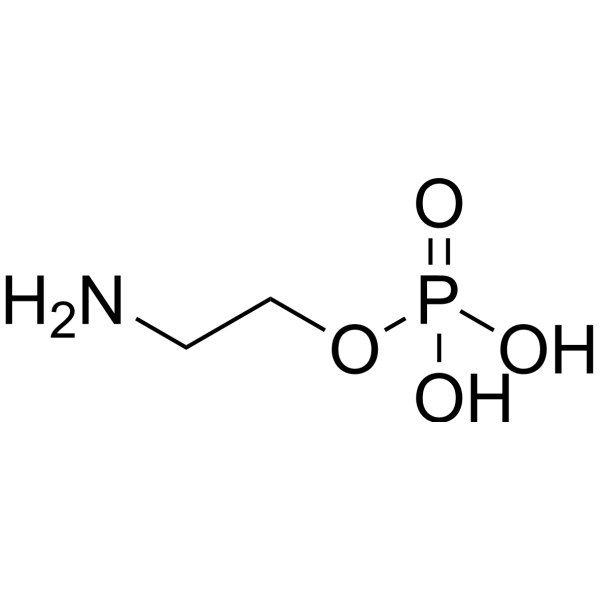 0 ImagesSynonyms: Monoaminoethyl phosphate (Standard); NSC 254167 (Standard); O-Phosphoethanolamine (Standard)Phosphorylethanolamine (Standard) is the analytical standard of Phosphorylethanolamine. This product is intended for research and analytical applications. Phosphorylethanolamine (Monoaminoethyl phosphate) is present in most animal tissues and is also present in various human extracranial tumors. Phosphorylethanolamine is considered as the intermediate product of phospholipid metabolism. Phosphorylethanolamine is essential for the formation and maintenance of the cell membrane.
-
Doxycycline hyclate (Standard)
 0 ImagesCat. No.: HY-N0565BRCAS No.: 24390-14-5Synonyms: Doxycycline (hydrochloride hemiethanolate hemihydrate) (Standard); WC2031 (Standard)Doxycycline hyclate (Standard) is the analytical standard of Doxycycline hyclate (HY-N0565B). This product is intended for research and analytical applications. Doxycycline hyclate is an orally active highly lipophilic, tissue-permeable MMP inhibitor with broad-spectrum antibacterial activity. Doxycycline hyclate is also a semi-synthetic antibiotic with chelating properties, which blocks bacterial protein synthesis and inhibits extracellular matrix degradation through interactions with zinc and calcium atoms. Doxycycline hyclate also inhibits mitochondrial biogenesis, translation, and the expression of respiratory chain proteins. Doxycycline hyclate induces apoptosis, inhibits autophagy and EMT, downregulates stem cell markers, and activates the PI3K-AKT pathway, thereby effectively inhibiting the viability and proliferation of cancer cells such as breast cancer cells. Doxycycline hyclate also promotes the survival and self-renewal of embryonic stem cells and neural stem cells, and reduces the frequency of medium changes in culture. Doxycycline hyclate has been applied in studies related to breast cancer, prostate cancer, bladder cancer, and other cancers.
-
Loperamide hydrochloride (Standard)
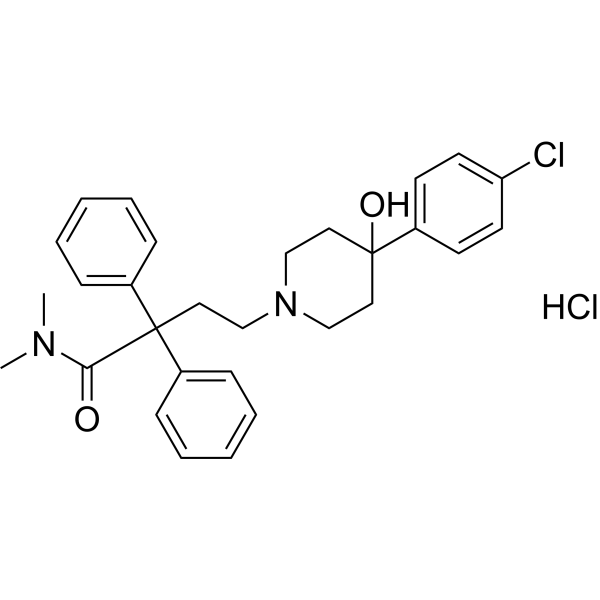 0 ImagesSynonyms: R-18553 hydrochloride (Standard)Loperamide (hydrochloride) (Standard) is the analytical standard of Loperamide (hydrochloride). This product is intended for research and analytical applications. Loperamide (hydrochloride) (R-18553 (hydrochloride)) is an opioid receptor agonist. Loperamide hydrochloride is a selective and competitive human intestinal carboxylesterases (hiCE) inhibitor. Loperamide hydrochloride has anti-diarrheal effect.
-
Betulinic acid (Standard)
 0 ImagesSynonyms: Lupatic acid (Standard); Betulic acid (Standard)Betulinic acid (Standard) is the analytical standard of Betulinic acid. This product is intended for research and analytical applications. Betulinic acid is a natural pentacyclic triterpenoid, acts as a eukaryotic topoisomerase I inhibitor, with an IC50 of 5 μM, and possesses anti-HIV, anti-malarial, anti-inflammatory and anti-tumor properties. Betulinic acid can cross the blood-brain barrier.
-
NADP sodium salt (Standard)
 0 ImagesNADP (sodium salt) (Standard) is the analytical standard of NADP (sodium salt). This product is intended for research and analytical applications. NADP sodium salt is the sodium salt form of NADP (HY-113325). NADP is a coenzyme involved in cellular electron transfer reactions in biological metabolism, which is alternately oxidized (NADP+) and reduced (NADPH), and can maintain cellular redox homeostasis and regulate many biological events, including cellular metabolism. NADPH is a universal electron donor that provides reducing ability for synthetic metabolic reactions and redox balance. NADPH plays a multifunctional role in regulating inflammation, redox homeostasis, and synthetic metabolism processes[1][4].
-
DMOG (Standard)
 0 ImagesSynonyms: Dimethyloxallyl Glycine (Standard)DMOG (Standard) is the analytical standard of DMOG. This product is intended for research and analytical applications. DMOG (Dimethyloxallyl Glycine) is a cell permeable and competitive inhibitor of HIF-PH, which results in HIF-1α stabilisation and accmulation in vitro and in vivo. DMOG is an α-ketoglutarate analogue and inhibits α-KG-dependent hydroxylases. DMOG acts as a pro-angiogenic agent and plays a protective role in experimental model of colitis and diarrhoea via HIF-1 related signal. DMOG induces cell autophagy.
-
(-)-Menthol (Standard)
 0 Images(-)-Menthol (Standard) is the analytical standard of (-)-Menthol. This product is intended for research and analytical applications. (-)-Menthol is a key component of peppermint oil that binds and activates transient receptor potential melastatin 8 (TRPM8), a Ca2+-permeable nonselective cation channel, to increase [Ca2+]i. Antitumor activity.
-
Thymol (Standard)
 0 ImagesThymol (Standard) is the analytical standard of Thymol. This product is intended for research and analytical applications. Thymol is a TRPA1 agonist. Thymol induces cancer cell apoptosis. Thymol is the main monoterpene phenol occurring in essential oils isolated from plants belonging to the Lamiaceae family, and other plants such as those belonging to the Verbenaceae, Scrophulariaceae, Ranunculaceae and Apiaceae families. Thymol has antioxidant, anti-inflammatory, antibacterial and antifungal effects.
-
Pyrogallol (Standard)
 0 ImagesPyrogallol (Standard) is the analytical standard of Pyrogallol. This product is intended for research and analytical applications. Pyrogallol is a polyphenol compound, which has anti-fungal and anti-psoriatic properties. Pyrogallol is a reductant that is able to generate free radicals, in particular superoxide anions.
-
Tyrosol (Standard)
 0 ImagesTyrosol (Standard) is the analytical standard of Tyrosol. This product is intended for research and analytical applications. Tyrosol is a derivative of phenethyl alcohol. Tyrosol attenuates pro-inflammatory cytokines from cultured astrocytes and NF-κB activation. Anti-oxidative and anti-inflammatory effects.

-
Diethyltoluamide (Standard)
 0 ImagesSynonyms: DEET (Standard); N,N-Diethyl-m-toluamide (Standard)Diethyltoluamide (Standard) is the analytical standard of Diethyltoluamide. This product is intended for research and analytical applications. Diethyltoluamide (DEET) is the most common active ingredient in insect repellents. It is intended to provide protection against mosquitoes, ticks, fleas, chiggers, leeches, and many other biting insects. Diethyltoluamide is toxic to hepatocytes and can lead to many physiological, pharmacological, and behavioral abnormal ities, particularly motor deficits and learning and memory dysfunction.
-
Ceftazidime (Standard)
 0 ImagesSynonyms: GR20263 (Standard)Ceftazidime (Standard) is the analytical standard of Ceftazidime. This product is intended for research and analytical applications. Ceftazidime (GR20263), an antibiotic, has a broad spectrum activity against Gram-positive and Gram-negative aerobic bacteria. Ceftazidime is also active against Enterobacteriaceae (including β-lactamase-positive strains) and is resistant to hydrolysis by most β-lactamases.



