



Treprostinil sodium
Based on 3 publication(s) in Google Scholar
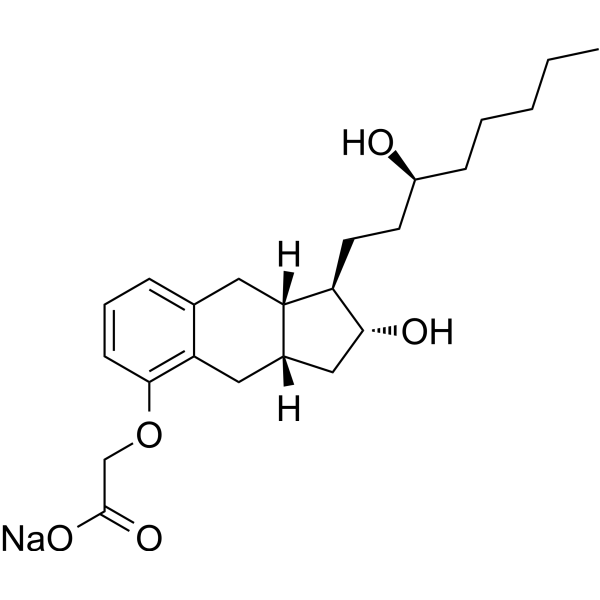
Treprostinil (UT-15) sodium is a potent DP1 and EP2 agonist with EC50 values of 0.6±0.1 and 6.2±1.2 nM, respectively.
Nur für Forschungszwecke. Wir verkaufen nicht an Patienten.
- Reinheit : 99.55%
- CAS. Nr.: 289480-64-4
- Formel: C23H33NaO5
- Molecular Weight:412.49
-
Speicherung:
4°C, sealed storage, away from moisture
* In solvent : -80°C, 6 months; -20°C, 1 month (sealed storage, away from moisture)

To place orders, for customer services and technical support, please contact: MedChemExpress USA
Tel: 609-228-6898 E-mail: [email protected] [email protected]


-
 Biologische Aktivität
-
Chemical Information
-
Lösungsmittel & Löslichkeit
- Reinheit & Dokumentation
- Verweise
-
 Help & FAQs


-
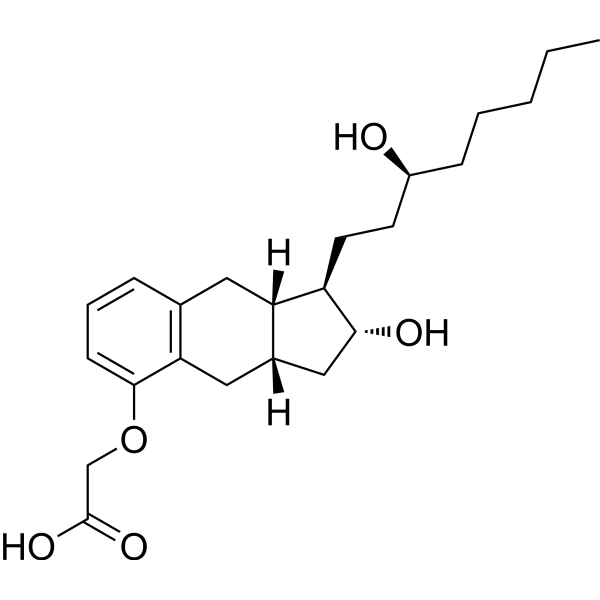
HY-100441
TreprostinilDP1/EP2 Agonist -
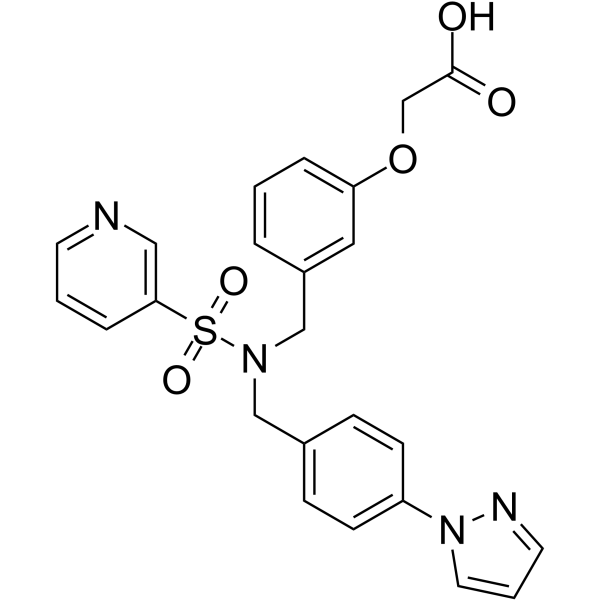
HY-14899
TaprenepagEP2 Agonist -
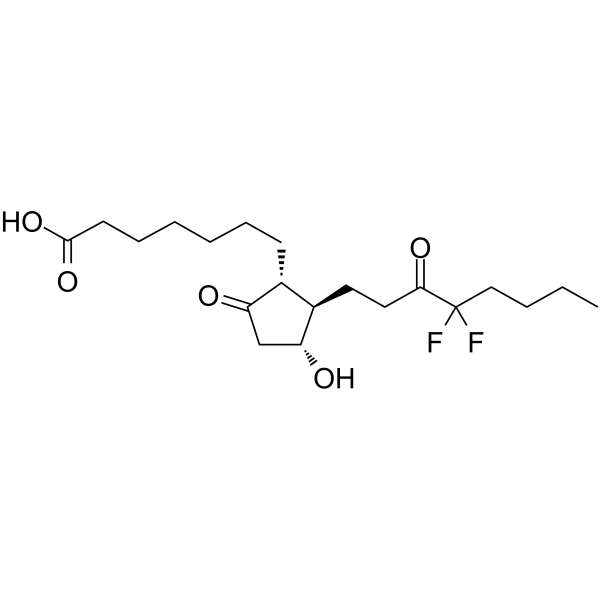
HY-B0679
LubiprostoneGastrointestinal Agent -
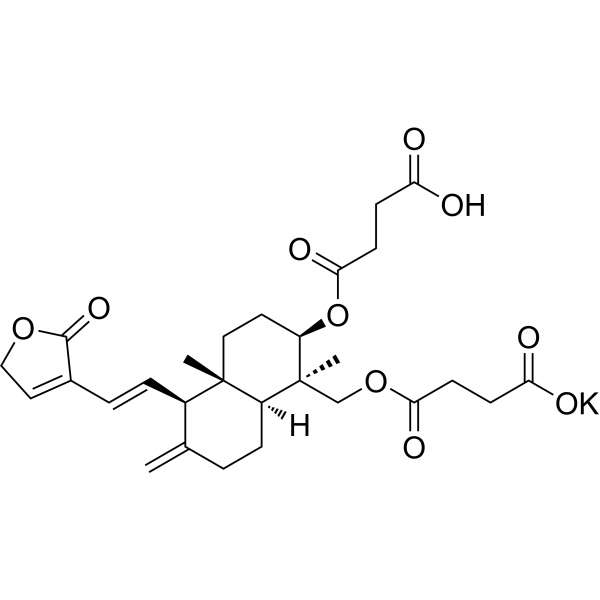
HY-N0677A
Kalii Dehydrographolidi SuccinasAntibiotic -
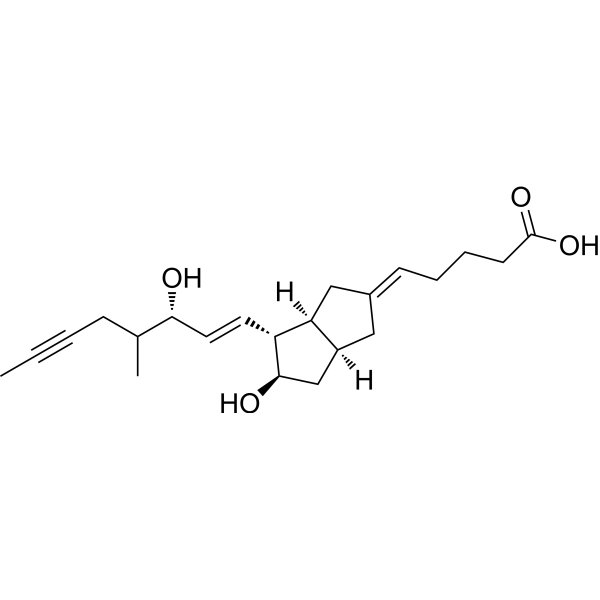
HY-A0096
IloprostPGI2 Analogue -
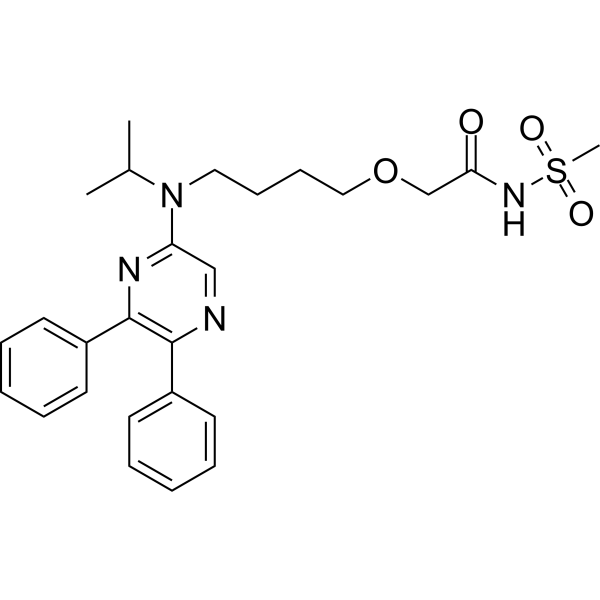
HY-14870
SelexipagProstaglandin Receptor Agonist -
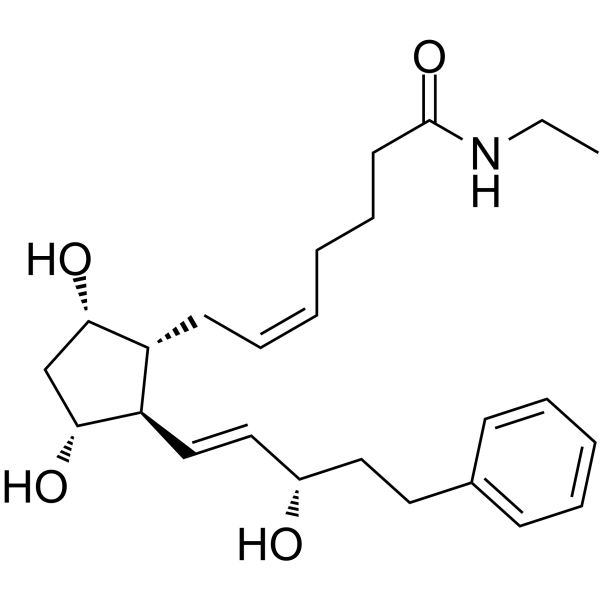
HY-B0191
BimatoprostProstaglandin Analog -

HY-16504R
Treprostinil sodium (Standard) -
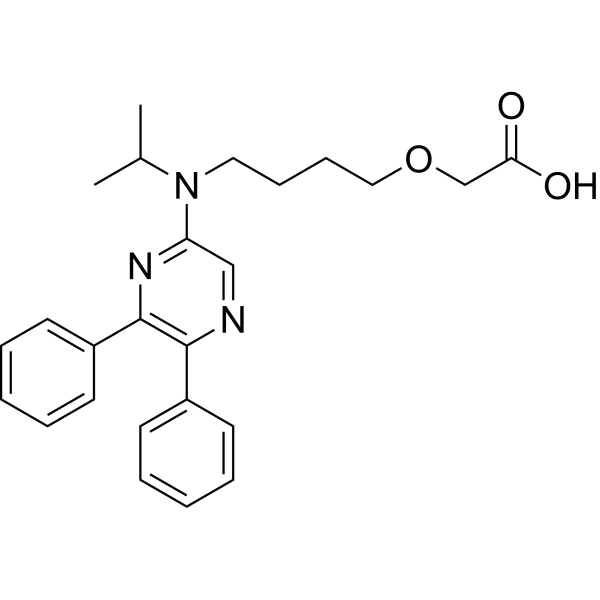
HY-79593
MRE-269Prostaglandin Receptor Agonist -
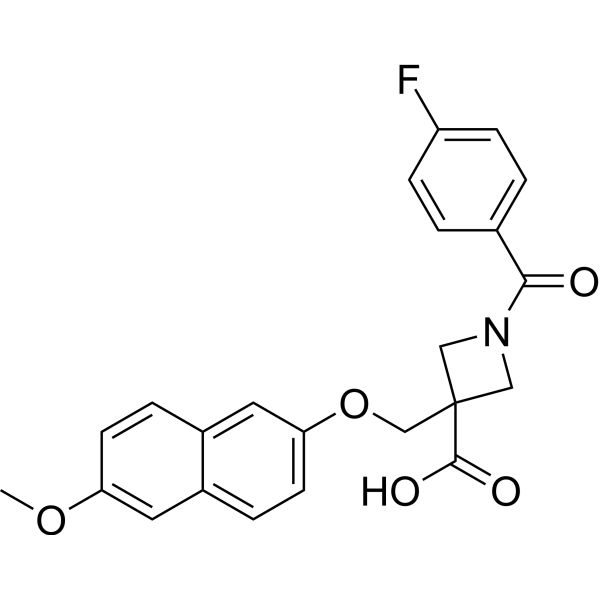
HY-18966
PF-04418948EP2 Receptor Antagonist -
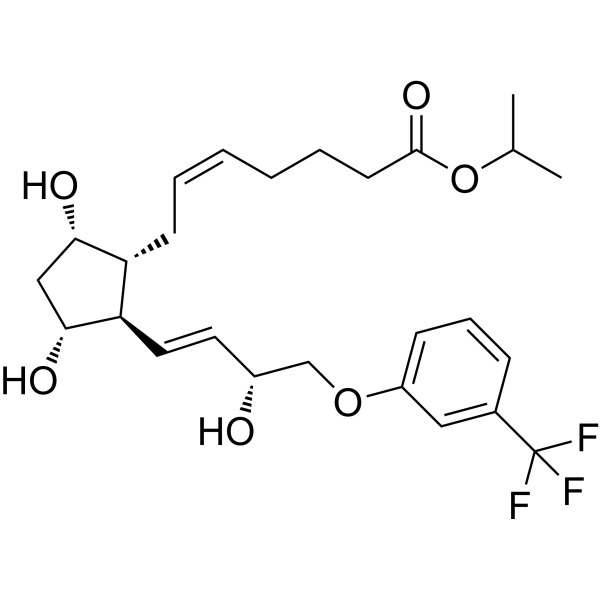
HY-B0584
TravoprostFP Prostaglandin Receptor Agonist -
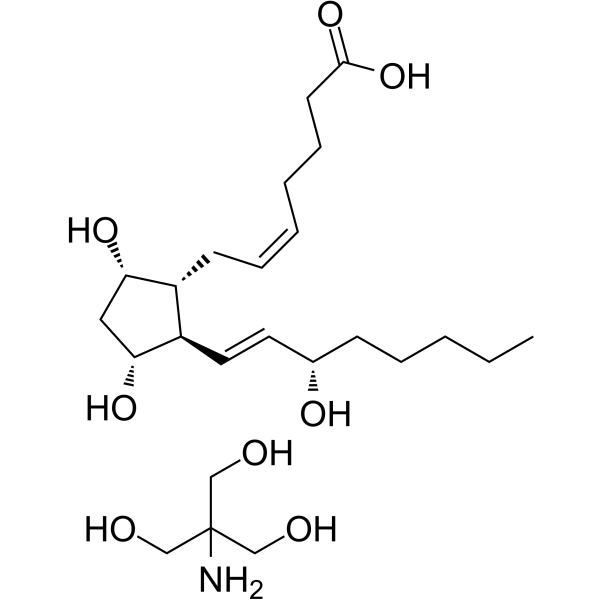
HY-12956A
Dinoprost tromethamine saltFP Receptor Agonist
Publications Citing Use of MedChemExpress (MCE) Treprostinil sodium
More

Biologische Aktivität
Beschreibung
IC50 & Target
[1]|
IP Receptor 1.9 nM (EC50) |
TP Receptor 919 nM (EC50) |
IP Receptor 32.1 nM (Ki) |
FP Receptor 4680 nM (Ki) |
DP1 0.6±0.1 nM (EC50) |
EP2 6.2±1.2 nM (EC50) |
DP1 4.4 nM (Ki) |
EP2 3.6 nM (Ki) |
EP4 826 nM (Ki) |
EP3 2505 nM (Ki) |
EP1 212 nM (Ki) |
EP1 285 nM (EC50) |
EP3 68.9 nM (EC50) |
EP4 181 nM (EC50) |
In Vitro
Treprostinil sodium has high affinity for the DP1, EP2 and IP receptors (Ki=4.4, 3.6 and 32 nM, respectively), low affinity for EP1 and EP4 receptors and even lower affinity for EP3, FP and TP receptors. Activation of IP, DP1 and EP2 receptors, as with treprostinil, can all result in vasodilatation of human pulmonary arteries[1].Treprostinil sodium inhibits viability of cultured endothelial colony forming cells. Endothelial colony forming cells proliferation is stimulated by conditioned media from Treprostinil pretreated mesenchymal stem cells[5].
MedChemExpress (MCE) has not independently confirmed the accuracy of these methods. They are for reference only.
In Vivo
MedChemExpress (MCE) has not independently confirmed the accuracy of these methods. They are for reference only.
Clinical Trial
| NCT Number | Sponsor | Condition | Start Date |
Phase

|
|---|---|---|---|---|
| NCT01329991 | 2011-05 | PHASE1 |


Chemical Information
-
CAS. Nr. 289480-64-4
-
Appearance Solid
-
Molecular Weight 412.49
-
Formel C23H33NaO5
-
Color White to off-white
-
SMILES
O=C(O[Na])COC1=C2C[C@@]3([H])C[C@@H](O)[C@H](CC[C@@H](O)CCCCC)[C@@]3([H])CC2=CC=C1
-
Synonyms
UT-15 sodium
-
Versand
Room temperature in continental US; may vary elsewhere.
-
Speicherung
4°C, sealed storage, away from moisture
* In solvent : -80°C, 6 months; -20°C, 1 month (sealed storage, away from moisture)


Publications (3)
-
Journal Impact Factor
-
Most Recent
-
Signal Transduct Target Ther
Large-scale and high-resolution mass spectrometry-based proteomics defines molecular subtypes of nasopharyngeal carcinoma for therapeutic targeting. [Abstract]2026 Jun 23;11(1):244. PMID: 42331772 -
Cell
2023 Dec 7;186(25):5500-5516.e21. PMID: 38016470 -


Lösungsmittel & Löslichkeit
In Vitro:
DMSO : 25 mg/mL (60.61 mM; ultrasonic and warming and heat to 60°C; Hygroscopic DMSO has a significant impact on the solubility of product, please use newly opened DMSO)
H2O : 16.67 mg/mL (40.41 mM; Need ultrasonic)
Please refer to the solubility information to select the appropriate solvent. Once prepared, please aliquot and store the solution to prevent product inactivation from repeated freeze-thaw cycles.
Storage method and period of stock solution: -80°C, 6 months; -20°C, 1 month (sealed storage, away from moisture). When stored at -80°C, please use it within 6 months. When stored at -20°C, please use it within 1 month.
* Note: If you choose water as the stock solution, please dilute it to the working solution, then filter and sterilize it with a 0.22 μm filter before use.
Please refer to the solubility information to select the appropriate solvent. Once prepared, please aliquot and store the solution to prevent product inactivation from repeated freeze-thaw cycles.
Storage method and period of stock solution: -80°C, 6 months; -20°C, 1 month (sealed storage, away from moisture). When stored at -80°C, please use it within 6 months. When stored at -20°C, please use it within 1 month.
* Note: If you choose water as the stock solution, please dilute it to the working solution, then filter and sterilize it with a 0.22 μm filter before use.
Konzentration (Stammlösung) × Volumen (Stammlösung) = Konzentration (Ziellösung) × Volumen (Ziellösung)
In Vivo:
Select the appropriate dissolution method based on your experimental animal and administration route.
- For the following dissolution methods, please ensure to first prepare a clear stock solution using an In Vitro approach and then sequentially add co-solvents:
- To ensure reliable experimental results, the clarified stock solution can be appropriately stored based on storage conditions. As for the working solution for In Vivo experiments, it is recommended to prepare freshly and use it on the same day.
- The percentages shown for the solvents indicate their volumetric ratio in the final prepared solution. If precipitation or phase separation occurs during preparation, heat and/or sonication can be used to aid dissolution.
Add each solvent one by one: 10% DMSO 40% PEG300 5% Tween-80 45% Saline
Solubility: ≥ 2.5 mg/mL (6.06 mM); Clear solution
This protocol yields a clear solution of ≥ 2.5 mg/mL (saturation unknown).
Taking 1 mL working solution as an example, add 100 μL DMSO stock solution (25.0 mg/mL) to 400 μL PEG300, and mix evenly; then add 50 μL Tween-80 and mix evenly; then add 450 μL Saline to adjust the volume to 1 mL.
Preparation of Saline: Dissolve 0.9 g sodium chloride in ddH₂O and dilute to 100 mL to obtain a clear Saline solution.
Add each solvent one by one: 10% DMSO 90% (20% SBE-β-CD in Saline)
Solubility: ≥ 2.5 mg/mL (6.06 mM); Clear solution
This protocol yields a clear solution of ≥ 2.5 mg/mL (saturation unknown).
Taking 1 mL working solution as an example, add 100 μL DMSO stock solution (25.0 mg/mL) to 900 μL 20% SBE-β-CD in Saline, and mix evenly.
Preparation of 20% SBE-β-CD in Saline (4°C, storage for one week): 2 g SBE-β-CD powder is dissolved in 10 mL Saline, completely dissolve until clear.
For the following dissolution methods, please prepare the working solution directly:
It is recommended to prepare fresh solutions and use them promptly within a short period of time.
The percentages shown for the solvents indicate their volumetric ratio in the final prepared solution. If precipitation or phase separation occurs during preparation, heat and/or sonication can be used to aid dissolution.
Add each solvent one by one: PBS
Solubility: 50 mg/mL (121.22 mM); Clear solution; Need ultrasonic
In Vivo Dissolution Calculator
Please enter the basic information of animal experiments:
-
-
-
-
Recommended: Prepare an additional quantity of animals to account for potential losses during experiments.
Working solution concentration: 0.22 mg/mL
This product has good water solubility, please refer to the measured solubility data in water/PBS/Saline for details.


Reinheit & Dokumentation
-
Data Sheet (282 KB)
-
SDS (644 KB)
- English - EN (644 KB)
- Français - FR (644 KB)
- Deutsch - DE (644 KB)
- Norwegian - NO (644 KB)
- Español - ES (644 KB)
- Swedish - SV (644 KB)
- Italian - IT (644 KB)
- Korean - KR (644 KB)
- Portuguese - PT (644 KB)
-
Handling Instructions (2659 KB)
Verweise
[1]. Whittle BJ, et al. Binding and activity of the prostacyclin receptor (IP) agonists, treprostinil and iloprost, at human prostanoid receptors: treprostinil is a potent DP1 and EP2 agonist. Biochem Pharmacol. 2012 Jul 1;84(1):68-75. [Content Brief]
[2]. Smadja DM, et al. Treprostinil indirectly regulates endothelial colony forming cell angiogenic properties by increasing VEGF-A produced by mesenchymal stem cells. Thromb Haemost. 2015 Oct;114(4):735-47. [Content Brief]
[3]. Ferrantino M, et al. Inhaled treprostinil sodium for the treatment of pulmonary arterial hypertension. Expert Opin Pharmacother. 2011 Nov;12(16):2583-93. [Content Brief]
[4]. Kazemi Z, et al. Repurposing Treprostinil for Enhancing Hematopoietic Progenitor Cell Transplantation. Mol Pharmacol. 2016 Jun;89(6):630-44. [Content Brief]
[5]. Ghonem N, et al. Treprostinil, a prostacyclin analog, ameliorates ischemia-reperfusion injury in rat orthotopic liver transplantation. Am J Transplant. 2011 Nov;11(11):2508-16. [Content Brief]
[6]. Nikam VS, et al. Treprostinil inhibits the recruitment of bone marrow-derived circulating fibrocytes in chronic hypoxic pulmonary hypertension. Eur Respir J. 2010 Dec;36(6):1302-14. [Content Brief]


Complete Stock Solution Preparation Table
Please refer to the solubility information to select the appropriate solvent. Once prepared, please aliquot and store the solution to prevent product inactivation from repeated freeze-thaw cycles.
Storage method and period of stock solution: -80°C, 6 months; -20°C, 1 month (sealed storage, away from moisture). When stored at -80°C, please use it within 6 months. When stored at -20°C, please use it within 1 month.
| Optional Solvent | Concentration Solvent Mass | 1 mg | 5 mg | 10 mg | 25 mg |
|---|---|---|---|---|---|
| H2O / DMSO | 1 mM | 2.4243 mL | 12.1215 mL | 24.2430 mL | 60.6075 mL |
| 5 mM | 0.4849 mL | 2.4243 mL | 4.8486 mL | 12.1215 mL | |
| 10 mM | 0.2424 mL | 1.2122 mL | 2.4243 mL | 6.0608 mL | |
| 15 mM | 0.1616 mL | 0.8081 mL | 1.6162 mL | 4.0405 mL | |
| 20 mM | 0.1212 mL | 0.6061 mL | 1.2122 mL | 3.0304 mL | |
| 25 mM | 0.0970 mL | 0.4849 mL | 0.9697 mL | 2.4243 mL | |
| 30 mM | 0.0808 mL | 0.4041 mL | 0.8081 mL | 2.0203 mL | |
| 40 mM | 0.0606 mL | 0.3030 mL | 0.6061 mL | 1.5152 mL | |
| DMSO | 50 mM | 0.0485 mL | 0.2424 mL | 0.4849 mL | 1.2122 mL |
| 60 mM | 0.0404 mL | 0.2020 mL | 0.4041 mL | 1.0101 mL |
* Note: If you choose water as the stock solution, please dilute it to the working solution, then filter and sterilize it with a 0.22 μm filter before use.


Treprostinil sodium Related Classifications
HY-16504 Related Classifications
 Powered by Bioz