



WAY-600
Based on 6 publication(s) in Google Scholar
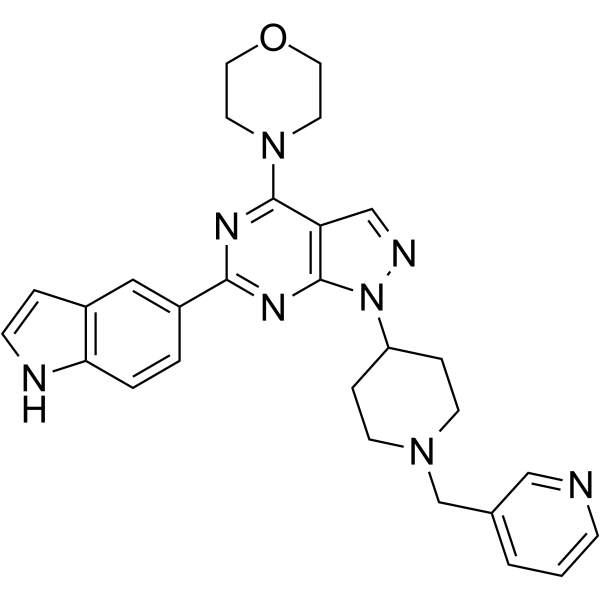
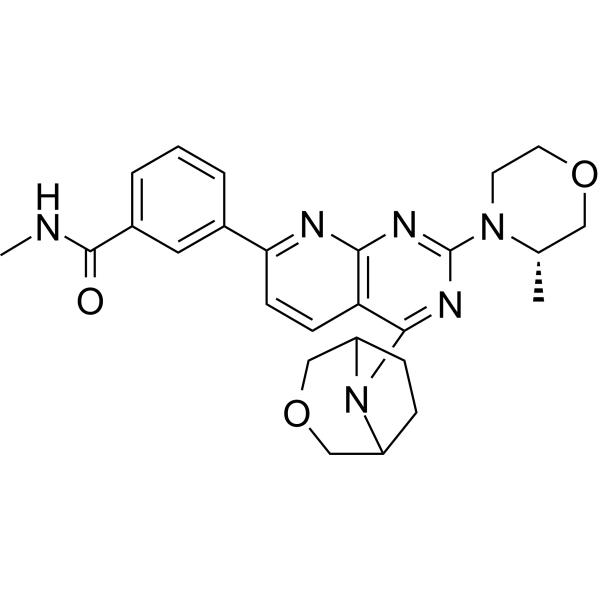
WAY-600 is a potent, ATP-competitive, and selective mTOR inhibitor with an IC50 of 9 nM for recombinant mTOR enzyme. WAY-600 blocks mTOR complex 1/2 (mTORC1/2) assemble and activation.
For research use only. We do not sell to patients.
- Purity : 99.86%
- CAS No.: 1062159-35-6
- Formula: C28H30N8O
- Molecular Weight:494.59
-
Storage:Powder -20°C, 3 years , 4°C, 2 years ; In solvent -80°C, 6 months , -20°C, 1 month

To place orders, for customer services and technical support, please contact: MedChemExpress USA
Tel: 609-228-6898 E-mail: [email protected] [email protected]


-
 Biological Activity
-
Chemical Information
-
Solvent & Solubility
- Purity & Documentation
- References
-
 Help & FAQs


-
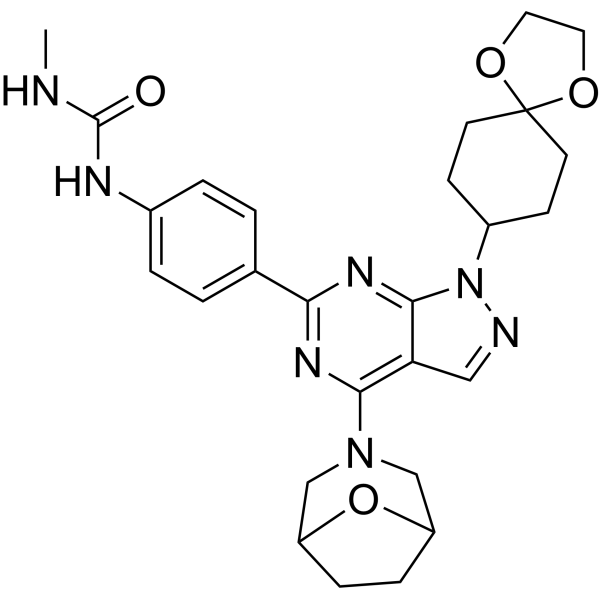
HY-10044
WYE-132mTORC1/mTORC2 Inhibitor -
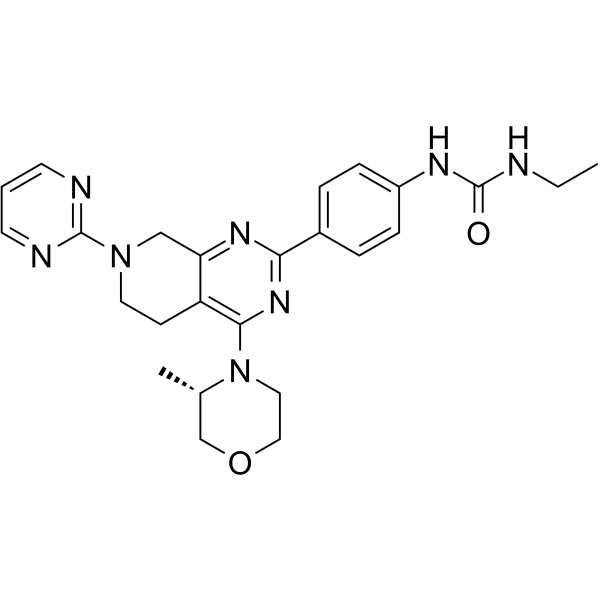
HY-18353
mTOR inhibitor-3mTOR Inhibitor -
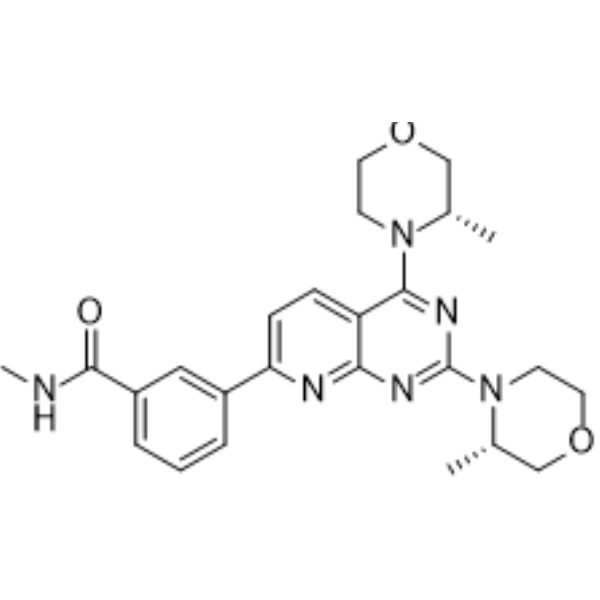
HY-15247
VistusertibmTORC Inhibitor -
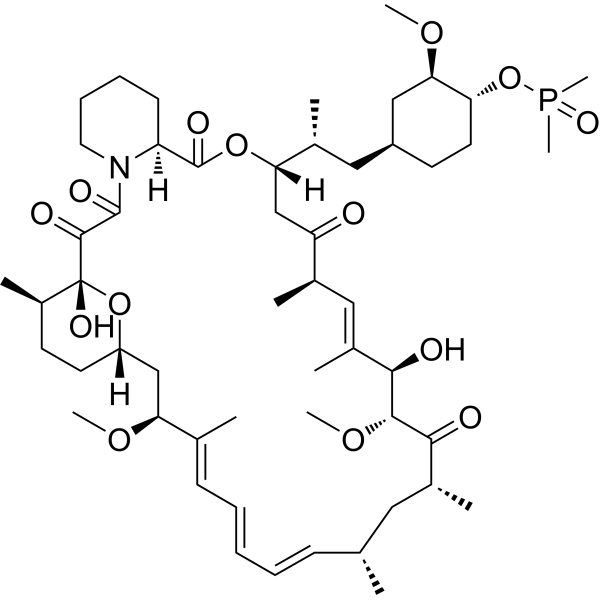
HY-50908
RidaforolimusmTOR Inhibitor -
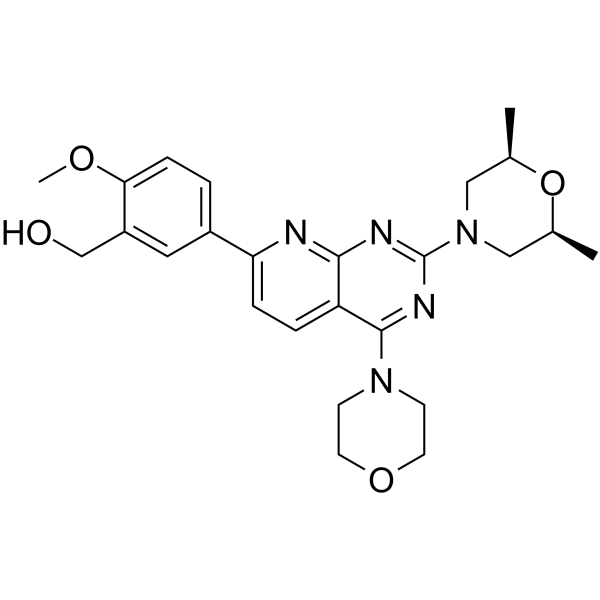
HY-50710
KU-0063794Specific mTOR Inhibitor -
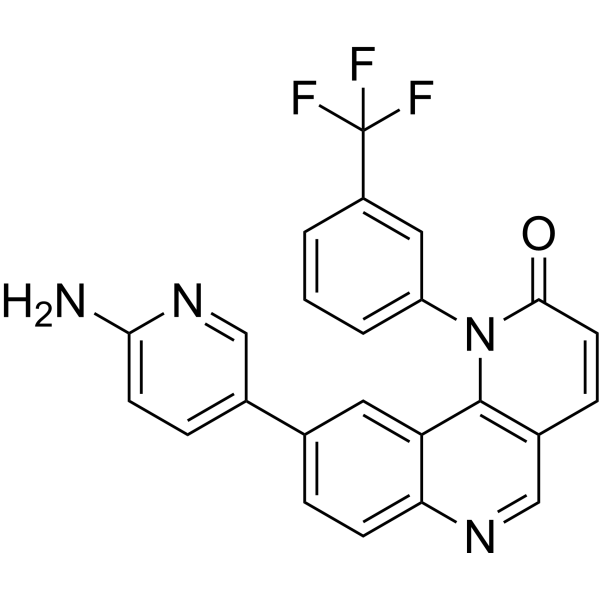
HY-13002
Torin 2mTOR Inhibitor -
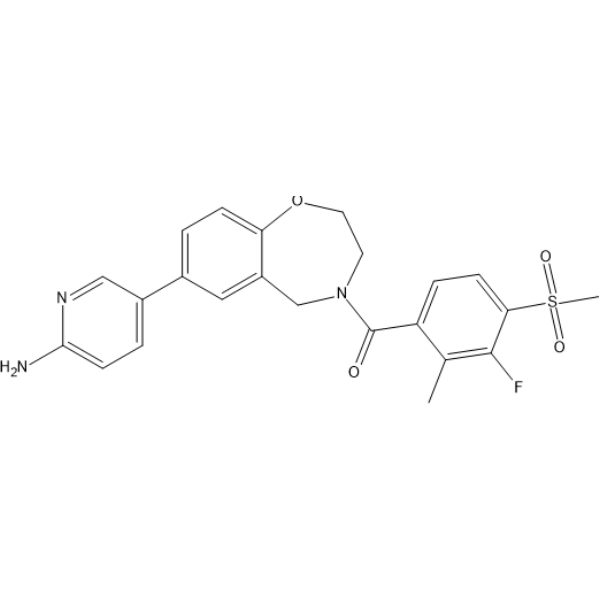
HY-13806
XL388mTOR Inhibitor -
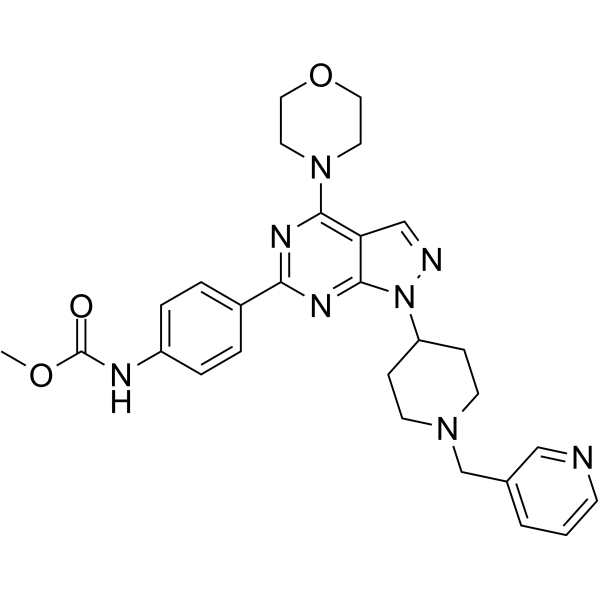
HY-15271
WYE-687mTOR inhibitor -
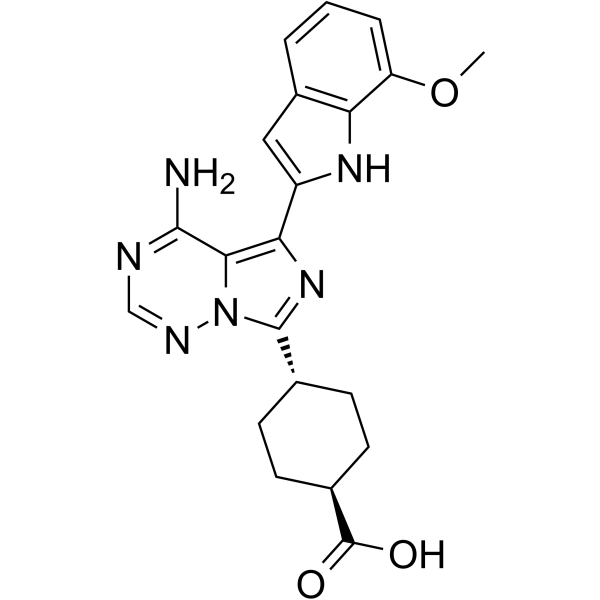
HY-10423
OSI-027mTOR Inhibitor -
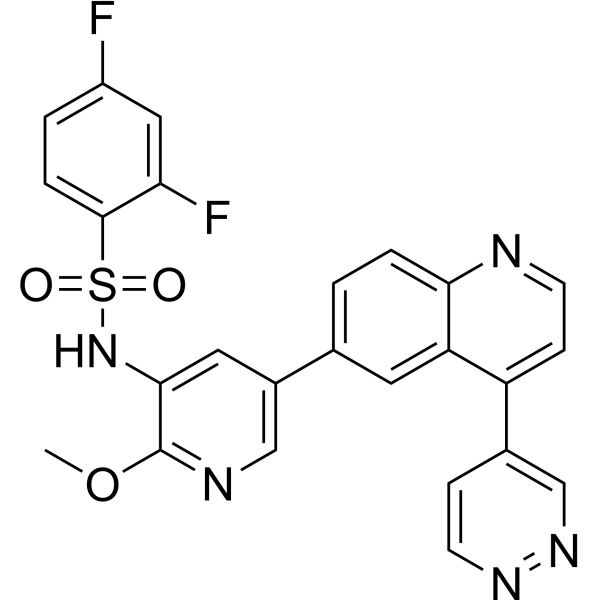
HY-10297
OmipalisibPI3K/mTOR Inhibitor -
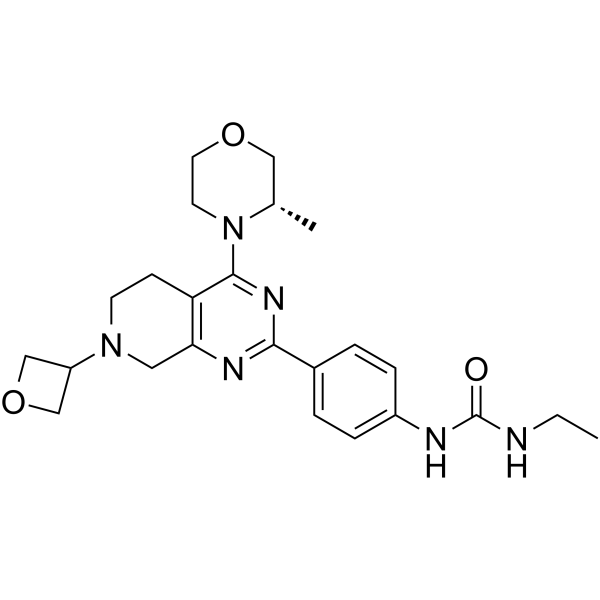
HY-15248
GDC-0349mTOR Inhibitor -
HY-126077
MTI-31mTORC1/mTORC2 Inhibitor
Publications Citing Use of MedChemExpress (MCE) WAY-600
More- Theranostics. 2022 Jan 1;12(2):675-688. [Abstract]
- Inflammation. 2024 Dec;47(6):2196-2214. [Abstract]
- Front Pharmacol. 2020 Nov 11:11:580407. [Abstract]
- Molecules. 2020 Apr 23;25(8):1980. [Abstract]
- Biochem Biophys Res Commun. 2015 Oct 23;466(3):547-53. [Abstract]
- Elife. 2020 Dec 7:9:e61405. [Abstract]
 Customer Validation & Images

-
WB


Biological Activity
Description
|
mTOR 9 nM (IC50) |
mTORC1 |
mTORC2 |
PI3K alpha 1.96 μM (IC50) |
PI3K gamma 8.45 μM (IC50) |
Cellular Effect
|
Cell Line

|
Type | Value | Description | References |
|---|---|---|---|---|
| JEG-3 | CC50 |
>10 μM
Compound: 67; WAY-600
|
Cytotoxicity against human JEG-3 cells
Cytotoxicity against human JEG-3 cells
|
[PMID: 33539089] |
In Vitro
WAY-600 exhibits a concentration-dependent and time-dependent inhibition of f HepG2 and Huh-7 cells viability. Following WAY-600 (1-1000 nM) treatment, the number of HepG2 cell colonies is dramatically decreased. Meanwhile, BrdU incorporation in HepG2 cells is also inhibited with WAY-600 treatment. WAY-600 dose-dependently increases the activity of caspase-3 and caspase-9 in HepG2 cells. WAY-600 disrupts assemble of mTORC1 (mTOR-Raptor association) and mTORC2 (mTOR-Rictor association). Activation of mTORC1 (indicated by p-S6K1 and p-4E-BP1) and mTORC2 is almost blocked by WAY-600 (100 nM)[2].
MedChemExpress (MCE) has not independently confirmed the accuracy of these methods. They are for reference only.
In Vivo
MedChemExpress (MCE) has not independently confirmed the accuracy of these methods. They are for reference only.


Chemical Information
-
CAS No. 1062159-35-6
-
Appearance Solid
-
Molecular Weight 494.59
-
Formula C28H30N8O
-
Color White to off-white
-
SMILES
C1(C=CN2)=C2C=CC(C3=NC(N(C4CCN(CC5=CC=CN=C5)CC4)N=C6)=C6C(N7CCOCC7)=N3)=C1
-
Shipping
Room temperature in continental US; may vary elsewhere.
-
Storage
Powder -20°C 3 years 4°C 2 years In solvent -80°C 6 months -20°C 1 month


Publications (6)
-
Journal Impact Factor
-
Most Recent
-
Theranostics
β-glucan-coupled superparamagnetic iron oxide nanoparticles induce trained immunity to protect mice against sepsis. [Abstract]2022 Jan 1;12(2):675-688. PMID: 34976207 -
Inflammation
Oroxylin A-induced Trained Immunity Promotes LC3-associated Phagocytosis in Macrophage in Protecting Mice Against Sepsis. [Abstract]2024 Dec;47(6):2196-2214. PMID: 38739341 -
Front Pharmacol
CC-223, NSC781406, and BGT226 Exerts a Cytotoxic Effect Against Pancreatic Cancer Cells via mTOR Signaling. [Abstract]2020 Nov 11:11:580407. PMID: 33343350 -
Molecules
In Vitro and in Vivo Activity of mTOR Kinase and PI3K Inhibitors Against Leishmania donovani and Trypanosoma brucei. [Abstract]2020 Apr 23;25(8):1980. PMID: 32340370 -
Biochem Biophys Res Commun
DNA-PKcs interference sensitizes colorectal cancer cells to a mTOR kinase inhibitor WAY-600. [Abstract]2015 Oct 23;466(3):547-53. PMID: 26381179
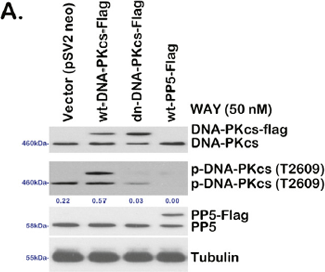
WAY-600 purchased from MedChemExpress. Usage Cited in: Biochem Biophys Res Commun. 2015 Oct 23;466(3):547-53. [Abstract]
DNA-PKcs Thr-2609 phosphorylation is important for WAY-600 resistance in HT-29 cells. Expression of listed proteins in stable HT-29 cells expressing empty vector (pSV2 neo), Flag-tagged wild-type DNA-PKcs (wt-DNA-PKcs-Flag), Flag-tagged dominant negative DNA-PKcs (dn-DNA-PKcs-Flag, T2609A), or Flag-tagged wild-type PP5 (PP5-Flag), is tested by Western blots.
-
Elife
2020 Dec 7:9:e61405. PMID: 33284104


Solvent & Solubility
In Vitro:
DMSO : 25 mg/mL (50.55 mM; Need ultrasonic; Hygroscopic DMSO has a significant impact on the solubility of product, please use newly opened DMSO)
Please refer to the solubility information to select the appropriate solvent. Once prepared, please aliquot and store the solution to prevent product inactivation from repeated freeze-thaw cycles.
Storage method and period of stock solution: -80°C, 6 months; -20°C, 1 month. When stored at -80°C, please use it within 6 months. When stored at -20°C, please use it within 1 month.
Please refer to the solubility information to select the appropriate solvent. Once prepared, please aliquot and store the solution to prevent product inactivation from repeated freeze-thaw cycles.
Storage method and period of stock solution: -80°C, 6 months; -20°C, 1 month. When stored at -80°C, please use it within 6 months. When stored at -20°C, please use it within 1 month.
Concentration (start) × Volume (start) = Concentration (final) × Volume (final)
In Vivo:
Select the appropriate dissolution method based on your experimental animal and administration route.
- For the following dissolution methods, please ensure to first prepare a clear stock solution using an In Vitro approach and then sequentially add co-solvents:
- To ensure reliable experimental results, the clarified stock solution can be appropriately stored based on storage conditions. As for the working solution for In Vivo experiments, it is recommended to prepare freshly and use it on the same day.
- The percentages shown for the solvents indicate their volumetric ratio in the final prepared solution. If precipitation or phase separation occurs during preparation, heat and/or sonication can be used to aid dissolution.
Add each solvent one by one: 10% DMSO 40% PEG300 5% Tween-80 45% Saline
Solubility: ≥ 2.5 mg/mL (5.05 mM); Clear solution
This protocol yields a clear solution of ≥ 2.5 mg/mL (saturation unknown).
Taking 1 mL working solution as an example, add 100 μL DMSO stock solution (25.0 mg/mL) to 400 μL PEG300, and mix evenly; then add 50 μL Tween-80 and mix evenly; then add 450 μL Saline to adjust the volume to 1 mL.
Preparation of Saline: Dissolve 0.9 g sodium chloride in ddH₂O and dilute to 100 mL to obtain a clear Saline solution.
In Vivo Dissolution Calculator
Please enter the basic information of animal experiments:
-
-
-
-
Recommended: Prepare an additional quantity of animals to account for potential losses during experiments.
Please enter your animal formula composition:
-
%DMSO +
Recommended: Keep the proportion of DMSO in working solution below 2% if your animal is weak.
-
%+
-
+%Tween-80 + +
-
%Saline +
The co-solvents required include: DMSO, . All of co-solvents are available by MedChemExpress (MCE). , Tween 80. All of co-solvents are available by MedChemExpress (MCE).
Working solution concentration: 0.22 mg/mL
Method for preparing stock solution: mg drug dissolved in μL DMSO. Stock solution concentration: mg/mL.
1. Take μL DMSO stock solution;
2. Add μL .
μL , mix evenly;
3. Then add μL Tween 80, mix evenly;
4. Then add μL
Please ensure that the stock solution in the first step is dissolved to a clear state, and add co-solvents in sequence. You can use ultrasonic heating (ultrasonic cleaner, recommended frequency 20-40 kHz), vortexing, etc. to assist dissolution.


Purity & Documentation
-
Data Sheet (279 KB)
-
SDS (393 KB)
- English - EN (393 KB)
- Français - FR (393 KB)
- Deutsch - DE (393 KB)
- Norwegian - NO (393 KB)
- Español - ES (393 KB)
- Swedish - SV (393 KB)
- Italian - IT (393 KB)
- Korean - KR (393 KB)
- Portuguese - PT (393 KB)
-
Handling Instructions (2659 KB)
References
[1]. Yu K, et al. Biochemical, cellular, and in vivo activity of novel ATP-competitive and selective inhibitors of the mammalian target of rapamycin. Cancer Res. 2009 Aug 1;69(15):6232-40. [Content Brief]
[2]. Wang K, et al. MEK-ERK inhibition potentiates WAY-600-induced anti-cancer efficiency in preclinical hepatocellular carcinoma (HCC) models. Biochem Biophys Res Commun. 2016 May 27;474(2):330-7. [Content Brief]


Complete Stock Solution Preparation Table
Please refer to the solubility information to select the appropriate solvent. Once prepared, please aliquot and store the solution to prevent product inactivation from repeated freeze-thaw cycles.
Storage method and period of stock solution: -80°C, 6 months; -20°C, 1 month. When stored at -80°C, please use it within 6 months. When stored at -20°C, please use it within 1 month.
| Optional Solvent | Concentration Solvent Mass | 1 mg | 5 mg | 10 mg | 25 mg |
|---|---|---|---|---|---|
| DMSO | 1 mM | 2.0219 mL | 10.1094 mL | 20.2188 mL | 50.5469 mL |
| 5 mM | 0.4044 mL | 2.0219 mL | 4.0438 mL | 10.1094 mL | |
| 10 mM | 0.2022 mL | 1.0109 mL | 2.0219 mL | 5.0547 mL | |
| 15 mM | 0.1348 mL | 0.6740 mL | 1.3479 mL | 3.3698 mL | |
| 20 mM | 0.1011 mL | 0.5055 mL | 1.0109 mL | 2.5273 mL | |
| 25 mM | 0.0809 mL | 0.4044 mL | 0.8088 mL | 2.0219 mL | |
| 30 mM | 0.0674 mL | 0.3370 mL | 0.6740 mL | 1.6849 mL | |
| 40 mM | 0.0505 mL | 0.2527 mL | 0.5055 mL | 1.2637 mL | |
| 50 mM | 0.0404 mL | 0.2022 mL | 0.4044 mL | 1.0109 mL |


WAY-600 Related Classifications
HY-15272 Related Classifications
 Powered by Bioz