



Adrixetinib

Based on 1 Customer Validation
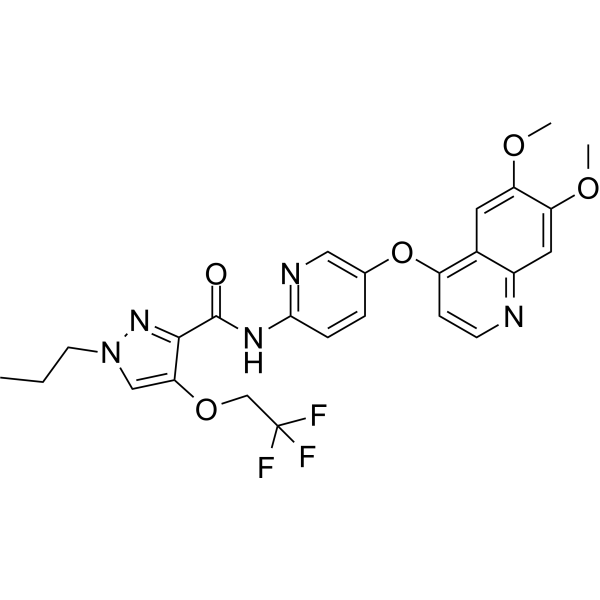
Adrixetinib (Q702) is an orally active triple inhibitor against CSF1R, Mer, and Axl, with Kd values of 8.7 nM, 0.8 nM, and 0.3 nM, respectively. Adrixetinib acts as a potent immune modulator that remodels the tumor microenvironment. Adrixetinib increases the abundance of M1 macrophages and CD8⁺ T cells, while decreasing the levels of M2 macrophages and myeloid-derived suppressor cells (MDSCs). Adrixetinib upregulates the expression of MHC class I and E-cadherin in tumor cells. Adrixetinib shows remarkable antitumor efficacy in syngeneic mouse tumor models. Adrixetinib is suitable for the research of breast cancer, renal adenocarcinoma, colon carcinoma, and melanoma.
For research use only. We do not sell to patients.
- Purity : 99.55%
- CAS No.: 2394874-66-7
- Formula: C25H24F3N5O5
- Molecular Weight:531.48
-
Storage:
4°C, sealed storage, away from moisture and light
* In solvent : -80°C, 6 months; -20°C, 1 month (sealed storage, away from moisture and light)

To place orders, for customer services and technical support, please contact: MedChemExpress USA
Tel: 609-228-6898 E-mail: [email protected] [email protected]


-
 Biological Activity
-
Chemical Information
-
Solvent & Solubility
- Protocols
- Purity & Documentation
- References
-
 Help & FAQs


-
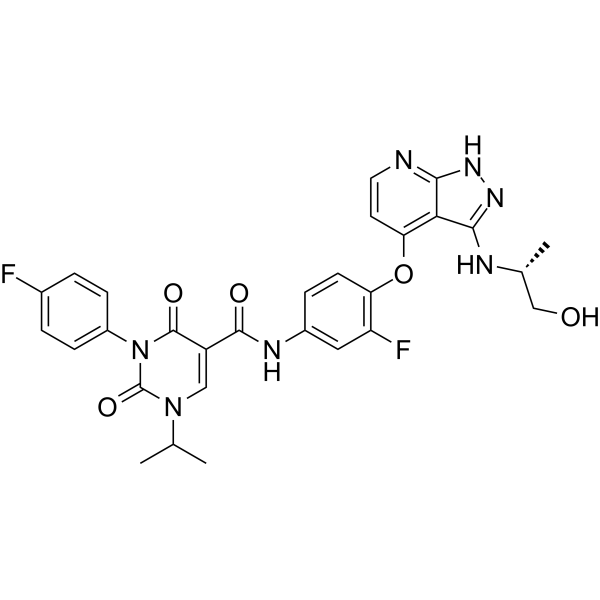
HY-147218
PF-07265807Kinase Inhibitor -
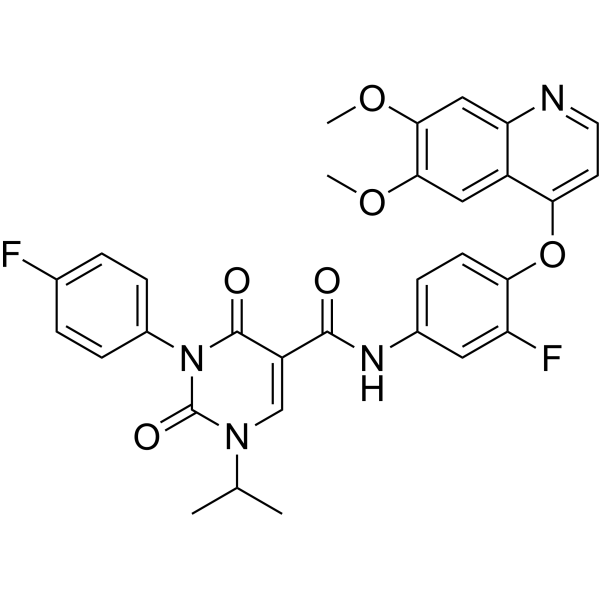
HY-100946
CEP-40783AXL/c-Met Inhibitor -
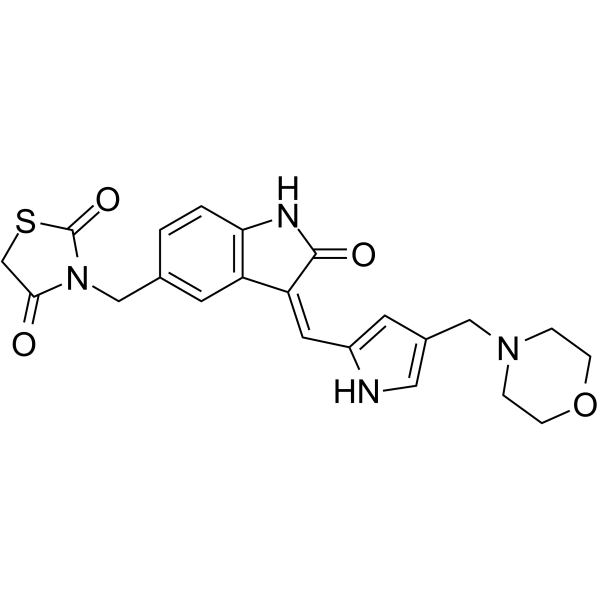
HY-12965
S49076 -
HY-10338
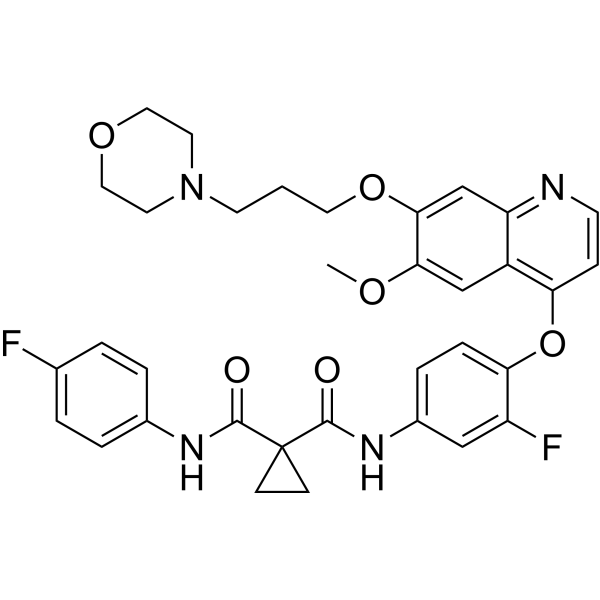
ForetinibMET/VEGFR2/KDR Inhibitor -

HY-100946R
CEP-40783 (Standard)AXL/c-Met Inhibitor -
HY-138696
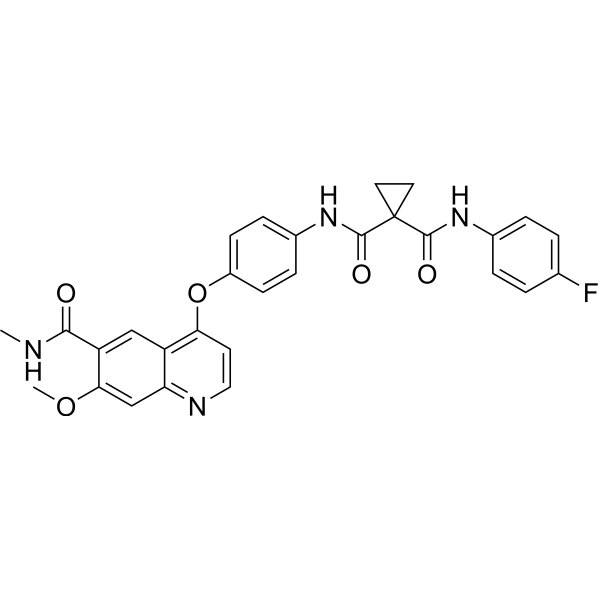
ZanzalintinibAxl/Mer/C-Met Inhibitor -
HY-125017
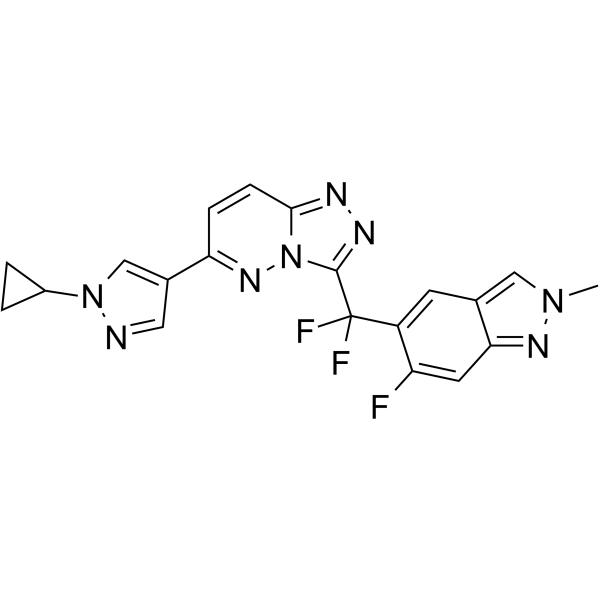
Bozitinibc-MET Kinase Inhibitor -
HY-116000
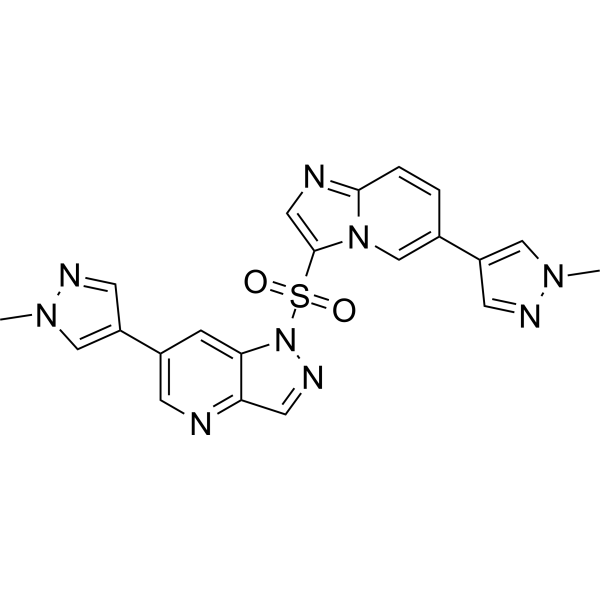
Glumetinibc-Met Inhibitor -

HY-P99250
OnartuzumabMET Inhibitor -
HY-16969
Dihexa -
HY-50683
JNJ-38877605c-Met/HGFR Inhibitor


Biological Activity
Description
IC50 & Target
[1]|
Axl 0.3 nM (Kd) |
Mer 0.8 nM (Kd) |
MHC I |
In Vitro
Adrixetinib (Q702) (1 h) potently binds to and inhibits purified Axl, Mer, and CSF1R kinases with IC50 values of 0.3 nM, 0.8 nM, and 8.7 nM, respectively[1].
Adrixetinib (0.001-10 μM; 24 h pretreatment) concentration-dependently inhibits Gas6-induced phosphorylation of Axl and AKT in H1299 cells, concentration-dependently inhibits Gas6-induced phosphorylation of Mer and AKT in A549 cells, and concentration-dependently inhibits CSF1-induced phosphorylation of CSF1R and ERK in THP-1 cells[1].
Adrixetinib (0.1-100 μM; 72 h) directly inhibits EMT6 cell viability with an IC50 of 8.4 μM[1].
Adrixetinib inhibits M-NFS-60 cell proliferation through the CSF1R pathway with an IC50 < 1.0 μM, showing potent cellular activity[2].
MedChemExpress (MCE) has not independently confirmed the accuracy of these methods. They are for reference only.
-
Cell Line:H1299 cells
-
Concentration:0.001, 0.01, 0.1, 1, 10 μM
-
Incubation Time:24 h (pretreatment); 1 h (Gas6 stimulation)
-
Result:Inhibited Gas6-induced phosphorylation of Axl (Tyr702) and AKT (Ser473) in a concentration-dependent manner.
-
Cell Line:A549 cells
-
Concentration:0.001, 0.01, 0.1, 1, 10 μM
-
Incubation Time:pretreatment; 1 h (Gas6 stimulation)
-
Result:Inhibited Gas6-induced phosphorylation of Mer (Tyr749/Tyr753/Tyr754) and AKT (Ser473) in a concentration-dependent manner.
-
Cell Line:THP-1 cells
-
Concentration:0.001, 0.01, 0.1, 1, 10 μM
-
Incubation Time:24 h (pretreatment); 5 min (CSF1 stimulation)
-
Result:Inhibited CSF1-induced phosphorylation of CSF1R (Tyr723) and ERK (Thr202/Tyr204) in a concentration-dependent manner.
-
Cell Line:EMT6 mouse triple-negative breast cancer cells
-
Concentration:0.1, 1, 10, 100 μM
-
Incubation Time:72 h
-
Result:Exhibited direct cytotoxicity against EMT6 cells with an IC50 of 8.4 μM.
In Vivo
Adrixetinib (10-100 mg/kg; p.o.; daily; 14 days) induces dose-dependent tumor growth control (54.3% to 84.6%) in subcutaneous EMT6 syngeneic breast cancer tumors in BALB/c mice[1].
Adrixetinib (30 mg/kg; p.o.; daily; up to 7 days) modulates EMT6 gene expression in subcutaneous EMT6 tumors to promote an immune-stimulatory microenvironment in BALB/c mice[1].
Adrixetinib (30 mg/kg; p.o.; daily; 5 to 22 days) remodels the immune cell population in subcutaneous MHC-I and E-cadherin expression in BALB/c mice[1].
Adrixetinib (30 mg/kg; p.o.; daily; 7 days) enhances the effector function of T and natural killer cells by increasing IFN-γ and granzyme B production in both subcutaneous EMT6 tumors and peripheral blood of BALB/c mice[1].
Adrixetinib (30 mg/kg; p.o.; daily; 21 days) increases CD8 T cell infiltration, reduces myeloid cell accumulation, and upregulates MHC-I and PD-L1 expression in subcutaneous EMT6 tumors in BALB/c mice[1].
Adrixetinib (30 mg/kg; p.o.; daily; 9 days) increases tumor antigen-specific CD8 T cell infiltration into subcutaneous B16F10-OVA melanoma tumors in C57BL/6 mice[1].
Adrixetinib (30 mg/kg; p.o.; daily; up to 27 days) induces tumor growth inhibition (64% to 77% TGI) in subcutaneous CT26, MC38, and RENCA syngeneic tumor models in mice[1].
MedChemExpress (MCE) has not independently confirmed the accuracy of these methods. They are for reference only.
-
Animal Model:BALB/c nude (female, 6-8 weeks old, subcutaneously implanted with H1299 human non-small cell lung carcinoma cells or M-NFS-60 murine myeloid leukemia cells mixed with Matrigel)[1]
-
Dosage:30 mg/kg
-
Administration:p.o.; daily; 7 days
-
Result:Inhibited phosphorylation of Axl in H1299 tumor samples.
Inhibited phosphorylation of CSF1R in M-NFS-60 tumor samples.
-
Animal Model:BALB/c (female, 6-8 weeks old, subcutaneously implanted with EMT6 murine triple-negative breast carcinoma cells)[1]
-
Dosage:10 mg/kg; 30 mg/kg; 100 mg/kg
-
Administration:p.o.; daily; 14 days
-
Result:Achieved 54.3%, 64.9%, and 84.6% tumor growth control, respectively, and significantly reduces tumor volume compared with the control group.
-
Animal Model:BALB/c (female, 6-8 weeks old, subcutaneously implanted with EMT6 murine triple-negative breast carcinoma cells)[1]
-
Dosage:30 mg/kg
-
Administration:p.o.; daily; up to 7 days
-
Result:Upregulated CD8⁺ T cell, natural killer cell and MHC‑I signature genes in a time‑dependent manner.
Downregulated tumor‑associated macrophage and myeloid‑derived suppressor cell signature genes in a time‑dependent manner.
Validated enhanced immune‑activating signatures and diminished immunosuppressive signatures by day 7 using gene expression heatmaps.
-
Animal Model:BALB/c (female, 6-8 weeks old, subcutaneously implanted with EMT6 murine triple-negative breast carcinoma cells)[1]
-
Dosage:30 mg/kg
-
Administration:p.o.; daily; 5 or 22 days
-
Result:Reduced tumor volume significantly compared with controls by day 22.
Decreased the proportion of tumor-infiltrating M-MDSCs by 2.3-fold and repolarized tumor-associated macrophages toward the M1 phenotype while reducing M2 populations, with these immune alterations sustained through day 22.
Elevated CD8⁺ T cell proportions at both days 5 and 22, and preserved higher MHC-I and increased E-cadherin protein expression in tumors by day 22.
-
Animal Model:BALB/c (female, 6-8 weeks old, subcutaneously implanted with EMT6 murine triple-negative breast carcinoma cells)[1]
-
Dosage:30 mg/kg
-
Administration:p.o.; daily; 7 days
-
Result:Significantly increased proportion of IFN-γ-producing CD4 T cells and granzyme B+ CD8 T cells in tumor samples relative to controls.
Significantly increased proportion of IFN-γ-producing CD4 T and natural killer cells, and granzyme B+ CD8 T cells in peripheral blood relative to controls.
-
Animal Model:BALB/c (female, 6-8 weeks old, subcutaneously implanted with EMT6 murine triple-negative breast carcinoma cells)[1]
-
Dosage:30 mg/kg
-
Administration:p.o.; daily; 21 days
-
Result:Increased tumor-infiltrating CD8 T cell percentages relative to controls.
Decreased myeloid cell percentages relative to controls.
Increased MHC-I and PD-L1 protein expression in CD45-negative tumor cells relative to controls.
-
Animal Model:C57BL/6 (female, 7-8 weeks old, subcutaneously implanted with B16F10-OVA murine melanoma cells)[1]
-
Dosage:30 mg/kg
-
Administration:p.o.; daily; 9 days
-
Result:Induced partial tumor growth inhibition.
Significantly increased percentage of OVA-specific CD8 T cells (detected via SIINFEKL-H-2Kb tetramer staining) in tumor samples relative to controls.
-
Animal Model:BALB/c (female, 6-8 weeks old, subcutaneously implanted with RENCA murine renal adenocarcinoma cells or CT26 murine colon carcinoma cells); C57BL/6 (female, 6-8 weeks old, subcutaneously implanted with MC38 murine colon adenocarcinoma cells)[1]
-
Dosage:30 mg/kg
-
Administration:p.o.; daily; up to 27 days
-
Result:Achieved 77% tumor growth control in CT26 colon tumors by day 27.
Achieved 64% tumor growth control in MC38 colon tumors by day 27.
Reduced tumor volume in RENCA renal tumors relative to controls.


Chemical Information
-
CAS No. 2394874-66-7
-
Appearance Solid
-
Molecular Weight 531.48
-
Formula C25H24F3N5O5
-
Color White to off-white
-
SMILES
O=C(C1=NN(CCC)C=C1OCC(F)(F)F)NC2=NC=C(C=C2)OC3=C4C=C(OC)C(OC)=CC4=NC=C3
-
Synonyms
Q702
-
Shipping
Room temperature in continental US; may vary elsewhere.
-
Storage
4°C, sealed storage, away from moisture and light
* In solvent : -80°C, 6 months; -20°C, 1 month (sealed storage, away from moisture and light)


Solvent & Solubility
In Vitro:
DMSO : ≥ 100 mg/mL (188.15 mM; Hygroscopic DMSO has a significant impact on the solubility of product, please use newly opened DMSO)
* "≥" means soluble, but saturation unknown.
Please refer to the solubility information to select the appropriate solvent. Once prepared, please aliquot and store the solution to prevent product inactivation from repeated freeze-thaw cycles.
Storage method and period of stock solution: -80°C, 6 months; -20°C, 1 month (sealed storage, away from moisture and light). When stored at -80°C, please use it within 6 months. When stored at -20°C, please use it within 1 month.
Please refer to the solubility information to select the appropriate solvent. Once prepared, please aliquot and store the solution to prevent product inactivation from repeated freeze-thaw cycles.
Storage method and period of stock solution: -80°C, 6 months; -20°C, 1 month (sealed storage, away from moisture and light). When stored at -80°C, please use it within 6 months. When stored at -20°C, please use it within 1 month.
Concentration (start) × Volume (start) = Concentration (final) × Volume (final)


Purity & Documentation
-
Data Sheet (287 KB)
-
SDS (254 KB)
- English - EN (254 KB)
- Français - FR (254 KB)
- Deutsch - DE (254 KB)
- Norwegian - NO (254 KB)
- Español - ES (254 KB)
- Swedish - SV (254 KB)
- Italian - IT (254 KB)
- Korean - KR (254 KB)
- Portuguese - PT (254 KB)
-
Handling Instructions (2659 KB)
References


Complete Stock Solution Preparation Table
Please refer to the solubility information to select the appropriate solvent. Once prepared, please aliquot and store the solution to prevent product inactivation from repeated freeze-thaw cycles.
Storage method and period of stock solution: -80°C, 6 months; -20°C, 1 month (sealed storage, away from moisture and light). When stored at -80°C, please use it within 6 months. When stored at -20°C, please use it within 1 month.
| Optional Solvent | Concentration Solvent Mass | 1 mg | 5 mg | 10 mg | 25 mg |
|---|---|---|---|---|---|
| DMSO | 1 mM | 1.8815 mL | 9.4077 mL | 18.8154 mL | 47.0385 mL |
| 5 mM | 0.3763 mL | 1.8815 mL | 3.7631 mL | 9.4077 mL | |
| 10 mM | 0.1882 mL | 0.9408 mL | 1.8815 mL | 4.7038 mL | |
| 15 mM | 0.1254 mL | 0.6272 mL | 1.2544 mL | 3.1359 mL | |
| 20 mM | 0.0941 mL | 0.4704 mL | 0.9408 mL | 2.3519 mL | |
| 25 mM | 0.0753 mL | 0.3763 mL | 0.7526 mL | 1.8815 mL | |
| 30 mM | 0.0627 mL | 0.3136 mL | 0.6272 mL | 1.5679 mL | |
| 40 mM | 0.0470 mL | 0.2352 mL | 0.4704 mL | 1.1760 mL | |
| 50 mM | 0.0376 mL | 0.1882 mL | 0.3763 mL | 0.9408 mL | |
| 60 mM | 0.0314 mL | 0.1568 mL | 0.3136 mL | 0.7840 mL | |
| 80 mM | 0.0235 mL | 0.1176 mL | 0.2352 mL | 0.5880 mL | |
| 100 mM | 0.0188 mL | 0.0941 mL | 0.1882 mL | 0.4704 mL |


Adrixetinib Related Classifications
HY-152830 Related Classifications
 Powered by Bioz