



Apoptone
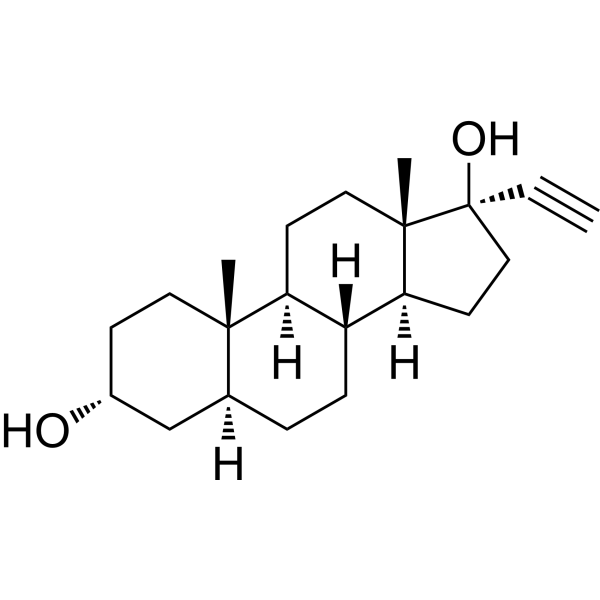
Apoptone (HE3235) is an orally active 3β-androstanediol analog. Apoptone reduces the expression of androgen receptor (Androgen receptor) and decreases intratumoral androgen levels. Apoptone exhibits anticancer activity against castration-resistant prostate cancer.
Nur für Forschungszwecke. Wir verkaufen nicht an Patienten.
- CAS. Nr.: 183387-50-0
- Formel: C21H32O2
- Molecular Weight:316.48
-
Speicherung:
Please store the product under the recommended conditions in the Certificate of Analysis.

To place orders, for customer services and technical support, please contact: MedChemExpress USA
Tel: 609-228-6898 E-mail: [email protected] [email protected]


-
 Biologische Aktivität
-
Chemical Information
- Protokoll
- Reinheit & Dokumentation
- Verweise
-
 Help & FAQs


-
HY-16985
DarolutamideAndrogen Receptor Antagonist -
HY-B0022
FlutamideAntiandrogen Agent -
HY-135794
11-KetodihydrotestosteroneAndrogen Receptor Agonist -
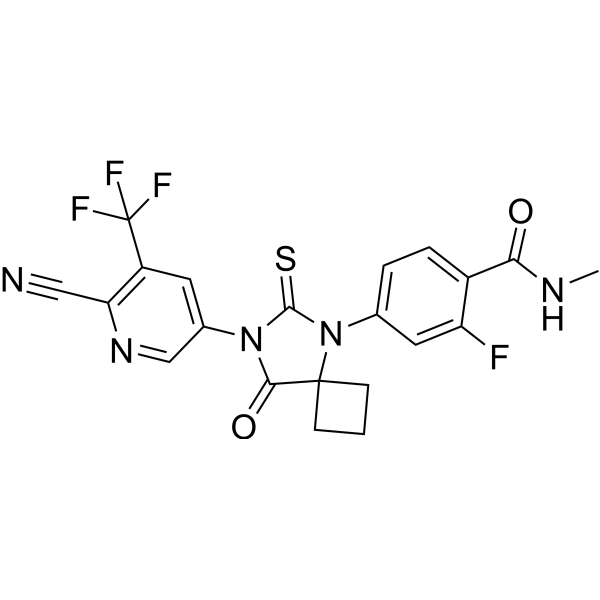
HY-16060
ApalutamideAR Antagonist -
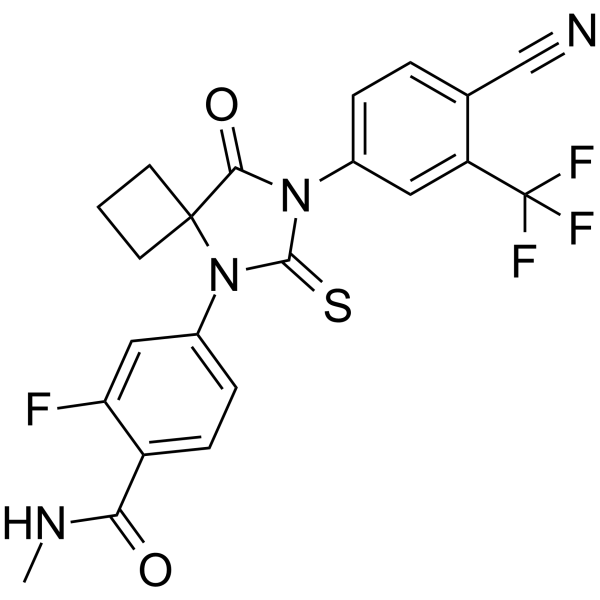
HY-111145
RD162NSAA -
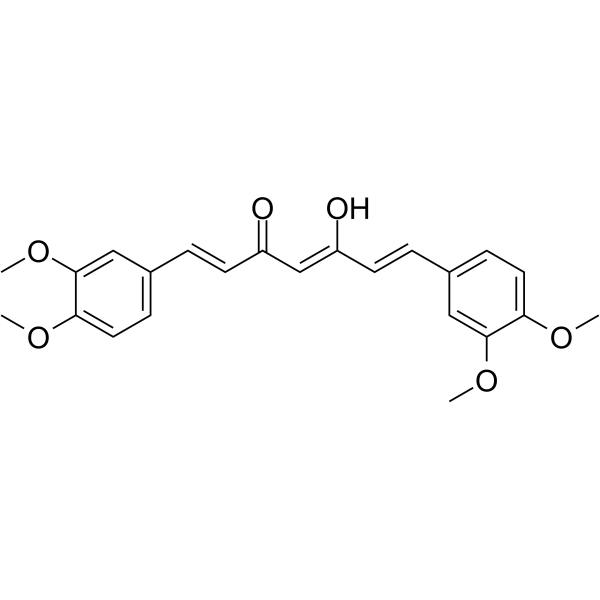
HY-15194
DimethylcurcuminAndrogen Receptor Inhibitor -
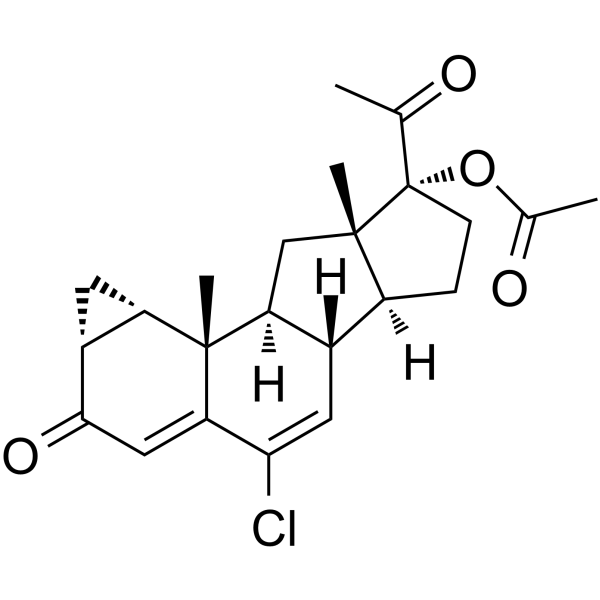
HY-13604
Cyproterone acetateAndrogen Receptor Antagonist -
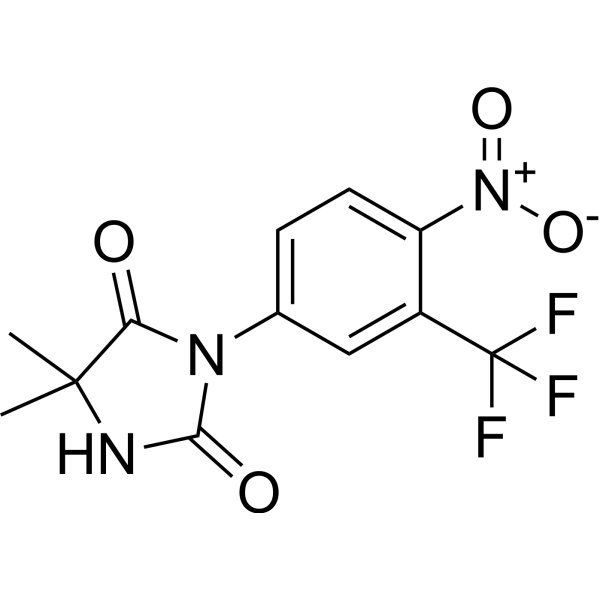
HY-13702
NilutamideAndrogen Receptor Antagonist -
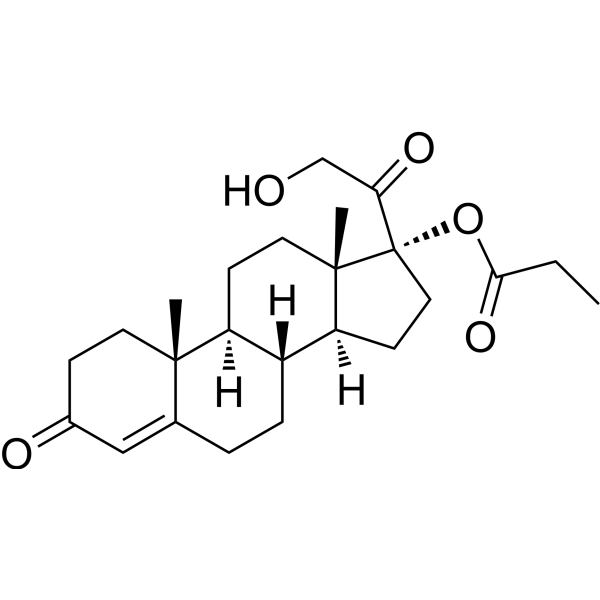
HY-13331
ClascoteroneAndrogen Receptor Inhibitor -
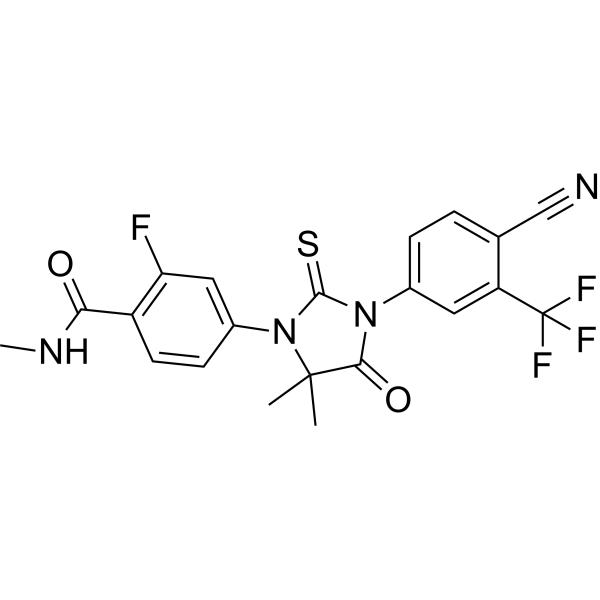
HY-70002
EnzalutamideAndrogen Receptor Antagonist -
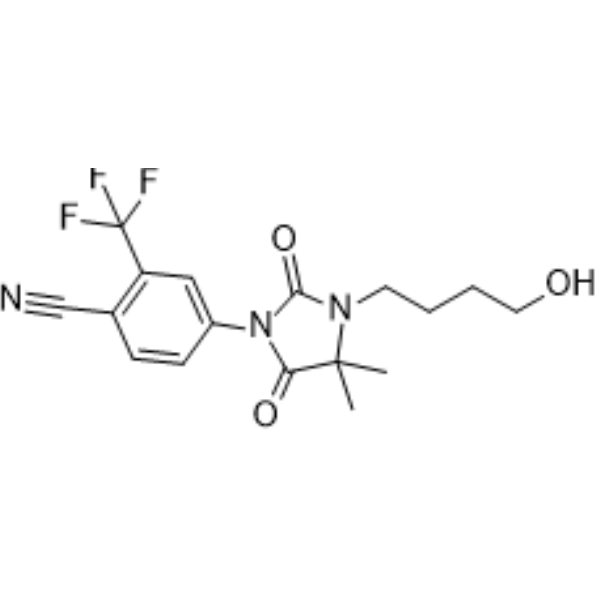
HY-10561
RU 58841Androgen Receptor Antagonist -
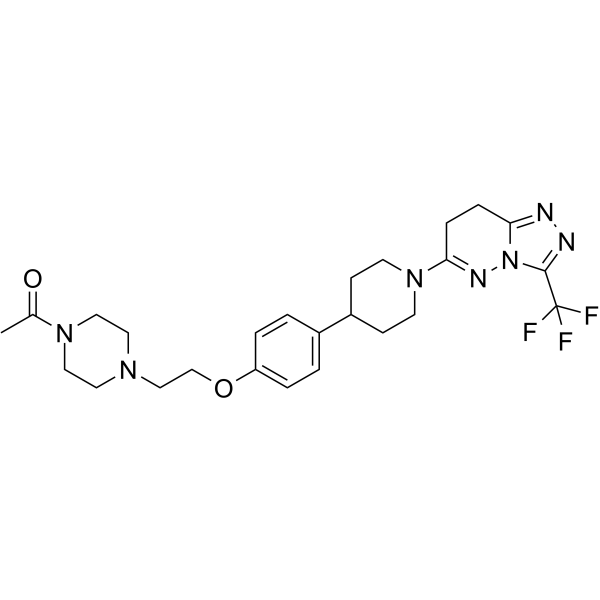
HY-16079
AZD3514AR Inhibitor


Biologische Aktivität
Beschreibung
In Vitro
Apoptone (2 h) binds to recombinant androgen receptor (IC50 1500 nM) and estrogen receptor α (IC50 200 nM)[1].
Apoptone transactivates mutant androgen receptor (EC50 0.48 nM), androgen/glucocorticoid receptor (EC50 11.4 nM), estrogen receptor α/β (EC50 0.8 nM), and estrogen receptor β (EC50 164 nM) in the corresponding transfected cell lines[1].
Apoptone potently inhibits the proliferation of LNCaP prostate cancer cells in vitro, with an EC50 of 6 nM[1].
Apoptone (1-50 nM; 3 d) inhibits the proliferation of castration-resistant prostate cancer C4-2B cells in a dose-dependent manner[2].
MedChemExpress (MCE) has not independently confirmed the accuracy of these methods. They are for reference only. Further protocols information, click here.
In Vivo
Apoptone (160 mg/kg; i.p.; once daily, 5 days/week; 4 weeks) inhibits subcutaneous castration-resistant prostate cancer growth by 43% in castrated male CB-17 SCID mice, with significant reductions in intratumoral androgens, AR mRNA, and nuclear AR localization, alongside transiently elevated serum PSA levels[2].
MedChemExpress (MCE) has not independently confirmed the accuracy of these methods. They are for reference only.
-
Animal Model:CB-17 SCID (male; castrated; implanted subcutaneously with ~20 mg LuCaP35V tumor bits)[2]
-
Dosage:160 mg/kg
-
Administration:i.p.; once daily, 5 days/week; 4 weeks
-
Result:Prolonged tumor doubling time to 18.2 ± 6.28 days (control = 10.44 ± 1.8 days; P < .0001), resulting in 43% tumor growth inhibition.
Increased serum PSA levels 1 to 3 weeks after treatment initiation (P < .0001); reached PSA index at sacrifice of 0.18 ± 0.07 ng/mL per cubic millimeter (control = 0.07 ± 0.02 ng/mL per cubic millimeter; P < .0001).
Reduced intratumoral testosterone levels by 93% (0.10 ± 0.05 pg/mg vs control 1.47 ± 0.67 pg/mg; P = .006) and dihydrotestosterone levels by 85% (0.64 ± 0.17 pg/mg vs control 4.28 ± 1.04 pg/mg; P < .0001).
Reduced androgen receptor (AR) mRNA levels by 3.1-fold, and decreased nuclear AR immunoreactivity score to 198 ± 28 (control = 248 ± 8; P = .0048).
Clinical Trial
| NCT Number | Sponsor | Condition | Start Date |
Phase

|
|---|---|---|---|---|
| NCT01329991 | Plexxikon| | 2011-05 | PHASE1 |


Chemical Information
-
CAS. Nr. 183387-50-0
-
Molecular Weight 316.48
-
Formel C21H32O2
-
SMILES
O[C@@]1(C#C)CC[C@@]2([H])[C@]3([H])CC[C@@]4([H])C[C@H](O)CC[C@]4(C)[C@@]3([H])CC[C@@]21C
-
Synonyms
HE3235
-
Versand
Room temperature in continental US; may vary elsewhere.
-
Speicherung
Please store the product under the recommended conditions in the Certificate of Analysis.

Protokoll
-
RNA extraction experimental
By lysing cells, releasing RNA, and removing impurities such as proteins and DNA, high-purity RNA products are finally obtained. The commonly used traditional method is the guanidine isothiocyanate/phenol/chloroform method (Trizol), which is suitable for a variety of animal materials including animal tissues, microorganisms, cultured cells, etc., and most plant materials.
-
Research Protocol for Endocrine Diseases
Endocrine diseases often arise from disrupted hormone production, hormone signaling, or target-tissue responsiveness; for diabetes-focused endocrine disease models, insulin signaling regulates glucose uptake, hepatic glucose output, lipid metabolism, and β-cell compensation. Type 2 diabetes develops through interacting defects in insulin resistance, β-cell dysfunction, adipose inflammation, hepatic glucose overproduction, altered incretin signaling, and ectopic lipid metabolism. A major unresolved question is whether endocrine dysfunction is driven primarily by target-tissue insulin resistance, intrinsic β-cell failure, immune/inflammatory stress, or combined multi-organ failure that differs by disease stage.


Reinheit & Dokumentation
Verweise
[1]. Ahlem C, et al. 17α-alkynyl 3α, 17β-androstanediol non-clinical and clinical pharmacology, pharmacokinetics and metabolism. Invest New Drugs. 2012 Feb;30(1):59-78. [Content Brief]
[2]. Koreckij TD, et al. HE3235 inhibits growth of castration-resistant prostate cancer. Neoplasia. 2009 Nov;11(11):1216-25. [Content Brief]

Calculators
Konzentration (Stammlösung) × Volumen (Stammlösung) = Konzentration (Ziellösung) × Volumen (Ziellösung)


Apoptone Related Classifications
HY-16247 Related Classifications
 Powered by Bioz