



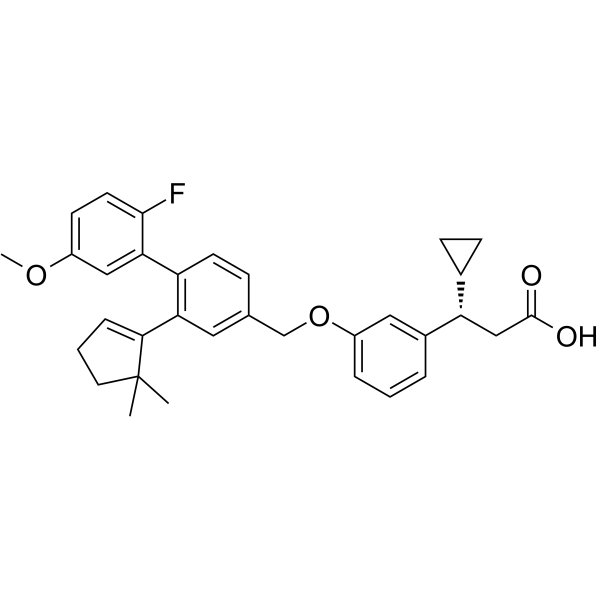
AM-1638
Based on 3 publication(s) in Google Scholar
AM-1638 is an orally active full agonist of GPR40 (EC50: 0.16 μM). AM-1638 increases the expression of antioxidant molecules (HO-1 and NQO-1). AM1638 blocks Palmitate (HY-N0830)-mediated superoxide production and ER stress. AM-1638 has antidiabetic activity and improves glycemic control in BDF mice with diet-induced obesity (DIO). AM-1638 demonstrates excellent oral bioavailability (mouse, >100%; rat, 72%; and cyno, 71%).
Nur für Forschungszwecke. Wir verkaufen nicht an Patienten.
- Reinheit : 99.71%
- CAS. Nr.: 1142214-62-7
- Formel: C33H35FO4
- Molecular Weight:514.63
-
Speicherung:
4°C, protect from light
* In solvent : -80°C, 6 months; -20°C, 1 month (protect from light)

To place orders, for customer services and technical support, please contact: MedChemExpress USA
Tel: 609-228-6898 E-mail: [email protected] [email protected]


-
 Biologische Aktivität
-
Chemical Information
-
Lösungsmittel & Löslichkeit
- Protokoll
- Reinheit & Dokumentation
- Verweise
-
 Help & FAQs


-
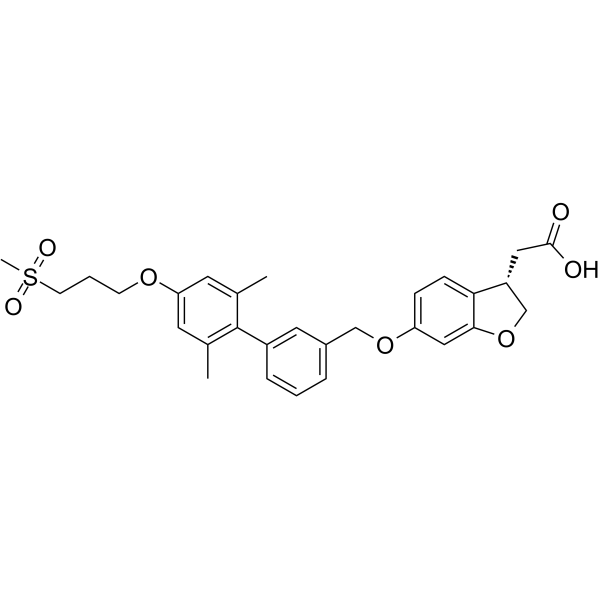
HY-10480
FasiglifamGPR40 Agonist -
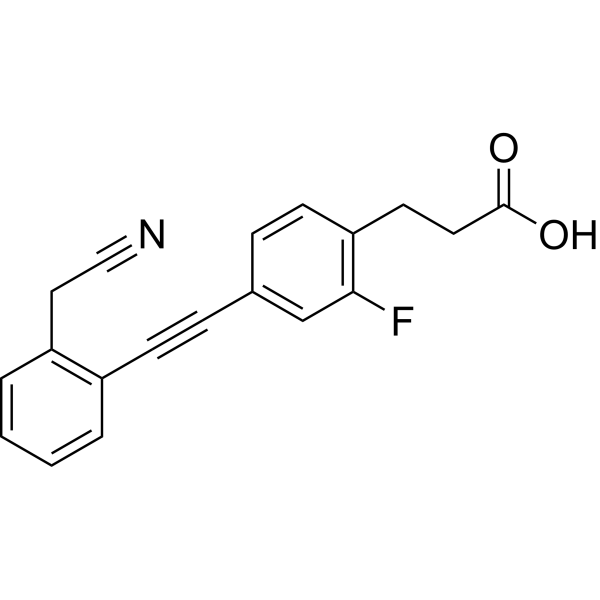
HY-15697
TUG-770GPR40/FFA1 Agonist -
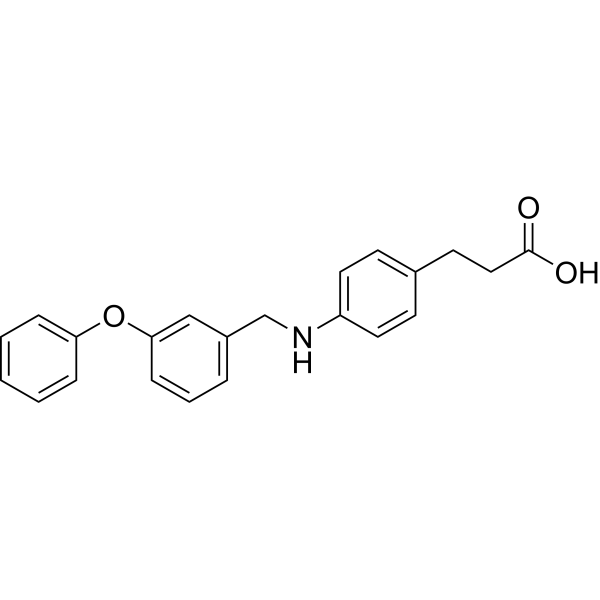
HY-15589
GW9508GPR40 Agonist -
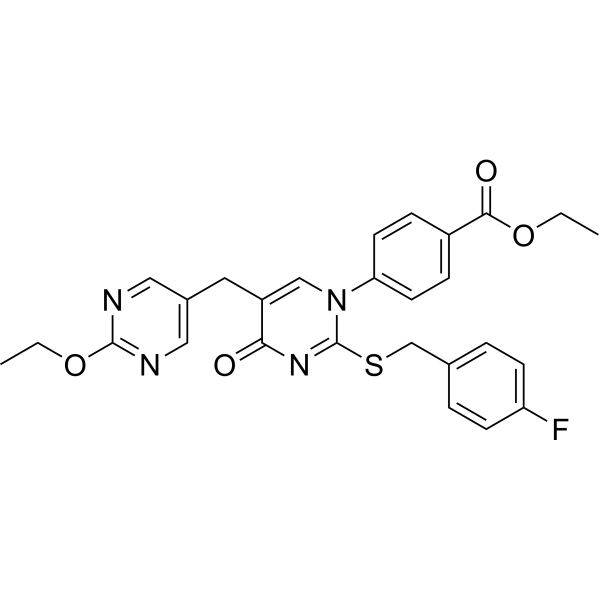
HY-50691
GW-1100Free Fatty Acid Receptor Antagonist -
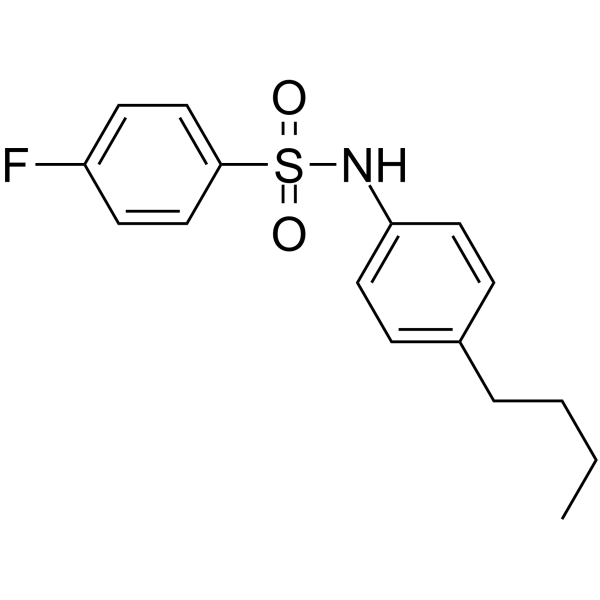
HY-101906
DC260126GPR40 antagonist -
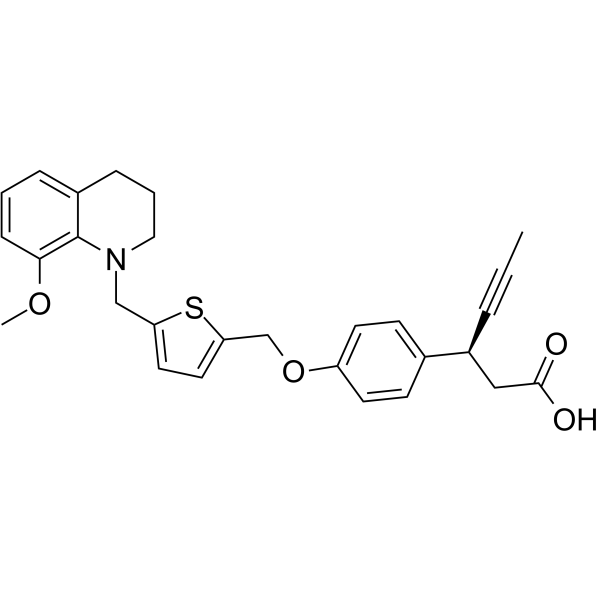
HY-19835
LY2922470GPR40 Agonist -
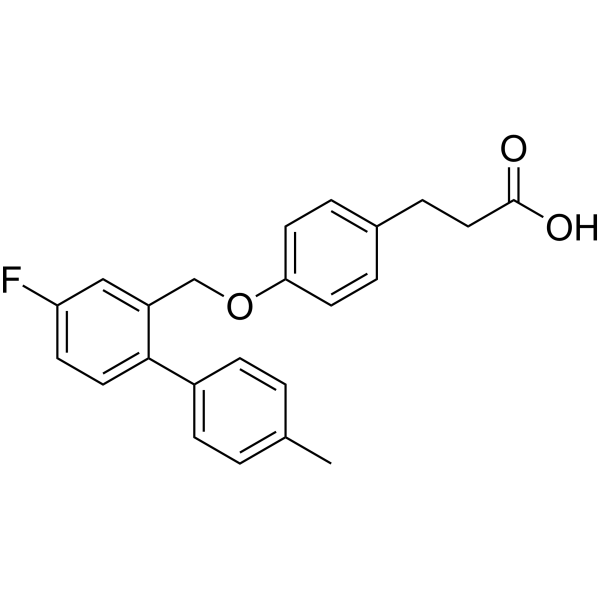
HY-100881
TUG-891FFA4/GPR120 Agonist -
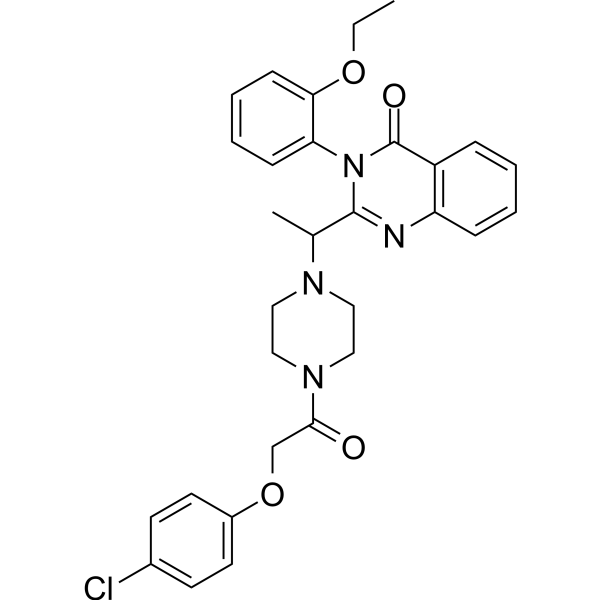
HY-15763
ErastinFerroptosis Inducer -
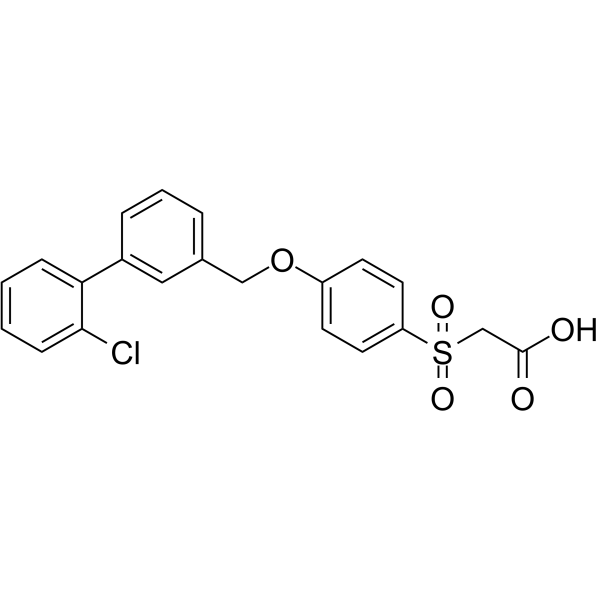
HY-103083
GPR40 agonist 4 -
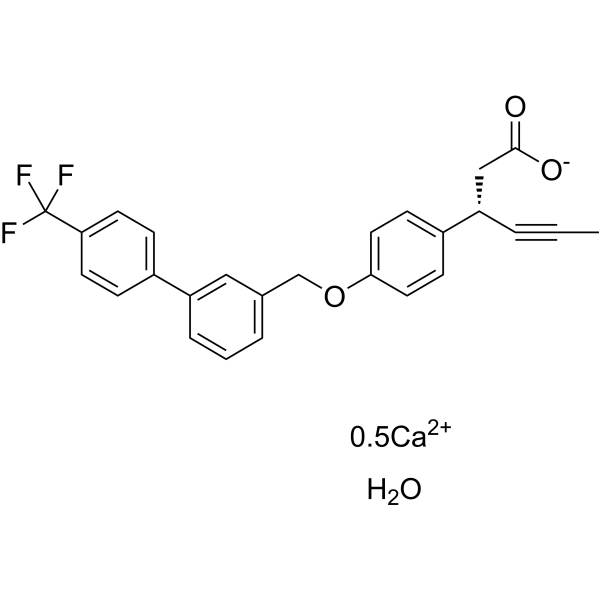
HY-13967B
AMG 837 calcium hydrateGPR40/FFA1 Agonist -
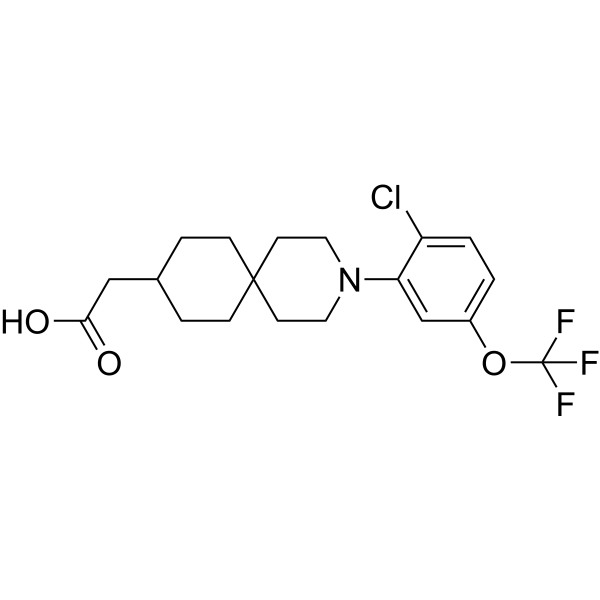
HY-101492
GPR120 Agonist 3GPR120 Agonist -
HY-13967
AMG 837GPR40/FFA1 Agonist
Publications Citing Use of MedChemExpress (MCE) AM-1638
More

Biologische Aktivität
Beschreibung
IC50 & Target
IC50: 0.16 μM (GPR40/FFA1)[1]
Cellular Effect
|
Cell Line

|
Type | Value | Description | References |
|---|---|---|---|---|
| A9 | EC50 |
13 nM
Compound: 1, AM-1638
|
Agonist activity at GPR40 (unknown origin) expressed in mouse A9 cells assessed as inositol phosphate accumulation using [myo-3H]inositol after 1 hr by scintillation counting in presence of 0.3% human serum albumin
Agonist activity at GPR40 (unknown origin) expressed in mouse A9 cells assessed as inositol phosphate accumulation using [myo-3H]inositol after 1 hr by scintillation counting in presence of 0.3% human serum albumin
|
[PMID: 24900845] |
| CHO | EC50 |
0.16 μM
Compound: 2, AM-1638
|
Agonist activity at human FFA1 receptor expressed in CHO cell membranes after 4 hrs by aequorin bioluminescence assay
Agonist activity at human FFA1 receptor expressed in CHO cell membranes after 4 hrs by aequorin bioluminescence assay
|
[PMID: 24900707] |
| CHO | EC50 |
0.16 μM
Compound: 21, AM-1638
|
Agonist activity at GPR40 expressed in CHO cells after 20 seconds by aequorin bioluminescence assay in presence of 0.1 % human serum
Agonist activity at GPR40 expressed in CHO cells after 20 seconds by aequorin bioluminescence assay in presence of 0.1 % human serum
|
[PMID: 24900539] |
| CHO | EC50 |
0.71 μM
Compound: 21, AM-1638
|
Agonist activity at GPR40 expressed in CHO cells after 20 seconds by aequorin bioluminescence assay in presence of 100 % human serum
Agonist activity at GPR40 expressed in CHO cells after 20 seconds by aequorin bioluminescence assay in presence of 100 % human serum
|
[PMID: 24900539] |
| CHO | EC50 |
161 nM
Compound: 1, AM-1638
|
Agonist activity at GPR40 (unknown origin) expressed in CHO cells assessed as luminescence for 20 seconds interval by aequorin assay in presence of 0.01% human serum albumin
Agonist activity at GPR40 (unknown origin) expressed in CHO cells assessed as luminescence for 20 seconds interval by aequorin assay in presence of 0.01% human serum albumin
|
[PMID: 24900845] |
| HEK293 | EC50 |
130 nM
Compound: 1; AM1638
|
Positive allosteric modulation of human GPR40 expressed in HEK293 cells assessed as IP1 accumulation measured after 60 mins by HTRF assay
Positive allosteric modulation of human GPR40 expressed in HEK293 cells assessed as IP1 accumulation measured after 60 mins by HTRF assay
|
[PMID: 28197316] |
| HEK293 | EC50 |
130 nM
Compound: AM-1638
|
Positive allosteric modulation of recombinant human GPR40 expressed in HEK293 cells assessed as increase in [3H]-myo-inositol phosphate accumulation measured after 60 mins in absence of human serum by microbeta counting method
Positive allosteric modulation of recombinant human GPR40 expressed in HEK293 cells assessed as increase in [3H]-myo-inositol phosphate accumulation measured after 60 mins in absence of human serum by microbeta counting method
|
[PMID: 31109791] |
| HEK293 | EC50 |
392 nM
Compound: 1; AM1638
|
Positive allosteric modulation of human GPR40 expressed in HEK293 cells assessed as IP1 accumulation measured after 60 mins in presence of 100% human serum by HTRF assay
Positive allosteric modulation of human GPR40 expressed in HEK293 cells assessed as IP1 accumulation measured after 60 mins in presence of 100% human serum by HTRF assay
|
[PMID: 28197316] |
| HEK293 | EC50 |
392 nM
Compound: AM-1638
|
Positive allosteric modulation of recombinant human GPR40 expressed in HEK293 cells assessed as increase in [3H]-myo-inositol phosphate accumulation measured after 60 mins in presence of 100% human serum by microbeta counting method
Positive allosteric modulation of recombinant human GPR40 expressed in HEK293 cells assessed as increase in [3H]-myo-inositol phosphate accumulation measured after 60 mins in presence of 100% human serum by microbeta counting method
|
[PMID: 31109791] |
In Vivo
MedChemExpress (MCE) has not independently confirmed the accuracy of these methods. They are for reference only.


Chemical Information
-
CAS. Nr. 1142214-62-7
-
Appearance Solid
-
Molecular Weight 514.63
-
Formel C33H35FO4
-
Color Off-white to yellow
-
SMILES
FC1=CC=C(OC)C=C1C2=C(C3=CCCC3(C)C)C=C(COC4=CC=CC([C@H](C5CC5)CC(O)=O)=C4)C=C2
-
Versand
Room temperature in continental US; may vary elsewhere.
-
Speicherung
4°C, protect from light
* In solvent : -80°C, 6 months; -20°C, 1 month (protect from light)


Publications (3)
-
Journal Impact Factor
-
Most Recent
-
Nat Commun
Human iPSC-based Modeling of Pulmonary Fibrosis Reveals p300/CBP Inhibition Suppresses Alveolar Transitional Cell State. [Abstract]2026 Feb 12;17(1):1214. PMID: 41680175 -
J Cell Physiol
The role of free fatty acid receptor pathways in a selective regulation of TRPA1 and TRPV1 by resolvins in primary sensory neurons. [Abstract]2022 Sep;237(9):3651-3660. PMID: 35802479 -
Biomed Pharmacother
Xelaglifam, a novel GPR40/FFAR1 agonist, exhibits enhanced β-arrestin recruitment and sustained glycemic control for type 2 diabetes. [Abstract]2024 Aug:177:117044. PMID: 38941892


Lösungsmittel & Löslichkeit
In Vitro:
DMSO : 100 mg/mL (194.31 mM; Need ultrasonic; Hygroscopic DMSO has a significant impact on the solubility of product, please use newly opened DMSO)
Please refer to the solubility information to select the appropriate solvent. Once prepared, please aliquot and store the solution to prevent product inactivation from repeated freeze-thaw cycles.
Storage method and period of stock solution: -80°C, 6 months; -20°C, 1 month (protect from light). When stored at -80°C, please use it within 6 months. When stored at -20°C, please use it within 1 month.
Please refer to the solubility information to select the appropriate solvent. Once prepared, please aliquot and store the solution to prevent product inactivation from repeated freeze-thaw cycles.
Storage method and period of stock solution: -80°C, 6 months; -20°C, 1 month (protect from light). When stored at -80°C, please use it within 6 months. When stored at -20°C, please use it within 1 month.
Konzentration (Stammlösung) × Volumen (Stammlösung) = Konzentration (Ziellösung) × Volumen (Ziellösung)
In Vivo:
Select the appropriate dissolution method based on your experimental animal and administration route.
- For the following dissolution methods, please ensure to first prepare a clear stock solution using an In Vitro approach and then sequentially add co-solvents:
- To ensure reliable experimental results, the clarified stock solution can be appropriately stored based on storage conditions. As for the working solution for In Vivo experiments, it is recommended to prepare freshly and use it on the same day.
- The percentages shown for the solvents indicate their volumetric ratio in the final prepared solution. If precipitation or phase separation occurs during preparation, heat and/or sonication can be used to aid dissolution.
Add each solvent one by one: 10% DMSO 90% (20% SBE-β-CD in Saline)
Solubility: 2.5 mg/mL (4.86 mM); Suspended solution; Need ultrasonic
This protocol yields a suspended solution of 2.5 mg/mL. Suspended solution can be used for oral and intraperitoneal injection.
Taking 1 mL working solution as an example, add 100 μL DMSO stock solution (25.0 mg/mL) to 900 μL 20% SBE-β-CD in Saline, and mix evenly.
Preparation of 20% SBE-β-CD in Saline (4°C, storage for one week): 2 g SBE-β-CD powder is dissolved in 10 mL Saline, completely dissolve until clear.
Add each solvent one by one: 10% DMSO 40% PEG300 5% Tween-80 45% Saline
Solubility: ≥ 2.08 mg/mL (4.04 mM); Clear solution
This protocol yields a clear solution of ≥ 2.08 mg/mL (saturation unknown).
Taking 1 mL working solution as an example, add 100 μL DMSO stock solution (20.8 mg/mL) to 400 μL PEG300, and mix evenly; then add 50 μL Tween-80 and mix evenly; then add 450 μL Saline to adjust the volume to 1 mL.
Preparation of Saline: Dissolve 0.9 g sodium chloride in ddH₂O and dilute to 100 mL to obtain a clear Saline solution.
In Vivo Dissolution Calculator
Please enter the basic information of animal experiments:
-
-
-
-
Recommended: Prepare an additional quantity of animals to account for potential losses during experiments.
Please enter your animal formula composition:
-
%DMSO +
Recommended: Keep the proportion of DMSO in working solution below 2% if your animal is weak.
-
%+
-
+%Tween-80 + +
-
%Saline +
The co-solvents required include: DMSO, . All of co-solvents are available by MedChemExpress (MCE). , Tween 80. All of co-solvents are available by MedChemExpress (MCE).
Working solution concentration: 0.22 mg/mL
Method for preparing stock solution: mg drug dissolved in μL DMSO. Stock solution concentration: mg/mL. * In solvent : -80°C, 6 months; -20°C, 1 month (protect from light)
1. Take μL DMSO stock solution;
2. Add μL .
μL , mix evenly;
3. Then add μL Tween 80, mix evenly;
4. Then add μL
Please ensure that the stock solution in the first step is dissolved to a clear state, and add co-solvents in sequence. You can use ultrasonic heating (ultrasonic cleaner, recommended frequency 20-40 kHz), vortexing, etc. to assist dissolution.


Reinheit & Dokumentation
-
Data Sheet (275 KB)
-
SDS (252 KB)
- English - EN (252 KB)
- Français - FR (252 KB)
- Deutsch - DE (252 KB)
- Norwegian - NO (252 KB)
- Español - ES (252 KB)
- Swedish - SV (252 KB)
- Italian - IT (252 KB)
- Korean - KR (252 KB)
- Portuguese - PT (252 KB)
-
Handling Instructions (2659 KB)
Verweise
[1]. Hwang HJ, et al. AM1638, a GPR40-Full Agonist, Inhibited Palmitate- Induced ROS Production and Endoplasmic Reticulum Stress, Enhancing HUVEC Viability in an NRF2-Dependent Manner. Endocrinol Metab (Seoul). 2023 Dec;38(6):760-769. [Content Brief]
[2]. Brown SP, et al. Discovery of AM-6226: A Potent and Orally Bioavailable GPR40 Full Agonist That Displays Efficacy in Nonhuman Primates. ACS Med Chem Lett. 2018 Jun 6;9(7):757-760. [Content Brief]
[3]. Brown SP, et al. Discovery of AM-1638: A Potent and Orally Bioavailable GPR40/FFA1 Full Agonist. ACS Med Chem Lett. 2012 Aug 15;3(9):726-30. [Content Brief]


Complete Stock Solution Preparation Table
Please refer to the solubility information to select the appropriate solvent. Once prepared, please aliquot and store the solution to prevent product inactivation from repeated freeze-thaw cycles.
Storage method and period of stock solution: -80°C, 6 months; -20°C, 1 month (protect from light). When stored at -80°C, please use it within 6 months. When stored at -20°C, please use it within 1 month.
| Optional Solvent | Concentration Solvent Mass | 1 mg | 5 mg | 10 mg | 25 mg |
|---|---|---|---|---|---|
| DMSO | 1 mM | 1.9431 mL | 9.7157 mL | 19.4314 mL | 48.5786 mL |
| 5 mM | 0.3886 mL | 1.9431 mL | 3.8863 mL | 9.7157 mL | |
| 10 mM | 0.1943 mL | 0.9716 mL | 1.9431 mL | 4.8579 mL | |
| 15 mM | 0.1295 mL | 0.6477 mL | 1.2954 mL | 3.2386 mL | |
| 20 mM | 0.0972 mL | 0.4858 mL | 0.9716 mL | 2.4289 mL | |
| 25 mM | 0.0777 mL | 0.3886 mL | 0.7773 mL | 1.9431 mL | |
| 30 mM | 0.0648 mL | 0.3239 mL | 0.6477 mL | 1.6193 mL | |
| 40 mM | 0.0486 mL | 0.2429 mL | 0.4858 mL | 1.2145 mL | |
| 50 mM | 0.0389 mL | 0.1943 mL | 0.3886 mL | 0.9716 mL | |
| 60 mM | 0.0324 mL | 0.1619 mL | 0.3239 mL | 0.8096 mL | |
| 80 mM | 0.0243 mL | 0.1214 mL | 0.2429 mL | 0.6072 mL | |
| 100 mM | 0.0194 mL | 0.0972 mL | 0.1943 mL | 0.4858 mL |


AM-1638 Related Classifications
HY-13467 Related Classifications
 Powered by Bioz