



Cyproheptadine
Based on 6 publication(s) in Google Scholar
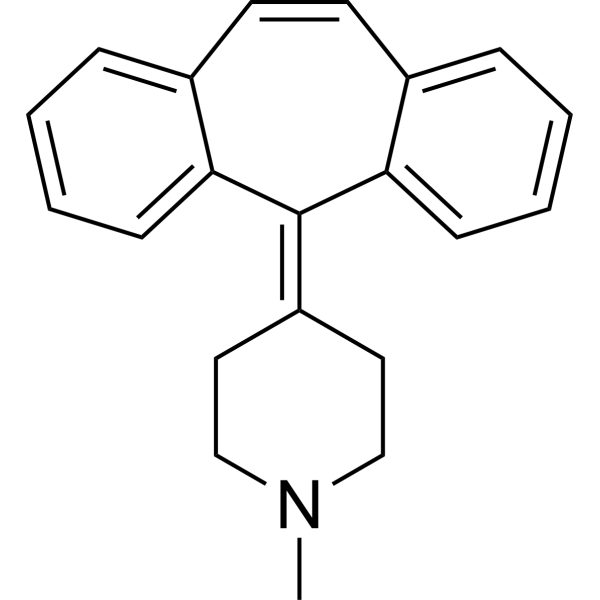
Cyproheptadine acts as a p38 MAP kinase activator, CHK2 activator, histamine H1 receptor inhibitor and serotonin receptor inhibitor. Cyproheptadine mediates cell cycle arrest via G1 phase arrest, G1/S transition arrest, G0/G1 phase arrest, reduced expression of cyclins D1/D2/D3, upregulated expression of HBP1, p16, p21, p27, and decreased phosphorylation of retinoblastoma protein. Cyproheptadine induces Apoptosis by increasing PARP and cleaved PARP, as well as activating the mitochondrial caspase pathway. Cyproheptadine inhibits tumor growth with extremely low toxicity to normal cells. Cyproheptadine can be used in research related to hepatocellular carcinoma, multiple myeloma and acute myeloid leukemia.
For research use only. We do not sell to patients.
- Purity : 99.92%
- CAS No.: 129-03-3
- Formula: C21H21N
- Molecular Weight:287.40
-
Storage:Powder -20°C, 3 years , 4°C, 2 years ; In solvent -80°C, 6 months , -20°C, 1 month

To place orders, for customer services and technical support, please contact: MedChemExpress USA
Tel: 609-228-6898 E-mail: [email protected] [email protected]


-
 Biological Activity
-
Chemical Information
-
Solvent & Solubility
- Purity & Documentation
- References
-
 Help & FAQs


-
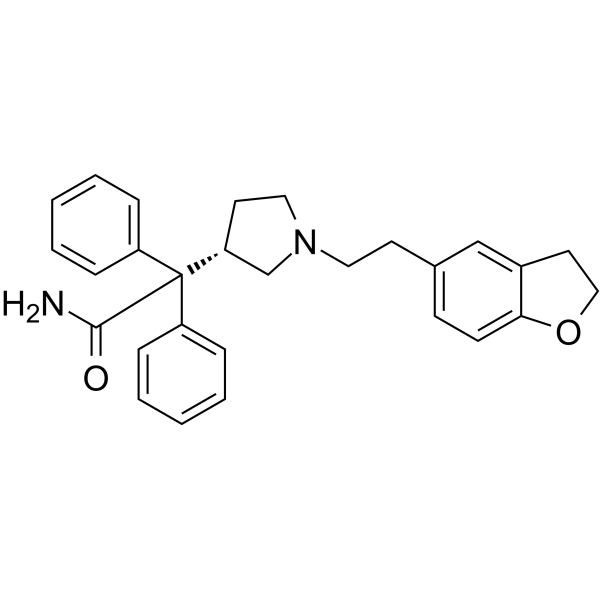
HY-A0033
DarifenacinM3 Muscarinic Receptor Antagonist -
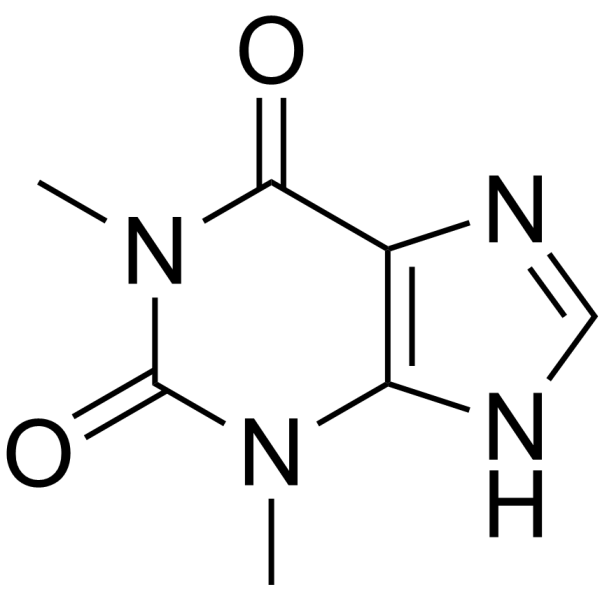
HY-B0809
TheophyllinePDE Inhibitor -
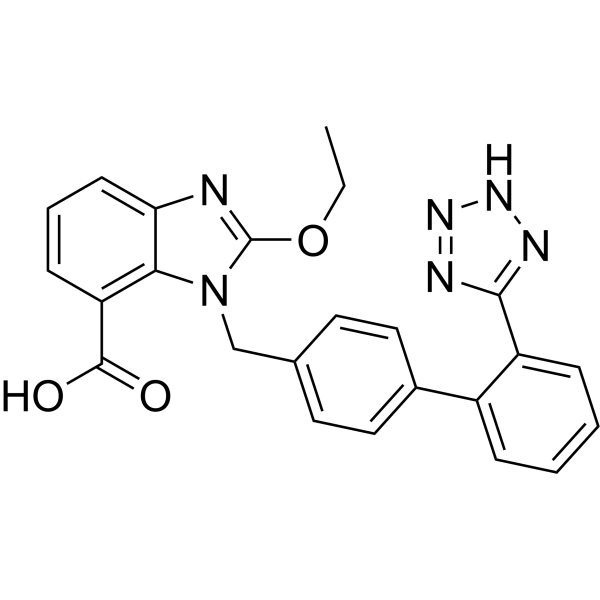
HY-B0205
CandesartanAngiotensin II AT1-Receptor Blocker -
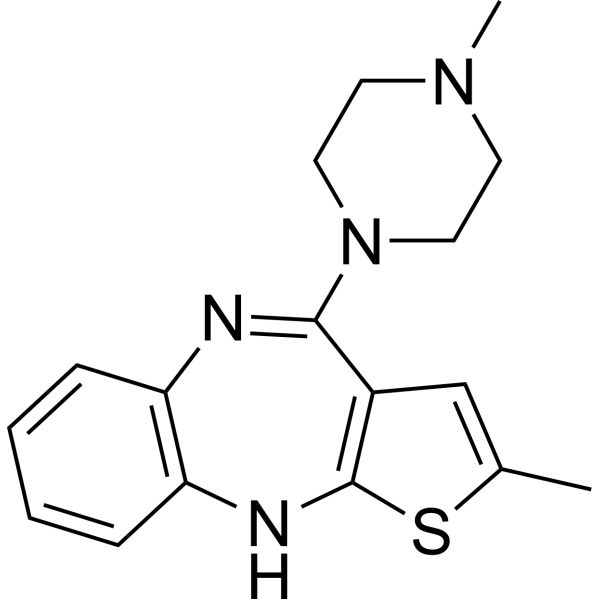
HY-14541
Olanzapine5-HT2/D1/D2 Antagonist -
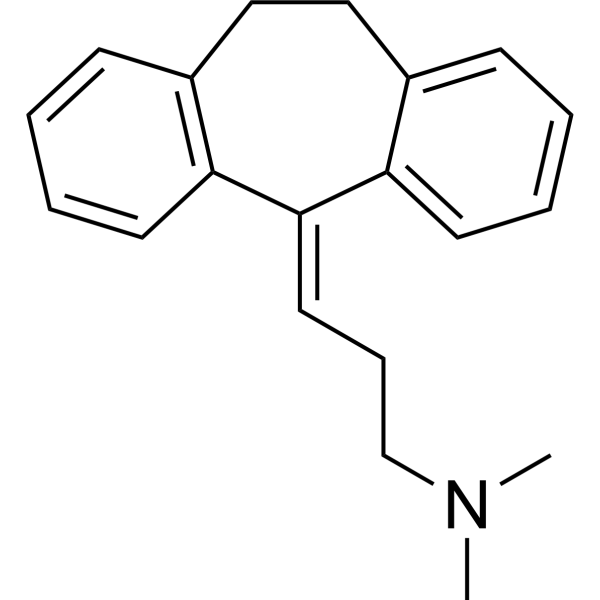
HY-B0527
AmitriptylineSERT/NET Inhibitor -
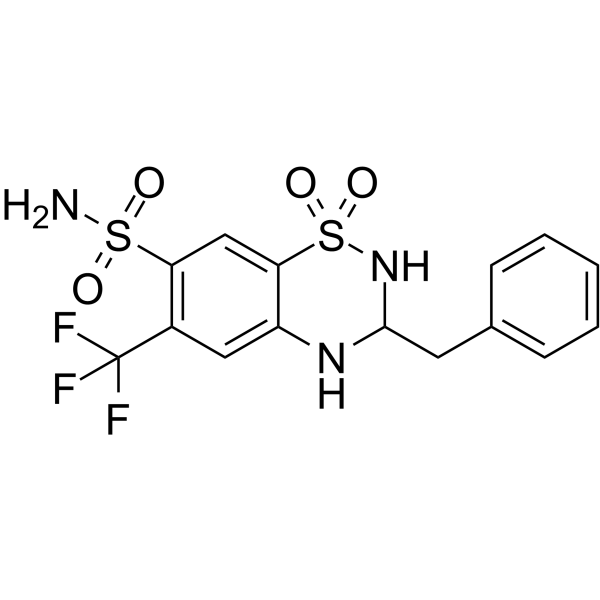
HY-B1363
BendroflumethiazideDiuretic -
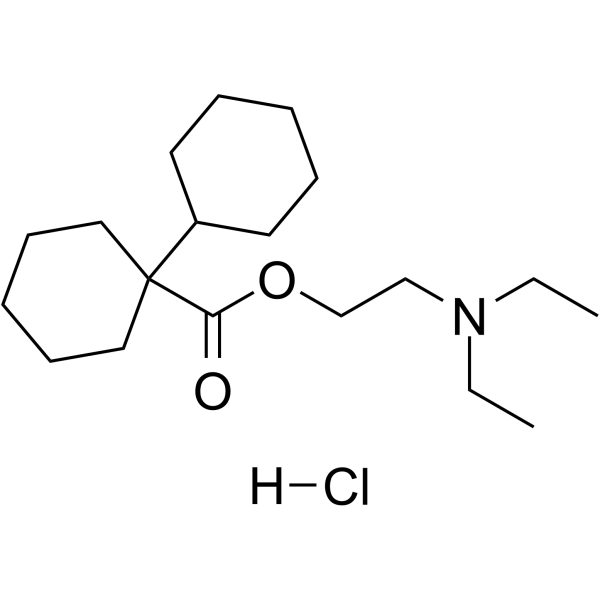
HY-B1339
Dicyclomine hydrochlorideM1/2 Muscarinic Receptor Antagonist -

HY-B1622R
Cyproheptadine (Standard)Reference Standard
Publications Citing Use of MedChemExpress (MCE) Cyproheptadine
MoreAll Histamine Receptor Isoforms
MoreAll 5-HT Receptor Isoforms
More

Biological Activity
Description
IC50 & Target
|
H1 Receptor |
Chk2 |
CDK1 |
CDK2 |
CDK3 |
In Vitro
Cyproheptadine (0-30 μM; 3-24 h) reduces cyclin D1, D2, and D3 protein and mRNA levels in human multiple myeloma (LP-1, KMS11, OCI-MY5, U266, MM1.R, OPM1, KMS12) and leukemia (OCI-AML2, OCI-AML3, HL60, OCI-M2, NB4, Jurkat) cell lines in a time- and concentration-dependent manner[2].
Cyproheptadine (0-20 μM) arrests human multiple myeloma (LP-1, MM1.S, MM1.R, KMS11) and leukemia (OCI-AML2, Jurkat) cell lines in the G0/G1 phase, reduces cellular proliferation, increases p21 expression, and decreases AP2A expression in a time- and concentration-dependent manner[2].
Cyproheptadine (0-30 μM; 24-72 h; 7-14 days) reduces viability and induces apoptosis in human multiple myeloma and leukemia cell lines and primary patient samples, inhibits clonogenic growth of primary AML samples, and exhibits reduced toxicity toward normal human hematopoietic stem cells, with cytotoxic effects occurring in a time- and concentration-dependent manner[2].
Cyproheptadine (0-30 μM; 24-48 h) induces caspase-dependent apoptosis in human multiple myeloma (OCI-MY5, OPM1, U266, LP-1) and leukemia (OCI-AML2, CEM, NB4) cell lines and murine leukemia (MDAY-D2) cells via activation of the mitochondrial pathway of caspase activation[2].
MedChemExpress (MCE) has not independently confirmed the accuracy of these methods. They are for reference only.
-
Cell Line:HepG2 and Huh-7 cells
-
Concentration:20, 40, 60, 80, 100, 120 μM
-
Incubation Time:24 h
-
Result:Inhibited cell proliferation in a dose-dependent manner.
Showed IC50 of 44.4 and 44.7 μM in HepG2 cells and Huh-7 cells, respectively.
In Vivo
Cyproheptadine (10 mg/kg; i.p.; once daily; for 10 consecutive days) reduces the expression level of Cyclin D2 protein in a subcutaneous multiple myeloma xenograft model[2].
Cyproheptadine (10 mg/kg; i.p.; once daily; for 5 consecutive days) reduces the protein expression levels of cyclin D2 and cyclin D3 in subcutaneous leukemia xenograft models[2].
Cyproheptadine (40 mg/kg; i.p.; once daily for 7 consecutive days) completely eliminates malignant ascites formation in a mouse intraperitoneal leukemia model[2].
MedChemExpress (MCE) has not independently confirmed the accuracy of these methods. They are for reference only.
-
Animal Model:NOD/SCID (sublethally irradiated with 3.5 Gy)[2]
-
Dosage:36 mg/kg
-
Administration:i.p.; daily; 7 weeks
-
Result:Delayed tumor growth, resulting in an approximately 2-fold reduction in tumor volume at the end of the 7-week treatment period.
Showed statistical significance at 35 days (P = .048) and 49 days (P = .032) post-treatment initiation.
-
Animal Model:NOD/SCID (sublethally irradiated with 3.5 Gy)[2]
-
Dosage:10 mg/kg
-
Administration:i.p.; daily; 10 days
-
Result:Decreased cyclin D2 protein expression in xenografted LP-1 tumors compared to vehicle control tumors, as detected by immunoblotting.
-
Animal Model:NOD/SCID (sublethally irradiated with 3.5 Gy)[2]
-
Dosage:10 mg/kg
-
Administration:i.p.; daily; 5 days
-
Result:Decreased cyclin D2 and cyclin D3 protein expression in xenografted MDAY-D2 tumors compared to vehicle control tumors, as detected by immunoblotting.
-
Animal Model:DBA2[2]
-
Dosage:40 mg/kg
-
Administration:i.p.; daily; 7 days
-
Result:Completely abolished formation of malignant ascites; no measurable ascites volume or malignant cell count was detected in treated mice, compared to vehicle control mice with median ascites volume of ~3 mL and median ascites cell count of ~1×10⁸ cells.
Induced Disease Models
Note:
Please do not refer to only one article to determine the experimental conditions. It is recommended to determine the optimal experimental conditions (animal strain, age, dosage, frequency and cycle, detection time and indicators, etc.) through preliminary experiments before the formal experiment.
Cyproheptadine is primarily used to establish a rat model of reversible diabetes-like conditions or β-cell functional inhibition, characterized by non-fasting hyperglycemia, abnormal glucose tolerance, reduced pancreatic insulin levels, and abnormal β-cell morphology[3].
Administration: Cyproheptadine (22.5-90 mg/kg): administered orally once daily for 14 days.
Histology analysis: Vacuolization of islet tissue; vesiculation of the rough endoplasmic reticulum and loss of secretory granules in β-cells.
MedChemExpress (MCE) has not independently confirmed the accuracy of these methods. They are for reference only.
Clinical Trial
| NCT Number | Sponsor | Condition | Start Date |
Phase

|
|---|---|---|---|---|
| NCT01329991 | Plexxikon| | 2011-05 | PHASE1 |


Chemical Information
-
CAS No. 129-03-3
-
Appearance Solid
-
Molecular Weight 287.40
-
Formula C21H21N
-
Color White to off-white
-
SMILES
CN1CC/C(CC1)=C2C3=CC=CC=C3C=CC4=CC=CC=C/24
-
Shipping
Room temperature in continental US; may vary elsewhere.
-
Storage
Powder -20°C 3 years 4°C 2 years In solvent -80°C 6 months -20°C 1 month


Publications (6)
-
Journal Impact Factor
-
Most Recent
-
Glia
Sustained Neuronal Stimulation Activates Paraventricular Thalamus Astrocytes for Chronicity of Neuropathic Pain in Mice. [Abstract]2026 Aug;74(8):e70183. PMID: 42231639 -
Front Pharmacol
Prediction of Synergistic Drug Combinations for Prostate Cancer by Transcriptomic and Network Characteristics. [Abstract]2021 Apr 12;12:634097. PMID: 33986671 -
PLoS Negl Trop Dis
Identification of anti-flaviviral drugs with mosquitocidal and anti-Zika virus activity in Aedes aegypti. [Abstract]2019 Aug 20;13(8):e0007681. PMID: 31430351 -
-
Cureus
2023 Nov 27;15(11):e49530. PMID: 38033435 -
Cureus
2023 Nov 27;15(11):e49530. PMID: 38033435


Solvent & Solubility
In Vitro:
DMSO : 3.17 mg/mL (11.03 mM; ultrasonic and warming and adjust pH to 3 with HCl and heat to 60°C; Hygroscopic DMSO has a significant impact on the solubility of product, please use newly opened DMSO)
Please refer to the solubility information to select the appropriate solvent. Once prepared, please aliquot and store the solution to prevent product inactivation from repeated freeze-thaw cycles.
Storage method and period of stock solution: -80°C, 6 months; -20°C, 1 month. When stored at -80°C, please use it within 6 months. When stored at -20°C, please use it within 1 month.
Please refer to the solubility information to select the appropriate solvent. Once prepared, please aliquot and store the solution to prevent product inactivation from repeated freeze-thaw cycles.
Storage method and period of stock solution: -80°C, 6 months; -20°C, 1 month. When stored at -80°C, please use it within 6 months. When stored at -20°C, please use it within 1 month.
Concentration (start) × Volume (start) = Concentration (final) × Volume (final)


Purity & Documentation
-
Data Sheet (304 KB)
-
SDS (393 KB)
- English - EN (393 KB)
- Français - FR (393 KB)
- Deutsch - DE (393 KB)
- Norwegian - NO (393 KB)
- Español - ES (393 KB)
- Swedish - SV (393 KB)
- Italian - IT (393 KB)
- Korean - KR (393 KB)
- Portuguese - PT (393 KB)
-
Handling Instructions (2659 KB)
References
[1]. Feng YM, et al. Cyproheptadine, an antihistaminic drug, inhibits proliferation of hepatocellular carcinoma cells by blocking cell cycle progression through the activation of P38 MAP kinase. BMC Cancer. 2015;15:134. Published 2015 Mar 17. [Content Brief]
[2]. Mao X, et al. Cyproheptadine displays preclinical activity in myeloma and leukemia. Blood. 2008;112(3):760-769. [Content Brief]


Complete Stock Solution Preparation Table
Please refer to the solubility information to select the appropriate solvent. Once prepared, please aliquot and store the solution to prevent product inactivation from repeated freeze-thaw cycles.
Storage method and period of stock solution: -80°C, 6 months; -20°C, 1 month. When stored at -80°C, please use it within 6 months. When stored at -20°C, please use it within 1 month.
| Optional Solvent | Concentration Solvent Mass | 1 mg | 5 mg | 10 mg | 25 mg |
|---|---|---|---|---|---|
| DMSO | 1 mM | 3.4795 mL | 17.3974 mL | 34.7947 mL | 86.9868 mL |
| 5 mM | 0.6959 mL | 3.4795 mL | 6.9589 mL | 17.3974 mL | |
| 10 mM | 0.3479 mL | 1.7397 mL | 3.4795 mL | 8.6987 mL |


Cyproheptadine Related Classifications
HY-B1622 Related Classifications
 Powered by Bioz
Keywords