



Diabetes Models
- 1
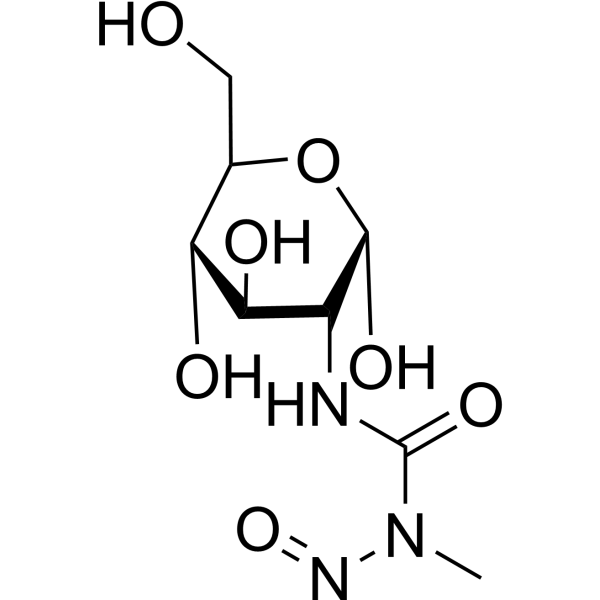
- Formule: C8H15N3O7
- Masse moléculaire: 265.22
Streptozotocin (Streptozocin; STZ) is an antibiotic widely used in experimental animal models of induced diabetes. Streptozotocin enters B cells via the glucose transporter (GLUT2) and causes the alkylation of DNA ( DNA-methylating ). Streptozotocin can induce the apoptosis of β cells.
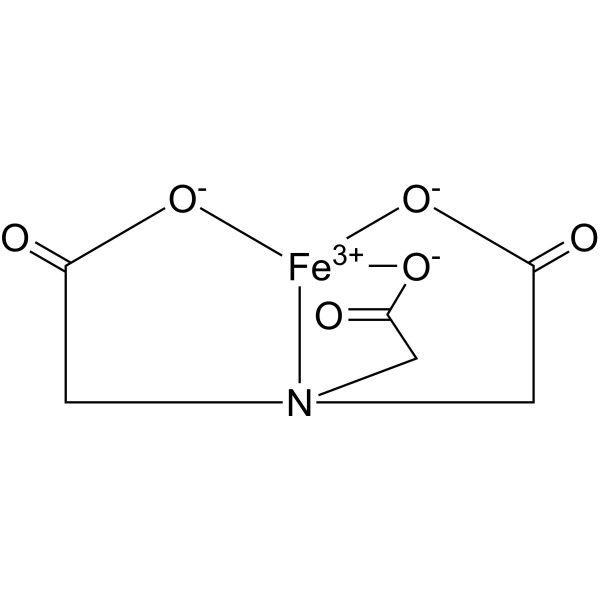
- Formule: C6H6FeNO6
- Masse moléculaire: 243.96
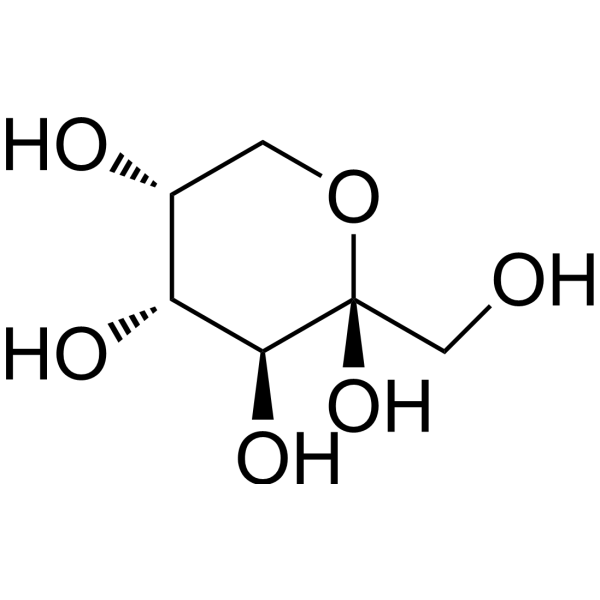
Ferric nitrilotriacetate (Fe-NTA), a complexation of nitriloacetic acid with iron, is a highly reactive compound used to induce degenerative disorders through oxidative stress (OS). Ferric nitrilotriacetate is also used in several studies to induce hyperglycemia, glycosuria, and both renal and liver carcinogenesis.

60 kcal% High Fat Diet is a high-fat model diet used to establish animal models of obesity and type 2 diabetes. Designed with similarities to Research Diets, Inc.formula D12492. This product comes with an authoritative third-party quality testing report.
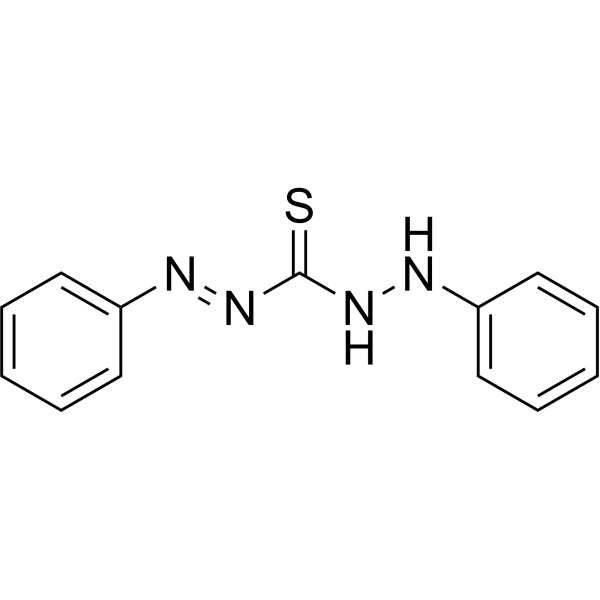
- Formule: C13H12N4S
- Masse moléculaire: 256.33
Dithizone can be toxic to pancreatic islet cells and cause experimental diabetes. Dithizone can be used for in vitro in vivo staining of transplanted islets and cytoplasmic granules of bone marrow cells. Dithizone can be used as a chelating agent and colorimetric indicator for the detection and extraction of various heavy metals, including lead and mercury, in analytical and biochemical applications. Dithizone forms stable colored complexes with metal ions and can be quantitatively analyzed by methods such as spectrophotometry.
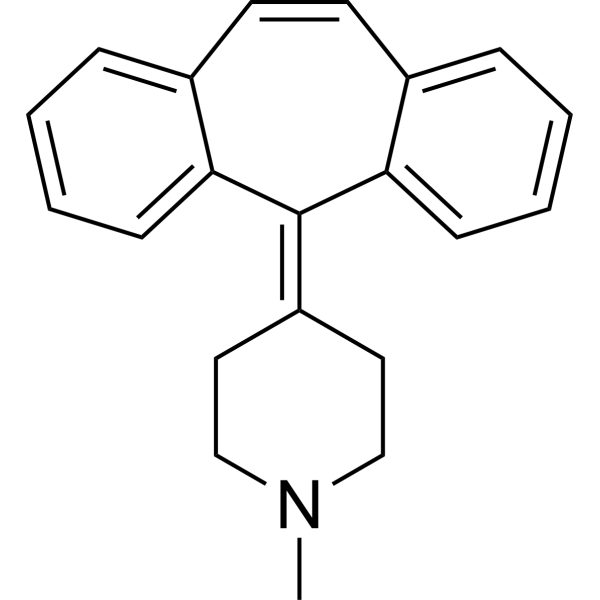
- Formule: C21H21N
- Masse moléculaire: 287.40
Cyproheptadine acts as a p38 MAP kinase activator, CHK2 activator, histamine H1 receptor inhibitor and serotonin receptor inhibitor. Cyproheptadine mediates cell cycle arrest via G1 phase arrest, G1/S transition arrest, G0/G1 phase arrest, reduced expression of cyclins D1/D2/D3, upregulated expression of HBP1, p16, p21, p27, and decreased phosphorylation of retinoblastoma protein. Cyproheptadine induces Apoptosis by increasing PARP and cleaved PARP, as well as activating the mitochondrial caspase pathway. Cyproheptadine inhibits tumor growth with extremely low toxicity to normal cells. Cyproheptadine can be used in research related to hepatocellular carcinoma, multiple myeloma and acute myeloid leukemia.
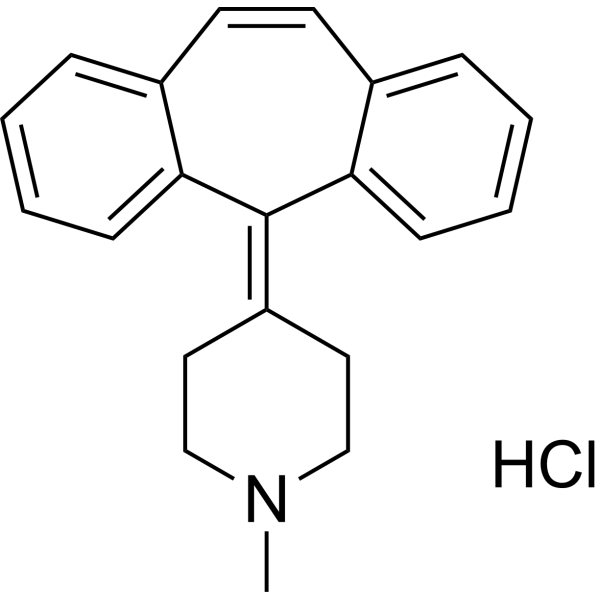
- Formule: C21H22ClN
- Masse moléculaire: 323.86
Cyproheptadine hydrochloride (Cyproheptadine HCl) acts as a p38 MAP kinase activator, CHK2 activator, histamine H1 receptor inhibitor and serotonin receptor inhibitor. Cyproheptadine hydrochloride mediates cell cycle arrest via G1 phase arrest, G1/S transition arrest, G0/G1 phase arrest, reduced expression of cyclins D1/D2/D3, upregulated expression of HBP1, p16, p21, p27, and decreased phosphorylation of retinoblastoma protein. Cyproheptadine hydrochloride induces Apoptosis by increasing PARP and cleaved PARP, as well as activating the mitochondrial caspase pathway. Cyproheptadine hydrochloride inhibits tumor growth with extremely low toxicity to normal cells. Cyproheptadine hydrochloride can be used in research related to hepatocellular carcinoma, multiple myeloma and acute myeloid leukemia.

10 kcal% Fat Diet (Matching Sucrose to HY-AF0005) is the control diet for the 60 kcal% High Fat Diet (HY-AF0005). 45 kcal% High Fat Diet is a high-fat model diet used to establish animal models of obesity and type 2 diabetes. Designed with similarities to Research Diets, Inc.formula D12450J.
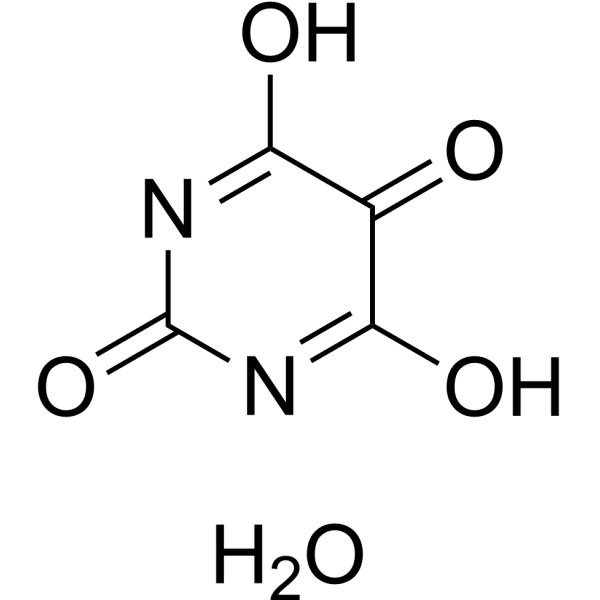
- Formule: C4H4N2O5
- Masse moléculaire: 160.08
Alloxan hydrate is a diabetogenic agent to induce diabetes. Alloxan hydrate is a proteasome inhibitor. Alloxan causes diabetes in experimental animals through its ability to destroy the insulin-secreting B-cells of the pancreas.

45 kcal% High Fat Diet is a high-fat model diet used to establish animal models of obesity and type 2 diabetes. Designed with similarities to Research Diets, Inc.formula D12451.

10 kcal% Fat Diet (Matching Sucrose to HY-AF0004) is the control diet for the 45 kcal% High Fat Diet (HY-AF0004). 45 kcal% High Fat Diet is a high-fat model diet used to establish animal models of obesity and type 2 diabetes. Designed with similarities to Research Diets, Inc.formula D12450H.
- 1



