



Acoramidis

Based on 1 Customer Validation
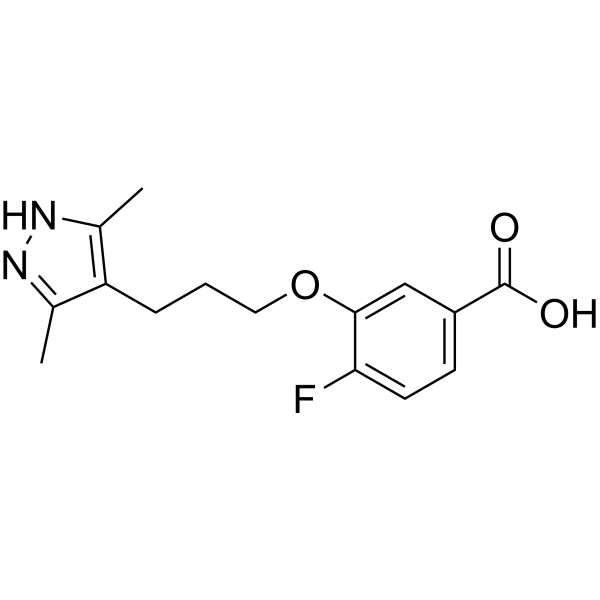
Acoramidis (AG10) is an orally active and selective kinetic stabilizer of WT and V122I-TTR (transthyretin). Acoramidis (AG10) is used in the study for transthyretin amyloidosis.
Nos produits utilisent uniquement pour la recherche. Nous ne vendons pas aux patients.
- Pureté : 98.47%
- CAS No.: 1446711-81-4
- Formule: C15H17FN2O3
- Masse moléculaire:292.31
-
Stockage:Powder -20°C, 3 years , 4°C, 2 years ; In solvent -80°C, 6 months , -20°C, 1 month

To place orders, for customer services and technical support, please contact: MedChemExpress USA
Tel: 609-228-6898 E-mail: [email protected] [email protected]


-
 Activité biologique
-
Chemical Information
-
Solvant et solubilité
- Protocole
- Pureté et documentation
- Références
-
 Help & FAQs


-
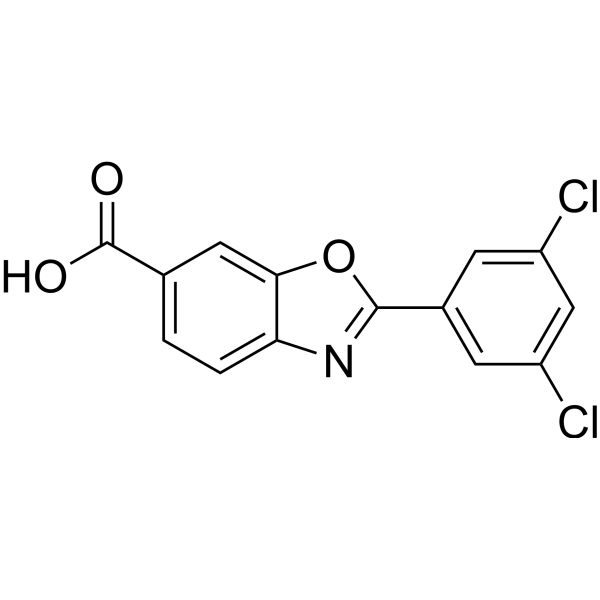
HY-14852
TafamidisTransthyretin Stabilizer -
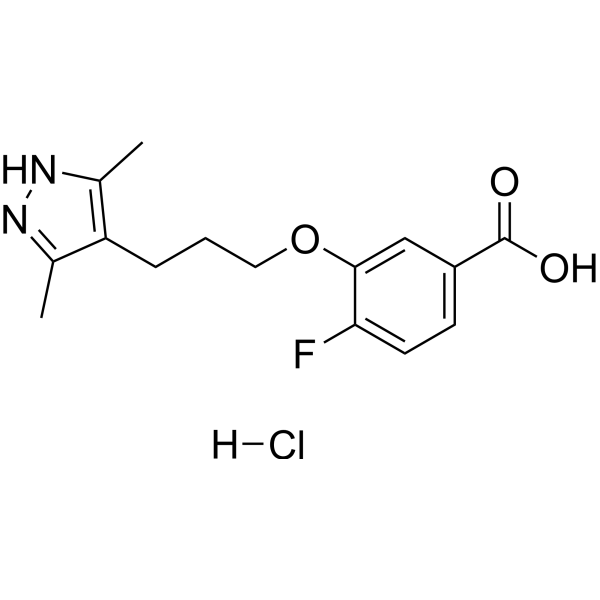
HY-109165A
Acoramidis hydrochlorideTransthyretin Stabilizer -

HY-109165AR
Acoramidis hydrochloride (Standard)Reference Standard -
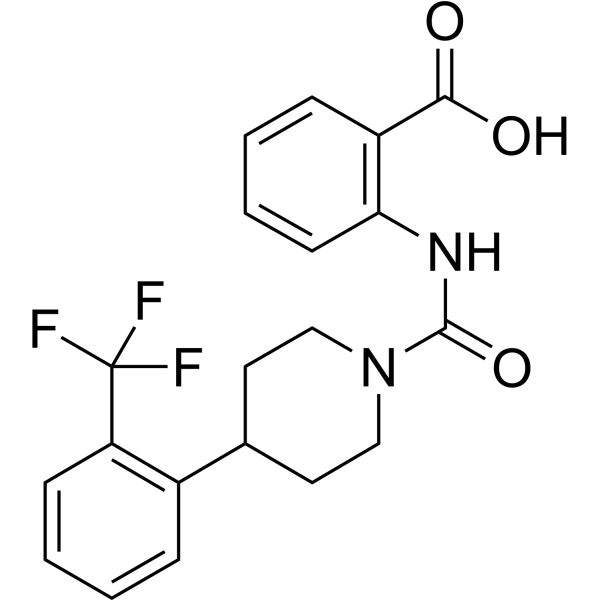
HY-107633
A 1120RBP4 Antagonist -
HY-14852A
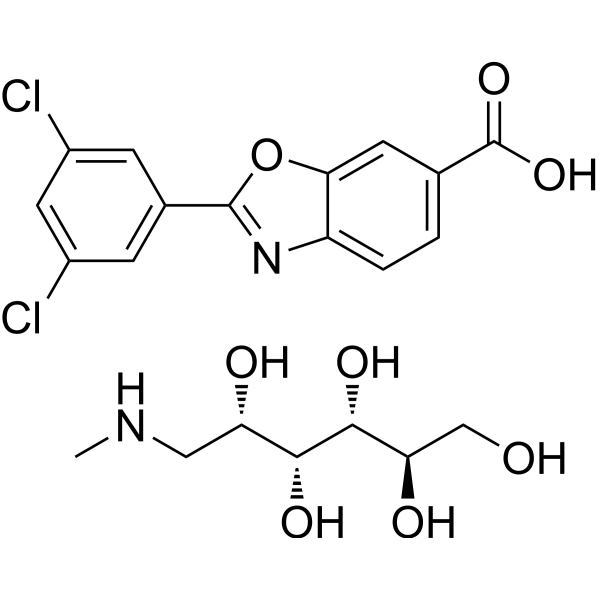
Tafamidis meglumineTransthyretin Stabilizer -
HY-113950
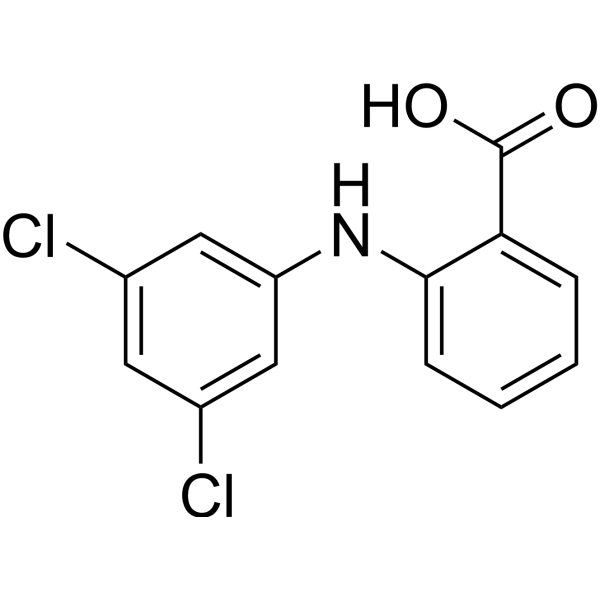
Dichlorophenyl-ABATTR Amyloid Fibril Formation Inhibitor -
HY-153577
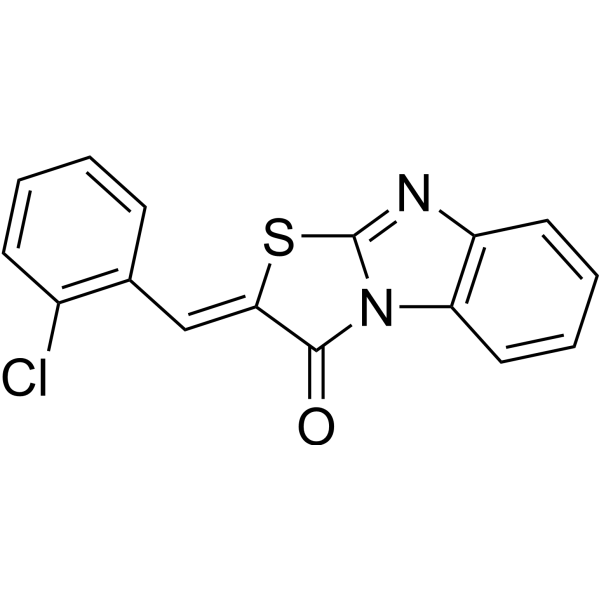
WT-TTR inhibitor 1WT-TTR Inhibitor -

HY-107633R
A 1120 (Standard)Reference Standard -

HY-14852AR
Tafamidis meglumine (Standard)Transthyretin Stabilizer


Activité biologique
Description
In Vitro
Acoramidis (AG10, 0.1-10 μM for TTR ~5 μM) stabilizes V122I- and WT-TTR equally well and also exceeds their efficacy to stabilize WT and mutant TTR in whole serum[1].
Acoramidis (AG10) stimulates the mitochondrial QO2 in a concentration-dependent manner between 10 and 100 μM[3].
Acoramidis (AG10) has very minimal inhibition of two common off-targets in drug discovery, the potassium ion channel hERG (IC50 > 100 μM) and a number of cytochrome P450 isozymes (IC50 > 50 μM) (low toxicity)[1].
MedChemExpress (MCE) has not independently confirmed the accuracy of these methods. They are for reference only.
-
Cell Line:Human serum (TTR ∼5 µM).
-
Concentration:0.1 and 10 μM.
-
Incubation Time:72 h.
-
Result:Was significantly more effective than tafamidis in stabilizing TTR.
The concentration of AG10 to 10 µM resulted in stabilization of almost all of TTR in serum.
In Vivo
-
Animal Model:Wistar rats[1].
-
Dosage:50 mg/kg/d (Toxicity Analysis).
-
Administration:Oral gavage, daily for 28 d.
-
Result:Showed the plasma Cmax of ∼40 µM and histopathological evaluation of liver, kidney, heart, spleen, thymus, and lung showed no signs of pathologic processes in the AG10-treated animals
Essai clinique
| NCT Number | Sponsor | Condition | Start Date |
Phase

|
|---|---|---|---|---|
| NCT01329991 | 2011-05 | PHASE1 |


Chemical Information
-
CAS No. 1446711-81-4
-
Appearance Solid
-
Masse moléculaire 292.31
-
Formule C15H17FN2O3
-
Color White to off-white
-
SMILES
O=C(O)C1=CC=C(F)C(OCCCC2=C(C)NN=C2C)=C1
-
Synonyms
AG10
-
Livraison
Room temperature in continental US; may vary elsewhere.
-
Stockage
Powder -20°C 3 years 4°C 2 years In solvent -80°C 6 months -20°C 1 month


Solvant et solubilité
In Vitro:
DMSO : 100 mg/mL (342.10 mM; Need ultrasonic; Hygroscopic DMSO has a significant impact on the solubility of product, please use newly opened DMSO)
Please refer to the solubility information to select the appropriate solvent. Once prepared, please aliquot and store the solution to prevent product inactivation from repeated freeze-thaw cycles.
Storage method and period of stock solution: -80°C, 6 months; -20°C, 1 month. When stored at -80°C, please use it within 6 months. When stored at -20°C, please use it within 1 month.
Please refer to the solubility information to select the appropriate solvent. Once prepared, please aliquot and store the solution to prevent product inactivation from repeated freeze-thaw cycles.
Storage method and period of stock solution: -80°C, 6 months; -20°C, 1 month. When stored at -80°C, please use it within 6 months. When stored at -20°C, please use it within 1 month.
Concentration (start) × Volume (start) = Concentration (final) × Volume (final)
In Vivo:
Select the appropriate dissolution method based on your experimental animal and administration route.
- For the following dissolution methods, please ensure to first prepare a clear stock solution using an In Vitro approach and then sequentially add co-solvents:
- To ensure reliable experimental results, the clarified stock solution can be appropriately stored based on storage conditions. As for the working solution for In Vivo experiments, it is recommended to prepare freshly and use it on the same day.
- The percentages shown for the solvents indicate their volumetric ratio in the final prepared solution. If precipitation or phase separation occurs during preparation, heat and/or sonication can be used to aid dissolution.
Add each solvent one by one: 10% DMSO 40% PEG300 5% Tween-80 45% Saline
Solubility: 2.5 mg/mL (8.55 mM); Clear solution; Need ultrasonic
This protocol yields a clear solution of 2.5 mg/mL.
Taking 1 mL working solution as an example, add 100 μL DMSO stock solution (25.0 mg/mL) to 400 μL PEG300, and mix evenly; then add 50 μL Tween-80 and mix evenly; then add 450 μL Saline to adjust the volume to 1 mL.
Preparation of Saline: Dissolve 0.9 g sodium chloride in ddH₂O and dilute to 100 mL to obtain a clear Saline solution.
Add each solvent one by one: 10% DMSO 90% (20% SBE-β-CD in Saline)
Solubility: 2.5 mg/mL (8.55 mM); Clear solution; Need ultrasonic
This protocol yields a clear solution of 2.5 mg/mL.
Taking 1 mL working solution as an example, add 100 μL DMSO stock solution (25.0 mg/mL) to 900 μL 20% SBE-β-CD in Saline, and mix evenly.
Preparation of 20% SBE-β-CD in Saline (4°C, storage for one week): 2 g SBE-β-CD powder is dissolved in 10 mL Saline, completely dissolve until clear.
In Vivo Dissolution Calculator
Please enter the basic information of animal experiments:
-
-
-
-
Recommended: Prepare an additional quantity of animals to account for potential losses during experiments.
Please enter your animal formula composition:
-
%DMSO +
Recommended: Keep the proportion of DMSO in working solution below 2% if your animal is weak.
-
%+
-
+%Tween-80 + +
-
%Saline +
The co-solvents required include: DMSO, . All of co-solvents are available by MedChemExpress (MCE). , Tween 80. All of co-solvents are available by MedChemExpress (MCE).
Working solution concentration: 0.22 mg/mL
Method for preparing stock solution: mg drug dissolved in μL DMSO. Stock solution concentration: mg/mL.
1. Take μL DMSO stock solution;
2. Add μL .
μL , mix evenly;
3. Then add μL Tween 80, mix evenly;
4. Then add μL
Please ensure that the stock solution in the first step is dissolved to a clear state, and add co-solvents in sequence. You can use ultrasonic heating (ultrasonic cleaner, recommended frequency 20-40 kHz), vortexing, etc. to assist dissolution.


Pureté et documentation
-
Fiche technique (273 KB)
-
SDS (393 KB)
- English - EN (393 KB)
- Français - FR (393 KB)
- Deutsch - DE (393 KB)
- Norwegian - NO (393 KB)
- Español - ES (393 KB)
- Swedish - SV (393 KB)
- Italian - IT (393 KB)
- Korean - KR (393 KB)
- Portuguese - PT (393 KB)
-
Instruction de manipulation (2659 KB)
Références
[1]. Sravan C Penchala, et al. AG10 inhibits amyloidogenesis and cellular toxicity of the familial amyloid cardiomyopathy-associated V122I transthyretin. Proc Natl Acad Sci U S A. 2013 Jun 11;110(24):9992-7. [Content Brief]
[2]. Jonathan C Fox, et al. First-in-Human Study of AG10, a Novel, Oral, Specific, Selective, and Potent Transthyretin Stabilizer for the Treatment of Transthyretin Amyloidosis: A Phase 1 Safety, Tolerability, Pharmacokinetic, and Pharmacodynamic Study in Healthy Adult Volunteers. Clin Pharmacol Drug Dev. 2020 Jan;9(1):115-129. [Content Brief]
[3]. Stephen P Soltoff, et al. Evidence that tyrphostins AG10 and AG18 are mitochondrial uncouplers that alter phosphorylation-dependent cell signaling. J Biol Chem. 2004 Mar 19;279(12):10910-8. [Content Brief]


Complete Stock Solution Preparation Table
Please refer to the solubility information to select the appropriate solvent. Once prepared, please aliquot and store the solution to prevent product inactivation from repeated freeze-thaw cycles.
Storage method and period of stock solution: -80°C, 6 months; -20°C, 1 month. When stored at -80°C, please use it within 6 months. When stored at -20°C, please use it within 1 month.
| Optional Solvent | Concentration Solvent Mass | 1 mg | 5 mg | 10 mg | 25 mg |
|---|---|---|---|---|---|
| DMSO | 1 mM | 3.4210 mL | 17.1051 mL | 34.2103 mL | 85.5256 mL |
| 5 mM | 0.6842 mL | 3.4210 mL | 6.8421 mL | 17.1051 mL | |
| 10 mM | 0.3421 mL | 1.7105 mL | 3.4210 mL | 8.5526 mL | |
| 15 mM | 0.2281 mL | 1.1403 mL | 2.2807 mL | 5.7017 mL | |
| 20 mM | 0.1711 mL | 0.8553 mL | 1.7105 mL | 4.2763 mL | |
| 25 mM | 0.1368 mL | 0.6842 mL | 1.3684 mL | 3.4210 mL | |
| 30 mM | 0.1140 mL | 0.5702 mL | 1.1403 mL | 2.8509 mL | |
| 40 mM | 0.0855 mL | 0.4276 mL | 0.8553 mL | 2.1381 mL | |
| 50 mM | 0.0684 mL | 0.3421 mL | 0.6842 mL | 1.7105 mL | |
| 60 mM | 0.0570 mL | 0.2851 mL | 0.5702 mL | 1.4254 mL | |
| 80 mM | 0.0428 mL | 0.2138 mL | 0.4276 mL | 1.0691 mL | |
| 100 mM | 0.0342 mL | 0.1711 mL | 0.3421 mL | 0.8553 mL |


Acoramidis Related Classifications
HY-109165 Related Classifications
 Powered by Bioz