



Rufinamide

Based on 1 Customer Validation
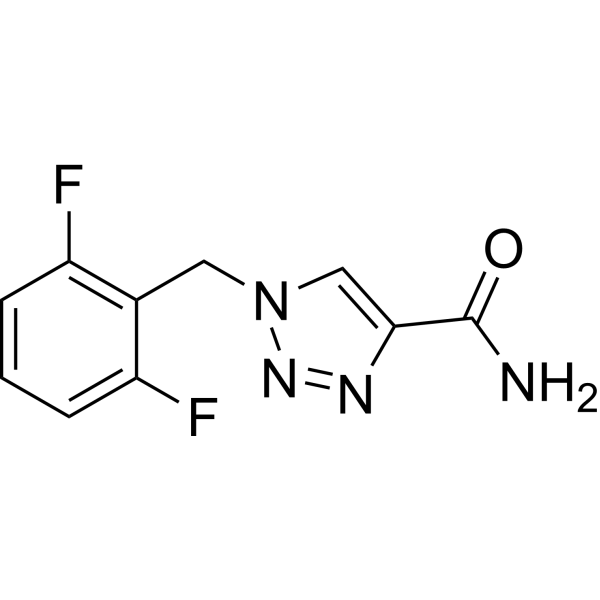
Rufinamide (CGP 33101) is an orally active antiepileptic compound that inhibits Na+ current activation, inhibits neuronal hyperexcitability, and has anticonvulsant effects. Rufinamide is used in the study of Lennox-Gastaut syndrome.
Nos produits utilisent uniquement pour la recherche. Nous ne vendons pas aux patients.
- Pureté : 99.88%
- CAS No.: 106308-44-5
- Formule: C10H8F2N4O
- Masse moléculaire:238.19
-
Stockage:Powder -20°C, 3 years , 4°C, 2 years ; In solvent -80°C, 2 years , -20°C, 1 year

To place orders, for customer services and technical support, please contact: MedChemExpress USA
Tel: 609-228-6898 E-mail: [email protected] [email protected]


-
 Activité biologique
-
Chemical Information
-
Solvant et solubilité
- Pureté et documentation
- Références
-
 Help & FAQs


-
HY-A0057
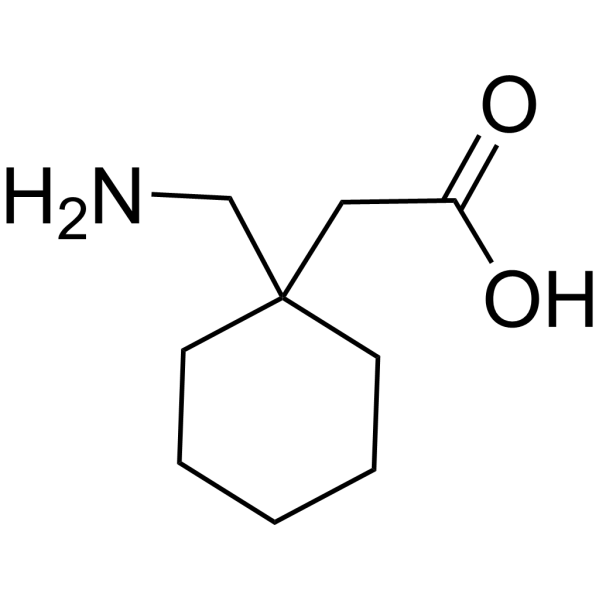
GabapentinCalcium Channel Blocker. -
HY-B0448
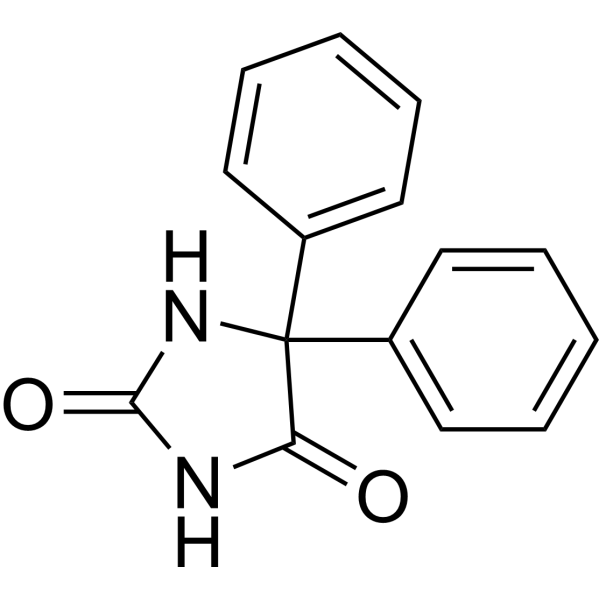
PhenytoinVirus Protease Inhibitor -
HY-B0124
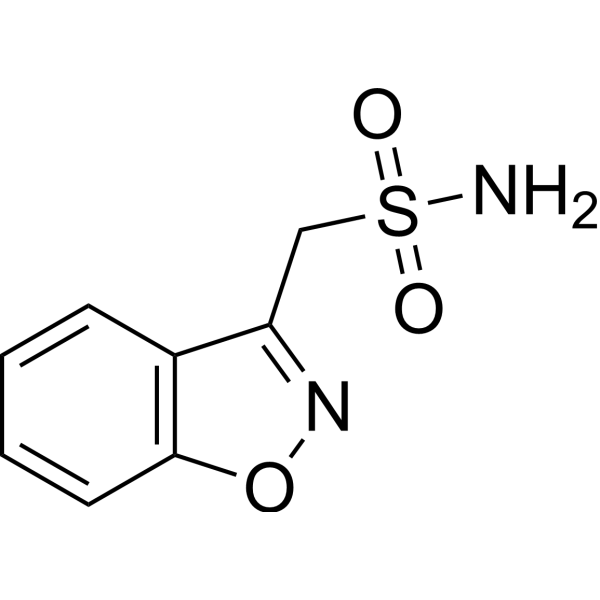
ZonisamideCarbonic Anhydrase Inhibitor -
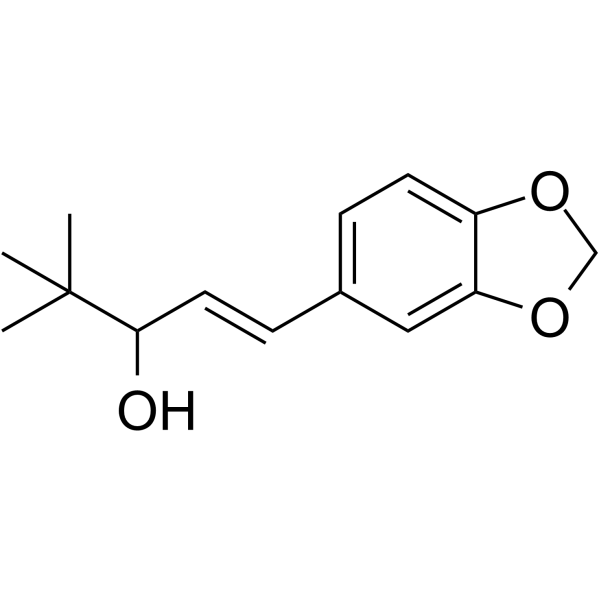
HY-103392
StiripentolAnticonvulsant Agent -
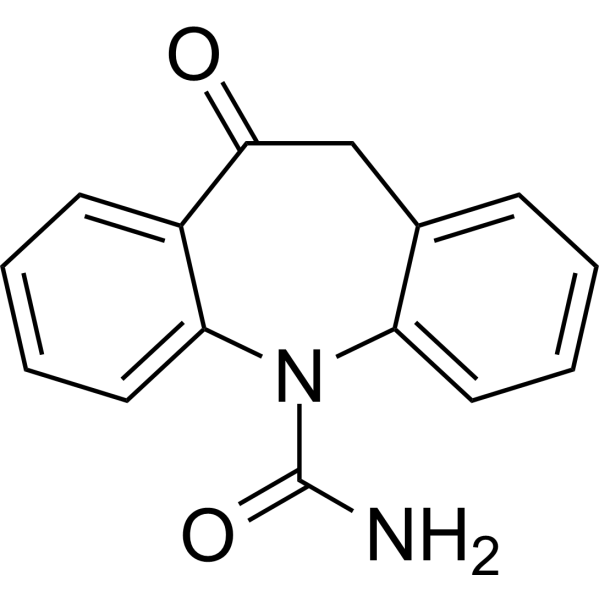
HY-B0114
OxcarbazepineAnti-Epileptic Agent -
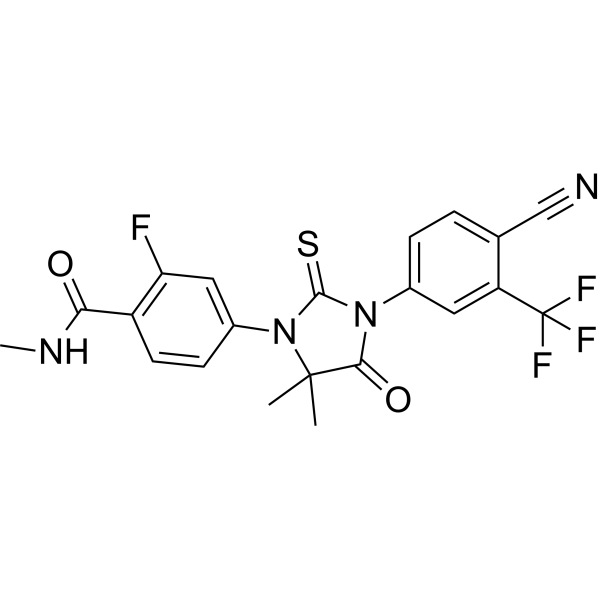
HY-70002
EnzalutamideAndrogen Receptor Antagonist -
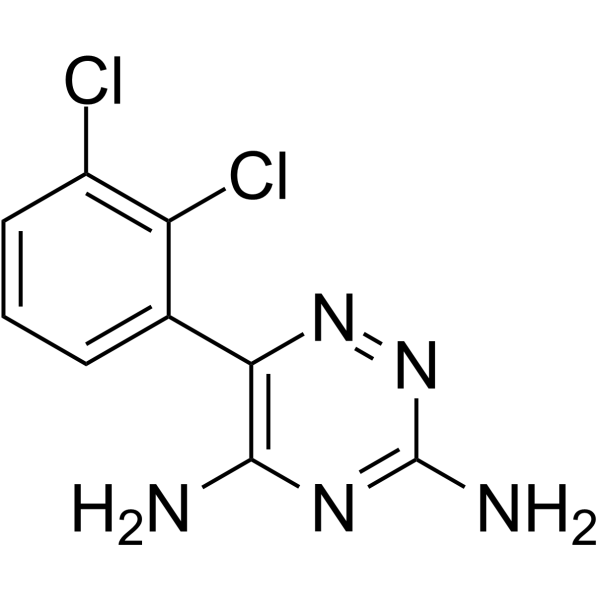
HY-B0495
LamotrigineAnticonvulsant Agent -
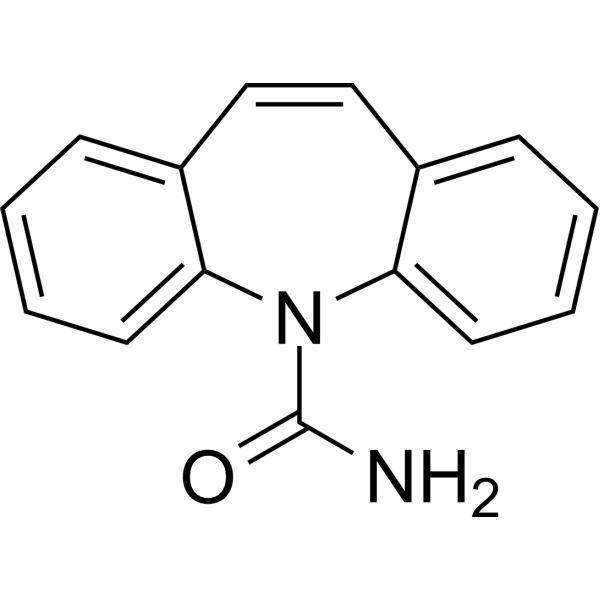
HY-B0246
CarbamazepineAnticonvulsant -
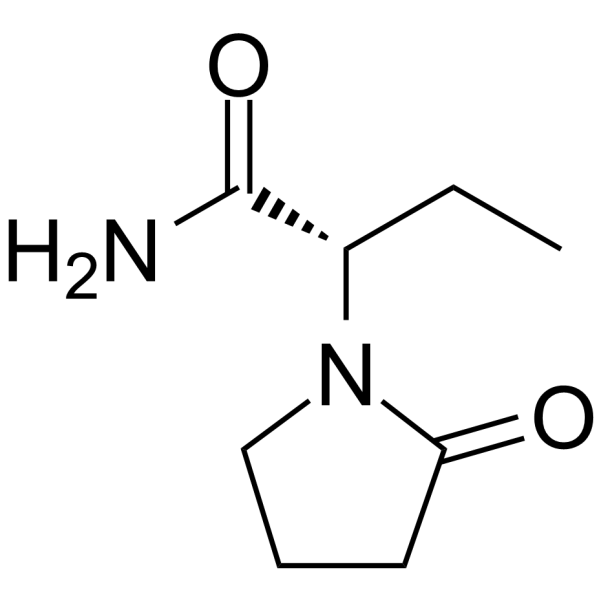
HY-B0106
LevetiracetamAntiepileptic Agent -
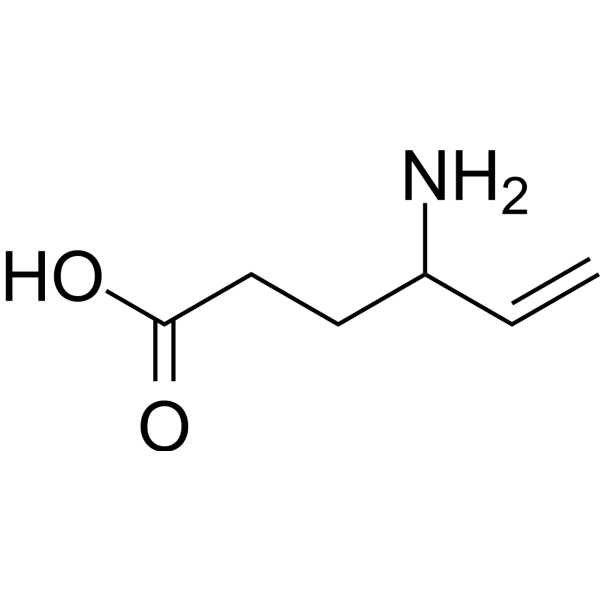
HY-15399
VigabatrinAntiepileptic Agent -
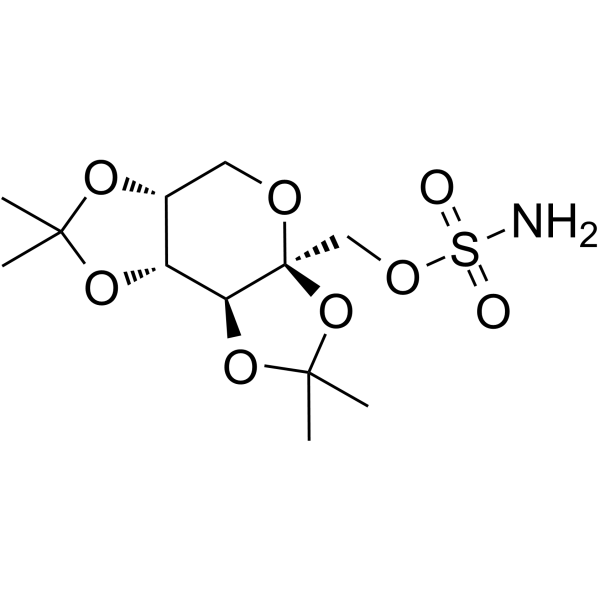
HY-B0122
TopiramateAntiepileptic Agent -
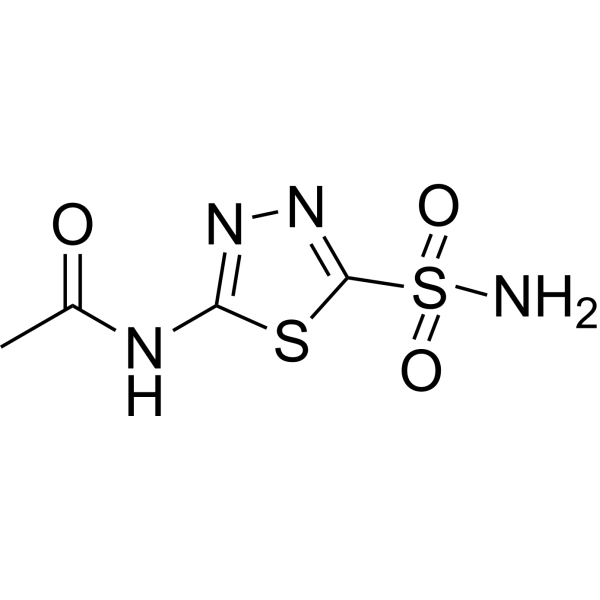
HY-B0782
AcetazolamideCA IX Inhibitor


Activité biologique
Description
In Vitro
Rufinamide (10-300 μM) selectively binds to the slow-inactivated state (Ii) of Na+ channels in CHO-K1 and human embryonic kidney 293 cells transfected with human NaV 1.7 cDNA, causing a hyperpolarizing shift and a kinase-dependent block, and inhibits the resuscitation current in a dose-dependent manner[1][3].
Rufinamide (100 µM) alleviates neuropathic pain in dorsal root ganglion neurons isolated from C57BL/6 mice by affecting the sodium ion stabilization inactivation effect[3].
MedChemExpress (MCE) has not independently confirmed the accuracy of these methods. They are for reference only.
In Vivo
Rufinamide is non-neurotoxic and has a high protection index at doses that reduce seizures (i.p. TD50: 500-1,000 mg/kg; p.o. TD50: ≥ 1,000 mg/kg)[2].
Rufinamide (p.o.) can effectively inhibit MES-induced seizures in Sprague-Dawley rats (ED50: 6.1 mg/kg) and is well tolerated with low toxicity[2].
Rufinamide (i.p., 5-50 mg/kg) dose-dependently alleviates neuropathic pain behaviors in the mouse spared nerve injury model without altering basal mechanical sensitivity or thermal paw withdrawal latency[3].
MedChemExpress (MCE) has not independently confirmed the accuracy of these methods. They are for reference only.
-
Animal Model:C57BL/6 mice (male, aged 4-8 weeks, 20-25 g)[3]
-
Dosage:5,10,25,50 mg/kg
-
Administration:i.p. one dose
-
Result:Showed dose-dependent relief of SNI-induced allodynia, with effects seen 20 minutes after injection, peaking at 60 minutes, and persisting for at least 4 hours, but subsiding by 24 hours after administration,at the highest dose, allodynia-like behaviors were completely reversed.
Did not cause any changes in sedation or basal pain sensitivity.


Chemical Information
-
CAS No. 106308-44-5
-
Appearance Solid
-
Masse moléculaire 238.19
-
Formule C10H8F2N4O
-
Color White to off-white
-
SMILES
O=C(C1=CN(CC2=C(F)C=CC=C2F)N=N1)N
-
Synonyms
CGP 33101; E 2080; RUF 331
-
Livraison
Room temperature in continental US; may vary elsewhere.
-
Stockage
Powder -20°C 3 years 4°C 2 years In solvent -80°C 2 years -20°C 1 year


Solvant et solubilité
In Vitro:
DMSO : 50 mg/mL (209.92 mM; Need ultrasonic; Hygroscopic DMSO has a significant impact on the solubility of product, please use newly opened DMSO)
Please refer to the solubility information to select the appropriate solvent. Once prepared, please aliquot and store the solution to prevent product inactivation from repeated freeze-thaw cycles.
Storage method and period of stock solution: -80°C, 2 years; -20°C, 1 year. When stored at -80°C, please use it within 2 years. When stored at -20°C, please use it within 1 year.
Please refer to the solubility information to select the appropriate solvent. Once prepared, please aliquot and store the solution to prevent product inactivation from repeated freeze-thaw cycles.
Storage method and period of stock solution: -80°C, 2 years; -20°C, 1 year. When stored at -80°C, please use it within 2 years. When stored at -20°C, please use it within 1 year.
Concentration (start) × Volume (start) = Concentration (final) × Volume (final)
In Vivo:
Select the appropriate dissolution method based on your experimental animal and administration route.
- For the following dissolution methods, please ensure to first prepare a clear stock solution using an In Vitro approach and then sequentially add co-solvents:
- To ensure reliable experimental results, the clarified stock solution can be appropriately stored based on storage conditions. As for the working solution for In Vivo experiments, it is recommended to prepare freshly and use it on the same day.
- The percentages shown for the solvents indicate their volumetric ratio in the final prepared solution. If precipitation or phase separation occurs during preparation, heat and/or sonication can be used to aid dissolution.
In Vivo Dissolution Calculator
Please enter the basic information of animal experiments:
-
-
-
-
Recommended: Prepare an additional quantity of animals to account for potential losses during experiments.
Please enter your animal formula composition:
-
%DMSO +
Recommended: Keep the proportion of DMSO in working solution below 2% if your animal is weak.
-
%+
-
+%Tween-80 + +
-
%Saline +
The co-solvents required include: DMSO, . All of co-solvents are available by MedChemExpress (MCE). , Tween 80. All of co-solvents are available by MedChemExpress (MCE).
Working solution concentration: 0.22 mg/mL
Method for preparing stock solution: mg drug dissolved in μL DMSO. Stock solution concentration: mg/mL.
1. Take μL DMSO stock solution;
2. Add μL .
μL , mix evenly;
3. Then add μL Tween 80, mix evenly;
4. Then add μL
Please ensure that the stock solution in the first step is dissolved to a clear state, and add co-solvents in sequence. You can use ultrasonic heating (ultrasonic cleaner, recommended frequency 20-40 kHz), vortexing, etc. to assist dissolution.


Pureté et documentation
-
Fiche technique (275 KB)
-
SDS (393 KB)
- English - EN (393 KB)
- Français - FR (393 KB)
- Deutsch - DE (393 KB)
- Norwegian - NO (393 KB)
- Español - ES (393 KB)
- Swedish - SV (393 KB)
- Italian - IT (393 KB)
- Korean - KR (393 KB)
- Portuguese - PT (393 KB)
-
Instruction de manipulation (2659 KB)
Références
[1]. Chen JL, et al. Inhibition of resurgent Na+ currents by rufinamide. Neuropharmacology. 2024 Apr 1;247:109835. [Content Brief]
[2]. White HS, et.al. The anticonvulsant profile of rufinamide (CGP 33101) in rodent seizure models. Epilepsia. 2008 Jul;49(7):1213-20. [Content Brief]
[3]. Suter MR, et.al. Rufinamide attenuates mechanical allodynia in a model of neuropathic pain in the mouse and stabilizes voltage-gated sodium channel inactivated state. Anesthesiology. 2013 Jan;118(1):160-72. [Content Brief]


Complete Stock Solution Preparation Table
Please refer to the solubility information to select the appropriate solvent. Once prepared, please aliquot and store the solution to prevent product inactivation from repeated freeze-thaw cycles.
Storage method and period of stock solution: -80°C, 2 years; -20°C, 1 year. When stored at -80°C, please use it within 2 years. When stored at -20°C, please use it within 1 year.
| Optional Solvent | Concentration Solvent Mass | 1 mg | 5 mg | 10 mg | 25 mg |
|---|---|---|---|---|---|
| DMSO | 1 mM | 4.1983 mL | 20.9916 mL | 41.9833 mL | 104.9582 mL |
| 5 mM | 0.8397 mL | 4.1983 mL | 8.3967 mL | 20.9916 mL | |
| 10 mM | 0.4198 mL | 2.0992 mL | 4.1983 mL | 10.4958 mL | |
| 15 mM | 0.2799 mL | 1.3994 mL | 2.7989 mL | 6.9972 mL | |
| 20 mM | 0.2099 mL | 1.0496 mL | 2.0992 mL | 5.2479 mL | |
| 25 mM | 0.1679 mL | 0.8397 mL | 1.6793 mL | 4.1983 mL | |
| 30 mM | 0.1399 mL | 0.6997 mL | 1.3994 mL | 3.4986 mL | |
| 40 mM | 0.1050 mL | 0.5248 mL | 1.0496 mL | 2.6240 mL | |
| 50 mM | 0.0840 mL | 0.4198 mL | 0.8397 mL | 2.0992 mL | |
| 60 mM | 0.0700 mL | 0.3499 mL | 0.6997 mL | 1.7493 mL | |
| 80 mM | 0.0525 mL | 0.2624 mL | 0.5248 mL | 1.3120 mL | |
| 100 mM | 0.0420 mL | 0.2099 mL | 0.4198 mL | 1.0496 mL |


Rufinamide Related Classifications
HY-A0042 Related Classifications
 Powered by Bioz