



COH-SR4
Based on 2 publication(s) in Google Scholar
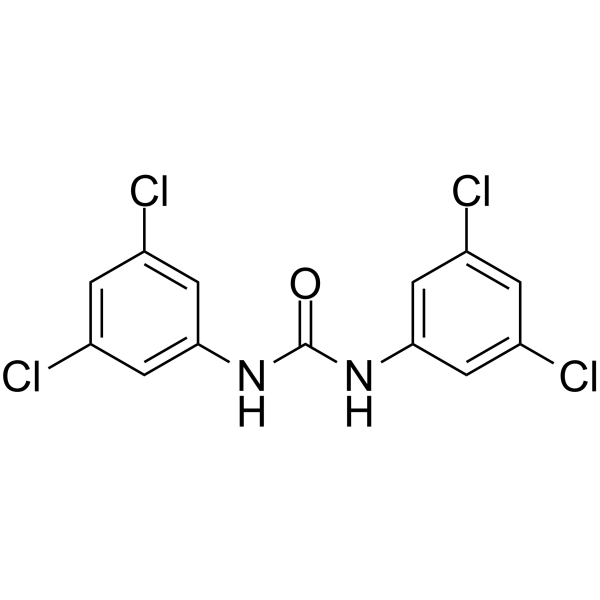
COH-SR4 is an AMPK activator. COH-SR4 shows potent anti-proliferative activities against leukemia, melanoma, breast and lung cancers. COH-SR4 inhibits adipocyte differentiation via AMPK activation. COH-SR4 can be used for the research of obesity and related metabolic disorders.
For research use only. We do not sell to patients.
- Purity : 99.53%
- CAS No.: 73439-19-7
- Formula: C13H8Cl4N2O
- Molecular Weight:350.03
-
Storage:Powder -20°C, 3 years , 4°C, 2 years ; In solvent -80°C, 6 months , -20°C, 1 month

To place orders, for customer services and technical support, please contact: MedChemExpress USA
Tel: 609-228-6898 E-mail: [email protected] [email protected]


-
 Biological Activity
-
Chemical Information
-
Solvent & Solubility
- Protocols
- Purity & Documentation
- References
-
 Help & FAQs


-
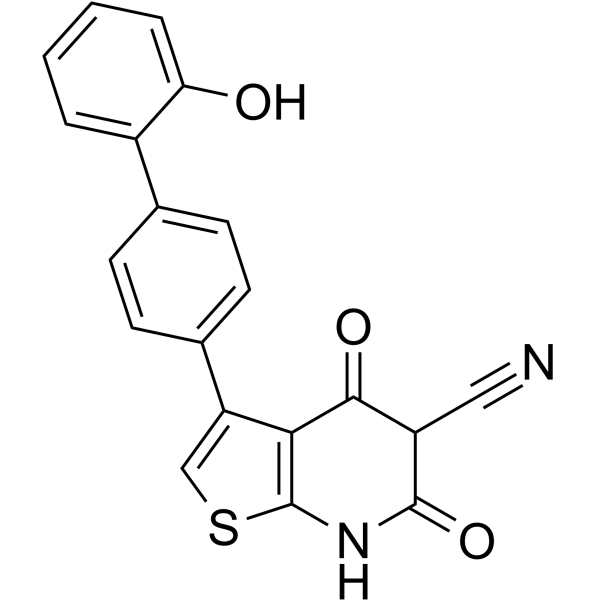
HY-50662
A-769662AMPK Activator -
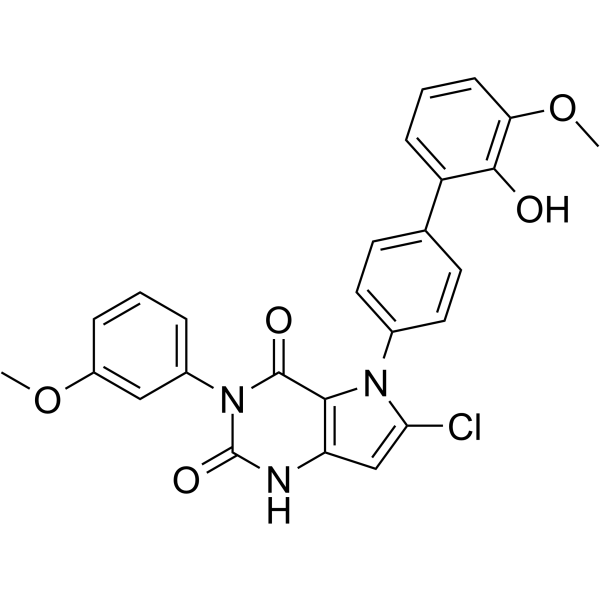
HY-100548
GSK621AMPK Activator -
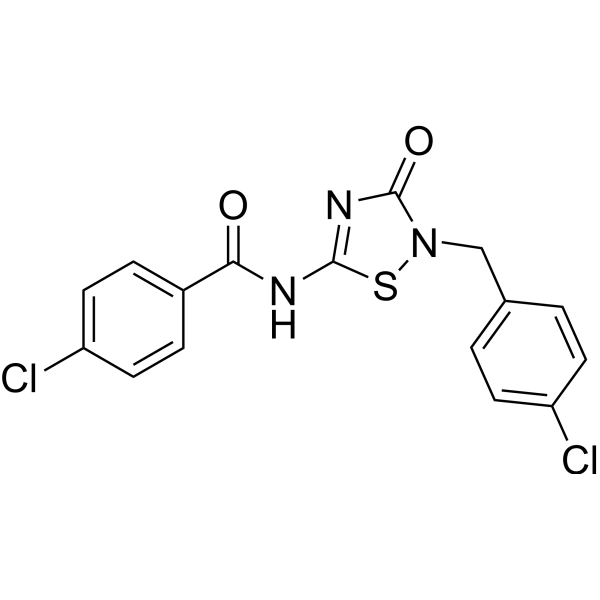
HY-112233
O-304AMPK Activator -
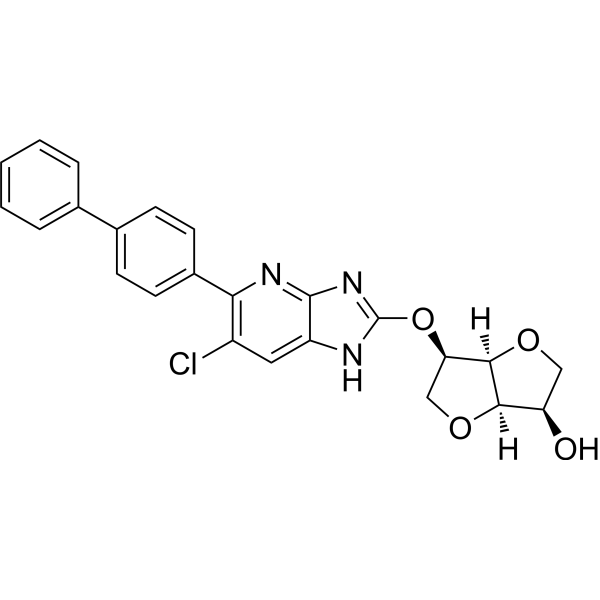
HY-111363
MK8722AMPK Activator -
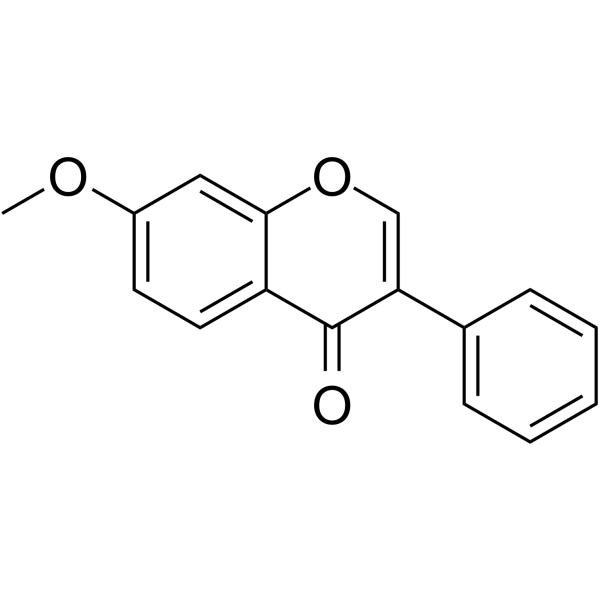
HY-N6631
7-MethoxyisoflavoneAMPK Activator -
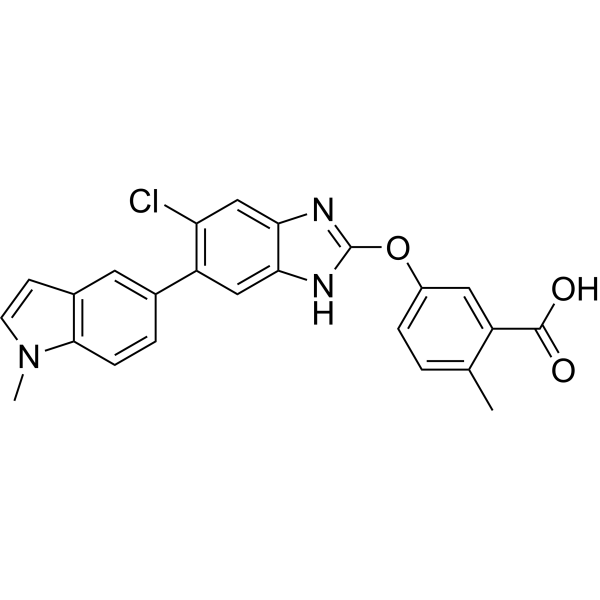
HY-112769
EX229AMPK Activator -
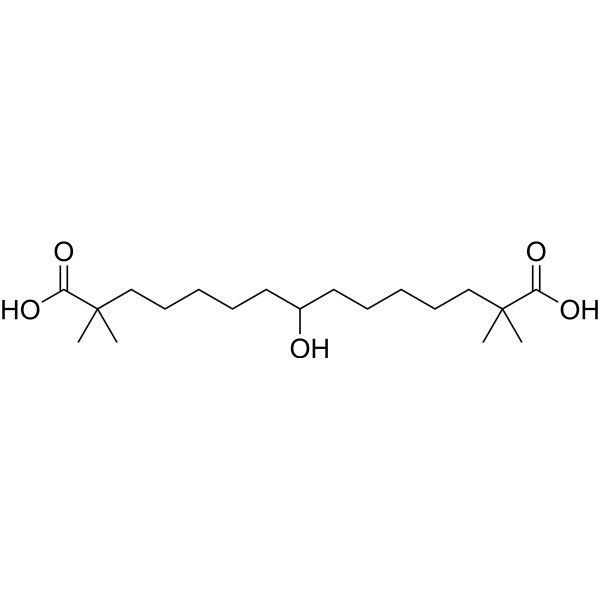
HY-12357
Bempedoic acidACL Inhibitor/AMPK Activator -
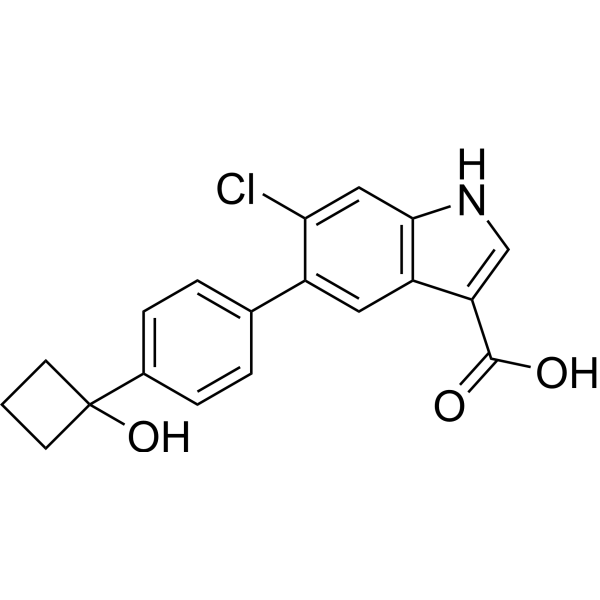
HY-103683
PF-06409577AMPK Activator -

HY-112108
Chitosan oligosaccharideD-Glucosamine Oligomer -
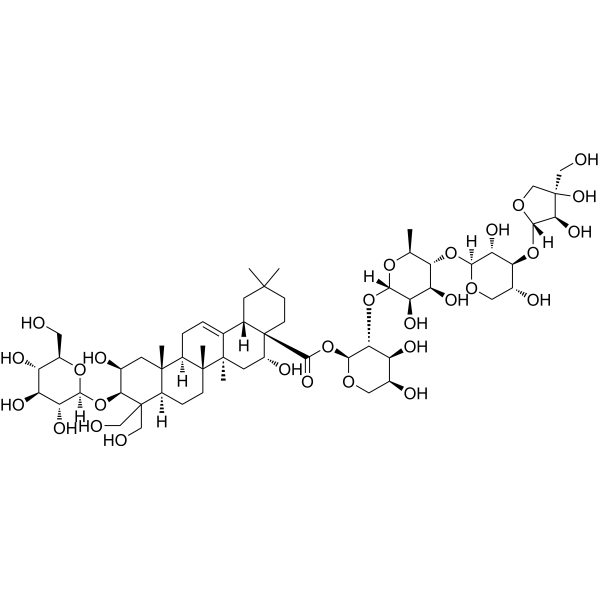
HY-N1411
Platycodin DAMPK Activator -
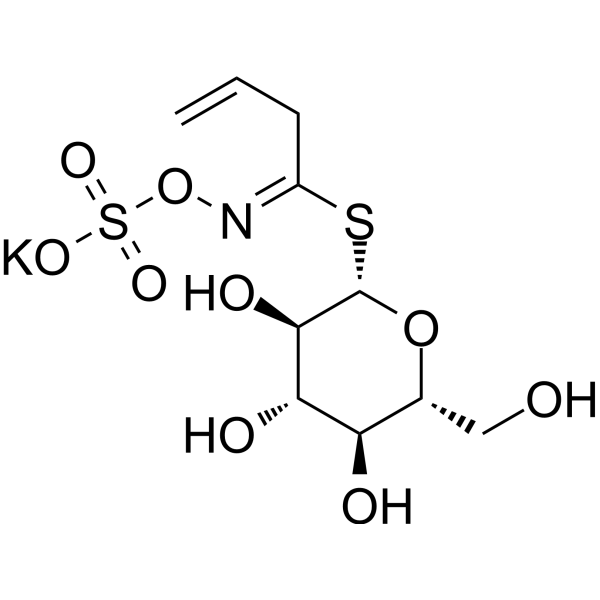
HY-N0404
SinigrinGlucosinolate -
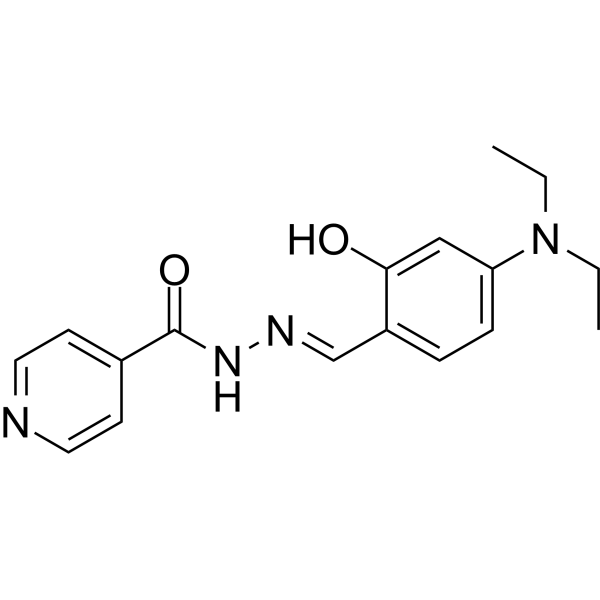
HY-103238
RSVA405AMPK Activator
Publications Citing Use of MedChemExpress (MCE) COH-SR4
MoreAll AMPK Isoforms
More

Biological Activity
Description
IC50 & Target
AMPK[1]
In Vitro
COH-SR4 (1-5 μM; 24 hours) results in a dose-dependent increase in the phosphorylation of AMPK and its substrate ACC in 3T3-L1 preadipocytes, as well as in cancer cells such as HL-60, HeLa, MCF-7[1].
COH-SR4 (3-5 µM; 7 days) significantly inhibits 3T3-L1 adipocyte differentiation in a dose-dependent manner[1].
COH-SR4 (1-5 μM; 24 hours) promotes cell G1 cycle arrest[1].
COH-SR4 significantly reduces intracellular lipid accumulation and downregulates the expression of key adipogenesis-related transcription factors and lipogenic proteins[1].
MedChemExpress (MCE) has not independently confirmed the accuracy of these methods. They are for reference only.
-
Cell Line:3T3-L1 preadipocytes, HL-60 cells, HeLa cells, MCF-7 cells
-
Concentration:1 μM, 3 μM, 5 μM
-
Incubation Time:24 hours
-
Result:Indirectly activated AMPK.
-
Cell Line:3T3-L1 cells
-
Concentration:1 μM, 3 μM, 5 μM
-
Incubation Time:24 hours
-
Result:Modulated the level of proteins active during S and G2 phases of the cell cycle.
In Vivo
COH-SR4 improves glycemic control and dyslipidemia in HFD obese mice[2].
COH-SR4 decreases adipose tissue hypertrophy and affects circulating adipokine levels in HFD obese mice[2].
COH-SR4 prevents hepatic lipid accumulation and fatty liver in HFD obese mice[2].
MedChemExpress (MCE) has not independently confirmed the accuracy of these methods. They are for reference only.
-
Animal Model:Nine-week old male C57BL/6J mice[2]
-
Dosage:5 mg/kg
-
Administration:Oral gavage, three times a week, for 6 weeks
-
Result:Decreased body weight and fat mass in HFD obese mice.


Chemical Information
-
CAS No. 73439-19-7
-
Appearance Solid
-
Molecular Weight 350.03
-
Formula C13H8Cl4N2O
-
Color Gray to gray purple
-
SMILES
O=C(NC1=CC(Cl)=CC(Cl)=C1)NC2=CC(Cl)=CC(Cl)=C2
-
Shipping
Room temperature in continental US; may vary elsewhere.
-
Storage
Powder -20°C 3 years 4°C 2 years In solvent -80°C 6 months -20°C 1 month


Publications (2)
-
Journal Impact Factor
-
Most Recent
-
-
Cell Mol Gastroenterol Hepatol
Apolipoprotein A-1 accelerated liver regeneration through regulating autophagy via AMPK-ULK1 pathway. [Abstract]2024;17(4):539-551. PMID: 38122985


Solvent & Solubility
In Vitro:
DMSO : 125 mg/mL (357.11 mM; Need ultrasonic; Hygroscopic DMSO has a significant impact on the solubility of product, please use newly opened DMSO)
Please refer to the solubility information to select the appropriate solvent. Once prepared, please aliquot and store the solution to prevent product inactivation from repeated freeze-thaw cycles.
Storage method and period of stock solution: -80°C, 6 months; -20°C, 1 month. When stored at -80°C, please use it within 6 months. When stored at -20°C, please use it within 1 month.
Please refer to the solubility information to select the appropriate solvent. Once prepared, please aliquot and store the solution to prevent product inactivation from repeated freeze-thaw cycles.
Storage method and period of stock solution: -80°C, 6 months; -20°C, 1 month. When stored at -80°C, please use it within 6 months. When stored at -20°C, please use it within 1 month.
Concentration (start) × Volume (start) = Concentration (final) × Volume (final)
In Vivo:
Select the appropriate dissolution method based on your experimental animal and administration route.
- For the following dissolution methods, please ensure to first prepare a clear stock solution using an In Vitro approach and then sequentially add co-solvents:
- To ensure reliable experimental results, the clarified stock solution can be appropriately stored based on storage conditions. As for the working solution for In Vivo experiments, it is recommended to prepare freshly and use it on the same day.
- The percentages shown for the solvents indicate their volumetric ratio in the final prepared solution. If precipitation or phase separation occurs during preparation, heat and/or sonication can be used to aid dissolution.
Add each solvent one by one: 10% DMSO 40% PEG300 5% Tween-80 45% Saline
Solubility: 2.08 mg/mL (5.94 mM); Suspended solution; Need ultrasonic
This protocol yields a suspended solution of 2.08 mg/mL. Suspended solution can be used for oral and intraperitoneal injection.
Taking 1 mL working solution as an example, add 100 μL DMSO stock solution (20.8 mg/mL) to 400 μL PEG300, and mix evenly; then add 50 μL Tween-80 and mix evenly; then add 450 μL Saline to adjust the volume to 1 mL.
Preparation of Saline: Dissolve 0.9 g sodium chloride in ddH₂O and dilute to 100 mL to obtain a clear Saline solution.
In Vivo Dissolution Calculator
Please enter the basic information of animal experiments:
-
-
-
-
Recommended: Prepare an additional quantity of animals to account for potential losses during experiments.
Please enter your animal formula composition:
-
%DMSO +
Recommended: Keep the proportion of DMSO in working solution below 2% if your animal is weak.
-
%+
-
+%Tween-80 + +
-
%Saline +
The co-solvents required include: DMSO, . All of co-solvents are available by MedChemExpress (MCE). , Tween 80. All of co-solvents are available by MedChemExpress (MCE).
Working solution concentration: 0.22 mg/mL
Method for preparing stock solution: mg drug dissolved in μL DMSO. Stock solution concentration: mg/mL.
1. Take μL DMSO stock solution;
2. Add μL .
μL , mix evenly;
3. Then add μL Tween 80, mix evenly;
4. Then add μL
Please ensure that the stock solution in the first step is dissolved to a clear state, and add co-solvents in sequence. You can use ultrasonic heating (ultrasonic cleaner, recommended frequency 20-40 kHz), vortexing, etc. to assist dissolution.


Purity & Documentation
-
Data Sheet (277 KB)
-
SDS (393 KB)
- English - EN (393 KB)
- Français - FR (393 KB)
- Deutsch - DE (393 KB)
- Norwegian - NO (393 KB)
- Español - ES (393 KB)
- Swedish - SV (393 KB)
- Italian - IT (393 KB)
- Korean - KR (393 KB)
- Portuguese - PT (393 KB)
-
Handling Instructions (2659 KB)
References
[1]. James L Figarola, et al. Small‑molecule COH-SR4 inhibits adipocyte differentiation via AMPK activation. Int J Mol Med. 2013 May;31(5):1166-76. [Content Brief]
[2]. James Lester Figarola, et al. COH-SR4 Reduces Body Weight, Improves Glycemic Control and Prevents Hepatic Steatosis in High Fat Diet-Induced Obese Mice. PLoS One. 2013; 8(12): e83801. [Content Brief]


Complete Stock Solution Preparation Table
Please refer to the solubility information to select the appropriate solvent. Once prepared, please aliquot and store the solution to prevent product inactivation from repeated freeze-thaw cycles.
Storage method and period of stock solution: -80°C, 6 months; -20°C, 1 month. When stored at -80°C, please use it within 6 months. When stored at -20°C, please use it within 1 month.
| Optional Solvent | Concentration Solvent Mass | 1 mg | 5 mg | 10 mg | 25 mg |
|---|---|---|---|---|---|
| DMSO | 1 mM | 2.8569 mL | 14.2845 mL | 28.5690 mL | 71.4224 mL |
| 5 mM | 0.5714 mL | 2.8569 mL | 5.7138 mL | 14.2845 mL | |
| 10 mM | 0.2857 mL | 1.4284 mL | 2.8569 mL | 7.1422 mL | |
| 15 mM | 0.1905 mL | 0.9523 mL | 1.9046 mL | 4.7615 mL | |
| 20 mM | 0.1428 mL | 0.7142 mL | 1.4284 mL | 3.5711 mL | |
| 25 mM | 0.1143 mL | 0.5714 mL | 1.1428 mL | 2.8569 mL | |
| 30 mM | 0.0952 mL | 0.4761 mL | 0.9523 mL | 2.3807 mL | |
| 40 mM | 0.0714 mL | 0.3571 mL | 0.7142 mL | 1.7856 mL | |
| 50 mM | 0.0571 mL | 0.2857 mL | 0.5714 mL | 1.4284 mL | |
| 60 mM | 0.0476 mL | 0.2381 mL | 0.4761 mL | 1.1904 mL | |
| 80 mM | 0.0357 mL | 0.1786 mL | 0.3571 mL | 0.8928 mL | |
| 100 mM | 0.0286 mL | 0.1428 mL | 0.2857 mL | 0.7142 mL |


COH-SR4 Related Classifications
HY-124822 Related Classifications
 Powered by Bioz