



Calcitonin (salmon)
Based on 3 publication(s) in Google Scholar
Calcitonin (salmon) (Salmon calcitonin) is a calcitonin receptor agonist and osteoclast inhibitor. Calcitonin (salmon) activates the calcitonin receptor/Cyclic AMP (cAMP) (HY-B1511) signaling pathway, binds to the amylin receptor (rat Kd = 30 pmol/L), inhibits osteoclast motility and bone resorption, and lowers plasma calcium. Calcitonin (salmon) induces proteoglycan and type II collagen synthesis, activates skeletal muscle glycogen phosphorylase and adenylate cyclase, stimulates glycogenolysis and increases plasma lactic acid (Lactic acid) (HY-B2227)/glucose (D-Glucose) (HY-B0389), inhibits insulin and gastric acid secretion and gastric emptying, and stimulates renin secretion. Calcitonin (salmon) relieves bone pain and produces antidepressant-like effects by inhibiting hippocampal p38 MAPK/JNK. Calcitonin (salmon) can be used in research on osteoporosis, osteoarthritis, Paget's disease, glucocorticoid-induced osteopenia, hyperglycemia, and depression.
Para uso exclusivo en investigación. No vendemos a pacientes.
- Pureza : 99.96%
- No. CAS: 47931-85-1
- Fòrmula: C145H240N44O48S2
- Peso molecular:3431.85
-
Almacenamiento:
Sealed storage, away from moisture.
Powder -80°C, 2 years , -20°C, 1 year* In solvent : -80°C, 6 months; -20°C, 1 month (sealed storage, away from moisture)

To place orders, for customer services and technical support, please contact: MedChemExpress USA
Tel: 609-228-6898 E-mail: [email protected] [email protected]


-
 Actividad biológica
-
Chemical Information
-
Solvente y solubilidad
- Protocolo
- Pureza y Documentación
- Referencias
-
 Help & FAQs


-
HY-P2273
Calcitonin (human)Hypocalcemic Hormone -
HY-P3462
CagrilintideAMYR/CTR agonist -
HY-P1464
Amylin, amide, ratAMY1/AMY3 Ligand -
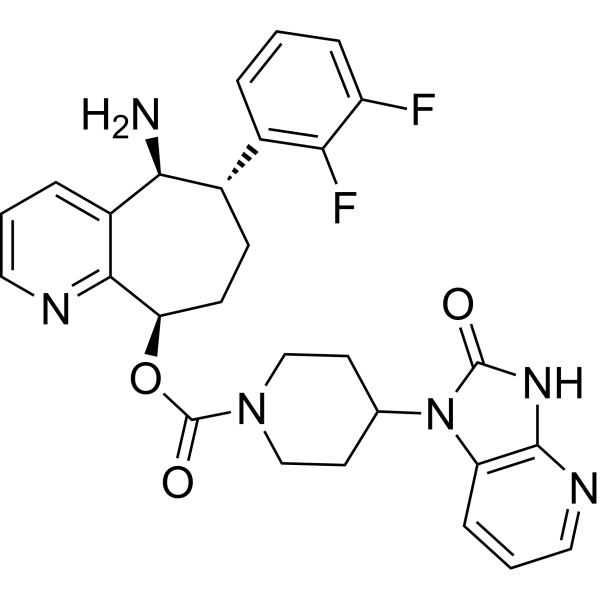
HY-15498
RimegepantCGRP/AMY1 Receptor Antagonist -

HY-114118
SemaglutideGLP-1R Agonist -
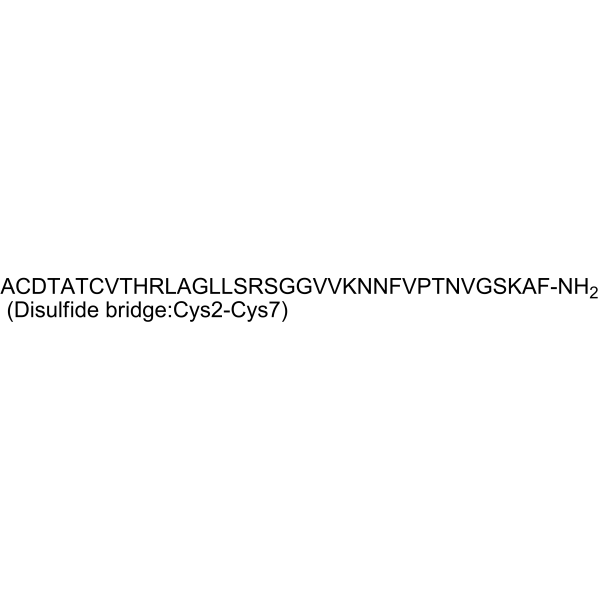
HY-P1071
α-CGRP (human)Vasodilator -
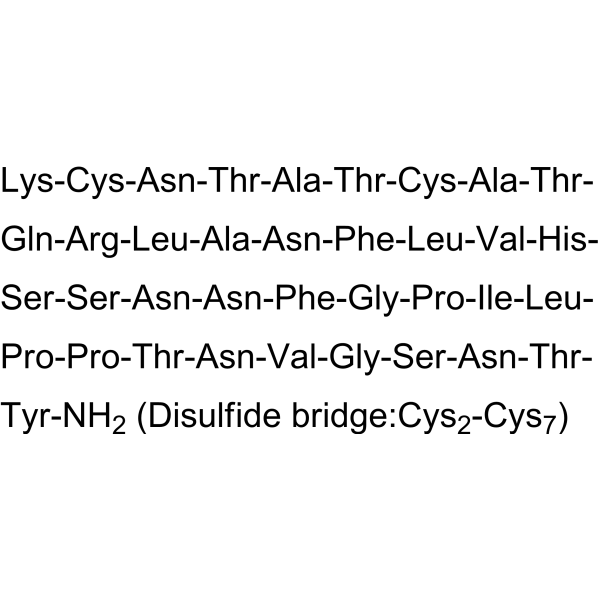
HY-P0058
PramlintideAnti-diabetic Agent -
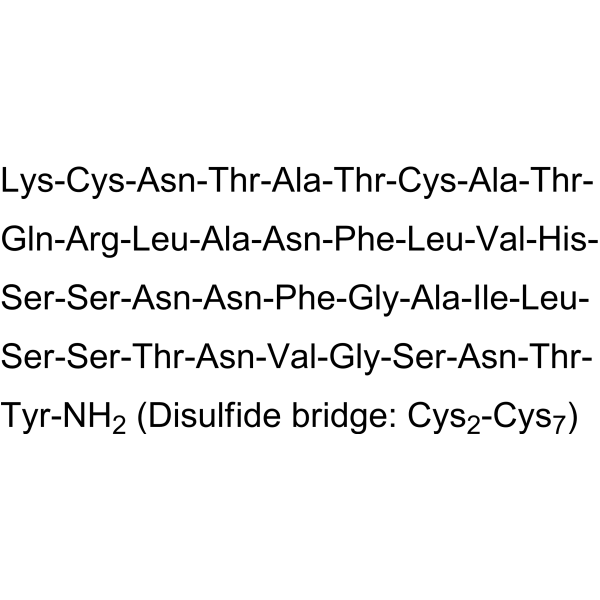
HY-P1070
Amylin, amide, humanGlucoregulatory Hormone -
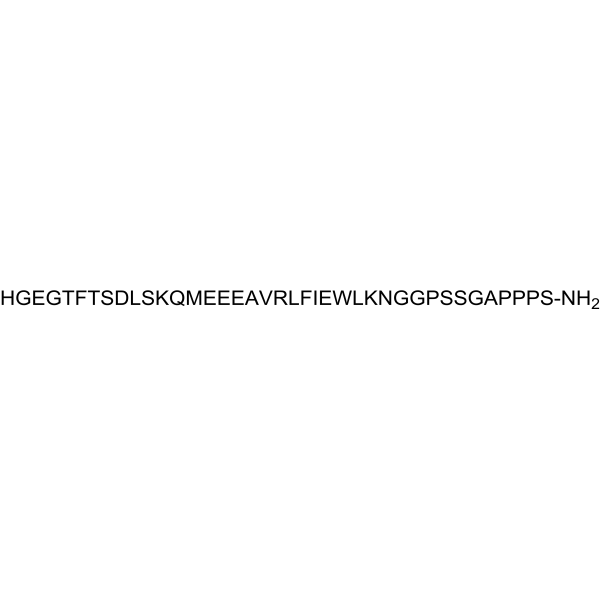
HY-13443
Exendin-4GLP-1 Receptor Agonist -
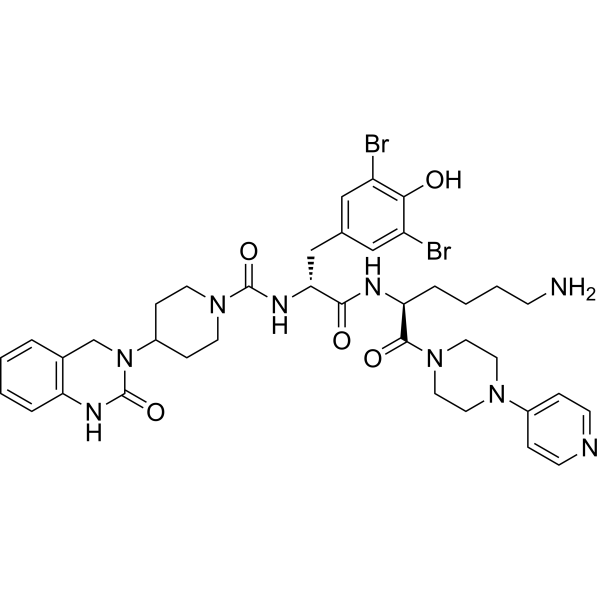
HY-10095
OlcegepantCGRP Antagonist -
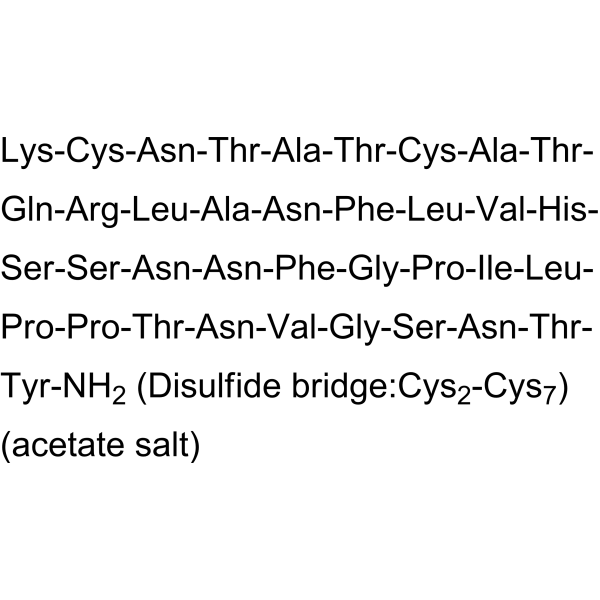
HY-P0058B
Pramlintide acetateAnti-diabetic Agent -
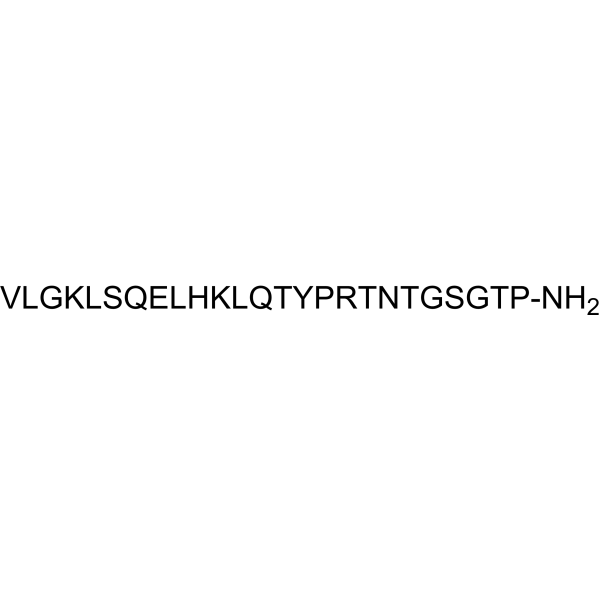
HY-P1782
Calcitonin (8-32), salmonAmylin Receptor Antagonist
Publications Citing Use of MedChemExpress (MCE) Calcitonin (salmon)
More Customer Validation & Images

-
WB


Actividad biológica
Descripciòn
IC50 & Target
[6]|
p38 MAPK |
JNK |
In Vitro
Calcitonin (salmon) (10 pM-1 μM; preincubation for 30 min-incubation for 10 min) activates glycogen phosphorylase a in isolated rat soleus muscle strips with an EC50 of 1.4 nM[5].
Calcitonin (salmon) (4 µg/mL; 24 h-42 days) is significantly more stable in 5% acetic acid (HY-Y0319), with 59% remaining at 42 days, whereas in PBS at pH 7.4, 80% degrades within 3 days at 37°C[1].
Calcitonin (salmon) (100 µg/mL; 24 h) shows almost no adsorption to blank PLGA H/RS or Eudragit RS nanoparticles, with 98-100% remaining at 24 h, and only slight loss to blank PLGA H nanoparticles, with 89.7-94.5% remaining at 24 h[1].
Calcitonin (salmon) (50 mg; 3-4 weeks) releases very slowly and incompletely from PLGA H and PLGA S nanoparticles, with cumulative release of approximately 21% within 3-4 weeks, whereas Eudragit RS and PLGA/Eudragit RS blends release 80-100% within a few hours[1].
Calcitonin (salmon) (100 pM-100 nM; 16 days) induces proteoglycan synthesis in human articular cartilage explants, with 10 nM producing 96% of the maximum induction effect[4].
Calcitonin (salmon) (100 pM-100 nM; 16 days) increases type II collagen formation in human articular cartilage explants, and 10 nM and 100 nM stimulate PIINP release, with a 35% increase over the 100 pM-100 nM range[4].
Calcitonin (salmon) (1 pM-100 nM; 15 min) activates cAMP signaling in isolated human articular chondrocytes, with maximal induction of > 200% at 1 nM, and the response at 100 nM is reduced by 50% by the calcitonin receptor antagonist 8-32sCT[4].
Calcitonin (salmon) (100 pM-100 nM; 16 days) does not reduce AlamarBlue metabolic activity in human articular cartilage explants[4].
Calcitonin (salmon) binds with high affinity (approximately 30 pM) to amylin binding sites in rat brain membranes[5].
MedChemExpress (MCE) has not independently confirmed the accuracy of these methods. They are for reference only.
In Vivo
Calcitonin (salmon) (70 pmol/kg/min (5.5 µg/h); intravenous infusion; continuous; 60 minutes before and 60 minutes after glucose challenge) inhibits the early insulin response to intravenous glucose while elevating plasma glucose[5].
Calcitonin (salmon) (0.01-100 µg; intravenous bolus) produces dose-dependent hyperglycemia with an ED50 of 4.4 µg and no measurable hypotensive effect[5].
Calcitonin (salmon) (50 IU/kg; subcutaneous injection; once daily; for 10 consecutive days) exhibits antidepressant-like effects in CRS mice, and this effect is blocked by p38 agonism but not by JNK agonism in the FST and SPT[6].
Calcitonin (salmon) (0.5-6.0 IU/kg; subcutaneous injection; single administration) produces dose-related reductions in serum calcium from 0.5 to 4.0 IU/kg in healthy male Swiss rats, with no further increase at 6.0 IU/kg[7].
Calcitonin (salmon) (1.0-12.0 IU/kg; intratracheal; single instillation) produces higher relative pulmonary bioactivity in combination with absorption enhancers, reaching 139.1% with the four-component combination F#15 in healthy male Swiss rats[7].
Calcitonin (salmon) (0.1-0.8 µg/rat; intracerebroventricular injection; single acute) produces a dose-dependent head-twitch response in healthy rats and enhances L-5-Hydroxytryptophan (L-5-HTP) (HY-B1716)-induced head twitches[8].
Calcitonin (salmon) (20 µg/kg; subcutaneous injection; single acute) alone does not produce head twitches in healthy rats, but enhances L-5-HTP-induced head twitches[8].
Calcitonin (salmon) (10 U/kg; subcutaneous injection; 5 times per week, Monday to Friday; 4 or 8 weeks) reverses established glucocorticoid-induced osteopenia in rats by enhancing bone formation and inhibiting bone resorption, despite continued MPA use[9].
Calcitonin (salmon) (2.5-40 U/kg; subcutaneous injection; single injection) produces persistent hypocalcemia and a dose-dependent increase in endogenous serum PTH in rats[9].
MedChemExpress (MCE) has not independently confirmed the accuracy of these methods. They are for reference only.
-
Animal Model:Harlan-Sprague-Dawley (male; age 95 days; weight 363 g)[5]
-
Dosage:100 µg
-
Administration:i.v. bolus; single
-
Result:A 100-µg i.v. bolus caused a rapid increase in plasma lactate followed by a slower increase in plasma glucose.
At this dose, efficacy was greatest among the peptides tested.
The same dose did not decrease arterial pressure.
-
Animal Model:Harlan-Sprague-Dawley (male)[5]
-
Dosage:0.01, 0.1, 1, 10, 100, 1000 µg
-
Administration:i.v. bolus; dose-response series
-
Result:The ED50 for the hyperglycemic effect was 4.4 µg.
The ED50 for the plasma lactate increase was not determinable because no clear maximal plateau was defined.
At i.v. doses greater than 1 µg, the effect was greater than that of amylin in elevating plasma lactate.
No significant effect on arterial pressure occurred at any administered dose.
-
Animal Model:Harlan-Sprague-Dawley (male; age 72 days; weight 340 g)[5]
-
Dosage:100 µg (single); 100 µg plus glucagon 100 µg (combination)
-
Administration:i.v. bolus; single; co-administered with glucagon 100 µg
-
Result:After insulin infusion, plasma glucose was 3.2 mmol/L.
A 100-µg bolus produced glycemic recovery of 7.06 mmol/L·h, measured as incremental plasma glucose AUC over 2 h, greater than the recovery with glucagon 100 µg (3.90 mmol/L·h).
Co-administration of 100 µg plus glucagon 100 µg produced a synergistic glycemic recovery of 13.9 mmol/L·h.
Plasma lactate increased.
-
Animal Model:Harlan-Sprague-Dawley (male; age 86 days; weight 381 g)[5]
-
Dosage:70 pmol/kg/min (5.5 µg/h)
-
Administration:i.v. infusion; continuous; 60 min before and 60 min after glucose challenge
-
Result:Continuous infusion elevated plasma glucose relative to controls at various time points throughout the test.
The insulin response within the first 60 min after glucose challenge was 302 pmol/L·h.
During the second hour, insulin levels were higher in infused rats than in controls.
-
Animal Model:C57BL/6J (male)[6]
-
Dosage:50 IU/kg bodyweight
-
Administration:s.c.; once daily; 10 consecutive days during the 14-day CRS period
-
Result:In CRS-treated mice, immobility time in the FST and TST was reduced and sucrose preference in the SPT was increased compared with CRS+saline mice; distance traveled in the OFT was unchanged.
In the hippocampus, phosphorylation ratios of JNK and p38 (p-JNK/JNK and p-p38/p38) were reduced toward control levels, while p-ERK/ERK, p-PTEN/PTEN, p-PI3K/PI3K, p-AKT/AKT, p-mTOR/mTOR, BDNF, PSD95, synapsin-1, and snap25 were unchanged.
-
Animal Model:C57BL/6J (male)[6]
-
Dosage:50 IU/kg body weight
-
Administration:s.c.; once daily; 10 consecutive days
-
Result:Distance traveled in the OFT, immobility time in the FST or TST, and sucrose preference in the SPT were not altered in non-stressed control mice.
-
Animal Model:C57BL/6J (male)[6]
-
Dosage:50 IU/kg body weight (sCT); 0.1 mg/kg (AN); 0.2 mg/kg (PMA)
-
Administration:s.c. (sCT); once daily; 10 consecutive days; i.p. (AN, PMA); once daily; 15 consecutive days
-
Result:In CRS-treated mice, co-application with AN or PMA did not affect locomotor activity in the OFT.
In the TST, immobility time was prolonged by both AN and PMA compared with the saline group under the same stress and dosing conditions.
In the FST and SPT, PMA, but not AN, blocked the antidepressant-like effects.
-
Animal Model:Swiss (male albino, 200-220 g)[7]
-
Dosage:0.5, 1.0, 3.0, 4.0, and 6.0 IU/kg
-
Administration:subcutaneous; single dose
-
Result:At 0.5 IU/kg, mean PBCR was 15.1%; PBCRmax was 25.8%; T.PBCRmax was 90 min; AUC0-240 min was 3543 %·min.
At 1.0 IU/kg, mean PBCR was 20.6%; PBCRmax was 31.2%; T.PBCRmax was 90 min; AUC0-240 min was 4769 %·min.
At 3.0 IU/kg, mean PBCR was 33.2%; PBCRmax was 46.7%; T.PBCRmax was 150 min; AUC0-240 min was 7634 %·min.
At 4.0 IU/kg, mean PBCR was 39.3%; PBCRmax was 48.8%; T.PBCRmax was 150 min; AUC0-240 min was 8885 %·min.
At 6.0 IU/kg, mean PBCR was 39.6%; PBCRmax was 48.9%; T.PBCRmax was 150 min; AUC0-240 min was 8895 %·min.
-
Animal Model:Sprague Dawley (male, 250-300 g)[8]
-
Dosage:0.1, 0.2, 0.4, and 0.8 µg/rat (head-twitch assay); 0.1 µg/rat (L-5-HTP interaction)
-
Administration:i.c.v.; single acute doses; 60 min (head-twitch assay); i.c.v.; once; 30 min before carbidopa (interaction)
-
Result:Produced a dose-dependent increase in head twitches counted for 60 min at 0.1 µg/rat (n=12), 0.2 µg/rat (n=8), 0.4 µg/rat (n=8), and 0.8 µg/rat (n=8).
In the L-5-HTP interaction study, produced 30.5 head twitches/90 min with 0 mg/kg L-5-HTP (n=12), 50.0 with 12.5 mg/kg L-5-HTP (n=8), 111.4 with 25 mg/kg L-5-HTP (n=7), and 109.0 with 50 mg/kg L-5-HTP (n=6).
Potentiated the head-twitch response elicited by L-5-HTP.
-
Animal Model:Sprague Dawley (male, 250-300 g)[8]
-
Dosage:5, 10, 20, 40, and 80 µg/kg (head-twitch assay); 20 µg/kg (L-5-HTP interaction)
-
Administration:s.c.; single acute doses; 60 min (head-twitch assay); s.c.; once; 30 min before carbidopa (interaction)
-
Result:At 5, 10, 20, 40, and 80 µg/kg, did not change the rat head-twitch response at any tested dose.
In the L-5-HTP interaction study, produced 25.3 head twitches/90 min with 0 mg/kg L-5-HTP (n=8), 17.3 with 12.5 mg/kg L-5-HTP (n=8), 66.0 with 25 mg/kg L-5-HTP (n=8), 104.4 with 50 mg/kg L-5-HTP (n=8), and 187.9 with 100 mg/kg L-5-HTP (n=8).
Potentiated the head-twitch response elicited by L-5-HTP.
-
Animal Model:Wistar (female, 11 weeks old at acclimation and 12 weeks old at study start)[9]
-
Dosage:10 U/kg
-
Administration:s.c.; 5 times/week Monday-Friday; 4 or 8 weeks
-
Result:Restored osteoid and fluorochrome labeling on cancellous bone surfaces, corrected MPA-induced cancellous osteopenia within 4 weeks, and maintained restored bone through 8 weeks.
Histomorphometry showed increased bone formation (OS/BS) and decreased bone resorption parameters (ES/BS and N.Oc).
MPA-induced suppression of serum osteocalcin was reversed at 4 weeks.
Total alkaline phosphatase activity was unchanged.
-
Animal Model:Wistar (female, 11 weeks old after 1 week acclimation)[9]
-
Dosage:2.5, 10, and 40 U/kg
-
Administration:s.c.; single injection
-
Result:Produced long-lasting hypocalcemia and increased serum PTH in a dose-dependent manner over the 1, 3, and 6 h post-injection sampling period.


Chemical Information
-
No. CAS 47931-85-1
-
Appearance Solid
-
Peso molecular 3431.85
-
Fòrmula C145H240N44O48S2
-
Color White to off-white
-
Synonyms
Salmon calcitonin
-
Sequence
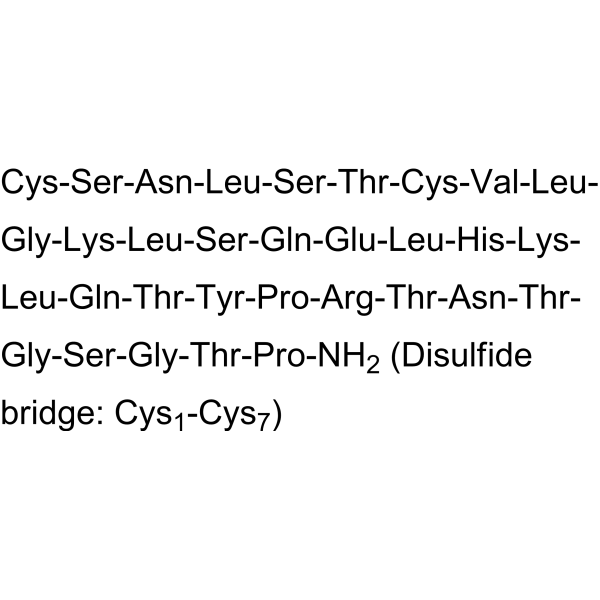
Cys-Ser-Asn-Leu-Ser-Thr-Cys-Val-Leu-Gly-Lys-Leu-Ser-Gln-Glu-Leu-His-Lys-Leu-Gln-Thr-Tyr-Pro-Arg-Thr-Asn-Thr-Gly-Ser-Gly-Thr-Pro-NH2 (Disulfide bridge: Cys1-Cys7)
-
Sequence Shortening
CSNLSTCVLGKLSQELHKLQTYPRTNTGSGTP-NH2 (Disulfide bridge: Cys1-Cys7)
-
Envío
Room temperature in continental US; may vary elsewhere.
-
Almacenamiento
Sealed storage, away from moisture
Powder -80°C 2 years -20°C 1 year * In solvent : -80°C, 6 months; -20°C, 1 month (sealed storage, away from moisture)


Publications (3)
-
Journal Impact Factor
-
Most Recent
-
J Cell Mol Med
2020 Aug;24(15):8650-8661. PMID: 32564456
Calcitonin (salmon) purchased from MedChemExpress. Usage Cited in: J Cell Mol Med. 2020 Aug;24(15):8650-8661. [Abstract]
Calcitonin increases phosphorylated PKC-ε but reduces phosphorylated PKC-δ, which are antagonistic to the effects of IL-1 treatment.
-
-


Solvente y solubilidad
In Vitro:
H2O : 50 mg/mL (14.57 mM; Need ultrasonic)
DMSO : 50 mg/mL (14.57 mM; Need ultrasonic; Hygroscopic DMSO has a significant impact on the solubility of product, please use newly opened DMSO)
Please refer to the solubility information to select the appropriate solvent. Once prepared, please aliquot and store the solution to prevent product inactivation from repeated freeze-thaw cycles.
Storage method and period of stock solution: -80°C, 6 months; -20°C, 1 month (sealed storage, away from moisture). When stored at -80°C, please use it within 6 months. When stored at -20°C, please use it within 1 month.
* Note: If you choose water as the stock solution, please dilute it to the working solution, then filter and sterilize it with a 0.22 μm filter before use.
Concentration (start) × Volume (start) = Concentration (final) × Volume (final)
In Vivo:
Select the appropriate dissolution method based on your experimental animal and administration route.
- For the following dissolution methods, please ensure to first prepare a clear stock solution using an In Vitro approach and then sequentially add co-solvents:
- To ensure reliable experimental results, the clarified stock solution can be appropriately stored based on storage conditions. As for the working solution for In Vivo experiments, it is recommended to prepare freshly and use it on the same day.
- The percentages shown for the solvents indicate their volumetric ratio in the final prepared solution. If precipitation or phase separation occurs during preparation, heat and/or sonication can be used to aid dissolution.
Add each solvent one by one: 10% DMSO 40% PEG300 5% Tween-80 45% Saline
Solubility: ≥ 2.5 mg/mL (0.73 mM); Clear solution
This protocol yields a clear solution of ≥ 2.5 mg/mL (saturation unknown).
Taking 1 mL working solution as an example, add 100 μL DMSO stock solution (25.0 mg/mL) to 400 μL PEG300, and mix evenly; then add 50 μL Tween-80 and mix evenly; then add 450 μL Saline to adjust the volume to 1 mL.
Preparation of Saline: Dissolve 0.9 g sodium chloride in ddH₂O and dilute to 100 mL to obtain a clear Saline solution.
Add each solvent one by one: 10% DMSO 90% (20% SBE-β-CD in Saline)
Solubility: ≥ 2.5 mg/mL (0.73 mM); Clear solution
This protocol yields a clear solution of ≥ 2.5 mg/mL (saturation unknown).
Taking 1 mL working solution as an example, add 100 μL DMSO stock solution (25.0 mg/mL) to 900 μL 20% SBE-β-CD in Saline, and mix evenly.
Preparation of 20% SBE-β-CD in Saline (4°C, storage for one week): 2 g SBE-β-CD powder is dissolved in 10 mL Saline, completely dissolve until clear.
In Vivo Dissolution Calculator
Please enter the basic information of animal experiments:
-
-
-
-
Recommended: Prepare an additional quantity of animals to account for potential losses during experiments.
Working solution concentration: 0.22 mg/mL
This product has good water solubility, please refer to the measured solubility data in water/PBS/Saline for details.


Pureza y Documentación
-
Ficha de datos (328 KB)
-
SDS (480 KB)
- English - EN (480 KB)
- Français - FR (480 KB)
- Deutsch - DE (480 KB)
- Norwegian - NO (480 KB)
- Español - ES (480 KB)
- Swedish - SV (480 KB)
- Italian - IT (480 KB)
- Korean - KR (480 KB)
- Portuguese - PT (480 KB)
-
Instrucciones de manejo (2659 KB)
Referencias


Complete Stock Solution Preparation Table
Please refer to the solubility information to select the appropriate solvent. Once prepared, please aliquot and store the solution to prevent product inactivation from repeated freeze-thaw cycles.
Storage method and period of stock solution: -80°C, 6 months; -20°C, 1 month (sealed storage, away from moisture). When stored at -80°C, please use it within 6 months. When stored at -20°C, please use it within 1 month.
| Optional Solvent | Concentration Solvent Mass | 1 mg | 5 mg | 10 mg | 25 mg |
|---|---|---|---|---|---|
| H2O / DMSO | 1 mM | 0.2914 mL | 1.4569 mL | 2.9139 mL | 7.2847 mL |
| 5 mM | 0.0583 mL | 0.2914 mL | 0.5828 mL | 1.4569 mL | |
| 10 mM | 0.0291 mL | 0.1457 mL | 0.2914 mL | 0.7285 mL |
* Note: If you choose water as the stock solution, please dilute it to the working solution, then filter and sterilize it with a 0.22 μm filter before use.


Calcitonin (salmon) Related Classifications
HY-P0090 Related Classifications
 Powered by Bioz
Keywords
- Calcitonin (salmon)
- 47931-85-1
- Salmon calcitonin
- CGRP Receptor
- Amylin Receptor
- Adenylate Cyclase
- Renin
- p38 MAPK
- JNK
- Calcitonin gene-related peptide receptor
- AMYR
- Adenylyl cyclase
- c-Jun N-terminal kinase
- amylin receptor
- bone resorption
- calcitonin receptor
- glucocorticoid-induced osteopenia
- glycogen phosphorylase
- osteoarthritis
- osteoblast
- osteoclast
- osteoporosis
- Inhibitor
- inhibitor
- inhibit