Search Result
Results for "
741
" in MedChemExpress (MCE) Product Catalog:
| Cat. No. |
Product Name |
Target |
Research Areas |
Chemical Structure |
-
- HY-P1649
-
SPR741
3 Publications Verification
NAB741
|
Bacterial
Antibiotic
|
Infection
|
|
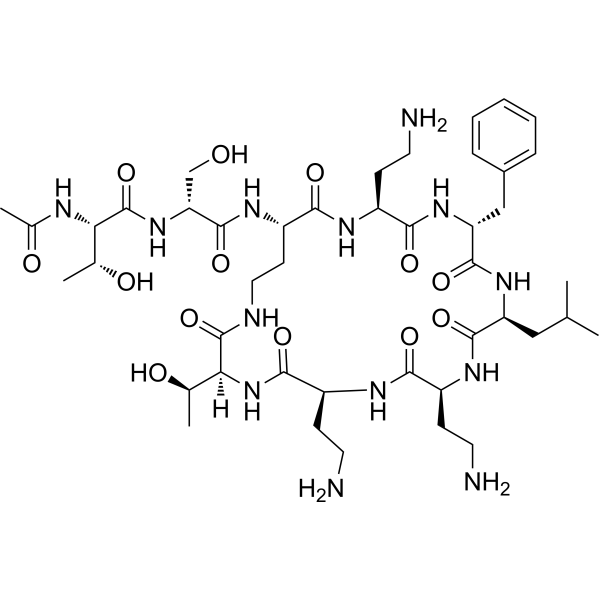
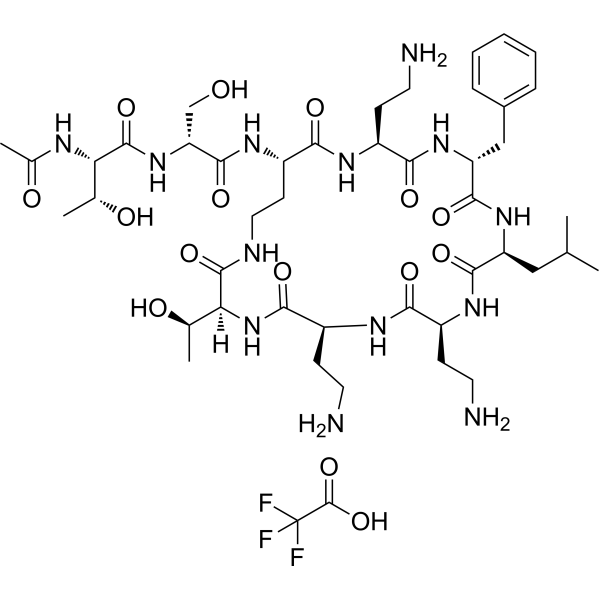
SPR741 (NAB741) is a cationic peptide derived from polymyxin B and is a potentiator molecule. SPR741 increases the permeability of the outer membrane of Gram-negative bacteria and is used to treat severe Gram-negative bacteria infections. SPR741 inhibits multidrug-resistant Gram-negative bacteria. The spectrum of activity of the antibiotic can be widened when used in combination with SPR741 .
|
-
-
- HY-P1649B
-
|
NAB741 acetate
|
Bacterial
Antibiotic
|
Infection
|
|
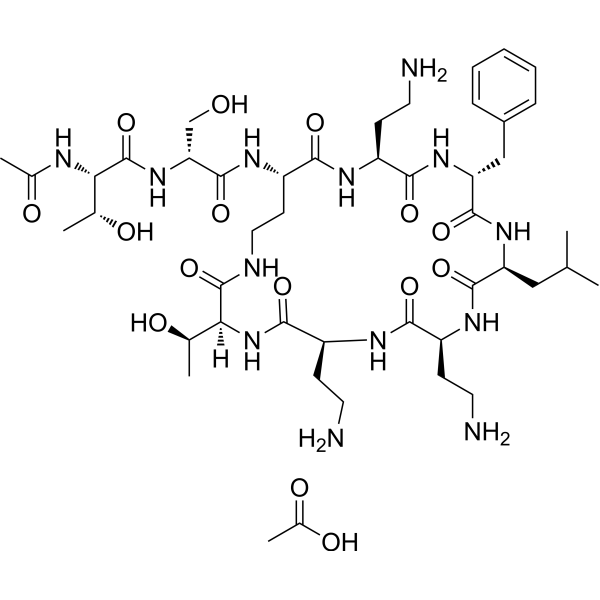
SPR741 acetate (NAB741 acetate) is a cationic peptide derived from polymyxin B and is a potentiator molecule. SPR741 acetate increases the permeability of the outer membrane of Gram-negative bacteria and is used to treat severe Gram-negative bacteria infections. SPR741 acetate inhibits multidrug-resistant Gram-negative bacteria. The spectrum of activity of the antibiotic can be widened when used in combination with SPR741 acetate .
|
-
-
- HY-P990220
-
|
|
Interleukin Related
|
Infection
Inflammation/Immunology
Cancer
|
|
Anti-Mouse IL-18 Antibody (YIGIF74-1G7) is a rat-derived IgG2a κ type antibody inhibitor, targeting to mouse IL-18. Anti-Mouse IL-18 Antibody (YIGIF74-1G7) can neutralize IL-18. Anti-Mouse IL-18 Antibody (YIGIF74-1G7) can be used for the researches of cancer, infection, inflammation and immunology, such as hepatocellular carcinoma and eosinophilic esophagitis .
|
-
-
- HY-136242
-
|
|
Estrogen Receptor/ERR
|
Endocrinology
Cancer
|
|
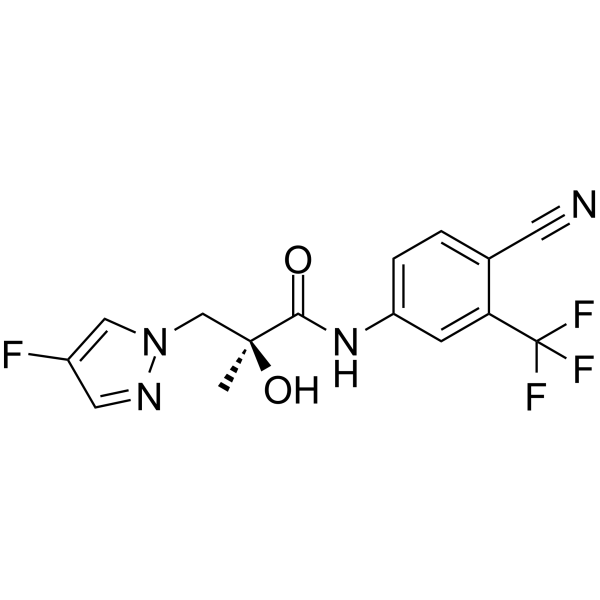
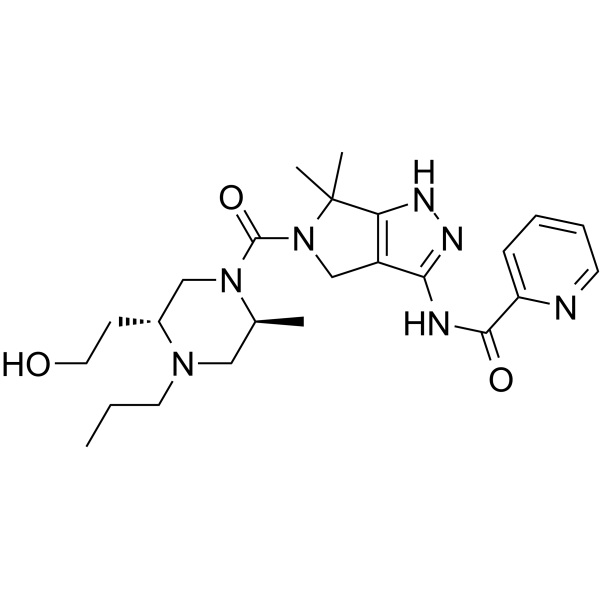
UT-34 is a potent, selective, orally bioactive second-generation pan-androgen receptor (AR) antagonist and degrader, with IC50 values of 211.7 nM, 262.4 nM, and 215.7 nM for wild-type AR, F876L-AR, and W741L-AR, respectively. UT-34 binds to the ligand-binding domain (LBD) and functional 1 (AF-1) domain of AR and requires the ubiquitin-proteasome pathway for AR degradation. UT-34 has anti-prostate cancer effects.
|
-
-
- HY-19151
-
|
IS-741
|
Integrin
Phospholipase
|
Inflammation/Immunology
|
|
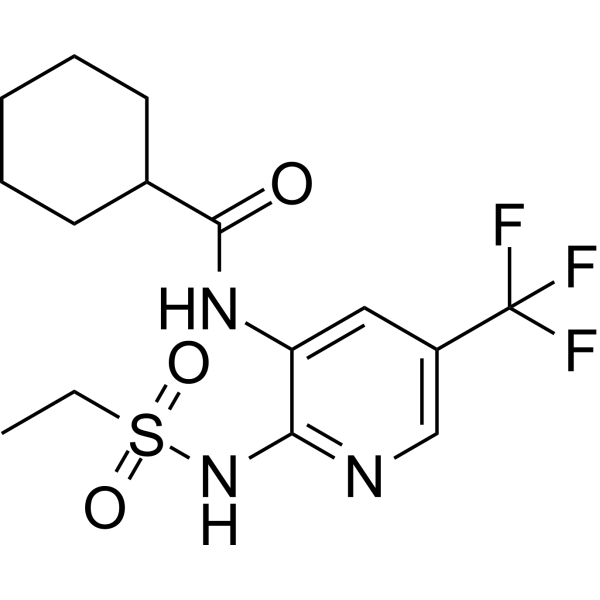
Fuzapladib (IS-741), an orally active leukocyte-function-associated antigen type 1 (LFA-1) activation inhibitor, is a leukocyte adhesion molecule. Fuzapladib is also a phospholipase A2 (PLA2) inhibitor. Fuzapladib exerts anti-inflammatory effects by inhibiting leukocyte migration into the inflammatory site .
|
-
-
- HY-101261
-
|
|
iGluR
|
Neurological Disease
|
|
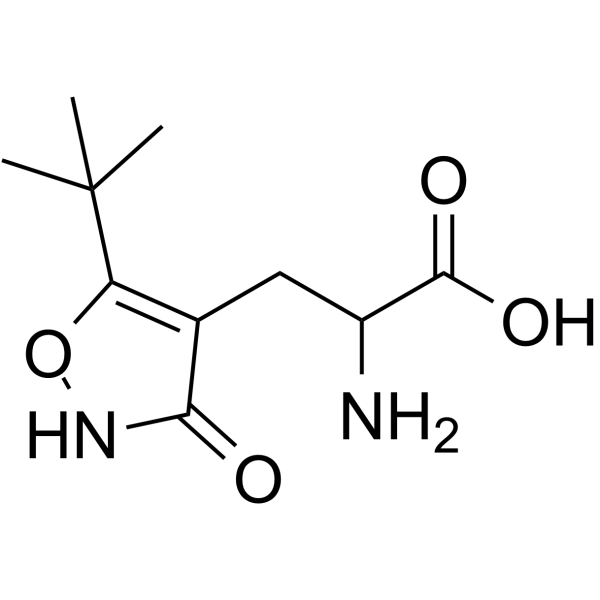
ATPA is a selective glutamate receptor GluR5 activator with EC50s of 0.66, 9.5, 1.4, 23, 32, 18, and 14 μM for GluR5wt, GluR5(S741M), GluR5(S721T), GluR5(S721T, S741M), GluR5(S741A), GluR5(S741L), and GluR5(S741V), respectively .
|
-
-
- HY-19151A
-
|
IS-741 sodium
|
Integrin
Phospholipase
|
Inflammation/Immunology
|
|
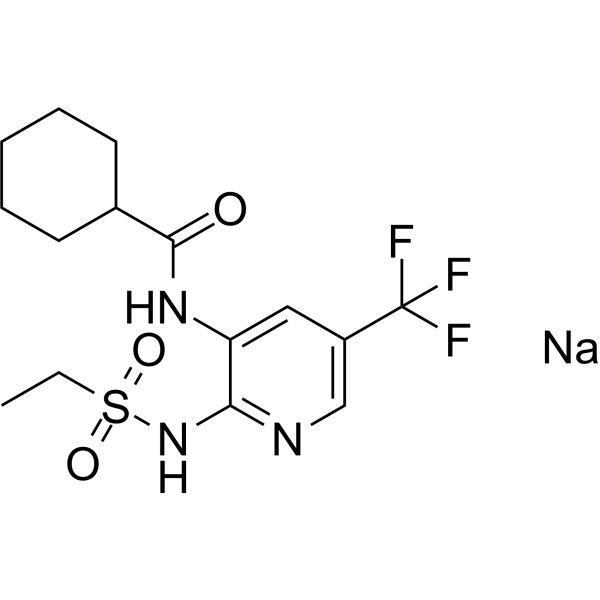
Fuzapladib (IS-741) sodium, an orally active leukocyte-function-associated antigen type 1 (LFA-1) activation inhibitor, is a leukocyte adhesion molecule. Fuzapladib sodium is also a phospholipase A2 (PLA2) inhibitor. Fuzapladib sodium exerts anti-inflammatory effects by inhibiting leukocyte migration into the inflammatory site .
|
-
-
- HY-147917
-
|
|
ADC Payload
DNA/RNA Synthesis
|
Cancer
|
|
RNA polymerase II-IN-2 is a RNA polymerase II inhibitor with a Ki value of 74.1 nM. RNA polymerase II-IN-2 inhibits Pol II-mediated transcription and induces cytotoxicity in mammalian cells. RNA polymerase II-IN-2 serves as a payload for antibody-drug conjugates (ADC) and is applicable for cancer research .
|
-
-
- HY-W587772
-
|
MEHHTP
|
Drug Metabolite
|
Metabolic Disease
|
|
Mono (2-ethyl-5-hydroxyhexyl) terephthalate (MEHHTP), a hydroxyl metabolite of the phthalate alternative Di-2-ethylhexyl terephthalate (DEHTP), is a liver X receptor α (LXRα) agonist with a binding energy of -7.41 kcal/mol. Mono (2-ethyl-5-hydroxyhexyl) terephthalate upregulates LXRα downstream targets such as SREBP-1c and FASN and increases lipogenic enzyme activity in hepatocytes, and elevating triglyceride (TG) levels. Mono (2-ethyl-5-hydroxyhexyl) terephthalate is promising for research of nonalcoholic fatty liver disease (NAFLD) .
|
-
-
- HY-111544
-
|
|
Histone Methyltransferase
|
Cancer
|
|
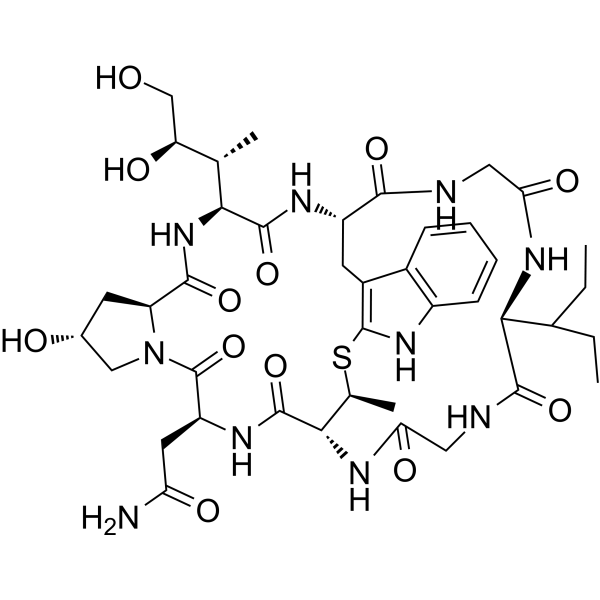
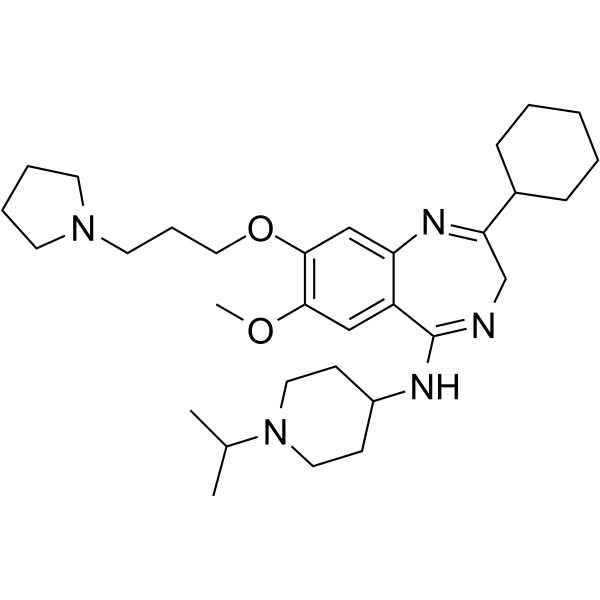
EML741 is a histone lysine methyltransferase G9a/GLP inhibitor, with an IC50 of 23 nM, Kd of 1.13 μM for G9a. EML741 also inhibits DNMT1 (IC50, 3.1 μM), with no effect on DNMT3a or DNMT3b. EML741 exhibits low cell toxicity, and is membrane permeable and blood-brain barrier penetrated .
|
-
-
- HY-139466
-
|
|
SHP2
PKC
|
Metabolic Disease
|
|
PF-03622905 is a potent and ATP-competitive PKC inhibitor with IC50s of 5.6 nM, 14.5 nM, 13 nM, 37.7 nM, and 74.1 nM for PKCα, PKCβI, PKCβII, PKCγ, and PKCθ, respectively. PF-03622905 shows high specificity for PKC over other protein kinases .
|
-
-
- HY-P1649A
-
|
NAB741 TFA
|
Bacterial
Antibiotic
|
Infection
|
|
SPR741 TFA (NAB741 TFA) is a cationic peptide derived from polymyxin B and is a potentiator molecule. SPR741 TFA increases the permeability of the outer membrane of Gram-negative bacteria and is used to treat severe Gram-negative bacteria infections. SPR741 TFA inhibits multidrug-resistant Gram-negative bacteria. The spectrum of activity of the antibiotic can be widened when used in combination with SPR741 TFA .
|
-
-
- HY-12709A
-
|
|
Adrenergic Receptor
|
Cardiovascular Disease
Inflammation/Immunology
|
|
ARC 239 dihydrochloride is a selective α2B/2C adrenoceptor antagonist (pKd values are 5.95, 7.41 and 7.56 at α2A, α2B, and α2C receptors respectively). ARC 239 dihydrochloride binds to CHO cell membranes expressing human recombinant a2A-, a2B- or a2C-adrenoceptor subtypes with pKis of 5.6, 8.4, and 7.08, respectively .
|
-
-
- HY-107644
-
|
|
mAChR
|
Cardiovascular Disease
|
|
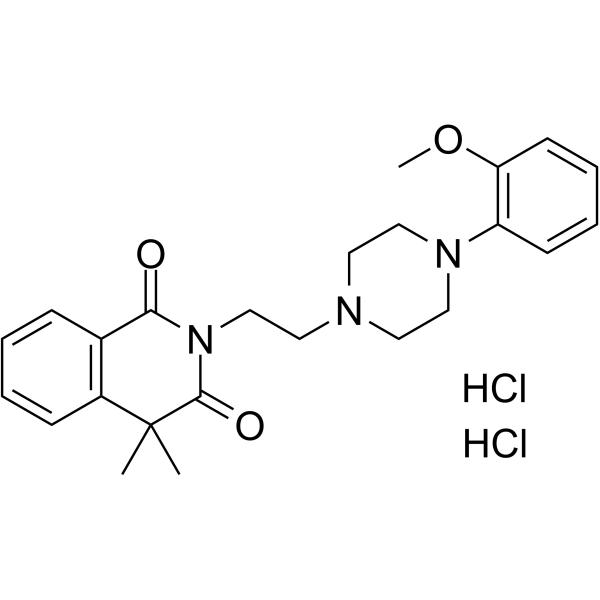
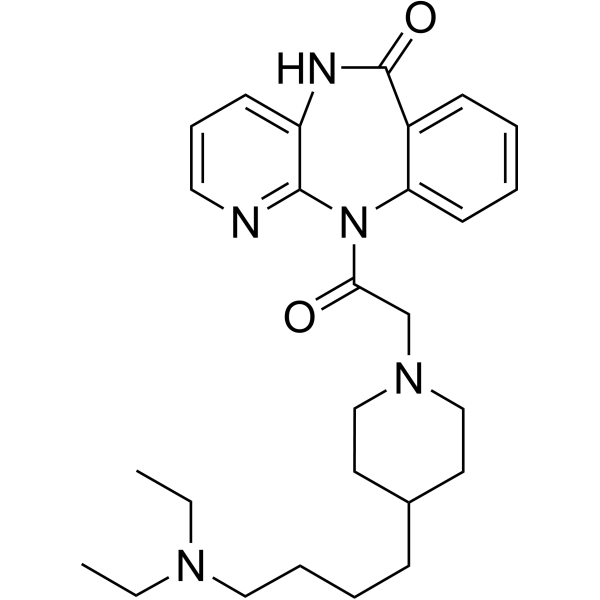
AQ-RA 741 is a potent and selective M 2 antagonist. AQ-RA 741 inhibits the vagally or agonist-induced bradycardia in rats, cats and guinea-pigs. AQ-RA 741 is used in bradycardiac disorders research .
|
-
-
- HY-W953182
-
|
|
Ligands for E3 Ligase
|
Cancer
|
|
CRBN ligand-741 is an E3 ubiquitin ligase cereblon (CRBN) ligand used to recruit the cereblon protein. CRBN ligand-741 can be linked to a target protein ligand via a linker to form a PROTAC.
|
-
-
- HY-19151B
-
|
IS-741 potassium
|
Integrin
Phospholipase
|
Inflammation/Immunology
|
|
Fuzapladib (IS-741) potassium, an orally active leukocyte-function-associated antigen type 1 (LFA-1) activation inhibitor, is a leukocyte adhesion molecule. Fuzapladib potassium is also a phospholipase A2 (PLA2) inhibitor. Fuzapladib potassium exerts anti-inflammatory effects by inhibiting leukocyte migration into the inflammatory site .
|
-
-
- HY-R04025
-
|
|
MicroRNA
|
Cancer
|
|
mmu-miR-741-3p mimics are small, chemically synthesized double-stranded RNAs that mimic endogenous miRNAs and enable miRNA functional analysis by up-regulation of miRNA activity.
|
-
mmu-miR-741-3p mimic
-
- HY-R04026
-
|
|
MicroRNA
|
Cancer
|
|
mmu-miR-741-5p mimics are small, chemically synthesized double-stranded RNAs that mimic endogenous miRNAs and enable miRNA functional analysis by up-regulation of miRNA activity.
|
-
mmu-miR-741-5p mimic
-
- HY-R04568
-
|
|
MicroRNA
|
Cancer
|
|
rno-miR-741-5p mimics are small, chemically synthesized double-stranded RNAs that mimic endogenous miRNAs and enable miRNA functional analysis by up-regulation of miRNA activity.
|
-
rno-miR-741-5p mimic
-
- HY-RI04568
-
|
|
MicroRNA
|
Cancer
|
|
rno-miR-741-5p inhibitors are chemically-modified oligonucleotides that hybridize with mature miRNAs. The miRNA inhibitors have full-length nucleotide 2'-methoxy modification. The miRNA inhibitors strongly compete with mature miRNAs to prevent the complementary pairing of miRNAs and their target genes, thereby inhibiting miRNAs from functioning.
|
-
rno-miR-741-5p inhibitor
-
- HY-R04026A
-
|
|
MicroRNA
|
Cancer
|
|
mmu-miR-741-5p agomirs are chemically-modified double-strand miRNA mimics with modified mature miRNA strand: 2 phosphorothioates at the 5' end, 4 phosphorothioates at the 3' end, 3' end cholesterol group, and full-length nucleotide 2'-methoxy modification. They are designed to mimic endogenous miRNAs and recommended for miRNA functional studies. Compared with miRNA mimics, they exhibits enhanced cellular uptake, stability and regulatory activity in vivo.
|
-
mmu-miR-741-5p agomir
-
- HY-19151C
-
|
IS-741 calcium
|
Integrin
Phospholipase
|
Inflammation/Immunology
|
|
Fuzapladib calcium, an orally active leukocyte-function-associated antigen type 1 (LFA-1) activation inhibitor, is a leukocyte adhesion molecule. Fuzapladib calcium is also a phospholipase A2 (PLA2) inhibitor. Fuzapladib calcium exerts anti-inflammatory effects by inhibiting leukocyte migration into the inflammatory site .
|
-
-
- HY-155349
-
-
-
- HY-145889
-
|
|
Biochemical Assay Reagents
|
Others
|
|
LC kinetic stabilizer-1 (compound 21) is a potent and selective amyloidogenic immunoglobulin light chain kinetic stabilizer with EC50s of 140 and 74.1 nM for WIL-FL * and WIL-FL * T46L/F49Y, respectively. WIL-FL is an amyloidogenic FL LC dimer .
|
-
-
- HY-100539
-
|
|
Dopamine Receptor
|
Others
|
|
PD 128907 is a D3 receptor ligand with activities of activating dopamine receptors, inhibiting cell firing, and inhibiting dopamine release. The active (+) enantiomer of PD 128907 has high affinity and selectivity for rat D3 dopamine receptors. PD 128907 inhibits cell firing in the ventral tegmental area and substantia nigra pars compacta with EC50 values of 33nM and 38nM, respectively. PD 128907 also inhibits dopamine release in the caudate putamen with an EC50 of 66nM. However, the selective D2 receptor antagonist L-741,626 has high affinity for receptors activated by PD 128907, indicating that the effects of PD 128907 are more likely on D2 autoreceptors rather than D3 dopamine receptor subtypes.
|
-
-
- HY-159922
-
|
|
Androgen Receptor
|
Cancer
|
|
AR antagonist 9 is an orally bioavailable selective androgen receptor (AR) antagonist that exerts anticancer effects by disrupting the dimerization of AR ligand-binding domains, showing potential for overcoming drug resistance in prostate cancer (PCa). Its AR antagonistic activity has an IC50 value of 0.051 μM, comparable to Enzalutamide (HY-70002) (IC50 = 0.060 μM). AR antagonist 9 demonstrated superior efficacy against ARF876L/T877A and ARW741C mutants compared to Enzalutamide (HY-70002). Furthermore, AR antagonist 9 exhibited favorable pharmacokinetic properties, with an oral bioavailability of F = 66.24% in rats. In the LNCaP xenograft mouse model, oral administration of AR antagonist 9 significantly inhibited tumor growth. AR antagonist 9 holds promise for research into overcoming PCa drug resistance .
|
-
-
- HY-R04567
-
|
|
MicroRNA
|
Cancer
|
|
rno-miR-741-3p mimics are small, chemically synthesized double-stranded RNAs that mimic endogenous miRNAs and enable miRNA functional analysis by up-regulation of miRNA activity.
|
-
rno-miR-741-3p mimic
-
- HY-RI04025
-
|
|
MicroRNA
|
Cancer
|
|
mmu-miR-741-3p inhibitors are chemically-modified oligonucleotides that hybridize with mature miRNAs. The miRNA inhibitors have full-length nucleotide 2'-methoxy modification. The miRNA inhibitors strongly compete with mature miRNAs to prevent the complementary pairing of miRNAs and their target genes, thereby inhibiting miRNAs from functioning.
|
-
mmu-miR-741-3p inhibitor
-
- HY-RI04026
-
|
|
MicroRNA
|
Cancer
|
|
mmu-miR-741-5p inhibitors are chemically-modified oligonucleotides that hybridize with mature miRNAs. The miRNA inhibitors have full-length nucleotide 2'-methoxy modification. The miRNA inhibitors strongly compete with mature miRNAs to prevent the complementary pairing of miRNAs and their target genes, thereby inhibiting miRNAs from functioning.
|
-
mmu-miR-741-5p inhibitor
-
- HY-RI04567
-
|
|
MicroRNA
|
Cancer
|
|
rno-miR-741-3p inhibitors are chemically-modified oligonucleotides that hybridize with mature miRNAs. The miRNA inhibitors have full-length nucleotide 2'-methoxy modification. The miRNA inhibitors strongly compete with mature miRNAs to prevent the complementary pairing of miRNAs and their target genes, thereby inhibiting miRNAs from functioning.
|
-
rno-miR-741-3p inhibitor
-
- HY-R04567A
-
|
|
MicroRNA
|
Cancer
|
|
rno-miR-741-3p agomirs are chemically-modified double-strand miRNA mimics with modified mature miRNA strand: 2 phosphorothioates at the 5' end, 4 phosphorothioates at the 3' end, 3' end cholesterol group, and full-length nucleotide 2'-methoxy modification. They are designed to mimic endogenous miRNAs and recommended for miRNA functional studies. Compared with miRNA mimics, they exhibits enhanced cellular uptake, stability and regulatory activity in vivo.
|
-
rno-miR-741-3p agomir
-
- HY-R04568A
-
|
|
MicroRNA
|
Cancer
|
|
rno-miR-741-5p agomirs are chemically-modified double-strand miRNA mimics with modified mature miRNA strand: 2 phosphorothioates at the 5' end, 4 phosphorothioates at the 3' end, 3' end cholesterol group, and full-length nucleotide 2'-methoxy modification. They are designed to mimic endogenous miRNAs and recommended for miRNA functional studies. Compared with miRNA mimics, they exhibits enhanced cellular uptake, stability and regulatory activity in vivo.
|
-
rno-miR-741-5p agomir
-
- HY-R04025A
-
|
|
MicroRNA
|
Cancer
|
|
mmu-miR-741-3p agomirs are chemically-modified double-strand miRNA mimics with modified mature miRNA strand: 2 phosphorothioates at the 5' end, 4 phosphorothioates at the 3' end, 3' end cholesterol group, and full-length nucleotide 2'-methoxy modification. They are designed to mimic endogenous miRNAs and recommended for miRNA functional studies. Compared with miRNA mimics, they exhibits enhanced cellular uptake, stability and regulatory activity in vivo.
|
-
mmu-miR-741-3p agomir
-
- HY-RI04025A
-
|
|
MicroRNA
|
Cancer
|
|
mmu-miR-741-3p antagomirs are chemically-modified oligonucleotides that hybridize with mature miRNAs. The miRNA antagomirs have 2 phosphorothioates at the 5' end, 4 phosphorothioates at the 3' end, 1 cholesterol group at the 3' end, and full-length nucleotide 2'-methoxy modification. The miRNA antagomirs strongly compete with mature miRNAs to prevent the complementary pairing of miRNAs and their target genes, thereby inhibiting miRNAs from functioning. Stability of miRNA antagomirs appears to be significantly higher than miRNA inhibitors, they exhibits enhanced cellular uptake, stability and regulatory activity in vivo.
|
-
mmu-miR-741-3p antagomir
-
- HY-RI04567A
-
|
|
MicroRNA
|
Cancer
|
|
rno-miR-741-3p antagomirs are chemically-modified oligonucleotides that hybridize with mature miRNAs. The miRNA antagomirs have 2 phosphorothioates at the 5' end, 4 phosphorothioates at the 3' end, 1 cholesterol group at the 3' end, and full-length nucleotide 2'-methoxy modification. The miRNA antagomirs strongly compete with mature miRNAs to prevent the complementary pairing of miRNAs and their target genes, thereby inhibiting miRNAs from functioning. Stability of miRNA antagomirs appears to be significantly higher than miRNA inhibitors, they exhibits enhanced cellular uptake, stability and regulatory activity in vivo.
|
-
rno-miR-741-3p antagomir
-
- HY-RI04026A
-
|
|
MicroRNA
|
Cancer
|
|
mmu-miR-741-5p antagomirs are chemically-modified oligonucleotides that hybridize with mature miRNAs. The miRNA antagomirs have 2 phosphorothioates at the 5' end, 4 phosphorothioates at the 3' end, 1 cholesterol group at the 3' end, and full-length nucleotide 2'-methoxy modification. The miRNA antagomirs strongly compete with mature miRNAs to prevent the complementary pairing of miRNAs and their target genes, thereby inhibiting miRNAs from functioning. Stability of miRNA antagomirs appears to be significantly higher than miRNA inhibitors, they exhibits enhanced cellular uptake, stability and regulatory activity in vivo.
|
-
mmu-miR-741-5p antagomir
-
- HY-RI04568A
-
|
|
MicroRNA
|
Cancer
|
|
rno-miR-741-5p antagomirs are chemically-modified oligonucleotides that hybridize with mature miRNAs. The miRNA antagomirs have 2 phosphorothioates at the 5' end, 4 phosphorothioates at the 3' end, 1 cholesterol group at the 3' end, and full-length nucleotide 2'-methoxy modification. The miRNA antagomirs strongly compete with mature miRNAs to prevent the complementary pairing of miRNAs and their target genes, thereby inhibiting miRNAs from functioning. Stability of miRNA antagomirs appears to be significantly higher than miRNA inhibitors, they exhibits enhanced cellular uptake, stability and regulatory activity in vivo.
|
-
rno-miR-741-5p antagomir
-
- HY-179633
-
|
|
CDK
Apoptosis
DNA/RNA Synthesis
Bcl-2 Family
IAP
|
Cancer
|
|
ZLMT-72 is an orally active dual CDK2 and CDK9 inhibitor with IC50s of 0.741 nM and 1.03 nM, respectively. ZLMT-72 shows good selectivity in kinase profiling andcholinesterase inhibition activity. ZLMT-72 has strong antiproliferative effects in the colorectal cancer (CRC) cell line HCT116 (GI50 < 0.1 nM). ZLMT-72 induces apoptosis by inhibiting thephosphorylation of retinoblastoma and RNA polymerase II, resulting in downregulation of antiapoptotic proteins (Mcl-1 and XIAP). ZLMT-72 can be used for the study of colorectal cancer (CRC) .
|
-
| Cat. No. |
Product Name |
Target |
Research Area |
-
- HY-P1649
-
SPR741
3 Publications Verification
NAB741
|
Bacterial
Antibiotic
|
Infection
|
|
SPR741 (NAB741) is a cationic peptide derived from polymyxin B and is a potentiator molecule. SPR741 increases the permeability of the outer membrane of Gram-negative bacteria and is used to treat severe Gram-negative bacteria infections. SPR741 inhibits multidrug-resistant Gram-negative bacteria. The spectrum of activity of the antibiotic can be widened when used in combination with SPR741 .
|
-
- HY-P1649B
-
|
NAB741 acetate
|
Bacterial
Antibiotic
|
Infection
|
|
SPR741 acetate (NAB741 acetate) is a cationic peptide derived from polymyxin B and is a potentiator molecule. SPR741 acetate increases the permeability of the outer membrane of Gram-negative bacteria and is used to treat severe Gram-negative bacteria infections. SPR741 acetate inhibits multidrug-resistant Gram-negative bacteria. The spectrum of activity of the antibiotic can be widened when used in combination with SPR741 acetate .
|
-
- HY-P1649A
-
|
NAB741 TFA
|
Bacterial
Antibiotic
|
Infection
|
|
SPR741 TFA (NAB741 TFA) is a cationic peptide derived from polymyxin B and is a potentiator molecule. SPR741 TFA increases the permeability of the outer membrane of Gram-negative bacteria and is used to treat severe Gram-negative bacteria infections. SPR741 TFA inhibits multidrug-resistant Gram-negative bacteria. The spectrum of activity of the antibiotic can be widened when used in combination with SPR741 TFA .
|
| Cat. No. |
Product Name |
Target |
Research Area |
Image |
-
- HY-P990220
-
|
|
Interleukin Related
|
Infection
Inflammation/Immunology
Cancer
|
|
Anti-Mouse IL-18 Antibody (YIGIF74-1G7) is a rat-derived IgG2a κ type antibody inhibitor, targeting to mouse IL-18. Anti-Mouse IL-18 Antibody (YIGIF74-1G7) can neutralize IL-18. Anti-Mouse IL-18 Antibody (YIGIF74-1G7) can be used for the researches of cancer, infection, inflammation and immunology, such as hepatocellular carcinoma and eosinophilic esophagitis .
|
-
(5)
| Cat. No. |
Product Name |
|
Classification |
-
- HY-R04025
-
|
|
|
MicroRNAs
miRNA mimics
|
|
mmu-miR-741-3p mimics are small, chemically synthesized double-stranded RNAs that mimic endogenous miRNAs and enable miRNA functional analysis by up-regulation of miRNA activity.
|
-
- HY-R04026
-
|
|
|
MicroRNAs
miRNA mimics
|
|
mmu-miR-741-5p mimics are small, chemically synthesized double-stranded RNAs that mimic endogenous miRNAs and enable miRNA functional analysis by up-regulation of miRNA activity.
|
-
- HY-R04568
-
|
|
|
MicroRNAs
miRNA mimics
|
|
rno-miR-741-5p mimics are small, chemically synthesized double-stranded RNAs that mimic endogenous miRNAs and enable miRNA functional analysis by up-regulation of miRNA activity.
|
-
- HY-RI04568
-
|
|
|
MicroRNAs
miRNA inhibitors
|
|
rno-miR-741-5p inhibitors are chemically-modified oligonucleotides that hybridize with mature miRNAs. The miRNA inhibitors have full-length nucleotide 2'-methoxy modification. The miRNA inhibitors strongly compete with mature miRNAs to prevent the complementary pairing of miRNAs and their target genes, thereby inhibiting miRNAs from functioning.
|
-
- HY-R04026A
-
|
|
|
MicroRNAs
miRNA agomirs
|
|
mmu-miR-741-5p agomirs are chemically-modified double-strand miRNA mimics with modified mature miRNA strand: 2 phosphorothioates at the 5' end, 4 phosphorothioates at the 3' end, 3' end cholesterol group, and full-length nucleotide 2'-methoxy modification. They are designed to mimic endogenous miRNAs and recommended for miRNA functional studies. Compared with miRNA mimics, they exhibits enhanced cellular uptake, stability and regulatory activity in vivo.
|
-
- HY-R04567
-
|
|
|
MicroRNAs
miRNA mimics
|
|
rno-miR-741-3p mimics are small, chemically synthesized double-stranded RNAs that mimic endogenous miRNAs and enable miRNA functional analysis by up-regulation of miRNA activity.
|
-
- HY-RI04025
-
|
|
|
MicroRNAs
miRNA inhibitors
|
|
mmu-miR-741-3p inhibitors are chemically-modified oligonucleotides that hybridize with mature miRNAs. The miRNA inhibitors have full-length nucleotide 2'-methoxy modification. The miRNA inhibitors strongly compete with mature miRNAs to prevent the complementary pairing of miRNAs and their target genes, thereby inhibiting miRNAs from functioning.
|
-
- HY-RI04026
-
|
|
|
MicroRNAs
miRNA inhibitors
|
|
mmu-miR-741-5p inhibitors are chemically-modified oligonucleotides that hybridize with mature miRNAs. The miRNA inhibitors have full-length nucleotide 2'-methoxy modification. The miRNA inhibitors strongly compete with mature miRNAs to prevent the complementary pairing of miRNAs and their target genes, thereby inhibiting miRNAs from functioning.
|
-
- HY-RI04567
-
|
|
|
MicroRNAs
miRNA inhibitors
|
|
rno-miR-741-3p inhibitors are chemically-modified oligonucleotides that hybridize with mature miRNAs. The miRNA inhibitors have full-length nucleotide 2'-methoxy modification. The miRNA inhibitors strongly compete with mature miRNAs to prevent the complementary pairing of miRNAs and their target genes, thereby inhibiting miRNAs from functioning.
|
-
- HY-R04567A
-
|
|
|
MicroRNAs
miRNA agomirs
|
|
rno-miR-741-3p agomirs are chemically-modified double-strand miRNA mimics with modified mature miRNA strand: 2 phosphorothioates at the 5' end, 4 phosphorothioates at the 3' end, 3' end cholesterol group, and full-length nucleotide 2'-methoxy modification. They are designed to mimic endogenous miRNAs and recommended for miRNA functional studies. Compared with miRNA mimics, they exhibits enhanced cellular uptake, stability and regulatory activity in vivo.
|
-
- HY-R04568A
-
|
|
|
MicroRNAs
miRNA agomirs
|
|
rno-miR-741-5p agomirs are chemically-modified double-strand miRNA mimics with modified mature miRNA strand: 2 phosphorothioates at the 5' end, 4 phosphorothioates at the 3' end, 3' end cholesterol group, and full-length nucleotide 2'-methoxy modification. They are designed to mimic endogenous miRNAs and recommended for miRNA functional studies. Compared with miRNA mimics, they exhibits enhanced cellular uptake, stability and regulatory activity in vivo.
|
-
- HY-R04025A
-
|
|
|
MicroRNAs
miRNA agomirs
|
|
mmu-miR-741-3p agomirs are chemically-modified double-strand miRNA mimics with modified mature miRNA strand: 2 phosphorothioates at the 5' end, 4 phosphorothioates at the 3' end, 3' end cholesterol group, and full-length nucleotide 2'-methoxy modification. They are designed to mimic endogenous miRNAs and recommended for miRNA functional studies. Compared with miRNA mimics, they exhibits enhanced cellular uptake, stability and regulatory activity in vivo.
|
-
- HY-RI04025A
-
|
|
|
MicroRNAs
miRNA antagomirs
|
|
mmu-miR-741-3p antagomirs are chemically-modified oligonucleotides that hybridize with mature miRNAs. The miRNA antagomirs have 2 phosphorothioates at the 5' end, 4 phosphorothioates at the 3' end, 1 cholesterol group at the 3' end, and full-length nucleotide 2'-methoxy modification. The miRNA antagomirs strongly compete with mature miRNAs to prevent the complementary pairing of miRNAs and their target genes, thereby inhibiting miRNAs from functioning. Stability of miRNA antagomirs appears to be significantly higher than miRNA inhibitors, they exhibits enhanced cellular uptake, stability and regulatory activity in vivo.
|
-
- HY-RI04567A
-
|
|
|
MicroRNAs
miRNA antagomirs
|
|
rno-miR-741-3p antagomirs are chemically-modified oligonucleotides that hybridize with mature miRNAs. The miRNA antagomirs have 2 phosphorothioates at the 5' end, 4 phosphorothioates at the 3' end, 1 cholesterol group at the 3' end, and full-length nucleotide 2'-methoxy modification. The miRNA antagomirs strongly compete with mature miRNAs to prevent the complementary pairing of miRNAs and their target genes, thereby inhibiting miRNAs from functioning. Stability of miRNA antagomirs appears to be significantly higher than miRNA inhibitors, they exhibits enhanced cellular uptake, stability and regulatory activity in vivo.
|
-
- HY-RI04026A
-
|
|
|
MicroRNAs
miRNA antagomirs
|
|
mmu-miR-741-5p antagomirs are chemically-modified oligonucleotides that hybridize with mature miRNAs. The miRNA antagomirs have 2 phosphorothioates at the 5' end, 4 phosphorothioates at the 3' end, 1 cholesterol group at the 3' end, and full-length nucleotide 2'-methoxy modification. The miRNA antagomirs strongly compete with mature miRNAs to prevent the complementary pairing of miRNAs and their target genes, thereby inhibiting miRNAs from functioning. Stability of miRNA antagomirs appears to be significantly higher than miRNA inhibitors, they exhibits enhanced cellular uptake, stability and regulatory activity in vivo.
|
-
- HY-RI04568A
-
|
|
|
MicroRNAs
miRNA antagomirs
|
|
rno-miR-741-5p antagomirs are chemically-modified oligonucleotides that hybridize with mature miRNAs. The miRNA antagomirs have 2 phosphorothioates at the 5' end, 4 phosphorothioates at the 3' end, 1 cholesterol group at the 3' end, and full-length nucleotide 2'-methoxy modification. The miRNA antagomirs strongly compete with mature miRNAs to prevent the complementary pairing of miRNAs and their target genes, thereby inhibiting miRNAs from functioning. Stability of miRNA antagomirs appears to be significantly higher than miRNA inhibitors, they exhibits enhanced cellular uptake, stability and regulatory activity in vivo.
|
Your information is safe with us. * Required Fields.
Inquiry Information
- Product Name:
- Cat. No.:
- Quantity:
- MCE Japan Authorized Agent:

