



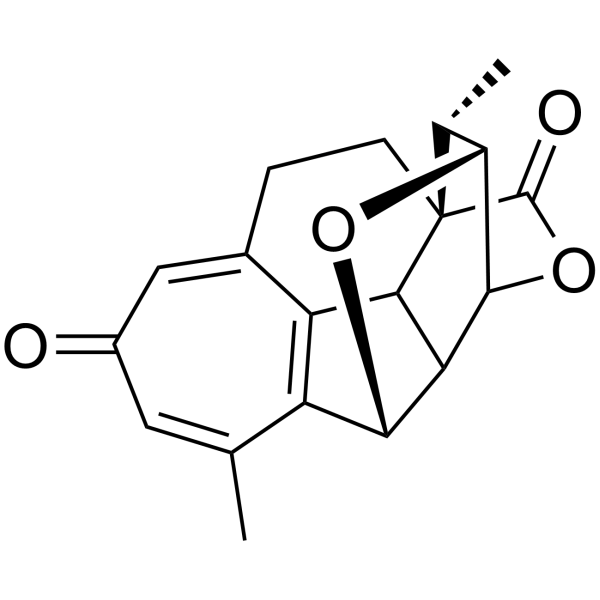
Harringtonolide
Based on 2 publication(s) in Google Scholar
Harringtonolide is a potent RACK1 inhibitor (IC50=39.66 μM in A375 cells). Harringtonolide inhibits the epithelial-mesenchymal transition (EMT) process and cell proliferation by affecting the interaction between FAK and RACK1. Harringtonolide has plant growth inhibitory, antiviral, anti-inflammatory, and antiproliferation activities.
Nos produits utilisent uniquement pour la recherche. Nous ne vendons pas aux patients.
- Pureté : 98%
- CAS No.: 64761-48-4
- Formule: C19H18O4
- Masse moléculaire:310.34
-
Stockage:
4°C, protect from light
* In solvent : -80°C, 6 months; -20°C, 1 month (protect from light)

To place orders, for customer services and technical support, please contact: MedChemExpress USA
Tel: 609-228-6898 E-mail: [email protected] [email protected]


-
 Activité biologique
-
Chemical Information
-
Solvant et solubilité
- Protocole
- Pureté et documentation
- Références
-
 Help & FAQs


-
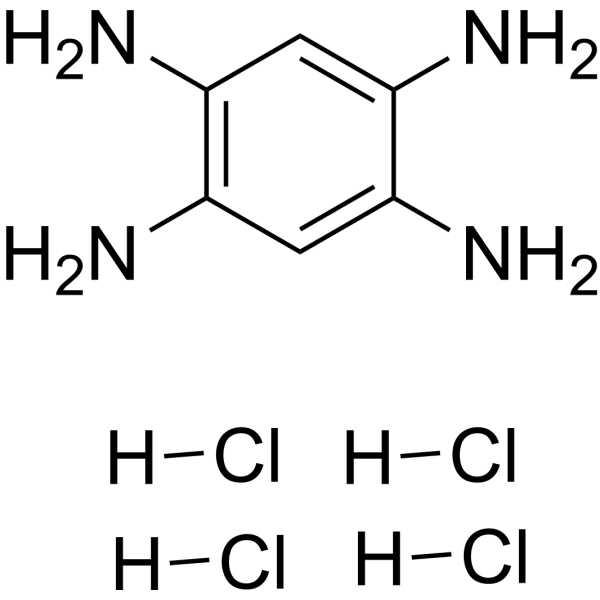
HY-12444
Y15FAK Inhibitor -
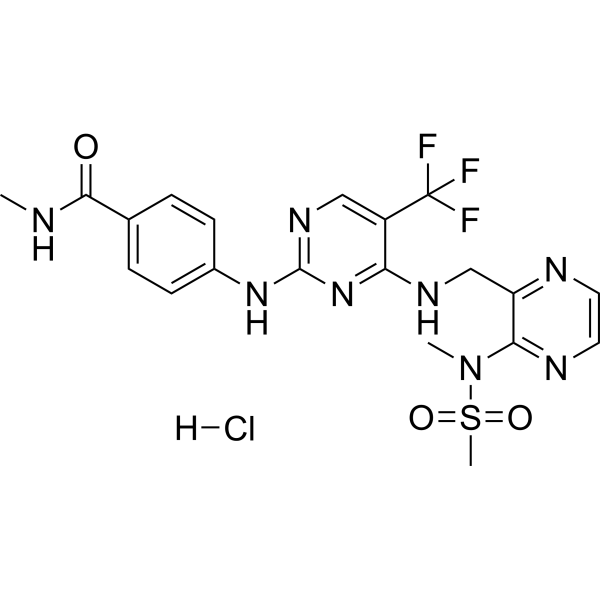
HY-12289A
Defactinib hydrochlorideFAK Inhibitor -
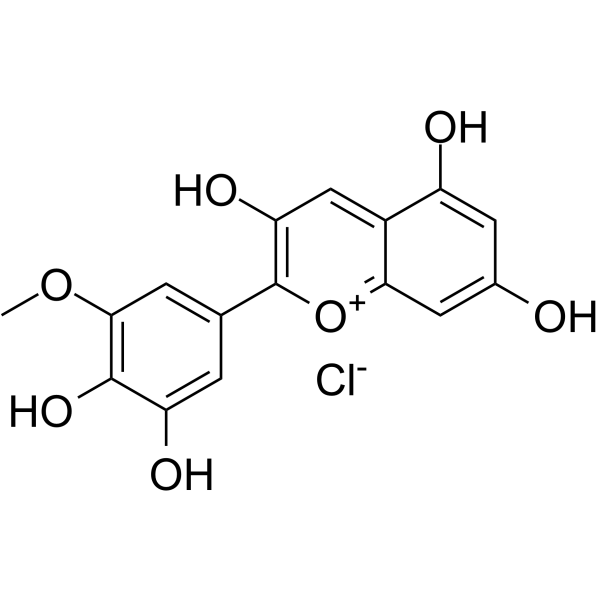
HY-126410
Petunidin chloridePEN Inhibitor -
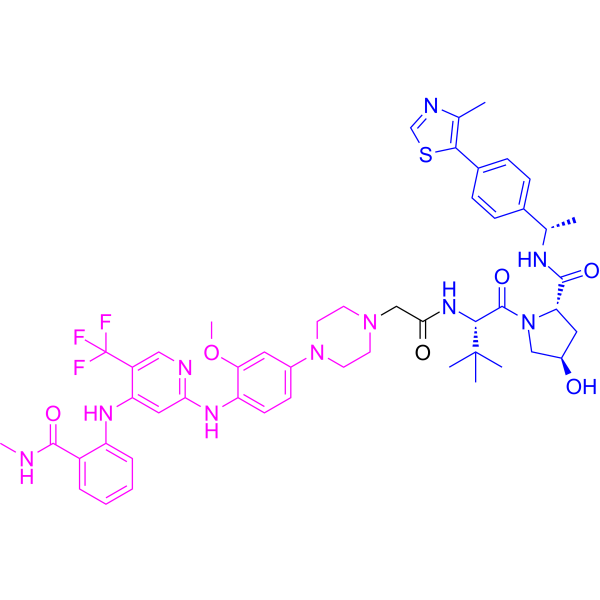
HY-132296
GSK215PROTAC FAK Degrader -
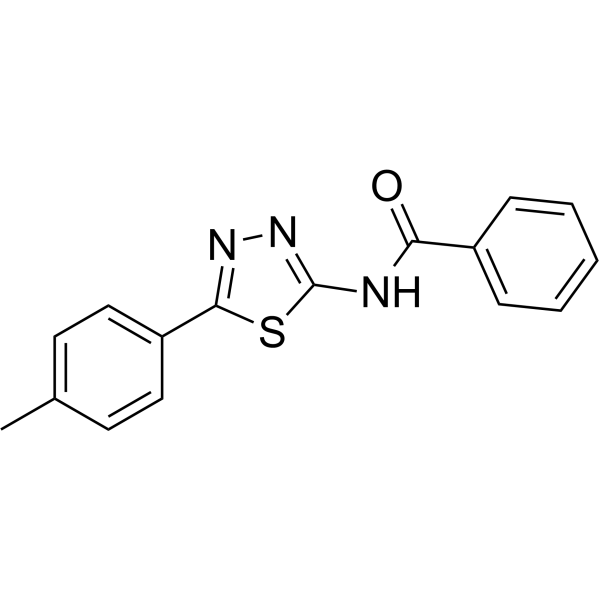
HY-148109
FAK-IN-7FAK Inhibitor -
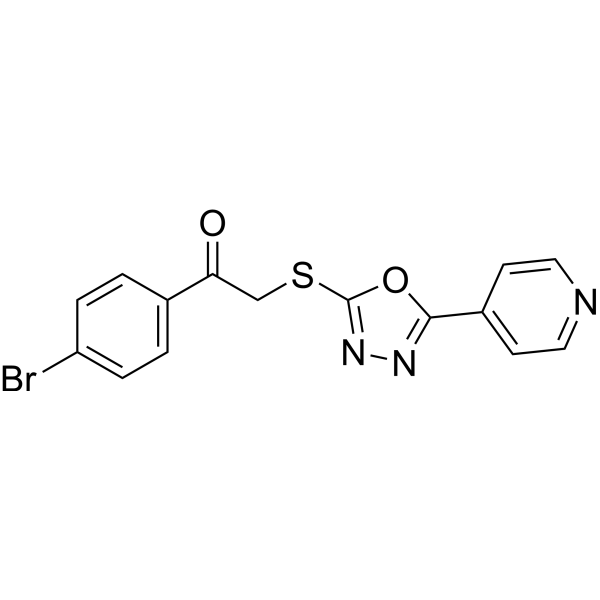
HY-153697
FAK-IN-10FAK Inhibitor -

HY-126410R
Petunidin chloride (Standard)Focal Adhesion Kinase Inhibitor -

HY-12289AR
Defactinib hydrochloride (Standard)FAK Inhibitor -
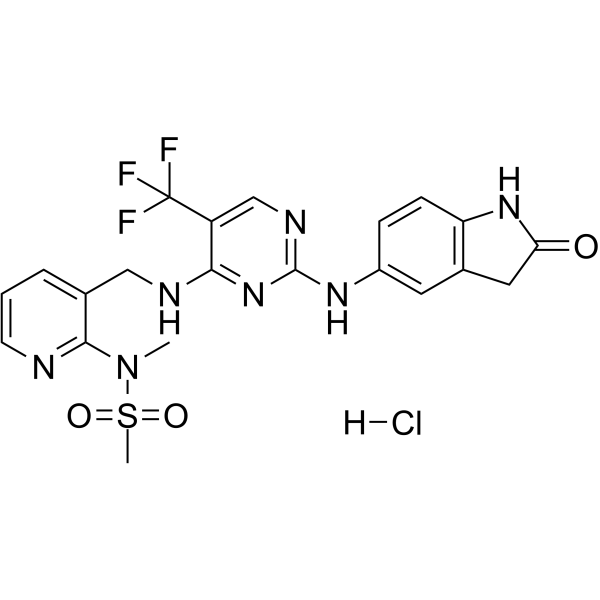
HY-20403
PF-562271 hydrochlorideFAK/Pyk2 Inhibitor -
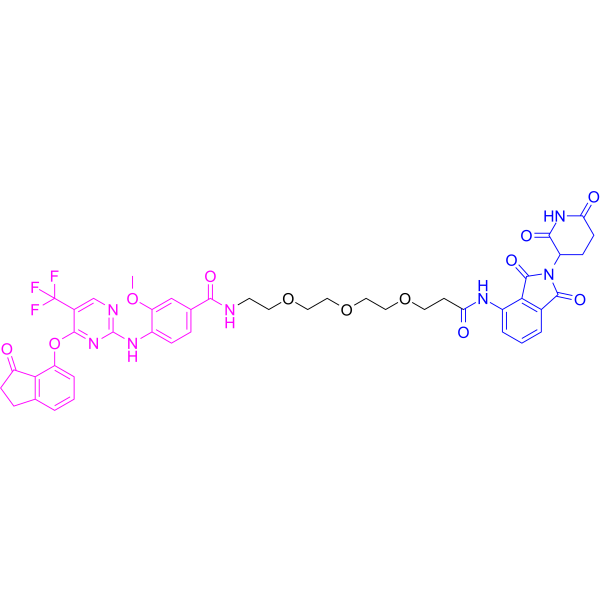
HY-111546
BI-3663PROTAC PTK2/FAK Degrader -
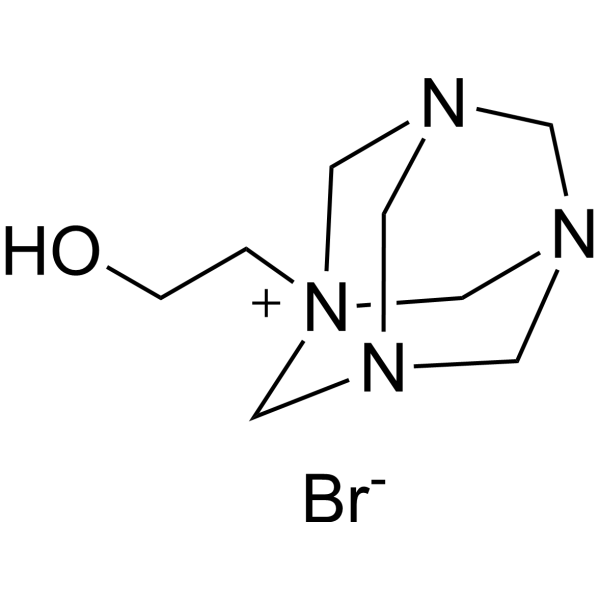
HY-103471
Y11FAK1 Inhibitor -
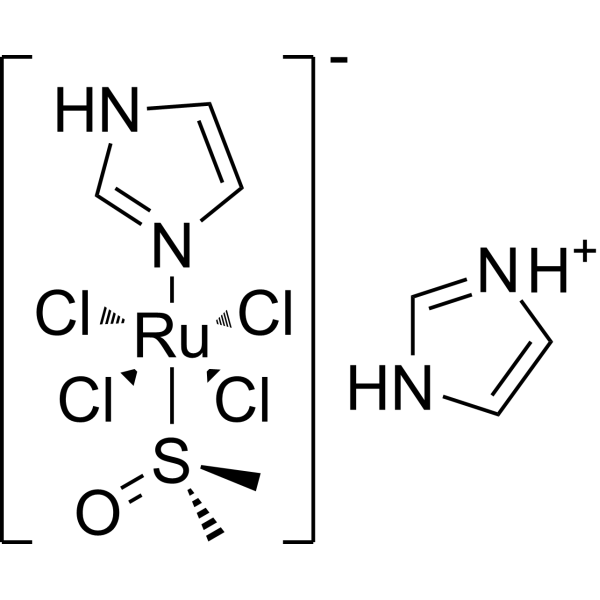
HY-19376
NAMI-ARuthenium Anticancer Agent
Publications Citing Use of MedChemExpress (MCE) Harringtonolide
More

Activité biologique
Description
IC50 & Target
IC50: 39.66 μM (RACK1) in A375 cells[1]
Cellular Effect
|
Cell Line

|
Type | Value | Description | References |
|---|---|---|---|---|
| A-375 | IC50 |
39.66 μM
Compound: HO; 1
|
Antiproliferative activity against human A-375 cells assessed as reduction in cell viability after 24 hrs by MTT assay
Antiproliferative activity against human A-375 cells assessed as reduction in cell viability after 24 hrs by MTT assay
|
[PMID: 35300090] |
In Vitro
Harringtonolide (0-50 μM; 24 hours) exhibits good antiproliferation activity in A375 cells with IC50 of 39.66 μM[1].
Harringtonolide (0-20 μM; 1 hour) restrains the proteolysis of RACK1 by Pronase, and protects temperature-dependent degradation of RACK1[1].
Harringtonolide (0-4 μM; 24 hours) suppresses the phosphorylation of FAK dose-dependently and inhibits Src and STAT3, the downstream proteins of FAK[1].
Harringtonolide (0-4 μM; 24 hours) dose-dependently inhibits the RACK1–FAK interaction in A375 cells[1].
MedChemExpress (MCE) has not independently confirmed the accuracy of these methods. They are for reference only.
-
Cell Line:A375 melanoma cells[1]
-
Concentration:0-50 μM
-
Incubation Time:24 hours
-
Result:Showed good antiproliferation activity with IC50 of 39.66 μM.
-
Cell Line:A375 melanoma cells[1]
-
Concentration:0, 0.5, 1, 2, 4 μM
-
Incubation Time:24 hours
-
Result:Suppressed the phosphorylation of FAK dose-dependently and inhibited Src and STAT3, the downstream proteins of FAK.
- Research Protocol for Infectious Diseases
- BrdU Incorporation Assay
- Somatic Cell Culture
- CFSE Dye Dilution Proliferation Assay
- Dye-dilution cell tracking and proliferation staining
- CCK-8/WST-8 Cell Proliferation Assay
- Protocol for Cell Cycle
- Cell Counting-Based Growth Curve Assay
- Research Protocol for Inflammation-related Diseases
- Colony Formation (Clonogenic) Assay
- Cell Viability Determination by MTT Colorimetric Assay
- EdU Incorporation Assay (Click Chemistry-Based DNA Synthesis Measurement)
- Ki-67 Immunostaining Proliferation Assay
- PCNA Immunodetection Proliferation Assay
- Protocol for Cell Counting and Cell Density Analysis
- MTT Cell Proliferation Assay


Chemical Information
-
CAS No. 64761-48-4
-
Appearance Solid
-
Masse moléculaire 310.34
-
Formule C19H18O4
-
Color White to off-white
-
SMILES
O=C1C=C(CC2)C3=C([C@H]4C(C5O6)C3[C@@]2([C@H](C)[C@H]5O4)C6=O)C(C)=C1
-
Structure Classification
-
Initial Source
-
Livraison
Room temperature in continental US; may vary elsewhere.
-
Stockage
4°C, protect from light
* In solvent : -80°C, 6 months; -20°C, 1 month (protect from light)


Publications (2)
-
Journal Impact Factor
-
Most Recent
-
PLoS Negl Trop Dis
Trichinella spiralis excretory-secretory proteins induced autophagy via activating AMPK/mTOR pathway and protected gut epithelial barrier. [Abstract]2025 Dec 22;19(12):e0013863. PMID: 41428690 -
PLoS Negl Trop Dis
A novel Trichinella spiralis serine proteinase disrupted gut epithelial barrier and mediated larval invasion through binding to RACK1 and activating MAPK/ERK1/2 pathway. [Abstract]2024 Jan 8;18(1):e0011872. PMID: 38190388


Solvant et solubilité
In Vitro:
DMSO : 5 mg/mL (16.11 mM; ultrasonic and warming and heat to 60°C; Hygroscopic DMSO has a significant impact on the solubility of product, please use newly opened DMSO)
Please refer to the solubility information to select the appropriate solvent. Once prepared, please aliquot and store the solution to prevent product inactivation from repeated freeze-thaw cycles.
Storage method and period of stock solution: -80°C, 6 months; -20°C, 1 month (protect from light). When stored at -80°C, please use it within 6 months. When stored at -20°C, please use it within 1 month.
Please refer to the solubility information to select the appropriate solvent. Once prepared, please aliquot and store the solution to prevent product inactivation from repeated freeze-thaw cycles.
Storage method and period of stock solution: -80°C, 6 months; -20°C, 1 month (protect from light). When stored at -80°C, please use it within 6 months. When stored at -20°C, please use it within 1 month.
Concentration (start) × Volume (start) = Concentration (final) × Volume (final)
In Vivo:
Select the appropriate dissolution method based on your experimental animal and administration route.
- For the following dissolution methods, please ensure to first prepare a clear stock solution using an In Vitro approach and then sequentially add co-solvents:
- To ensure reliable experimental results, the clarified stock solution can be appropriately stored based on storage conditions. As for the working solution for In Vivo experiments, it is recommended to prepare freshly and use it on the same day.
- The percentages shown for the solvents indicate their volumetric ratio in the final prepared solution. If precipitation or phase separation occurs during preparation, heat and/or sonication can be used to aid dissolution.
Add each solvent one by one: 10% DMSO 40% PEG300 5% Tween-80 45% Saline
Solubility: ≥ 0.5 mg/mL (1.61 mM); Clear solution
This protocol yields a clear solution of ≥ 0.5 mg/mL (saturation unknown).
Taking 1 mL working solution as an example, add 100 μL DMSO stock solution (5.0 mg/mL) to 400 μL PEG300, and mix evenly; then add 50 μL Tween-80 and mix evenly; then add 450 μL Saline to adjust the volume to 1 mL.
Preparation of Saline: Dissolve 0.9 g sodium chloride in ddH₂O and dilute to 100 mL to obtain a clear Saline solution.
Add each solvent one by one: 10% DMSO 90% (20% SBE-β-CD in Saline)
Solubility: ≥ 0.5 mg/mL (1.61 mM); Clear solution
This protocol yields a clear solution of ≥ 0.5 mg/mL (saturation unknown).
Taking 1 mL working solution as an example, add 100 μL DMSO stock solution (5.0 mg/mL) to 900 μL 20% SBE-β-CD in Saline, and mix evenly.
Preparation of 20% SBE-β-CD in Saline (4°C, storage for one week): 2 g SBE-β-CD powder is dissolved in 10 mL Saline, completely dissolve until clear.
In Vivo Dissolution Calculator
Please enter the basic information of animal experiments:
-
-
-
-
Recommended: Prepare an additional quantity of animals to account for potential losses during experiments.
Please enter your animal formula composition:
-
%DMSO +
Recommended: Keep the proportion of DMSO in working solution below 2% if your animal is weak.
-
%+
-
+%Tween-80 + +
-
%Saline +
The co-solvents required include: DMSO, . All of co-solvents are available by MedChemExpress (MCE). , Tween 80. All of co-solvents are available by MedChemExpress (MCE).
Working solution concentration: 0.22 mg/mL
Method for preparing stock solution: mg drug dissolved in μL DMSO. Stock solution concentration: mg/mL. * In solvent : -80°C, 6 months; -20°C, 1 month (protect from light)
1. Take μL DMSO stock solution;
2. Add μL .
μL , mix evenly;
3. Then add μL Tween 80, mix evenly;
4. Then add μL
Please ensure that the stock solution in the first step is dissolved to a clear state, and add co-solvents in sequence. You can use ultrasonic heating (ultrasonic cleaner, recommended frequency 20-40 kHz), vortexing, etc. to assist dissolution.


Pureté et documentation
-
Fiche technique (283 KB)
-
SDS (252 KB)
- English - EN (252 KB)
- Français - FR (252 KB)
- Deutsch - DE (252 KB)
- Norwegian - NO (252 KB)
- Español - ES (252 KB)
- Swedish - SV (252 KB)
- Italian - IT (252 KB)
- Korean - KR (252 KB)
- Portuguese - PT (252 KB)
-
Instruction de manipulation (2659 KB)
Références


Complete Stock Solution Preparation Table
Please refer to the solubility information to select the appropriate solvent. Once prepared, please aliquot and store the solution to prevent product inactivation from repeated freeze-thaw cycles.
Storage method and period of stock solution: -80°C, 6 months; -20°C, 1 month (protect from light). When stored at -80°C, please use it within 6 months. When stored at -20°C, please use it within 1 month.
| Optional Solvent | Concentration Solvent Mass | 1 mg | 5 mg | 10 mg | 25 mg |
|---|---|---|---|---|---|
| DMSO | 1 mM | 3.2223 mL | 16.1114 mL | 32.2227 mL | 80.5568 mL |
| 5 mM | 0.6445 mL | 3.2223 mL | 6.4445 mL | 16.1114 mL | |
| 10 mM | 0.3222 mL | 1.6111 mL | 3.2223 mL | 8.0557 mL | |
| 15 mM | 0.2148 mL | 1.0741 mL | 2.1482 mL | 5.3705 mL |


Harringtonolide Related Classifications
HY-N10335 Related Classifications
 Powered by Bioz