



KDM5-C70
Based on 8 publication(s) in Google Scholar
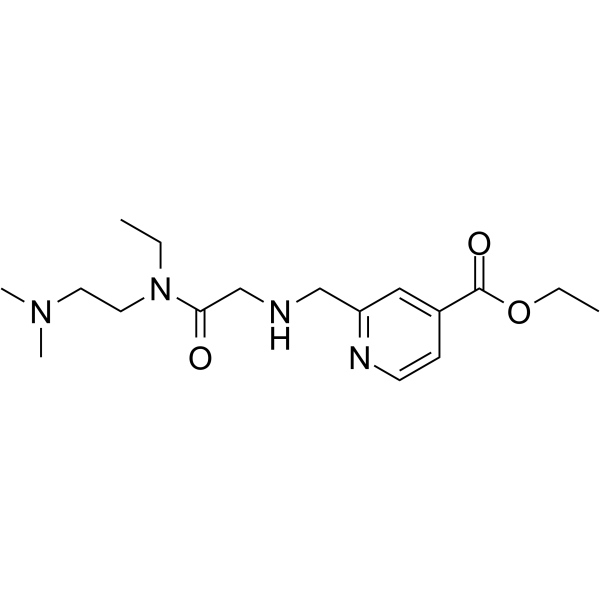
KDM5-C70 is an ethyl ester derivative of KDM5-C49 and a potent, cell-permeable and pan-KDM5 histone demethylase inhibitor. KDM5-C70 has an antiproliferative effect in myeloma cells, leading to genome-wide elevation of H3K4me3 levels.
Nos produits utilisent uniquement pour la recherche. Nous ne vendons pas aux patients.
- Pureté : 98.82%
- CAS No.: 1596348-32-1
- Formule: C17H28N4O3
- Masse moléculaire:336.43
-
Stockage:
-20°C, stored under nitrogen
* In solvent : -80°C, 6 months; -20°C, 1 month (stored under nitrogen)

To place orders, for customer services and technical support, please contact: MedChemExpress USA
Tel: 609-228-6898 E-mail: [email protected] [email protected]


-
 Activité biologique
-
Chemical Information
-
Solvant et solubilité
- Protocole
- Pureté et documentation
- Références
-
 Help & FAQs


-
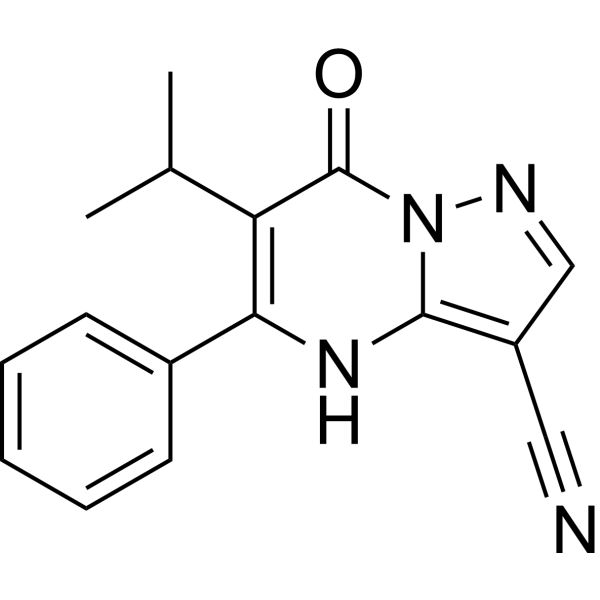
HY-100421
CPI-455KDM5 Inhibitor -
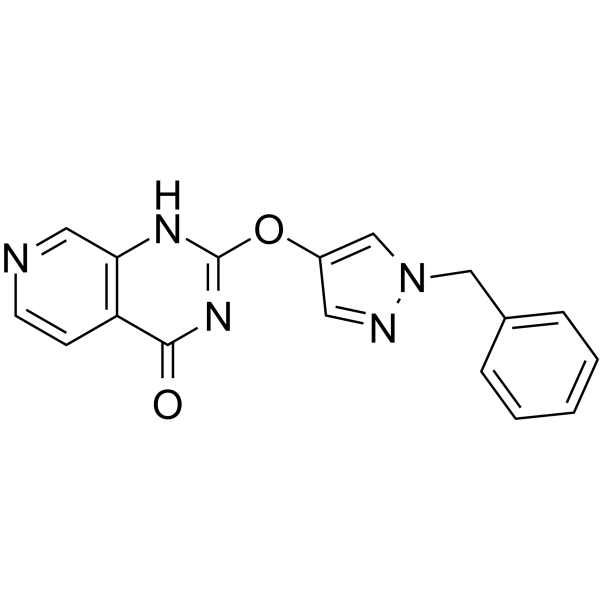
HY-116761
GSK467KDM5B Inhibitor -
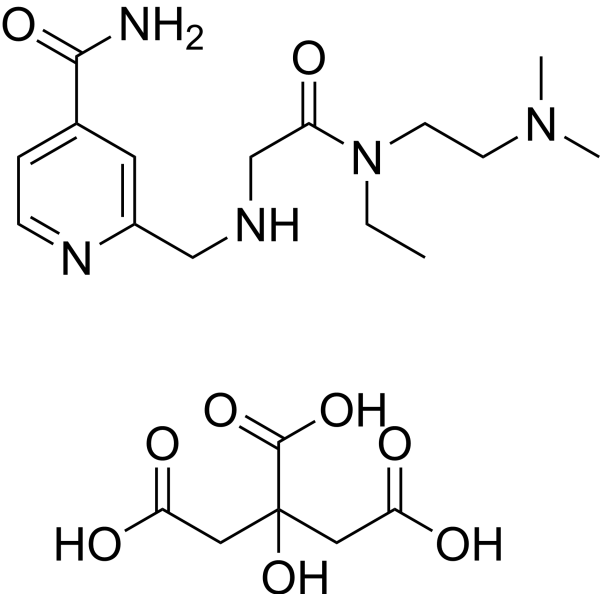
HY-102047B
KDOAM-25 citrateKDM5 Inhibitor -
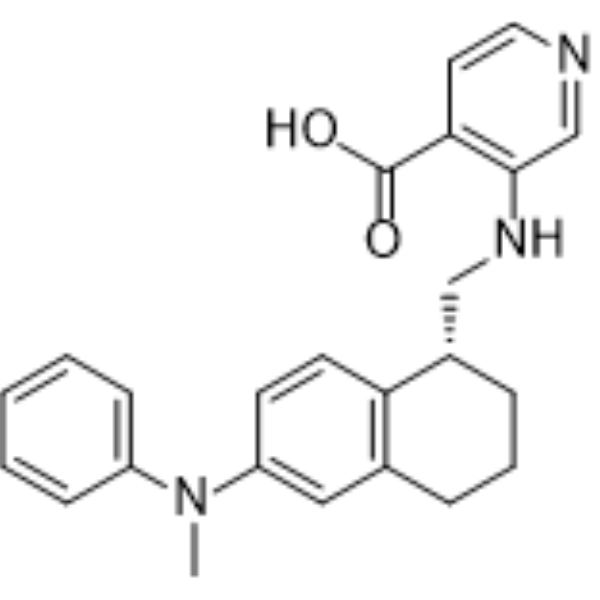
HY-104048
QC6352KDM4 Inhibitor -
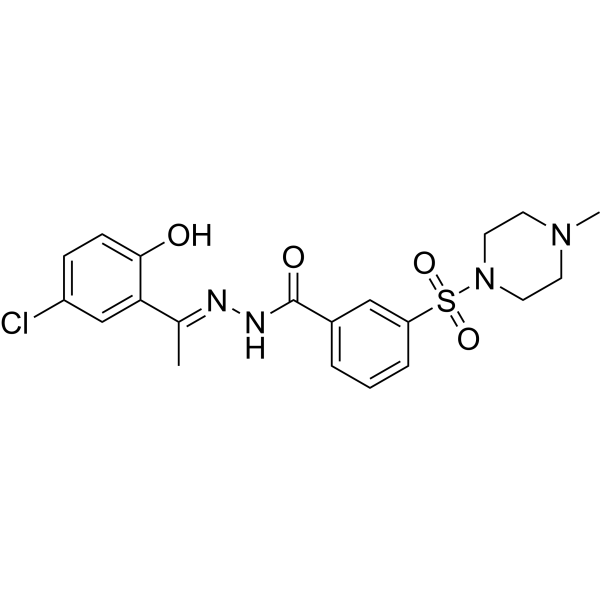
HY-103713
SeclidemstatLSD1 Inhibitor -
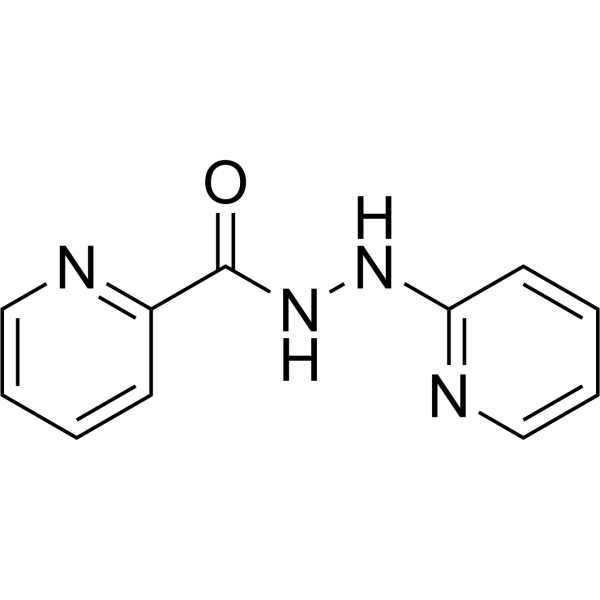
HY-139348
PFI-90KDM3B Inhibitor -
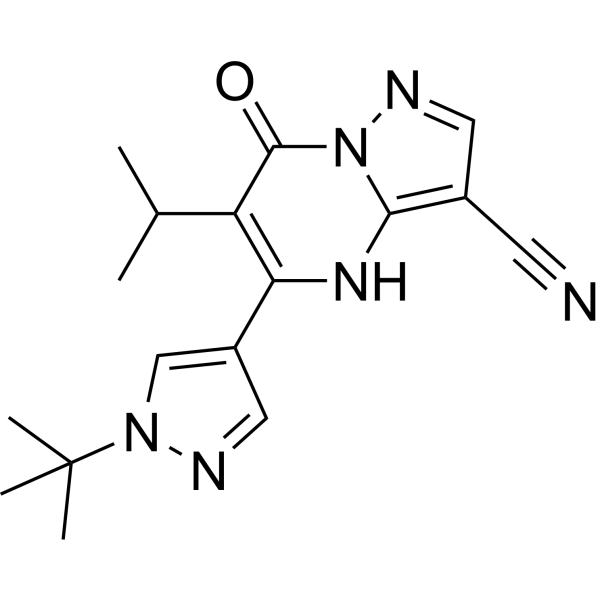
HY-100422
KDM5-IN-1KDM5 Inhibitor -
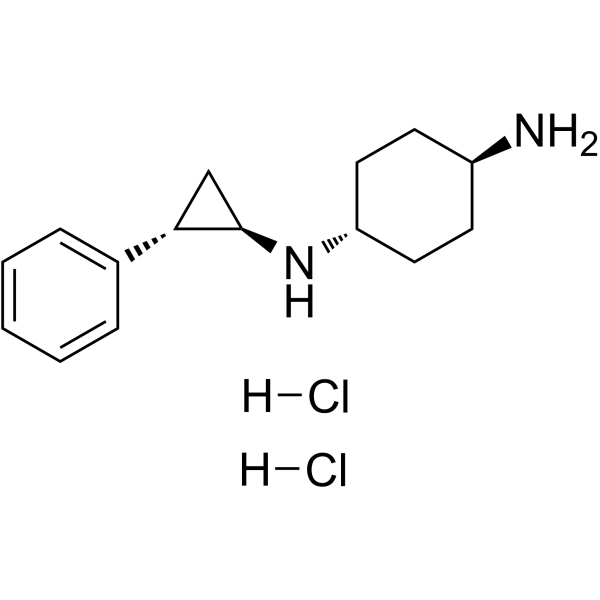
HY-12782T
Iadademstat dihydrochlorideKDM1A Inhibitor -
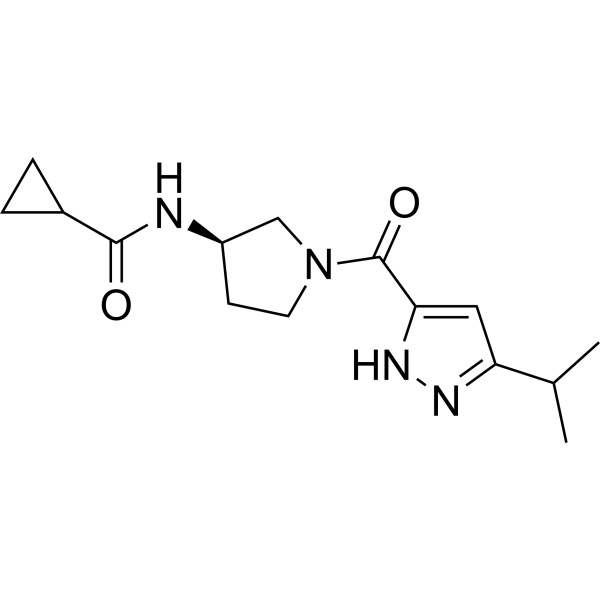
HY-100014
KDM5A-IN-1KDM5 Inhibitor -
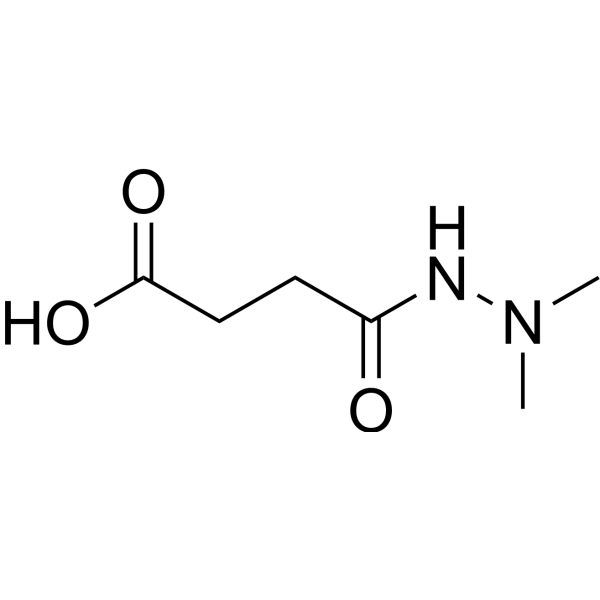
HY-13643
DaminozideKDM2/7 Inhibitor -
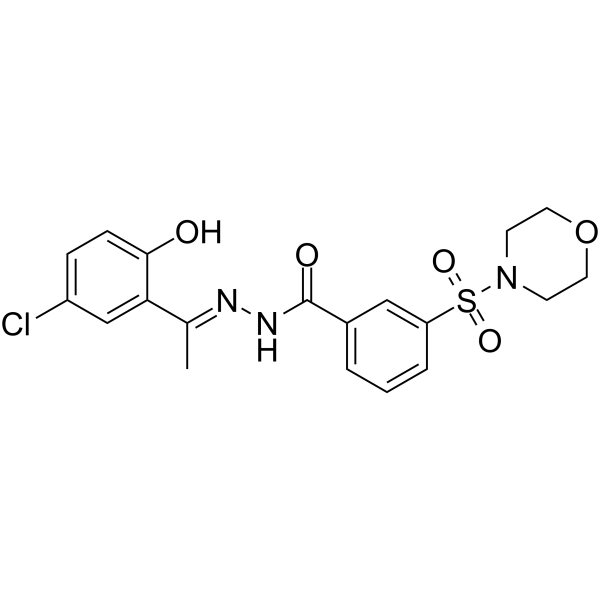
HY-12635
SP2509LSD1 Antagonist -
HY-13953
JIB-04Histone Demethylase Inhibitor
Publications Citing Use of MedChemExpress (MCE) KDM5-C70
More- Cell Res. 2023 May;33(5):403-406. [Abstract]
- Nat Commun. 2026 Apr 22;17(1):5596. [Abstract]
- Sci Adv. 2023 Apr 7;9(14):eadd8343. [Abstract]
- Acta Pharmacol Sin. 2025 Aug 19. [Abstract]
- Sci Rep. 2025 Feb 13;15(1):5409. [Abstract]
- Clin Exp Med. 2025 Nov 25;26(1):33. [Abstract]
- bioRxiv. 2025 Oct 14.
- bioRxiv. 2023 Nov 9:2023.10.29.564587. [Abstract]
 Customer Validation & Images

-
IF
-
RT-PCR
-
WB
-
WB
-
Cell Imaging/Staining


Activité biologique
Description
IC50 & Target
|
KDM5 |
Cellular Effect
|
Cell Line

|
Type | Value | Description | References |
|---|---|---|---|---|
| MCF7 | IC50 |
<1 μM
Compound: 130
|
Antiproliferative activity against human MCF7 cells assessed as reduction in cell viability after 120 hrs by ATPlite assay
Antiproliferative activity against human MCF7 cells assessed as reduction in cell viability after 120 hrs by ATPlite assay
|
[PMID: 26710088] |
| MM1.S | EC50 |
3.1 μM
Compound: 14
|
Antiproliferative activity against human MM1.S cells assessed as reduction in cell viability
Antiproliferative activity against human MM1.S cells assessed as reduction in cell viability
|
[PMID: 34555614] |
| U2OS | IC50 |
<1 μM
Compound: 130
|
Inhibition of KDM5B in human U2OS cells assessed as reduction in demethylation of H3K4me3 after 20 hrs by Hoechst 33342 staining based immunofluorescence assay
Inhibition of KDM5B in human U2OS cells assessed as reduction in demethylation of H3K4me3 after 20 hrs by Hoechst 33342 staining based immunofluorescence assay
|
[PMID: 26710088] |
| U2OS | IC50 |
<1 μM
Compound: 130
|
Inhibition of KDM5C in human U2OS cells assessed as reduction in demethylation of H3K4me3 after 20 hrs by Hoechst 33342 staining based immunofluorescence assay
Inhibition of KDM5C in human U2OS cells assessed as reduction in demethylation of H3K4me3 after 20 hrs by Hoechst 33342 staining based immunofluorescence assay
|
[PMID: 26710088] |
In Vitro
KDM5-C70 (10-9-10-5 M; 7 days; MM.1S myeloma cells) treatment shows antiproliferative effects after 7 days of treatment at elevated concentrations (estimated 50% reduction of viability/proliferation for KDM5-C70 at ~20 μM)[1].
KDM5-C70 (50 μM; 7 days; MM.1S myeloma cells) treatment decreases the level of phosphorylation of retinoblastoma protein (Rb), while leaving the total level of phosphorylated Rb (pRb) unchanged, indicating impairment of cell cycle progression[1].
Chromatin immunoprecipitation followed by next-generation sequencing shows an increase in H3K4me3 levels around transcription start sites with KDM5-C70 but little change with GSK467A at 50 μM inhibitor concentrations[1].
MedChemExpress (MCE) has not independently confirmed the accuracy of these methods. They are for reference only. Further protocols information, click here.
-
Cell Line:MM.1S myeloma cells
-
Concentration:10-9-10-5 M
-
Incubation Time:7 days
-
Result:Showed antiproliferative effects after 7 days of treatment at elevated concentrations.
-
Cell Line:MM.1S myeloma cells
-
Concentration:50 μM
-
Incubation Time:7 days
-
Result:Decreased the level of phosphorylation of retinoblastoma protein (Rb).


Chemical Information
-
CAS No. 1596348-32-1
-
Appearance Liquid (Density: 1.099 g/cm3)
-
Masse moléculaire 336.43
-
Formule C17H28N4O3
-
Color Light yellow to yellow
-
SMILES
O=C(C1=CC(CNCC(N(CCN(C)C)CC)=O)=NC=C1)OCC
-
Livraison
Room temperature in continental US; may vary elsewhere.
-
Stockage
-20°C, stored under nitrogen
* In solvent : -80°C, 6 months; -20°C, 1 month (stored under nitrogen)


Publications (8)
-
Journal Impact Factor
-
Most Recent
-
Cell Res
2023 May;33(5):403-406. PMID: 36922644
KDM5-C70 purchased from MedChemExpress. Usage Cited in: Cell Res. 2023 May;33(5):403-406. [Abstract]
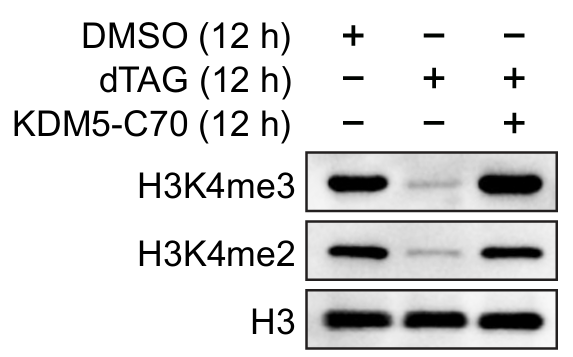
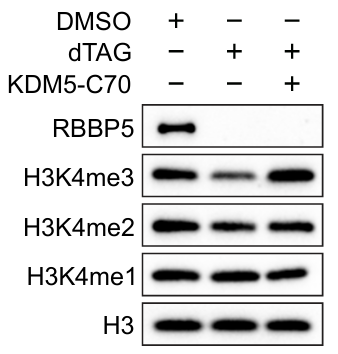
Western blotting was performed in mRBBP5-dTAG mESCs treated with dTAG and/or pan-KDM5 inhibitor KDM5-C70 for 12 h. The results showed that supplementation with KDM5-C70 reversed the reduction of global H3K4me2/3 induced by 12 h dTAG treatment.
KDM5-C70 purchased from MedChemExpress. Usage Cited in: Cell Res. 2023 May;33(5):403-406. [Abstract]
Western blotting of dTAG treatment with or without pan-KDM5 inhibition by KDM5-C70 (12 h) in mRBBP5-dTAG mESCs. The results showed that treatment with the pan-KDM5 inhibitor KDM5-C70 restored H3K4me3 levels, indicating that KDM5 demethylases are mainly responsible for RBBP5 degradation-induced rapid H3K4me3 depletion.
-
Nat Commun
Transcription factor 19 modulates fatty acid elongation and unfolded protein response to attenuate palmitic acid-induced hepatic dysfunction. [Abstract]2026 Apr 22;17(1):5596. PMID: 42020413 -
Sci Adv
Modification of maternally defined H3K4me3 regulates the inviability of interspecific Xenopus hybrids. [Abstract]2023 Apr 7;9(14):eadd8343. PMID: 37027476
KDM5-C70 purchased from MedChemExpress. Usage Cited in: Sci Adv. 2023 Apr 7;9(14):eadd8343. [Abstract]
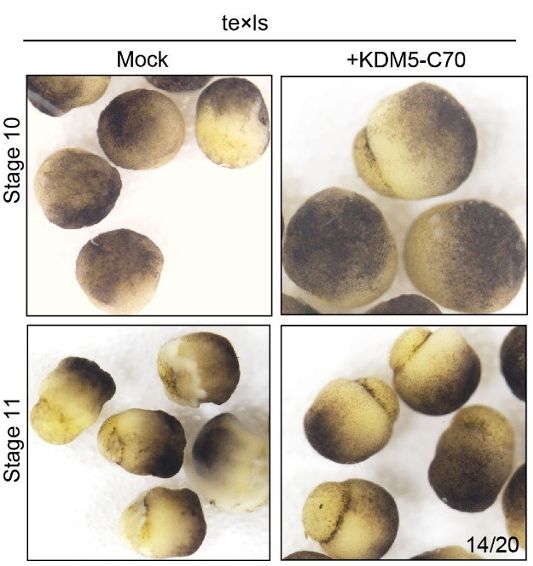
The treatment of pan-Kdm5 histone demethylase inhibitor KDM5-C70 partially rescued the mushroom morphology of te×ls embryos. The te×ls embryos were treated with KDM5-C70 (20 μM) from stage 3, and images were captured at stage 11.
KDM5-C70 purchased from MedChemExpress. Usage Cited in: Sci Adv. 2023 Apr 7;9(14):eadd8343. [Abstract]
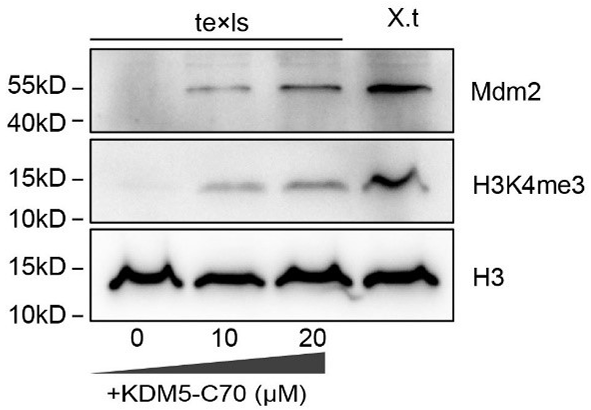
The H3K4me3 and Mdm2 protein levels in te×ls embryos upon KDM5-C70 (10-20 μM) treatment were detected by western blot around stage 11. The results showed that elevations of H3K4me3 and Mdm2 were observed in KDM5-C70–treated te×ls embryos.
-
Acta Pharmacol Sin
DNMT inhibition epigenetically restores the cGAS-STING pathway and activates RIG-I/MDA5-MAVS to enhance antitumor immunity. [Abstract]2025 Aug 19. PMID: 40830678 -
Sci Rep
Histone demethylase inhibitor KDM5-C70 regulates metabolomic and lipidomic programming during an astrocyte differentiation of rat neural stem cell. [Abstract]2025 Feb 13;15(1):5409. PMID: 39948097
KDM5-C70 purchased from MedChemExpress. Usage Cited in: Sci Rep. 2025 Feb 13;15(1):5409. [Abstract]
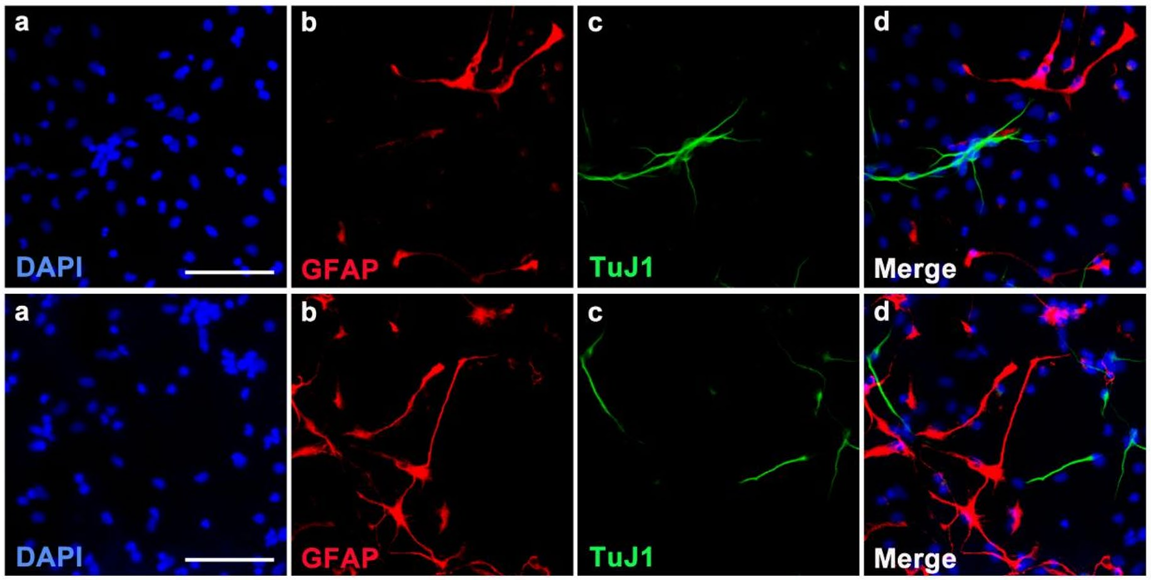
NSCs treated with 0.1% DMSO (Upper row) or 25 µM KDM5-C70 (Lower row) in the absence of EGF and FGF2 for 4 days. (a) nuclei stained with DAPI (blue), (b) astrocytes immuno-stained with GFAP (red), (c) neurons immuno-stained with TuJ1 (green), and (d) merged images.
KDM5-C70 purchased from MedChemExpress. Usage Cited in: Sci Rep. 2025 Feb 13;15(1):5409. [Abstract]
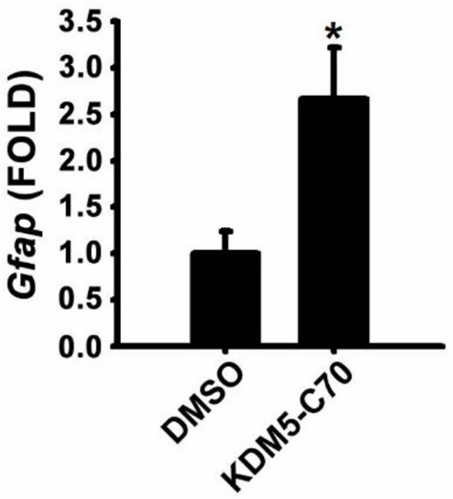
Real-time RT-PCR was performed to quantify the mRNA levels of Gfap. Total RNA was extracted from NSCs treated with 0.1% DMSO or 25 µM KDM5-C70 in the absence of EGF and FGF2 for 3 days. Gapdh was used as an internal control.
-
Clin Exp Med
Corin: a dual inhibitor for KDM1A/HDAC1, suppresses hepatocellular carcinoma by triggering cuproptosis. [Abstract]2025 Nov 25;26(1):33. PMID: 41286164 -
-
bioRxiv
Heterozygous Kmt2d loss diminishes enhancers to render medulloblastoma cells vulnerable to combinatory inhibition of lysine demethylation and oxidative phosphorylation. [Abstract]2023 Nov 9:2023.10.29.564587. PMID: 37961118


Solvant et solubilité
In Vitro:
DMSO : 100 mg/mL (297.24 mM; Need ultrasonic; Hygroscopic DMSO has a significant impact on the solubility of product, please use newly opened DMSO)
Please refer to the solubility information to select the appropriate solvent. Once prepared, please aliquot and store the solution to prevent product inactivation from repeated freeze-thaw cycles.
Storage method and period of stock solution: -80°C, 6 months; -20°C, 1 month (stored under nitrogen). When stored at -80°C, please use it within 6 months. When stored at -20°C, please use it within 1 month.
Please refer to the solubility information to select the appropriate solvent. Once prepared, please aliquot and store the solution to prevent product inactivation from repeated freeze-thaw cycles.
Storage method and period of stock solution: -80°C, 6 months; -20°C, 1 month (stored under nitrogen). When stored at -80°C, please use it within 6 months. When stored at -20°C, please use it within 1 month.
Concentration (start) × Volume (start) = Concentration (final) × Volume (final)
In Vivo:
Select the appropriate dissolution method based on your experimental animal and administration route.
- For the following dissolution methods, please ensure to first prepare a clear stock solution using an In Vitro approach and then sequentially add co-solvents:
- To ensure reliable experimental results, the clarified stock solution can be appropriately stored based on storage conditions. As for the working solution for In Vivo experiments, it is recommended to prepare freshly and use it on the same day.
- The percentages shown for the solvents indicate their volumetric ratio in the final prepared solution. If precipitation or phase separation occurs during preparation, heat and/or sonication can be used to aid dissolution.
Add each solvent one by one: 10% DMSO 40% PEG300 5% Tween-80 45% Saline
Solubility: ≥ 2.5 mg/mL (7.43 mM); Clear solution
This protocol yields a clear solution of ≥ 2.5 mg/mL (saturation unknown).
Taking 1 mL working solution as an example, add 100 μL DMSO stock solution (25.0 mg/mL) to 400 μL PEG300, and mix evenly; then add 50 μL Tween-80 and mix evenly; then add 450 μL Saline to adjust the volume to 1 mL.
Preparation of Saline: Dissolve 0.9 g sodium chloride in ddH₂O and dilute to 100 mL to obtain a clear Saline solution.
Add each solvent one by one: 10% DMSO 90% (20% SBE-β-CD in Saline)
Solubility: ≥ 2.5 mg/mL (7.43 mM); Clear solution
This protocol yields a clear solution of ≥ 2.5 mg/mL (saturation unknown).
Taking 1 mL working solution as an example, add 100 μL DMSO stock solution (25.0 mg/mL) to 900 μL 20% SBE-β-CD in Saline, and mix evenly.
Preparation of 20% SBE-β-CD in Saline (4°C, storage for one week): 2 g SBE-β-CD powder is dissolved in 10 mL Saline, completely dissolve until clear.
In Vivo Dissolution Calculator
Please enter the basic information of animal experiments:
-
-
-
-
Recommended: Prepare an additional quantity of animals to account for potential losses during experiments.
Please enter your animal formula composition:
-
%DMSO +
Recommended: Keep the proportion of DMSO in working solution below 2% if your animal is weak.
-
%+
-
+%Tween-80 + +
-
%Saline +
The co-solvents required include: DMSO, . All of co-solvents are available by MedChemExpress (MCE). , Tween 80. All of co-solvents are available by MedChemExpress (MCE).
Working solution concentration: 0.22 mg/mL
Method for preparing stock solution: mg drug dissolved in μL DMSO. Stock solution concentration: mg/mL. * In solvent : -80°C, 6 months; -20°C, 1 month (stored under nitrogen)
1. Take μL DMSO stock solution;
2. Add μL .
μL , mix evenly;
3. Then add μL Tween 80, mix evenly;
4. Then add μL
Please ensure that the stock solution in the first step is dissolved to a clear state, and add co-solvents in sequence. You can use ultrasonic heating (ultrasonic cleaner, recommended frequency 20-40 kHz), vortexing, etc. to assist dissolution.

Protocole
-
Cell Viability Determination by MTT Colorimetric Assay
The following protocol uses the MTT colorimetric assay as a classic literature-established method for assessing cell viability/metabolic activity in cultured mammalian cells. MTT[3-(4,5-dimethylthiazol-2-yl)-2,5-diphenyltetrazolium bromide] is reduced by metabolically active cells to a colored formazan product; the amount of formazan is quantified spectrophotometrically and provides an indirect measure of metabolically active viable cells. Importantly, MTT reduction reflects cellular oxidoreductase/metabolic activity rather than an absolute direct count of living cells, so changes in cellular metabolism can alter the signal independently of cell number.


Pureté et documentation
-
Fiche technique (272 KB)
-
SDS (393 KB)
- English - EN (393 KB)
- Français - FR (393 KB)
- Deutsch - DE (393 KB)
- Norwegian - NO (393 KB)
- Español - ES (393 KB)
- Swedish - SV (393 KB)
- Italian - IT (393 KB)
- Korean - KR (393 KB)
- Portuguese - PT (393 KB)
-
Instruction de manipulation (2659 KB)
Références
[1]. Johansson C, et al. Structural analysis of human KDM5B guides histone demethylase inhibitor development. Nat Chem Biol. 2016 Jul;12(7):539-45. [Content Brief]
[2]. Blair LP, et al. KDM5 lysine demethylases are involved in maintenance of 3'UTR length. Sci Adv. 2016 Nov 18;2(11):e1501662. [Content Brief]


Complete Stock Solution Preparation Table
Please refer to the solubility information to select the appropriate solvent. Once prepared, please aliquot and store the solution to prevent product inactivation from repeated freeze-thaw cycles.
Storage method and period of stock solution: -80°C, 6 months; -20°C, 1 month (stored under nitrogen). When stored at -80°C, please use it within 6 months. When stored at -20°C, please use it within 1 month.
| Optional Solvent | Concentration Solvent Mass | 1 mg | 5 mg | 10 mg | 25 mg |
|---|---|---|---|---|---|
| DMSO | 1 mM | 2.9724 mL | 14.8619 mL | 29.7239 mL | 74.3097 mL |
| 5 mM | 0.5945 mL | 2.9724 mL | 5.9448 mL | 14.8619 mL | |
| 10 mM | 0.2972 mL | 1.4862 mL | 2.9724 mL | 7.4310 mL | |
| 15 mM | 0.1982 mL | 0.9908 mL | 1.9816 mL | 4.9540 mL | |
| 20 mM | 0.1486 mL | 0.7431 mL | 1.4862 mL | 3.7155 mL | |
| 25 mM | 0.1189 mL | 0.5945 mL | 1.1890 mL | 2.9724 mL | |
| 30 mM | 0.0991 mL | 0.4954 mL | 0.9908 mL | 2.4770 mL | |
| 40 mM | 0.0743 mL | 0.3715 mL | 0.7431 mL | 1.8577 mL | |
| 50 mM | 0.0594 mL | 0.2972 mL | 0.5945 mL | 1.4862 mL | |
| 60 mM | 0.0495 mL | 0.2477 mL | 0.4954 mL | 1.2385 mL | |
| 80 mM | 0.0372 mL | 0.1858 mL | 0.3715 mL | 0.9289 mL | |
| 100 mM | 0.0297 mL | 0.1486 mL | 0.2972 mL | 0.7431 mL |


KDM5-C70 Related Classifications
HY-120400 Related Classifications
 Powered by Bioz