



LG100268
Based on 5 publication(s) in Google Scholar
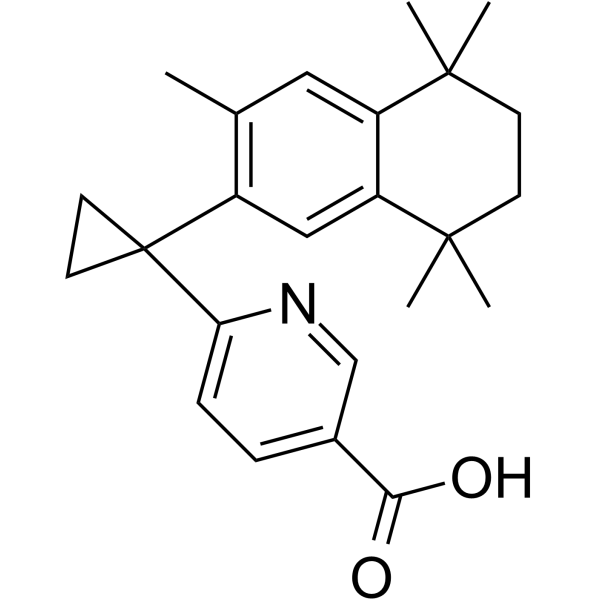
LG100268 (LG268) is a potent, selective and orally active retinoid X receptor (RXR) agonist with EC50 values of 4 nM, 3 nM, and 4 nM for RXR-α, RXR-β, and RXR-γ, respectively. LG100268 displays >1000-fold selectivity for RXR over RAR, the Ki values are 3.4 nM, 6.2 nM and 9.2 nM for RXR-α, RXR-β, and RXR-γ, respectively. LG100268 activates RXR homodimers to induce transcriptional activation. LG100268 can be used for the study of lung carcinogenesisy.
For research use only. We do not sell to patients.
- Purity : 99.39%
- CAS No.: 153559-76-3
- Formula: C24H29NO2
- Molecular Weight:363.49
-
Storage:Powder -20°C, 3 years , 4°C, 2 years ; In solvent -80°C, 2 years , -20°C, 1 year

To place orders, for customer services and technical support, please contact: MedChemExpress USA
Tel: 609-228-6898 E-mail: [email protected] [email protected]


-
 Biological Activity
-
Chemical Information
-
Solvent & Solubility
- Purity & Documentation
- References
-
 Help & FAQs


-
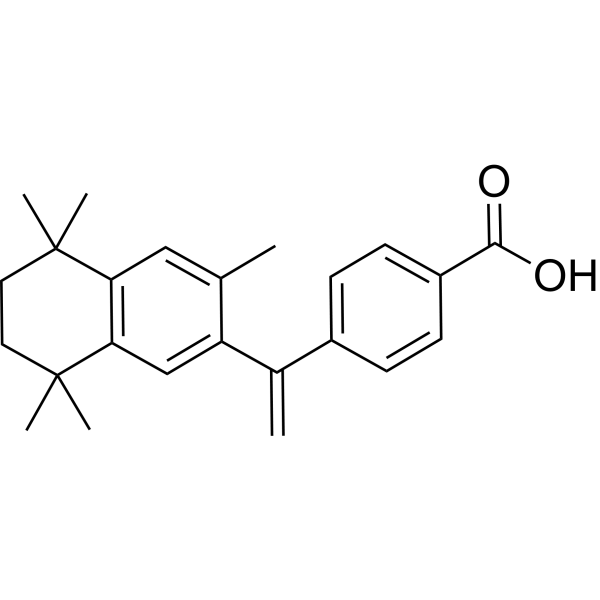
HY-14171
BexaroteneRXR Agonist -
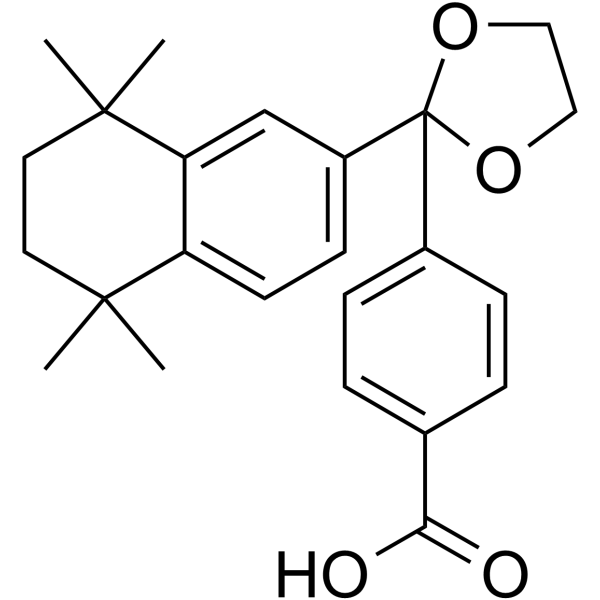
HY-107413
SR11237RXR Activator -
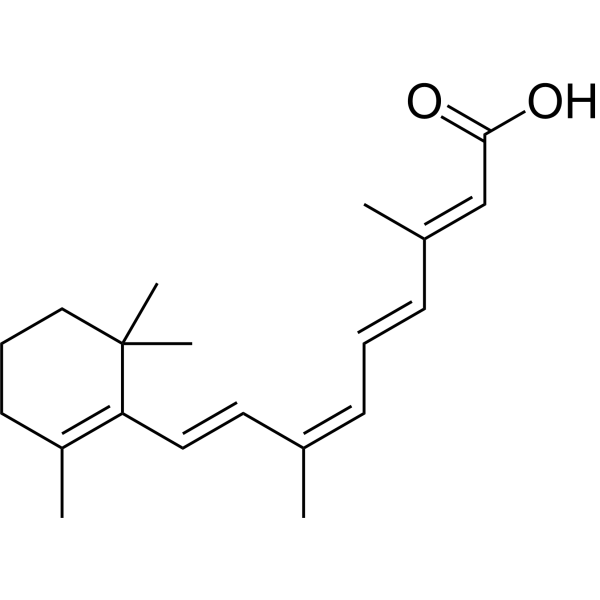
HY-15128
9-cis-Retinoic acidRAR/RXR Agonist -
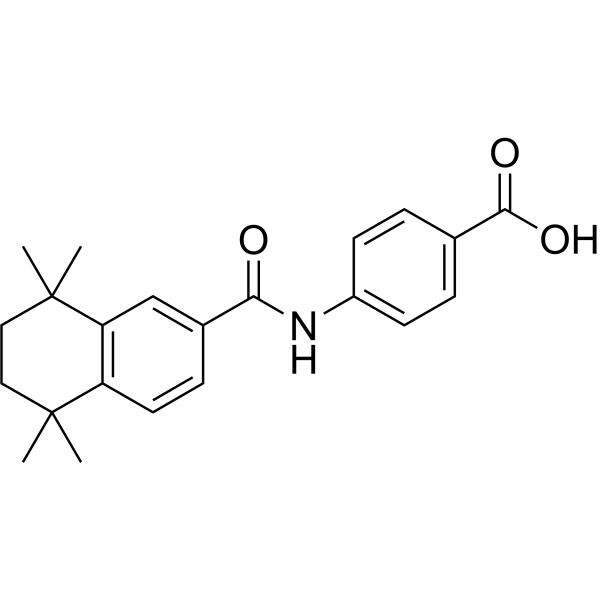
HY-10475
AM580RARα Agonist -
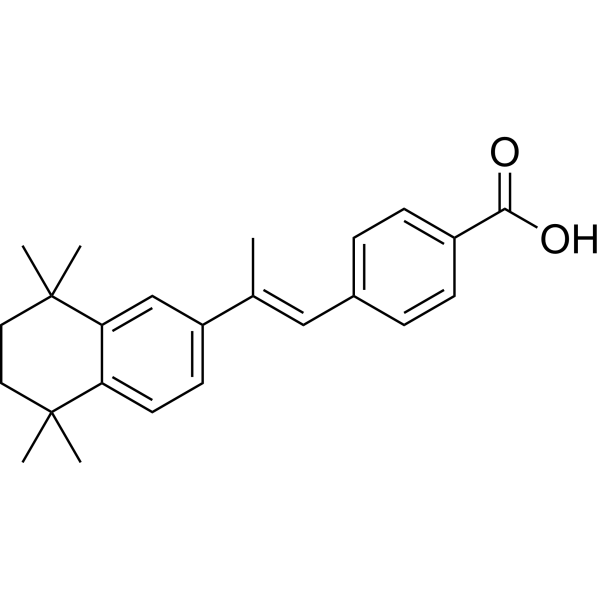
HY-15682
TTNPBApoptosis Inducer -
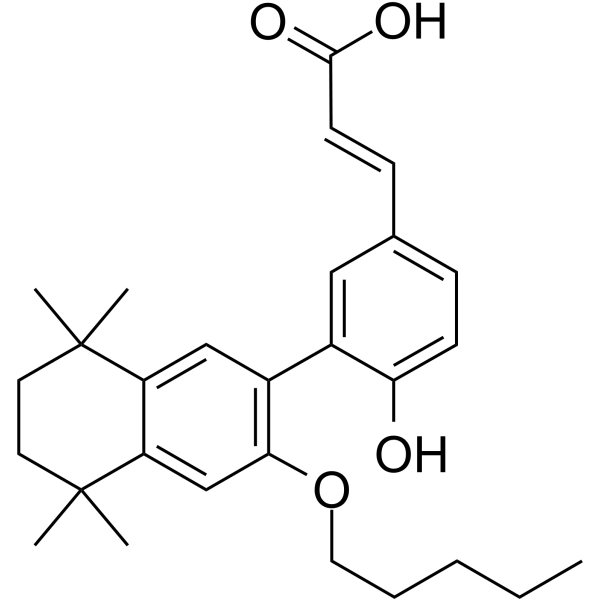
HY-107500
UVI 3003RXR Inhibitor -
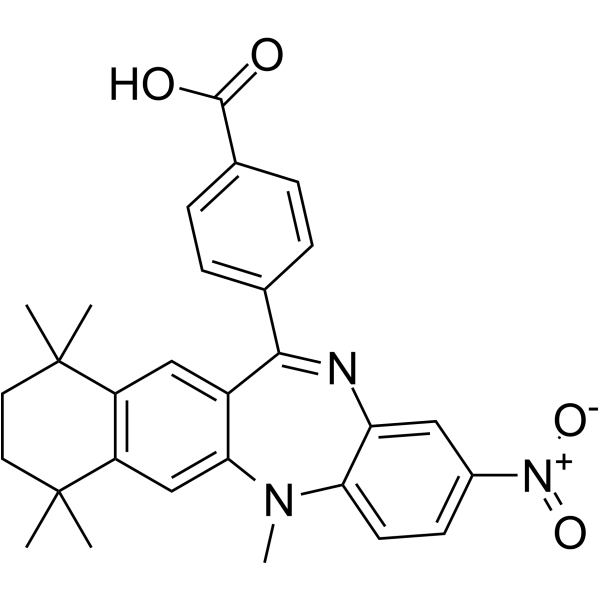
HY-108521
HX531RXR Antagonist -
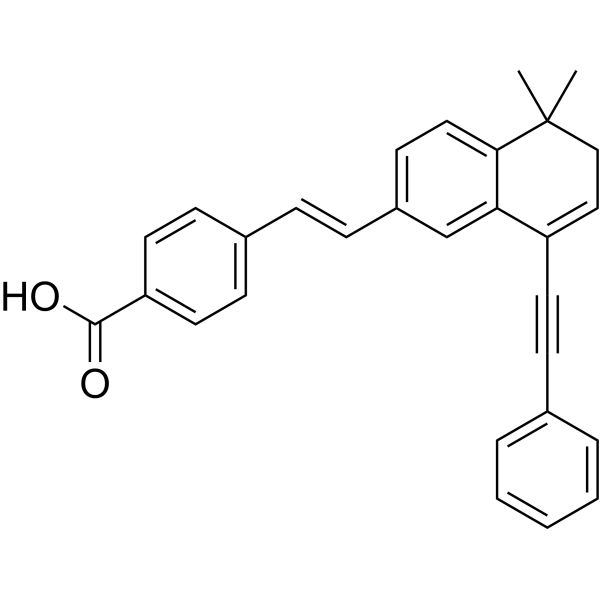
HY-108529
BMS493Inverse RAR Inhibitor -
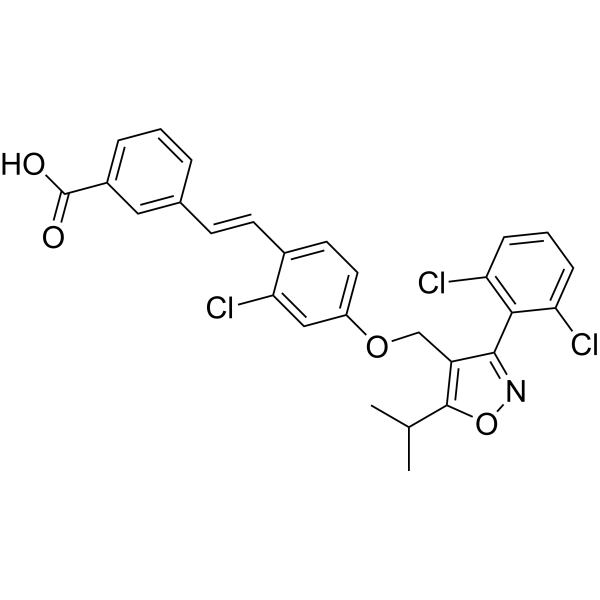
HY-50108
GW 4064FXR Agonist -
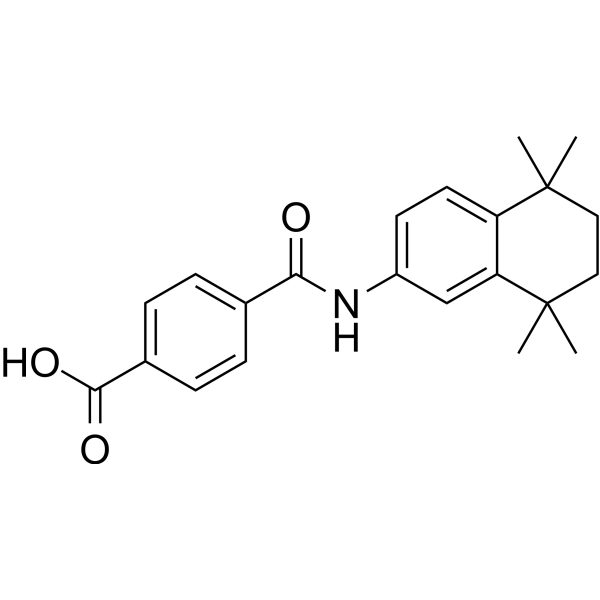
HY-14652
TamibaroteneApoptosis Inducer -
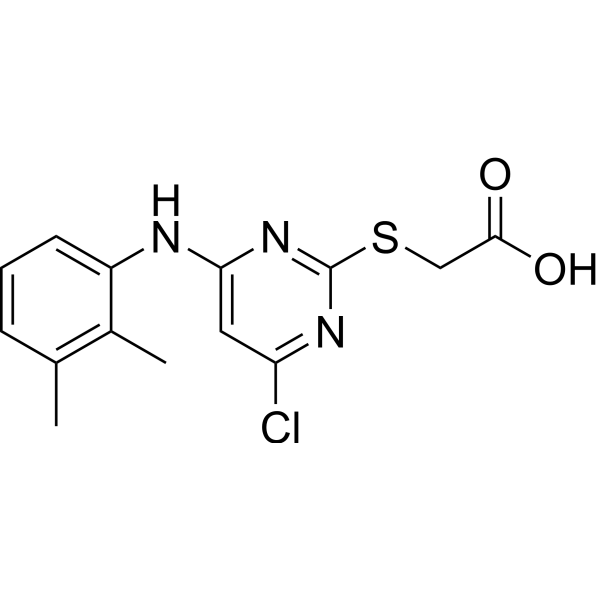
HY-16995
Pirinixic acidPPAR Agonist -
HY-107399
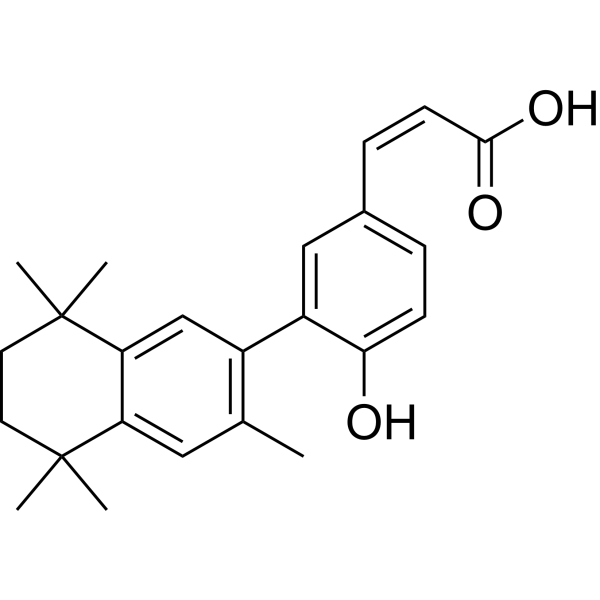
CD3254RXR Agonist
Publications Citing Use of MedChemExpress (MCE) LG100268
More

Biological Activity
Description
Cellular Effect
|
Cell Line

|
Type | Value | Description | References |
|---|---|---|---|---|
| COS-1 | EC50 |
0.04 μM
Compound: 162
|
Activation of human RXRalpha activity expressed in COS1 cells after 12 hrs by RXRE-luciferase reporter gene assay
Activation of human RXRalpha activity expressed in COS1 cells after 12 hrs by RXRE-luciferase reporter gene assay
|
[PMID: 23472886] |
| CV-1 | EC50 |
11 nM
Compound: 2
|
In vitro transcriptional activation in CV-1 cells expressing RXR-alpha
In vitro transcriptional activation in CV-1 cells expressing RXR-alpha
|
[PMID: 12954061] |
| CV-1 | EC50 |
17 nM
Compound: 1
|
In vitro agonistic activity against RXR alpha in CV-1 cells
In vitro agonistic activity against RXR alpha in CV-1 cells
|
[PMID: 14592510] |
| CV-1 | EC50 |
99 nM
Compound: 2
|
In vitro evaluation against RXR-alpha/PPAR-gamma in CV-1 cells by cotransfection assay was determined
In vitro evaluation against RXR-alpha/PPAR-gamma in CV-1 cells by cotransfection assay was determined
|
[PMID: 12954061] |
| CV-1 | IC50 |
8 nM
Compound: LG100268
|
Antagonist activity for Retinoic X receptor alpha in CV1 cells
Antagonist activity for Retinoic X receptor alpha in CV1 cells
|
[PMID: 15006411] |
In Vitro
LG100268 (100 nM-1 μM; 24 hours) shows a downregulation of CSF3 and a 2.5-fold decrease of CXCL2 and IL-1β mRNA expression in RAW264.7 cells[3].
MedChemExpress (MCE) has not independently confirmed the accuracy of these methods. They are for reference only.
-
Cell Line:RAW264.7 cells
-
Concentration:100 nM-1 μM
-
Incubation Time:24 hours
-
Result:Decreased LPS induced cytokine mRNA levels.
In Vivo
MedChemExpress (MCE) has not independently confirmed the accuracy of these methods. They are for reference only.
-
Animal Model:A/J mice[3]
-
Dosage:50 mg/kg (Combines with carboplatin (50 mg/kg i.p.) starts 1 week after the LG268 treatment diet)
-
Administration:Oral diet; once daily; 7 weeks
-
Result:Decreased lung tumors growth significantly in mice.


Chemical Information
-
CAS No. 153559-76-3
-
Appearance Solid
-
Molecular Weight 363.49
-
Formula C24H29NO2
-
Color White to off-white
-
SMILES
O=C(C1=CC=C(C2(C3=C(C)C=C4C(C)(C)CCC(C)(C)C4=C3)CC2)N=C1)O
-
Synonyms
LG268
-
Shipping
Room temperature in continental US; may vary elsewhere.
-
Storage
Powder -20°C 3 years 4°C 2 years In solvent -80°C 2 years -20°C 1 year


Publications (5)
-
Journal Impact Factor
-
Most Recent
-
Cell Rep Med
CAR-M2 immunotherapy resolves renal fibrosis via revascularization and apoptosis of profibrotic Cxcr2+ endothelial cells. [Abstract]2026 Apr 21;7(4):102698. PMID: 41887221 -
Environ Res
Di-tert-Butylphenol (2,4-DTBP) and its analogs disrupt thyroid hormone signaling via activation of retinoid X receptor α. [Abstract]2026 Mar 20:299:124333. PMID: 41864412 -
Am J Chin Med
Berberine Inhibited SASP-Related Inflammation through RXRα/PPARγ/NEDD4 Pathway in Atherosclerosis. [Abstract]2025;53(1):251-283. PMID: 39829230 -
J Steroid Biochem Mol Biol
Rxrs and their partner receptor genes inducing masculinization plausibly mediated by endocrine disruption in Paralichthys olivaceus. [Abstract]2023 Feb:226:106219. PMID: 36356854 -
Exp Eye Res
Effects of PPAR-γ and RXR-α on mouse meibomian gland epithelial cells during inflammation induced by latanoprost. [Abstract]2022 Nov:224:109251. PMID: 36150542


Solvent & Solubility
In Vitro:
DMSO : 5.56 mg/mL (15.30 mM; Need ultrasonic; Hygroscopic DMSO has a significant impact on the solubility of product, please use newly opened DMSO)
Please refer to the solubility information to select the appropriate solvent. Once prepared, please aliquot and store the solution to prevent product inactivation from repeated freeze-thaw cycles.
Storage method and period of stock solution: -80°C, 2 years; -20°C, 1 year. When stored at -80°C, please use it within 2 years. When stored at -20°C, please use it within 1 year.
Please refer to the solubility information to select the appropriate solvent. Once prepared, please aliquot and store the solution to prevent product inactivation from repeated freeze-thaw cycles.
Storage method and period of stock solution: -80°C, 2 years; -20°C, 1 year. When stored at -80°C, please use it within 2 years. When stored at -20°C, please use it within 1 year.
Concentration (start) × Volume (start) = Concentration (final) × Volume (final)
In Vivo:
Select the appropriate dissolution method based on your experimental animal and administration route.
- For the following dissolution methods, please ensure to first prepare a clear stock solution using an In Vitro approach and then sequentially add co-solvents:
- To ensure reliable experimental results, the clarified stock solution can be appropriately stored based on storage conditions. As for the working solution for In Vivo experiments, it is recommended to prepare freshly and use it on the same day.
- The percentages shown for the solvents indicate their volumetric ratio in the final prepared solution. If precipitation or phase separation occurs during preparation, heat and/or sonication can be used to aid dissolution.
Add each solvent one by one: 10% DMSO 40% PEG300 5% Tween-80 45% Saline
Solubility: ≥ 0.56 mg/mL (1.54 mM); Clear solution
This protocol yields a clear solution of ≥ 0.56 mg/mL (saturation unknown).
Taking 1 mL working solution as an example, add 100 μL DMSO stock solution (5.6 mg/mL) to 400 μL PEG300, and mix evenly; then add 50 μL Tween-80 and mix evenly; then add 450 μL Saline to adjust the volume to 1 mL.
Preparation of Saline: Dissolve 0.9 g sodium chloride in ddH₂O and dilute to 100 mL to obtain a clear Saline solution.
Add each solvent one by one: 10% DMSO 90% (20% SBE-β-CD in Saline)
Solubility: 0.56 mg/mL (1.54 mM); Suspended solution; Need ultrasonic
This protocol yields a suspended solution of 0.56 mg/mL. Suspended solution can be used for oral and intraperitoneal injection.
Taking 1 mL working solution as an example, add 100 μL DMSO stock solution (5.6 mg/mL) to 900 μL 20% SBE-β-CD in Saline, and mix evenly.
Preparation of 20% SBE-β-CD in Saline (4°C, storage for one week): 2 g SBE-β-CD powder is dissolved in 10 mL Saline, completely dissolve until clear.
In Vivo Dissolution Calculator
Please enter the basic information of animal experiments:
-
-
-
-
Recommended: Prepare an additional quantity of animals to account for potential losses during experiments.
Please enter your animal formula composition:
-
%DMSO +
Recommended: Keep the proportion of DMSO in working solution below 2% if your animal is weak.
-
%+
-
+%Tween-80 + +
-
%Saline +
The co-solvents required include: DMSO, . All of co-solvents are available by MedChemExpress (MCE). , Tween 80. All of co-solvents are available by MedChemExpress (MCE).
Working solution concentration: 0.22 mg/mL
Method for preparing stock solution: mg drug dissolved in μL DMSO. Stock solution concentration: mg/mL.
1. Take μL DMSO stock solution;
2. Add μL .
μL , mix evenly;
3. Then add μL Tween 80, mix evenly;
4. Then add μL
Please ensure that the stock solution in the first step is dissolved to a clear state, and add co-solvents in sequence. You can use ultrasonic heating (ultrasonic cleaner, recommended frequency 20-40 kHz), vortexing, etc. to assist dissolution.


Purity & Documentation
-
Data Sheet (283 KB)
-
SDS (252 KB)
- English - EN (252 KB)
- Français - FR (252 KB)
- Deutsch - DE (252 KB)
- Norwegian - NO (252 KB)
- Español - ES (252 KB)
- Swedish - SV (252 KB)
- Italian - IT (252 KB)
- Korean - KR (252 KB)
- Portuguese - PT (252 KB)
-
Handling Instructions (2659 KB)
References
[1]. M F Boehm, et al. Design and Synthesis of Potent Retinoid X Receptor Selective Ligands That Induce Apoptosis in Leukemia Cells. J Med Chem [Content Brief]
[2]. D S Lala, et al. Activation of Specific RXR Heterodimers by an Antagonist of RXR Homodimers.Nature. 1996 Oct 3;383(6599):450-3. [Content Brief]
[3]. Martine Cao,et al.The Rexinoids LG100268 and LG101506 Inhibit Inflammation and Suppress Lung Carcinogenesis in A/J Mice. Cancer Prev Res (Phila). 2016 Jan;9(1):105-14. [Content Brief]


Complete Stock Solution Preparation Table
Please refer to the solubility information to select the appropriate solvent. Once prepared, please aliquot and store the solution to prevent product inactivation from repeated freeze-thaw cycles.
Storage method and period of stock solution: -80°C, 2 years; -20°C, 1 year. When stored at -80°C, please use it within 2 years. When stored at -20°C, please use it within 1 year.
| Optional Solvent | Concentration Solvent Mass | 1 mg | 5 mg | 10 mg | 25 mg |
|---|---|---|---|---|---|
| DMSO | 1 mM | 2.7511 mL | 13.7555 mL | 27.5111 mL | 68.7777 mL |
| 5 mM | 0.5502 mL | 2.7511 mL | 5.5022 mL | 13.7555 mL | |
| 10 mM | 0.2751 mL | 1.3756 mL | 2.7511 mL | 6.8778 mL | |
| 15 mM | 0.1834 mL | 0.9170 mL | 1.8341 mL | 4.5852 mL |


LG100268 Related Classifications
HY-15340 Related Classifications
 Powered by Bioz