



Responsive Peptides
- 1

- Formula: C136H215N33O45
- Molecular Weight: 3032.36
GALA is a pH-responsive amphipathic peptide consisting of 30 amino acids, which acts as a lung endothelium-targeting ligand. GALA undergoes a conformational transition from random coil to α-helix in an acidic environment at pH 5.0, thereby inducing endosomal membrane destabilization and fusion. GALA-modified liposomes traverse lung endothelial cells via clathrin-dependent endocytosis and transcytosis, and specifically accumulate in the lungs after intravenous injection. GALA significantly promotes the cytosolic release of cargos carried by exosomes, plasmids and liposomes, effectively enhances gene transfection efficiency, and drives gene knockdown of functional macromolecules (such as siRNA) in alveolar epithelial cells (with no significant cytotoxicity at effective concentrations). GALA serves as a critical tool for studies on lung cancer metastasis (e.g., melanoma lung metastasis) and lung-targeted drug delivery systems.

- Formula: C189H28N4O55S
- Molecular Weight: 4054.56
pH-Low Insertion Peptide (pHLIP) is a short, pH-responsive peptide capable of inserting across a cell membrane to form a transmembrane helix at acidic pH. pH-Low Insertion Peptide targets the acidic tumor microenvironment for tumors at early and metastatic stages with high specificity, used as a specific ligand. pH-Low Insertion Peptide successfully modify polylysine polymers to have the pH-responsive capability. pH-Low Insertion Peptide-based targeting of cancer presents an opportunity to monitor metabolic changes, and to selectively deliver imaging and therapeutic agents to tumors.

- Formula: C136H215N33O45.xC2HF3O2
- Molecular Weight: 3032.36 (free base)
GALA (TFA) is a biological active peptide (GALA, a pH-sensitive fusogenic peptide, is a promising method to accelerate this step in order to enhance the expression of the desired proteins.).
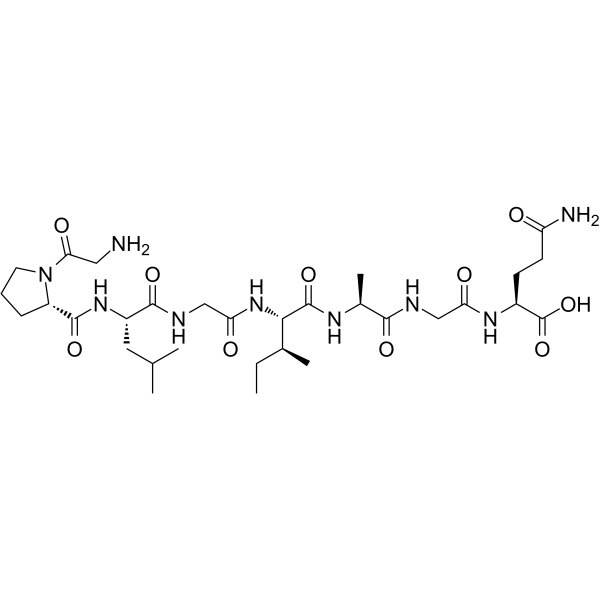
- Formula: C31H53N9O10
- Molecular Weight: 711.81
GPLGIAGQ, a MMP2-cleavable polypeptide, is used as a stimulus-sensitive linker in both liposomal and micellar nanocarriers for MMP2-triggered tumor targeting. GPLGIAGQ can be used to synthesis unique MMP2-targeted photosensitizer in photodynamic therapy (PDT).
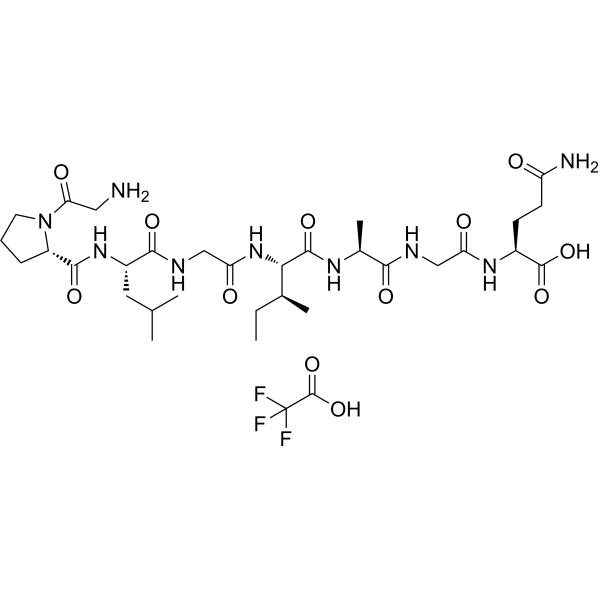
- Formula: C33H54F3N9O12
- Molecular Weight: 825.83
GPLGIAGQ TFA, a MMP2-cleavable polypeptide, is used as a stimulus-sensitive linker in both liposomal and micellar nanocarriers for MMP2-triggered tumor targeting. GPLGIAGQ TFA can be used to synthesis unique MMP2-targeted photosensitizer in photodynamic therapy (PDT).

- Formula: C141H223N35O46S
- Molecular Weight: 3176.55
GALA-Cys is a chemically modified GALA peptide (HY-P5423) that retains GALA functions while acquiring strong covalent conjugation capability. GALA-Cys undergoes pH-driven reversible secondary structure transition, rearranges into an amphipathic α-helix, self-oligomerizes, penetrates lipid membranes to form pores, and disrupts lipid bilayers, thereby enabling endosomal escape and cytosolic cargo delivery. GALA-Cys can be conjugated with lipid DPTE for integration into liposomes, self-assembles into a tilted monolayer on gold surfaces, and serves as a pH-responsive coating for particle surface functionalization. GALA-Cys is applicable to studies related to targeted cargo delivery.

- Formula: C88H157N29O27
- Molecular Weight: 2053.37
ccβ is a 17-residue peptide that folds into a coiled-coil trimer at low temperatures and aggregates to form amyloid fibrils at high temperatures. ccβ serves as a simple model system for investigating α-helix to β-sheet conformational transitions and template-mediated aggregation processes associated with prion and amyloidogenic diseases. ccβ can be used in studies of prion diseases and Alzheimer's disease.

- Formula: C93H136N24O15
- Molecular Weight: 1830.23
Py-FGGK is a gelatinase-responsive short peptide. Py-FGGK can specifically target MRSA, cause leakage of cellular components, generate ROS in situ, and kill biofilm-encapsulated MRSA cells. Py-FGGK can promote cell migration to aid wound healing, and accelerates wound healing in MRSA-infected rat models. Py-FGGK can be used in studies related to MRSA infection.

- Formula: C189H282N42O55S.xC2HF3O2
- Molecular Weight: 4054.57 (free base)
pH-Low Insertion Peptide TFA (pHLIP TFA) is a short, pH-responsive peptide capable of inserting across a cell membrane to form a transmembrane helix at acidic pH. pH-Low Insertion Peptide TFA targets the acidic tumor microenvironment for tumors at early and metastatic stages with high specificity, used as a specific ligand. pH-Low Insertion Peptide TFA successfully modifys polylysine polymers to have the pH-responsive capability. pH-Low Insertion Peptide TFA -based targeting of cancer presents an opportunity to monitor metabolic changes and to selectively deliver imaging and therapeutic agents to tumors.

- Formula: C145H232N36O46S
- Molecular Weight: 3247.67
Ahx-GALA-Cys is a GALA peptide (HY-P5423) derivative with an N-terminal 6-aminohexanoic acid (Ahx) linker and a C-terminal cysteine residue. Ahx-GALA-Cys possesses strong covalent coupling capacity, which can be used to conjugate fluorophores and targeting ligands for investigating the surface functionalization of small extracellular vesicles (sEV) and lysosomal escape.

- Formula: C34H58N10O11S
- Molecular Weight: 814.95
GPLGIAGQC is an MMP2-cleavable peptide. In nanoparticle-drug conjugation systems, GPLGIAGQC is cleaved by MMP2 between the glycine and isoleucine residues. After MMP2-mediated hydrolysis of GPLGIAGQC, the Fc fragment is exposed on the surface of nanoparticles.

- Formula: C54H72N12O12
- Molecular Weight: 1081.22
IKFQFHFD is a pH-responsive and self-assembling peptide. IKFQFHFD is biocompatible at neutral pH and becomes an antimicrobial peptide-like molecular structure only at acidic pH. IKFQFHFD can be used for chronic wounds (venous ulcers, diabetic ulcers, and pressure ulcers) induced by biofilm infections research.

- Formula: C83H128N28O17S2
- Molecular Weight: 1854.21
LH2 peptide is a pH-responsive cell-penetrating peptide dimer with the amino acid sequence LHHLCHLLHHLCHLAG. It can increase its uptake in tumor cells under weakly acidic conditions (such as the tumor microenvironment) through the protonation of histidine residues (pKa approximately 6). When conjugated with the anticancer drug Paclitaxel (HY-B0015), the PTX-LH2 conjugate showed superior tumor suppression effects compared to paclitaxel alone in a subcutaneous breast tumor model. The LH2 peptide holds potential as a drug delivery vehicle in cancer research.

- 1



