



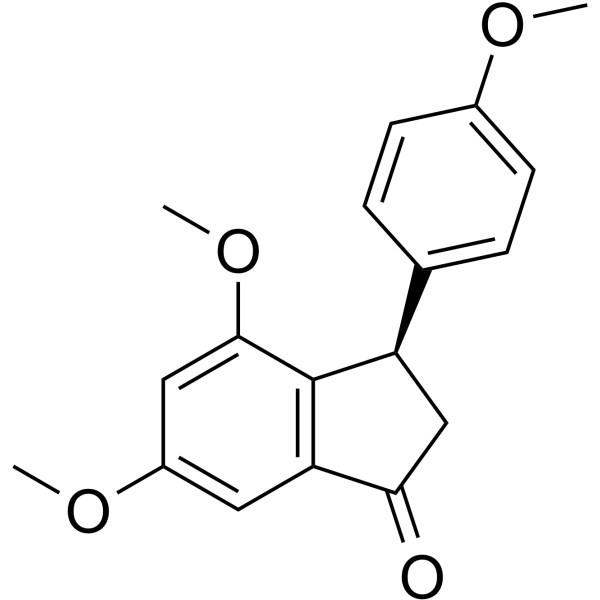
(R)-STU104

Based on 1 Customer Validation
(R)-STU104 is a potent and orally active TAK1-MKK3 interaction inhibitor with IC50s of 0.58 μM and 4.0 μM for TNF-α and MKK3 phosphorylation. (R)-STU104 suppresses the TAK1/MKK3/p38/MnK1/MK2/elF4E signal pathways through binding with MKK3 and disrupting the TAK1 phosphorylating MKK3. (R)-STU104 can be used for researching ulcerative colitis.
For research use only. We do not sell to patients.
- Purity : 99.91%
- CAS No.: 2767124-77-4
- Formula: C18H18O4
- Molecular Weight:298.33
-
Storage:Powder -20°C, 3 years ; In solvent -80°C, 6 months , -20°C, 1 month

To place orders, for customer services and technical support, please contact: MedChemExpress USA
Tel: 609-228-6898 E-mail: [email protected] [email protected]


-
 Biological Activity
-
Chemical Information
-
Solvent & Solubility
- Protocols
- Purity & Documentation
- References
-
 Help & FAQs


-
HY-152185
BSJ-04-122MKK4/7 Inhibitor -
HY-N0188
Esculinp38 MAPK Inhibitor -
HY-110398
5,6,7-Trimethoxyflavonep38 MAPK Inhibitor -
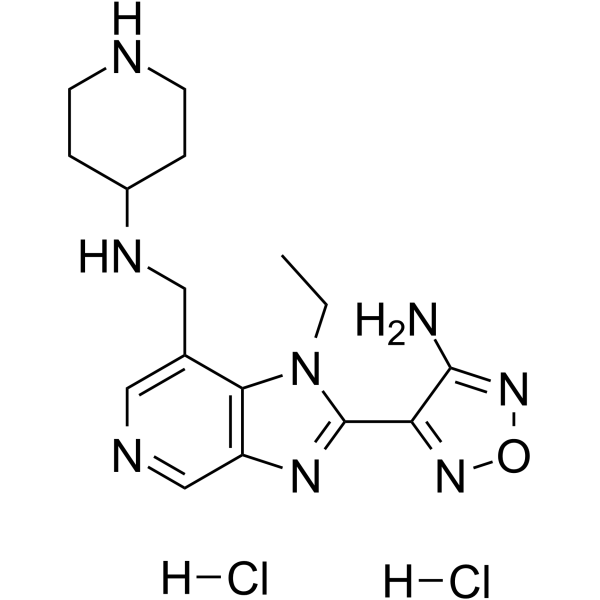
HY-110313
SB-747651A dihydrochlorideMSK1 Inhibitor -
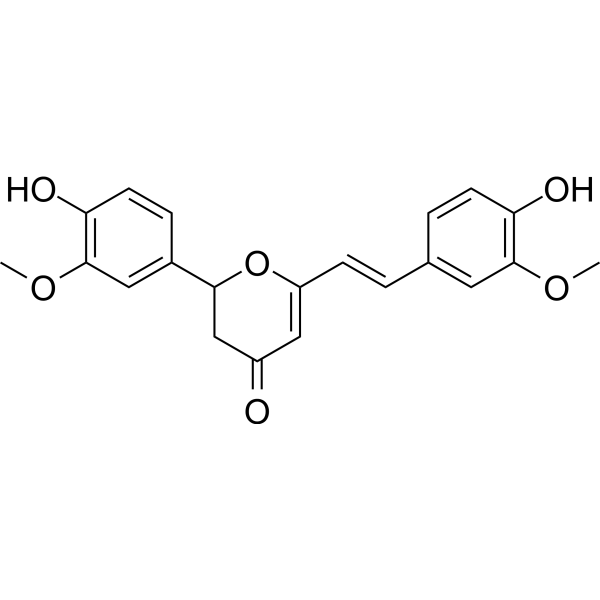
HY-N8251
Cyclocurcuminp38α Inhibitor -
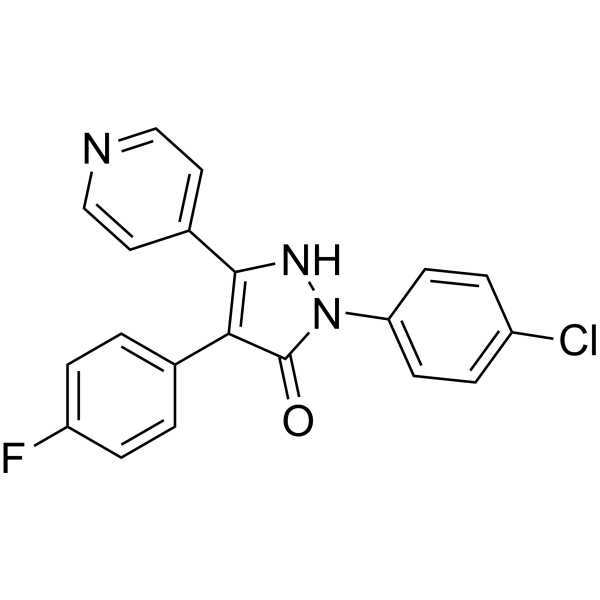
HY-112466
p38 MAPK-IN-4p38 MAPK Inhibitor -
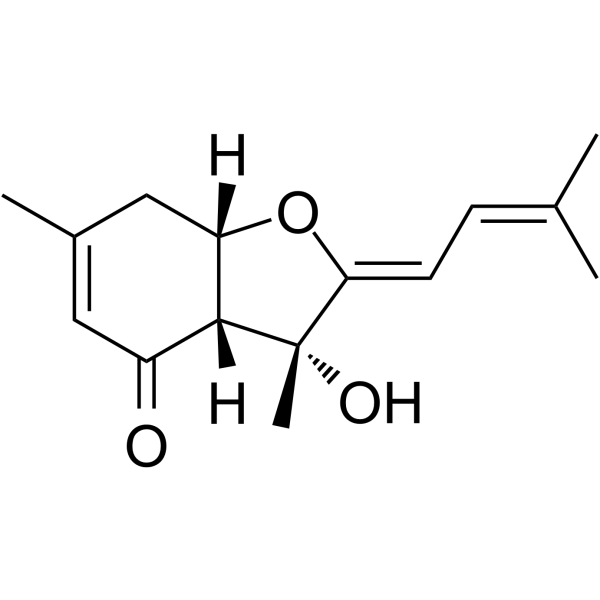
HY-N4233
Bisabolangelonep38 MAPK Inhibitor -
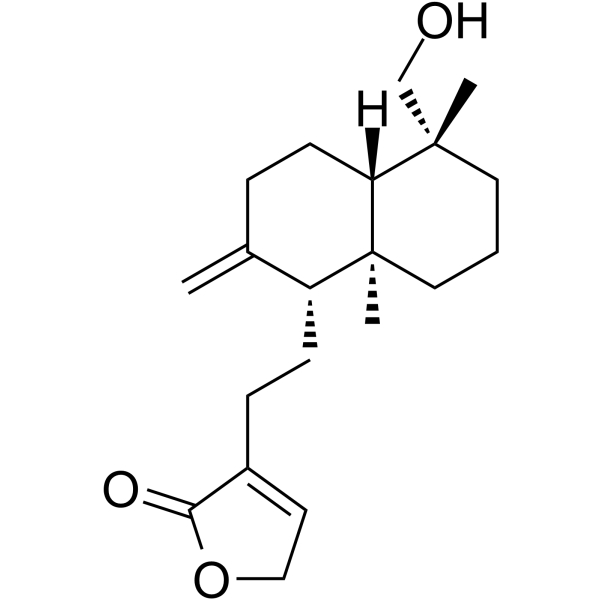
HY-N9388
AndrograpaninAnti-Inflammatory Agent -
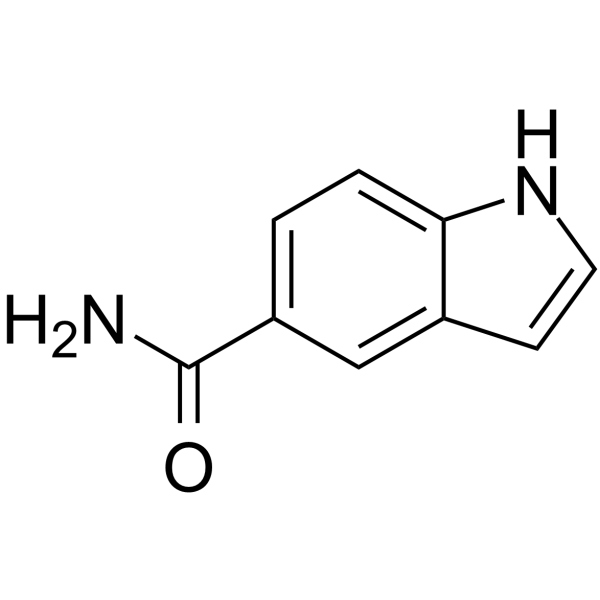
HY-W015445
SD-169p38α Inhibitor -
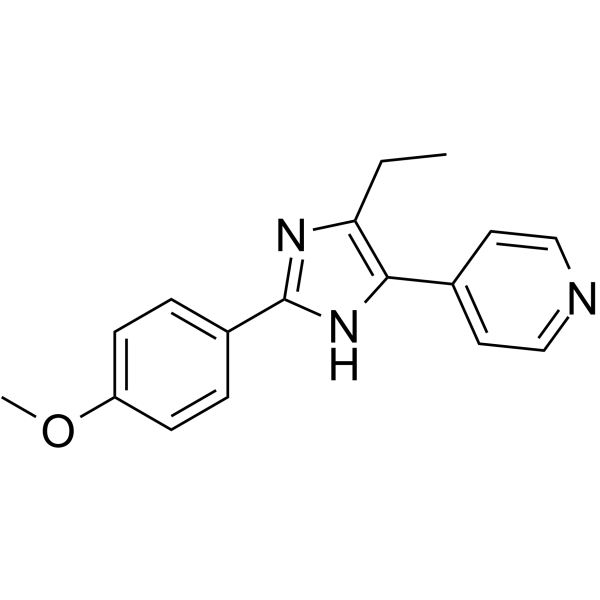
HY-112367
SB 202474p38 MAPK Inhibitor Negative Control -
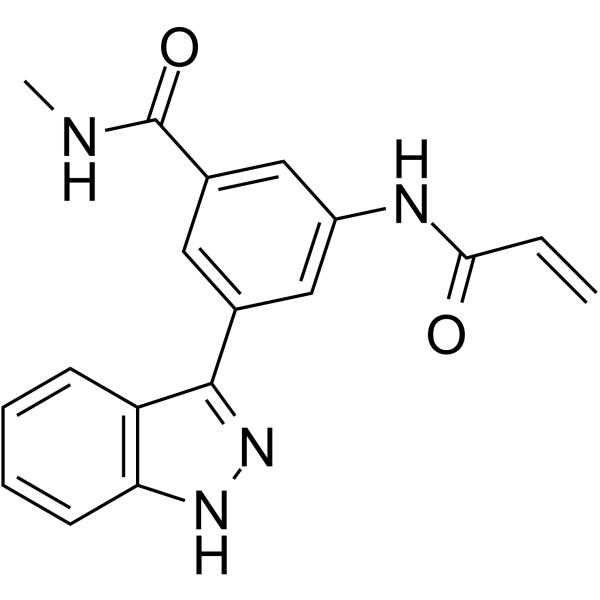
HY-122872
MKK7-COV-9Covalent MKK7 Inhibitor -

HY-N0188R
Esculin (Standard)p38 MAPK Inhibitor


Biological Activity
Description
IC50 & Target
IC50: 0.58 μM (TNF-α), 4.0 μM (MKK3 phosphorylation)[1]
Cellular Effect
|
Cell Line

|
Type | Value | Description | References |
|---|---|---|---|---|
| RAW264.7 | IC50 |
0.58 μM
Compound: (R)-STU104
|
Inhibition of LPS-induced TNFalpha production in mouse RAW264.7 cells preincubated for 2 hrs followed by LPS treatment for 24 hrs by RT-qPCR analysis
Inhibition of LPS-induced TNFalpha production in mouse RAW264.7 cells preincubated for 2 hrs followed by LPS treatment for 24 hrs by RT-qPCR analysis
|
[PMID: 35442672] |
In Vitro
In Vivo
Pharmacokinetic Parameters of (R)-STU104 in male C57 mice[1].
| IV (5 mg/kg) | PO (30 mg/kg) | |
| Tmax (h) | 0.083 | |
| AUC0-t (μg/L·h) | 7249 | 9895 |
| AUC0-∞ (μg/L·h) | 8635 | 16991 |
| MRT0-∞ (h) | 7.32 | 12.52 |
| Cmax (ng/mL) | 2920 | 2290 |
| t1/2 (ng/mL) | 9.29 | 8.67 |
| VZ (L/kg) | 7.76 | 3.68 |
| CLZ (ng/mL) | 0.58 | 0.29 |
| F (%) | 33% |
MedChemExpress (MCE) has not independently confirmed the accuracy of these methods. They are for reference only.
-
Animal Model:C57BL/6 mice (dextran sodium sulfate (DSS)-induced acute ulcerative colitis)[1]
-
Dosage:1, 3 and 10 mg/kg
-
Administration:IG, for 7 days
-
Result:Ameliorated the symptoms of DSS-induced experimental colitis, and significantly inhibited inflammatory cytokine protein TNF-α, IL-1β, IL-6, and IL-23.


Chemical Information
-
CAS No. 2767124-77-4
-
Appearance Solid
-
Molecular Weight 298.33
-
Formula C18H18O4
-
Color White to off-white
-
SMILES
O=C1C[C@H](C2=CC=C(OC)C=C2)C3=C1C=C(OC)C=C3OC
-
Shipping
Room temperature in continental US; may vary elsewhere.
-
Storage
Powder -20°C 3 years In solvent -80°C 6 months -20°C 1 month


Solvent & Solubility
In Vitro:
DMSO : 50 mg/mL (167.60 mM; Need ultrasonic; Hygroscopic DMSO has a significant impact on the solubility of product, please use newly opened DMSO)
Please refer to the solubility information to select the appropriate solvent. Once prepared, please aliquot and store the solution to prevent product inactivation from repeated freeze-thaw cycles.
Storage method and period of stock solution: -80°C, 6 months; -20°C, 1 month. When stored at -80°C, please use it within 6 months. When stored at -20°C, please use it within 1 month.
Please refer to the solubility information to select the appropriate solvent. Once prepared, please aliquot and store the solution to prevent product inactivation from repeated freeze-thaw cycles.
Storage method and period of stock solution: -80°C, 6 months; -20°C, 1 month. When stored at -80°C, please use it within 6 months. When stored at -20°C, please use it within 1 month.
Concentration (start) × Volume (start) = Concentration (final) × Volume (final)
In Vivo:
Select the appropriate dissolution method based on your experimental animal and administration route.
- For the following dissolution methods, please ensure to first prepare a clear stock solution using an In Vitro approach and then sequentially add co-solvents:
- To ensure reliable experimental results, the clarified stock solution can be appropriately stored based on storage conditions. As for the working solution for In Vivo experiments, it is recommended to prepare freshly and use it on the same day.
- The percentages shown for the solvents indicate their volumetric ratio in the final prepared solution. If precipitation or phase separation occurs during preparation, heat and/or sonication can be used to aid dissolution.
In Vivo Dissolution Calculator
Please enter the basic information of animal experiments:
-
-
-
-
Recommended: Prepare an additional quantity of animals to account for potential losses during experiments.
Please enter your animal formula composition:
-
%DMSO +
Recommended: Keep the proportion of DMSO in working solution below 2% if your animal is weak.
-
%+
-
+%Tween-80 + +
-
%Saline +
The co-solvents required include: DMSO, . All of co-solvents are available by MedChemExpress (MCE). , Tween 80. All of co-solvents are available by MedChemExpress (MCE).
Working solution concentration: 0.22 mg/mL
Method for preparing stock solution: mg drug dissolved in μL DMSO. Stock solution concentration: mg/mL.
1. Take μL DMSO stock solution;
2. Add μL .
μL , mix evenly;
3. Then add μL Tween 80, mix evenly;
4. Then add μL
Please ensure that the stock solution in the first step is dissolved to a clear state, and add co-solvents in sequence. You can use ultrasonic heating (ultrasonic cleaner, recommended frequency 20-40 kHz), vortexing, etc. to assist dissolution.


Purity & Documentation
-
Data Sheet (280 KB)
-
SDS (251 KB)
- English - EN (251 KB)
- Français - FR (251 KB)
- Deutsch - DE (251 KB)
- Norwegian - NO (251 KB)
- Español - ES (251 KB)
- Swedish - SV (251 KB)
- Italian - IT (251 KB)
- Korean - KR (251 KB)
- Portuguese - PT (251 KB)
-
Handling Instructions (2659 KB)
References


Complete Stock Solution Preparation Table
Please refer to the solubility information to select the appropriate solvent. Once prepared, please aliquot and store the solution to prevent product inactivation from repeated freeze-thaw cycles.
Storage method and period of stock solution: -80°C, 6 months; -20°C, 1 month. When stored at -80°C, please use it within 6 months. When stored at -20°C, please use it within 1 month.
| Optional Solvent | Concentration Solvent Mass | 1 mg | 5 mg | 10 mg | 25 mg |
|---|---|---|---|---|---|
| DMSO | 1 mM | 3.3520 mL | 16.7600 mL | 33.5199 mL | 83.7998 mL |
| 5 mM | 0.6704 mL | 3.3520 mL | 6.7040 mL | 16.7600 mL | |
| 10 mM | 0.3352 mL | 1.6760 mL | 3.3520 mL | 8.3800 mL | |
| 15 mM | 0.2235 mL | 1.1173 mL | 2.2347 mL | 5.5867 mL | |
| 20 mM | 0.1676 mL | 0.8380 mL | 1.6760 mL | 4.1900 mL | |
| 25 mM | 0.1341 mL | 0.6704 mL | 1.3408 mL | 3.3520 mL | |
| 30 mM | 0.1117 mL | 0.5587 mL | 1.1173 mL | 2.7933 mL | |
| 40 mM | 0.0838 mL | 0.4190 mL | 0.8380 mL | 2.0950 mL | |
| 50 mM | 0.0670 mL | 0.3352 mL | 0.6704 mL | 1.6760 mL | |
| 60 mM | 0.0559 mL | 0.2793 mL | 0.5587 mL | 1.3967 mL | |
| 80 mM | 0.0419 mL | 0.2095 mL | 0.4190 mL | 1.0475 mL | |
| 100 mM | 0.0335 mL | 0.1676 mL | 0.3352 mL | 0.8380 mL |


(R)-STU104 Related Classifications
HY-150612 Related Classifications
 Powered by Bioz